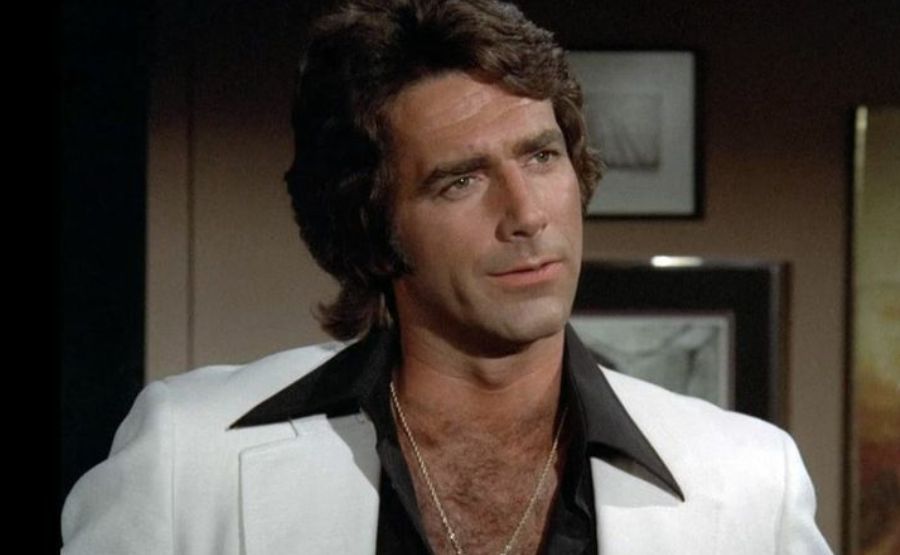
Young Sam Elliott: Rare Early Years, Career Beginnings, and Rise to Fame
Quick Bio
| Detail | Info |
| Full Name | Samuel Pack Elliott |
| Born | August 9, 1944 |
| Birthplace | Sacramento, California, USA |
| Age | 82 (as of 2026) |
| Nationality | American |
| Occupation | Actor, Voice Artist |
| Known For | Road House, Tombstone, A Star Is Born, The Big Lebowski, 1883 |
| Height | 6 ft 2 in (188 cm) |
| Spouse | Katharine Ross (married 1984 — present) |
| Children | Cleo Rose Elliott (b. 1984) |
| Education | Clark College; University of Oregon (did not graduate) |
| Net Worth | ~$20 million (estimated) |
| Hollywood Walk of Fame | Star awarded 2017 |
| Oscar Nomination | A Star Is Born (2019) Best Supporting Actor |
Introduction: The Voice, The Mustache, The Man
Close your eyes and hear that voice. Deep, unhurried, worn smooth by decades of use like a river stone. There is no voice in Hollywood quite like it. And attached to that voice — that thick mustache, those weathered features, that six-foot-two frame that seems built from the same timber as the American West itself — is Samuel Pack Elliott. A man who decided at age nine that he wanted to be an actor, spent two decades grinding toward that goal, and then spent another five decades proving every doubter wrong.
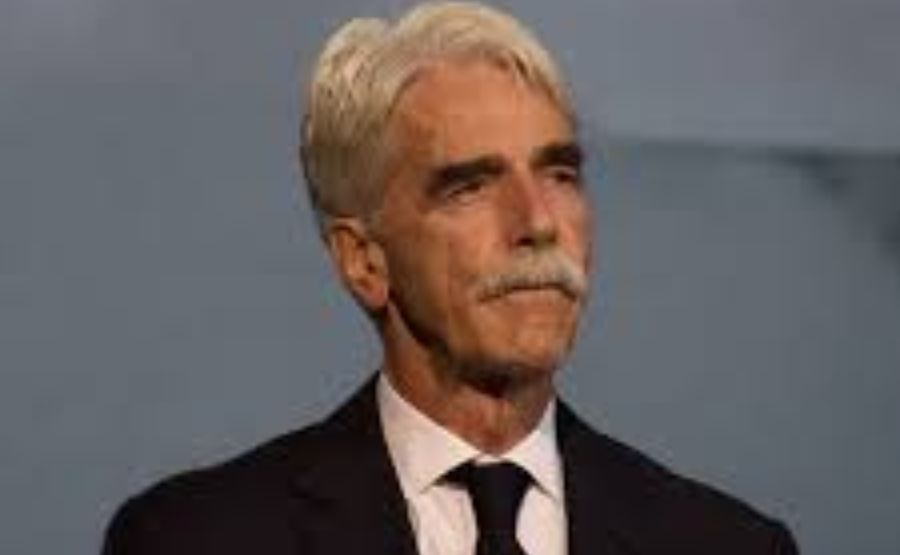
Sam Elliott is 82 years old. He has been making movies and television since before most people reading this biography were born. At age 74, he was nominated for his first Academy Award. He’s currently starring in a hit series that’s introducing him to a brand new generation of viewers. And somewhere in the hills of Malibu or the green valleys of Oregon, he still wears the same boots, still keeps the same quiet, and still carries himself exactly like the cowboy he has played a hundred times over — because in many ways, that is genuinely who he is.
This is not the story of an overnight success. It is something better than that. It is the story of a man who took the long road, stuck to it, and found out that the long road was the right one all along.
Early Life: Sacramento Summers and Oregon Mountains
Sam Elliott came into the world on August 9, 1944, at Sutter Memorial Hospital in Sacramento, California. His mother, Glynn Mamie Sparks, was a physical education instructor and high school teacher who had once been a Texas state diving champion — a detail that hints at the kind of disciplined, capable people he came from. His father, Henry Nelson Elliott, worked as a predator-control specialist for the Department of the Interior, spending his days outdoors in the wild places of the American landscape.
Sam’s early Sacramento years had the quality of a particular kind of American childhood — the 1950s kind, where a boy with a bicycle and curiosity had an entire world available to him. He divided his time between William Land Park and the Sacramento River, picked up his first serious love of the outdoors on fishing and hiking trips with his father into the Sierras, and started absorbing something about wide-open spaces and quiet patience that would stay with him for the rest of his life.
Then, in 1957, when Sam was thirteen, everything changed. His father’s job with the U.S. Fish and Wildlife Service required a relocation. The family packed up and moved north to Portland, Oregon. Sam did not want to go. He had friends, a life, roots. Portland felt like exile.
What he found there, eventually, was something better than what he’d left behind. Oregon — its forests, its rivers, its particular quality of unforgiving natural beauty — seeped into him. It became the landscape of his interior life. Decades later, long after Hollywood success had given him the option of living anywhere on earth, Sam Elliott would still come back to Oregon. He and his wife own a home in the Willamette Valley, and he has spoken about hoping to live there year-round someday. Oregon didn’t just shape him. It claimed him.
He also has a sister named Glenda, who has remained outside the public spotlight throughout his career.
See also “Nate Foy: The Massachusetts Kid Who Earned His Way to Fox News One Market at a Time“
Childhood Dreams and a Father’s Doubt
By the time Sam was nine years old, he knew what he wanted to do with his life. He wanted to act. He had no particular reason to believe he could. He simply decided, the way children sometimes do with complete and total certainty, that this was the thing.
His father did not share the feeling.
Henry Elliott was a practical man. He worked outdoors, managed difficult terrain, dealt in realities. The idea of his son going to Hollywood to chase acting roles struck him as precisely the kind of foolish dream that wrecked young men’s lives. He was blunt about it. When Sam talked about acting, his father delivered a verdict that Sam has quoted publicly many times since: he had a snowball’s chance in hell of making it.
The relationship between Sam and his father carried the particular strain that develops when a parent and child simply cannot agree on who the child is allowed to be. They were not enemies. But the tension was real, and it never fully resolved. Henry Elliott died of a heart attack when Sam was just eighteen years old. They never got the chance to reach an understanding.
Sam has been candid about how much that loss cost him — not just the grief of losing a parent, but the specific grief of losing someone while the argument was still unfinished. His father died, Sam has said, believing his son was headed down the wrong path entirely.
He proved otherwise for the remainder of his life. But some part of him clearly still feels the weight of that unresolved conversation.
Education: Theater Found Him in Oregon
After high school at David Douglas High School in Portland, Sam did what his father had pushed for: he enrolled at the University of Oregon, studying English and psychology. He lasted two terms before leaving. The formal academic life didn’t fit.
He enrolled instead at Clark College in Vancouver, Washington — a community college just across the Columbia River from Portland. And here is where everything changed.
At Clark, he discovered theater. He appeared in a stage production of Guys and Dolls, and something clicked into place. The Vancouver Columbian newspaper reviewed the production and specifically suggested that Elliott should pursue professional acting. That kind of external validation — a stranger seeing in you what you have always seen in yourself — has a specific, electrifying quality. It confirmed what nine-year-old Sam had already known.
He eventually re-enrolled at the University of Oregon, pledging at the Sigma Alpha Epsilon fraternity and continuing his studies, but left again before completing his degree. His mind was made up. Acting was the destination, and no amount of formal education was going to get him there faster than simply going to Los Angeles and trying.
Career Beginnings: The Long Climb
Sam Elliott arrived in Los Angeles in the late 1960s with a face built for cinema, a voice that could stop a room, and absolutely no guarantee that any of it would work out.
He started at the bottom, the way most serious actors do. He got a bit part in Butch Cassidy and the Sundance Kid (1969) — the enormous Paul Newman and Robert Redford western that is still considered one of the finest films of its era. Sam played a card player in the opening scene, watching Redford demonstrate his shooting skills. He had no lines. He was barely on screen. But he was there.
What makes that moment worth noting is not the role itself but a footnote to it: one of the film’s stars was actress Katharine Ross. They were not introduced on set. But their paths had crossed.
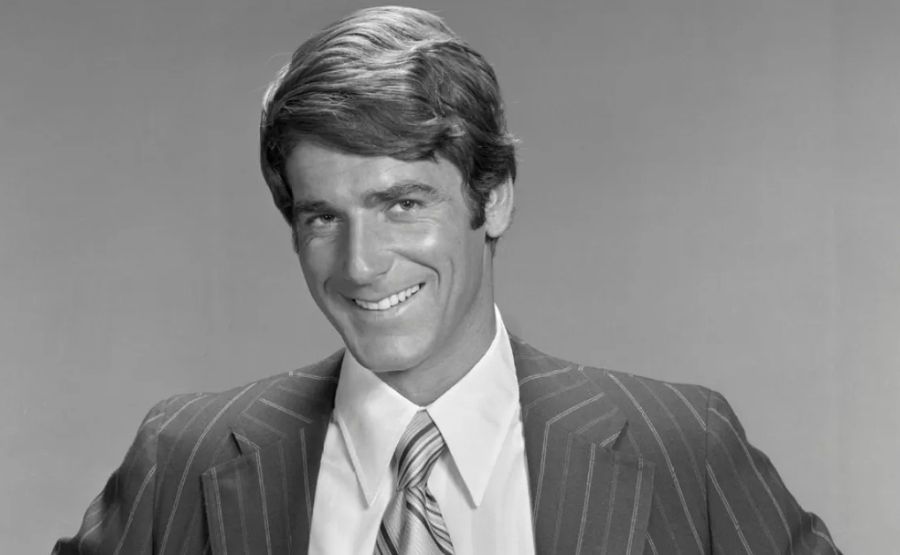
Fox Studios noticed him and signed him — one of the last actors brought on under the old Hollywood studio system before that model dissolved entirely. He was promptly loaned to Paramount for a season on the long-running spy series Mission: Impossible, playing Dr. Doug Lang, clean-shaven and noticeably different from the mustachioed figure the world would eventually recognize. He looked handsome and capable, but the signature look — the mustache, the weathered gravity — hadn’t fully arrived yet.
He kept working through the early 1970s, picking up television roles and minor film parts, building experience the hard way. The breakthrough he needed was slow in coming.
The Rise: Finding His Voice and His Face
The mustache appeared somewhere in the early 1970s, and with it came the Sam Elliott that audiences would eventually make famous. It was not a calculated image decision. It simply looked right — like something that had always been there, waiting.
His first significant lead role came with Lifeguard in 1976, a drama that gave him genuine screen time and demonstrated what he could do when someone gave him room to work. Critics and audiences noticed.
Then came The Legacy (1978), a British horror film also starring Katharine Ross. Here, finally, nearly a decade after they had occupied the same film set without meeting, Sam Elliott and Katharine Ross actually met. The connection was immediate and lasting. They began a relationship that would define both their personal and professional lives for decades to come.
The 1980s established Elliott as one of the most reliable and distinctive presences in Hollywood — particularly in Westerns and action films. Mask (1985), the Peter Bogdanovich drama starring Cher, gave him a role of real emotional substance. Road House (1989), the gloriously committed action film starring Patrick Swayze, became a cult classic in which Elliott’s Wade Garrett character — mentor, friend, the older and wiser knife-fighter — remains one of the film’s most remembered elements.
Tombstone (1993) was perhaps his most beloved Western role — Virgil Earp, lawman brother of Wyatt, a man trying to hold the line between civilization and violence. The film became a cultural touchstone, and Elliott’s performance was a significant part of why.
The Big Lebowski (1998), the Coen Brothers’ masterpiece of absurdist comedy, gave him the role of The Stranger — a mysterious narrator figure who appears at the film’s beginning and end, sipping milk and delivering philosophical observations in a drawl so perfectly calibrated that it became the film’s emotional anchor. It is a small role by page count. In practice, it is unforgettable.
Major Achievements: The Oscar That Came at 74
For a long time, the industry celebrated Sam Elliott the way it celebrates reliable, excellent character actors — with steady work and professional respect, but not quite the peak recognition that leads to awards seasons. He was critically respected across decades of performances. Major award nominations were elusive.
Then came A Star Is Born (2018).
Bradley Cooper’s remake of the classic musical drama starred Cooper himself and Lady Gaga, but Sam Elliott’s performance as Bobby Maine — the older half-brother and manager of Cooper’s self-destructing country star — was the film’s quiet heartbeat. There is a scene between Elliott and Cooper, a confrontation in a bathroom during a concert, where decades of fraternal resentment and love and disappointment spill out in a few minutes of devastating dialogue. Elliott plays it with the kind of restraint that only comes from a career spent learning exactly how little you need to do on screen.
He was nominated for his first Academy Award for Best Supporting Actor as a result of the performance. He was 74 years old. It was also recognized with a Golden Globe nomination and a Screen Actors Guild nomination.
He didn’t win the Oscar. But the nomination meant something specific and important: it acknowledged a career of sustained excellence that had never previously been formally recognized at that level. The industry was saying, finally and explicitly, that they had seen what he had been doing all along.
A Hollywood Walk of Fame star was awarded in 2017 — a formal institutional marker of a legacy already well established.
His SAG Award for 1883 — the Yellowstone prequel series — came in recognition of one of his finest television performances, playing Shea Brennan, a Pinkerton detective leading a wagon train westward while quietly processing his own grief and exhaustion. It is the kind of role that fits Sam Elliott the way a worn leather jacket fits someone who has spent decades breaking it in.
Personal Life: The Marriage That Hollywood Said Couldn’t Last
In 1984, Katharine Ross and Sam Elliott got married. That is forty-two years ago, as of 2026. In Hollywood terms, this is not just unusual. It is almost unprecedented.
Ross was already a celebrated actress when they met — Oscar-nominated for The Graduate (1967), part of the iconic cast of Butch Cassidy and the Sundance Kid (also 1969, the same film where Elliott had his tiny uncredited role). She had been married four times before Sam. He had not been married before her.
Their daughter, Cleo Rose Elliott, was born in 1984, the same year as their wedding. Cleo has built her own career as a musician and singer, staying largely outside the Hollywood world her parents inhabit.
Sam and Katharine have co-starred in several projects over the years, including The Legacy — the film that introduced them — and various television productions. Their professional collaboration reflects the depth of their personal partnership.
They maintain homes in Malibu, in Oregon’s Willamette Valley, and reportedly in Texas — properties that reflect both their Hollywood careers and their genuine love of open, rural landscapes.
Sam has spoken about the marriage with characteristic plainness. He is not a man who performs his emotions for public consumption. But the forty-plus years of sustained commitment, in a world where relationships are regularly dissolved under far less pressure, says more than any interview quotation could.
Challenges: Patience as the Long Game
Sam Elliott’s biggest professional challenge was simply time — the sheer, grinding duration of the wait between arrival in Hollywood and genuine recognition.
He spent years doing bit parts, guest television roles, minor film appearances, working consistently and improving steadily while the star-making machinery of Hollywood pointed its attention elsewhere. His father had predicted failure, and for a long time, the evidence was ambiguous enough to keep that prediction alive as a possibility.
He also worked through an industry that was sometimes uncertain what to do with him — that saw the look and the voice and the obvious screen presence but didn’t always know what genre or what kind of story to put them in. He ended up in Westerns largely because they fit, not because he was limited to them, and even within that fitting there were years where Westerns were out of fashion and his particular currency felt temporarily devalued.
The death of his father at eighteen — the finality of that unresolved argument, the silence where reconciliation should have been — was a wound that Sam has referred to in interviews across the decades. It did not break him. But it is clearly still there, still carried.
Financially, the early years were lean in the way that early acting careers almost always are. He supplemented his income with physical labor — construction work — while building his resume and waiting for the roles that would make everything worth it.
Financial Situation: What a Lifetime of Work Looks Like
Sam Elliott’s estimated net worth sits at approximately $20 million, with some sources placing it as high as $25 million. The range reflects the difficulty of pinning down exact figures for an actor who has never run a public company or disclosed personal finances, but the ballpark is consistent across credible sources.
What that number represents is a lifetime of steady, consistent earning rather than a single blockbuster windfall. His income has come from film salaries across dozens of productions, television paychecks from The Ranch (a Netflix series in which he starred from 2016 to 2020), 1883, and most recently Landman — a hit Paramount series that he has confirmed he’s returning to for a third season. He has also been one of the most recognized voices in advertising for decades, lending his baritone to campaigns for Coors beer, Dodge Ram trucks, Doritos, and the American Beef Council. Voice work of that caliber pays extremely well.
Real estate holdings in Malibu and Oregon contribute meaningfully to his overall financial picture.
He is not the wealthiest actor of his generation. He is a comfortably wealthy man who built that security slowly and deliberately, which seems entirely consistent with who he is.
Current Activities: Still in the Saddle
At 82, Sam Elliott is not retired. He is not winding down. He is working.
His role in Landman — the Taylor Sheridan-created Paramount+ series set in the oil fields of West Texas — has introduced him to the same massive audience that made 1883 and Yellowstone cultural phenomena. He confirmed in 2025 that he would return for the show’s third season. That is not the behavior of a man coasting toward the finish line.
He still divides his time between California and Oregon, where he and Katharine Ross have spent decades turning their houses into true homes. He speaks about Oregon with a warmth that makes clear it is the place his heart goes when given the choice.
He has spoken recently and forcefully about gender-based violence issues in South Africa — wait, that’s a different biography. What Sam Elliott has spoken about recently is the state of the Western genre, the Yellowstone universe, and his genuine gratitude for the career resurgence that late-in-life roles have brought him.
On social media, fans continue to circulate photographs and clips from his early career — a young Sam Elliott, already equipped with the mustache and the cheekbones and the presence, looking like someone who was always going to end up exactly here.
Final Words
Here is what makes Sam Elliott’s story genuinely worth telling. He decided he wanted something at age nine. His own father told him he’d never get it. He spent two decades getting absolutely nowhere by Hollywood’s usual metrics. And then he spent five more decades building one of the most recognizable, most durable, most genuinely beloved careers in American film and television.
He didn’t compromise who he was to get there. He didn’t chase trends or reinvent his image for market research. He found the thing that fit — the genre, the voice, the look, the particular brand of quiet authority that he carries naturally — and he gave it everything he had, for as long as it took.
The Oscar nomination at 74 is the number that tells the most important story. Not because the award itself matters most, but because of what it reveals about how he got there: not fast, not through luck, not through being the right person in the right place at the right time. Through pure, sustained, patient excellence. Through showing up for five decades and never once mailing it in.
His father died thinking his son was going to fail. His son went on to become one of the most iconic figures in the history of American cinema. That arc — the long, quiet, relentless proof of a life well chosen — is as western a story as anything Sam Elliott has ever appeared in.
FAQs
1. What is Sam Elliott’s real name?
His birth name is Samuel Pack Elliott. He has used this professionally throughout his career, typically credited as Sam Elliott.
2. Where was Sam Elliott born and raised?
He was born on August 9, 1944, in Sacramento, California, at Sutter Memorial Hospital. His family relocated to Portland, Oregon when he was thirteen, following his father’s job with the U.S. Fish and Wildlife Service. Oregon remained a central part of his life and identity.
3. How did Sam Elliott get into acting?
He knew he wanted to act from around age nine. After attending college at Clark College in Vancouver, Washington, where he appeared in a stage production and was publicly encouraged to pursue professional acting by a local newspaper, he relocated to Los Angeles in the late 1960s and began working his way up from bit parts.
4. What was Sam Elliott’s first film role?
His first significant film role was a small, uncredited appearance as a card player in Butch Cassidy and the Sundance Kid (1969) — the classic western starring Paul Newman and Robert Redford. He had no lines, but the film was enormously significant and launched him into the studio system.
5. How did Sam Elliott meet his wife Katharine Ross?
They were both on the set of Butch Cassidy and the Sundance Kid in 1969 but were not introduced. They finally met properly while filming The Legacy in 1978 and began a relationship that led to their marriage in 1984. They have been together ever since.
6. Does Sam Elliott have children?
He and Katharine Ross have one daughter, Cleo Rose Elliott, born in 1984. Cleo has pursued a career as a musician and singer.
7. What is Sam Elliott’s most famous role?
He has several contenders: Virgil Earp in Tombstone (1993), Wade Garrett in Road House (1989), The Stranger in The Big Lebowski (1998), Bobby Maine in A Star Is Born (2018), and Shea Brennan in 1883 (2021-2022). Different generations of fans would give different answers.
8. Did Sam Elliott win an Academy Award?
He was nominated for the Academy Award for Best Supporting Actor for his performance in A Star Is Born (2018) but did not win. He was 74 at the time of his nomination — one of the oldest nominees in that category.
9. What is Sam Elliott’s estimated net worth?
Most credible sources estimate his net worth at approximately $20 million, built through decades of film and television salaries, commercial voiceover work for major brands including Dodge Ram, Coors, and Doritos, and real estate holdings in California and Oregon.
10. Is Sam Elliott still acting?
Yes. As of 2026, he is starring in Landman, a Paramount+ series, and has confirmed he will return for its third season. He remains one of the most active working actors of his generation.
11. What is Sam Elliott’s relationship with the Western genre?
It is the genre most associated with him, though he has worked successfully across comedy, drama, action, and horror. He has spoken about genuinely identifying with the cowboy ethos — the code of quiet honor, self-reliance, and directness — rather than simply performing it for the camera. He maintains properties in Oregon and reportedly Texas that reflect a genuinely rural way of life.
12. What happened with Sam Elliott’s father?
His father, Henry Nelson Elliott, was openly skeptical of Sam’s acting ambitions and told him he had no real chance of succeeding in Hollywood. Henry died of a heart attack when Sam was only eighteen years old, before the argument between them could be resolved. Sam has spoken about this loss with evident pain across many interviews over the decades.
Explore ideas that elevate your thinking with The Elevate Magazine.