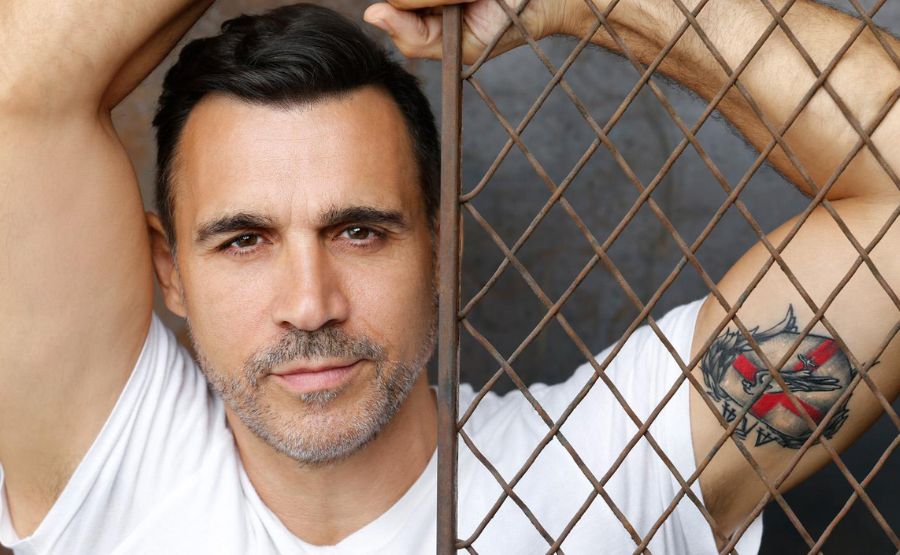
Adrian Paul: The Immortal Highlander Who Never Stopped Moving
Quick Bio
| Detail | Information |
| Full Name | Adrian Paul Hewett |
| Born | May 29, 1959, London, England |
| Age | 67 (as of 2026) |
| Nationality | British |
| Ethnicity | Mixed — Italian mother, British father |
| Height | 6 feet 1 inch (185 cm) |
| Occupation | Actor, martial artist, director, producer, humanitarian |
| Known For | Duncan MacLeod in Highlander: The Series (1992–1998); founder of The Peace Fund |
| First Marriage | Meilani Figalan (1990–1997, divorced) |
| Current Wife | Alexandra Tonelli (married 2009; met on set of The Breed in Budapest) |
| Children | Three |
| Charity | The Peace Fund (founded 1997) |
| Estimated Net Worth | ~$5–8 million |
| Years Active | 1981–present |
Introduction: The Man Who Made Immortality Look Possible
There is a specific kind of television role that becomes so identified with the actor playing it that separating the person from the character becomes almost philosophically complicated. Adrian Paul had that role. For six seasons and well over a hundred episodes, he was Duncan MacLeod — a four-hundred-year-old Scottish warrior who had been walking through human history since the sixteenth century, watching everyone he loved die, and still finding reasons to care about the world.
The character required something genuinely unusual from an actor. Not just sword fighting and dramatic speeches, though there was plenty of both. It required the kind of settled, experienced gravitas that comes from someone who has actually been through things — who has earned the stillness that Duncan MacLeod carried into every room. Adrian Paul, a London-born son of an Italian mother and a British father, who had been a semi-professional football player, a fashion model, a choreographer across two continents, and a serious student of acting craft, brought all of that to the role. And it worked.
But reducing Adrian Paul to Duncan MacLeod would be the same kind of mistake that reducing Duncan MacLeod to his sword would be. The man behind the Highlander is a serious performer who spent decades building craft before the breakthrough role arrived, who used the platform that role gave him to start one of the more genuinely impactful humanitarian organizations connected to the entertainment world, and who has kept working — seriously and consistently — through every shift in the television and film landscape since the 1990s.
This is the full story.
See also “Kristen Rivers: The Woman Who Built the Foundation of a Basketball Dynasty“
Early Life: London, Football, and a Body That Wanted to Move
Adrian Paul Hewett was born on May 29, 1959, in London, England — the eldest of three brothers, born to a British father and an Italian mother. The mixture of cultures in his household gave him both the English reserve that would eventually read as aristocratic authority on screen and the Mediterranean expressiveness that gave his Duncan MacLeod surprising warmth beneath the brooding exterior.
He was a physical boy from the beginning. Sport was central to his identity before art was. As a teenager in London, he was capable enough at football — what Americans call soccer — to play semi-professionally. He made appearances for Cray Wanderers in the London Spartan League between 1976 and 1978. The London Spartan League is a genuine amateur and semi-professional competition, and playing in it at seventeen and eighteen years old reflects real athletic ability rather than casual recreational participation.
But football was not going to be his life. His body, trained for sport, turned out to be equally suited to something completely different: dance. He moved into modeling and dancing, working throughout Europe and building a reputation as a choreographer during his early twenties. For roughly six years, he worked in London as a professional dancer and choreographer — the discipline of that work shaping the physical intelligence that would later make him one of the most convincing action performers on television.
The turning point came when he appeared in a London musical production called The Break — a show that cast him as a dancer-actor rather than purely one or the other. The experience showed him what performance could be when movement and character were fused rather than separated. It opened a door. He decided to walk through it all the way.
The Move to America: 1984, Acting Classes, and Starting Over
In 1984, Adrian Paul left Europe and moved to the United States. He was twenty-five years old. He had a career in modeling and choreography behind him, but no acting credits, no industry connections in Hollywood, and no particular reason for anyone in the American entertainment industry to pay attention to him.
He paid attention to the work instead.
He studied with two of the most respected acting coaches in Los Angeles: Ivana Chubbuck and Roy London. Both were known for demanding, emotionally rigorous approaches to the craft. Roy London in particular had a reputation for producing actors who did genuinely deep psychological work on their roles rather than performing technical surfaces. London’s students included Gary Oldman, Michelle Pfeiffer, and Sharon Stone among many others. For a dancer-choreographer with no formal acting training, working with coaches of that caliber was the equivalent of jumping straight into professional-level competition.
He spent roughly a year in intensive study before his first professional television role arrived.
Career Beginnings: The Colbys, Beauty and the Beast, and War of the Worlds
His first series role came on The Colbys — the ABC drama series that was a spin-off from Dynasty. He played Nikolai “Kolya” Rostov, a temperamental Russian ballet dancer. The role was a logical bridge between his dancer identity and his emerging actor identity — and it required him to play someone with a strong physical vocabulary, which was precisely where his genuine strengths lay. The character was recurring in the second season, giving him consistent screen time to develop professional discipline on a network drama set.
From there, things moved methodically. A role in the Broadway production of Bouncers in 1987. A guest appearance on Beauty and the Beast — the CBS fantasy drama series, not the fairy tale — which he has cited specifically as an experience that helped him understand what committed character work looked like. His first film role came in 1988 with Last Rites, opposite Tom Berenger. He appeared in Roger Corman’s Masque of the Red Death in 1989.
Then came War of the Worlds — the syndicated science fiction television series that served as a continuation of the 1953 film. He joined as a series regular in the second season, playing John Kincaid, a former soldier battling the alien invasion. The role was his first sustained leading-man position in American television — a proper test of whether he could carry the dramatic weight of a season-long arc rather than a guest appearance.
The series wasn’t renewed for a third season. But Adrian kept working. Guest spots on Murder She Wrote. A role opposite Sandra Bullock in Love Potion Number 9, which turned out to be one of the early performances from an actress who would become one of the biggest stars in Hollywood a few years later. And a small role in the 1991 Dark Shadows revival for NBC, playing Jeremiah Collins in three episodes.
And then came the role that would change everything.
Duncan MacLeod: The Role That Defined a Career
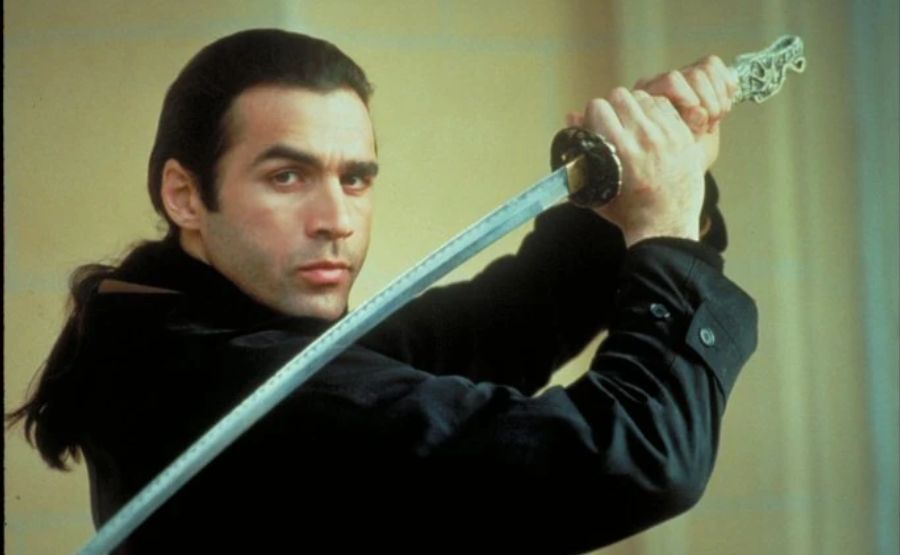
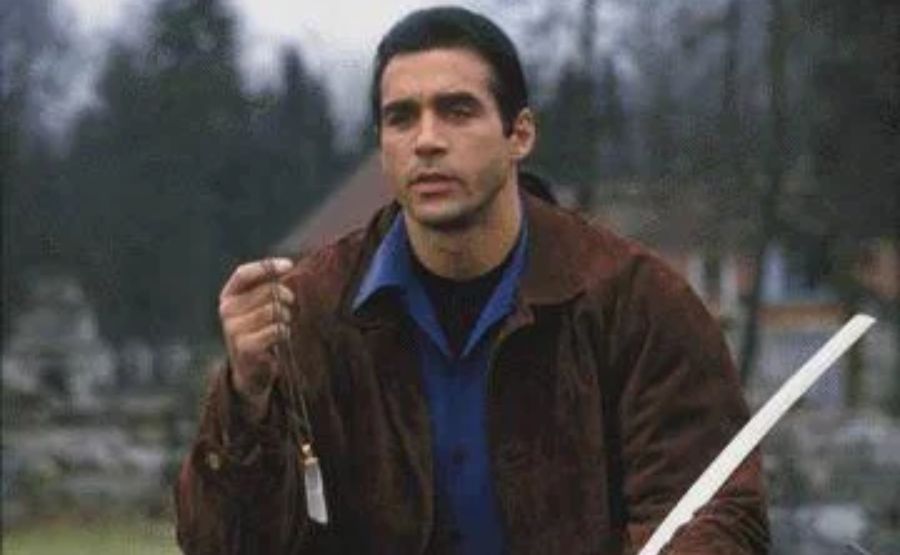
In 1992, Adrian Paul was cast as Duncan MacLeod in Highlander: The Series — a syndicated television drama based on the 1986 film Highlander, which had starred Christopher Lambert as Connor MacLeod, an immortal Scottish warrior in modern New York. Lambert had declined to reprise Connor for the ongoing series, which created the opening for a new character.
Here Adrian Paul made a decision that was both creatively astute and personally brave: he suggested to the producers that rather than playing a version of Connor MacLeod and inviting direct comparisons with Lambert’s established performance, his character should be a distinct person — a new immortal, a kinsman of Connor but his own man. The producers agreed. Duncan MacLeod was born: a Highlander from 1592, a warrior and protector whose centuries of lived experience had given him both extraordinary fighting ability and a deeply developed moral code about when violence was justified and when it wasn’t.
The series ran for six seasons and 119 episodes, airing from October 1992 through 1998. It filmed primarily in Vancouver, with several seasons filming in Paris, and it accumulated a passionate international audience across its run. The show’s format was essentially a procedural with a philosophical dimension: each episode involved Duncan encountering another immortal or a human threat, navigating the specific ethical challenges the situation presented, and usually prevailing while the flashback structure revealed another chapter of his four-hundred-year life story.
Adrian directed four episodes of the series, including the landmark hundredth episode filmed on location in Bordeaux, France, and the Season Four opener Homeland — the only episode filmed partly in Scotland. Three of his four directed episodes were voted by fans into the top ten favorites of the entire series run. The directing work was significant: it meant he wasn’t just performing the lead role but was developing the skills to shape the story from behind the camera, which would matter for the next phase of his career.
After Highlander: Keeping the Craft Alive
When Highlander: The Series ended in 1997, Adrian was in demand in ways that other actors would have used purely to maximize commercial opportunity. He chose differently. He went back to studying.
He worked with acting coach Larry Moss — whose list of students includes Hilary Swank, Jim Carrey, and Geoffrey Rush — before taking on film work that interested him rather than simply whatever paid best. He appeared in John Landis’s romantic comedy Susan’s Plan, the action thriller Dead Men Can’t Dance, and helped found Actors in Process, a Los Angeles theater group that developed and staged original works. Their production of an original play called Things Just Change, performed at the Odyssey Theatre in Los Angeles, put him back in a live performance context that he has always described as foundational to his development as an actor.
The Highlander franchise wasn’t finished with him. In 2000, he starred opposite Christopher Lambert in Highlander: Endgame — the first of the franchise’s films to feature both MacLeods and to transition narrative leadership from Lambert’s Connor to Paul’s Duncan. In 2007, he appeared in Highlander: The Source, the second feature film. In 2001, he starred in the Canadian series Tracker, playing an alien bounty hunter living on Earth — a premise that had obvious parallels to his Highlander work without being identical.
His film career through the 2000s and 2010s brought him roles in The Breed (2001), 9 Miles Down (2009), Eyewitness (2015), and numerous other productions spanning action, thriller, and dramatic genres. In 2019, he joined the CW series Arrow in a recurring role as Dante — a return to network television that brought him to a new generation of genre audiences who had grown up after the Highlander era.
The Peace Fund: When Platform Became Purpose
In 1997, as his tenure on Highlander was concluding, Adrian Paul did something that relatively few actors in his position do: he founded a charitable organization that had nothing to do with the entertainment industry’s usual self-promotional philanthropy.
The Peace Fund — whose full name is Peacefund Canada in its organizational documentation — is dedicated to supporting children affected by war, conflict, and violence around the world. The organization has raised funds for children in conflict zones across multiple continents, focusing specifically on providing practical support — education, medical care, rehabilitation — to kids whose lives have been disrupted by violence they had no part in creating.
The organization has organized charity boxing events featuring celebrities, produced awareness campaigns, and worked with partner organizations to deliver actual on-the-ground support. Adrian has been personally involved rather than simply lending his name and attending annual galas. He has traveled, spoken, and used his international recognition to open doors for an organization that might otherwise struggle to generate attention.
For someone whose most famous role is a warrior who has spent four centuries fighting — someone whose entire public brand is built on combat and mortality — founding an organization dedicated to the protection of children from violence has an almost poetic quality of personal meaning. He has never made that connection explicitly in any interview I encountered, which is itself telling. It suggests the charity work comes from something real rather than from a desire to complicate or deepen a public image.
Personal Life: Two Marriages, Three Children, and Budapest
Adrian Paul’s personal life has two distinct chapters.
His first marriage was to Meilani Figalan, whom he married in 1990 — the year before Highlander began, when his career was building but before it had delivered its breakthrough. The marriage lasted seven years, ending in divorce in 1997 — the same year the series concluded and the same year he founded the Peace Fund. The convergence of those three endings and beginnings in a single year is striking.
He met his second wife in Budapest. He was filming The Breed there in 2001 — the cult action-horror film in which he played a vampire hunter — when he encountered Alexandra Tonelli. They married in 2009, eight years after that initial meeting in Hungary. The patience of that timeline says something about both of them: they knew each other for nearly a decade before formally committing.
They have three children together. Adrian has kept their lives almost entirely private — names, ages, and details have not been shared in public forums, which is a consistent and deliberate protective choice from someone who clearly understands what public exposure does to a family’s ability to simply exist on its own terms.
Challenges: The Post-Highlander Question
The challenge that has quietly shaped Adrian Paul’s professional life since 1998 is one that every actor who defined a role faces: how do you keep being taken seriously when the role you played for six years was so thoroughly satisfying to so many people that some portion of your audience will always wish you were still playing it?
Highlander was not, by the standards of American network television, a major show. It was syndicated, filmed mostly in Canada and France, and reached its audience through a delivery mechanism that was already being disrupted by the rise of cable. But within the genre community, it was beloved with a depth and loyalty that transcended ratings metrics. Fans organized conventions, produced fan fiction, maintained online communities that lasted for decades. Adrian Paul was the center of all of that — the gravitational point around which a genuinely passionate international audience organized its affection.
That is a gift. It is also a kind of professional weight. The films that followed — Endgame and The Source — were received unevenly by both critics and fans. The television work that came after was serious but never recaptured the scale of the original Highlander audience. The theatrical and independent film work he pursued reflected genuine artistic ambition but not broad commercial success.
He navigated all of this without visible bitterness and without the desperate clinging to the original role’s glory that sometimes characterizes actors in similar positions. He kept working. He kept studying. He founded a charity. He raised children. He played Dante on Arrow when he was sixty years old and brought genuine menace to a part that could have been a cameo.
Financial Situation: Steady, Earned, and Honestly Estimated
Adrian Paul’s estimated net worth sits at approximately $5 to $8 million — a figure that reflects nearly four decades of consistent professional work across television, film, theater, producing, and directing. The Highlander era was his most commercially significant period, and the franchise’s international reach meant syndication revenue across multiple countries. The subsequent film and television work has kept a steady income flowing.
He has not built the kind of wealth that franchise-era blockbuster actors sometimes accumulate. But he has maintained a genuine working career across more than four decades, which is its own kind of financial achievement — particularly in an industry that routinely discards actors once their moment of maximum commercial visibility passes.
Today: Sixty-Seven and Still in the Game
As of 2026, Adrian Paul is sixty-seven years old, still actively working in film and television, and still engaged with the Peace Fund’s humanitarian work. He remains one of the most recognizable faces at genre conventions worldwide, where his connection to the Highlander fanbase — one of the more devoted in the history of science fiction and fantasy television — ensures a consistent and warm reception.
He lives with his wife Alexandra and their three children in the Los Angeles area, maintaining the private family life that has characterized his domestic arrangements since his second marriage. His social media presence exists, is relatively active, and mixes professional announcements with the occasional glimpse of personal life without crossing into the kind of oversharing that compromises the privacy he has always valued.
He continues to take roles that interest him, to support the Peace Fund, and to carry himself through the world with the particular combination of physical ease and thoughtful deliberateness that made Duncan MacLeod so compelling to watch for six seasons.
There can be only one. But Adrian Paul has always been enough.
Final Words
Adrian Paul’s career is a study in the relationship between physical discipline and artistic growth. He was an athlete before he was a dancer. A dancer before he was an actor. An actor before he was a director. A director before he was a producer. And through all of those iterations, a person who seemed to understand that genuine craft requires sustained investment rather than the exploitation of a single talent at its commercial peak.
The Highlander role was extraordinary — not just because it sustained six seasons and spawned films and conventions and lasting fan devotion, but because it required someone who could plausibly embody four centuries of lived experience without becoming ridiculous. Adrian Paul managed that. He made Duncan MacLeod feel real in a way that required something genuine from the performer.
What makes Adrian Paul stand out is not just that he played that role. It is that he built the kind of human being who could play it — through football pitches in London, through dance studios across Europe, through rigorous acting classes in Los Angeles, through theater productions nobody remembers, and through a charity that tries to protect children from exactly the kind of violence his most famous character spent four hundred years fighting against.
He is sixty-seven. He is still working. He is still studying, still giving, still moving through the world with the discipline of a man who learned very young that a body and a mind kept in motion are the most durable assets a person can possess.
There can be only one. And this particular one has made the most of every year.
See also “Kristen Rivers: The Woman Who Built the Foundation of a Basketball Dynasty“
FAQs
1. Who is Adrian Paul?
Adrian Paul, born Adrian Paul Hewett on May 29, 1959, in London, England, is a British actor, martial artist, director, producer, and humanitarian. He is internationally recognized for playing Duncan MacLeod — a four-hundred-year-old Scottish immortal warrior — in Highlander: The Series (1992–1998) and two subsequent films. He founded The Peace Fund charitable organization in 1997 to support children affected by war and conflict.
2. What is Adrian Paul’s real name?
His full birth name is Adrian Paul Hewett. He uses Adrian Paul professionally, dropping his surname for the screen. He was born in London, England, on May 29, 1959.
3. What was Adrian Paul’s career before acting?
He was a semi-professional football player in his teens, playing for Cray Wanderers in the London Spartan League between 1976 and 1978. He then became a fashion model and professional dancer and choreographer, working throughout Europe for approximately six years before transitioning into acting.
4. How did Adrian Paul prepare for acting?
After arriving in the United States in 1984, he spent roughly a year studying with two highly regarded Los Angeles acting coaches: Ivana Chubbuck and Roy London. Both were known for rigorous, psychologically deep approaches to the craft. He later studied with Larry Moss after Highlander: The Series concluded.
5. What was his first major role in America?
His first series role was as Nikolai “Kolya” Rostov — a temperamental Russian ballet dancer — in The Colbys, the ABC spin-off from Dynasty, which aired in 1986 and 1987.
6. How did the character of Duncan MacLeod come about?
When Adrian Paul was cast in Highlander: The Series in 1992, he suggested to the producers that rather than playing a version of Connor MacLeod — the character Christopher Lambert had originated in the 1986 film — his character should be an entirely new immortal, to avoid comparisons with Lambert’s established performance. The producers agreed, and Duncan MacLeod was created as a distinct Highlander and kinsman of Connor.
7. Did Adrian Paul direct any episodes of Highlander?
Yes. He directed four episodes during the series’ run, including the landmark hundredth episode filmed on location in Bordeaux, France, and the Season Four opener Homeland — the only episode partially filmed in Scotland. Three of his four directed episodes were voted by fans into the all-time top ten favorites of the 119-episode run.
8. What is The Peace Fund?
The Peace Fund is a charitable organization Adrian Paul founded in 1997, as his tenure on Highlander was concluding. It is dedicated to supporting children in conflict zones around the world, providing education, medical care, and rehabilitation to kids whose lives have been disrupted by war and violence. Paul has been personally involved in its activities rather than simply lending his name.
9. How many times has Adrian Paul been married and does he have children?
He has been married twice. His first marriage to Meilani Figalan lasted from 1990 to 1997. He met his second wife, Alexandra Tonelli, while filming The Breed in Budapest in 2001, and they married in 2009. He and Alexandra have three children together, whose identities he keeps private.
10. What is Adrian Paul’s estimated net worth?
His net worth is estimated at approximately $5 to $8 million, reflecting nearly four decades of consistent work across television, film, theater, directing, and producing. The international syndication of Highlander: The Series was his most commercially significant period.
11. What has Adrian Paul done since Highlander ended?
He appeared in Highlander: Endgame (2000) and Highlander: The Source (2007), starred in the Canadian series Tracker (2001), appeared in numerous independent films, helped found the Actors in Process theater group in Los Angeles, joined Arrow in a recurring role as Dante in 2019, and has continued both his acting career and his Peace Fund humanitarian work.
12. Is Adrian Paul still active in 2026?
Yes. He is sixty-seven years old and continues to take acting roles, maintain his Peace Fund work, and appear at genre conventions where his connection to the Highlander fanbase remains strong. He lives in the Los Angeles area with his wife Alexandra and their three children.
Explore ideas that elevate your thinking with The Elevate Magazine.