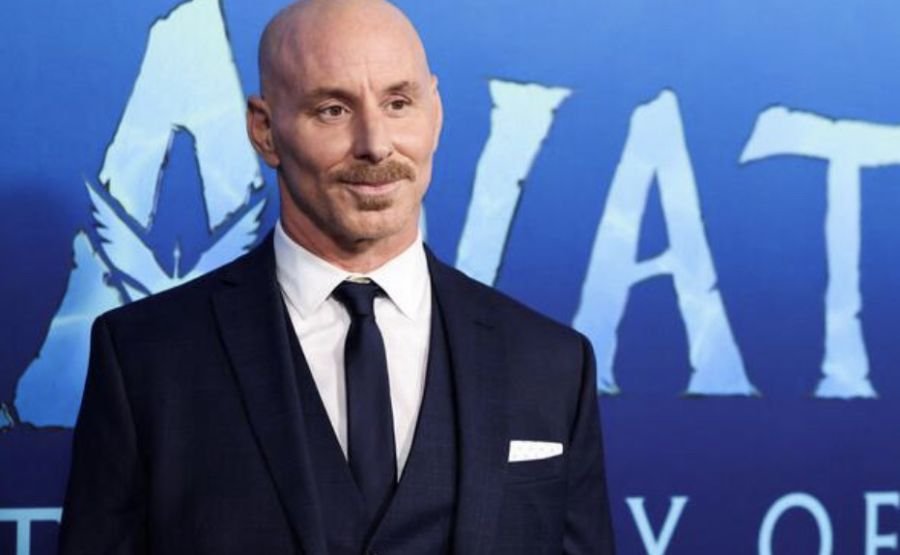
Matt Gerald: The Wharton Graduate Who Chose Hollywood — and Kept Getting Called Back
Quick Bio
| Detail | Info |
| Full Name | Matthew Gerald |
| Born | May 2, 1970, Miami, Florida, USA |
| Age | 56 (as of 2026) |
| Nationality | American |
| Occupation | Actor, screenwriter |
| Known For | Corporal Lyle Wainfleet in the Avatar franchise; Melvin Potter/Gladiator in Daredevil (Netflix); Ray Speltzer in Dexter; Tommy Hisk in The Shield |
| Education | Wharton School, University of Pennsylvania |
| Previous Career | Finance/Wall Street |
| First Credit | Starstruck (1998) |
| MCU Roles | White Power Dave (All Hail the King, 2014); Melvin Potter (Daredevil, 2015–2018) |
| Avatar Films | The films Avatar (2009), Avatar: The Way of Water (2022), and Avatar 3 |
| Wife | Camille |
| Daughter | Harlow |
| @realmattgerald (20,000+ followers) | |
| Estimated Net Worth | $1–3 million |
Introduction: The Man You’ve Seen a Hundred Times Without Knowing His Name
Here is a test. Think about a moment in Avatar when a soldier does something truly menacing — lean and dangerous, with a face that belongs in that jungle and also obviously does not. That is Matt Gerald. Think about the scene in Daredevil where a massive, frightened man handles a vigilante’s suit with something almost like tenderness — a villain with a heart too fragile for the world he lives in. That is Matt Gerald too. And if you watched Dexter, you might remember the episode that made viewers genuinely uncomfortable in a way the show rarely managed — the one with the predator who almost seemed to enjoy the cat-and-mouse. That was him as well.
Matt Gerald is the definition of a working actor at the highest levels of his craft. Not a household name. Not the face on the poster. But the kind of presence that directors with very specific needs — James Cameron, the creative teams behind Netflix’s MCU entries, the writers of The Shield and Dexter at their best — keep calling back.
His path to that position is not the standard story. He did not come up through acting school or arrive in Hollywood at nineteen with a headshot and a dream. He graduated from one of the most competitive business programs in the country, worked in finance, and then made the kind of pivot that most sensible people talk themselves out of. He has been acting professionally since 1998. He is still in demand in 2026. That is not an accident.
See also “Adrian Paul: The Immortal Highlander Who Never Stopped Moving“
Early Life: Miami, Florida
Matt Gerald was born on May 2, 1970, in Miami, Florida. He grew up in the city — warm, sprawling, ethnically diverse, culturally layered in a way that most American cities are not. Miami in the 1970s and 1980s was a place with genuine edge: the drug trade was reshaping the city’s economy and its neighborhoods simultaneously, the music was changing, and the cultural crosscurrents of Latin American immigration were transforming what Miami was in real time.
Growing up in that environment tends to produce people who are perceptive readers of social situations — who develop, early and without being taught, the ability to understand who is in a room and what the power dynamics are. That specific skill, transposed to an acting context, translates into something genuinely valuable: the capacity to make a character feel embedded in a world rather than dropped into it.
Details about Matt’s specific family background and childhood are things he has kept out of the public conversation. What is documented is that he was athletic — seriously so — and that athletics would eventually take him far enough from Miami to completely reshape his sense of what his life could be.
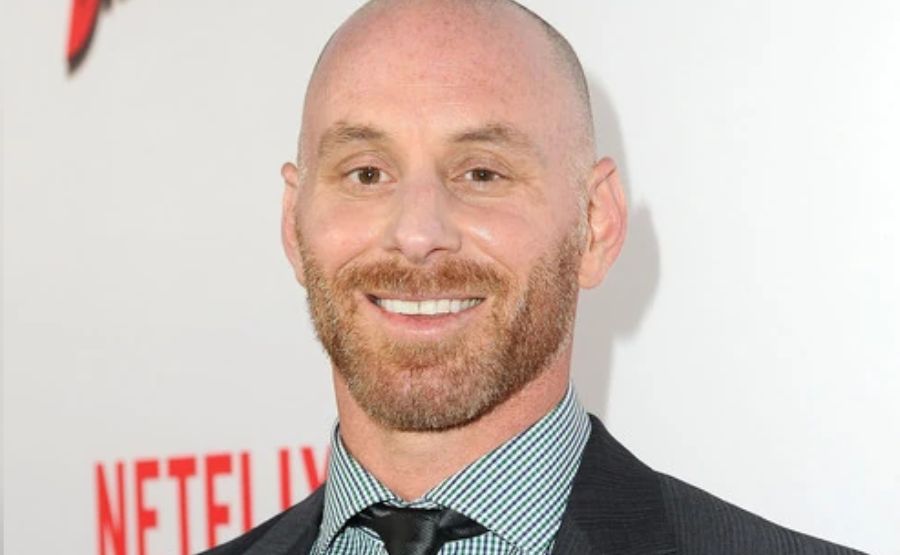
Education: Wharton, Football, and a Fork in the Road
The detail that surprises people most about Matt Gerald is also the one that makes his career trajectory suddenly coherent: he graduated from the Wharton School at the University of Pennsylvania — arguably the most prestigious undergraduate business program in the United States, consistently ranked at or near the top of every relevant list, and famous for producing the kind of driven, analytically rigorous people who populate Wall Street, private equity, and the C-suites of major corporations.
He did not arrive at Wharton as a casual student. He played college football there — competing at the Division I-AA level for Penn’s Quakers, managing the physical demands of collegiate athletics alongside the intellectual demands of Wharton’s curriculum. That combination is not easy. Wharton’s coursework is legitimately demanding, and football at any level of collegiate competition requires a time and physical commitment that most students never experience. Managing both requires the kind of self-discipline and adaptability that tends to serve people well in whatever they do next.
What Wharton gave him, beyond the business education itself, was a particular mental framework: analytical, outcome-oriented, patient with complexity, comfortable with high-stakes decisions. None of that is conventionally understood as preparation for an acting career. In practice, it is excellent preparation for the kind of character work Matt would go on to do — building roles from the inside out, understanding what a character wants and what is preventing them from getting it, and making choices under the pressure of a director’s specific vision.
After Wharton, he went to Wall Street. Finance. The obvious destination for a Wharton graduate with his credentials. He was doing what made sense on paper.
It did not last.
The Pivot: Walking Away From Finance
At some point in the mid-to-late 1990s — after a stint in finance that was apparently both successful enough to confirm his abilities and insufficient to make him feel like he was in the right place — Matt Gerald made a decision that people with Wharton degrees very rarely make: he walked away from Wall Street and went to Hollywood to become an actor.
The decision is worth pausing on, because it is genuinely unusual. People with business school credentials who work in finance rarely abandon those careers voluntarily. The financial compensation is significant, the social identity is substantial, and the sunk cost of the degree and the early career investment creates enormous inertia toward staying. Walking away from all of that, toward an industry with no guaranteed income, no clear career path, and an extraordinarily high failure rate, requires a particular combination of self-knowledge and courage.
He made the jump anyway.
His first screen credit appeared in 1998 — a small role as a patrolman in the film Starstruck. It was not a significant part. Most first roles are not. What it was, was a beginning — proof that the theoretical bet he had made on himself had produced at least an initial real-world return.
From there, he began the steady, patient work of building a career the way genuinely durable careers in acting tend to be built: role by role, production by production, proving in each context that he was worth calling again.
The Rise: From Guest Spots to Major Franchises
The early years of Matt Gerald’s acting career produced a collection of credits that, taken individually, might not seem significant but collectively tell the story of someone developing serious professional standing across multiple genres and formats.
He appeared in Magnolia — Paul Thomas Anderson’s ambitious, critically acclaimed ensemble drama — which placed him in the company of Tom Cruise, Julianne Moore, Philip Seymour Hoffman, and an extraordinary collection of serious film actors at their best. Being part of that production, however briefly, was a signal about the level at which he was operating.
Tigerland (2002), Joel Schumacher’s Vietnam-era military drama starring Colin Farrell in a career-making performance, gave him another substantive credit. Terminator 3: Rise of the Machines (2003) — a major franchise sequel — placed him in the kind of big-budget action context where physical presence and screen confidence matter enormously.
Then came The Shield — one of the most critically respected police dramas in American television history, an FX series whose moral complexity and narrative ambition were genuinely unusual for their time. Matt appeared in seven episodes as Tommy Hisk, a troubled officer — a recurring role substantial enough to develop genuine character depth. Getting seven episodes of The Shield was not luck. It was the result of someone seeing in an audition exactly what they needed and trusting that the performance would deliver.
S.W.A.T., xXx: State of the Union, G.I. Joe: Retaliation (as Zandar/Havoc), Escape Plan (with Sylvester Stallone and Arnold Schwarzenegger), San Andreas (with Dwayne Johnson), Bright (with Will Smith) — the list of productions with genuine commercial scale and notable cast members that Matt Gerald appeared in during this period is not short. Each one represents a casting decision by someone with a real need — a specific type, a specific presence, a specific ability to fill a role with credibility — and each one represents Matt Gerald delivering what was asked.
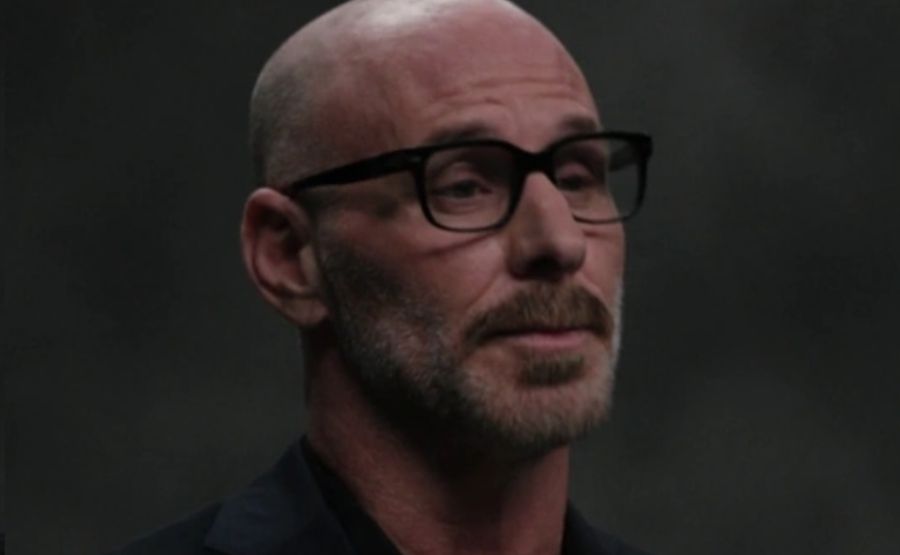
Avatar: James Cameron Calls, Repeatedly
The role that expanded Matt Gerald’s professional profile most dramatically was Corporal Lyle Wainfleet in James Cameron’s Avatar (2009) — the science fiction epic that went on to become, for a significant period, the highest-grossing film in the history of cinema.
Wainfleet is a soldier in the film’s antagonist force — the kind of character whose menace is not theatrical but functional, someone who belongs in the machinery of violence the film depicts and who carries that belonging in his body and his face. It is a supporting role, not a lead, but it is a role in a film that reached essentially every movie-going human on earth.
Cameron called him back for Avatar: The Way of Water (2022). And then again for the third film in the franchise, which was still in production or recently released as of 2026. Three films. Same director. Same franchise. The same extremely demanding filmmaker who is legendarily exacting about the people he works with, and who has brought Matt back to Pandora multiple times.
In the specific context of James Cameron’s career — a director famous for his technical perfectionism and the extreme conditions he creates on set — being called back once is notable. Being called back three times across fifteen-plus years is a genuine statement of trust and professional reliability.
Daredevil and the MCU: Melvin Potter
If the Avatar franchise gave Matt Gerald his highest-profile film credit, the Netflix Daredevil series gave him his most emotionally resonant television work.
He played Melvin Potter — a character who in Marvel Comics is the supervillain Gladiator, but who in the Netflix series was reimagined as something more tragic and more interesting: a gifted craftsman with a childlike emotional profile and an enormous physical presence, trapped in a dependent relationship with Wilson Fisk that exploits his vulnerabilities while demanding his extraordinary skills.
The role appeared across seven episodes of Daredevil (2015–2018) — enough screen time to develop a character with real depth. What Matt did with Potter was genuinely impressive: he played someone who is simultaneously physically imposing and emotionally fragile, dangerous by circumstance rather than by nature, capable of tenderness and of terrifying violence depending entirely on what the moment demands. It is the kind of nuanced work that supporting players in superhero productions rarely get credited for, because audiences are usually focused on the leads.
His MCU involvement also included White Power Dave in the Marvel One-Shot All Hail the King (2014) — a brief but memorable character in a short film that served as an epilogue to Iron Man 3.
Other Major Credits: Dexter, Grimm, and More
His role as Ray Speltzer in Dexter was the kind of guest performance that viewers who saw it did not quickly forget. Speltzer was a physically formidable antagonist who functioned almost as a mirror to the show’s protagonist — someone who hunted in a different way, with a different psychology, and who managed to make the audience genuinely uncomfortable in episodes that remain among the more discussed of that show’s later seasons.
Grimm gave him another recurring presence in a genre production. In 2024, two major franchise productions called him in the same year: Yellowstone (as Grant Horton, in two episodes) and Special Ops: Lioness (as Goose, in two episodes) — two of the most-watched shows in their respective networks’ histories.
He has also worked as a screenwriter — a dimension of his creative career that tends to get mentioned briefly and then dropped, but which speaks to someone who thinks about storytelling from multiple angles, not just from the performer’s side of the camera.
Personal Life: Camille, Harlow, and a Private Family
Matt Gerald is married to Camille, and the couple has a daughter named Harlow. Both his wife and his daughter appear on his Instagram account — @realmattgerald — alongside on-set moments and sports-related content, giving his followers a genuine window into the texture of his daily life rather than a purely professional presentation.
He has over 20,000 followers on Instagram — a following that reflects genuine audience interest without the kind of mass platform that turns private life into public performance.
He has kept his personal life appropriately private beyond these glimpses, and no significant personal controversy or documented difficulty appears in the public record.
Challenges: The Long Middle of a Character Actor’s Career
The challenge that defines Matt Gerald’s professional life is not failure — it is the sustained effort required to remain relevant across nearly three decades in an industry that consumes people rapidly. Being a character actor in Hollywood means perpetually proving yourself without the insulation of leading-man status or franchise ownership. Every audition is a fresh case for your own value. Every hiatus between productions carries uncertainty that stars rarely face.
He navigated the transition from finance to acting in his late twenties — a period that required significant financial uncertainty and the psychological adjustment of giving up established success for unproven potential. He built his career through the 2000s and 2010s with consistent professional work rather than a single breakout moment, which is the harder path even when it produces the more durable result.
Financial Picture: Earned Through Consistent Work
Matt Gerald’s estimated net worth sits between $1 million and $3 million — a range that reflects decades of professional acting in significant productions without leading-role compensation levels. Character actors in major franchise films, recurring television roles at major networks, and sustained work in prestige productions command meaningful professional fees, and across nearly thirty years of that kind of work, the accumulation is real.
He is not a wealthy-by-Hollywood-standards figure. He is a financially stable professional who earned his position through consistent, high-quality work rather than through a single high-compensation breakthrough.
Life Today: Still Working, Still Getting Called
In 2024 alone — a year when many actors of his generation were seeing their opportunities narrow — Matt Gerald appeared in two separate major productions: Yellowstone Season 5 and Special Ops: Lioness. Two different shows, two different networks, two different creative teams, both calling the same actor. That is not a career in decline. That is a career still running at genuine professional altitude.
He continues to engage with his industry peers and his audience through Instagram, sharing the reality of his working life in a way that feels authentic rather than curated. He remains married to Camille. Harlow is growing up. The family lives, presumably, within whatever distance from production centers his working schedule requires.
James Cameron is making more Avatar films. Matt Gerald has been in all of them so far.
Final Words
There is a very specific thing that Matt Gerald’s career demonstrates, and it is worth naming directly: consistency of craft, sustained over a long period, in a field that rewards it only if you never stop delivering it, produces something remarkable.
He has appeared in some of the biggest films ever made. He has played characters in the MCU. He has worked with James Cameron three times, with the creative teams behind The Shield and Dexter and Daredevil at their respective peaks, with Stallone and Schwarzenegger and Dwayne Johnson and Will Smith in major franchise productions.
He did all of this without becoming a celebrity. He did it as the supporting player, the recurring presence, the specific type who fills the specific need that very good productions have for a very specific kind of performer.
He graduated from Wharton. He went to Wall Street. He walked away from both to do this instead. Twenty-eight years later, James Cameron is still calling.
That is not an accident. That is a career.
FAQs
1. Who is Matt Gerald?
Matt Gerald is an American actor and screenwriter born on May 2, 1970, in Miami, Florida. He is best known for playing Corporal Lyle Wainfleet in James Cameron’s Avatar franchise, Melvin Potter/Gladiator in Netflix’s Daredevil, and Ray Speltzer in Dexter. He graduated from the Wharton School at the University of Pennsylvania and worked briefly in finance before pursuing acting full-time.
2. What was Matt Gerald’s career before acting?
After graduating from Wharton — one of the most prestigious business schools in the country — he worked in finance on Wall Street. He left that career in the late 1990s to pursue acting, beginning with a small role in the 1998 film Starstruck.
3. Where did Matt Gerald go to college?
He attended the Wharton School at the University of Pennsylvania, where he also played college football. Wharton is consistently ranked among the top undergraduate business programs in the United States.
4. What is Matt Gerald’s most famous role?
He is perhaps most widely recognized as Corporal Lyle Wainfleet in James Cameron’s Avatar (2009) and Avatar: The Way of Water (2022), and as Melvin Potter (Gladiator) in Netflix’s Daredevil (2015–2018).
5. How many Avatar films has Matt Gerald appeared in?
He has appeared in at least three Avatar films — the original Avatar (2009), Avatar: The Way of Water (2022), and the third installment in the franchise. Being called back repeatedly by James Cameron is widely understood as a significant mark of professional trust.
6. What character did Matt Gerald play in Daredevil?
He played Melvin Potter — also known as Gladiator in Marvel Comics — across seven episodes of the Netflix series. In the show, the character was reimagined as a gifted craftsman coerced by Wilson Fisk into making protective suits, who later builds Daredevil’s iconic armor in exchange for protection.
7. Did Matt Gerald appear in any other Marvel productions?
Yes. Beyond Daredevil, he played White Power Dave in the Marvel One-Shot All Hail the King (2014), a short film set in the Marvel Cinematic Universe.
8. What other notable roles has Matt Gerald had?
His notable credits include Tommy Hisk in The Shield (7 episodes), Ray Speltzer in Dexter, Zandar/Havoc in G.I. Joe: Retaliation, and supporting roles in Tigerland, S.W.A.T., Escape Plan, San Andreas, Bright, Shot Caller, Magnolia, and Terminator 3: Rise of the Machines. In 2024, he appeared in both Yellowstone (as Grant Horton) and Special Ops: Lioness (as Goose).
9. Is Matt Gerald also a screenwriter?
Yes. He is credited as a screenwriter in addition to his acting career — a dimension of his creative work that receives less public attention but reflects someone engaged with storytelling from multiple perspectives.
10. Who is Matt Gerald’s family?
He is married to Camille and has a daughter named Harlow. Both appear on his Instagram account alongside professional content.
11. What is Matt Gerald’s estimated net worth?
His net worth is estimated between $1 million and $3 million, built through nearly three decades of consistent professional acting work in major film and television productions. No official financial disclosure has been made.
12. Where can you follow Matt Gerald online?
He is active on Instagram at @realmattgerald, where he has over 20,000 followers. His account features on-set moments, sports content, family photos, and promotional appearances.
Explore ideas that elevate your thinking with The Elevate Magazine.