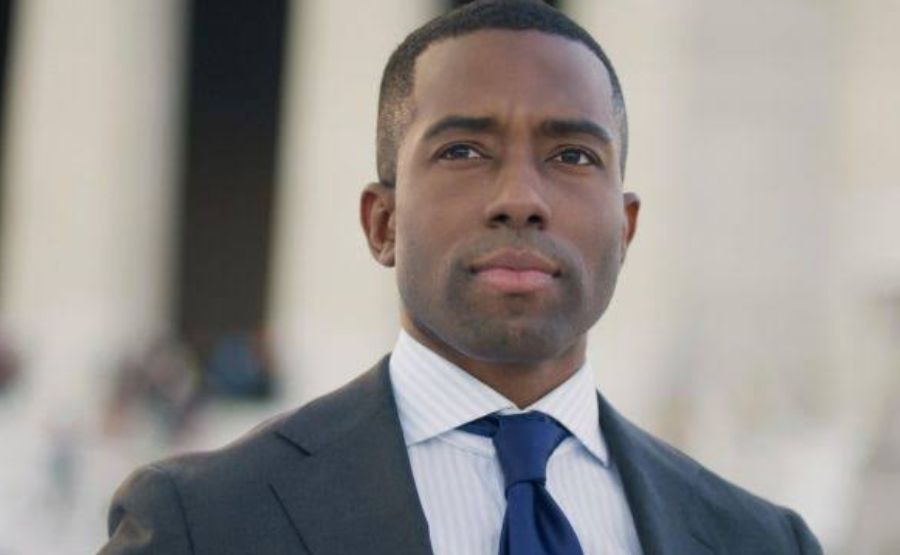
Shermichael Singleton Net Worth: How He Built His Wealth
Quick Bio
| Detail | Information |
| Full Name | Shermichael Singleton |
| Born | 1991 |
| Birthplace | New Orleans, Louisiana, USA |
| Raised | Dallas, Texas |
| Age (2026) | Approximately 34–35 years old |
| Nationality | American |
| Ethnicity | African-American |
| Occupation | Political strategist; CNN commentator; radio host; author; public speaker |
| Party | Republican |
| Education | BA Political Science, Morehouse College, Atlanta |
| Campaigns | Newt Gingrich (2012); Mitt Romney (2012); Ben Carson (2016) |
| Government Role | Deputy Chief of Staff, HUD (fired 2017) |
| Media | CNN contributor; SiriusXM Urban View host (The Shermichael Singleton Show) |
| Firm | Global Impact Strategies (principal) |
| Forbes Recognition | 2019’s Forbes 30 Under 30: Law & Policy |
| Spouse | Nhiya Marie Singleton |
| Residence | Washington, D.C. |
| Net Worth | ~$1.5 million (estimated) |
Introduction: The Man Who Got Fired for Being Right
Some political careers are built on telling powerful people exactly what they want to hear. Shermichael Singleton built his by doing the opposite.
He is a Black Republican strategist who came up through three presidential campaigns, reached a senior government appointment at an age when most of his peers were still figuring out their first career move, and then lost that position because he had written an op-ed months before the inauguration criticizing the man who would eventually become his boss.
That firing could have ended everything. It did the opposite. The story of Shermichael Singleton getting dismissed from the Department of Housing and Urban Development in 2017 for something he had written before Donald Trump was even elected made him one of the most talked-about voices in American political media. CNN came calling. MSNBC followed. SiriusXM gave him his own show. The Forbes list recognized him as one of the most significant young figures in law and policy.
He is not famous because he spent his career saying what was convenient. He is famous because he spent it saying what he actually believed — about race, about the Republican Party, about what conservatism should and should not stand for — and kept saying it regardless of consequence.
That is a genuinely unusual thing in any political environment. In Washington, D.C., it is almost its own form of radicalism.
See also “Michael Rainey Jr. Net Worth: Career, Earnings, and Rise to Fame“
Early Life: New Orleans, Dallas, and the Making of a Political Mind
Shermichael Singleton was born in 1991 in New Orleans, Louisiana — a city with one of the richest and most complicated histories in America, a place where culture, race, and economic inequality intersect in ways that are visible on every street corner and in every conversation. It is not a place that produces people who are indifferent to how society is organized, because the organization of that particular society has never been subtle.
The family moved to Dallas, Texas, and it is in Dallas where Singleton grew up and was shaped into the person who would eventually sit across from cable news anchors and explain American politics to a national audience. He has described his Southern upbringing — across both Louisiana and Texas — as having given him two things that turned out to be professionally essential: discipline and drive. The South is not always known for either of those qualities in its public image, but the reality of working-class Southern life tends to produce people who understand that nothing comes without effort and that the world does not reorganize itself simply because you need it to.
What drew him to politics specifically is something he has touched on in various interviews — a combination of intellectual fascination with how power operates, a genuine belief in the principles of conservative governance, and the very particular experience of being a young Black man who found himself drawn to a party that had largely stopped making serious efforts to be relevant to people who looked like him. That contradiction, rather than discouraging him, appears to have sharpened his sense of purpose. There has to be someone in the room. He made the early decision that he would be the one.
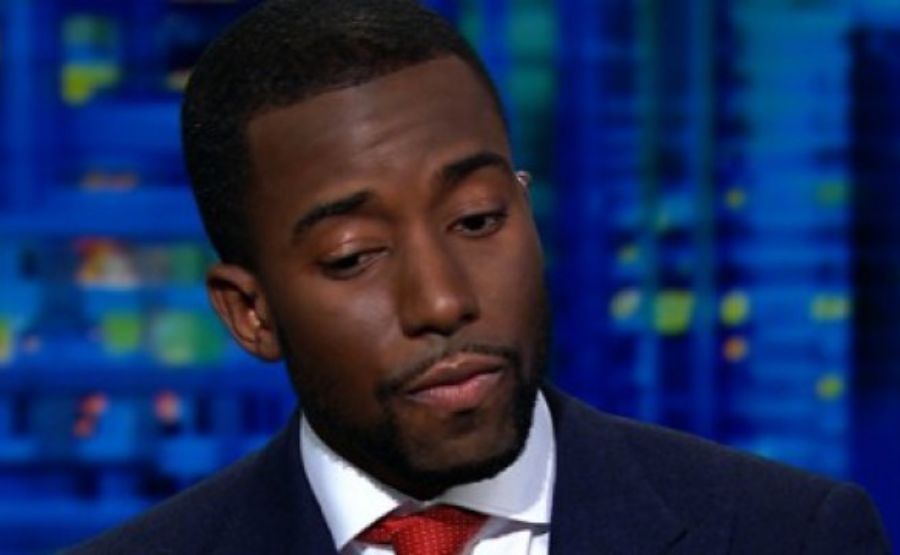
Education: Morehouse College and the Place That Made Everything Else Possible
Shermichael Singleton attended Morehouse College in Atlanta, Georgia, graduating with a Bachelor of Science degree in Political Science.
The choice of Morehouse was not incidental. Morehouse is the only all-male historically Black college in the United States, and it carries within its academic culture a very specific set of expectations and ambitions. It is a place that has produced a remarkable number of the most significant Black leaders in American history — not because it produces any one type of thinker, but because it takes seriously the idea that every student who enters should leave not just educated but prepared to make a real contribution to the world they return to.
For a young man from Texas who was already interested in conservative politics and who had already started thinking seriously about what it meant to be Black and Republican in twenty-first century America, Morehouse was both an unlikely choice and an obvious one. It put him in the company of people who pushed back hard on comfortable assumptions, who forced him to defend and refine his political thinking, and who gave him an intellectual foundation that made his subsequent career in political analysis and commentary possible.
At Morehouse, he did not simply study. He went to work. While still a student, he became involved in Newt Gingrich’s 2012 presidential primary campaign — specifically in youth outreach and engagement — which was the first real entry point into the professional political world that would define the rest of his career.
Career Beginnings: From Student Activist to Presidential Campaign Staffer
The Newt Gingrich campaign in 2012 was not a winning campaign. Gingrich’s presidential ambitions did not survive past the Republican primary. But for a Morehouse student looking for his first serious political experience, working on a national presidential campaign — even one that ultimately fell short — was an education that no classroom could replicate.
He learned how campaigns actually operate — the logistics, the coalition-building, the crisis management, the difference between what political theory describes and what political reality delivers. He worked with real professionals in a genuinely high-stakes environment and discovered that he could more than hold his own.
From there, he moved to America Rising — the Republican opposition research firm that became one of the more influential operations in the conservative political infrastructure during the Obama era. Opposition research is the unglamorous but consequential work of political campaigns: finding, organizing, and deploying information that challenges the other side’s record and narrative. During his time at America Rising, Singleton contributed to the team that helped shape the Republican Party’s landslide victories in the 2014 midterm elections — one of the most significant Republican electoral performances in decades.
He also worked on Mitt Romney’s 2012 presidential campaign — which, even in its defeat, gave him experience on one of the most sophisticated campaign operations the Republican Party had assembled in years. Three presidential campaigns before he was thirty years old. Three opportunities to see American politics from its highest-stakes vantage point.
Ben Carson, HUD, and the Op-Ed That Changed Everything
The most consequential chapter of Shermichael Singleton’s early career began with Dr. Ben Carson’s 2016 presidential campaign.
Carson — the renowned neurosurgeon and conservative media figure — ran for the Republican presidential nomination in 2016. Singleton joined the campaign as its Coalitions Advisor, a role that drew directly on his expertise in building support across diverse communities. When Carson suspended his campaign and endorsed Donald Trump, Singleton became Carson’s Director of Communications — a senior communications role at a moment when Carson’s public profile remained significant despite the end of his presidential bid.
When Trump won the election and Carson was nominated as Secretary of Housing and Urban Development, Singleton followed him into the administration. He was appointed Deputy Chief of Staff at HUD — a Senior Executive Service position that made him one of the ten African-Americans serving at the SES political appointee level across the entire administration and the youngest person ever to hold an SES position at HUD.
Then February 2017 arrived.
An op-ed that Singleton had written in October 2016 — before the election, before the inauguration, before any of his government service — resurfaced and attracted the attention of the Trump White House. In that piece, Singleton had argued that Trump’s approach to Black voters was cynical and empty, that characterizing Black communities primarily in terms of poverty and dysfunction was not a genuine outreach strategy but a form of political theater. He had written it as a political commentator expressing a political view. He was fired from his government position because of it.
He has never apologized for writing it. He has said, on multiple occasions, that he stands by every word.
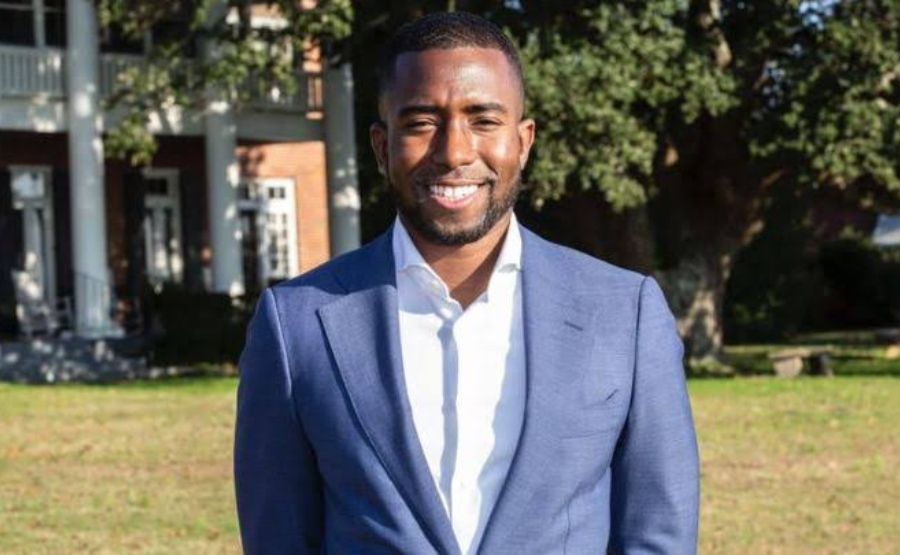
After HUD: CNN, SiriusXM, and a Platform Bigger Than the Job He Lost
The firing that might have ended a less resilient career instead provided the precise kind of story that national media runs toward rather than away from.
Here was a young Black Republican who had reached a senior government position, had told the truth as he saw it even when it was inconvenient, and had paid a professional price for it. That story contained every element cable news programs want in a commentator: genuine expertise, an authentic perspective, demonstrated willingness to speak candidly about politically uncomfortable realities, and a biography that gave his commentary emotional weight beyond the analytical.
CNN hired him as a political commentator. MSNBC featured him regularly. He appeared on Fox News. C-SPAN, NPR, BET, SiriusXM — across the media landscape, Shermichael Singleton became a voice that networks called when they wanted a Black conservative who would give an honest assessment rather than a party line.
In 2019, Forbes named him to its 30 Under 30 list in the Law and Policy category — recognition of his contributions to American political discourse that also came with practical benefits to his public profile and speaking career.
His SiriusXM show, The Shermichael Singleton Show, airs weekly on the Urban View channel and reaches hundreds of thousands of listeners. It gives him a forum for the kind of extended political analysis that cable news segments do not allow and has become one of the more substantive platforms in the political radio space.
He also founded and leads Global Impact Strategies, his own political consulting firm, which works with candidates and clients at the congressional, state, and local levels. The firm represents his effort to translate everything he learned across three presidential campaigns and his government service into ongoing professional work that shapes elections beyond his media appearances.
Personal Life: Marriage and a Life Built Alongside the Work
Shermichael Singleton is married to Nhiya Marie Singleton. The two have built their life together in Washington, D.C., where the demands of political consulting, media commentary, and public speaking create a professional schedule that is demanding under any circumstances and genuinely grueling during election cycles.
Singleton has not made his marriage or personal life a significant part of his public persona. In a media environment that frequently blurs personal and professional identity, his approach has been to keep those spheres reasonably distinct — he is a political commentator, not a personal brand in the broader lifestyle influencer sense. The public-facing Shermichael Singleton is the political analyst and consultant. The private dimensions of his life remain genuinely private.
He is a public speaker in demand for university audiences and corporate events, and has spoken at Harvard University’s Kennedy School of Government — a stage that reflects the seriousness with which academic and professional audiences have taken his political analysis.
Challenges: Being Black, Being Republican, and Saying What He Actually Thinks
The central ongoing challenge of Shermichael Singleton’s public life is one he acknowledged and accepted before his career properly began — the specific complexity of being a Black man who genuinely believes in conservative principles in an era when the Republican Party’s relationship with Black Americans has been, to put it diplomatically, strained.
He has never pretended that complexity away. He has written about it, spoken about it, and argued on television about it with commentators from both parties who have found his position either naively optimistic or simply incoherent. His response to both critiques has been essentially the same: that his political views are his own, that the Republican Party’s failures in connecting with Black communities do not make those communities’ interests inherently Democratic, and that someone willing to make that argument from inside the party is more useful than one who abandons it for the comfort of ideological consistency from the outside.
During the 2024 election cycle, he was publicly critical of Donald Trump’s racist characterizations of Kamala Harris and of Trump’s hostile behavior toward Black journalists at the National Association of Black Journalists conference. He made clear that his Republican identity has always been about principles rather than loyalty to any individual, and that those principles were not served by racism, whatever its electoral justification.
That willingness to say things that complicate the story of party loyalty is both what has cost him professionally at specific moments and what has made him credible to audiences across the political spectrum.
Financial Situation: Multiple Revenue Streams, Honest Estimate
Shermichael Singleton’s estimated net worth sits at approximately $1.5 million — a figure that reflects the accumulated value of a career spanning presidential campaigns, government service, CNN commentary, a nationally syndicated radio show, his consulting firm, speaking fees, and whatever writing income he has generated through published work.
His speaking fees, through the Premiere Speakers Bureau, reflect the market value placed on his political expertise and public profile. Consultants of his experience and visibility command meaningful fees for corporate and organizational speaking engagements. His CNN contributor role, his SiriusXM show, and his firm all represent ongoing income streams that compound over time.
The $1.5 million figure is an estimate without verified financial disclosure behind it. It is plausible given the trajectory and scope of his career. It is not extravagant for someone who has spent a decade at the intersection of national politics, television commentary, and political consulting. What it reflects is a career built on genuine expertise rather than celebrity, with the financial rewards that competence in those fields reliably produces.
Life Today: Building the Next Chapter on His Own Terms
In 2026, Shermichael Singleton is in his mid-thirties — an age at which the early chapters of his career have produced enough credential and credibility to support almost any direction he chooses to take next.
He continues to appear regularly on CNN as a political commentator. He still hosts his show on SiriusXM. He continues to run Global Impact Strategies. He continues to write — for CNN’s opinion platform, for The Hill, and for other outlets that seek his perspective on the intersection of race, conservatism, and contemporary American politics.
When discussing his goals for the future, he has emphasized increasing the platform’s influence and reach by connecting with more communities, reaching more people, and developing the kind of long-term influence that outlasts any individual news cycle or election. The political consulting work he does through his firm is an ongoing investment in that ambition.
He is building something. The foundation is already visible.
Final Words
Here is what makes Shermichael Singleton’s story genuinely instructive rather than simply interesting.
He has never had an easy political identity. He came up as a Black Republican — a combination that both sides of American political life have, at different moments, found implausible or suspicious. He reached a senior government position through genuine professional achievement, lost it because he would not recant an honest opinion, and built something considerably more durable from the aftermath.
He tells audiences who do not want to hear what he has to say exactly what he thinks. He does this on CNN, where his Republican identity makes him unconventional. He does it in conservative spaces, where his willingness to criticize Trump and call out racism makes him uncomfortable company. He does it in Black media spaces, where his party affiliation produces skepticism he addresses directly rather than deflecting.
The consistency across all of those contexts is the thing. He has one argument and he makes it everywhere — that Black Americans deserve to be courted seriously by both parties, that conservatism has genuine answers to genuine problems that affect those communities, and that performing loyalty to any individual politician is a category error for anyone who actually believes in political principles.
Whether you agree with that argument or not, the courage to make it — consistently, publicly, at professional cost — is what Shermichael Singleton’s career actually demonstrates. And that is worth knowing about.
FAQs
1. Who is Shermichael Singleton?
He is an American Republican political strategist, CNN political commentator, radio host, public speaker, and founder of the consulting firm Global Impact Strategies. He came to national attention after being fired from his role as Deputy Chief of Staff at the Department of Housing and Urban Development in 2017 for an op-ed he had written criticizing then-candidate Donald Trump. He is a 2019 Forbes 30 Under 30 honoree in the Law and Policy category.
2. Where was Shermichael Singleton born and raised?
He was born in 1991 in New Orleans, Louisiana, and raised in Dallas, Texas. He later moved to Washington, D.C., where he has built his career and currently resides.
3. What did Shermichael Singleton study and where?
He attended Morehouse College in Atlanta, Georgia — the only all-male historically Black college in the United States — where he earned a Bachelor of Science degree in Political Science. Morehouse’s culture of Black leadership and intellectual rigor was formative in shaping both his political analysis and his public persona.
4. What presidential campaigns did Singleton work on?
He worked on three Republican presidential campaigns: Newt Gingrich’s 2012 primary bid, where he focused on youth outreach; Mitt Romney’s 2012 general election campaign; and Ben Carson’s 2016 campaign, where he served as Coalitions Advisor and later as Director of Communications after Carson endorsed Trump.
5. Why was Shermichael Singleton fired from HUD?
He was fired in early 2017 — shortly after President Trump took office — because of an op-ed he had written in October 2016 criticizing then-candidate Trump’s approach to Black voters. He had argued the approach was cynical and performative rather than genuine. When that piece surfaced after his appointment, he was dismissed from his position as HUD’s Deputy Chief of Staff. He has never retracted the op-ed.
6. What was significant about his HUD appointment?
During the entire Trump administration, he was the youngest person ever selected to a Senior Executive Service (SES) position and one of only ten African-Americans chosen to such roles. a part in the Department of Housing and Urban Development’s past. It represented a genuine milestone in a career built on professional achievement at an unusually early age.
7. What does Shermichael Singleton do at CNN?
He serves as a CNN political commentator, contributing political analysis and opinion writing through CNN’s platforms. His commentary addresses Republican politics, race and conservatism, and American political dynamics broadly. He has been a regular presence on CNN programming through multiple election cycles.
8. What is The Shermichael Singleton Show?
It is a weekly radio program that airs on SiriusXM’s Urban View channel, Saturdays from 2 to 3 PM Eastern. The show reaches hundreds of thousands of listeners weekly and gives Singleton a forum for extended political analysis and commentary beyond what cable news segments allow.
9. What is Global Impact Strategies?
It is Singleton’s political consulting firm, of which he is the principal. The firm provides strategic consulting to candidates and clients at the congressional, state, and local levels across the country. It represents the ongoing professional application of the skills and connections he built across three decades — in relative terms — of campaign and government work.
10. Is Shermichael Singleton married?
Yes. He is married to Nhiya Marie Singleton. The couple lives in Washington, D.C. Singleton has kept his personal life largely separate from his public media presence, maintaining a focus on his professional work rather than incorporating personal content into his public brand.
11. What is Shermichael Singleton’s estimated net worth?
His net worth is estimated at approximately $1.5 million, reflecting income from CNN commentary, his SiriusXM show, consulting fees through Global Impact Strategies, speaking engagements, and writing. No verified financial disclosure exists, and this figure should be understood as an informed estimate rather than a confirmed number.
12. What makes Shermichael Singleton notable in the context of Republican politics?
He is one of the most visible Black Republican strategists in American media who has consistently and publicly criticized elements of the Republican Party’s approach to race — including criticizing Donald Trump’s language about Black voters and Black journalists — while maintaining his Republican identity and conservative principles. His willingness to make that argument in every media context, regardless of the reception, distinguishes him from political commentators who tailor their message to the audience in front of them.