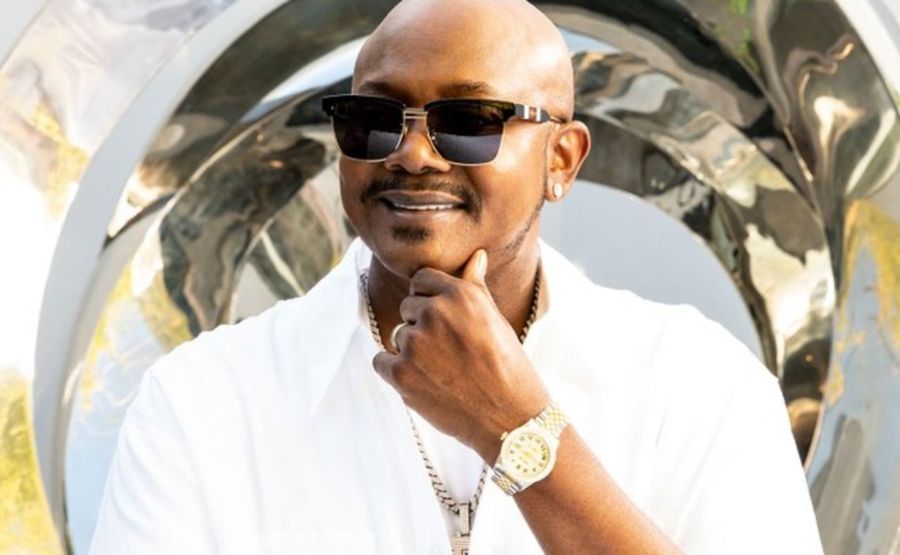
Joel Hailey: His Journey, Personal Life, Career, and Family Story
Quick Bio
| Detail | Info |
| Full Name | Joel Hailey |
| Stage Name | JoJo |
| Born | June 10, 1971, Charlotte, North Carolina, USA |
| Age | 55 (as of 2026) |
| Nationality | American |
| Occupation | Singer, songwriter, R&B recording artist |
| Known For | Lead singer of Jodeci; one half of K-Ci & JoJo; featured on 2Pac’s “How Do U Want It”; “All My Life” (1998 – #1 Billboard Hot 100). |
| Family | Brother: Cedric “K-Ci” Hailey; half-brother: Calvin Richardson; cousins: Dave Hollister and Fantasia Barrino |
| Parents | Both parents were gospel singers |
| Daughter | One daughter (name kept private) |
| Notable Songs | “All My Life,” “Tell Me It’s Real,” “Crazy,” “Forever” |
| Albums with K-Ci & JoJo | Love Always (1997), It’s Real (1999), X (2000), Emotional (2002), My Brother’s Keeper (2013) |
| Recovery Documentary | Come Clean, K-Ci & JoJo (TV One, 2010) |
| Estimated Net Worth | $6–10 million (combined with K-Ci; individually estimated) |
Introduction: The Man Who Wrote “All My Life” for His Daughter
There is a song that practically everyone who came of age in the late 1990s knows by heart. It is the kind of song that played at proms, at weddings, at the quiet moments when something big was happening and people needed music to hold it. It starts with a simple keyboard figure and a voice — warm, clear, and aching with something deeply personal — and it opens with words about loving someone more than you thought possible.
“All My Life” was written by Joel “JoJo” Hailey about his daughter.
He was going to give it away. He offered the song to another artist and waited to see if they would take it. When they passed, he held onto it. And the decision to record it himself — alongside his brother Cedric, better known as K-Ci — turned into one of the most enduring love songs of its decade.
But the story of Joel Hailey is not just a story about a great song. It is a story about Charlotte, North Carolina, and a Pentecostal household full of music and faith. It is a story about two brothers who learned to harmonize in church before they understood what a recording studio was. It is a story about enormous success followed by an equally enormous unraveling — and then the harder, quieter work of coming back from it.
One of the authentic voices of 1990s R&B is Joel Hailey, which makes him significant. Not someone who happened to be present when something happened, but someone who contributed to building the sound itself.
See also “Richard Fairbank: The Man Who Turned Data Into a Dynasty“
Early Years: Church, Charlotte, and a Singing Family
Joel Hailey was born on June 10, 1971, in Charlotte, North Carolina — a city that, in the early 1970s, was working its way through the specific tensions of a South still adjusting to the Civil Rights era. Charlotte was not yet the banking hub it would become. It was a city defined by neighborhoods, churches, and the particular culture of Black Southern community life.
The Hailey household was rooted in the Pentecostal tradition — the most musically intense corner of Christian practice, a faith expression where the congregation does not merely sing but enters into something that feels genuinely transcendent. Joel and his older brother Cedric grew up in that world, absorbing the specific technique of gospel singing before they could put a name to what they were learning: how to use breath, how to sustain a note, how to move an audience not just through melody but through the emotional truth behind it.
Their parents were singers. Their home was filled with recorded music from artists who had themselves come up through the gospel tradition — Shirley Caesar, the Clark Sisters, Sam Cooke, the Winans. Growing up inside that world gives a child a musical education that no conservatory can fully replicate. It is training by total immersion, and Joel received it from birth.
The family launched a gospel group called Little Cedric and the Hailey Singers, named for Cedric but including Joel and their father, recording three gospel albums — Jesus Saves, I’m Alright Now, and God’s Blessings. The group toured the South, which gave the Hailey brothers something invaluable: the experience of performing for real audiences before they were teenagers, learning how to hold a room and trust their voices.
Joel also has notable family connections beyond his immediate household. His half-brother is neo-soul singer Calvin Richardson. His cousins include R&B singer Dave Hollister and American Idol winner Fantasia Barrino. The music ran deep in that family tree.

The Jodeci Years: Finding Secular Music and Becoming Famous
At some point in the early 1990s, the Hailey brothers crossed paths with the DeGrate brothers — Donald, who would become known as DeVante Swing, and Dalvin. The DeGrates were from Charlotte too. The story of how they connected involves mutual friends and a social circle that overlapped in the way that social circles in mid-sized cities often do.
What happened when all four of them got in a room together was something that happens rarely: a genuine chemical reaction between voices that immediately understood each other. They were four young men with deep gospel foundations and a burning desire to take that emotional intensity into a more contemporary musical context. Their goal was to create R&B that would have the same impact as a church service, moving listeners with its powerful vocals and cutting-edge sound.
They formed Jodeci, and the name itself encoded all four of them: Jo from JoJo, De from DeVante, Ci from K-Ci, with Dalvin completing the ensemble.
Their debut arrived at the right moment. New Jack Swing was fading and something rawer, more soul-centered was starting to take its place. Jodeci’s combination of explicit street attitude and genuine gospel-rooted vocal power created an entirely new kind of tension that felt authentic rather than calculated. They could sing, and they were known as the Bad Boys of R&B. Really sing.
Albums followed in rapid succession through the early 1990s: Forever My Lady (1991), Diary of a Mad Band (1993), The Show, the After Party, the Hotel (1995). Joel anchored the lower register of the group’s harmony while K-Ci delivered the more flamboyant lead vocal moments. His writing contributions shaped the sound in ways that are not always credited in casual retellings of the Jodeci story.
The K-Ci & JoJo Chapter Begins: Breaking From Jodeci
By the mid-1990s, the creative partnership at the center of Jodeci was under strain. The lifestyle was escalating in ways that creative output alone could not contain. The brothers began pulling toward a different kind of project — something that would let them operate as a duo without the full group infrastructure.
The inflection point that announced this shift to the wider world came in 1996, when they were featured on 2Pac’s “How Do U Want It.” The song reached number one on the Billboard Hot 100 and was nominated for a Grammy for Best Rap Performance by a Duo or Group. Being prominently featured on one of the biggest hip-hop tracks of the year alongside the most celebrated rapper of that moment established them as names that existed beyond Jodeci’s context.
K-Ci & JoJo: Love Always, the brothers’ debut album, was released in 1997. The album was built around ballads that showed off the precise thing they could do better than almost anyone working in R&B at the time — the sustained, emotionally naked vocal performance that made a listener feel something they hadn’t planned on feeling.
The Song “All My Life” and Its Backstory
The track that changed everything was not an accident, but it almost wasn’t theirs.
Joel wrote “All My Life” about his daughter. The song captures something very specific — the particular quality of love that arrives when you become responsible for another human being, a love that surprises you with its depth and totality. He wrote it with genuine feeling and then, uncertain of its commercial potential, offered it to another artist.
When no takers came forward, he kept it. He and Cedric recorded it. And in 1998, “All My Life” entered the world.
It was at the top of the Billboard Hot 100 for three weeks. It received Grammy nominations. It became the song that schoolchildren performed at talent shows and that couples played at their weddings. Only a few songs were able to blur the lines between R&B and mainstream pop radio because they were so emotionally accessible. worked for everyone.
The decision to hold onto that song, to trust that something written out of genuine personal love might connect with strangers who had never met him, was the best creative judgment call of Joel Hailey’s career.
“Tell Me It’s Real,” which peaked at number two on the Billboard Hot 100, was released the following year. The duo was collecting hits with a consistency that felt almost effortless from the outside.
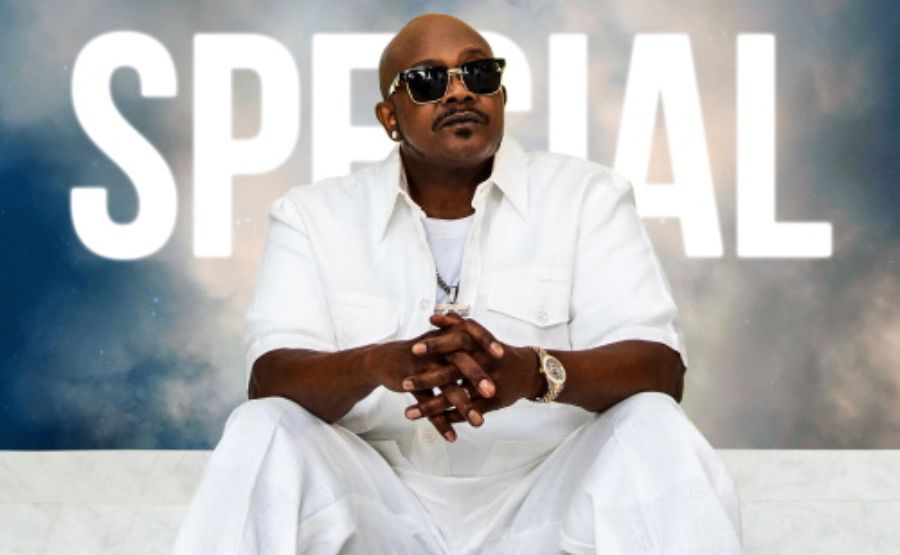
Personal Life: Faith, Family, and a Daughter Who Inspired the Greatest Song
Joel Hailey has a daughter whose name he has kept carefully private — a deliberate choice consistent with a man who understands what public scrutiny can do to people who did not choose it. His relationship with his daughter is the most documented emotional thread in his public statements. The fact that he wrote “All My Life” about her, and nearly gave the song away, reveals something about his relationship to his own creative work — the uncertainty that lives inside even someone whose abilities are genuinely exceptional.
He grew up in a family where the gospel tradition shaped everything, including how love itself was understood and expressed. That theological orientation stayed with him through the secular musical career, surfacing in interviews where he has spoken about faith as a sustaining force, and reappearing most explicitly in his family’s recovery journey in the 2010 TV One documentary.
He and Cedric are more than business partners. They are brothers who have experienced every stage of the narrative together, including church pews, gospel tours, the Jodeci recording studios, the height of K-Ci & JoJo’s popularity, and the difficult years that followed.
The Difficult Years: Substance Abuse and the Long Way Back
Jodeci and the early K-Ci & JoJo era were surrounded by an obsessive lifestyle that ultimately came at a cost. Both brothers struggled with substance abuse — a reality that was whispered about for years before either addressed it publicly and directly.
The years of hard partying took a genuine toll on their health, their output, and their careers. The gap between the Emotional album in 2002 and My Brother’s Keeper in 2013 — more than a decade — reflects a period of significant personal turbulence rather than creative contentment. Albums were planned and delayed. Concert appearances drew mixed attention, some performances generating public concern about the brothers’ physical states.
In a reality documentary series titled K-Ci & JoJo: Come Clean, TV One chronicled the healing process in 2010. The brothers went on camera and addressed their struggles directly — not in the oblique language of celebrity crisis management but in the honest, sometimes painful terms of people who had genuinely lost their footing and were working to find it again. The gospel foundation of their childhoods, it turned out, was something to return to rather than simply to leave behind.
The 2013 album My Brother’s Keeper — the title itself a reference to the biblical question about responsibility for one’s sibling — was a kind of testament to what they had survived together. Released on eOne, it represented their return to active recording after years of difficulty.
Financial Situation: Built and Rebuilt
Joel Hailey’s financial picture reflects a career that generated genuine wealth during its peak years and was complicated by the decade of difficulty that followed. With its enormous economic success and long-lasting cultural afterlife in licensing and sampling, “All My Life” alone generates substantial recurring royalties. The Jodeci catalog continues to generate revenue from streaming. The albums by K-Ci and JoJo are still available.
The combined net worth of K-Ci and JoJo is estimated by various sources to be between six and ten million dollars. Joel’s individual share of that reflects his contribution as both vocalist and songwriter — the “All My Life” songwriting credit in particular carries lasting financial weight.
The Come Clean era and the difficult years in between almost certainly reduced what a purely productive career trajectory would have produced. Recovery costs money. Lost earning years cost money. But the catalog built during the productive years provides a foundation.
Life Today: Still Singing, Still Brothers
As of 2026, Joel Hailey continues to perform as part of K-Ci & JoJo. The brothers are still working together — still harmonizing, still bringing the gospel-rooted emotional power that made their recordings last. They appear at events, perform at venues that appreciate what they represent in R&B history, and remain connected to the music that defined a significant portion of the 1990s.
He is in his mid-fifties. The voice is older. The experience is deeper. Few R&B records ever achieve the level of cultural durability that the songs—especially “All My Life”—have.
Final Words
There is something worth sitting with in the fact that Joel Hailey wrote “All My Life” and almost gave it away.
He had the ability to create something that tens of millions of people would carry in their memories for decades. It wasn’t good enough, in his opinion. He almost let it go.
That gap between genuine talent and genuine confidence in that talent is one of the more human things about his story. He came from Charlotte gospel choirs, built something extraordinary with his brother, made music that mattered, survived the years when it all came apart, and kept going.
The song is still playing. At weddings and graduations and quiet moments when people need something to hold the feeling. Every time it plays, Joel Hailey’s voice — and the story of his daughter that he almost didn’t tell — reaches someone who needed it.
That is not a small thing. That is a life’s work.
FAQs
1. Who is Joel Hailey?
American R&B singer and composer Joel Hailey, better known by his stage name JoJo, was born in Charlotte, North Carolina, on June 10, 1971. Along with his older brother Cedric “K-Ci” Hailey, he is one half of the duet K-Ci & JoJo. He was the lead vocalist for the well-known group Jodeci in the 1990s. He is best known for the 1998 hit “All My Life,” which he wrote and which spent three weeks at number one on the Billboard Hot 100.
2. Who is Joel Hailey’s brother and what have they done together?
His older brother is Cedric Hailey, known as K-Ci, born September 2, 1969. Together they have been making music since childhood — first as part of the family gospel group Little Cedric and the Hailey Singers, then as lead vocalists of Jodeci, Lastly, between 1997 and 2013, the pair K-Ci & JoJo released five studio albums.
3. Who did Joel Hailey write “All My Life” about?
“All My Life” was written by him about his daughter. He has been open about this in various interviews over the years. After writing it, he offered the song to another artist who ultimately passed on it — at which point he and K-Ci decided to record it themselves.
4. How well did “All My Life” perform on the charts?
After its debut in 1998, “All My Life” topped the Billboard Hot 100 for three weeks in a row. It was a crossover success that transcended R&B radio to achieve mainstream pop radio saturation, earning Grammy nominations and becoming one of the most enduring love songs of its era.
5. What was Jodeci and what was Joel’s role in it?
The two Hailey brothers and the two DeGrate brothers—DeVante Swing and Mr. Dalvin—formed the four-piece R&B ensemble Jodeci in Charlotte, North Carolina. The group recorded three studio albums in the early 1990s and defined a new kind of urban R&B that combined explicit themes with genuine gospel-rooted vocal power. Joel contributed as a vocalist and songwriter, typically occupying the lower harmonic register while K-Ci handled more prominent lead lines.
6. What is the significance of their family gospel background?
Both brothers grew up in a Pentecostal household with parents who were gospel singers. They began performing as children in the family gospel group Little Cedric and the Hailey Singers, recording three gospel albums and touring the South. That foundation gave them formal vocal training through immersion — learning breath control, emotional delivery, and harmony before they were teenagers.
7. What is the subject of K-Ci & JoJo: Come Clean, a TV One documentary?
Come Clean aired on TV One in 2010 and documented the brothers’ struggles with substance abuse and their recovery process. It was a candid, public acknowledgment of the difficult years that had followed their peak career success in the late 1990s. Both brothers participated openly and directly rather than using the soft language of standard celebrity crisis coverage.
8. What is the 2Pac connection?
In 1996, K-Ci and JoJo were featured artists on 2Pac’s “How Do U Want It,” which reached number one on the Billboard Hot 100 and received a Grammy nomination for Best Rap Performance by a Duo or Group. Their popularity outside of the conventional R&B audience was greatly increased by the partnership, which also allowed them forge their own identity apart from Jodeci.
9. Who are Joel Hailey’s famous relatives?
His half-brother is neo-soul singer Calvin Richardson. His cousins include R&B singer Dave Hollister and American Idol winner Fantasia Barrino. The musical talent across the extended Hailey family is remarkable in its concentration.
10. Does Joel Hailey have children?
He has at least one daughter, whose name he has kept private. His relationship with his daughter is the most personally significant detail he has shared publicly — the inspiration for “All My Life” — and he has maintained a protective boundary around her life and identity throughout his career.
11. What is Joel Hailey’s estimated net worth?
Estimates of the combined K-Ci & JoJo net worth range from six to ten million dollars, reflecting career earnings from music sales, touring, songwriting royalties — including the substantial and ongoing royalty stream from “All My Life” — and their catalog’s continued presence in streaming. Joel’s individual share reflects both his vocal contribution and his role as a songwriter on their most commercially successful material.
12. Is Joel Hailey still performing?
Yes. As of 2026, Joel Hailey continues to perform as part of K-Ci & JoJo. The brothers have maintained their performing partnership through recovery and into their fifties, appearing at events and venues as part of the ongoing legacy of one of the most distinctive vocal duos in 1990s R&B.
Explore ideas that elevate your thinking with The Elevate Magazine.