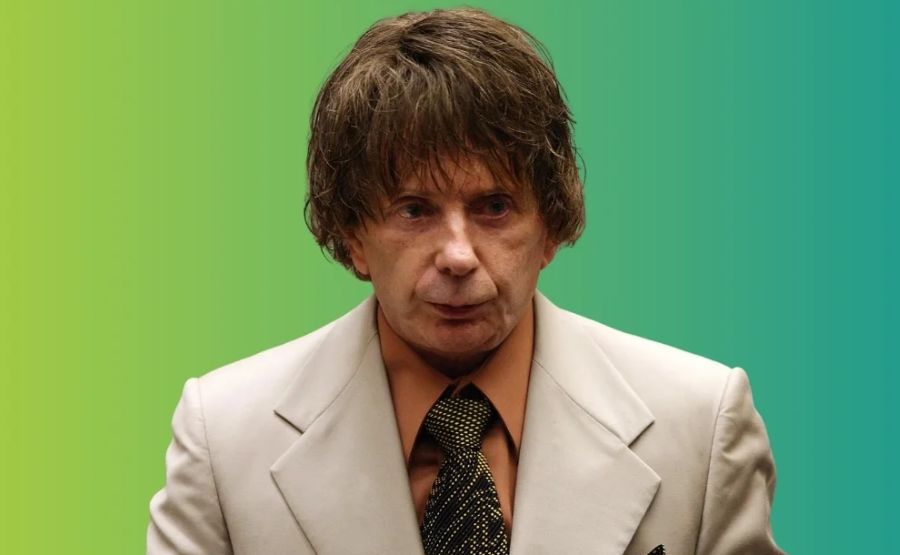
Gary Phillip Spector: Growing Up in the Shadow of Genius and Darkness
Quick Bio
| Detail | Info |
| Full Name | Gary Phillip Spector |
| Born | May 12, 1966, Van Nuys, Los Angeles, California, USA |
| Nationality | American |
| Occupation | Private individual; reported to work in the Colorado Springs area |
| Known For | Son of singer Ronnie Spector and music producer Phil Spector, adopted |
| Twin Brother | Louis Phillip Spector |
| Other Siblings | Donte Phillip Spector (adopted brother); Nicole Audrey Spector (half-sister, writer/editor); Jason Charles Spector; Austin Drew Spector; Phillip Spector Jr. (deceased, leukemia) |
| Adoptive Parents | Phil Spector (music producer, convicted murderer, 1939–2021); Ronnie Spector (singer, The Ronettes, 1943–2022) |
| Current Residence | Colorado Springs, Colorado (reported) |
| Personal | Married; one daughter |
| Estimated Net Worth | Modest; exact figures unknown; inheritor of disputed estate portion |
Introduction: A Life Defined by What Surrounds It
Some people become famous. Others become known entirely because of who surrounds them — and what those people did, both glorious and terrible.
Gary Phillip Spector belongs firmly to the second category. His name draws attention not because of anything he built or performed or said publicly, but because of the two towering, complicated figures who adopted him as a small boy and raised him inside one of the most turbulent households in American music history.
His father, Phil Spector, was a genuine revolutionary. The “Wall of Sound” technique he invented in the early 1960s reshaped how pop music was recorded and heard. He produced some of the most beloved songs of the twentieth century — for the Ronettes, the Righteous Brothers, the Beatles, Tina Turner, and Leonard Cohen. He was, by any reasonable measure, among the most influential producers who ever lived.
He was also a convicted murderer. A man credibly described by multiple women, including Gary’s own adoptive mother, as violent, controlling, and deeply dangerous. A man who, according to his own sons Gary and Donte, subjected his children to profound abuse inside the walled estate he used as both his home and his prison.
Ronnie Spector — the luminous voice behind “Be My Baby,” one of the greatest pop recordings ever made — was Gary’s adoptive mother. She escaped Phil with her life, barely, in 1972. She rebuilt herself with extraordinary courage. She died in January 2022, remembered universally as a survivor and an icon.
Gary Phillip Spector grew up in the gap between these two people. He has spent his adult life — sensibly, admirably — trying to live outside the gravitational pull of both their legacies. This is his story, told as honestly and carefully as the available facts allow.
See also “Margie Washichek: The Woman Who Knew Jimmy Buffett Before the World Did“
Birth and Early Years: Before the Spector Name
Gary Phillip Spector and his twin brother Louis came into the world on May 12, 1966, in Van Nuys, a neighborhood in the San Fernando Valley area of Los Angeles. Their biological family and the circumstances of their very early years are not part of the public record — Gary has never spoken about them, and no source has credibly reported on that chapter of his life.
What is documented is what happened next. In 1971, Phil Spector arrived home with two small boys in tow — Gary and Louis, five years old — and presented them to Ronnie as an unexpected Christmas gift. The story has been confirmed through Ronnie’s own accounts: she had no knowledge that Phil was planning to adopt children. She drove home with him one day, saw two boys playing outside a property, asked what was happening, and received a two-word answer: “Merry Christmas.”
It was a moment that tells you almost everything you need to know about Phil Spector’s understanding of family, control, and other human beings. The adoption of two young children was unilateral. It was impulsive. It was framed as a gift to a wife rather than a joint decision between two parents. And it landed in a marriage that was already, by Ronnie’s account, deeply and frighteningly dysfunctional.
Gary Phillip Spector, age five, walked into all of that. He had no idea what he was into. No child could.
The Household He Grew Up In
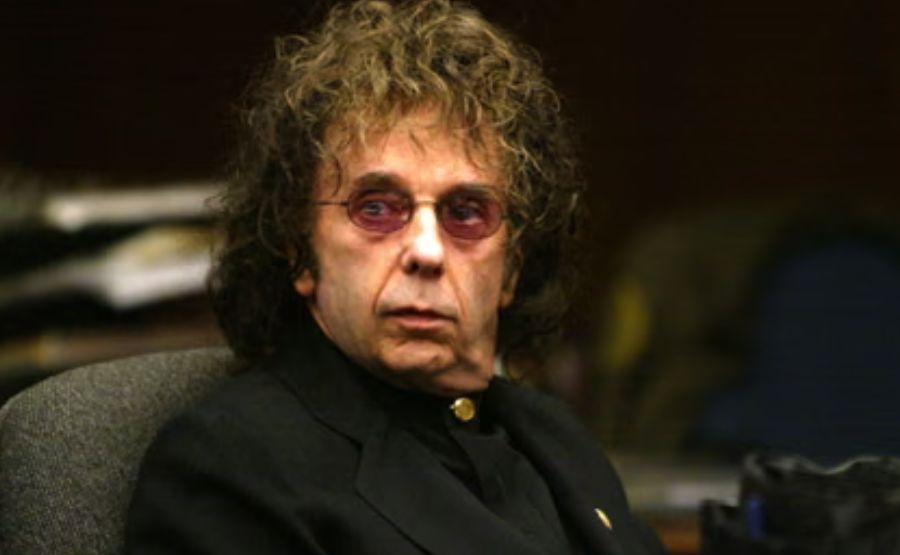
Understanding Gary’s childhood requires understanding the environment that shaped it — and that environment was Phil Spector’s sprawling, heavily guarded estate in the Alhambra area of Los Angeles, a property that functioned simultaneously as a palace and a prison.
Phil Spector in the early 1970s was a man whose brilliant career was beginning to curdle. He had taken a break from the music business. He was increasingly reclusive, increasingly armed, and increasingly dangerous to those closest to him. Ronnie Spector’s memoir, Be My Baby, published in 1990, described a marriage defined by psychological manipulation, physical confinement, and constant terror. She wrote about being forbidden to perform, having her shoes confiscated so she could not leave the house, and finding a gold coffin in the basement that Phil told her he would use if she ever tried to escape. She said she left in 1972 by running barefoot from the house with the help of her mother, later writing that she knew she would not have survived if she had stayed.
In their 1974 divorce settlement, Ronnie surrendered custody of the three adopted children — Gary, Louis, and Donte. She said later that this was because Phil had threatened to have her killed if she fought for them. The boys stayed with Phil.
Reporting confirmed by multiple outlets, including the Daily Record’s coverage of Phil Spector’s death, contains Gary’s and Donte’s direct claims that their father kept them confined and subjected them to serious abuse, including forcing them to witness or participate in sexual acts with his girlfriend. These are not rumors or tabloid inventions. They are claims made by Phil Spector’s own sons.
This was the household Gary Phillip Spector grew up in. A household of extraordinary wealth and cultural prestige on the outside. A household of documented abuse and controlled isolation on the inside.
Education: A Window Into the Wider World
The specific details of Gary’s formal education are not publicly documented. What sources consistently note is that he eventually moved toward a normal, grounded adult life — which strongly implies that at some point, education provided both the practical skills and the psychological breathing room to build something of his own away from his father’s estate.
Whether Gary attended schools in the Los Angeles area during his years with Phil, and what kind of schooling that involved given the controlled and isolated nature of the Spector household, is something he has not spoken about publicly. By the time he reached adulthood, he appears to have pursued post-secondary education — sources reference a college background, though specific institutions and fields of study are not confirmed through primary sources.
What can be said is that the Gary Phillip Spector who emerges in adulthood is described across sources as educated, settled, and capable of building an ordinary professional life — which, given where he started, represents a genuine and hard-won achievement.
Adulthood: Building a Life That Belongs to Him
At some point in his adult years — the timeline is not precisely documented — Gary Phillip Spector made a series of decisions that have defined his life since: he left California, he put considerable geographic distance between himself and the world he grew up in, and he built something quiet and stable in Colorado Springs, Colorado.
He is married. He has a daughter. He lives in a community not particularly associated with music or entertainment or celebrity. He doesn’t use any public social media platforms. He does not give interviews. He has not written a memoir or sought any kind of platform to discuss his extraordinary family history.
This is a choice. A considered, consistent, and — given everything — entirely understandable one.
His twin brother Louis has reportedly pursued interests in writing and art, occupying a similarly private but slightly more creatively visible space. His adoptive brother Donte has been somewhat more willing to speak about the family’s history publicly, having shared accounts of their father’s behavior in various contexts. His half-sister Nicole Audrey Spector — born in 1982 to Phil and his girlfriend Janis Zavala — built a career as a writer and editor and has maintained a professional presence in media. Gary, by contrast, has kept the lowest profile of all Phil Spector’s children.
He reportedly works in a professional capacity in the Colorado Springs area, though specific details about his occupation have not been confirmed publicly. The picture that emerges is of someone who has successfully separated his identity from his last name and is living, as deliberately as possible, as an ordinary person.
The Weight of Two Losses: Phil and Ronnie
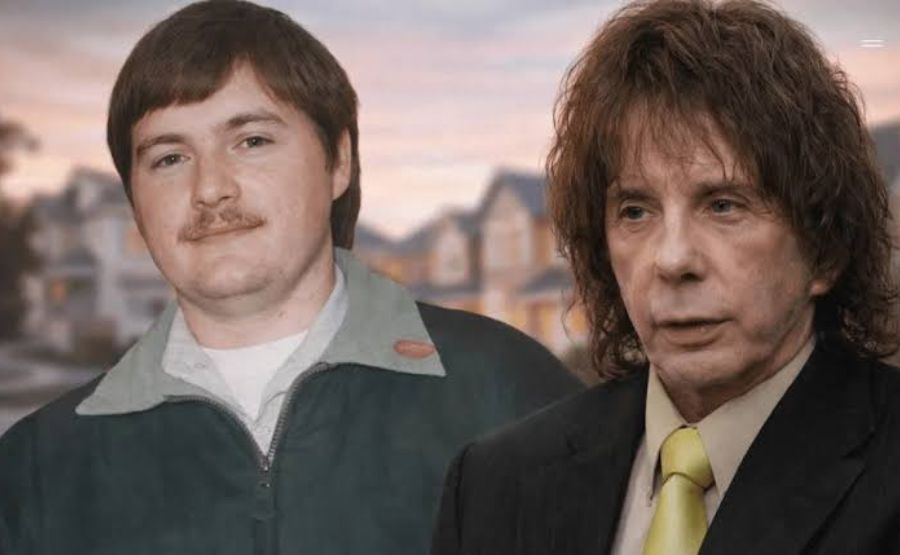
Gary Phillip Spector has had to navigate two very different kinds of grief in recent years, connected to two very different kinds of people.
Phil Spector died on January 16, 2021, at the age of 81, in a California prison hospital. He had been serving a sentence of 19 years to life after his 2009 conviction for the second-degree murder of actress Lana Clarkson, who was found shot to death in the foyer of his Alhambra home in February 2003. Until the very end, he remained innocent. He died — official reports attributed his death to natural causes, with COVID-19 as a contributing factor — having never expressed public remorse for Lana Clarkson’s death, and having never publicly addressed the abuse allegations his own children had made against him.
For Gary, Phil’s death raised the question that children of monstrous parents always face: how do you grieve someone whose influence on your life was so deeply harmful? The public record offers no answer, because Gary has not spoken. But the question sits there, unresolved and real.
Ronnie Spector died on January 12, 2022 — just under a year after Phil — from cancer. She was 78. The outpouring of love and respect that followed her death was genuine and enormous. She was remembered as a groundbreaking singer, a survivor of documented abuse, and a woman who rebuilt herself with grace and determination after escaping one of the most frightening marriages in American entertainment history. Her relationship with her adopted sons after the divorce is not something she documented in detail — the custody arrangement meant the boys remained with Phil — but sources describe her as having maintained warmth toward them in the years that followed.
Losing both parents within the space of twelve months, whatever the complexity of those relationships, is its own kind of reckoning.
The Spector Legacy and Estate Questions
Phil Spector’s death also raised practical questions about his estate. He had accumulated considerable wealth — estimates place his net worth at the time of death at around $50 million, built from decades of music royalties and publishing rights tied to some of the most enduring recordings in American popular music. He had married a third time in 2006, to Rachelle Short, from whom he filed for divorce in 2016, and that proceeding was apparently still unresolved at the time of his death.
The specific disposition of Phil Spector’s estate and what portion, if any, Gary and his siblings inherited is not part of the public record. Estate proceedings involving complex royalty portfolios, contested marriages, and multiple potential heirs can take years to resolve and rarely generate public documentation unless contested in ways that produce court records.
What is clear is that Gary’s lifestyle — described consistently as modest and private, centered around family in Colorado Springs — does not suggest someone living off an enormous inheritance. Whether that reflects the actual distribution of the estate, Gary’s personal values, or some combination of both is not something the available record can answer with confidence.
Personal Life: The Family He Actually Chose
Here is perhaps the most meaningful part of Gary Phillip Spector’s story: the family he built himself.
He is married to a woman whose name he has kept out of the public eye. They have a daughter together. They live in Colorado Springs — a mid-sized Colorado city known for its outdoor access, its military presence, and its distance from the coastal media circus that defined so much of Gary’s early life.
By all available accounts, Gary has created precisely the kind of home that was denied to him as a child: stable, private, warm, and entirely his own. He is not performing his life for anyone. He is not monetizing his family history. He is not seeking sympathy, absolution, or attention in connection with the complicated people who raised him.
He is simply living. And given what he grew up inside, that ordinariness is a genuine achievement that deserves to be named as such.
Financial Picture: Modest by Choice or Circumstance
Gary Phillip Spector’s personal finances are as private as everything else about him. No verified figures exist for his net worth. The estimates that appear across various biography sites are speculative and range wildly enough to be meaningless.
What is reasonable to conclude: his lifestyle is not extravagant. His location — Colorado Springs rather than Beverly Hills or Manhattan — and his career in a non-entertainment professional field both point toward a comfortable but not wealthy life built on earned income rather than inherited celebrity wealth.
Phil Spector’s publishing and royalty portfolio — which generated income for decades from some of the most-played songs in pop history — represents real financial value. How much of that eventually flows to Gary through estate proceedings is unknown. The rights to music like “Be My Baby,” “You’ve Lost That Lovin’ Feelin’,” and the Beatles’ Let It Be album are extraordinarily valuable properties. The full picture of who holds them now, after Phil’s death and the various legal proceedings around his estate, has not been publicly resolved.
Life Today: Quiet, Grounded, and Away From All of It
As of 2026, Gary Phillip Spector lives in Colorado Springs with his wife and daughter. He has no public profile. He does not comment on documentaries about his father — and there have been several, including a recent Netflix series that revisited the Lana Clarkson case. He does not appear at music industry events tied to Phil’s legacy. He does not write op-eds about growing up as the son of a convicted murderer and a pop music icon.
He has chosen, consistently and with apparent conviction, to let his own life be its own thing — defined by the people he loves and the work he does rather than by the names he carries.
Final Words
It is easy, in a culture that rewards drama and disclosure, to see Gary Phillip Spector’s silence as absence. It is nothing of the kind.
He grew up inside circumstances that could have broken a person entirely — adopted as a small child into a household where abuse, control, and fear were the daily weather, raised by a father whose later crimes confirmed the violence that had always been present, watching his adoptive mother escape a marriage that she described as a near-death experience, losing custody of her in a divorce settlement she accepted under threat. He survived all of that. He became an adult. He made choices — where to live, whom to love, how to spend his time — that have nothing to do with fame or legacy or the weight of a famous last name.
That is its own kind of achievement. Quiet, invisible to the outside world, and entirely real.
The Spector name carries an enormous amount of American music history — genuinely revolutionary work that shaped the sound of an era. It also carries documented violence, abuse, and the permanent fact of a murder conviction. Gary has had to hold both of those things his entire life without a public platform, without a memoir, and without the therapy of celebrity confession.
He chose Colorado Springs. He chose a family. He chose privacy. In the specific circumstances of his life, those are not small choices. They are brave ones.
FAQs
1. Who is Gary Phillip Spector?
The renowned singer Ronnie Spector and music producer Phil Spector adopted Gary Phillip Spector. Born on May 12, 1966, in Van Nuys, Los Angeles, he was adopted in 1971 along with his twin brother Louis Phillip Spector. He lives a deeply private life in Colorado Springs, Colorado, and has no public professional or media presence.
2. How was Gary Phillip Spector adopted?
In 1971, Phil Spector brought Gary and his twin brother Louis home as an unannounced Christmas surprise for his wife Ronnie. Ronnie had no prior knowledge that Phil planned to adopt children. According to her own account, Phil simply drove her to a property where two young boys were playing and told her “Merry Christmas.” Gary and Louis were approximately five years old at the time.
3. Who is the twin brother of Gary Phillip Spector?
His twin is Louis Phillip Spector, also born on May 12, 1966. Louis was adopted alongside Gary in 1971 and has maintained a similarly private life as an adult, with reported interests in writing and art.
4. Who are Gary Phillip Spector’s other siblings?
His siblings include Donte Phillip Spector (adopted before Gary and Louis in 1969); and Phil Spector’s biological children with Janis Zavala — Nicole Audrey Spector (a writer and editor), Jason Charles Spector, and Austin Drew Spector. Another sibling, Phillip Spector Jr., died tragically from leukemia at a young age.
5. What was Gary Phillip Spector’s childhood like?
By all credible accounts, it was deeply difficult. Both Gary and his brother Donte made serious abuse allegations against Phil Spector, including claims of confinement and sexual abuse. Ronnie Spector’s memoir documented the extreme control and violence of the Spector household. Ronnie escaped in 1972 and surrendered custody of the adopted children under what she described as coerced circumstances.
6. What happened to Phil Spector?
Phil Spector was convicted in 2009 of the second-degree murder of actress Lana Clarkson, who was found shot to death in his Alhambra home in February 2003. He was sentenced to 19 years to life in prison. He died on January 16, 2021, at age 81, while incarcerated, with official reports citing natural causes and COVID-19 as a contributing factor.
7. What happened to Ronnie Spector?
Ronnie Spector — born Veronica Bennett, lead singer of the Ronettes — divorced Phil in 1974 and rebuilt her life and music career with documented courage and resilience. She remarried, had two biological sons, and continued performing and advocating for abuse survivors. She published her memoir Be My Baby in 1990, detailing the abuse she experienced. She died on January 12, 2022, from cancer at the age of 78.
8. Where is Gary Phillip Spector currently residing?
He is reported to live in Colorado Springs, Colorado, with his wife and daughter. He relocated away from California and has maintained an extremely private life there, entirely outside the entertainment world.
9. Does Gary Phillip Spector have children?
Yes. He has one daughter. Her name and details about her life are not publicly shared, consistent with Gary’s general commitment to keeping his family out of the public eye.
10. What is Gary Phillip Spector’s net worth?
His personal wealth has never been made public. His way of life seems humble rather than ostentatious. Phil Spector’s estate — valued by some estimates at around $50 million at the time of his death — included highly valuable music rights and royalties, but the distribution of that estate has not been publicly documented. Any specific figures attributed to Gary online are speculative.
11. Has Gary Phillip Spector spoken publicly about his father?
He has made allegations of abuse alongside his brother Donte, confirmed through reporting on Phil Spector’s death. Beyond that, Gary has not given interviews, written publicly, or commented on any of the numerous documentaries and media retrospectives about Phil Spector’s life and crimes.
12. What is Phil Spector best known for musically?
Phil Spector is credited with inventing the “Wall of Sound” production technique — a method of layering multiple instruments, vocal arrangements, and orchestral elements into a single dense, reverb-heavy recording style that transformed pop music in the early 1960s. He produced landmark recordings including “Be My Baby” by the Ronettes, “You’ve Lost That Lovin’ Feelin'” by the Righteous Brothers, and worked with the Beatles on their Let It Be album. He placed 24 records in the US Top 40 between 1960 and 1965.
Explore ideas that elevate your thinking with The Elevate Magazine.