Nehwal Badminton: The Inspiring Journey of a Champion on the Court
Quick Bio
| Detail | Information |
| Full Name | Saina Nehwal |
| Born | March 17, 1990, Hisar, Haryana, India |
| Age | 36 (as of 2026) |
| Nationality | Indian |
| Sport | Badminton (Women’s Singles) |
| Coach (Primary) | Pullela Gopichand |
| Peak Ranking | World No. 1 (2015) |
| Olympic Medal | Bronze, 2012 London Olympics (first Olympic badminton medal by an Indian) |
| International Titles | 24+ |
| Husband | Parupalli Kashyap (married December 14, 2018) |
| Awards | Arjuna Award (2009); Khel Ratna (2010); Padma Shri (2010); Padma Bhushan (2016) |
| Academy | Saina Nehwal Badminton Academy, Hyderabad |
| Retired | January 2026 |
| Estimated Net Worth | ~$5–15 million (₹42–70 crore; sources vary) |
Introduction: The Shuttler Who Made India Fall in Love with Badminton
There is a specific kind of athlete who does more than win. They change what is possible. They shift what an entire country believes about itself in a particular sport. They make millions of children pick up a racket — or in this case, a shuttle — because they suddenly believe this is something that people like them can do.
Saina Nehwal is that kind of athlete.
Before she came along, Indian women’s badminton was a sport with genuine talent and genuine potential but without a figure who could carry both the competitive achievement and the cultural weight of bringing the sport to mainstream consciousness. She became that figure — systematically, relentlessly, across two decades of professional competition that included an Olympic medal, a World No. 1 ranking, more than two dozen international titles, and awards from the Indian government that placed her among the country’s most honored sporting figures.
She retired in January 2026. She is thirty-six years old. And the badminton landscape she leaves behind — the crowded academies, the young girls training across India with genuine ambitions of competing internationally, the television audiences that tune in for Indian badminton in a way that simply did not exist before her — is one she helped build, one match at a time.
This is how she did it.
Early Life: Haryana, a Badminton Family, and a Five-Year-Old Who Moved Worlds
Saina Nehwal was born on March 17, 1990, in Hisar — a city in Haryana, the northern Indian state known historically for agriculture, wrestling, and the specific combination of competitive spirit and physical toughness that its sporting tradition has produced. She was the second daughter of Harvir Singh Nehwal and Usha Nehwal.
Here is the first thing that makes Saina’s story specific rather than generic: both of her parents were former state-level badminton players. Not professional athletes, not international competitors, but people who had played the game seriously enough at the state level to understand what real training looked like, what real talent looked like, and what it would take for a child with those gifts to develop them properly. That background gave Saina something many athletic children never have — parents who could actually see what they were seeing when they watched their daughter play.
When Saina was approximately five years old, her family relocated to Hyderabad — the capital of what was then Andhra Pradesh and is now Telangana. The move was driven by professional considerations for her father. But Hyderabad turned out to be exactly the right city for what Saina was going to become. It was home to one of the most important badminton academies in India, and it was where she would spend the formative years of her development as a player.
The transition to Hyderabad was not without its social difficulty. Language was the first challenge. Saina grew up speaking Hindi, and Hyderabad’s dominant language is Telugu — a Dravidian language with no structural relationship to Hindi. A five-year-old navigating a new city and a new social environment where she couldn’t fully communicate was, by any measure, facing a significant adjustment. Her parents later noted that she was drawn to the badminton court partly because sport is a universal language — on court, what mattered was the shuttle, not the words.
Her mother’s nickname for her — “Steffi Saina,” a reference to tennis legend Steffi Graf — was both affectionate and predictive. Even before Saina had accumulated a single title, her mother could see the competitive intensity that would eventually take her to the top of the sport.
See also “Jimmy Connors: The Fierce Tennis Legend Who Redefined Competitive Greatness“
Education: Courts and Classrooms in Hyderabad
Saina completed her higher secondary education at St. Ann’s College in Mehdipatnam, Hyderabad — a Catholic educational institution in the western part of the city. Her schooling years and her training years overlapped significantly, which meant navigating the demands of academic work alongside increasingly serious athletic commitments.
This balancing act is common among elite young athletes but rarely easy. Court time competes with study time. Tournament schedules disrupt academic calendars. The family’s willingness to support her athletic ambitions despite those tensions — including her father’s commitment to travel significant distances to support her training — reflects the seriousness with which they treated her sporting potential from an early age.
She did not pursue a graduate degree in the traditional sense; her post-secondary focus was fully absorbed by professional competition that was already at an international level by the time most young people are beginning university.
The Gopichand Connection: Training That Shaped Everything
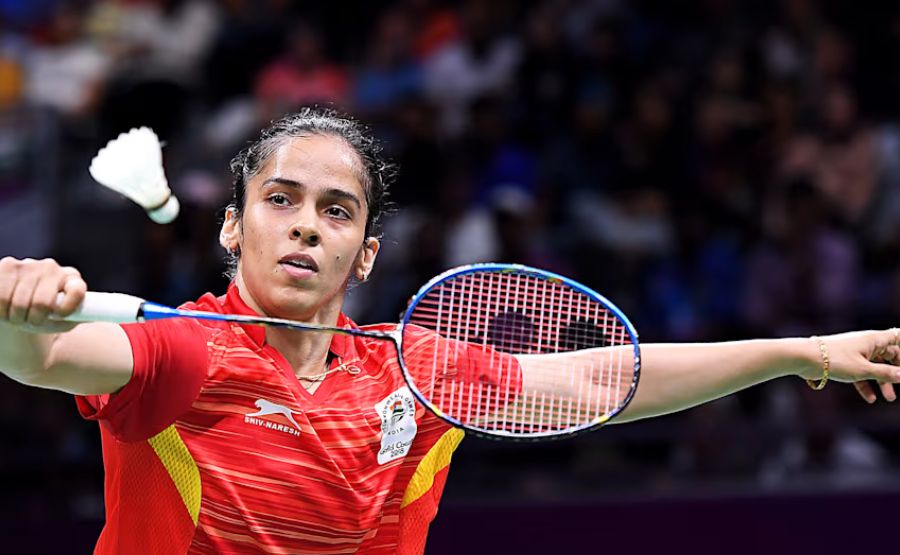
When Saina was around eight years old, a coach named Nani Prasad Rao noticed something in the way she moved on court — a natural footwork quality that isn’t easily taught and that marks players with genuine potential. He began working with her and, crucially, brought her into the orbit of the Gopichand Badminton Academy.
Pullela Gopichand — himself a former All England Open champion and one of India’s most celebrated badminton players — had retired from professional play and turned his attention to coaching. His academy in Hyderabad became arguably the most important institution in Indian badminton’s subsequent history. The list of international-level players he coached there is remarkable, and Saina Nehwal was among the earliest.
Getting to the academy required effort that went beyond simply showing up. Her parents committed to travelling more than fifty kilometres each day to get Saina to training and back — a logistical investment that continued for years and that reflects the family’s genuine understanding that serious talent requires serious support.
What Gopichand gave Saina went beyond technical training. He instilled in her the specific competitive mindset that elite sport requires — the willingness to study opponents, to work on weaknesses rather than simply play to strengths, and to maintain the physical conditioning that allows technical skill to express itself under competitive pressure.
Career Rise: The Asian Satellite Title and the World Stage
Saina’s first significant international result came in 2005, when she won at an Asian Satellite tournament — a result that announced her on the junior circuit and confirmed that what was being developed in Hyderabad was genuinely special.
In 2008, she achieved two results that together made her one of the most talked-about young badminton players in the world. She won the BWF World Junior Championships — becoming the first Indian to do so. And she was recognized by the Badminton World Federation as the Most Promising Player of the Year. She was eighteen years old.
Those junior achievements were not simply junior achievements. They were evidence that she could compete at the top of her age group against the world’s best — a foundation for the senior career that was already beginning.
Her rise through the senior rankings was not a straight line. The world’s best women’s badminton players were concentrated in China, South Korea, and increasingly Indonesia — nations with deep infrastructure, large coaching pools, and decades of competitive tradition. Breaking through against that competition required sustained excellence rather than a single inspired performance.
She did it through grinding consistency. By 2010, she had reached World No. 2 — a ranking that no Indian woman had previously achieved. She won the India Open and retained the Indonesia Open that same year. She took gold at the Commonwealth Games in New Delhi. She was twenty years old, already one of the top two badminton players on the planet.
The 2012 Olympic Bronze: The Medal That Changed Everything
The moment that most clearly divided Indian badminton into before-Saina and after-Saina came at the 2012 London Olympics.
She navigated through the draw to the semifinals — a position that had never been occupied by an Indian woman in Olympic badminton. Her semifinal opponent was Wang Xin of China, one of the sport’s premier players. Wang suffered an injury during the match and could not continue. Saina advanced to the bronze medal match.
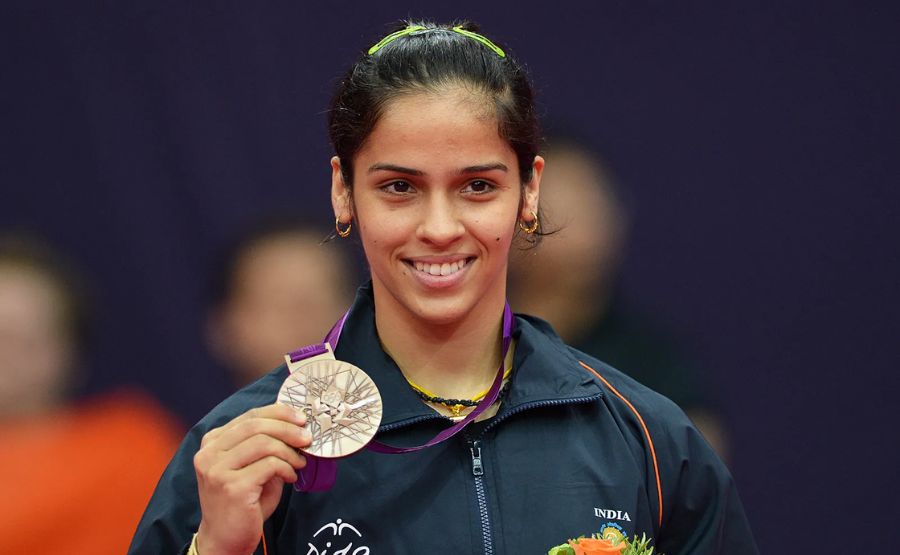
Her bronze medal opponent was Xin Wang — the match was completed, and Saina won. The bronze medal she collected at the ExCeL Arena in London was the first Olympic badminton medal ever won by an Indian. More broadly, it was one of only a small number of individual Olympic medals India had won at those Games, and it arrived with a national significance that extended far beyond sport.
The coverage in India was extraordinary. She returned home to scenes of celebration that treated her achievement with the kind of intensity that the country reserves for the most emotionally resonant sporting moments. Television viewing figures for badminton shot up. Academies reported increases in enrollment. Young girls who had watched her compete told interviewers that they wanted to be her.
This is what it means to change a sport’s standing in a country. Not just winning — winning in a way and at a scale that makes the general public feel that something new is possible.
World No. 1: The Summit That Only She Had Reached
In 2015, Saina Nehwal became the first Indian woman to achieve the World No. 1 ranking in badminton. The ranking is calculated based on performance across the BWF’s most prestigious tournaments over a rolling period, and reaching the top spot requires consistency against the world’s best across multiple events — not a single exceptional performance but sustained excellence over time.
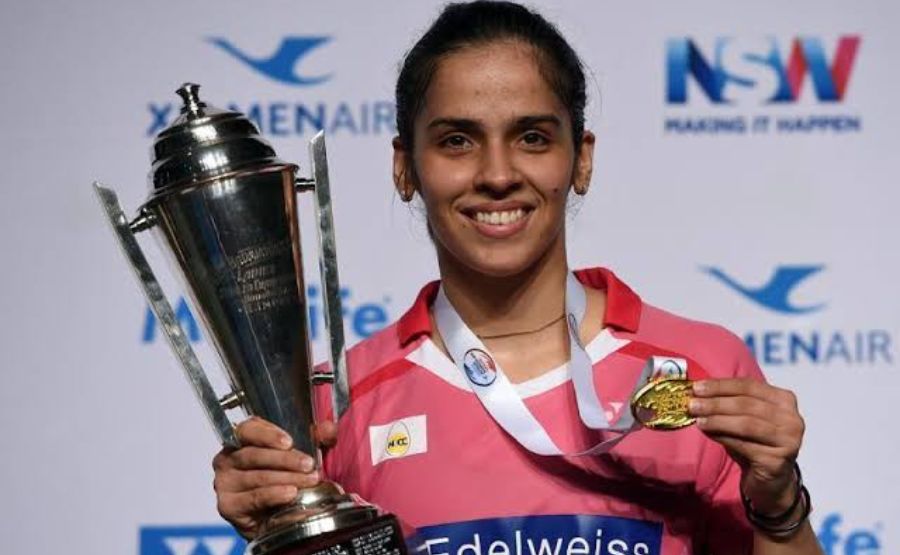
The same year, she reached the final of the All England Open — the oldest badminton tournament in the world and one of the most prestigious — becoming the first Indian woman to do so. She won the World Championships silver medal, defeating players ranked above her throughout the draw before losing the final.
These achievements collectively represented the peak of her professional career — a period in which she was, objectively, the best women’s singles badminton player in the world.
Personal Life: Parupalli Kashyap and a Marriage Between Champions
On December 14, 2018, Saina Nehwal married Parupalli Kashyap — a professional badminton player himself, ranked in the world’s top twenty at his peak and representing India at multiple major international competitions including the Olympics.
Their marriage brought together two people whose professional worlds were identical — they understood each other’s training schedules, competitive pressures, injury recoveries, and the psychological demands of elite sport from direct personal experience. Kashyap trained alongside her at the Gopichand Academy for many of their respective careers, and the friendship that preceded the marriage was built on years of shared professional context.
The wedding was a private ceremony attended by close family and friends rather than a high-profile celebrity event — a choice that reflected both their personalities and their preference for keeping their personal life appropriately separated from their professional visibility.
They have no children as of 2026.
Challenges: Injuries, Arthritis, and the Long Farewell
The hardest period of Saina Nehwal’s career was the years between 2016 and her eventual retirement — a sustained battle against injuries and, ultimately, chronic arthritis that progressively limited what she could ask of her body.
She had experienced knee injuries earlier in her career that required surgery and rehabilitation. But the arthritis that developed in her later career presented a different kind of challenge — not a single traumatic injury with a recovery timeline, but a chronic condition that demanded ongoing management and that placed a ceiling on the intensity and frequency of training and competition her body could sustain.
She continued competing through those years — winning two gold medals at the 2018 Commonwealth Games in Gold Coast, Australia, in both individual and team events; contributing to India’s Uber Cup campaigns; and continuing to represent India at major BWF events. But the consistency that had characterized her peak years became harder to maintain as the physical cost of each tournament increased.
In January 2026, she announced her retirement from professional badminton. She was thirty-five years old. The retirement reflected a clear-eyed assessment of what her body could still sustain rather than a precipitous departure — she had extended her career as far as professional commitment and competitive will could take it against the physical reality of chronic arthritis.
Financial Situation: Four Decades of Smart Building
Saina Nehwal’s net worth is estimated across different reliable sources at figures ranging from approximately $5 million (around ₹42 crore) to $15 million (around ₹60–70 crore at current exchange rates). The variation reflects different methodologies for valuing endorsement contracts, real estate holdings, and business interests rather than fundamental disagreement about her financial position. She is, unambiguously, one of the wealthier athletes India has produced.
Her income sources are multiple and carefully diversified. Prize money accumulated across more than two decades of top-level competition — including a reported $400,000 from the 2010 BWF World Championships. Endorsement contracts with global and Indian brands including Yonex, Bridgestone, and Hero MotoCorp have been a consistent income source, with individual campaign fees reportedly ranging from ₹75 lakh to ₹1 crore. Her signature Yonex badminton equipment line generates ongoing royalty income that will continue well into her post-retirement years.
She runs a badminton academy in Hyderabad — both a revenue-generating operation and a contribution to the infrastructure of Indian badminton. Real estate investments and participation in the One8 sportswear brand (associated with Virat Kohli) represent additional asset classes.
Her annual income post-retirement is estimated at approximately ₹4.8 crore to ₹5.5 crore — a figure that reflects the durability of her brand even without active competition.
Today: After the Shuttles, Building What Comes Next
As of 2026, Saina Nehwal has retired from professional badminton, effective January 2026. She lives in Hyderabad with her husband Parupalli Kashyap and continues to operate her badminton academy, maintain her endorsement relationships, and participate in the broader conversation about Indian sport in the kind of media and public role that elite athletes with her profile naturally transition into.
She has been appointed to the International Olympic Committee’s Athletes’ Commission — a role that reflects her international standing and that gives her a formal voice in the governance of global sport beyond India’s boundaries.
She has spoken publicly about wanting to contribute to the development of Indian badminton from the administrative and coaching side — bringing the knowledge she accumulated across two decades of competing at the highest level into the service of the next generation of players who grew up watching her compete.
Final Words
Saina Nehwal’s career is one of the most significant individual sporting journeys in Indian history — not because of the medal count alone, though the medal count is extraordinary, but because of what those medals meant to a country and a sport.
She arrived at the Gopichand Academy as a five-year-old who had just moved cities and couldn’t speak the local language. She left professional badminton thirty-one years later as the first Indian woman to have been World No. 1, the holder of an Olympic medal that had never been won by an Indian before her, the recipient of the country’s highest sporting and civilian honors, and the figure most credited with making badminton a mainstream ambition rather than a peripheral pursuit for the generation of Indian girls who came after her.
The arthritis that ended her competitive career did not diminish what she built. It simply changed the medium through which she will continue to contribute.
She was called Steffi Saina by her mother before she had won anything. Her mother, it turns out, was right.
See also “Jimmy Connors: The Fierce Tennis Legend Who Redefined Competitive Greatness“
FAQs
1. Who is Saina Nehwal?
Saina Nehwal is a retired Indian professional badminton player born on March 17, 1990, in Hisar, Haryana. She is the first Indian woman to become World No. 1 in badminton (2015), the first Indian to win an Olympic badminton medal (bronze, London 2012), and one of India’s most decorated athletes. She retired from professional competition in January 2026.
2. When and where was Saina Nehwal born?
She was born on March 17, 1990, in Hisar, Haryana, India. Her family relocated to Hyderabad when she was approximately five years old, and she spent her formative years and entire professional career based in that city.
3. Who trained Saina Nehwal?
Her primary coach for most of her professional career was Pullela Gopichand — a former All England Open champion who became India’s most influential badminton coach. She trained at the Gopichand Badminton Academy in Hyderabad. Earlier in her development, coach Nani Prasad Rao first identified her talent and helped bring her into the Gopichand training environment.
4. What was Saina Nehwal’s biggest career achievement?
She has multiple candidates for this distinction. The 2012 London Olympics bronze medal — the first Olympic badminton medal ever won by an Indian — is the most historically significant single moment. Her 2015 achievement of World No. 1 — the first Indian woman to reach that ranking — represents the peak of her sustained career excellence. She also accumulated 24+ international titles and a World Championships silver medal.
5. When did Saina Nehwal get married and who is her husband?
She married Parupalli Kashyap on December 14, 2018, in a private ceremony attended by family and close friends. Kashyap is himself a professional badminton player who represented India at the Olympics and reached a world ranking in the top twenty at his peak.
6. Why did Saina Nehwal retire?
She retired in January 2026 due to the effects of chronic arthritis that had progressively limited her ability to train and compete at the elite level. The condition had been affecting her career for several years, and she made the decision after a clear-eyed assessment of what her body could sustainably continue to do.
7. What awards has Saina Nehwal received from the Indian government?
She has received the Arjuna Award (2009), the Rajiv Gandhi Khel Ratna Award — now called the Major Dhyan Chand Khel Ratna — (2010), the Padma Shri (2010), and the Padma Bhushan (2016). She was also appointed to the International Olympic Committee’s Athletes’ Commission.
8. What is Saina Nehwal’s estimated net worth?
Estimates vary across sources — ranging from approximately $5 million (₹42 crore) on the more conservative end to ₹60–70 crore on more generous assessments. The variation reflects different approaches to valuing her endorsement contracts, royalties, real estate, and business interests. She is financially secure and continues to earn significant post-retirement income through her Yonex equipment royalties, endorsements, and academy operations.
9. What brands does Saina Nehwal endorse?
Her major endorsement relationships have included Yonex (her signature equipment line generates ongoing royalty income), Bridgestone, and Hero MotoCorp. She has also been associated with the One8 sportswear brand. Individual campaign fees are reported to range from ₹75 lakh to ₹1 crore.
10. What is Saina Nehwal’s badminton academy?
She operates a badminton academy in Hyderabad — the Saina Nehwal Badminton Academy — which provides coaching to aspiring young badminton players. The academy serves both as a revenue-generating business and as a contribution to the development infrastructure of Indian badminton.
11. Has Saina Nehwal ever been World Champion?
She has not won the BWF World Championships gold medal, but she reached the silver medal level in 2015 — losing the final after defeating multiple higher-ranked opponents through the draw. She won bronze medals at the World Championships as well.
12. What was Saina Nehwal’s impact on Indian badminton?
She is widely credited with elevating badminton from a relatively niche sport in India to a mainstream competitive aspiration. Her Olympic bronze in 2012 triggered a significant increase in academy enrollments, television viewership, and government investment in badminton infrastructure. She paved the way for the generation of Indian women’s badminton players who followed her, including PV Sindhu, who achieved still greater Olympic success partly on the foundation Saina had built.
Explore ideas that elevate your thinking with The Elevate Magazine.