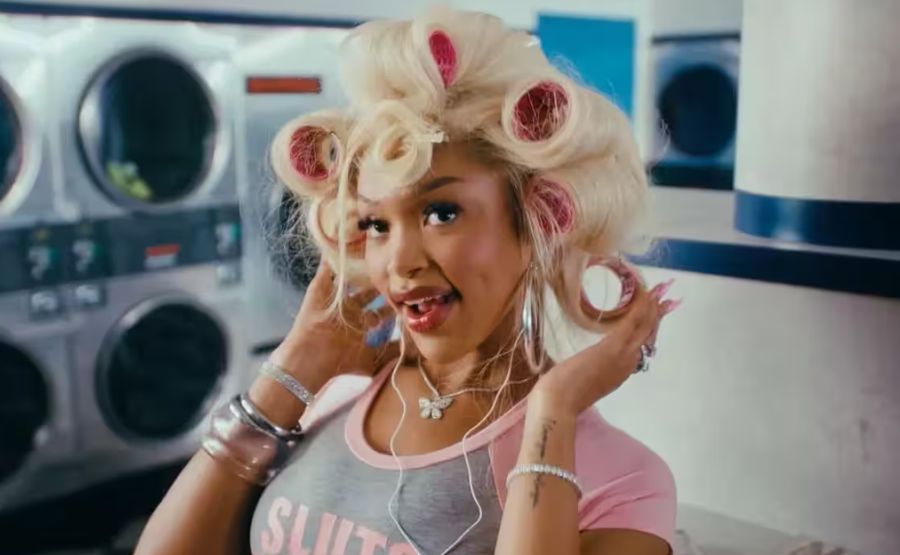
Jourdin Pauline Age: The Guyanese Pop Princess Who Built Her Own Kingdom
Quick Bio
| Detail | Information |
| Full Name | Jourdin Pauline Redic |
| Stage Name | Jourdin Pauline |
| Born | August 23, 1999 |
| Birthplace | Georgetown, Guyana |
| Moved to USA | Age 6 |
| Age | 26 (as of 2026) |
| Nationality | Guyanese-American |
| Occupation | Singer, songwriter, actress, model, entrepreneur |
| Nickname | “The Guyanese Pop Princess” |
| Genre | Trap-pop, R&B, dancehall, soca-influenced pop |
| Debut EP | Love Songs About Nobody (June 2021) |
| Known For | “NASTY,” “Lustful Desires,” “Toxic (Errbody)”; TV song placements on Grown-ish, Black-ish, 13 Reasons Why; 1.3M+ Instagram followers |
| Training | South Bay Conservatory (musical theatre and performing arts) |
| Mentor/Producer | Alonzo Jackson (worked with Beyoncé, Pink, Dr. Dre) |
| Career Start | Age 10 (behind-the-scenes songwriter) |
| Estimated Net Worth | ~1–2 million (estimated; not publicly disclosed) |
Introduction: She Came From the Hood and She Kept Every Bit of It
There are artists who perform a version of struggle without ever having lived it. And then there are artists whose whole voice was forged by something real — by immigration, by tight money, by neighborhoods where the sounds are loud and the choices are hard and the only way out is the one you build yourself.
Jourdin Pauline is firmly, unapologetically the second kind.
She was born in Georgetown, Guyana. She moved to South Central Los Angeles at age six into one of the neighborhood’s most famously gritty corners — the same streets Nipsey Hussle called home. She got bullied in school, pulled out of the traditional classroom, and used the isolation of homeschooling to start writing music professionally while most of her peers were still figuring out middle school.
By age ten, she was placing songs on network television. By her twenties, she had credits across shows like Grown-ish, Black-ish, 13 Reasons Why, and half a dozen more. She built a social media following of over a million people while remaining completely independent — no major label, no industry machine, just talent and drive and a cultural identity she has never once diluted for anyone’s comfort.
Her nickname, “The Guyanese Pop Princess,” is catchy. But it undersells the full picture. She is a strategist, a writer, a businesswoman, and one of the most genuinely self-made young artists working in American music today.
See also “Sunny Black: Inside the Life and Career Behind the Name“
Early Life: From Georgetown to South Central
Georgetown, Guyana, is a coastal city shaped by Caribbean culture, immigrant hustle, and the kind of everyday resilience that gets passed down like a family recipe. It is where Jourdin was born in August 1999, and it gave her something that Los Angeles, for all its glamour, could not replicate: a foundational understanding of what it means to make do with what you have.
When she was six years old, her family packed up and moved to Los Angeles. Specifically to South Central — Hyde Park, near Crenshaw and Slauson. This was not Beverly Hills. It was not the glittering LA of television fantasies. It was one of the city’s working-class, historically underserved neighborhoods, where police sirens were background noise and kids learned early to read their environment carefully.
Jourdin has been remarkably open about what that landing felt like. She came from a third-world country, so in a literal sense, the streets of South Central represented a step up in material infrastructure — more buildings, more electricity, more everything. But the cultural shift was jarring. She has described the neighborhood honestly: people running through backyards, police chases, the constant low hum of urban tension. She was a girl from Guyana trying to figure out how to belong in the American hood. That tension never fully resolved — and it absolutely shows up in her music.
Her mother played a crucial role from the very beginning. She was a music industry manager, someone who understood the business side of entertainment from the inside. That exposure meant Jourdin did not grow up romanticizing the industry from the outside — she grew up watching her mother navigate it with professional eyes. That perspective would later become one of her greatest advantages.
Jourdin has said that her first words, according to her mother, were essentially a song. Whether that is literally true or family mythology, the underlying message is real: she came into this world already oriented toward music.
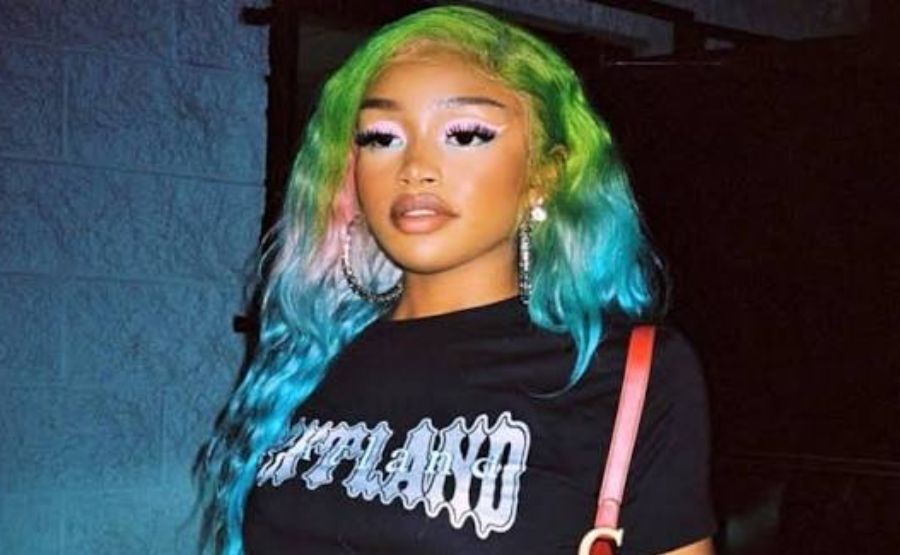
Education: Homeschooled, Focused, and Writing Hits by Her Teens
Jourdin’s conventional school experience ended in second grade.
She was bullied. Badly enough that her family made the decision to pull her out and homeschool her. This is not an unusual story — many creative kids find the rigid social structures of school cruel and limiting — but what Jourdin did with that removal is unusual. Instead of losing ground academically and socially, she found her direction.
Free from the structure and the cruelty of the classroom, she zeroed in on music. Homeschooling gave her time, and time gave her focus. She started writing. She started studying the craft seriously. And while other kids her age were navigating the social maze of middle school hallways, Jourdin was learning how songs actually work — melody, structure, emotional arc, the mechanics of storytelling compressed into three minutes.
She enrolled at the South Bay Conservatory, a Los Angeles institution focused on musical theatre and performing arts. There she worked on voice, movement, stage presence, and the particular discipline of theatrical performance — the kind of training that teaches you how to inhabit a moment rather than just stand in it.
She also took piano lessons and vocal coaching separately, layering her skill set with deliberate intention. And she began studying songwriting formally, learning how to translate raw emotion and lived experience into professional-grade compositions.
It was not a standard educational path. But for someone like Jourdin — someone who learned by doing, by creating, by immersing herself in the one thing that made sense to her — it was exactly the right one.
Career Beginnings: Writing for Television Before Anyone Knew Her Name
Here is a detail that surprises most people when they first hear it: Jourdin Pauline spent the first decade of her professional career almost completely invisible.
Starting around age ten, she was working behind the scenes in the music industry — writing songs that ended up on some of the most-watched television shows in America. CSI: Miami. Keeping Up with the Kardashians. Teen Mom. ANT Farm. Shake It Up. Black-ish. Grown-ish. Vampire Academy. America’s Next Top Model. Love and Hip Hop.
Read that list again. She placed songs on shows across networks — Disney Channel, ABC, Freeform, MTV, VH1 — before she was even old enough to vote. This was not a kid dabbling. This was a working professional songwriter building real credits in a real industry, quietly, without any of the public attention that usually accompanies that kind of achievement.
The mentor who shaped this period was producer Alonzo Jackson — a collaborator whose credits include work with Beyoncé, Pink, Zendaya, Kelly Rowland, Dr. Dre, and Bella Thorne. Working with someone operating at that level, at that age, accelerated Jourdin’s development in ways that no conservatory training alone could provide. Jackson taught her the difference between writing a song and crafting a record — the discipline, the commercial awareness, the understanding of what makes something land with an audience versus what just feels good in the room.
Those years of invisible work laid a foundation that most aspiring artists never build. By the time Jourdin was ready to step out from behind the curtain and claim her name in front of the music, she was not a beginner pretending to be ready. She had the receipts.
Rise to Visibility: Building a Platform Without a Label’s Help
Jourdin made a decision that not everyone has the confidence or infrastructure to make: she went independent.
No major label. No industry machinery making decisions for her. Just her music, her relationships, and her own business sense — built partly on watching her ther manage artists from the other side of the table.
She began releasing music under her own name and building a social media following that, by the time her debut project arrived, had grown to over a million followers on Instagram alone. That number did not come from a label’s marketing budget. It came from consistency, from a genuine visual aesthetic, from the kind of personality that translates naturally to digital platforms — confident, culturally specific, unapologetically herself.
Her singles began landing. “Hey Hi,” “Whet,” “Big Bandz,” “Nobody,” “Spiral” — each one placed in film or television, each one adding another credit to a resume that was already longer than most artists twice her age. 13 Reasons Why on Netflix. Paradise Lost for Paramount Television. The placements kept coming because the songs were genuinely good — radio-ready but with an edge, built on the trap-pop foundation she had been developing since childhood but flavored with dancehall rhythms and soca influences that were entirely her own.
Culturally, she is something the American pop world does not see often: a Guyanese artist at the mainstream level, refusing to sand down her identity to fit a more familiar mold. She wears her country’s flag on her nails. She speaks openly about her upbringing. She connects Caribbean rhythms with American trap production and makes it feel effortless because, for her, it genuinely is.
Major Achievements: The EP, the Placements, and the TV Milestone
The summer of 2021 was Jourdin Pauline’s biggest moment yet.
She released her debut EP, Love Songs About Nobody, in June of that year — a ten-track project that had been in development for years and served as her proper introduction to the world as a front-facing artist. The project was spearheaded by lead singles “Toxic (Errbody)” and “Lustful Desires,” both accompanied by cinematic music videos that showed a fully realized visual artist, not just a songwriter stepping cautiously in front of the camera.
The most notable song was “NASTY,” a self-assured, R&B-infused record that went beyond the EP and appeared twice as a featured song on ABC’s Grown-ish. Getting one placement on a major network sitcom is a win. Getting two on the same show signals something more significant: the music supervisors who choose songs for these productions trusted Jourdin’s work enough to reach for it again. That kind of trust is earned slowly and reflects genuine quality.
The EP earned coverage in outlets like Flaunt magazine, SHEEN, and iHeart Radio’s Power 105.1 platform. A feature in Flaunt — a publication that moves selectively and targets cultural tastemakers — was particularly meaningful, placing Jourdin alongside a very specific tier of artist: people doing interesting things independently, on their own creative terms.
Beyond the music itself, her philanthropy deserves mention. She has performed and worked with A.W.A.R.H.E. — Artists Wanting AIDS and HIV Related Education — using her platform to raise awareness around a cause that disproportionately affects communities of color. In a world where celebrity charity often looks performative, Jourdin’s involvement in this space reflects the same directness she brings to everything else.
She also starred in her first feature film — the details of which she spoke about publicly while the project was in development — describing the experience as something that stripped away the protective barriers she keeps up in everyday life and forced her to be genuinely vulnerable on camera. For someone who has always expressed herself most comfortably through music, that level of exposure represented real artistic growth.
Personal Life: Private but Present
Jourdin Pauline keeps the romantic dimension of her life out of the public record with considerable success — which, given a social media following of over a million people, reflects real intention.
She has not publicly confirmed relationships, partners, or romantic history in any verifiable way. She has no publicly known children. What she has spoken about openly is her inner life: her mental health, her tendency to build emotional walls, her experience with anxiety after the extended isolation of the COVID-19 pandemic, and her use of meditation as a grounding practice.
Her cultural identity is perhaps the most defining personal characteristic she has shared publicly. She loves Guyana. She says so constantly, and the sentiment reads as genuine rather than performed. She incorporates Guyanese symbols into her visual brand — flag imagery, cultural references, the rhythms of soca and dancehall woven into pop productions. In interviews, she has said that even after growing up in America, becoming Americanized, building a career in Los Angeles, she cannot let that side of herself go. She does not want to.
Her mother remains a central figure in her life and her work — the woman who managed artists, who recognized her daughter’s gift early, and who helped create the conditions for that gift to develop. That bond appears to be foundational.
She has described herself as a closet introvert — someone who projects enormous confidence publicly but genuinely values quiet, solitude, and the kind of creative space that does not have an audience. It is a paradox familiar to many artists: the more internal you are, the more you need art as the channel for everything you cannot say directly.
Challenges: Bullying, Isolation, and the Hard Math of Independence
The bullying Jourdin experienced in second grade was serious enough to permanently redirect her educational path. She has spoken about it without dramatizing it — it happened, it hurt, it changed things. The decision to homeschool her was the right one, and the creative explosion that followed suggests the traditional classroom was genuinely the wrong environment for who she was.
The pandemic hit her the way it hit many artists: performances cancelled, external momentum stalled, the strange combination of creative productivity and social paralysis. She has said that the months of isolation gave her enormous amounts of new music — she described feeling like she had five albums ready — but also left her with what she described as anxiety about re-entering the world. For someone who already had walls up around her emotional life, two years of enforced withdrawal compounded the tendency toward guardedness.
Staying independent in an industry that wants to own you is its own ongoing challenge. Major labels offer resources — promotional budgets, distribution power, industry relationships — that independent artists have to replicate through hustle, strategic partnerships, and an intimate understanding of how to work social media algorithms. Jourdin has done it, but it has not been without friction. Building a million-plus following without label support requires constant creative output, consistent visual identity, and the willingness to be the entire operation — artist, brand manager, content creator, and businessperson — simultaneously.
Financial Situation: Independent Money, Real Earnings
Jourdin Pauline’s net worth is not publicly disclosed. Estimates in the range of one to two million dollars circulate online, but these are informed guesses rather than verified figures.
What can be said honestly is that her income has multiple legitimate streams. Television sync placements — the fees paid to use a song in a TV show or film — represent real, recurring money. She has accumulated an extraordinary number of these placements across more than a decade of behind-the-scenes work. Each one generates licensing fees and performance royalties. Over time, across shows as widely watched as Grown-ish and Black-ish, those numbers compound meaningfully.
Her streaming income, merchandise sales, social media brand partnerships, and live performance fees represent additional revenue layers. A social media presence of 1.3 million Instagram followers has genuine commercial value — brands pay for access to engaged audiences, and Jourdin’s audience is specifically the demographic that major consumer brands actively want to reach.
What she has not done is accept an advance from a major label in exchange for creative control. That decision has a real financial cost — label money is significant — but it also means everything she earns belongs to her. The long-term math of ownership, especially for a songwriter with the sync credits she already holds, often favors independence.
She is twenty-six years old. The financial story is still early.
Life Today: Still Building, Still Independent, Still Herself
As of 2026, Jourdin Pauline is fully in motion.
In February 2026, she dropped “Sexier Than You,” the latest in a string of releases that includes DANGERUSH and “Concentr888” featuring Buddy. She launched “DO IT 4” and its accelerated version in the autumn of 2025. The output is consistent, the creative direction is evolving, and the independence that has defined her approach from the beginning remains intact.
She continues to build her acting portfolio alongside the music — the feature film she mentioned in 2021 interviews appears to have been her entry point into that world, and her perspective on acting has shifted from it being a complementary skill to something she describes as genuinely necessary for her emotional expression.
More than 1.3 million people follow her on Instagram. She remains active across platforms, using them not just for promotion but as a genuine extension of her personality — direct, funny, culturally specific, and unwilling to perform a a less authentic but more palatable version of herself.
She is still representing Guyana. She continues to do it according to her own terms. Still building something that looks less like a typical pop career and more like a self-made empire, assembled brick by brick from the streets of South Central and the rhythms of Georgetown.
Final Words
There is a version of Jourdin Pauline’s career that might have happened differently. A label signs her early, smooths the edges, packages her identity into something more conventionally marketable, and maybe makes her famous faster while making her less interesting permanently.
That version did not happen. She kept her name, her flag, her neighborhood, her sound, and her independence. She let the industry come to her on her terms rather than walking toward it on theirs.
What she has built as a result is something genuinely rare: a career with real roots. Her TV placements are not flukes — they are the product of fifteen-plus years of craft development that started before she could drive. Her fan base did not come from a label’s marketing machine — it came from a million individual people who found her and decided she was worth following.
The Guyanese Pop Princess title started as a nickname. It has become something more accurate: a statement of identity, a flag planted in American pop culture by a girl who came from Georgetown at age six, landed in the hood, got bullied out of school, found music in the quiet of homeschooling, and never once stopped building toward the version of herself she knew she could be.
She is twenty-six. The story is nowhere near finished.
FAQs
1. Who is Jourdin Pauline?
She is a Guyanese-American singer, songwriter, actress, model, and entrepreneur based in Los Angeles. Born in Georgetown, Guyana in 1999, she moved to South Central LA at age six and began her professional music career at age ten as a behind-the-scenes songwriter for television. She is known for her debut EP Love Songs About Nobody and for her anthem single “NASTY.”
2. How old is Jourdin Pauline?
She was born on August 23, 1999, making her 26 years old as of 2026.
3. Where is she from originally?
Georgetown, Guyana — a coastal capital shaped by Caribbean and South American culture. She moved to Los Angeles at age six and grew up specifically in the South Central neighborhood of Hyde Park, near Crenshaw and Slauson.
4. Why is she called the “Guyanese Pop Princess”?
The nickname captures her dual identity: her Guyanese roots and cultural pride on one side, and her engagement with mainstream American pop music on the other. She has actively embraced the title as a statement about representation — she is the most visible Guyanese artist working at her level in American pop music, and she treats that visibility as a responsibility.
5. What TV shows has her music appeared on?
Her song placements span an impressive range of shows: Grown-ish, Black-ish, 13 Reasons Why, CSI: Miami, Keeping Up with the Kardashians, Teen Mom, ANT Farm, Shake It Up, Love and Hip Hop, America’s Next Top Model, #blackAF, and Vampire Academy, among others.
6. What is her debut EP and what does it sound like?
Love Songs About Nobody was released in June 2021 and contains ten tracks. It combines dancehall rhythms, R&B melodies, trap-pop production, and Jourdin’s characteristically airy vocals. Lead singles included “Toxic (Errbody)” and “Lustful Desires.” The standout track “NASTY” went on to receive two placements on ABC’s Grown-ish.
7. Is Jourdin Pauline signed to a major label?
No. She has remained deliberately independent throughout her career, building her following and revenue streams without the backing of a major record label. This reflects both a personal philosophy about creative control and a business decision about ownership of her work.
8. Who mentored her early career?
Producer Alonzo Jackson, whose credits include collaborative work with Beyoncé, Pink, Dr. Dre, Kelly Rowland, and Zendaya, guided her during the formative years of her career. Under his mentorship, she developed her songwriting, recording, and production skills beginning around age ten.
9. Why was Jourdin Pauline homeschooled?
She was bullied in second grade seriously enough that her family removed her from the conventional school system and educated her at home. That transition proved creatively transformative — the additional time and focus led directly to her early professional work as a songwriter for television.
10. What is Jourdin Pauline’s net worth?
Her net worth is not publicly disclosed. Estimates of approximately one to two million dollars circulate across various websites, reflecting her income from television sync placements, streaming royalties, brand partnerships, merchandise, and live performances. The exact figure is unknown, and she has not addressed it publicly.
11. Has Jourdin Pauline acted in films or television?
Yes. She has mentioned starring in her first feature film, and she has taken acting classes to develop her skills on camera. She has described acting as something that helps her access emotional vulnerability in ways that even music does not always allow. Her entertainment career spans both performance disciplines.
12. What is she working on now in 2026?
She released the single “Sexier Than You” in February 2026 and continues to release music consistently as an independent artist. She remains active on social media with over 1.3 million Instagram followers and continues developing her acting career alongside her music. She has described having more music ready to release than a single project could contain.