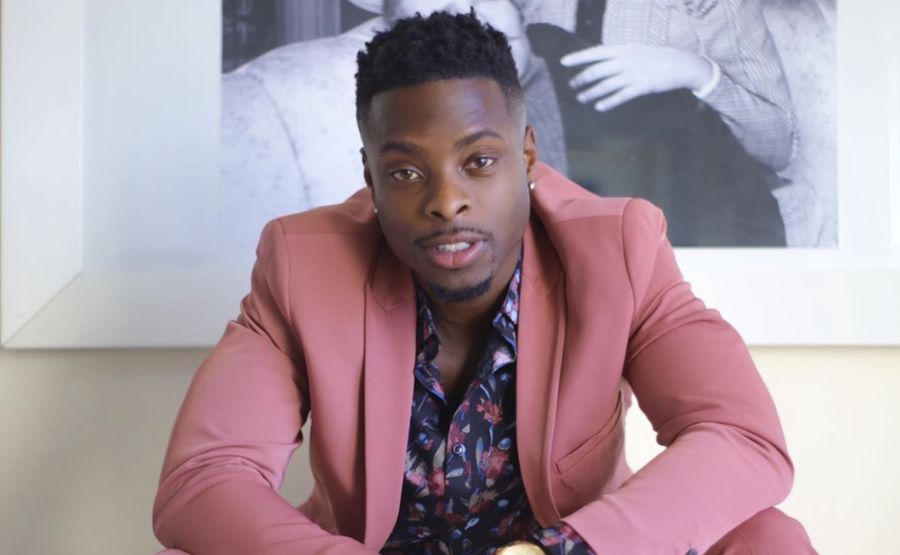
Johnell Young Movies and TV Shows: A Look at His Career on Screen
Quick Bio
| Detail | Information |
| Full Name | Johnell Young |
| Born | 1993 |
| Age | 32–33 (as of 2026) |
| Birthplace | Staten Island, New York, USA |
| Nationality | American |
| Occupation | Actor, model, content creator |
| Known For | GZA in Wu-Tang: An American Saga (Hulu, 2019–2023); Ray Luv in All Eyez on Me (2017); Woody in Tales (BET) |
| First Credit | Pootie Tang (2001) — childhood role |
| Education | Clark Atlanta University (basketball scholarship) |
| Notable Feature | NBA 2K20 (video game character Bertie Barnett) |
| Family Connection | Aunt: actress Vanessa Jefferson |
| Relationship | Briana Hampton (girlfriend, as of recent years) |
| Social Media | @johnellxyoung |
| Podcast/Platform | The C.A.S.T. |
| Estimated Net Worth | Approximately $1 million |
Introduction: Staten Island to the Wu-Tang Universe
Staten Island is one of those places that punches above its weight in terms of what it produces culturally. It gave the world the Wu-Tang Clan — arguably the most influential hip-hop collective in history. And now it has given the world an actor who gets to portray one of them on screen.
Johnell Young is a name that serious fans of prestige hip-hop television already know. If you watched Wu-Tang: An American Saga on Hulu — the critically appreciated drama that traced the formation of the legendary rap group from the streets of Staten Island through to their unlikely cultural domination — then you watched Johnell embody GZA, one of the group’s most cerebral and respected members. He did it across multiple seasons, across four years of the show’s run, and he did it in a way that earned genuine respect from hip-hop fans who take these things seriously.
But Johnell’s story is not simply a story about landing one great role. It is the story of someone who started in the industry as a child, walked away when rejection got to him, pursued an entirely different career path as a college basketball player, returned to acting years later when the hunger came back, and then methodically built the kind of career where the opportunities started getting bigger with each passing year.
It’s a story about starting over. About trusting the process. About what happens when you give something a second chance.
Early Life and Childhood: Growing Up on Staten Island
Johnell Young was born in 1993 and raised on Staten Island — the borough of New York City that always seems to get overlooked in favor of Manhattan or Brooklyn or even the Bronx, but which has its own fierce, grounded identity. It is a borough that values loyalty, community, and the specific kind of toughness that comes from growing up somewhere the world doesn’t automatically celebrate.
Growing up on Staten Island in the 1990s meant growing up in the shadow of the Wu-Tang Clan — a cultural force whose music was everywhere and whose roots were planted in the same streets Johnell was navigating as a kid. That geographic and cultural proximity to one of hip-hop’s greatest stories would eventually become directly relevant to his career, though there was no way to know that during his childhood.
His aunt, Vanessa Jefferson, was an actress. That family connection to the entertainment world gave him his first exposure to what a professional performance career might look like. It normalized the idea in a household context where it might otherwise have seemed remote or unrealistic.
By the time he was eight or nine years old, the performing instinct had already surfaced. His parents channeled it in two directions simultaneously: they enrolled him in school plays, where he could exercise it in a structured environment, and they connected him with a New York talent agency that could put him in front of industry professionals.
That agency got him his first credited film role. He appeared in Pootie Tang, the 2001 comedy starring Lance Crouther and featuring Chris Rock, J.B. Smoove, and Busta Rhymes. He was among the kids in the movie. He was either eight or nine. It was the beginning of something that he didn’t yet know would pause for years before resuming in earnest.
The First Attempt: Rejection, Basketball, and Stepping Away
Here is one of the most honest things about Johnell Young’s story: he didn’t handle rejection well as a kid. He’s said so himself.
Auditions are, by design, a machine that produces far more rejection than acceptance. Professional actors spend years learning to process that ratio and keep showing up anyway. For a child, the math feels different. Being told “no” repeatedly, when you don’t have the professional framework to understand it as a normal part of the process, can feel personal in a way that eventually becomes intolerable.
So at some point in his childhood or early adolescence, Johnell made a decision that is actually quite common among people who started performing young and stopped: he decided the rejection wasn’t worth it anymore, and he shifted his energy entirely toward basketball.
It turned out he was good. Very good. competent enough to participate in collegiate sports.
He attended Clark Atlanta University — a historically Black university in Atlanta, Georgia — where he was a member of the basketball team on scholarship. Clark Atlanta is a serious institution, part of the Atlanta University Center Consortium, with strong academic and athletic traditions. Playing basketball there wasn’t a consolation path. It was a genuine competitive achievement.
After college, he pursued the dream further. He played basketball overseas and, by his own account, was at one point preparing to try out for the New York Knicks’ G-League affiliate. He was, in other words, a serious professional basketball prospect.
And then something shifted. Around 2016, when he was in his early twenties, the acting hunger came back. Not a casual interest — a genuine, insistent pull back toward the thing he had left behind years earlier.
He decided to give it one more try.
Career Beginnings: Returning to the Industry
Coming back to the entertainment industry as an adult, without an established recent track record, is harder than breaking in as a fresh face. The industry has a short memory. The connections you build as a child actor don’t automatically sustain themselves across a decade-long absence.
Johnell rebuilt from the ground up. He returned to auditioning, leveraged whatever connections remained, and started accumulating the early credits that re-establish a performer’s professional presence.
His connection to the hip-hop world helped. The culture he had grown up inside — Staten Island, the Wu-Tang era, the specific texture of that New York experience — gave him authentic access to the kind of stories and characters that the entertainment industry was increasingly interested in telling. He wasn’t performing a version of street-rooted Black experience he had studied from a distance. He was drawing from something he understood from the inside.
The 2017 Tupac Shakur biopic All Eyez on Me gave him an early return credit. He appeared as rapper Ray Luv — a real figure from Tupac’s circle — in a supporting capacity. He was uncredited in some accounts of the film, but his presence there put him in the orbit of a major hip-hop biographical project and signaled his direction clearly. This was where his instincts and his background were going to produce opportunities.
Around the same time, he landed a role in Tales, the BET anthology series created by Irv Gotti that dramatized hip-hop songs as narrative episodes. He played a character named Woody. It was a serious dramatic television credit on a well-regarded series. The momentum was beginning to build.
Wu-Tang: An American Saga and the Breakthrough
In 2019, Hulu premiered Wu-Tang: An American Saga — a ten-episode drama co-created by RZA himself, along with Alex Tse, that traced the formation of the Wu-Tang Clan from their early years in Staten Island through to the recording of their debut album.
Johnell was cast as Gary “GZA” Grice — known as GZA or The Genius — the Wu-Tang member widely regarded as the group’s most lyrically sophisticated and intellectually formidable rapper. Portraying GZA meant capturing something specific: a quiet, measured presence that carried immense weight, a man whose reputation for lyrical precision translated into a particular kind of stillness and depth on screen.
The casting was right. Johnell brought exactly that quality to the role — a calm, introspective performance that honored GZA’s real-world reputation while also making the character dramatically compelling across multiple seasons of storytelling. He appeared in the show from 2019 through 2023, across all three seasons of the series.
Fan reception was warm. Hip-hop audiences, who scrutinize these portrayals with genuine investment in the accuracy and respect of the representation, largely approved of his work. That is not a given — hip-hop biopics and dramatizations frequently frustrate fans who feel the performances don’t capture the genuine essence of the artists being depicted. Johnell’s version of GZA cleared that bar.
The role also made him visible to casting directors and producers across the industry in a way that smaller credits hadn’t. Wu-Tang: An American Saga was a Hulu original during a period when Hulu was investing seriously in prestige content. Being a recurring presence across three seasons of a show like that is the kind of credential that opens doors in a sustained way.
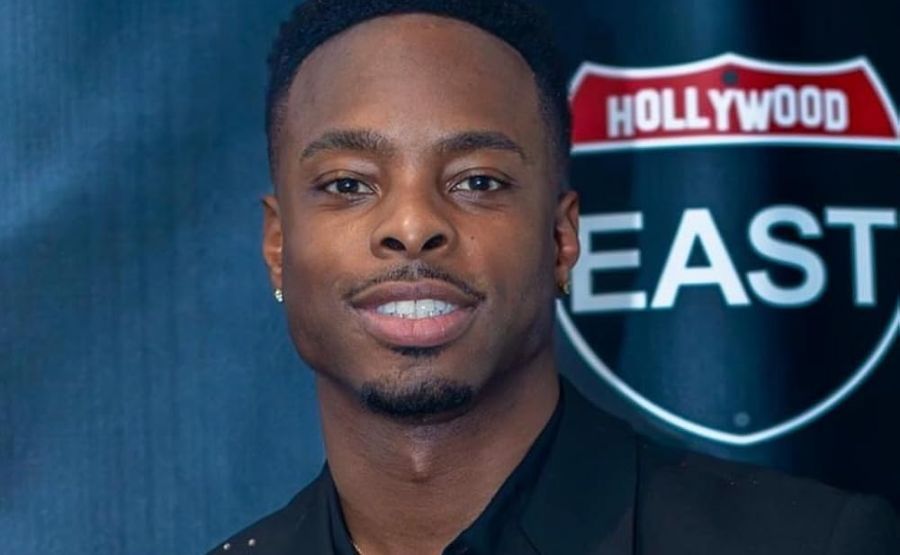
Additional Projects and Expanding the Range
While Wu-Tang was running, Johnell found time to expand into other projects.
In 2019, he was featured in NBA 2K20 — the enormously popular basketball video game — as a character named Bertie Barnett in the game’s story mode. For someone who had spent years playing basketball competitively before returning to acting, the combination was something like a natural convergence of two previous lives. The game reaches tens of millions of players annually, giving him visibility in an entirely different demographic.
He has continued to take television and film roles alongside and since the conclusion of Wu-Tang, building a roster of credits across both streaming and independent cinema that reflects his range and his ambition. He has spoken in interviews about wanting to expand beyond the hip-hop-adjacent roles that have defined his initial breakthrough — specifically mentioning an interest in playing sophisticated dramatic characters, legal professionals, or even eventually a Marvel character.
He also hosts a podcast and social media platform called The C.A.S.T., through which he engages with his audience and with the entertainment industry in a more direct, unmediated way than traditional media allows.
Personal Life: Faith, Fashion, and Finding His Person
Johnell Young has maintained a relatively grounded personal life through his rise to recognition. He has spoken about the importance of faith and the practice of manifestation — the belief that intentional, focused thinking about goals helps bring them into reality. It’s a framework that fits someone who walked away from acting, came back to it years later, and then found himself playing one of the Wu-Tang Clan on Hulu.
He has a genuine interest in fashion and has spoken about using clothing as a form of creative expression — another dimension of the creative identity that also expresses itself through acting.
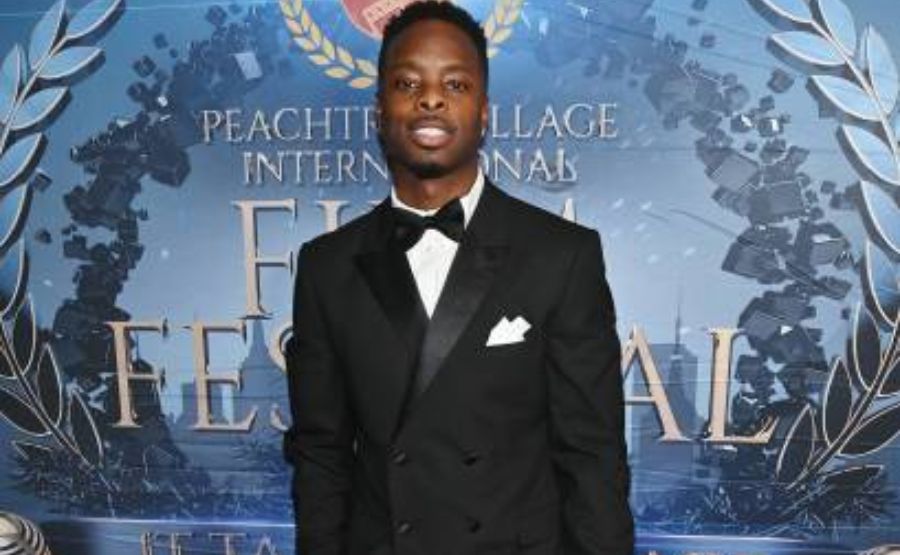
He has been connected to Briana Hampton — the two have attended industry events and been photographed together at occasions including film festivals. He is not married as per the most recent data available.
His upbringing in Staten Island, his years in Atlanta at Clark Atlanta University, and his professional life navigating New York and Los Angeles have given him a broad geographic and cultural foundation that informs both his personal outlook and the authenticity he brings to performance.
Challenges: The Gap Years and What They Required
The most defining challenge of Johnell Young’s career is not the kind that generates dramatic headlines. It is the kind that is actually more common and more difficult: being an actor who stopped for years and had to start over.
The entertainment industry has no formal mechanism for accommodating people who leave and return. There is no reintegration pathway, no institutional support for the returning performer. You come back and you start from where you can, which is usually much further back than where you had gotten before.
For Johnell, the return required rebuilding professional relationships, re-establishing industry credibility, and competing for roles against people who had never stopped accumulating credits while he was playing basketball overseas. The emotional work of confronting rejection as an adult — with the self-awareness to understand what it is and the resilience to absorb it anyway — is genuinely hard.
He did it. The process took several years of modest credits before Wu-Tang arrived as the breakthrough it became. That arc — patient, sustained, forward-directed — reflects the specific character that also served him well on a basketball court.
Financial Situation: Building Real Value
Johnell Young’s estimated net worth sits at approximately one million dollars — a figure that reflects his growing catalog of professional credits rather than the kind of wealth that accumulates after decades at the top of an industry.
He earns through acting fees from television and film, from the NBA 2K20 video game involvement, through modeling and brand partnerships, and through the social media and podcast content he creates under The C.A.S.T. brand. None of those streams individually generates life-changing income at this stage of his career, but they compound into a foundation that reflects genuinely growing professional value.
The trajectory suggests this number will grow. Actors whose breakthrough comes on prestige streaming series tend to see their earning capacity increase meaningfully in the years following that visibility. Johnell is in that phase now — after the Wu-Tang exposure, commanding better roles, better fees, and more options than before.
Life Today: Still Rising
As of 2026, Johnell Young is thirty-two or thirty-three years old, based in the entertainment ecosystem that spans New York, Los Angeles, and Atlanta, and actively building the next chapter of a career that is clearly still ascending.
He has multiple projects in various stages of development and production. He continues to engage his growing audience through The C.A.S.T. and his social media presence. He is modeling his professional trajectory on the kind of career that expands its range over time rather than staying locked in the lane that first produced success.
Final Words
Johnell Young’s story is fundamentally a story about the value of coming back.
He started young. He left when it got hard. He built himself into a legitimate college athlete and a professional basketball player. And then, in his mid-twenties, he looked at his life and decided he wasn’t done with acting after all.
What happened next is the kind of thing that makes people who believe in second chances feel vindicated. He came back, put in the work, rebuilt the credentials, and then landed the kind of role — GZA, across three seasons of a Hulu original — that changes what people think you’re capable of.
He grew up on the same Staten Island streets that produced the Wu-Tang Clan. He got to tell part of their story on screen. There is something satisfying about that specific circle closing.
He is still writing the remainder of his tale.
FAQs
1. Where was Johnell Young born?
He was born in 1993 in Staten Island, New York — the same borough that produced the Wu-Tang Clan, whose story he would later portray on screen.
2. What is Johnell Young best known for?
He is best known for playing GZA (Gary “The Genius” Grice) in Hulu’s Wu-Tang: An American Saga, across all three seasons of the critically received series from 2019 to 2023.
3. How did Johnell Young first get into acting?
He started performing in school plays and church performances around age eight or nine. His parents enrolled him with a New York talent agency, which secured his first professional credit in the 2001 film Pootie Tang, alongside Chris Rock, Busta Rhymes, and J.B. Smoove.
4. Why did Johnell Young stop acting as a teenager?
He has spoken openly about finding childhood rejection — the constant audition process producing far more “no” than “yes” — genuinely difficult to handle. He stepped away from acting and redirected his energy toward basketball.
5. Did Johnell Young play college basketball?
Yes. He attended Clark Atlanta University in Atlanta, Georgia, and was a member of the basketball team there. He also played basketball overseas after college and was at one point working toward a tryout with the New York Knicks’ G-League team.
6. When did Johnell Young return to acting?
Around 2016, in his mid-twenties, the desire to pursue acting returned. He began auditioning again and rebuilding his professional presence in the industry.
7. What was Johnell Young’s role in All Eyez on Me?
He played Ray Luv — a real rapper from Tupac Shakur’s close circle — in the 2017 biographical film about Tupac’s life. The role was an early credit in his return to the industry.
8. What is The C.A.S.T.?
It is a podcast and social media platform that Johnell hosts, through which he engages with his audience, discusses the entertainment industry, and shares content beyond his on-screen work.
9. Was Johnell Young in a video game?
Yes. He appeared as a character named Bertie Barnett in the story mode of NBA 2K20, the basketball video game. Given his competitive basketball background, the role was a natural fit.
10. Who is Johnell Young’s family connection to the entertainment industry?
His aunt, Vanessa Jefferson, is an actress. She was one of his earliest exposures to what a professional performing career could look like.
11. What is Johnell Young’s estimated net worth?
Approximately one million dollars, accumulated through acting fees, modeling and brand work, the NBA 2K20 involvement, and his social media and podcast content through The C.A.S.T. This reflects a growing career trajectory rather than a ceiling.
12. What are Johnell Young’s goals for his future career?
He has expressed a desire to expand beyond the hip-hop-adjacent roles that have defined his early career, specifically mentioning an interest in portraying sophisticated dramatic characters, legal professionals, and eventually a Marvel superhero character.
Explore ideas that elevate your thinking with The Elevate Magazine.