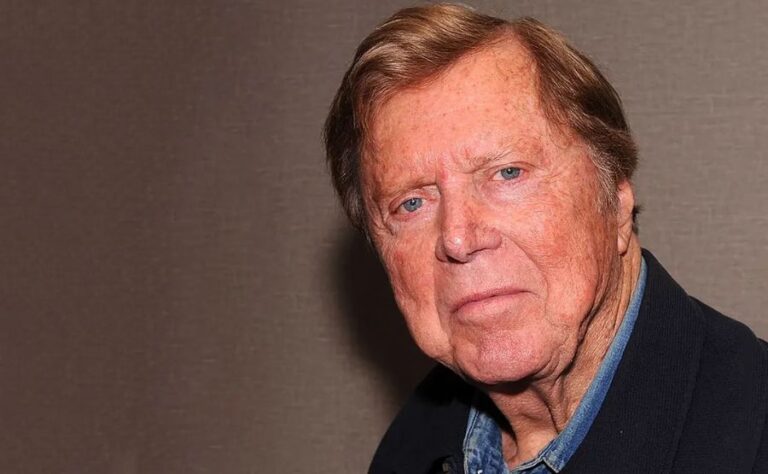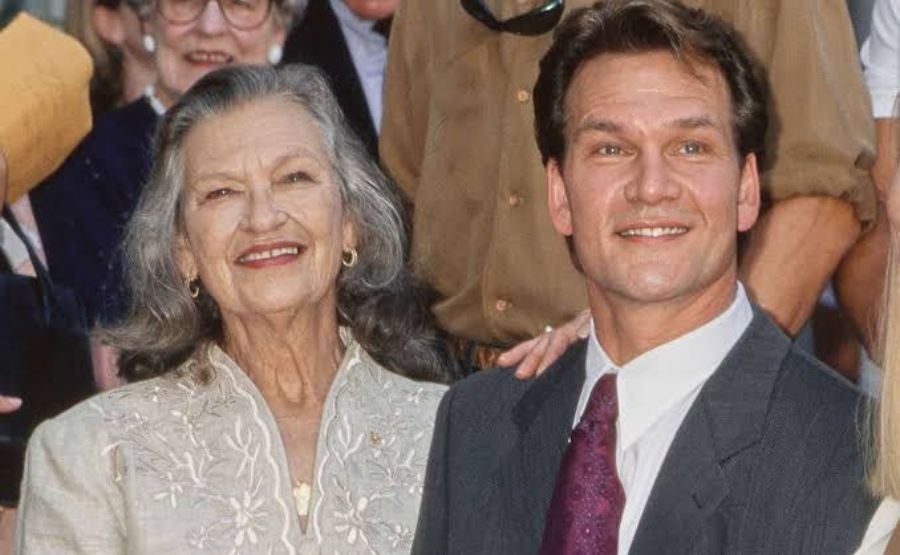
Vicky Swayze: The Life and Loss of Patrick Swayze’s Eldest Sister
| Quick Bio | |
| Full Name | Victoria Lynn Swayze |
| Born | June 8, 1949, Houston, Texas, USA |
| Died | December 2, 1994, Van Nuys, California, USA |
| Age at Death | 45 |
| Nationality | American |
| Occupation | Dancer, Actress, Performer |
| Known For | Sister of Patrick Swayze; accomplished performance artist in theatre and dance |
| Parents | Jesse Wayne Swayze and Patsy Swayze |
| Siblings | Patrick Swayze, Don Swayze, Sean Swayze, Bambi Swayze (adopted) |
| Marriages | Married twice (spouses’ names not publicly documented) |
| Cause of Death | Suicide by overdose of painkillers |
Introduction
Not every story that matters gets told. Vicky Lynn Swayze is one of the people who spent a lifetime in the long shadow of a famous family — talented, pressured, beloved, and ultimately lost to a battle that was fought almost entirely in private. Most people encountered her name only in obituaries or footnotes about her brother Patrick, the actor who lit up movie screens in Dirty Dancing and Ghost. But Vicky’s story is its own thing. It is a story about what it costs to grow up Swayze, about a woman who danced and performed and struggled and disappeared into her demons, and about the kind of grief that changes the people left behind.
Patrick called her death the turning point of his life. He said it out loud, in interviews and in print. For someone who experienced several pivotal moments in their life, that is a big deal. Understanding why requires understanding who Vicky actually was — not just as a tragic footnote, but as a person who lived and worked and tried.
This is her story, told as honestly as the available record allows.
See also “Paul Edward Hospenthal: From Golf to a Life in the Spotlight“
A Household Built on Discipline and Dance
Houston, Texas in the late 1940s was not a place that produced Broadway stars as a matter of course. But the Swayze household operated according to its own internal logic, one where excellence in performing arts was less a choice than an expectation woven into daily life.
Vicky Lynn arrived first — the eldest child of Jesse Wayne Swayze and Patsy Swayze, born in the summer of 1949. She would be followed over the next several years by her brother Patrick in 1952, then Don in 1958, Sean in 1962, and finally Bambi, who was adopted and born in 1966. Five children total. Five personalities to shape, push, and in some ways define.
Their father Jesse was a civil engineer who had been a Texas state champion cowboy — a quiet, steadying presence in a household that often ran hot. He was the emotional center of the family in ways that Patrick would later describe with real tenderness. Their mother Patsy was a different kind of force entirely. She was a dancer and choreographer who ran the Swayze Dance Studio in Houston — a serious, well-regarded operation. Patsy was not the kind of parent who asked her children whether they wanted to pursue dance. She simply made clear that they would, and they would do it at the highest level available to them.
Patrick would later write, with characteristic honesty, that their mother made all of them feel that ordinary was never quite enough. The expectation was to be exceptional at whatever they attempted. The siblings themselves coined a phrase for the particular pressure they all felt: they called it “growing up Swayze.” It described an almost compulsive drive to be first, be best, and push past whatever limit had just been reached. It was motivating, occasionally exhausting, and for some members of the family, ultimately something more dangerous than motivation.
Vicky was the first child to absorb all of that. The firstborn in a family like this carries a specific weight. She was the one Patsy’s expectations landed on first. She was the one who set the standard — or failed to — before her siblings arrived to redefine it.
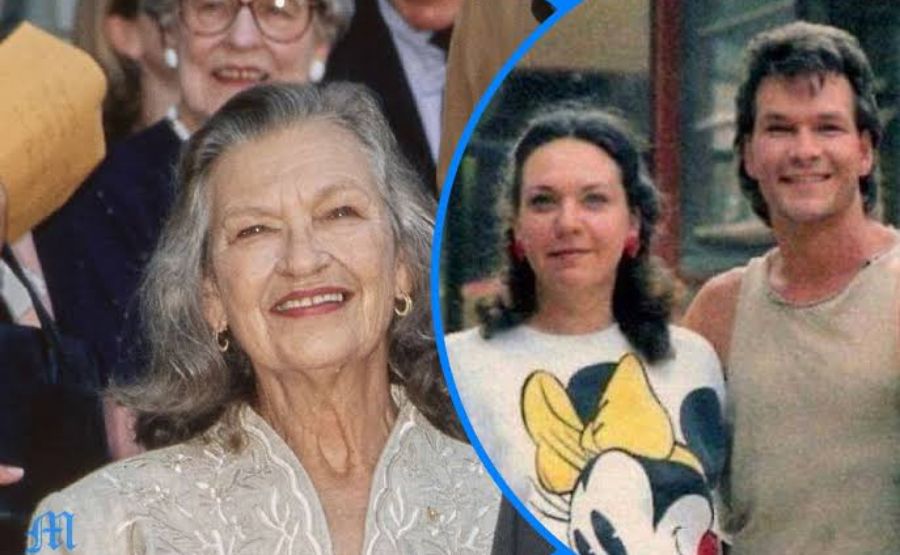
The Dancer Takes Shape
From the time she was small, Vicky trained at her mother’s studio. Ballet came first, as it does in serious dance households — the foundation on which everything else gets built. She picked up additional styles from there and developed what the Los Angeles Times would later describe as accomplished technique across both theatre and dance.
She was what the performing arts world calls a triple threat: she could dance, she could sing, and she could act. In a family where talent was the currency of approval, Vicky had real currency. She worked hard at it. The training was serious. The standards were high. And she showed genuine ability, not just effort.
Patrick, three years younger, came up through the same training environment. The two of them shared something that went beyond simply having the same mother and teacher. They shared a particular kind of formation — the kind that happens when you spend hours in the same studio, learning the same vocabulary of movement, being measured against the same demanding standard. It created a bond that Patrick would carry with him for the rest of his life and described publicly as one of the most significant relationships he had.
As she moved into young adulthood, Vicky worked as a performer. She built a career in the regional performing arts world — theatre productions, dance work, the kind of professional life that is real and demanding and largely invisible to people outside those circles. She was, by any honest measure, genuinely talented. She was not a household name. But neither was that the only measure of a performing arts career that mattered.
She was living a creative life that her family had prepared her for and that she had worked hard to inhabit.
The Weight the Family Never Fully Understood
Somewhere in the middle of all that work and family and performance, something else was happening inside Vicky that nobody around her could quite reach.
She struggled with depression. Not the ordinary low-level sadness that comes and goes — something deeper and more disorienting, the kind that arrives without warning and stays without invitation. Patrick would write about it later in his memoir The Time of My Life, published in 2009 shortly before his own death. He described a sister who had eventually been diagnosed with bipolar disorder on top of the depression — a combination that made her moods unpredictable and her life, at certain points, unmanageable.
The family witnessed something they didn’t fully have the tools to understand or address. Vicky would sometimes disappear. She would go silent, withdraw from the people around her, and surface again later in whatever state she happened to be in. Patrick described it as one of the hardest things about loving her — not knowing what to expect when she came back.
He also took on practical responsibility. He paid for her medical bills. He covered her living expenses during stretches when she couldn’t manage them herself. This was not the action of a famous brother doing charity. It was the action of a sibling who was deeply committed to another person’s survival and who carried real guilt about his ability — or inability — to make things better.
That guilt, as Patrick later made plain, never fully left him.
Marriage, Children, and the Years in California
At some point in her adult life, Vicky moved from Texas to California and settled in Van Nuys, a neighborhood in the San Fernando Valley north of Los Angeles. She was married twice, though the names of her husbands have never been confirmed in public sources. Whether she had children from these marriages is a question the record answers inconsistently — some credible accounts suggest she did, others make no mention of children at all. What is clear is that her personal life, like much of her inner life, remained largely private even from public scrutiny.
Her time in California placed her in closer geographic proximity to Patrick as his career was ascending. The late 1980s and early 1990s were the period when Patrick became one of the most recognizable actors in the world — Dirty Dancing in 1987, Ghost in 1990 — and he remained closely involved in his sister’s life even as those films were reshaping his professional identity. The famous brother and the struggling older sister, connected by blood and history and the particular language of a Houston dance studio decades earlier.
She continued to identify as a performer throughout her adult years. But the mental health challenges made sustained professional life difficult in a way that talent alone couldn’t compensate for.
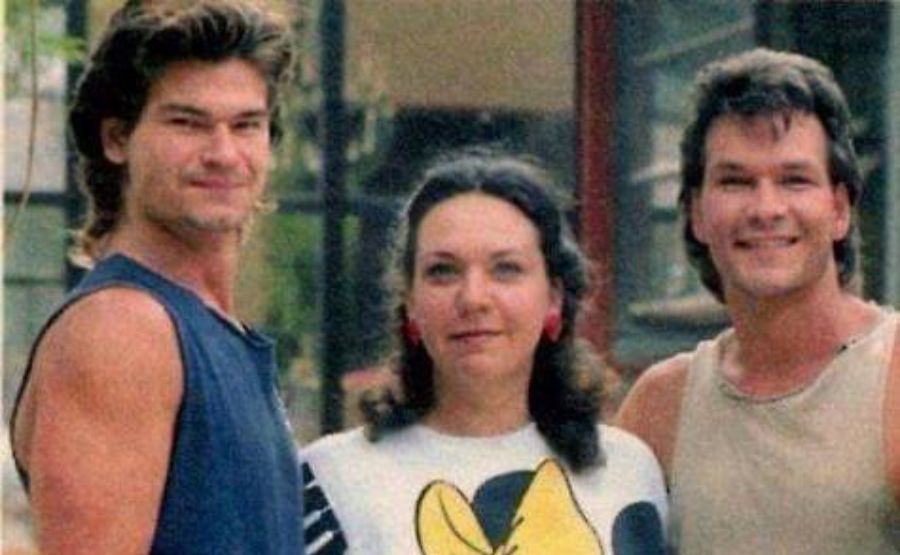
December 2, 1994
On December 2, 1994, Vicky Lynn Swayze died in Van Nuys, California. She was 45 years old. The cause of death was an overdose of painkillers, ruled a suicide.
She was found at her home. She had been struggling with depression and addiction for years — the two conditions feeding each other in the destructive way they often do, where the substance use that begins as relief from emotional pain gradually becomes its own separate crisis.
Patrick was 42 years old when his sister died. He had spent a significant portion of his adult life worrying about her, supporting her financially and emotionally, and trying to find ways to help her that she could actually receive. None of it had been enough. And that reality — that you can love someone completely and still be unable to save them — is one of the harder lessons that grief forces on the people who survive it.
He told the Daily Mail in 2005 that her death changed his life. That is not a small statement from a man who by that point had experienced a great deal.
How Her Death Affected Those Around Her
The Swayze family had already sustained one devastating loss before Vicky died. Their father Jesse had died of a heart attack in 1982, when Patrick was thirty. That loss had pushed Patrick toward serious drinking — his own well-documented struggle with alcohol that ran through the years that followed.
When Vicky died in 1994, Patrick made a decision. He sought treatment for his alcoholism. The loss of his sister became the moment he stopped finding reasons to put off getting help. He said publicly that her death pushed him toward a kind of reckoning — not just about his drinking, but about what he was living for and what he owed to his own life.
He also carried what he described as guilt and blame, particularly in connection to Vicky. The specific texture of that guilt — the question of whether he should have done more, seen more clearly, intervened differently — is the particular weight that comes with losing someone to suicide. Patrick spoke about it with enough honesty that you can sense it was something he sat with for a long time.
His response, in the end, was what he described as trying to find meaning. He said he made a promise to himself to honor the spirit of the person he had lost by making his own life better — so that her death would not be entirely pointless. It is the kind of thing people say in grief that sounds like a cliché until you understand that they actually meant it and actually tried to live by it.
Patsy Swayze, their mother, outlived both Vicky and Patrick. The losses compounded across decades in the way losses do in families where lives run hard and bright and sometimes very short.
The Legacy in the Margin
Vicky Lynn Swayze did not leave behind a filmography that people study or a dance legacy that gets commemorated in annual retrospectives. What she left is something harder to catalog: a presence in the life of her brother that shaped him in ways that continued to matter long after she was gone.
Patrick said that he chose more meaningful film roles in the years following her death. He said it made him think differently about what was worth doing with whatever time he had. That kind of influence — invisible in the historical record but real in the decisions it produced — is a form of legacy too.
The LA Times called her an accomplished performance artist in theatre and dance. That is the most specific professional endorsement in the public record about her work, and it comes from a credible source. It matters. She was not simply a famous person’s sibling who happened to exist. She was a trained performer who worked in her craft for years, who carried an enormous amount of pressure from childhood forward, and who fought a battle with her mental health that the people around her genuinely tried to help her win.
She didn’t win it. But she fought it for a long time.
Net Worth and Financial Picture
Vicky Lynn Swayze did not accumulate documented personal wealth. Her career as a regional performer in theatre and dance, while real, did not generate the kind of income that creates an estate worth discussing in financial terms. In her later years she was, by Patrick’s own account, financially dependent on his support — he paid her medical and living expenses. No net worth figure exists in the public record because there is no credible basis for one.
What is worth noting is that financial stability was part of what she struggled to maintain, and that her brother provided it as an act of love rather than obligation. That tells you something about both of them.
Final Words
Vicky Lynn Swayze was the first. The eldest child of a family that ran on ambition and discipline and the relentless expectation of excellence. She was taught to dance before she had much choice in the matter. She developed genuine talent and built a genuine performing career. She also carried a weight in her mind that the people who loved her most couldn’t lift, no matter how hard they tried or how much they paid.
Her story is not a cautionary tale about fame or a footnote in someone else’s biography. It is a human story about the gap between what families can see and what they can’t, about the limits of love as a practical tool against mental illness, and about the kind of grief that becomes a turning point for the people who survive it.
Patrick honored her by changing his life. He said so. He made it mean something. Accepting the loss and refusing to let it be the end of the story is perhaps the best that anyone left behind can do.
Vicky Lynn Swayze was 45 years old. She deserved more time.
If you or someone you know is struggling with mental health or thoughts of suicide, please reach out. The Suicide and Crisis Lifeline in the United States can be reached by calling or texting 988, which is open around-the-clock.
FAQs
1. Who was Vicky Lynn Swayze?
Vicky Lynn Swayze was an American dancer and actress, born in Houston, Texas in 1949. She was the eldest child of Patsy and Jesse Swayze and the older sister of actor Patrick Swayze. She worked as a performer in theatre and dance throughout her adult life and died in December 1994 at the age of 45.
2. When was Vicky Lynn Swayze born?
She was born on June 8, 1949, in Houston, Texas. Most reliable sources agree on this date, though some lower-quality sites have incorrectly listed 1958 — the birth year of her younger brother Don.
3. How did Vicky Lynn Swayze die?
She died on December 2, 1994, in Van Nuys, California, from an overdose of painkillers. Her death was ruled a suicide. She had battled depression and addiction for years.
4. What was her relationship with Patrick Swayze like?
By Patrick’s own account, they were extremely close. He described a deep bond rooted in shared childhood experiences and artistic training. He supported her financially through the later years of her life, paying for medical bills and living expenses, and her death was one of the most significant events of his life.
5. What mental health conditions did Vicky Lynn struggle with?
Patrick wrote in his memoir The Time of My Life that she had been diagnosed with depression and bipolar disorder. He described periods when she would disappear from contact with family for extended stretches, and the family often didn’t know what to expect when she resurfaced.
6. Did Vicky Lynn Swayze have children?
This is genuinely unclear. Sources conflict on this question. Some indicate she had children from one of her two marriages; others make no mention of children at all. Because no reliable primary source confirms the detail either way, it cannot be stated definitively.
7. Was Vicky Lynn Swayze a professional performer?
Yes. The Los Angeles Times described her as an accomplished performance artist in theatre and dance. She trained extensively at her mother Patsy’s dance studio and developed skills as a dancer, singer, and actress. Her professional career was built largely in the regional performing arts world rather than in Hollywood.
8. Who were Vicky Lynn’s siblings?
She had four younger siblings: Patrick Swayze (born 1952), Don Swayze (born 1958), Sean Swayze (born 1962), and Bambi Swayze (adopted, born 1966). Patrick died of pancreatic cancer in 2009. Sean died of complications from liver disease in December 2024. Don and Bambi are still living as of 2025.
9. How did Vicky Lynn’s death affect Patrick Swayze?
Patrick described her death as the catalyst for a profound change in his life. He sought treatment for his alcoholism following her death, and he said it made him re-examine what he was doing with his life and his career. He carried guilt about his inability to save her for the rest of his life and spoke about it publicly on multiple occasions.
10. Where did Vicky Lynn Swayze live at the time of her death?
She was living in Van Nuys, California, in the San Fernando Valley area of Los Angeles, at the time of her death.
11. What did Patrick Swayze say publicly about her death?
He told the Daily Mail in 2005 that her death changed his life. In his 2009 memoir The Time of My Life, co-written with his wife Lisa Niemi, he wrote about the guilt and grief he carried, and described making a promise to himself to honor her spirit by living better. He also said publicly that his response to her death was to make a promise to himself that her death would not be pointless.
12. What is Vicky Lynn Swayze’s legacy?
Her professional legacy is modest by Hollywood measures — she worked as a performer in theatre and dance, received recognition from the LA Times, and trained under one of the most demanding dance instructors in Houston. But her broader legacy is the influence she had on her brother. Patrick credited her death with prompting him to get sober, to seek meaning, and to approach his remaining years with greater intentionality. That kind of influence, while invisible in award records or box office tallies, is real and lasting.
Explore ideas that elevate your thinking with The Elevate Magazine.