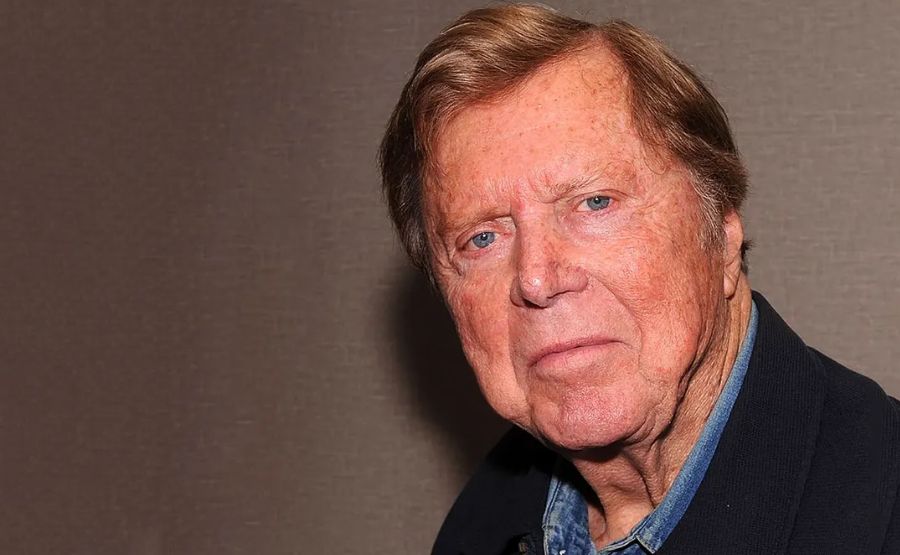
Edd Byrnes Net Worth: The Boy Who Combed His Way Into Television History
Quick Bio
| Detail | Info |
| Full Name | Edward Byrne Breitenberger (stage name: Edd Byrnes) |
| Born | July 30, 1932, New York City, New York, USA |
| Died | January 8, 2020, Santa Monica, California, USA |
| Age at Death | 87 |
| Nationality | American |
| Occupation | Actor, singer |
| Known For | “Kookie” on 77 Sunset Strip (ABC, 1958–1964); Vince Fontaine in Grease (1978) |
| Hit Song | “Kookie, Kookie (Lend Me Your Comb)” with Connie Stevens — Billboard Top 5, 1959 |
| Career Active | 1956–1999 |
| Wife | Asa Maynor (m. 1962; divorced) |
| Son | Logan Byrnes (San Diego television news anchor) |
| Autobiography | ‘Kookie’ No More (1996) |
| TV Guide Honor | One of “25 Greatest Teen Idols” |
| Net Worth at Peak | ~$5 million |
| Net Worth at Death | ~$2 million |
Introduction: The Comb That Launched a Thousand Fan Letters
There is a very specific moment in American pop culture history when the television set transformed from a household appliance into a teen idol delivery machine. The moment has a name, a character, and a comb — and the man holding that comb was Edd Byrnes.
In 1958, a new detective show called 77 Sunset Strip debuted on ABC. It starred serious, handsome leading men. It had good writing and a jazzy sensibility. And buried within it, playing a parking lot attendant who wasn’t supposed to be the star, was a young actor named Edd Byrnes with dark hair, a knowing smirk, and the most compulsively interesting way of combing his hair that anyone had ever seen.
The letters arrived at a rate of fifteen thousand per week.
What happened next — the hit song, the magazine covers, the studio contract dispute, the career that stretched across four decades before fading into respectable supporting work — is the story of American television finding its first true teen idol and what that discovery actually cost the man at the center of it.
Edd Byrnes did not come from comfort. He was not manufactured by a studio system that spotted a talented kid in a performing arts school. He climbed out of poverty, survived a difficult and at times genuinely disturbing young adulthood, taught himself to act, drove to Los Angeles with almost nothing, and then caught lightning in a bottle in a way that neither he nor anyone around him quite knew how to sustain. His autobiography, published in 1996 and titled with the kind of directness that comes from hard-won honesty, was called ‘Kookie’ No More — and that title said everything about the complicated relationship between a real person and the character that simultaneously made him famous and trapped him there.
Early Life: New York, Poverty, and a Father Who Left Too Soon
Edward Byrne Breitenberger came into the world on July 30, 1932, in New York City. He was not born into the kind of environment that produces polished entertainers. His family was poor — genuinely poor, the kind of poor that means real material deprivation and the specific psychological weight that comes from growing up without financial security in one of America’s priciest cities.
His father was an alcoholic. The drinking shaped the household in all the ways alcoholism shapes households — unpredictably, corrosively, with a quality of instability that children carry well into adulthood even when they don’t understand its source. When Edd was thirteen, his father died.
That loss at thirteen is a particular kind of loss. Old enough to understand what death means, young enough to be entirely unequipped to process it. Old enough to feel the full weight of what was missing, young enough to spend years filling that hole with whatever substitutes presented themselves.
The name change was meaningful in its own small way. He took the name Byrnes as a teenager, honoring his maternal grandfather Edward Byrne — reaching backward for a stable identity at a moment when his immediate family had fractured. It was the kind of gesture that says something about who he was trying to become rather than who circumstance had made him.
See also “Akaash Singh Net Worth: The Dallas Kid Who Said What Everyone Was Thinking“
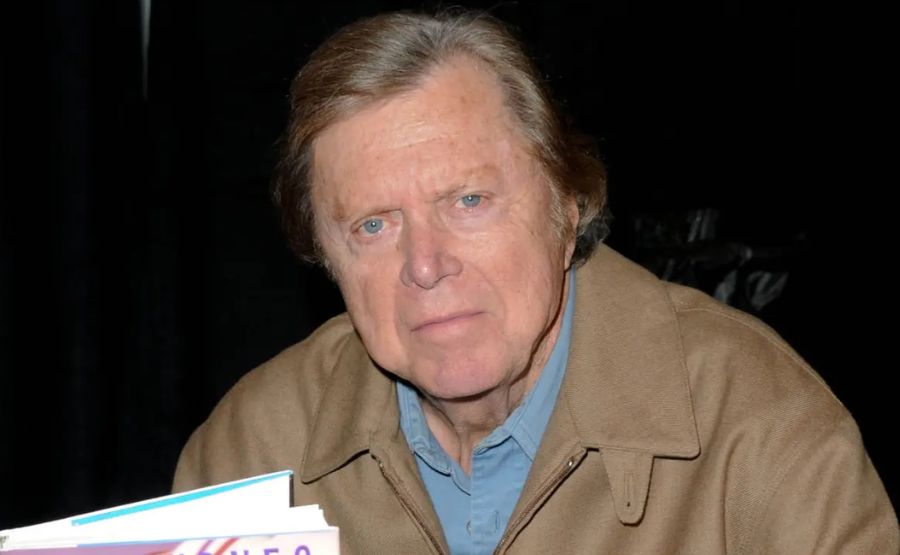
The Early Adulthood Nobody Talks About
Most accounts of Edd Byrnes’s life skip fairly quickly from his difficult childhood to his acting ambitions. His 1996 autobiography did not skip it.
At seventeen, he began working as a photographer’s model. The work was legitimate and unremarkable in itself — a good-looking young man in postwar New York had a reasonable shot at print work. But it opened doors to a world that was neither simple nor safe.
He wrote with uncomfortable candor about being drawn into male hustling with wealthy older men — clients who introduced him, as he described it, to a strange universe of art, wealth, sadism, luxury vehicles, sex for money, theater, and fine restaurants. It was an experience that encompassed genuine exposure to culture and genuine exploitation simultaneously, and he did not sentimentalize either aspect of it in his telling.
What that chapter of his life represents — how it shaped his ambitions, his self-understanding, his approach to the entertainment industry that he was about to enter — is something he chose to make part of the public record rather than leaving it hidden. The decision to write about it honestly, decades later, reflected something about the man who survived it: someone who had reached a point of genuine self-acceptance and who understood that the truth of a life is usually more interesting and more instructive than the version that gets cleaned up for general consumption.
He wanted to act. That remained constant through everything else.
Learning the Craft: Connecticut and the California Dream
Sometime in the mid-1950s, Edd began performing at the Litchfield Community Playhouse in Connecticut — a regional theater where the work was real and the stakes were low enough to actually learn something. Community theater of this kind was exactly where actors without industry connections or formal conservatory training could develop their instincts: in front of small audiences, in roles that required them to make choices rather than simply look good.
He stayed at Litchfield for roughly a year. It was enough to confirm that the desire to act was not a fantasy but something he could actually do. That confirmation meant more than any formal training might have, because it came from performance rather than instruction.
In 1955, he packed up and drove to Los Angeles. He had a few hundred dollars and what his son would later describe simply as a dream of making it in the entertainment business. That description manages to capture both the improbability and the absolute commonness of what he was attempting — thousands of young people made that same drive every year. Most of them turned around eventually.
He did not.
He took whatever work he could find during his early years in Hollywood. He performed with a summer stock theater company in 1956, doing the unpaid work that any young actor does when they are building experience before industry attention arrives. He tried for Broadway and did not succeed. He found his way onto television — a guest spot on Crossroads, then Wire Service, then Navy Log — the accumulation of small credits that keeps an actor’s momentum alive and puts his face in front of the people who make casting decisions.
77 Sunset Strip: The Character Who Took Over
When 77 Sunset Strip premiered on ABC in September 1958, Edd Byrnes was not its star. He played Gerald Lloyd “Kookie” Kookson III — a parking attendant who worked the lot at Dino’s Lodge, the Hollywood nightclub adjacent to the detective agency where the show’s leads conducted their investigations. The nightclub was real: it was owned by Dean Martin and served as both a filming location and a bit of Los Angeles glamour lending authenticity to the production.
Kookie was supposed to be a supporting player. A recurring presence. Local color. He was hip in the specific way that the late 1950s understood hipness — jazz-inflected slang, casual attitude, a cool that operated through studied indifference. And he combed his hair. Constantly. Compulsively. As a character quirk.
It became a phenomenon.
The audience response was immediate and overwhelming. Teenagers — particularly teenage girls — responded to something in Byrnes’s combination of looks, attitude, and that constant comb that no writer of market research had anticipated and no studio executive had planned for. The fan mail came in at fifteen thousand letters per week at the show’s peak. That volume forced the production’s hand. What had been written as a supporting character had to become something more substantial.
The producers offered Byrnes a more significant role. He was now in a position to negotiate, and he held out. He wanted what his audience’s response had earned him: proper co-star status and compensation to match. The studio resisted. There was a standoff. Byrnes eventually won.
It was a lesson in the specific power that genuine audience connection creates — a power that exists independent of what any executive thinks you deserve, because it belongs to the audience rather than to the studio.
He appeared on 77 Sunset Strip across most of its run from 1958 to 1964. The character of Kookie went from parking cars to working alongside the detectives, which was where the audience had always wanted him.
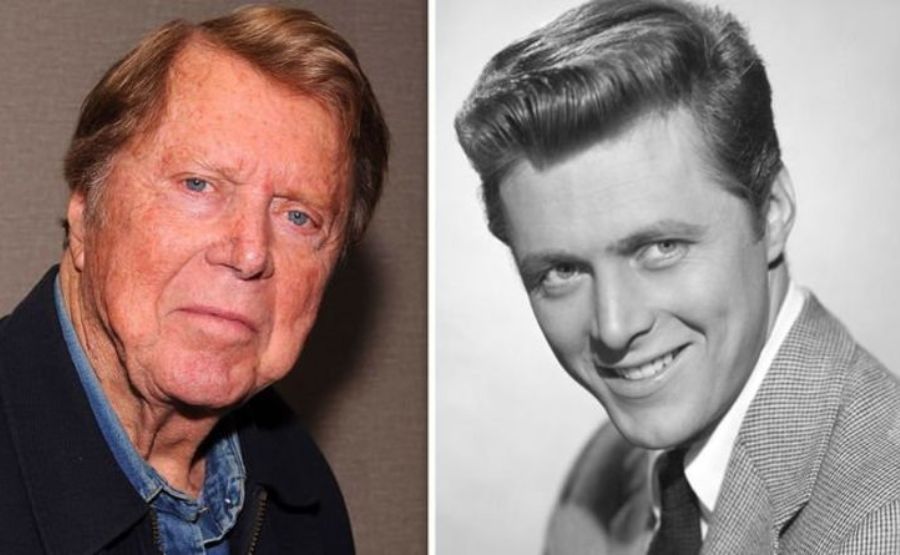
“Kookie, Kookie, Lend Me Your Comb”: The Song That Made It Official
In 1959, Edd Byrnes and actress Connie Stevens released a novelty duet that capitalized directly on the Kookie phenomenon. The song was called “Kookie, Kookie (Lend Me Your Comb)” — a playful piece of pop fluff built entirely around the combing obsession that had captured the audience’s imagination.
It landed in the top five on the Billboard Hot 100. It went gold.
The record demonstrated something that the television ratings had already suggested: the Kookie persona had moved beyond the audience that watched 77 Sunset Strip into a broader cultural space. You could buy the record without watching the show and still be in on the joke. You could be in on the joke without knowing much about the person behind the character.
That gap — between the character and the person, between Kookie and Edward Byrne Breitenberger — would become the central tension of the next several decades of Edd Byrnes’s life.
TV Guide named him one of the 25 Greatest Teen Idols in American television history. The designation was accurate. It was also, in the way of all such designations, a frame that threatened to become permanent.
Grease and the Second Act
After 77 Sunset Strip ended in 1964, Byrnes continued working. He appeared in various film and television productions through the 1960s and 1970s — working actor credits that kept him employed and in the industry without repeating the cultural moment he had experienced with Kookie.
The role that gave his career a genuinely memorable second peak came in 1978: Vince Fontaine in Grease.
The character was a slick, smooth television dance show host — a Dick Clark-inflected figure who emceed the dance contest and moved through the film’s world with practiced showbiz ease. It was a supporting role in a massive production that starred John Travolta and Olivia Newton-John and became one of the highest-grossing musicals in cinema history. Playing Vince Fontaine required exactly the kind of polished, self-aware cool that Byrnes had been working on since 77 Sunset Strip, and he delivered it.
Grease introduced him to an entirely new generation of viewers. For people who encountered him there first, in a film that would be rewatched across decades, he was the charming emcee in the spotlight — not the television star their parents remembered.
He continued acting through the 1980s and into the 1990s, with roles in Murder, She Wrote, Kung Fu: The Legend Continues, and other productions. His final professional credit came in 1999 with Shake, Rattle, and Roll: An American Love Story — four decades after “Kookie, Kookie” had made him famous.
Personal Life: Marriage, Son, and the Battles Within
In 1962, Edd Byrnes married Asa Maynor, an actress. The marriage produced their son Logan Byrnes and eventually ended in divorce. Logan grew up to become a television news anchor in San Diego — a career path that carries its own interesting symmetry with a father whose face was made by television.
The personal struggles Byrnes faced were serious and sustained. He battled addiction to both alcohol and drugs across significant portions of his adult life — a reality he chose to document in his 1996 autobiography ‘Kookie’ No More rather than conceal. The memoir was an act of candor that required genuine courage, particularly for someone whose public image had been built on cool self-assurance.
He overcame the addiction. The recovery was part of the honest accounting he offered in the book — not a triumphant climax designed to produce a redemption narrative, but a real development in a complicated life.
He never remarried publicly after the divorce from Asa Maynor.
Financial Situation: From Five Million to Two
Here is the honest picture of Edd Byrnes’s financial life, based on the most credible available sources.
At the peak of his career — during the 77 Sunset Strip years, when fan mail was arriving by the truckload and the gold record was selling — his net worth reached approximately $5 million. That reflects a combination of his television salary, his music earnings, the residuals and licensing income that a cultural phenomenon generates, and whatever investments he made during a period of genuine prosperity.
By the time of his death in January 2020, that figure had declined to an estimated $2 million. The decline reflects several realities: several decades of working actor income rather than star-level compensation, the financial costs that come with personal struggles including addiction, the natural erosion that time creates in entertainment residuals as older properties lose relevance, and the general financial patterns of a career that peaked early and maintained itself at a more modest level for a long time afterward.
Two million dollars is not poverty. It is the financial legacy of someone who experienced genuine fame, navigated genuine difficulty, and arrived at the end of a long life with enough to have lived comfortably in Santa Monica. It is a realistic number for an American actor whose peak years were in the late 1950s and who continued working intermittently for four more decades without ever returning to that first extraordinary height.
Death: January 8, 2020
Edd Byrnes died on January 8, 2020, at his home in Santa Monica, California. He was 87 years old. His son Logan announced the news, describing him as an amazing man and one of his best friends.
The cause was natural — the specific kind of ending that belongs to an old man who lived his life and came to the end of it at home.
Final Words
There is something genuinely poignant about a person who becomes so thoroughly identified with a character that the character’s name becomes their professional title — “Edd ‘Kookie’ Byrnes” in every headline, every retrospective, every obituary. It is both a tribute and a cage.
What Edd Byrnes managed to do, across the years that followed his first fame, was to keep living honestly despite that cage. He wrote a memoir that told his actual story rather than the marketable version. He acknowledged his addiction and his recovery. He described his complicated young adulthood with the unsettling clarity of someone who had worked through it rather than sealed it away. He continued working not because he had to maintain an image but because acting was what he knew how to do and what he had chosen.
He drove to Los Angeles with almost nothing in 1955 and spent the rest of his life in that city, doing the work, making the most of what the industry offered, and eventually letting go of the need for it to offer more.
The comb, the catchphrases, the fifteen thousand letters a week — those belong to a cultural moment that has passed and that will never come again. What remains is the fuller story of the man who was holding the comb. And that story turns out to be considerably more interesting.
FAQs
1. Who was Edd Byrnes?
Edd Byrnes, born Edward Byrne Breitenberger on July 30, 1932, in New York City, was an American actor and singer who became one of television’s first genuine teen idols through his role as Kookie on 77 Sunset Strip (1958–1964). He is also remembered for playing Vince Fontaine in Grease (1978) and for his Top 5 Billboard hit “Kookie, Kookie (Lend Me Your Comb)” with Connie Stevens. He died in Santa Monica, California on January 8, 2020, at age 87.
2. What was Edd Byrnes’s real name and why did he change it?
He was born Edward Byrne Breitenberger. He changed his name as a teenager, adopting the surname Byrnes to honor his maternal grandfather, Edward Byrne. The choice was personal — a way of connecting to a stable family identity at a difficult period in his life — and the name stuck throughout his professional career.
3. Who was Kookie and why was the character so popular?
Kookie — Gerald Lloyd “Kookie” Kookson III — was a parking lot attendant who worked at Dino’s Lodge, the Hollywood nightclub adjacent to the detective agency at the center of 77 Sunset Strip. His defining trait was his constant, compulsive hair-combing, his hip jazz-era slang, and an attitude of effortless cool. The character resonated with teenage audiences in a way nobody anticipated, generating 15,000 fan letters per week at peak popularity and making Byrnes one of the most recognizable television faces in America.
4. What was “Kookie, Kookie (Lend Me Your Comb)” and how did it do commercially?
It was a novelty duet recorded by Edd Byrnes and actress Connie Stevens in 1958, released to capitalize on the Kookie phenomenon and the character’s famous hair-combing habit. The song reached the Top 5 on the Billboard Hot 100 chart and was certified gold — a genuine commercial hit that extended the Kookie brand into music.
5. Did Edd Byrnes fight with the studio over his role on 77 Sunset Strip?
Yes. When it became clear that his character Kookie had become the most popular element of the show, Byrnes held out for a proper co-star contract and compensation commensurate with his audience response. There was a genuine standoff with Warner Bros. He ultimately won, receiving upgraded status and improved pay — a negotiation that demonstrated both his awareness of his own market value and the specific power that genuine audience connection creates.
6. What was Edd Byrnes’s role in Grease?
He played Vince Fontaine, the slick, charismatic television dance show host who emcees the dance contest sequence in the 1978 musical film. The character was a smooth showbiz type — a lightly satirical Dick Clark-inflected figure — and the role gave Byrnes a second, widely seen career moment in a film that went on to become one of the highest-grossing musicals in cinema history.
7. What did Edd Byrnes write in his autobiography?
His 1996 memoir, titled ‘Kookie’ No More, addressed the full arc of his life with notable candor. This included his impoverished New York childhood, the death of his alcoholic father when he was thirteen, a period in his late teens when he worked as a photographer’s model and was drawn into male hustling with wealthy older men, his addiction to alcohol and drugs during later years, and his eventual recovery. The book was an honest accounting rather than a promotional exercise.
8. Who was Edd Byrnes married to and does he have children?
He married actress Asa Maynor in 1962. The marriage produced one son, Logan Byrnes, who became a television news anchor working for KUSI-TV in San Diego. The marriage to Asa Maynor eventually ended in divorce, and Byrnes did not have any other publicly documented marriages.
9. What personal struggles did Edd Byrnes face during his life?
He struggled with addiction to both alcohol and drugs for significant portions of his adult life — a challenge he addressed directly in his 1996 memoir. He eventually achieved sobriety and recovery. The struggles were serious and extended but were ultimately something he worked through rather than succumbed to.
10. What was Edd Byrnes’s net worth?
At the peak of his fame during and shortly after the 77 Sunset Strip years, his net worth is estimated to have reached approximately $5 million. At the time of his death in January 2020, that figure had declined to approximately $2 million — reflecting the natural financial arc of a career that peaked early, was complicated by personal struggles, and continued at a more modest professional level for several subsequent decades.
11. Was Edd Byrnes recognized for his cultural impact?
Yes. TV Guide named him one of the 25 Greatest Teen Idols in American television history — a designation that acknowledged his singular impact on how television interacted with teenage audiences in the late 1950s. He is widely considered one of the earliest genuine TV teen idols, predating the wave of performers who followed in the form he helped create.
12. When and how did Edd Byrnes die?
He died on January 8, 2020, at his home in Santa Monica, California, of natural causes. He was 87 years old. His son Logan announced the news, describing him as “an amazing man and one of my best friends.” His death was unexpected in the immediate sense — no prolonged public illness preceded the announcement — but came at the end of a long and full life.
Explore ideas that elevate your thinking with The Elevate Magazine.