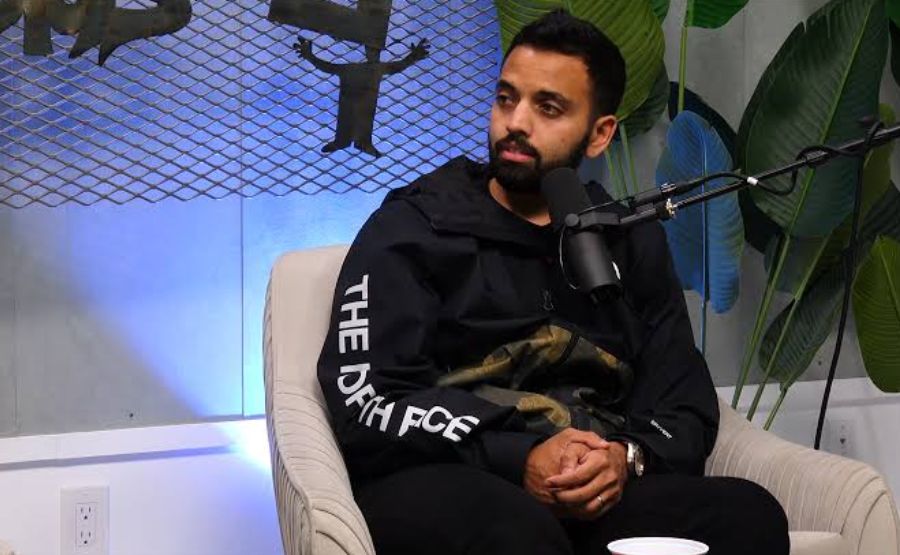
Akaash Singh Net Worth: The Dallas Kid Who Said What Everyone Was Thinking
Quick Bio
| Detail | Information |
| Full Name | Akaash Singh |
| Born | May 4, 1984, Dallas, Texas, USA |
| Age | 42 (as of 2026) |
| Nationality | American |
| Ethnicity | Indian-American; family from Uttar Pradesh |
| Education | Austin College (pre-med) |
| Occupation | Stand-up comedian, actor, podcaster, writer |
| Known For | Flagrant podcast (with Andrew Schulz); Bring Back Apu YouTube special; MTV’s Wild ‘N Out; Guy Code |
| Television | MTV’s Wild ‘N Out; MTV’s Guy Code; Netflix’s Brown Nation; HBO’s The Leftovers |
| Specials | Bring Back Apu; Gaslit (both YouTube) |
| Wife | Jasleen Chawla (married 2021) |
| Based In | New York City |
| Estimated Net Worth | ~$2–5 million |
Introduction: The Comedian Who Refuses to be Comfortable
Let me tell you about a guy from Dallas who was supposed to become a doctor, moved to New York City with his two best friends instead, spent years grinding through comedy clubs, landed on national television, became one half of one of the most listened-to comedy podcasts in America, released a YouTube special that crossed a million views in its first week, and has never once softened a punchline to make anyone more comfortable.
Akaash Singh is, by his own design, the kind of comedian who makes people laugh at things they weren’t sure they were allowed to laugh at. His comedy draws from the specific experience of growing up Indian-American in Texas — the cultural duality of traditional expectations at home and Western norms everywhere else — and expands outward from there into race, relationships, masculinity, politics, and the generally absurd texture of contemporary American life.
He is not for everyone. He does not try to be. And that commitment to an uncompromised point of view — present from his earliest club sets through his podcast work and into his recent specials — is the quality that has built him a genuinely devoted audience among people who appreciate comedy that doesn’t file down its edges before delivery.
He is forty-two years old, based in New York City, married, and still building something. This is his story.
Early Life: Dallas, Desi Culture, and the Comedy That Started in the Cafeteria
Akaash Singh was born on May 4, 1984, in Dallas, Texas — a city that is neither coastal nor small-town, a place where the ambition and the conservatism of the American South and the expansive self-confidence of Texas combine in ways that are distinctly their own. His family had roots in Uttar Pradesh — one of India’s most populous states, located in the northern part of the country, with a culture that carries specific expectations around education, career, family, and community standing.
His father is a business owner — someone who built something in Texas through the kind of sustained practical effort that immigrant entrepreneurship requires. Growing up with that model meant growing up with a clear, implicit message: you work hard, you build something real, and the path runs through education. The medical profession was the most common translation of that message in Indian-American households of that generation, which is why Akaash spent the early part of his college career pursuing pre-med coursework.
But the comedy started much earlier. He was performing in school talent shows from a young age — not as a passive participant in the standard school talent show ritual, but as someone who was already developing instincts about how to read a room, how to construct a joke, and how to be funny in front of people who weren’t yet expecting it from him. Those early talent show performances were the first laboratory for what would eventually become a professional toolkit.
The dual cultural experience of his childhood — navigating what his family expected of him at home and what the broader Texas social world was offering him outside — gave him the particular sensitivity to cultural code-switching that runs through his comedy. He understood from a young age what it felt like to be perceived as other, to have assumptions made about who you were based on where your parents came from, and to carry a set of cultural references that didn’t always match the ones around him. That experience doesn’t automatically produce a comedian. But when someone with the right comedic instincts grows up inside it, it produces someone who has something specific and genuine to say.
See also “Kurt Warner Net Worth: The Grocery Clerk Who Became a Hall of Famer“

Education: Pre-Med, Austin College, and the Turn That Changed Everything
Akaash attended Austin College — a private liberal arts institution in Sherman, Texas, located about seventy miles north of Dallas. It is a genuinely rigorous academic environment, and he pursued pre-medical coursework there — the path that his family background made the obvious choice.
He was good enough at the academic work. That was never the problem. The problem was that the thing he actually wanted to be doing with his time and energy was comedy. And the gap between what he was supposed to become and what he actually wanted to become was the kind of gap that eventually forces a decision.
The decision, when it came, was a significant one. He left the pre-med path, moved — alongside his two closest friends — to Los Angeles initially, and then to New York City, specifically to pursue a comedy career. This was not a casual pivot. It was the kind of choice that Indian-American families of his parents’ generation were not necessarily equipped to celebrate, and it required a certain amount of genuine conviction to make and maintain.
The move to New York was where everything began to take its professional shape. New York’s comedy club scene in the mid-to-late 2000s was a specific and demanding environment — hundreds of comics competing for spots at a handful of clubs, developing their sets through repetition and failure and gradual improvement in front of audiences who had seen everything and were skeptical about anyone new. Akaash entered that environment and started the long process of becoming good enough.
He has cited Chris Rock and Dave Chappelle among his most significant influences — two comedians whose work is characterized by fearlessness about uncomfortable topics, structural precision in joke construction, and a genuine point of view that is present in every performance rather than just the explicitly political material. Both influences are visible in his own approach.
Career Rise: Guy Code, Wild N’Out, and Grinding to National TV
His first significant national television exposure came through MTV. The network was running two shows — Guy Code and Wild ‘N Out — that served as platforms for comedians whose styles fit the specific energy of young, irreverent, culturally connected comedy.
Guy Code was a talking-head format show in which comedians and personalities offered their takes on the unwritten rules of male behavior — a format that gave everyone involved genuine camera time and the opportunity to develop a distinct on-screen persona. Akaash contributed regularly, and his combination of cultural specificity (the Indian-American perspective was not heavily represented in that format) and unfiltered delivery made him a distinctive presence.
Wild ‘N Out, hosted by Nick Cannon, was a freestyle improv comedy competition — a faster, louder, higher-energy environment that required different skills than the measured delivery of stand-up. Being able to hold his own in that format demonstrated range.
These television appearances were building blocks rather than career-defining moments — they expanded his name recognition beyond the New York comedy club circuit and introduced him to MTV’s audience of younger viewers who might not have been attending comedy clubs but were watching cable television. They also led to subsequent opportunities: a role in Netflix’s Brown Nation and an appearance in HBO’s prestige drama The Leftovers.
The Brown Nation role was particularly meaningful as a statement of representation — an Indian-American comedian appearing in a show specifically about South Asian-American experience rather than simply as a supporting presence in a broader American ensemble.
The Flagrant Years: A Podcast That Built a Movement
The career development that most significantly shaped Akaash Singh’s trajectory as a public figure was not a television show or a film role. It was a podcast.
Alongside comedian Andrew Schulz — who is himself one of the most successful independent comedians in America, known for his refusal to work within traditional comedy industry structures and his large self-built audience — Akaash co-hosted Flagrant 2, later known simply as Flagrant. The podcast ran for several years and became one of the most listened-to comedy podcasts in the country.
The format was conversational and unfiltered — two comedians and their inner circle discussing news, sports, culture, relationships, and whatever else came up, with the kind of candor that broadcast media cannot accommodate and that podcast audiences have repeatedly demonstrated they want. The podcast developed a devoted audience, generated millions of listens per episode at its peak, and built the kind of community around it that translates into real-world demand for live events and comedy specials.
For Akaash specifically, the podcast was a significant economic and visibility multiplier. His stand-up tours grew in scale as the podcast audience converted into live comedy ticket buyers. His name recognition extended well beyond comedy club regulars into the broader podcast-listening demographic.
He has since departed from Flagrant, with that separation generating its own discussion within the comedy community — but the audience he built during those years and the professional credibility the partnership established did not depart with him. He took both with him into the next chapter.
Major Achievement: Bring Back Apu and the Million-View Moment
In 2019, Akaash Singh released Bring Back Apu — a stand-up comedy special that he self-produced and released directly to YouTube rather than through a streaming platform or television network.
The title was a direct reference to the controversy around Apu Nahasapeemapetilon, the Indian convenience store owner character from The Simpsons, who had been targeted by criticism arguing that the character was a harmful Indian stereotype. The backlash from the documentary The Problem with Apu had led the show to effectively retire the character. Akaash’s special took a pointed opposite position — arguing, from the perspective of an actual Indian-American, that the erasure of Apu was its own kind of problem, and doing so through comedy rather than political argument.
The special crossed one million views within a single week of its release. That is a meaningful threshold — the kind of performance that validates the self-release model and demonstrates genuine audience demand without the intermediary of a major platform’s promotion and recommendation algorithm.
It was followed by Gaslit — a second YouTube special that continued demonstrating his ability to produce and release comedy content independently without sacrificing production values or audience reach.
The self-release model is itself a statement: Akaash Singh builds his career on his own terms, directly with his audience, without waiting for permission from gatekeepers.
Personal Life: Jasleen, Family, and the Values That Show Up in the Work
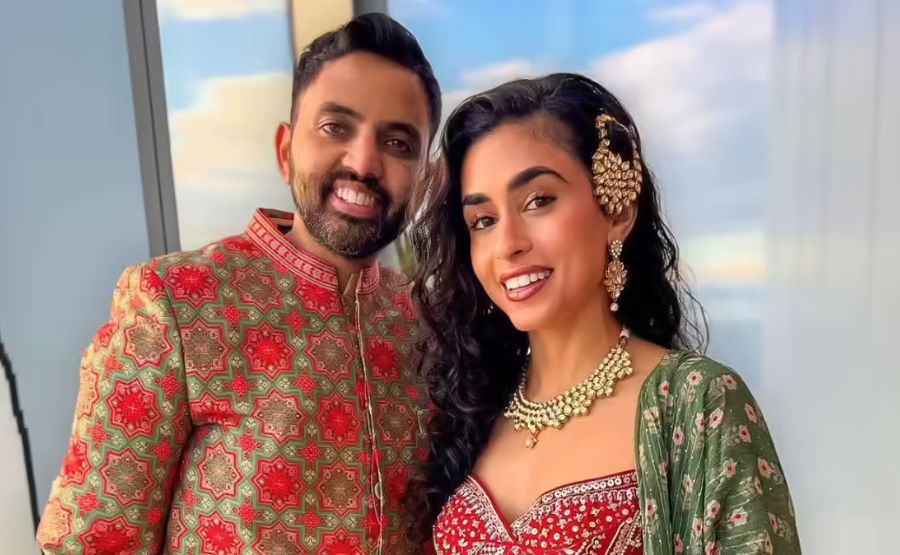
In 2021, Akaash Singh married Jasleen Chawla. The marriage brought together two people with shared cultural heritage — Jasleen is also of Indian background — and has been documented warmly but privately on social media. He has spoken about marriage and relationships with the directness that characterizes everything else about his public presence, making his personal life material without making it exposé.
The family dynamic of his upbringing — the first-generation immigrant experience, the father who built a business, the expectations around education and career — has been a consistent source of material in his comedy and a genuine source of identity in his personal life. He has described the Indian-American experience of navigating family expectations with affection rather than resentment, which is a more nuanced position than the simple “immigrant parent comedy” trope would suggest.
He has no publicly confirmed children as of 2026.
Challenges: The Independent Path and the Flagrant Departure
The challenge that has most defined Akaash Singh’s career is the challenge of building an audience on your own terms in an industry that has historically rewarded conformity to established pathways.
He did not get a late-night television deal. He did not get a Netflix original special with the promotional machine that comes with it. He built his audience through television work that gave him exposure without making him a star, through podcast work that gave him a devoted listening community, and through self-released specials that proved direct distribution can work without platform intermediaries.
The departure from Flagrant — the specifics of which have not been fully aired publicly — represented a moment of professional disruption. Separating from a podcast that had been central to his public identity and income structure for years requires genuine resilience and a clear enough sense of your own independent value to continue without that platform.
He has continued. That is the most relevant piece of information about how the challenge has resolved itself.
Financial Situation: Building Wealth the Independent Way
Akaash Singh’s net worth is estimated at approximately $2 to $5 million — a range that reflects the diversity of his income sources and the genuine uncertainty around what an independent comedian’s touring income, podcast revenue, YouTube views, television appearances, and merchandise generate in aggregate.
His income streams are multiple and mutually reinforcing. National touring generates direct ticket revenue — and as his audience grew through the podcast and YouTube specials, the scale of those tours expanded. YouTube revenue from his specials adds ongoing royalty income. His time on the Flagrant podcast would have generated revenue through sponsorships and advertising at significant scale. Television appearances at the SAG rate contributed to earlier career earnings.
He operates as an independent creator in the truest sense — building and owning his platform rather than licensing himself to a network or platform that controls the distribution relationship with his audience. That independence has a financial ceiling (he will not make the money that a Netflix exclusive deal pays) and a floor (his income is not dependent on a platform’s continuing interest in his work). The net result appears to be genuine financial stability and self-sufficiency.
He is not wealthy by entertainment industry standards. He is financially independent, professionally self-sustaining, and positioned to continue building.
Today: New York, Tours, and What Comes Next
As of 2026, Akaash Singh is forty-two years old, based in New York City with his wife Jasleen, and actively building the next chapter of his comedy career without the Flagrant platform that had been central to the previous chapter.
He continues to tour nationally and internationally. He has been committed to releasing multiple stand-up specials — ambitious by any standard, given that most comedians produce a new hour of material every year or two at most. His YouTube channel and social media presence maintain his direct connection to his audience between tour dates and special releases.
He is one of the clearest examples working today of what an independent comedy career looks like when the comedian controls the means of distribution — the touring, the specials, the social media, the merchandise — rather than relying on any single platform or institution to determine his reach.
Final Words
Akaash Singh’s career is a case study in building something real on your own terms in an industry that would rather you follow established paths. He was supposed to be a doctor. He moved to New York instead. He spent years in clubs developing a voice. He got on national television, built a podcast audience in the millions, released specials directly to YouTube that crossed a million views in a week, and then kept going when one of his most significant professional partnerships ended.
What makes him stand out is not any single moment but the consistency of the approach: fearless, direct, culturally specific, and completely uninterested in making his comedy more comfortable for audiences who aren’t quite ready for it. That approach cost him a broader mainstream breakthrough. It also built a more loyal and engaged audience than the mainstream breakthrough typically produces.
He is forty-two. He is still building. And the next special is probably already written.
See also “Kurt Warner Net Worth: The Grocery Clerk Who Became a Hall of Famer“
FAQs
1. Who is Akaash Singh?
Akaash Singh is an American stand-up comedian, actor, and podcaster born on May 4, 1984, in Dallas, Texas. He is of Indian-American heritage, with family roots in Uttar Pradesh. He is best known for co-hosting the Flagrant podcast with Andrew Schulz, his YouTube special Bring Back Apu, and television appearances on MTV’s Wild ‘N Out and Guy Code, Netflix’s Brown Nation, and HBO’s The Leftovers.
2. Where was Akaash Singh born and where is he from?
He was born in Dallas, Texas, into an Indian-American family. His family has roots in Uttar Pradesh, a state in northern India. He grew up in Dallas before eventually moving to New York City to pursue his comedy career.
3. What is Akaash Singh’s educational background?
He attended Austin College — a private liberal arts institution in Sherman, Texas — where he initially pursued a pre-medical course of study. He ultimately left the pre-med path to pursue comedy, relocating to New York City with two close friends.
4. How did Akaash Singh get into comedy?
He started performing in school talent shows from a young age, developing early instincts about joke construction and audience reading. He has cited Chris Rock and Dave Chappelle as significant influences. After leaving his pre-med path at Austin College, he moved to New York City and began the long process of developing his stand-up material through the city’s competitive club circuit.
5. What is the Flagrant podcast?
Flagrant — originally called Flagrant 2 — is a comedy podcast that Akaash Singh co-hosted with Andrew Schulz, discussed news, sports, relationships, and culture with the kind of unfiltered candor that podcast formats allow and broadcast media doesn’t. The podcast became one of the most listened-to comedy podcasts in the United States and significantly expanded Akaash’s audience beyond his stand-up following.
6. What is Bring Back Apu?
Bring Back Apu is a stand-up comedy special that Akaash Singh self-produced and released directly to YouTube in 2019. The title references the controversy surrounding the Simpsons character Apu Nahasapeemapetilon, arguing from an Indian-American perspective against the character’s effective retirement. The special crossed one million views within its first week of release, validating Akaash’s direct-distribution model.
7. Is Akaash Singh married?
Yes. He married Jasleen Chawla in 2021. Jasleen is also of Indian heritage. He has spoken warmly about his marriage in public contexts without making extensive private details part of his public persona.
8. What television shows has Akaash Singh appeared on?
His television credits include MTV’s Wild ‘N Out and Guy Code, Netflix’s Brown Nation, and HBO’s The Leftovers. His Wild ‘N Out and Guy Code appearances provided his earliest significant national television exposure and helped build his audience beyond the New York club circuit.
9. What is Akaash Singh’s estimated net worth?
His net worth is estimated at approximately $2 to $5 million as of 2026, reflecting income from national touring, YouTube special revenue, podcast advertising and sponsorships during his time on Flagrant, television appearances, and merchandise. He operates as an independent creator rather than under a major platform deal.
10. Why did Akaash Singh leave Flagrant?
The specific reasons for his departure from the Flagrant podcast have not been fully disclosed publicly by either Akaash or Andrew Schulz. He has continued building his comedy career independently following the separation.
11. What makes Akaash Singh’s comedy distinct?
His comedy is characterized by fearlessness about uncomfortable topics — particularly around race, cultural identity, masculinity, and American political and social dynamics. He draws heavily from his specific experience as an Indian-American who grew up navigating the dual pressures of traditional family expectations and broader Western culture, giving his material a specific cultural grounding that distinguishes it from more generic observational comedy.
12. What is Akaash Singh doing in 2026?
He continues to tour nationally and internationally, maintains a YouTube presence through his specials and clips, and continues building his independent comedy career following his departure from Flagrant. He is forty-two years old, based in New York City, and actively developing new material and specials.
Explore ideas that elevate your thinking with The Elevate Magazine.