
Jon Provost Net Worth: The Boy Who Will Always Be Timmy
Quick Bio
| Detail | Info |
| Full Name | Jonathan Bion Provost |
| Date of Birth | March 12, 1950 |
| Place of Birth | Los Angeles, California, USA |
| Nationality | American |
| Occupation | Actor, Author, Animal Welfare Advocate |
| Known For | Timmy Martin on Lassie (CBS, 1957–1964) |
| Years Active | 1953–present |
| Education | BA in Psychology |
| First Marriage | Sandra Goosens (1979–1993; divorced) |
| Current Spouse | Laurie Jacobson (married 1999) |
| Children | Two |
| Autobiography | Timmy’s in the Well (2007; updated 2011) |
| Hollywood Walk of Fame | Star at 7080 Hollywood Blvd. (1994) |
| Estimated Net Worth | ~$2 million |
Introduction
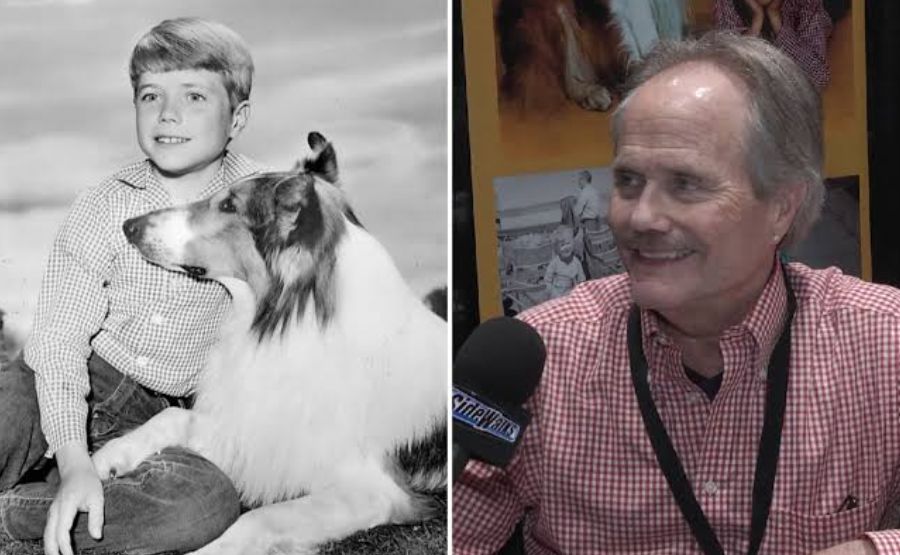
Ask almost anyone who grew up watching television in the late 1950s or early 1960s to describe Timmy from Lassie, and they’ll paint you a picture without hesitating: a blond-haired boy in a checkered shirt and jeans, running through fields with a magnificent rough collie at his side, getting into trouble and getting rescued, week after week, in a world where loyalty between a boy and his dog was the most reliable thing in the universe.
That boy was Jon Provost. And the story of what it meant to be that boy — to become famous before you had the emotional architecture to handle it, to carry a character beloved by millions into an adult life that television had never prepared you for — is considerably more complicated and considerably more interesting than the clean pastoral image of Timmy Martin ever suggested.
Jon Provost has been candid about all of it. The depression. The dyslexia that went undiagnosed through his entire childhood. The Sunset Strip years of sex, drugs, and rock and roll that followed the end of his child stardom. The long retreat to Northern California wine country, where he tried to figure out who he was when the cameras weren’t rolling. The autobiography that finally let him tell the whole story.
He got his Hollywood Walk of Fame star in 1994. He donated his famous high-top sneakers to the Smithsonian Institution. He is 75 years old and still shows up at conventions and events where fans who watched Lassie as children — who are now grandparents themselves — tell him what the show meant to them.
Timmy is still down the well in the cultural imagination of millions of people. And Jon Provost got out of it long ago.
Los Angeles, 1950: Where It Began
Jonathan Bion Provost was born on March 12, 1950, in Los Angeles — which, in retrospect, was a convenient starting point for a career in the entertainment industry, though nobody plans these things.
His mother was a devoted fan of actress Jane Wyman — the kind of fan who paid close attention to casting announcements and kept up with what the studios were producing. When she heard that a film called So Big was looking for a young child to play Wyman’s son, she took action. Jon was two years old, maybe nudging toward three, and he passed the audition.
This is an important detail about how the career started: it wasn’t Jon’s ambition. It was his mother’s connection to an actress she admired. That’s not unusual in child acting — most of the children who appear in early films and television got there through a parent’s initiative rather than their own, because children that young don’t have career ambitions in any meaningful sense. What mattered was that once they put him in front of a camera, something clicked. He was a natural.
The family had no particular show business background. They were Angelenos who had accidentally stumbled into the entertainment industry through a fan’s enthusiasm and a child who happened to be photogenic and comfortable on a set. The industry embraced what it found.
See also “Edd Byrnes Net Worth: The Boy Who Combed His Way Into Television History“
Before Lassie: A Working Child Actor
By the time Jon Provost won the role of Timmy Martin at the age of seven, he was — and this surprised people who discovered it later — already a seasoned professional. The Timmy casting was not a first audition. It was the latest in a string of film and early television appearances that had been accumulating since he was barely old enough to walk.
So Big (1953) with Jane Wyman and Sterling Hayden. The Country Girl (1954) — the film that earned Grace Kelly an Academy Award, in which he played the son of Kelly and Bing Crosby. Back from Eternity (1956) with Anita Ekberg. Escapade in Japan (1957) — which featured, in a small uncredited role, a young actor named Clint Eastwood who was at that point not yet famous by any stretch of the imagination.
That is an extraordinary early filmography for any actor, let alone one who hadn’t yet started second grade. He was working with the biggest names in Hollywood during what was arguably the peak of the studio system’s glamour era, playing small parts but absorbing what it meant to be on a professional film set from the very beginning of his conscious life.
The child acting world of the early 1950s was a particular environment — competitive, demanding, entirely dependent on parental ambition and management, and largely indifferent to what any of it was doing to the children at its center. There were no protections in place comparable to what exist today. Children worked long hours, were subject to the pressure of professional productions, and were expected to perform on demand without the emotional support structures that adults take for granted.
Jon handled it. He was good at it. And in 1957, the producers of Lassie came looking for a new young lead.
Lassie: Seven Seasons, International Fame, and a Collie Who Couldn’t Go to Australia
Tommy Rettig had been Lassie’s original young companion on the CBS series — playing Jeff Miller through the show’s first three seasons. By 1957, Rettig had simply grown too old for the role. The producers needed a new boy, a younger one, someone who could carry the relationship with the dog with the same emotional authenticity that had made the show a hit.
Jon Provost auditioned. They chose him for his screen presence, his prior professional experience, and the natural comfort he brought to the camera. He was cast as Timmy Martin — an orphaned runaway whom Lassie brings home to the farm. The character quickly became part of the fabric of the show, and the show quickly became one of the most watched programs on American television.
For seven seasons — from 1957 through 1964, spanning seasons 5 through 11 — Jon Provost was Timmy. The checkerboard shirts. The jeans. The blond hair. The absolute dependability of Lassie showing up when Timmy was in trouble. The show ran in a world where the central premise was that a dog’s loyalty and intelligence could save a child from any danger the world produced, and that premise resonated with American families in ways that kept them returning every week.
The show was not without its dangers for its young star. Jon nearly drowned on the set during production of one episode — a genuine close call that he has described in interviews and in his memoir. The television world that was presenting a weekly image of safety and order was, for the people working inside it, subject to the real risks that any physical production involves.
His favorite episode from the entire run is the three-part “Lassie’s Odyssey” from Season 8, broadcast in 1962. Even now, he has said, watching it makes him tear up. That level of emotional connection to the material — fifty-plus years after it aired — tells you something about what those years meant to him, beyond simply the professional achievement.
The ending of his run came in 1964, written into the show’s narrative with a plot device that has since become a minor piece of television history. The Martin family was written off as emigrating to Australia to teach farming techniques. Lassie, however, could not accompany them — because Australian quarantine regulations would have prevented the dog from entering the country. It was a solution that the producers apparently found workable. Jon was fourteen years old. His seven years as Timmy Martin were over.
The Teenage Years and the Exit From Show Business
What happens to a child who has been famous since before they started school, when the fame suddenly ends at fourteen? In Jon Provost’s case, the answer involved a few more film roles and then a deliberate exit from the industry altogether.
This Property Is Condemned (1966) — a serious film with Robert Redford and Natalie Wood that was a very different world from the pastoral safety of Lassie. The Computer Wore Tennis Shoes (1969) — a Disney comedy with Kurt Russell. The Secret of the Sacred Forest (1970), shot in the Philippines. A handful of other small appearances.
And then he stopped.
He was eighteen years old when he made the decision to step away from the entertainment industry entirely. The Sunset Strip in the late 1960s was offering experiences that were very different from anything Timmy Martin had ever encountered, and Jon — like many young people of his generation — engaged with all of it. The sex, drugs, and rock and roll culture of that era was available in abundant quantity to a young man who had spent his childhood in Hollywood, and he found it.
He has been honest about this period. The depression that settled over him during these years was serious — what he has described as near-crippling at its worst. The dyslexia that had made school difficult throughout his childhood had never been properly diagnosed or addressed. He was navigating young adulthood with significant unresolved challenges and without the grounding that a more conventional childhood might have provided.
He headed north. To Sonoma County, in Northern California’s wine country, far from Hollywood and its particular pressures. He was going to figure out something different.
Sonoma County, Psychology, and Building a Real Life
In Sonoma County, Jon Provost went back to school and earned a Bachelor of Arts degree in psychology. The choice of subject is interesting in retrospect — psychology, the study of how human minds work, what shapes behavior, how people respond to their environments — feels like a natural field for someone who had spent his childhood inside an entertainment industry that had shaped him in ways he was only beginning to understand.
After graduating, he worked in the field of special education — using his psychology background to work with children who had learning differences and developmental challenges. This is a genuinely demanding, genuinely meaningful form of work, and the irony of someone with undiagnosed dyslexia working to help children navigate their own learning challenges is not lost.
He married Sandra Goosens in 1979. They had two children together. The marriage lasted fourteen years, ending in divorce in 1993.
He settled in Sonoma County and built the kind of life that had nothing to do with television — raising his children, working in a meaningful profession, living in a wine country landscape that was about as far from Hollywood as you could get while remaining in California.
The Return: New Lassie, the Walk of Fame, and Coming Full Circle
In 1989, Jon made the decision to step back in front of a camera. The New Lassie — a syndicated series starring Dee Wallace that updated the franchise for a new generation — offered him a recurring role as a real estate agent named Steve McCullough.
The return was meaningful in multiple ways. In one episode, he appeared alongside Tommy Rettig — the original Jeff Miller, Lassie’s first young companion from the 1954–1957 seasons — in a nostalgic reunion that connected the show’s history across decades. For fans who remembered both of them, it was an extraordinary moment.
He also wrote an episode of The New Lassie — moving to the other side of the creative process — that focused on the inhumane treatment of animals used in research. The episode earned him the Genesis Award for Outstanding Television in a Family Series. The animal welfare connection was not accidental. His long relationship with Lassie had given him a genuine passion for the advocacy of animals, and the Genesis Award recognized the seriousness with which he engaged that cause.
He was awarded a star at 7080 Hollywood Blvd. on the Hollywood Walk of Fame in 1994. — the ultimate institutional recognition of a career’s impact on American entertainment. The star honored Timmy Martin as much as Jon Provost, because the character and the actor had become, after thirty years, essentially inseparable in the public imagination.
He also donated the famous high-top sneakers that Timmy wore in Lassie to the Smithsonian Institution — an extraordinary act of cultural preservation that placed his character’s costume alongside other artifacts of American history. His mother had saved the costume. He gave it to the country.
Laurie Jacobson, Timmy’s in the Well, and the Story Finally Told
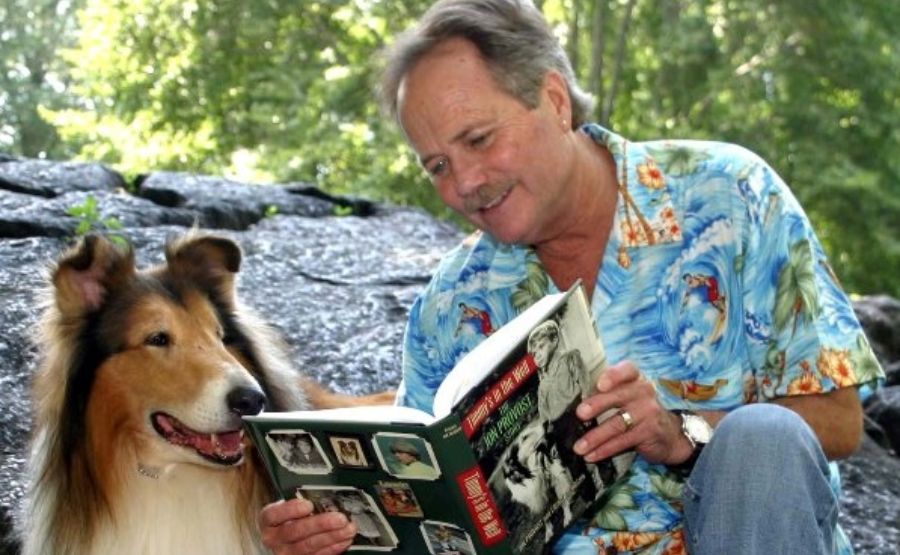
In 1999, Jon Provost married Laurie Jacobson — a famed Hollywood historian and author who has written extensively about the entertainment industry’s history. Together they co-authored Timmy’s in the Well: The Jon Provost Story, published in 2007 and updated in 2011. The title is a play on the famous (if largely apocryphal) cultural meme that Lassie was constantly being told that Timmy had fallen down a well — in reality the well scenario was only specifically depicted a handful of times, but it had become the shorthand for the show’s rescue-based premise.
The book tells the full story — the early childhood career, the Lassie years, the depression, the dyslexia, the Sunset Strip years, the retreat to Sonoma County, and the gradual rebuilding of a life and a career. It is a candid account by someone who had processed enough of what happened to him to describe it honestly.
The Provosts keep a rescue dog named Buddy — a 22-pound companion who represents the couple’s genuine commitment to the animal welfare values that have threaded through Jon’s post-Lassie life. Jon’s children live nearby. The family is close.
Net Worth: The Honest Picture
Jon Provost’s estimated net worth is approximately $2 million — a figure that reflects the cumulative earnings of a career that spans more than seven decades, from the early 1950s to the present, but that was never organized around the accumulation of significant wealth.
Child actors of his era were not protected by the same legal and financial frameworks that exist today — Coogan Law reforms, though in place, were not consistently enforced, and many child performers of the 1950s and 1960s found that their earnings had been managed, spent, or simply not preserved in ways that provided lasting financial security. How much of Jon’s Lassie earnings remained available to him as an adult is not documented.
His adult income has come from convention appearances, speaking engagements, the autobiography, television and film work since his return in 1989, and various projects related to his public persona. He has been consistent and visible in the convention circuit that caters to fans of classic television — a community that remains deeply loyal to the shows and performers of that era.
He lives comfortably and has spoken about his financial life without complaint. The $2 million figure is modest by Hollywood standards but represents a genuine and stable position built across a long life.
Final Words
Jon Provost’s biography is ultimately a story about the difference between what a person appears to be from the outside and who they actually are from the inside — and about the very long journey it can take to close that gap.
From the outside, for most of his life, he was Timmy. The boy in the checkered shirt. The child who ran with Lassie through fields and got rescued from wells and embodied the absolute safety of a world where loyalty and love were always enough. That image was beloved by millions. It still is.
From the inside, it was considerably more complicated. The depression. The dyslexia. The confusion of being nationally famous at seven and out of the industry at eighteen. The Sunset Strip years. The retreat to wine country to figure out who he was without the cameras.
He figured it out. He got the psychology degree. He worked with children who needed help. He raised his own children. He wrote the memoir. He married the woman who helped him tell the story. He donated the sneakers to the Smithsonian. He still shows up at conventions and signs autographs and tells audiences what the show meant to him — and hears, in return, what it meant to them.
Timmy’s in the well. Jon Provost climbed out decades ago. And the view from up here, it turns out, is pretty good.
See also “Edd Byrnes Net Worth: The Boy Who Combed His Way Into Television History“
FAQs
1. Who is Jon Provost?
Jon Provost, born Jonathan Bion Provost on March 12, 1950, in Los Angeles, is an American actor best known for playing Timmy Martin — the young orphan adopted by the Martin family — in the CBS series Lassie from 1957 to 1964. He was already a working child actor before Lassie, having appeared in films with Bing Crosby, Grace Kelly, and Jane Wyman from the age of two.
2. How old was Jon Provost when he started acting?
He was approximately two or three years old when he made his film debut in So Big (1953), playing the son of Jane Wyman and Sterling Hayden. By the time he was cast as Timmy Martin at age seven in 1957, he had already appeared in numerous films and early television productions.
3. Why did Jon Provost leave Lassie in 1964?
The show’s writers handled his departure by writing the Martin family off to Australia to work in agriculture. The plot device specified that Australian quarantine regulations would prevent Lassie from accompanying them, allowing the show to continue with a new human companion for the dog. Jon was fourteen at the time.
4. What did Jon Provost do after Lassie?
He made a few additional films in the late 1960s and early 1970s, including This Property Is Condemned (1966), The Computer Wore Tennis Shoes (1969), and The Secret of the Sacred Forest (1970). He then left show business entirely at eighteen, moved to Northern California’s Sonoma County, earned a BA in psychology from college, and worked for a period in special education.
5. When did Jon Provost return to acting?
He returned to television in 1989 when he joined the cast of The New Lassie as a recurring character named Steve McCullough, a real estate agent. He also wrote an episode of the show focused on animal research, which earned him a Genesis Award for Outstanding Television in a Family Series.
6. What is Jon Provost’s Hollywood Walk of Fame star?
He received a star on the Hollywood Walk of Fame in 1994 at 7080 Hollywood Boulevard in Los Angeles, recognizing his career’s impact on American entertainment — particularly his seven-season run as Timmy Martin on Lassie.
7. What did Jon Provost donate to the Smithsonian Institution?
He donated the iconic high-top sneakers that Timmy Martin wore throughout his years on Lassie. His mother had preserved his costume after the show ended, and Jon eventually decided the sneakers belonged in the national collection. They are now part of the Smithsonian’s holdings.
8. Did Jon Provost write an autobiography?
Yes. He co-wrote Timmy’s in the Well: The Jon Provost Story with his wife Laurie Jacobson, published in 2007 and updated in 2011. The book covers his full life story — including his depression, his undiagnosed dyslexia, the Sunset Strip years, and his journey to rebuilding his life outside of Hollywood.
9. Who is Jon Provost married to?
He married Laurie Jacobson in 1999. Jacobson is a well-regarded Hollywood historian and author who co-wrote his memoir with him. He was previously married to Sandra Goosens from 1979 to 1993, with whom he has two children.
10. What challenges did Jon Provost face after his child acting career?
He has spoken openly about battles with near-crippling depression following the end of his Lassie years, undiagnosed dyslexia that made schooling difficult throughout his childhood, and his immersion in the Sunset Strip culture of the late 1960s. He described these years in his memoir without minimizing their difficulty.
11. Does Jon Provost have a favorite Lassie episode?
Yes. His favorite is the three-part “Lassie’s Odyssey” from Season 8, which aired in 1962. He has said that watching it still moves him to tears even now — a testimony to the genuine emotional connection he had to the material despite the complicated context of his child stardom.
12. What is Jon Provost’s estimated net worth?
His net worth is estimated at approximately $2 million, accumulated through his early acting career, convention appearances, speaking engagements, The New Lassie work, his autobiography, and other projects over a career spanning more than seven decades. Child actors of his era were not always well protected financially, and his net worth reflects a life rebuilt on his own terms rather than significant accumulated child stardom wealth.