Rico Abreu Net Worth: The Dirt Track King Who Refuses to Be Defined by Anything But Speed
Quick Bio
| Detail | Information |
| Full Name | Rico Emanuel Abreu |
| Born | January 30, 1992 |
| Birthplace | St. Helena, California, USA |
| Nationality | American |
| Height | 4 ft 4 in (1.32 m) |
| Weight | ~95 lbs (43 kg) |
| Condition | Achondroplasia (most common form of dwarfism) |
| Occupation | Professional sprint car and dirt track racing driver; team owner |
| Known For | 2025 Kubota High Limit Racing Champion; 2014 USAC National Midget Series Champion; back-to-back Chili Bowl Nationals winner (2015, 2016) |
| Father | David Abreu (Napa Valley vineyard manager) |
| Spouse | Meagan Droud Abreu (married February 2024) |
| Children | None publicly reported |
| Team (2026) | Tony Stewart/Curb-Agajanian Racing, No. 24 |
| Estimated Net Worth | ~$2–$3 million (as of 2026) |
| Career Racing Debut | January 24, 2009 (Lakeport Indoor Speedway) |
Introduction: Small in Stature, Enormous in Spirit
Some athletes overcome ordinary obstacles to reach the top. Rico Abreu overcame something that most people would have assumed made professional racing physically impossible.
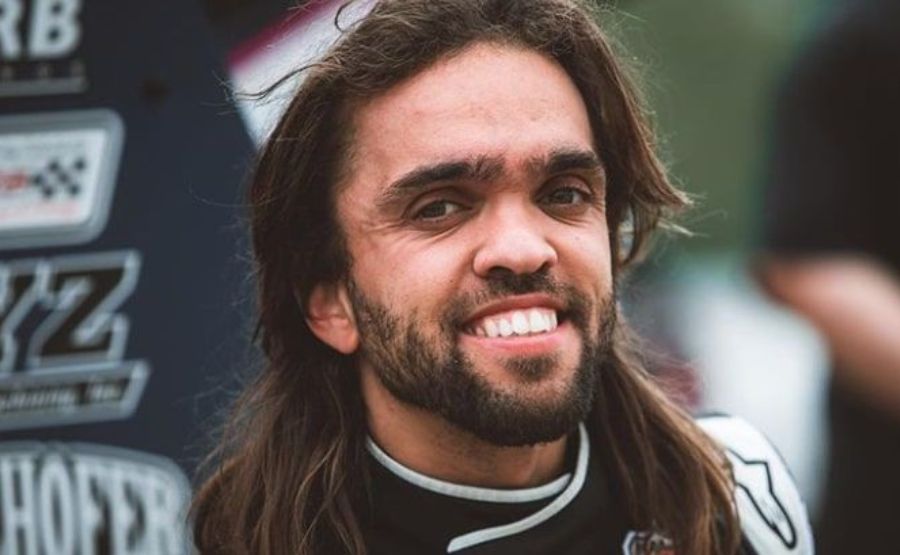
He stands four feet four inches tall. He was born with achondroplasia, a genetic condition that causes shortened limbs and compact stature. Racing cars are built for people a foot taller and fifty pounds heavier than him. The accelerator pedals, the steering column, the seat — none of it was designed with someone like Rico in mind.
And yet, as of 2026, he is one of the most decorated dirt track racing drivers in American motorsports. He has won the Chili Bowl Nationals — widely considered the most prestigious indoor midget car race on the planet — twice in a row. He is a national USAC midget champion. He won the entire Kubota High Limit Racing Series title in 2025. And he now drives for Tony Stewart‘s operation, one of the most respected teams in sprint car racing.
Rico Abreu’s story is not really a story about disability. It is a story about what happens when a person refuses to let anyone else write the ceiling on what they can achieve.
See also “Special Ed Rapper Net Worth: The Rise and Legacy of a Hip-Hop Pioneer“
Early Life: Vineyards, Backyard Ovals, and a Born Competitor
Rico grew up in the Napa Valley wine country of northern California — a landscape more famous for Cabernet Sauvignon than checkered flags. His father David Abreu is a prominent vineyard manager in that world, a well-respected figure in California’s agricultural heartland. Rico’s upbringing was rooted in farm country, close-knit family life, and a culture where hard work and physical competence were simply expected.
Even as a young child, Rico was wired for speed. He rode dirt bikes before he could seriously contemplate organized competition. The thrill of movement, of pushing something mechanical to its limits — it was already in him.
His parents were the kind who paid attention. When they saw what their son was drawn to, they did not redirect him. They did not suggest he try something safer or more physically conventional. Instead, his father did something remarkable: he built a one-eighth-mile asphalt oval right in their backyard. A real, functional racing track. Just so Rico could practice.
That single act of parental belief probably shaped everything that came after.
Rico is not the only sibling in his family. He has a younger brother who became a strong athlete in his own right, and a sister who showed animals at competitions — a common pastime in agricultural California. Their parents, by Rico’s own account, poured the same full support into all three children, whatever direction each one chose. No one in the family beside Rico has achondroplasia. It was simply a characteristic he was born with, not a crisis to be managed.
Education: Learning While Racing
The details of Rico’s formal schooling are not widely documented in the public record, which is not unusual for someone who entered serious competitive racing in his mid-teens and began building a national profile shortly after. What is clear from the timeline of his career is that racing was never an extracurricular activity for him — it was the central organizing force of his young life.
His first Outlaw kart start came on January 24, 2009. He was seventeen years old. Within months, he had already posted his first win. The following year, he went nine for eleven in his local division. This was not the pace of someone treating motorsports as a hobby alongside school. This was someone already living the career.
Career Beginnings: The Backyard Oval Led to the Big Time
The year 2009 brought Rico his competitive debut — and it brought him something else, too.
A teenage racer from a nearby town named Kyle Larson showed up at a charity karting event held at the Abreu backyard oval that year. The two immediately clicked. Larson, already pegged as a future star, and Rico, the kid who had built his skills on a strip of asphalt his dad had poured for him, became fast friends.
That friendship would change the course of Rico’s life.
By 2011, Larson had introduced him to sprint car racing — a wilder, more powerful, and more demanding form of open-wheel dirt competition than the karts Rico had been running. It was a significant leap. Sprint cars are violent, unforgiving machines. They slide and dance through loose dirt at terrifying speeds. Drivers who cannot feel the limits of traction instantly tend not to last long.
Rico felt those limits instinctively. He won the 360 Winged Sprint Car Rookie of the Year award in 2011, his debut year in the category. The learning curve that stumbles most newcomers barely slowed him down.
From 2013 through 2015, he was everywhere. He raced over a hundred times each of those three years, splitting his time between midget cars and winged sprint cars, racking up double-digit wins per season. Across those three years alone, he crossed the finish line first more than fifty times.
His car needed modifications that no other driver required — extended pedals, a repositioned seat, a customized steering column — just to allow him to reach and operate the controls properly. Every time he won a race, he did it in a machine that had been rebuilt around a body the sport was never designed to accommodate. That context never leaves the story.
Major Achievements: The Titles That Define a Career
The 2014 season was when Rico announced himself as genuinely elite.
He ran twenty-eight starts in the USAC National Midget Series that year. He won ten of them. He accumulated seventeen top-five finishes. He clinched the championship title at Texas Motor Speedway. The USAC honored him as the Midget Driver of the Year. He also took the Belleville Midget Nationals that year, one of the series’ marquee events.
Then came the Chili Bowl.
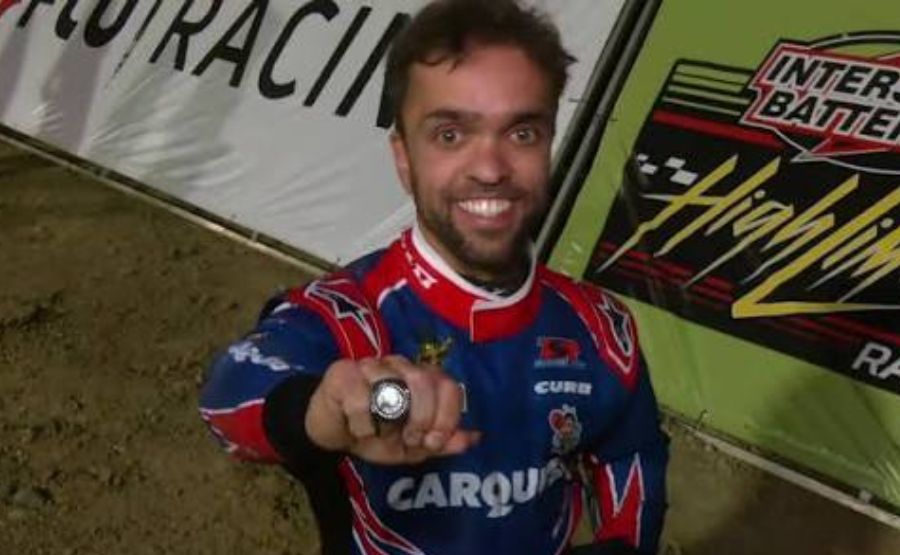
The Chili Bowl Nationals in Tulsa, Oklahoma, is the kind of event that midget car drivers circle on their calendars in permanent marker. Held indoors on a clay oval, it draws the best dirt racers in the country every January. Winning it once is a career-defining achievement. Rico won it in 2015. And then he came back and won it again in 2016 — back to back, something only the very best manage to pull off.
In the 2015 edition, his victory gave Toyota its first-ever Chili Bowl win. That is a marketing milestone for a manufacturer, and it put Rico’s name in front of an audience far beyond the sprint car faithful.
He also won the 2015 Pepsi Nationals and earned a World of Outlaws Rookie of the Year award in 2016 — making him the first American driver to claim that distinction.
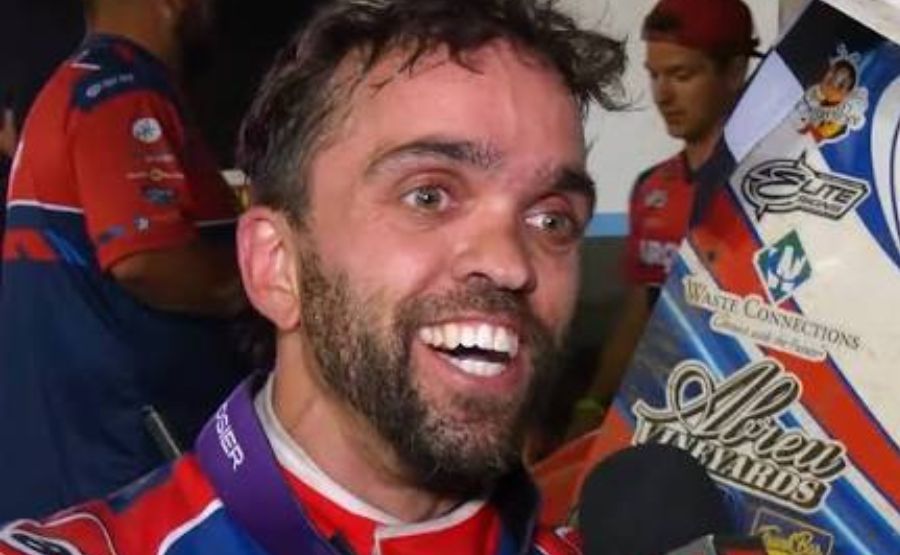
And then, a decade after all of that groundwork, came perhaps the biggest title of his career so far. In 2025, he raced the full fifty-one-event Kubota High Limit Racing schedule and emerged as champion, securing a $250,000 championship payout and cementing his place at the very top of the sprint car world. His single-race payday at the 2025 Skagit Nationals — $126,000 — stands as the largest prize he has ever taken home from one event.
The NASCAR Chapter: A Detour That Taught Him Something
Between 2015 and 2017, Rico took a swing at NASCAR.
He was following a path that Kyle Larson had already blazed — from the dirt ovals of open-wheel racing to the asphalt of stock car’s biggest stages. It made sense on paper. Larson had made the transition brilliantly. Why not Rico?
He started in the NASCAR K&N Pro Series East in 2015, captured a win at Columbus Motor Speedway in Ohio, and showed enough to earn a full-time Truck Series ride with ThorSport Racing in 2016. He ran well enough — thirteen in the points, a handful of top-ten finishes, a standout performance at the Eldora Dirt Derby — but the sponsorship money that professional NASCAR requires never fully materialized.
By January 2017, at the Chili Bowl, he was honest about it. He told reporters that things had not come together, that sponsorship realities had changed the picture, and that he was not ready to give up on stock car racing entirely — but for now, it was back to dirt.
“I’m just going to take a step back,” he said at the time. It was the right call.
Personal Life: A Decade of Partnership, Then a Ring
Rico met Meagan Droud in 2013. They were young, they were both connected to the racing world, and they fit together naturally. She has been at racetracks across the country with him ever since — not just as a partner, but as an active part of his operation, handling merchandise and the business side of things at races.
For more than a decade, they built a life together on the road — track after track, state after state, the grinding, joyful marathon of a professional racing career.
On January 29, 2023 — the day before Rico’s thirty-first birthday — he asked Meagan to marry him. He shared the news on social media with a directness that suited him: “10 years later I asked her to be my wife.” The response from the racing community was immediate and warm.
They married in February 2024 in an intimate ceremony with family and close friends around them. Rico described Meagan as “my world” when he shared the moment publicly. The couple shares a home in Rutherford, California — wine country, not far from where Rico grew up. They also share a toy poodle named Gus, who has acquired something of a fan following among Rico’s social media followers.
As of 2026, they have not announced any children.
Challenges: The Car That Took Extra Building, and the Sport That Tested His Patience
Here is the thing about Rico Abreu’s challenges that deserves to be said plainly: every single race he has ever entered required his crew to physically rebuild his car around his body.
The pedals, the seat position, the steering geometry — all of it has to be adjusted every time he gets into a new vehicle. In a sport where tiny fractions of setup make enormous differences to performance, those modifications have to be perfect. His physical condition has never been an excuse and he has never presented it as one. But the additional complexity it adds to race preparation is real, and navigating it race after race, season after season, requires an operational discipline that most drivers simply do not face.
Then there was the NASCAR period. Sponsorship failures are not personal failures, but they sting. Rico had proven he could win on asphalt. He had the talent. The money just was not there. Watching a dream stall for financial reasons rather than performance reasons is its own particular frustration, and he handled it with a maturity that said a lot about his character.
There is also the quieter challenge of physical demands. At roughly ninety-five pounds and four foot four, Rico puts significant strain on his body in a sport that batters even the largest drivers. He has raced through that without complaint for more than fifteen years.
Financial Situation: Building Real Wealth the Hard Way
Rico Abreu’s net worth is estimated at somewhere between two and three million dollars as of 2026. That figure will be rising as his 2026 season with Tony Stewart’s operation generates new income and expanded sponsorship opportunities.
To understand that number honestly, it helps to know what sprint car racing actually pays. This is not NASCAR, where a single Cup Series win can generate millions in prize money and sponsor bonuses. For much of his career, Rico was competing in a world where a major race win might pay out tens of thousands of dollars rather than hundreds of thousands.
His 2025 championship season was his most financially significant to date. He earned over $580,000 in prize money through September of that year alone, with the $250,000 championship payout and the $126,000 Skagit Nationals win forming the largest paydays of his career.
Beyond race winnings, Rico runs Rico Abreu Racing as a team owner, generates income from sponsorship deals, operates an online merchandise store called Shop Rico, and has built a personal brand that carries real commercial value within the racing community.
His partnership with Tony Stewart/Curb-Agajanian Racing starting in 2026 merged his family-owned No. 24 operation with one of the most well-resourced teams in sprint car racing. That collaboration should meaningfully increase his earning potential in the years ahead.
Life Today: Champion Status and a New Chapter Ahead
As of 2026, Rico Abreu is thirty-four years old, freshly married, reigning High Limit Racing champion, and driving for Tony Stewart’s team — one of the most respected names in the sport.
The Tony Stewart partnership, announced in September 2025 and launched in January 2026, pairs Rico’s aggressive, instinctive driving style with a team that has the infrastructure, the crew expertise, and the resources to support championship-level campaigns consistently. His longtime crew chief Ricky Warner continues working with him, providing continuity within the new structure.
He remains rooted in his California life with Meagan. He competes across the country for most of the year, racing the full High Limit schedule. He is, by all available evidence, doing exactly what he was built to do.
Final Words
People will always reach for the easy narrative with Rico Abreu. The short man who proved the doubters wrong. The little guy with the big heart. It is tempting, and it is not entirely wrong — but it undersells what he actually did.
What Rico Abreu proved is that mastery of craft, applied relentlessly over time, beats nearly every obstacle. He did not win the Chili Bowl twice because he was inspirational. He won it because he was faster. He did not become a national champion because of a heartwarming story. He became one because he figured out how to drive a sprint car better than almost anyone else alive.
The physical reality of his situation is part of his story, yes. But the larger truth is that Rico Abreu simply fell in love with racing as a kid in Napa Valley, got a dad who built him a backyard oval, made a best friend named Kyle Larson who opened a door into sprint cars, and then went out and won everything that was worth winning in his world.
He built a team. He built a marriage. He built a brand. And he is thirty-four years old, at the peak of his powers, racing for one of the most respected partnerships in his sport.
The dirt track world has had great champions before. But there has never quite been one like Rico Abreu.
See also “Special Ed Rapper Net Worth: The Rise and Legacy of a Hip-Hop Pioneer“
FAQs
1. Who is Rico Abreu?
He is a professional American sprint car and dirt track racing driver, born in St. Helena, California in 1992. He is widely considered one of the most talented and decorated drivers in the history of open-wheel dirt racing, having won national championships and the iconic Chili Bowl Nationals twice consecutively.
2. How tall is Rico Abreu and what condition does he have?
He stands four feet four inches tall and weighs approximately ninety-five pounds. He was born with achondroplasia, the most common form of dwarfism, which affects bone growth and results in a compact stature. His race cars require custom modifications — including extended pedals and adjusted seating — so he can reach and operate the controls.
3. How did Rico Abreu get started in racing?
He began riding dirt bikes as a young child. His father, David Abreu, built a one-eighth-mile asphalt oval in their backyard so Rico could practice karting. He made his official Outlaw kart debut in January 2009 and won his first race at Cycleland Speedway just months later.
4. What is the Chili Bowl Nationals and why is Rico’s record there significant?
The Chili Bowl Nationals is held annually in Tulsa, Oklahoma and is regarded as the most prestigious indoor midget car race in the world. Rico won it in 2015 and again in 2016 — consecutive victories that few drivers ever manage. His 2015 win was also Toyota’s first Chili Bowl triumph.
5. How is Kyle Larson connected to Rico Abreu’s career?
Larson and Rico first met in 2009 at a charity karting event held at the Abreu backyard oval. The two became close friends. In 2011, Larson introduced Rico to sprint car racing, which proved to be the decisive turning point in his professional career. They have remained friends and occasional competitors ever since.
6. Did Rico Abreu race in NASCAR?
Yes. Between 2015 and 2017, he competed in the NASCAR K&N Pro Series East (winning once at Columbus Motor Speedway in Ohio) and ran twenty-six starts in the NASCAR Camping World Truck Series with ThorSport Racing in 2016. Sponsorship difficulties ultimately ended his full-time pursuit of NASCAR.
7. What did Rico Abreu win in 2025?
He won the Kubota High Limit Racing Series championship, completing the full fifty-one-race schedule, recording sixteen feature wins, and earning a $250,000 championship payout. He also won the Skagit Nationals for a career-high single-race prize of $126,000.
8. Who is Rico Abreu married to?
He married Meagan Droud in February 2024 after more than a decade of dating. He proposed in January 2023, one day before his thirty-first birthday. Meagan has long been involved in the business side of his racing operation, particularly merchandise management.
9. Does Rico Abreu have children?
As of 2026, he and Meagan have not publicly announced having children. References to “Gus” in his social media are related to their toy poodle.
10. What is Rico Abreu’s net worth?
His net worth is estimated between two and three million dollars as of 2026, built through race prize money, team ownership, sponsorships, merchandise sales through his Shop Rico brand, and brand partnerships. His 2026 deal with Tony Stewart Racing is expected to grow his earnings significantly.
11. What is Rico Abreu’s team situation in 2026?
He merged his family-owned No. 24 sprint car team with Tony Stewart/Curb-Agajanian Racing in a partnership announced in September 2025 and launched in January 2026. He competes full-time in the Kubota High Limit Racing Series with longtime crew chief Ricky Warner.
12. What makes Rico Abreu stand out from other sprint car drivers?
Beyond his remarkable physical circumstances and the custom modifications required to race, Rico stands out for his consistency and longevity at the elite level. He has competed in hundreds of events across multiple series, won at nearly every level of open-wheel dirt racing, and continues to perform at championship level in his thirties — a phase where many drivers begin to decline.