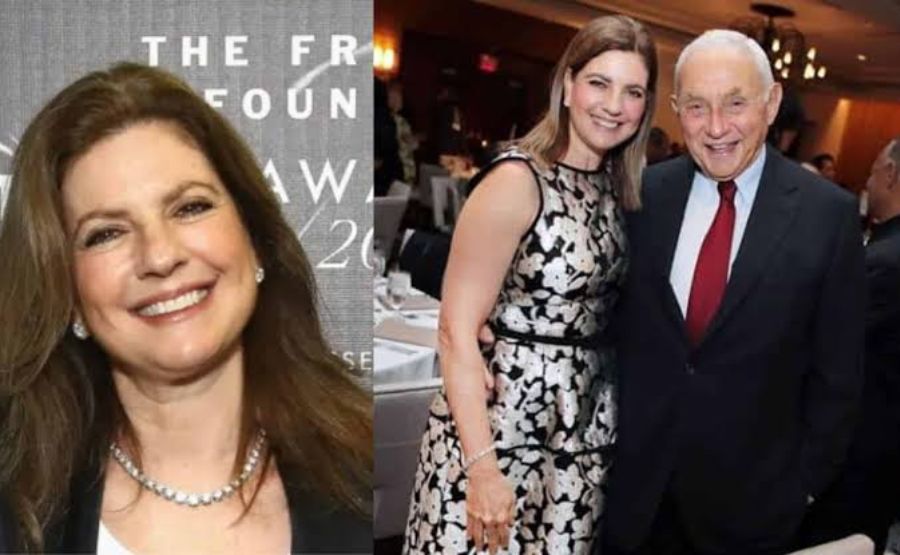
Abigail S. Koppel: Lawyer, Philanthropist, and One of Ohio’s Most Influential Civic Leaders
Quick Bio
| Detail | Info |
| Full Name | Abigail S. Koppel (now Abigail S. Wexner) |
| Born | Circa 1961–1962, New York City, USA |
| Nationality | American |
| Education | Dwight School (NYC); Barnard College at Columbia University (BA, magna cum laude, Phi Beta Kappa); NYU School of Law (JD) |
| Occupation | Attorney (former); CEO of Whitebarn Associates; philanthropist; civic leader |
| Known For | Founding the Columbus Coalition Against Family Violence; establishing the Center for Family Safety and Healing; her partnership with equestrian Beezie Madden; her marriage to billionaire retailer Les Wexner |
| Spouse | Leslie H. “Les” Wexner (married January 23, 1993) |
| Children | Four: Sarah, Hannah, David, and Harry Wexner |
| Residence | New Albany, Ohio |
Introduction
Here’s a name most people haven’t heard — and that’s actually part of the story. Abigail S. Koppel has spent decades doing serious, consequential work in law, philanthropy, and community leadership, mostly without making a fuss about it. She’s probably best known to the wider public as the wife of Les Wexner, the retail billionaire who built Victoria’s Secret and Bath & Body Works into household names. But spend five minutes looking into what she’s actually done, and you quickly realize the wife-of label does her a real disservice.
She’s a magna cum laude graduate who trained at one of the most elite law firms in the world. She built an organization that fights family violence from the ground up. She helped steer one of America’s top children’s hospitals through the largest expansion in its history. She brought world-class equestrian competition to a small Ohio suburb and turned it into a fundraising engine that generated tens of millions of dollars for child safety programs. And she did most of this while raising four children, running her own investment company, and sitting on more nonprofit boards than most people could manage.
This is the story of a woman who chose substance over visibility — and quietly built a legacy that will outlast most people who chose the other way.
See also “Serene Justice-Reed: The Woman Who Believed in Victoria Before Anyone Else Did“
Early Life and Childhood
Abigail was born around 1961 or 1962 in New York City. She grew up in Manhattan, raised in what appears to have been a middle-class Jewish household with strong values around community and service. Her father, Yehuda Koppel, was involved in the opening of an El Al Israel Airlines ticket office — a small but telling detail that suggests a family with roots in the Jewish immigrant experience and a deep sense of identity tied to that heritage. She grew up with two brothers, Dan and Gil.
Manhattan in the 1960s and 1970s was a particular kind of place to grow up — dense, cosmopolitan, full of possibility if you were curious enough to reach for it. And Abigail clearly was. Even as a young girl she was drawn to horses, that classic New York City–kid obsession that almost never gets to go anywhere because there’s nowhere nearby to actually ride one. She’s spoken about dreaming of ponies as a child but not having the financial means to pursue it. It’s a small detail, but it tells you something — she came from comfort, but not from great wealth. The ambition she developed was her own.
Education
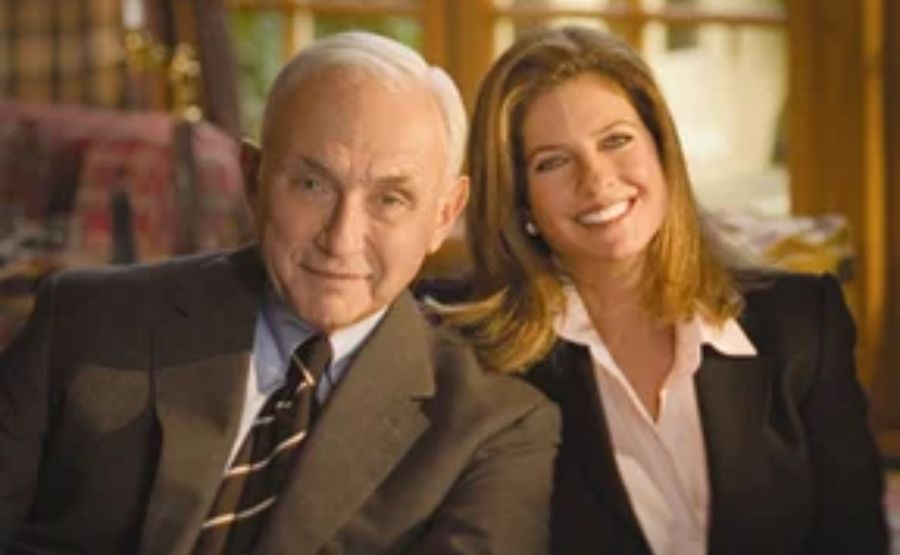
Abigail attended the Dwight School in Manhattan, a private institution with a long reputation for sending students into elite universities. From there she went to Barnard College, the women’s college affiliated with Columbia University on the Upper West Side. She didn’t just graduate from Barnard — she graduated magna cum laude and was inducted into Phi Beta Kappa, the academic honor society reserved for the top performers in a graduating class. That’s not luck. That’s sustained, serious academic work.
She followed her undergraduate degree with a law degree from New York University School of Law, one of the most prestigious law programs in the country. By the time she finished, she had the kind of educational pedigree that opened doors at the very top tier of the legal profession.
Career Beginnings and Rise
Fresh out of NYU Law, Abigail joined Davis Polk & Wardwell — a firm whose name alone tells you everything about where her career was headed. Davis Polk is the kind of Wall Street law firm that trains people who go on to lead corporations, governments, and major institutions. Not everyone gets an offer. She did.
She practiced there from 1987 to 1992, splitting her time between the firm’s New York and London offices. Working in both cities in those years meant exposure to complex international corporate law, high-stakes deal-making, and the kind of professional environment that sharpens you quickly or weeds you out. She thrived.
It was those London years that also gave her something unexpected: actual time in the saddle. She rode in Hyde Park and Richmond Park during her time based in the UK, finally getting proper access to horses after years of being horse-obsessed without the means to act on it. That London chapter started what would eventually become one of the more remarkable equestrian partnerships in American show jumping.
Her connection to Les Wexner came through a mutual contact — a corporate lawyer named Wendy Meister, who was working at Davis Polk at the time, the same firm that represented Les’s company, The Limited. Meister introduced them. By 1992 they were together, and on January 23, 1993, Abigail Koppel became Abigail Wexner in a private ceremony in New Albany, Ohio. She was around thirty-one. He was fifty-five. Neither had been married before. It was, by all accounts, a genuine partnership, not a transactional one — and the work she went on to do in the years that followed makes that clear.
Major Achievements and Breakthrough Moments
Once Abigail moved to Columbus and stepped back from full-time legal practice, she didn’t slow down. She redirected her energy, and what came next was arguably more impactful than anything she’d done in a law office.
Nationwide Children’s Hospital. Abigail joined the board of Nationwide Children’s Hospital in Columbus in 1993 — the same year she got married. She served on that board for more than twenty-five years, including a seven-year stretch from 2005 to 2012 as chair of the board of directors. During her chairmanship, the hospital underwent what was described as the single largest pediatric expansion in the country’s history — a twelve-story hospital building, a third research facility, and a regional economic impact exceeding a billion dollars. Since 2006, Nationwide Children’s has made the U.S. News & World Report Best Hospitals list every year. In 2019, the hospital’s research institute was renamed the Abigail Wexner Research Institute in her honor. That’s not a ceremonial renaming — it’s a recognition of the transformative role she played over more than two decades.
The Center for Family Safety and Healing. In 1998 Abigail founded the Columbus Coalition Against Family Violence from scratch. She was troubled by how fragmented the community’s response to domestic violence and child abuse was — law enforcement, medical care, legal advocacy, and social services all operating in silos, leaving victims to navigate a maze on their own. She set out to change that. In 2011 the Coalition merged with Nationwide Children’s existing child advocacy program to become the Center for Family Safety and Healing, a comprehensive, coordinated response to all forms of family violence in one location. Abigail became the Center’s founding board chair. She then oversaw a $20 million gift from the Wexner Family Charitable Fund that secured the Center’s long-term future. The cumulative giving and impact connected to the Wexner family at Nationwide Children’s ultimately exceeded $80 million.
The New Albany Classic. For twenty years, from 1998 to 2017, Abigail hosted the New Albany Classic Invitational Grand Prix on the lawn of the Wexner estate. It was part world-class equestrian competition — with $125,000 in prize money, top international riders, and FEI sanctioning — and part community festival, drawing around 18,000 people a year. Over its two-decade run, the event raised more than $47 million for the Center for Family Safety and Healing and its predecessor organization. When she ended the Classic in 2018, she cited the increasingly crowded national equestrian calendar making it difficult for top riders to compete — a practical, unsentimental decision that spoke to her character.
Equestrian Partnership with Beezie Madden. Abigail’s involvement in competitive equestrian sports went well beyond hosting events. For more than a decade she partnered with Beezie Madden, one of the most decorated American show jumpers in history. Under that arrangement, Abigail would acquire horses, and Madden would train and ride them in international competition. Together they helped produce gold at the 2004 Athens Olympics and silver at the 2006 World Equestrian Games in Aachen, Germany. It’s an unusual kind of athletic achievement — owner rather than rider — but meaningful within the world of show jumping, where top horses and owners are essential to what champions can accomplish.
Whitebarn Associates. Abigail also serves as CEO of Whitebarn Associates, a private investment company she co-founded. This role keeps her connected to the business world in her own right, separate from Les’s retail empire.
Personal Life
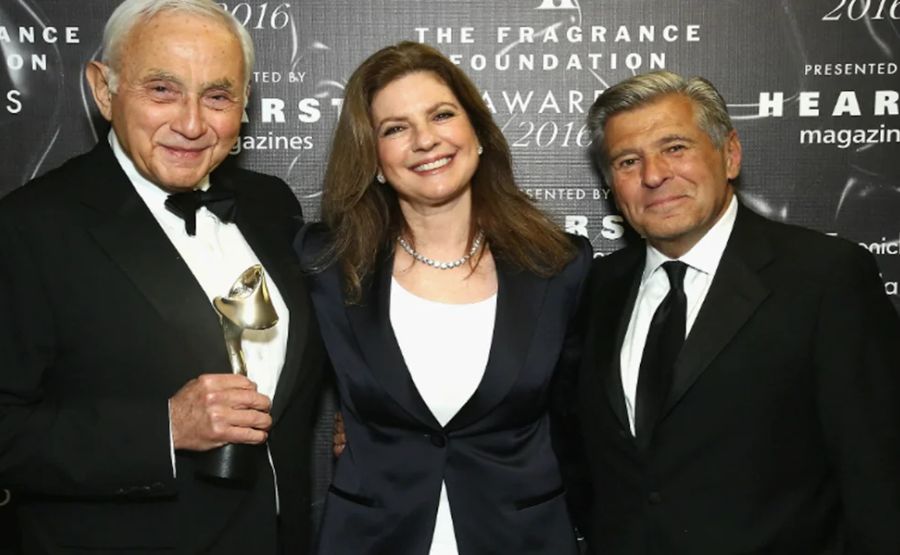
Abigail and Les Wexner have been married since January 1993 and have four children together: Sarah, Hannah, David, and Harry. They make their home in New Albany, Ohio — the planned community that Les helped develop starting in the 1980s, which grew from a rural village into a prosperous, carefully designed suburb outside Columbus.
The family is deeply embedded in the Jewish community and philanthropic life of central Ohio. The Wexner Foundation, which Les established, focuses on developing Jewish leadership across North America and in Israel, and Abigail serves on its board. She also held a presidential appointment to the United States Holocaust Memorial Museum. Their family’s presence in Columbus — through hospitals, schools, arts institutions, and neighborhood development — is pervasive in a way that’s hard to overstate.
Abigail’s four children all ride horses, though none have pursued competitive equestrian careers. She’s noted warmly that she considers riding a gift she can share with them — something she never had growing up.
Challenges and Difficult Periods
No account of Abigail Wexner’s public life can be honest without addressing the shadow that fell across the family with the Jeffrey Epstein scandal.
Les Wexner had a close financial and personal relationship with Epstein stretching from the late 1980s into the 2000s. At the peak of that relationship, Les gave Epstein broad power of attorney over large portions of his financial affairs — an extraordinary level of trust. When Epstein’s crimes came to light, and more so after his 2019 arrest and death, that relationship drew the Wexner name into one of the most disturbing scandals in recent American history.
Les has consistently denied any knowledge of Epstein’s crimes, describing himself as having been deceived. He says he cut ties with Epstein around 2007 after discovering Epstein had misappropriated approximately $46 million. In 2026, Les was deposed by the U.S. House Committee on Oversight and Government Reform as part of the ongoing congressional investigation into Epstein’s associates. His name appears hundreds of times in the Epstein files released by the Department of Justice.
Abigail’s name surfaced in this too. A never-sent draft note Epstein apparently wrote referenced an argument he’d had with Abigail in which he felt she had made unfair accusations toward him — suggesting she had her own friction with Epstein independent of her husband. A lawsuit brought by Epstein survivors alleged that an assault occurred at an Ohio property associated with the Wexners, though Les’s representatives firmly denied this.
Abigail herself has not given extended public comment on these matters. She has continued her philanthropic and civic work throughout the controversy. Les has not been charged with any crime. But the cloud over the family’s legacy is real, ongoing, and not fully resolved.
Financial Situation and Net Worth
Abigail’s personal net worth isn’t published separately in any reliable source, and it would be misleading to treat it as though it were. As the spouse of Les Wexner — whose fortune has been estimated by Forbes at several billion dollars — she has access to resources that most people never will. Their family’s philanthropic giving alone has exceeded $80 million to Nationwide Children’s Hospital, and that’s before counting their contributions through the Wexner Foundation and other vehicles.
Abigail also runs Whitebarn Associates as CEO. Private investment companies of that kind don’t publish financials. What’s clear is that she exercises genuine executive responsibility over it — this isn’t an honorary title.
What’s worth noting is the way the money has been used. The pattern isn’t lavish spending for its own sake — it’s institutional investment. A research institute. A family violence center. A school network. An equestrian event that doubled as a fundraiser. Whether that reflects her character or her husband’s priorities or both, the footprint it has left in central Ohio is hard to argue with.
Current Activities and Life Today
As of 2026, Abigail Wexner remains active across multiple institutions. She continues in her role as CEO of Whitebarn Associates. She serves on the boards of the Wexner Foundation, the United States Equestrian Team Foundation, the KIPP Foundation, and several other organizations. The Center for Family Safety and Healing continues to operate, backed by the endowment built partly through the Wexner family’s giving.
The Epstein-related scrutiny of her husband has remained part of the family’s public reality through 2026, with congressional depositions and civil litigation still unfolding. How that resolves — and what it ultimately means for the philanthropic legacy the couple has spent decades building in Ohio — remains an open question.
Abigail herself maintains a lower public profile than most people connected to names as prominent as hers. She gives few interviews. She lets the work speak.
Final Words
What makes Abigail S. Koppel worth understanding is the distance between her public visibility and her actual impact. She moved to Columbus as the new wife of a famous businessman, and she could have spent the next thirty years doing what a lot of people in her position do — attending galas, lending her name to causes, enjoying a level of comfort most people can’t imagine. She didn’t.
Instead she spent her first years in Ohio joining a hospital board and then actually chairing it through one of the biggest expansions in American pediatric medicine. She built an organization to fight family violence when no one was asking her to. She turned a horse show on her lawn into a $47 million fundraising engine. She trained at and practiced for one of the world’s most demanding law firms before any of this began.
The Epstein chapter is a complicated and painful one, and it’s impossible to separate from the family’s story now. But it doesn’t erase the research institute, the safety center, or the work. Those things exist because she built them.
What stands out in the end is the commitment to doing the actual work, not just funding it from a distance. That’s rarer than it sounds.
FAQs
1. Who is Abigail S. Koppel?
She’s an American attorney and philanthropist, born in New York City, who is now known as Abigail Wexner. She is best recognized for her marriage to retail billionaire Les Wexner and for her extensive civic and philanthropic work in Columbus, Ohio.
2. Where did Abigail Koppel go to school?
She attended the Dwight School in Manhattan, then earned a bachelor’s degree magna cum laude from Barnard College at Columbia University, and a law degree from New York University School of Law.
3. Where did she work as a lawyer?
From 1987 to 1992, she was an attorney at Davis Polk & Wardwell, working in both the firm’s New York and London offices.
4. How did she meet Les Wexner?
A mutual contact — corporate lawyer Wendy Meister, who worked at Davis Polk — introduced them around 1992. Davis Polk was the outside law firm representing Les’s company, The Limited.
5. When did they get married?
January 23, 1993, in a private ceremony in New Albany, Ohio. It was the first marriage for both.
6. How many children do they have?
Four: Sarah, Hannah, David, and Harry Wexner.
7. What is the Center for Family Safety and Healing?
It’s an organization in Columbus, Ohio, that provides a coordinated, comprehensive response to all forms of family violence — child abuse, domestic violence, teen dating abuse, and elder abuse — all under one roof. Abigail founded its predecessor organization in 1998 and has served as its board chair.
8. What is the Abigail Wexner Research Institute?
It’s the research division of Nationwide Children’s Hospital in Columbus, renamed in Abigail’s honor in 2019 in recognition of her twenty-five-plus years on the hospital’s board and her role in overseeing its historic expansion.
9. What was the New Albany Classic?
An annual equestrian grand prix and community festival held on the Wexner estate from 1998 to 2017. Over its run, it raised more than $47 million for family safety programs. Abigail hosted and organized it for twenty years before ending it in 2018.
10. What is her connection to equestrian sports?
She has been a major owner and patron in show jumping. Her long partnership with Olympic rider Beezie Madden produced gold at the 2004 Athens Olympics and silver at the 2006 World Equestrian Games.
11. What is Whitebarn Associates?
A private investment company that Abigail co-founded and leads as CEO. It is not publicly traded and its financials are not published.
12. What is the Jeffrey Epstein connection?
Les Wexner had a close financial relationship with Epstein from the late 1980s through around 2007. When Epstein’s crimes became public, Les denied any knowledge of them and said he was deceived. In 2026, Les was deposed by Congress as part of the ongoing investigation. Les has not been charged with any crime. Abigail’s name has appeared peripherally in some documents and lawsuits connected to the case.
Explore ideas that elevate your thinking with The Elevate Magazine.