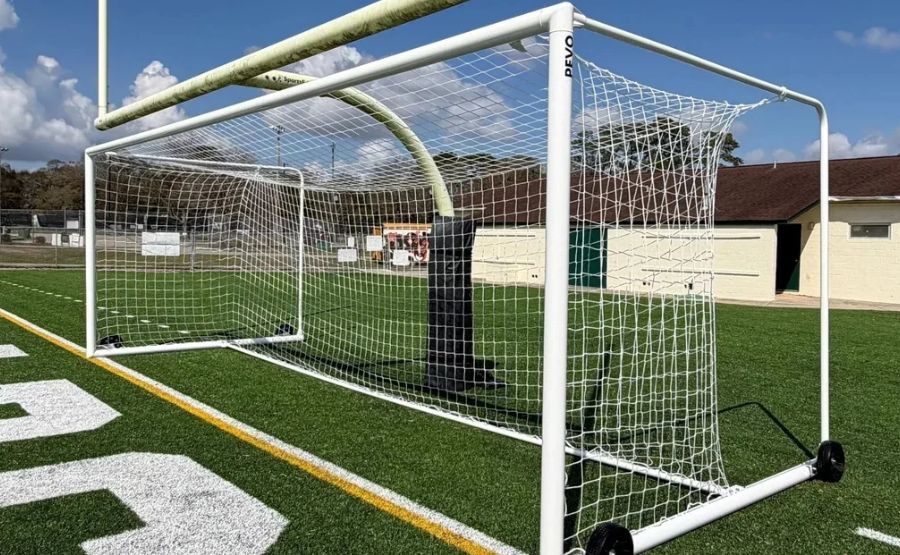
Finding a suitable place to practice soccer isn’t always easy. Full-sized fields may be unavailable, shared with other teams, or too far away for a quick training session. Fortunately, effective practice doesn’t always require a permanent goal or a professionally marked pitch.
A portable soccer goal makes it easier to create a flexible training environment in suitable open spaces. From shooting exercises to small-sided matches, movable goals support a wide range of activities without requiring permanent field installations.
Why Flexible Training Spaces Matter
Consistent practice plays an important role in developing soccer skills. However, players often struggle to maintain a routine when training depends entirely on field availability.
A portable soccer goal helps address this challenge by allowing players to establish temporary practice areas where conditions permit.
The ability to change locations also introduces variety. Players can practice on different suitable surfaces, adapt to changing surroundings, and develop greater awareness of their environment.
Making Better Use of Limited Space
A smaller training area can still support meaningful improvement.
Players can work on controlled finishing, short passing combinations, and quick decisions without needing an entire field.
The key is selecting exercises that match the available space and keeping the surrounding area clear.
How a Portable Soccer Goal Supports Skill Development
Shooting Accuracy
Accurate finishing requires more than striking the ball with power.
Players must coordinate their approach, body position, balance, and contact point.
A portable soccer goal provides a visible target for repeated shooting exercises.
Start with stationary shots before progressing to moving-ball finishes. Gradually introduce different angles to develop adaptability.
Passing and Combination Play
A goal can also serve as the finishing point for passing sequences.
Two players might exchange short passes before one takes a controlled shot.
This simple activity combines communication, timing, ball control, and finishing.
Goalkeeping Practice
When the goal is appropriately sized and securely installed, goalkeepers can practice positioning and controlled saves.
Training should begin with manageable shots before increasing difficulty.
Always maintain enough space around the goal for safe movement.
Choosing the Right Training Location
Not every outdoor area is suitable for soccer practice.
Look for a reasonably level surface without hidden holes, sharp objects, or obstacles.
Check that the location permits ball games and provides adequate distance from roads, windows, and pedestrians.
A portable soccer goal should be positioned where missed shots won’t create unnecessary hazards.
Consider the Playing Surface
Grass often provides a familiar environment for soccer training.
Other surfaces may also be suitable, depending on footwear, weather conditions, and goal design.
Avoid unstable ground that prevents the frame from remaining secure.
Setting Up a Portable Soccer Goal Safely
Before each session, inspect the frame, netting, and connecting components.
Follow the assembly and anchoring instructions appropriate to the goal’s design.
A portable soccer goal must be properly secured against tipping or unexpected movement.
Never allow children to climb, hang from, or swing on the frame.
After installation, check the surrounding space and confirm that the goal remains stable.
Five Practical Training Activities
Try incorporating these exercises into your routine:
- Corner finishing: Aim controlled shots toward different goal areas.
- One-touch shooting: Receive a pass and finish with minimal delay.
- Weak-foot practice: Develop confidence using your less dominant foot.
- Timed finishing: Complete accurate attempts within a defined interval.
- Small-sided games: Use limited space to encourage quick decisions.
Adjust the difficulty according to player experience and available room.
Conclusion
A portable soccer goal can make regular soccer practice more accessible, adaptable, and enjoyable.
Its greatest advantage is the freedom to organize meaningful activities without relying entirely on permanent facilities.
With thoughtful setup, appropriate safety precautions, and structured exercises, players can transform suitable open spaces into valuable opportunities for improvement.