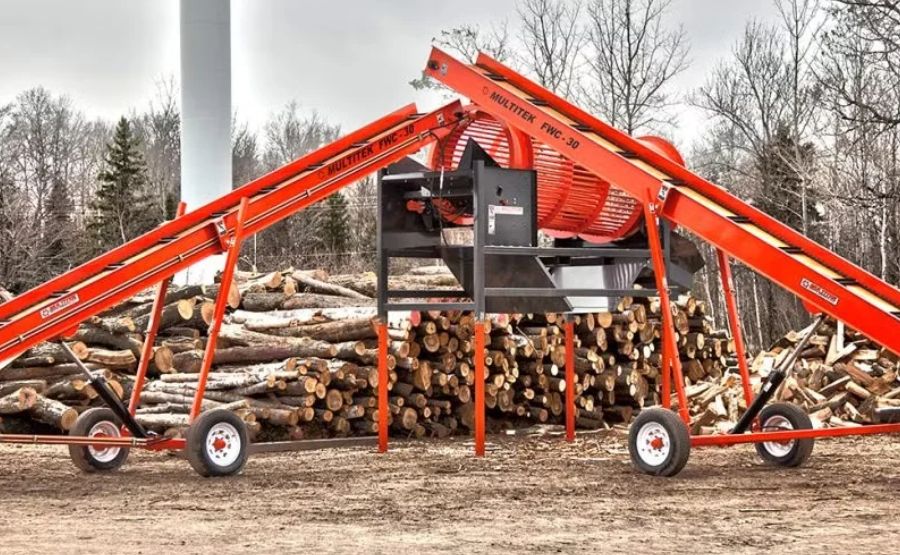
Moving split firewood from the processing area to storage can become one of the most repetitive parts of wood preparation. Even when cutting and splitting operations run efficiently, finished pieces must still be collected, transported, and stacked. Evaluating a firewood conveyor for sale can help operators understand how mechanical material handling may improve the overall workflow.
The right conveyor arrangement supports consistent movement and reduces the need to repeatedly lift individual pieces.
Identify the Material Handling Problem
Before considering conveyor specifications, examine how finished firewood currently moves through the work area.
Does split wood accumulate near the machine? Are operators frequently stopping to clear the discharge zone?
These interruptions may indicate that material movement needs improvement.
Understand the Processing Sequence
An organized workflow generally follows a clear direction:
Incoming timber enters the cutting area, passes through splitting, and moves toward collection or storage.
A conveyor can help connect the final processing stage with the next handling location.
The arrangement should minimize unnecessary movement without obstructing operators or other equipment.
Choosing Suitable Conveyor Dimensions
A firewood conveyor for sale should match the physical layout of the processing site.
Conveyor length determines how far material can travel, while discharge height affects the receiving arrangement.
Conveyor Length
A longer conveyor may allow finished wood to reach a more distant collection point.
However, additional length can increase space requirements and complicate positioning in restricted areas.
Measure the working environment before selecting equipment.
Adjustable Discharge Height
Height adjustment can help accommodate different receiving containers or storage arrangements.
The discharge point should direct material into an appropriate collection area without creating unstable piles.
Consider how the receiving space will change as material accumulates.
Belt Design and Material Movement
Conveyor surfaces must handle irregular pieces of wood.
Split firewood can contain sharp edges, bark, loose debris, and varying dimensions.
A suitable belt design should provide dependable movement under the intended conditions.
Matching Conveyor Speed to Output
Material should leave the processing area at a rate that prevents excessive accumulation.
An overly slow conveyor may create a bottleneck, while poorly coordinated movement can cause unnecessary scattering.
Actual performance depends on loading patterns, wood dimensions, and the conveyor’s rated capacity.
Portability and Site Arrangement
Some operators work from a fixed processing location. Others move equipment between different timber preparation sites.
Portable configurations may offer flexibility, but transport arrangements and setup requirements deserve attention.
Plan for Safe Positioning
Place the conveyor on suitable ground and follow instructions for securing its operating position.
Maintain adequate clearance around moving belts, rollers, and support structures.
Avoid positioning discharge areas where falling wood could strike workers.
Maintenance Requirements
Firewood conveyors operate in environments where bark, chips, and dust accumulate quickly.
Regular cleaning helps prevent debris from interfering with moving components.
Inspect belts for wear, check alignment, and examine rollers and bearings according to maintenance guidance.
Preventing Common Interruptions
Unexpected stoppages may result from excessive loading, material obstructions, or worn components.
Never attempt to remove trapped wood while the conveyor is running.
Use the required shutdown and energy-isolation procedures before clearing blockages.
Operators researching firewood handling equipment and local availability should evaluate maintenance requirements as part of their decision.
Conclusion
A firewood conveyor for sale can be an important consideration when manual material handling limits overall processing efficiency.
Appropriate length, discharge height, belt design, and site positioning all influence practical performance.
By planning the entire workflow rather than focusing on individual tasks, operators can create a safer, more organized firewood preparation environment.