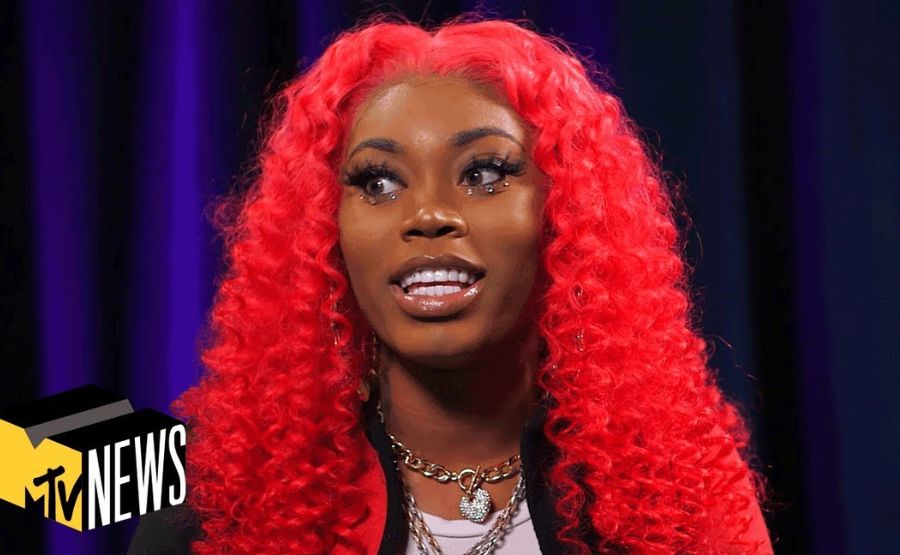
Asia Da Brat: Dallas’s Own, On Her Own Terms
Quick Bio
| Detail | Info |
| Full Name | Misharron Jermeisha Allen |
| Stage Names | Asian Doll; Asian Da Brat |
| Date of Birth | December 7, 1996 |
| Place of Birth | Dallas, Texas, USA |
| Nationality | American |
| Ethnicity | African-American |
| Occupation | Rapper, Songwriter |
| Known For | First female artist signed to Gucci Mane’s 1017 Records; Unfuccwitable (2019) |
| Parents | Michael Jermeisha Allen (father); LaKeithia Lewis (mother) |
| Siblings | 2 older brothers, 1 younger sister (known as Infleelow) |
| Daughter | Mi’Lani |
| Label | 1017 Eskimo Records (Gucci Mane) |
| Estimated Net Worth | ~$500,000 |
Introduction
Dallas, Texas has been quietly producing rappers who hit different from the rest of the South — harder, more direct, with a specific kind of edge that the city’s particular blend of grit and ambition tends to produce. Asian Da Brat — who started out as Asian Doll and has moved between those two names like someone trying on different crowns to see which one fits — is one of the clearest examples of what that city can produce when a person with genuine talent decides to go all the way with it.
She dropped out of school in twelfth grade to rap. She was one of the first female artists to get on Gucci Mane‘s radar seriously enough to sign to 1017 Records. She changed her name in 2019 to separate herself from the crowd of artists doing the “Doll” thing, choosing instead to reference one of hip-hop’s foundational female figures — Da Brat, the Chicago rapper who became the first solo female rapper to go platinum in 1994.
That name choice said something. It wasn’t ego. It was a statement of intention: I’m in that lineage, and I’m about to prove it.
See also “Jew Sheisty: The Underground Jewish Rapper Who Changed Florida Rap From the Inside“
Growing Up in Dallas
Misharron Jermeisha Allen was born on December 7, 1996, in Dallas, Texas — a Sagittarius, which her fans have noted fits her energy perfectly. Dallas is the kind of city that doesn’t give you much sympathy if you’re not willing to hustle. It’s big, it’s spread out, it doesn’t have the concentrated industry infrastructure of Atlanta or the historical mythology of Houston. You have to build your own lane, because the city isn’t going to hand you one.
She grew up in a household with both parents present and three siblings: two older brothers and a younger sister who would later become known online as Infleelow. That family dynamic — older brothers, a younger sister, parents in the picture — gave her both protection and competition, the kind of household where you had to be quick and loud to get heard.
She didn’t come from extreme wealth, but she came from people who worked and cared about their children. The neighborhood and the specific circumstances of her childhood have not been part of her public narrative in detail — she has spoken more about the music and the hustle than about the geography of where she grew up.
What she has talked about is how early the music came. She was writing and performing rap in high school. Not as a hobby, not as a side thing — as the thing. The action she intended to take.
Education: The Decision to Leave
She enrolled in high school, made it as far as twelfth grade, and then stopped. She didn’t graduate. She dropped out in senior year to focus on rap full-time.
That’s a choice that sounds reckless from the outside and looks completely logical from the inside when you understand what she was building. She wasn’t dropping out to hang out. She was dropping out because she had a clear direction and the conventional path was starting to feel like it was running parallel to where she needed to go rather than toward it.
The decision required confidence. Twelfth grade means you’re close — close enough that most people in her position would have just finished the year and gotten the diploma. Walking away from that close makes a statement: I’m not interested in the credential, I’m interested in the career, and I need to start now.
It also meant she took on all the risk of that decision personally. There was no safety net. If the rap career didn’t work, there was no backup plan she was quietly maintaining. She went all the way in.
Career Beginnings: The Barbie Doll Gang Era
In December 2015, Misharron Allen introduced herself to the world as Asian Doll and released her debut EP, Da Rise of Barbie Doll Gang Empire. She was nineteen years old.
The name Asian Doll positioned her within the aesthetic vocabulary of early 2010s hip-hop — the Barbie wave that Nicki Minaj had established and that had generated its own ecosystem of female rappers adopting variations on the Doll brand. The music was aggressive and confident, built on trap beats that Dallas was well-positioned to produce, with a delivery that was distinctly hers — rapid, sharp, sometimes unpredictable in its rhythmic choices.
The music found its audience on SoundCloud first, then on YouTube, then on the streaming platforms that were beginning to reshape how independent artists built followings. She was part of a generation of rappers who understood that you didn’t need a label to get your music to people. You needed consistency, personality, and the ability to make content that people wanted to pass around.
She was consistent. She was releasing music, building a following in Texas, and beginning to generate the kind of buzz that eventually makes it across state lines.
1017 Records and the Gucci Mane Moment
Becoming the first female artist signed to Gucci Mane’s 1017 Eskimo Records was the kind of deal that changes the shape of a career. Gucci Mane was, by the mid-2010s, one of the most influential figures in Atlanta rap — a man whose ear for talent and whose prison-to-triumph narrative had made him a symbol of a particular kind of resilience and creative power. His label had launched careers. Getting on his radar meant something.
The signing brought her distribution, promotion, and industry infrastructure that her independent work had been building toward. It also meant she was being put in rooms with people who had figured out how to move music at scale.
More importantly, it gave her a platform to present herself to audiences who hadn’t yet heard of Asian Doll. The 1017 association was a co-sign from one of the most credible names in rap, delivered at a moment when female rappers were beginning to command the attention they had always deserved.
She continued releasing music through this period — mixtapes, singles, guest features — building the catalogue and the credibility that would eventually support the next phase.
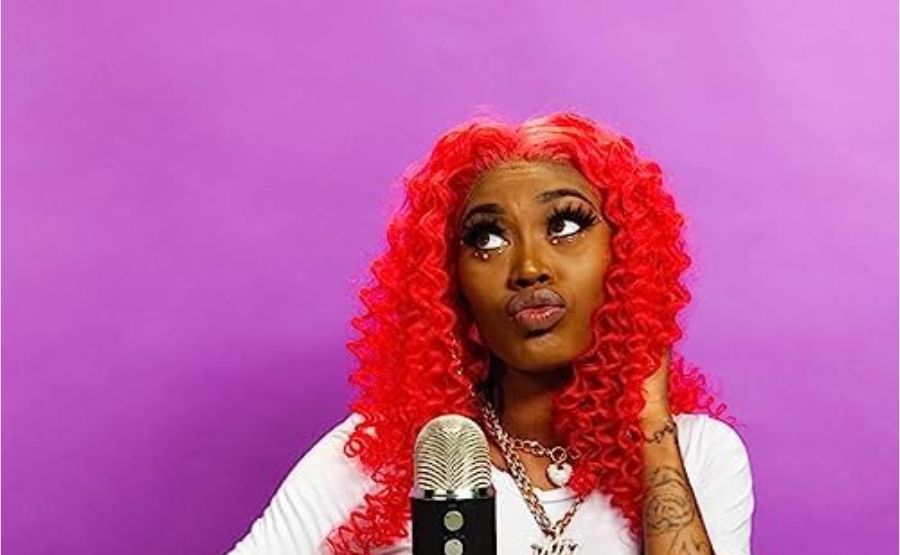
Becoming Asian Da Brat: 2019 and the Name Change
In 2019, Misharron Allen announced she was changing her professional name from Asian Doll to Asian Da Brat. She addressed it on Hot97 directly: she wanted to separate herself from the expanding group of female rappers who had adopted variations of the “Doll” name. The space was getting crowded in a way that made it harder to stand out, and standing out has always been central to what she does.
The new name came with a specific reference. Da Brat — Shawntae Harris — was the first solo female rapper to sell a million records. She was a Chicago icon who blended hardcore rap with a loose, charismatic style that made her one of the most distinctive voices of the 1990s. Choosing that as your reference point is a declaration of artistic ambition. It says: I see myself in that lineage of trail-blazers, not just in the current crop.
She clarified in that same Hot97 interview that the name also referenced the Bratz doll toy brand — so there was a dual meaning at work, personal and cultural simultaneously. But the primary weight of the choice was clear: she was claiming a place in the history of female rap, not just in its current moment.
Unfuccwitable, released in 2019 under the Asian Da Brat name, was the project she made as herself in the fullest sense — confident in her identity, clear about where she stood, and delivering music that reflected both.
Major Projects and Collaborations
Across her career, Asian Da Brat has built a discography that spans multiple mixtapes, EPs, and albums, with collaborations that demonstrate both her Texas roots and her national reach.
She worked with fellow Texas rapper Tay Money on Down South — a collaboration that connected two of the Lone Star State’s most prominent female voices and demonstrated that there was a real scene building in Texas rather than just individual breakouts. Texas had always produced influential music, but the state’s women were beginning to claim a more visible piece of that legacy.
Her catalogue includes Glock Season (2016), Pull Up (2017), Boss Bitch Music (2018), and Unfuccwitable (2019) as its core releases, along with Da Hardest Doll in 2024 — the most recent significant project that demonstrates she’s still actively producing at a high level nearly a decade into her career.
The features she’s accumulated — working with artists across the Atlanta and Texas scenes — reflect someone who has operated consistently at a level where the right people want her on their records.
Personal Life: Mi’Lani and the Private World
Asian Da Brat is the mother of a daughter named Mi’Lani, whose father’s identity has not been made public. She has spoken about her daughter in interviews as her primary motivation — the person she’s doing this for, the reason that the hustle has to keep going even when the industry makes it difficult.
She has handled her romantic life with considerable privacy. The relationships that have been publicly discussed have been treated with discretion, and she hasn’t allowed the personal narrative to become the primary story about her public persona. She has kept the focus on the music.
Her younger sister Infleelow — born in May 2003 — has developed her own social media presence and has been a visible part of the family connection that Asian Da Brat has maintained through her career. Her brothers have stayed largely out of the public eye.
Challenges: Building Without a Blueprint
The specific challenges of Asian Da Brat’s career are the challenges that every independent female rapper from a non-traditional market faces: she was building something in a city that wasn’t Atlanta or New York or Los Angeles, in a genre that has historically undervalued and underpaid its female artists, and doing it with the kind of assertive persona that makes some industry figures uncomfortable even as they acknowledge the talent.
The name change to Asian Da Brat was itself a challenge. Rebranding mid-career requires an audience that’s loyal enough to follow you and secure enough in its connection to you that a name shift doesn’t read as a gimmick. She managed it because the music was consistent enough to justify the trust.
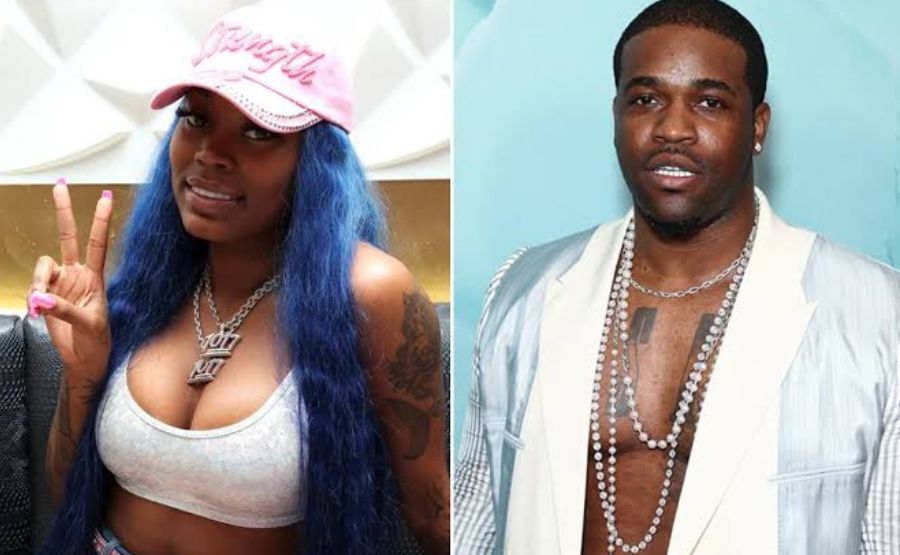
She has also navigated the specific pressure of being publicly associated with high-profile male artists in ways that can sometimes overshadow the work itself. She has been linked romantically to several names in hip-hop, and managing those associations while keeping the focus on the career requires a specific kind of intentionality and discipline.
Net Worth: Working Toward Stability
Asian Da Brat’s estimated net worth is approximately $500,000 — a figure that represents nearly a decade of independent and label-backed music production, touring, streaming revenue, and the accumulated value of a brand she has built entirely through consistent work.
The figure is modest by mainstream celebrity standards and honest by independent music standards. She has not had the kind of mainstream crossover hit that generates instant multi-million dollar net worth. What she has built is a sustainable career infrastructure — a genuine audience, a real catalogue, and the industry relationships that allow an artist to keep working at a professional level.
Life Today: Still Building
As of 2025–2026, Asian Da Brat is still actively making music. Da Hardest Doll in 2024 demonstrated that she is not coasting on past reputation — she is still in the studio, still releasing, still pushing the catalogue forward.
She has maintained her presence in both the Texas and Atlanta rap ecosystems, occupying a specific position in the culture as someone who has been doing this consistently since 2015, who has survived the turbulent middle years that end most independent rap careers, and who has emerged with a clear sense of who she is and what she makes.
She is raising her daughter. She is making music. She is building something that belongs entirely to her.
Final Words
Asian Da Brat’s story is the story of what it looks like to bet on yourself before anyone else has placed their bet. She left school in senior year. She built a following one SoundCloud play at a time. She got in front of Gucci Mane and made it stick. She changed her name when the landscape required it and didn’t apologize for the change. She kept making music through the years when it would have been easy to stop.
The name she chose in 2019 — Asian Da Brat — is the most clarifying detail in the whole biography. She picked a name that pointed directly at one of the most historically significant figures in female rap and said: this is my lineage. This is the standard I’m holding myself to. This is what I’m building toward.
Whether the catalogue ultimately reaches that level of historical significance is a question that will take years to fully answer. What is not a question is the intention — and for now, the intention is enough to make the journey worth watching.
See also “Jew Sheisty: The Underground Jewish Rapper Who Changed Florida Rap From the Inside“
FAQs
1. Who is Asian Da Brat?
Asian Da Brat, born Misharron Jermeisha Allen on December 7, 1996, in Dallas, Texas, is an American rapper who began her career in 2015 under the name Asian Doll. She was the first female artist signed to Gucci Mane’s 1017 Eskimo Records and changed her name to Asian Da Brat in 2019. She is known for an aggressive delivery style, Texas-rooted trap music, and a consistent output of mixtapes and albums since her debut.
2. What does the name Asian Da Brat mean?
She changed her name from Asian Doll to Asian Da Brat in 2019 to distinguish herself from a growing number of female rappers using variations of the “Doll” name. The new name references two things: the iconic Chicago rapper Da Brat (Shawntae Harris), who was the first solo female rapper to go platinum; and the Bratz doll toy brand. In a Hot97 interview, she explained both references.
3. Where did Asian Da Brat grow up?
She grew up in Dallas, Texas. Dallas is the city that shaped her musical identity — its particular blend of hustle culture, trap music influence, and independence from the established rap industry centers of Atlanta and New York contributed to her direct, self-reliant approach to building a career.
4. Did Asian Da Brat finish school?
No. She dropped out of high school in her senior year — twelfth grade — to focus on her rap career full-time. The decision was deliberate rather than circumstantial: she had a clear direction and chose to commit to it entirely rather than complete the final year of conventional education.
5. What was Asian Da Brat’s first project?
Her debut EP, Da Rise of Barbie Doll Gang Empire, was released in December 2015 under her original stage name Asian Doll. The project introduced her aggressive rap style to an audience initially built on SoundCloud and YouTube.
6. What is her connection to Gucci Mane?
She became the first female artist signed to Gucci Mane’s 1017 Eskimo Records label. The signing was a significant milestone that provided her with professional infrastructure and a major co-sign in the rap industry, validating her talent to audiences who hadn’t yet encountered her independently.
7. What are her most significant projects?
Her core discography includes Glock Season (2016), Pull Up (2017), Boss Bitch Music (2018), Unfuccwitable (2019) — the first project released under the Asian Da Brat name — and Da Hardest Doll (2024). She has also released numerous singles and collaborated with artists across the Texas and Atlanta rap scenes.
8. Who are Asian Da Brat’s parents and siblings?
Her parents are Michael Jermeisha Allen and LaKeithia Lewis. She has two older brothers and one younger sister known publicly as Infleelow (born May 2003). Her siblings have been mentioned in connection with her public persona, though they generally maintain their own private lives.
9. Does Asian Da Brat have children?
Yes. She has a daughter named Mi’Lani. She has spoken about her daughter as a primary motivation for her continued work in music. The identity of Mi’Lani’s father has not been made public.
10. Has Asian Da Brat collaborated with other Texas rappers?
Yes. One of her notable Texas collaborations was with Tay Money on Down South, connecting two of the state’s prominent female rap voices. She has also worked with artists from the Atlanta scene through her 1017 Records connections.
11. What is Asian Da Brat’s estimated net worth?
Her net worth is estimated at approximately $500,000, reflecting nearly a decade of independent and label-backed music earnings, streaming revenue, and brand value. The figure is honest for an independent artist who has maintained a sustained career without a massive mainstream crossover hit.
12. What is she doing now?
As of 2025–2026, Asian Da Brat is actively making and releasing music. Her 2024 project Da Hardest Doll demonstrated ongoing creative activity. She continues to operate in both the Texas and Atlanta rap ecosystems, maintaining her position as a consistent and credible presence in the culture she has been building in since 2015.