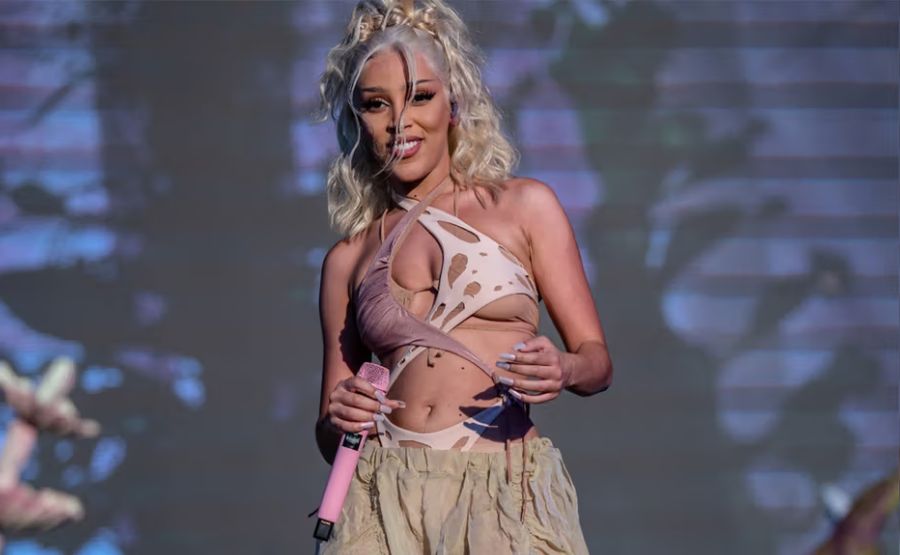
Doja Cat House: A Look Inside Her Luxury Homes and Lifestyle
Quick Bio
| Detail | Info |
| Full Name | Amala Ratna Zandile Dlamini |
| Stage Name | Doja Cat |
| Born | October 21, 1995, Los Angeles (Tarzana), California, USA |
| Age | 30 (as of 2026) |
| Nationality | American |
| Ethnicity | South African (Zulu) and American (Jewish and African-American heritage) |
| Occupation | Rapper, singer, songwriter, record producer |
| Known For | “Mooo!(2018); “Kiss Me More” feat. SZA; Hot Pink; Planet Her; Scarlet; fifth album Vie (2025) |
| Father | Dumisani Dlamini (South African actor and composer) |
| Mother | Deborah Elizabeth Sawyer (American painter) |
| Labels | Kemosabe Records; RCA Records |
| Active | 2012–present |
| Estimated Net Worth | ~$16 million (Celebrity Net Worth) |
| Key Awards | Grammy Award for Best Pop Duo/Group Performance; multiple BET, MTV, and Billboard awards |
Introduction: The Artist Who Refuses to Be Predictable
If you had to pick one word to describe Doja Cat’s career, “unexpected” might be the most accurate. She came up through the internet before the internet was considered a serious career incubator. She went viral with a song about being a cow. She turned meme fame into Grammy nominations. She reinvented herself multiple times — pop princess, rap provocateur, dark gothic alter ego — and each time, the audience followed.
But the story of Amala Dlamini is more interesting than any of those headline moments suggest. It is the story of a girl who moved between continents, grew up in a spiritual commune in the California mountains, dropped out of high school at sixteen, slept on the floor of a Los Angeles apartment searching YouTube for instrumentals, and taught herself to make music through sheer obsession.
She went from uploading rough tracks to SoundCloud as a teenager to collecting Grammy Awards and headlining major festivals as a genuinely global superstar. And she did it while being completely, sometimes controversially, herself — which is both her most marketable quality and the thing that has gotten her into trouble more than once.
Doja Cat matters because she is one of the few artists of her generation who genuinely cannot be contained by a single genre, a single image, or a single definition of success.
Early Life: Los Angeles, New York, and a Mountain Commune
Amala Ratna Zandile Dlamini came into the world on October 21, 1995, in the Tarzana neighborhood of Los Angeles. Her name alone tells a story of cultural intersection: Amala is South African, Ratna is Sanskrit, Zandile is Zulu — three names across three traditions, given to one child by two parents from very different worlds.
Her father, Dumisani Dlamini, is a South African actor and composer with significant credits in his home country’s film and television industry. He returned to South Africa when Amala was still very young — a departure that shaped her childhood in ways she has acknowledged in interviews, including the particular kind of father-shaped absence that many children raised by single mothers understand.
Her mother, Deborah Elizabeth Sawyer, is an American painter of Jewish and African-American descent. She raised Amala largely alone, and her creative orientation — visual art as a daily practice rather than a weekend hobby — created a household environment that treated artistic expression as genuinely normal.
Shortly after Amala was born, the family moved temporarily to New York City, where she spent roughly the first five years of her life. Then came the more unusual chapter: Deborah moved the family to a Hindu ashram commune in the Santa Monica Mountains. Growing up in that environment — outside conventional suburban American culture, embedded in a community with alternative spiritual and social values — gave Amala a perspective that was already unusual before she ever picked up a microphone.
She has spoken about her childhood with a mix of affection and reflection — it was different, it was formative, and it was the kind of early experience that either produces profound confusion or an unusually capacious inner world. In her case, it produced both, and eventually the latter won.
See also “Jew Sheisty: The Underground Jewish Rapper Who Changed Florida Rap From the Inside“
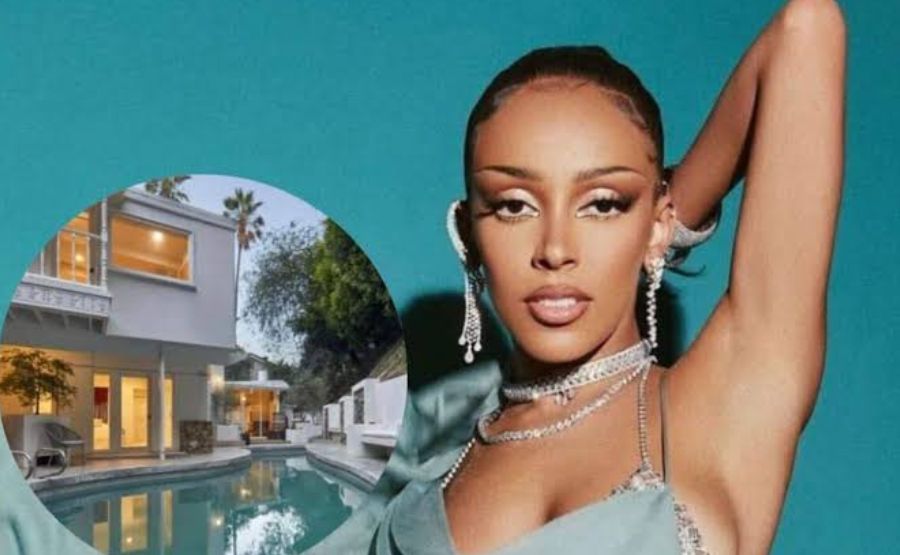
Education: ADHD, Dropping Out, and Teaching Herself the Hard Way
Amala’s formal education followed a trajectory that will feel familiar to anyone who has spent years in a classroom feeling like the curriculum was designed for someone else.
She struggled with ADHD — a condition she has discussed publicly with notable candor — and described the experience of sitting through standard school instruction as feeling frozen while everyone around her was moving. She reached her junior year, eleventh grade, and decided she was done. She dropped out at sixteen.
She has been clear that this was not a triumphant act of visionary certainty. She dropped out. Then she was young and untethered and anxious about everything. She spent long stretches of her post-dropout years on the floor of a Los Angeles apartment — no structure, no income, no obvious plan — browsing the internet at all hours and pulling beats from YouTube to experiment over.
What she had was taste, curiosity, and the particular fixation that characterizes people who will eventually become genuinely accomplished at something. She had a serious interest in music. She was consumed by it. And the internet gave her access to everything she needed to start learning without anyone’s permission.
Career Beginnings: SoundCloud, a Record Deal, and the Meme That Changed Everything
Amala started uploading music to SoundCloud as a teenager, performing under the name she had assembled from her sense of humor and her personal life: Doja, from a strain of marijuana she liked; Cat, from her genuine affection for cats. The name sounded ridiculous to some people. It stuck perfectly.
Her earliest uploads caught the attention of people in the industry before she had any real public profile. In 2014, at eighteen years old, she released her debut EP Purrr! — a small, self-sufficient project that moved between genres in a way that suggested someone who had absorbed far more music than her age would imply, and who was already refusing to stay in one lane.
She signed to Kemosabe Records and RCA Records, and in March 2018, released her debut studio album Amala. The album did not become a commercial success. Pop, R&B, hip-hop, and experimental production were among the artistic expressions that the market was unsure how to react to.
What the market was very sure how to receive came later that same year. In August 2018, Doja Cat dropped “Mooo!In a low-budget video, she raps about being a cow for four minutes over a beat that shouldn’t have been so addicting. she wore a cow costume and delivered increasingly absurdist lines with total deadpan commitment.
The internet lost its mind.
“Mooo!” went viral immediately. It was shared, sampled, parodied, and celebrated across every platform. It was joyful and completely unserious and technically competent enough that paying attention to it for four minutes made you realize there was something genuinely interesting underneath the joke. Doja Cat had not become famous through industry machinery. She had become famous by being exactly as weird and fun as she actually was, and the internet recognized the authenticity immediately.
The Rise: Hot Pink, Say So, and Becoming Unavoidable
The viral wave from “Mooo!” carried genuine momentum, and Doja Cat converted it into something more sustained with Hot Pink, released in November 2019.
Hot Pink was a significant step in every direction that mattered. Sonically, it moved between bubblegum pop and sharp hip-hop with ease. Lyrically, it established her as someone who could be funny and sharp and genuinely sensual in the same sentence without any of it feeling forced. And commercially, it introduced her to audiences who had not caught the “Mooo!” wave.
But it was a song on Hot Pink that would eventually push her into a genuinely different category of fame. “Say So” was a disco-inflected pop song — bright, melodically hooky, and built around a groove that felt immediately nostalgic and completely contemporary at the same time. A TikTok choreography challenge attached itself to the song in early 2020, and as millions of users filmed themselves doing the dance, the song climbed the charts with a velocity that surprised even the label.
“Say So” became her first chart-topper and peaked at number one on the Billboard Hot 100. The remix featuring Nicki Minaj extended its cultural presence. Grammy nominations followed.
2021 brought Planet Her, her third studio album, which pushed her global visibility even further. Lead single “Kiss Me More” featuring SZA gave her a second major commercial moment and — alongside its Grammy Award for Best Pop Duo or Group Performance — confirmed that her momentum was not a fluke.
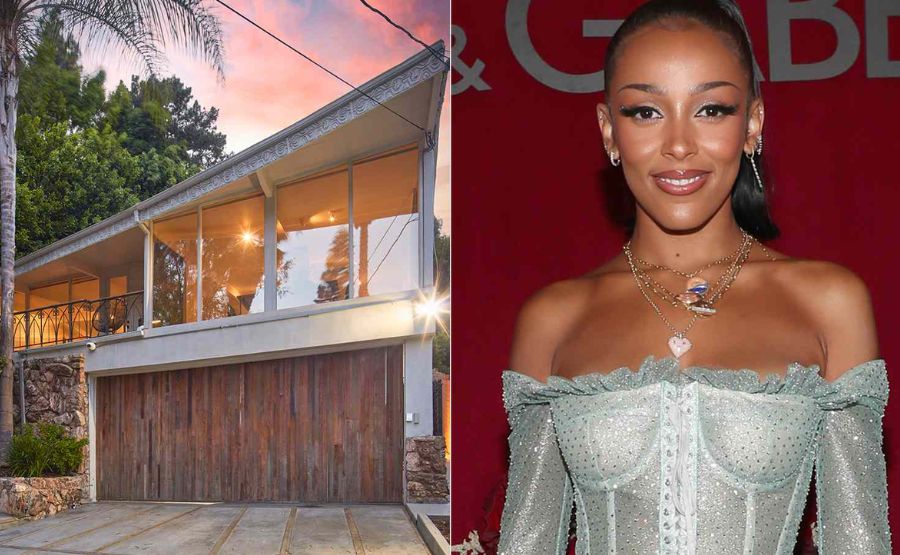
Major Achievements: Awards, Records, and Cultural Saturation
The pace of Doja Cat’s accumulation of recognition in the early 2020s was genuinely remarkable.
She won that Grammy Award for Best Pop Duo or Group Performance for “Kiss Me More.” She collected BET Hip-Hop Awards and MTV Video Music Awards. She made an appearance on TIME’s list of the 100 Most Influential People. She was the fourth most-Googled artist in the United States in 2020 — putting her in a category normally occupied by people whose names have been famous for decades.
Her fashion presence expanded in parallel with her music: campaigns with Calvin Klein, Prada, and Converse positioned her as a genuine fashion icon rather than just a musician who dressed interestingly. She brought the same shape-shifting energy to fashion that she brought to genres.
Scarlet, released in September 2023, represented a deliberate artistic recalibration. It was darker, more aggressively hip-hop focused, less pop-friendly — and deliberately so. She had described the album as an exploration of a different side of herself, less interested in meeting audience expectations and more interested in pursuing something that felt artistically honest. The critical response was strong and the commercial response was solid, if less massive than Planet Her‘s pop saturation.
And then, in September 2025, came Vie — her fifth studio album — with its striking imagery of a woman in a tattered wedding dress hanging from a parachute caught in a tree. The lead single “Jealous Type,” released in August 2025, previewed a sound that continued her evolution rather than repeating any previous chapter. A tour announcement followed.
Personal Life: Private, Intentional, and Consistently Her Own Business
Doja Cat keeps her personal life more private than her professional one, which given how vigorously she performs her public persona on social media is actually a meaningful distinction.
She has no children. She has been linked to various people over the years — the details of which she has largely declined to discuss at length — and in 2025 identified as publicly single. She has spoken about the importance of protecting private relationships from the specific damage that fame and social media can do to them.
She has also used social media to express strong opinions directly, sometimes dramatically, including occasional announcements that she is quitting platforms she later returns to. Her relationship with her online audience is intense, interactive, and sometimes confrontational — she will engage with fans and critics in real time in ways that most artists’ teams would flag as inadvisable.
She was raised primarily by her mother, and has disclosed that she has additional half-siblings from her mother’s side. Her father Dumisani Dlamini returned to South Africa early in her life, a fact she has referenced with varying degrees of emotional directness in different interviews.
Challenges: Controversy, Backlash, and the Cost of Constant Visibility
Fame at Doja Cat’s level comes with sustained public scrutiny, and she has experienced several genuinely difficult public episodes.
In 2020, during the early pandemic months, old chat room conversations surfaced in which she had participated in online communities known for racist content. She addressed the controversy directly — apologizing, explaining her online behavior as misguided, and acknowledging the harm the communities caused. The episode was significant and generated real damage to her public standing for a period.
She has also navigated the particular exhaustion of being constantly watched — of having every social media post, every interview comment, and every live stream comment become material for hot takes and criticism cycles. She has said in various contexts that the relationship between fame and the internet is genuinely strange and often genuinely taxing.
She dropped out of high school. She slept on an apartment floor. She taught herself from YouTube beats. None of that background produced the kind of stable scaffolding that makes sudden and enormous success easy to process.
Financial Picture: Building Real Wealth From Multiple Directions
Doja Cat’s net worth is most reliably cited by Celebrity Net Worth at approximately $16 million, a figure that reflects her particular combination of income sources: music sales and streaming, touring, songwriting and production credits, brand partnership deals with major fashion houses, and her ongoing social media influence that commands significant sponsorship rates.
Her earnings from brand work alone — campaigns with Prada, Calvin Klein, Converse, and other major names — represent a meaningful income layer beyond music. Artists who achieve genuine crossover into fashion commerce tend to build more durable financial portfolios than those whose income depends entirely on recording.
She is not in the ultra-wealthy tier of artists who have spent decades at the top. She is in the genuinely successful tier of someone who went from sleeping on floors at sixteen to earning at a level that provides real long-term stability in her early thirties.
Life Today: Touring, Evolving, and Still Refusing to Be Predictable
As of 2026, Doja Cat is thirty years old, actively touring behind Vie, and in the exact place in her career where the interesting question is not whether she can keep the attention she has earned but what she will do with it next.
The fifth album’s imagery — the tattered wedding dress, the parachute caught in a tree, the description of the tree as representing life and wisdom — suggests an artist who is thinking seriously about what the next chapter of her creative identity looks like, rather than simply maintaining what has already worked.
She is working. She is transforming. She is probably going to do something unexpected.
Final Words
Here is what Doja Cat’s career ultimately demonstrates: the internet did not just provide a distribution channel for her music. The internet was the native environment in which her particular combination of humor, genre-fluidity, visual creativity, and raw willingness to be weird and specific and herself found the audience it always deserved.
She was not discovered by a scout at a talent show. She was discovered by millions of people who encountered “Mooo!” on their timelines and recognized something genuine. And she converted that recognition — through sustained creative work across five studio albums and a string of genuinely important pop singles — into a career that has outlasted the meme and built something much more durable than any single viral moment.
From a floor in Los Angeles to the Billboard Hot 100. From a Hindu commune in the Santa Monica Mountains to Grammy stages. From YouTube beats at midnight to Prada campaigns.
That is not a small journey. And it is not finished.
FAQs
1. What is Doja Cat’s real name?
Her full birth name is Amala Ratna Zandile Dlamini. The name reflects her mixed heritage: Amala comes from her South African father’s culture, Ratna is a Sanskrit name, and Zandile is Zulu. She has performed exclusively under the stage name Doja Cat since the beginning of her professional career.
2. What is the origin of the name “Doja Cat”?
She has explained that “Doja” refers to a strain of marijuana she liked, while “Cat” comes from her genuine personal love for cats. She assembled the name as a teenager and it has remained her professional identity ever since.
3. Who are Doja Cat’s parents?
Her father is Dumisani Dlamini, a South African actor and composer. Her mother is Deborah Elizabeth Sawyer, an American painter of Jewish and African-American descent. Her father returned to South Africa when she was young, and she was raised primarily by her mother in Los Angeles.
4. How did Doja Cat become famous?
The 2018 hit song “Mooo!” was her first big hit.” — a purposefully absurdist song about being a cow that went viral on social media and exposed her to a sizable internet following. With the #1 hit “Say So” (2020) and Hot Pink (2019), she turned that viral moment into long-term chart success.
5. What was Doja Cat’s first number-one hit?
“Say So,” from her Hot Pink album, became her first number-one single on the Billboard Hot 100 in 2020. It was boosted enormously by a TikTok dance challenge that made the song ubiquitous across social media. A remix featuring Nicki Minaj extended its commercial lifespan.
6. Has Doja Cat won any Grammy Awards?
Yes. She won the Grammy Award for Best Pop Duo or Group Performance for “Kiss Me More,” her collaboration with SZA. She has also received multiple additional Grammy nominations across different categories.
7. What is Doja Cat’s estimated net worth?
Celebrity Net Worth, one of the more consistently cited sources on these matters, places her net worth at approximately $16 million as of 2025. Her income comes from music sales, streaming, touring, songwriting and production credits, and substantial brand partnership deals with fashion houses including Prada and Calvin Klein.
8. What are Doja Cat’s studio albums?
She has released five studio albums: Amala (2018), Hot Pink (2019), Planet Her (2021), Scarlet (2023), and Vie (2025). Each album has represented a somewhat different artistic direction, with Scarlet and Vie showing her moving toward darker, more hip-hop-focused territory after the pop saturation of Planet Her.
9. Does Doja Cat have children?
No. As of 2026, she has no children. She has spoken about being focused on her career and personal projects, and has noted the importance of protecting her private life from public scrutiny.
10. What controversy has Doja Cat faced?
In 2020, old online chat room conversations surfaced that placed her in communities known for racist content. She addressed the situation publicly, apologizing and acknowledging the harm those communities caused. The episode generated significant backlash and was a genuinely difficult public moment in her career trajectory.
11. Did Doja Cat go to college?
No. She dropped out of high school at sixteen during her junior year, citing her ADHD and her conviction that performing and music were all she actually cared about. She taught herself music production largely through self-directed learning, searching for beats on YouTube in her Los Angeles apartment after dropping out.
12. What is Doja Cat’s most recent project?
Her fifth studio album, Vie (a play on “La Vie,” meaning “The Life”), was released on September 26, 2025. Prior to the album’s release, the first song “Jealous Type” was released. She announced a concert tour in connection with the album, with presale beginning August 25, 2025. The album’s imagery — featuring her in a tattered wedding dress suspended from a parachute caught in a tree — suggests continued artistic evolution toward darker, more conceptually complex territory.
Explore ideas that elevate your thinking with The Elevate Magazine.