Jenny Arness: A Short Life in a Very Long Shadow
Quick Bio
| Detail | Information |
| Full Name | Jenny Lee Arness |
| Born | May 23, 1950, Los Angeles, California, USA |
| Died | May 12, 1975, Malibu, California, USA |
| Age at Death | 24 |
| Nationality | American |
| Father | James Arness (actor; Gunsmoke‘s Marshal Matt Dillon) |
| Mother | Virginia Chapman (actress; married James Arness 1948, divorced 1960) |
| Brothers | Craig Aurness (adopted; photographer; died 2004); Rolf Arness (surfer) |
| Uncle | Peter Graves (actor) |
| Career | Actress (two episodes of Gunsmoke, 1964) |
| Known For | Daughter of James Arness; brief television appearance |
| Buried | Forest Lawn Memorial Park, Glendale, California |
| Cause of Death | Drug overdose; ruled suicide |
Introduction: The Daughter Nobody Knew Enough About
James Arness is one of the most recognizable figures in television history. For twenty years — from 1955 to 1975 — he played Marshal Matt Dillon on Gunsmoke, the most successful Western drama ever made for American television. At six feet seven inches, he was literally larger than everyone around him. His voice, his bearing, his quiet authority — all of it made him an icon.
Behind that icon was a family. A private one. And the least publicly known member of that family was his only daughter, Jenny Lee Arness.
She was born in 1950. She appeared in two episodes of her father’s legendary show when she was a teenager. And then, on May 12, 1975 — just weeks after Gunsmoke aired its final episode — she died in Malibu, California, at twenty-four years old.
Her life was short. There is little information available to the public about it. And yet people continue to search for her name — partly because of who her father was, and partly, perhaps, because they sense that behind the famous surname there was a real young woman whose struggles and humanity deserve more than a footnote in a biography about someone else.
This is an attempt to tell her story honestly and with appropriate care — acknowledging what the record confirms, naming what it doesn’t, and treating a young woman who died too soon with the dignity that her brief time on earth deserved.
See also “Julie Deborah Brown: The Woman Who Built Room for Every Baby to Grow“
Early Life: Growing Up Arness in Hollywood
Jenny Lee Arness came into the world on May 23, 1950, in Los Angeles, California. She was the first biological child and the only daughter of James Arness and his first wife, Virginia Chapman. She also had an older adopted brother, Craig Aurness, and would eventually be joined by a younger brother named Rolf.
Her father’s career was beginning its extraordinary trajectory when she was born. James Arness — born James King Aurness, he shortened the family name professionally — had been working in Hollywood since the late 1940s, taking small roles and building the physical presence and screen authority that would eventually make him perfect for Marshal Dillon. He was a World War II veteran, a Bronze Star and Purple Heart recipient who had been seriously wounded at the Battle of Anzio, and a man whose personal gravitas read unmistakably on camera.
Growing up with that man as your father, in Hollywood, during the 1950s and 1960s when Gunsmoke made him a permanent fixture in American living rooms, meant growing up inside a specific kind of fishbowl. The Arness family was not tabloid-fodder in the way that some Hollywood families were — James was famously private, and he worked hard to keep his personal life separate from his professional one. But the shadow of his fame was real, and Jenny grew up living inside it.
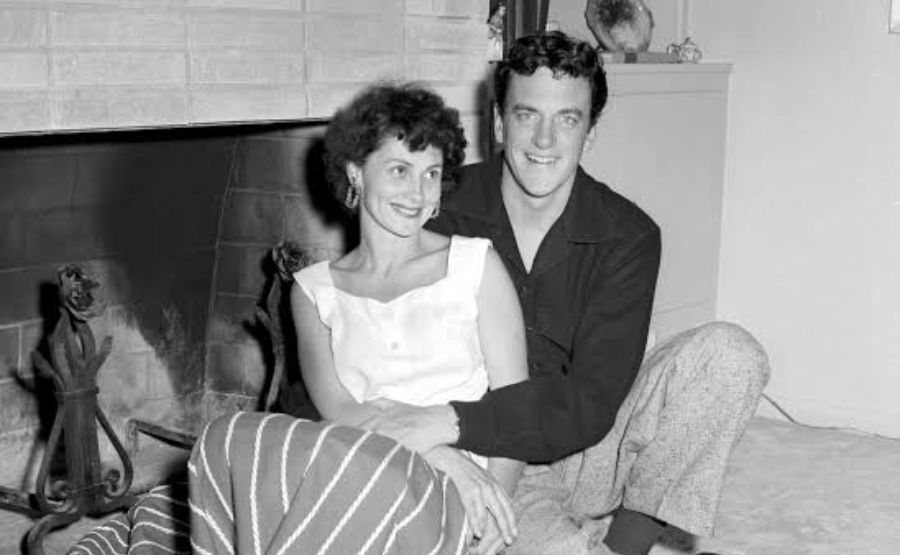
Her mother, Virginia Chapman, was an actress herself. She had worked in the industry before and during her marriage to James, appearing in small roles in film and television. The marriage lasted twelve years — they wed in February 1948 and divorced in 1960, when Jenny was ten years old. For a child of ten, parental divorce carries its own particular weight. For a child of ten whose father was the star of the most popular Western on American television, that weight had additional complications that most children never face.
After the divorce, Virginia retained primary care of the children. James Arness went on to a relationship with actress Thordis Brandt that lasted from 1965 through 1972, and eventually remarried in 1978 — Janet Surtees, who would remain his wife until his death in 2011.
Jenny grew up navigating those transitions alongside her brothers, in the specific Los Angeles milieu of children whose parents worked in entertainment.
Education: Selective Schools and What They Couldn’t Provide
Jenny received her early education at private schools in the Los Angeles area — appropriate to her family’s financial circumstances and social position. One source mentions a period of schooling in Switzerland, though this claim comes from a single source and cannot be independently confirmed.
What private schools in 1960s Los Angeles could provide a teenager who was the daughter of a television icon was academic instruction, social positioning, and the physical proximity to other children from similar circumstances. What they could not provide — what nothing in that era readily provided — was meaningful support for the kind of psychological and emotional challenges that Jenny was evidently navigating during her adolescent years.
The 1960s were decades before meaningful mental health resources became accessible or destigmatized, even for families with financial means. The specific experiences of isolation, identity pressure, and emotional struggle that can accompany growing up famous-by-association were not widely understood as things requiring professional attention. You were expected to manage. You were expected to carry yourself appropriately. And if you couldn’t, that failure was private, internal, and rarely acknowledged.
Career: Two Episodes, One Stage, and a Life That Went a Different Direction
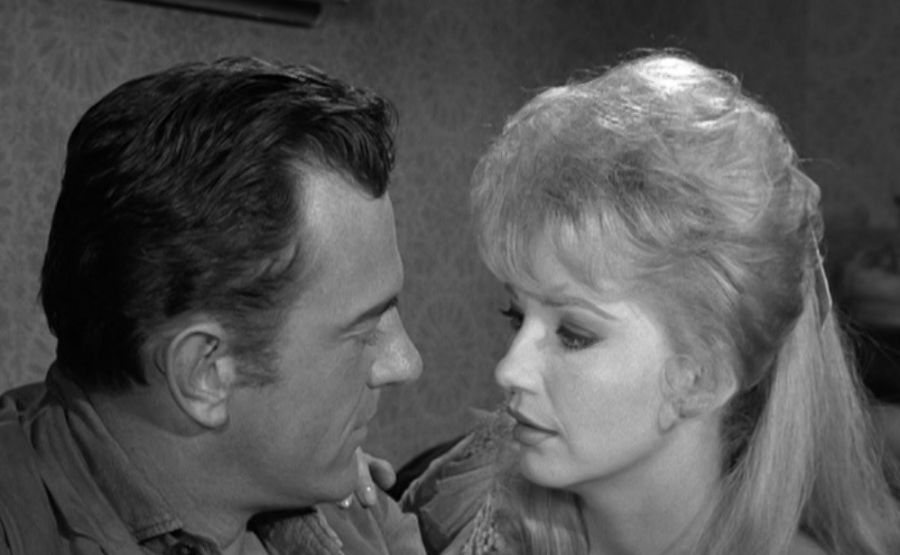
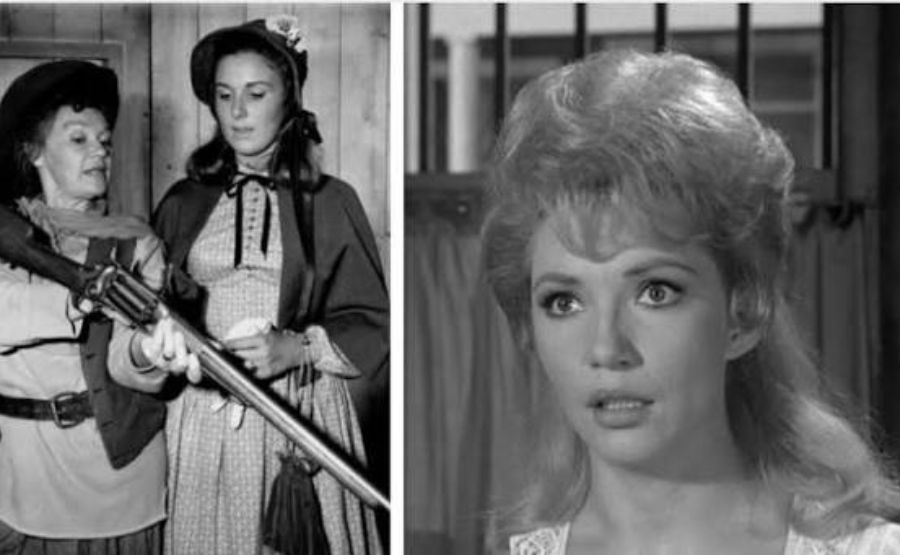
In 1964, Jenny Lee Arness appeared on Gunsmoke. She was fourteen years old. She appeared in two episodes — “Aunt Thede” and “The Glory and the Mud” — in small roles that allowed her to share the screen with her father, even briefly.
Those two appearances represent the entirety of her documented acting career. They are preserved in the archive of one of television’s most significant productions, which means that anyone who wants to see Jenny Lee Arness — to see her move and hear her voice — can still do so through those episodes, however briefly.
They are also, in their own way, a window into a moment of possibility. She was young. She was on camera. She was carrying herself in the world her father had built, and she was doing it capably. Whether she ever seriously considered acting as a profession, whether she had ambitions in that direction or other directions entirely, is not part of any confirmed public record.
What is clear is that the screen career did not develop beyond those two appearances. She stepped away from professional performance and navigated her young adulthood through the late 1960s and into the 1970s outside the entertainment world that her family name connected her to.
Personal Life: Malibu, the Early Seventies, and Struggling in Private
By the early 1970s, Jenny Lee Arness was in her early twenties and living in Malibu, California. The Malibu of that era — perched between the Pacific Ocean and the Santa Monica Mountains, home to artists and musicians and the specific counterculture energy of the early 1970s — was its own world, one that contained both beauty and instability in equal measure.
One source references a relationship with Gregg Allman — the Georgia-born musician and founding member of the Allman Brothers Band, who was himself navigating a turbulent personal life in this period. This claim appears in a single source and has not been independently confirmed, so it should be understood as reported rather than established. What is independently established is that Jenny was part of the Malibu social world of the early 1970s and that the years leading up to her death were marked by genuine struggle.
Multiple sources describe her as someone who battled mental health challenges — the specific language used by sources from that era reflects the limited understanding of mental health that characterized the period. What that actually looked like in her day-to-day experience — what form the struggle took, what support she had or didn’t have — is not part of any reliable record.
Her father’s schedule on Gunsmoke had meant sustained absences throughout her childhood. Her parents had divorced when she was ten. Her mother Virginia was managing her own challenges. The specific combination of circumstances that shaped Jenny’s inner life is not fully knowable from the outside — but the outcome of that inner life, in May 1975, is documented and clear.
Death: May 12, 1975
On May 12, 1975, Jenny Lee Arness died in Malibu, California. She was twenty-four years old, eleven days shy of her twenty-fifth birthday.
Her death was ruled a suicide. It followed approximately six weeks after the final episode of Gunsmoke aired on March 31, 1975 — the end of a twenty-year run that had defined her father’s professional life and, by extension, her own family’s shape and identity.
Sources differ on the specific substance involved — some cite heroin, others cite sleeping pills — and the discrepancy likely reflects either different sourcing or a combination of substances. What the sources agree on is the manner: intentional drug overdose.
She was buried at Forest Lawn Memorial Park in Glendale, California — the same cemetery where many of Hollywood’s most recognizable figures rest.
Two years later, in 1977, her mother Virginia Chapman died under similar circumstances — a sleeping pill overdose deemed accidental, though the proximity in timing and method to her daughter’s death is something that the family has lived with quietly ever since.
Her older adopted brother Craig Aurness went on to build a career as a photographer and co-founded the Westlight stock photo agency, which was eventually sold in 1998. He died in December 2004. Her younger brother Rolf became a champion surfer and subsequently withdrew from public life.
Her father, James Arness, died on June 3, 2011, at the age of eighty-eight. He left behind a letter to be released posthumously that thanked fans for their decades of support. He did not speak publicly about Jenny’s death in any extended way during his lifetime — consistent with a man whose entire public persona was built on privacy and restraint.
The Family’s Grief and What Endures
The Arness family’s losses — Jenny in 1975, Virginia in 1977, Craig in 2004, and James himself in 2011 — trace a particular arc of grief across four decades. The family that had been photographed together in 1957 — James tall and certain, Virginia beside him, Craig and Rolf on the floor, eight-year-old Jenny in the center — was gradually reduced by time and by tragedy in ways that no photograph from a happier moment could have predicted.
What endures of Jenny Lee Arness, beyond the grief, is those two episodes of Gunsmoke. A fourteen-year-old girl on her father’s television show, in two small roles in 1964. That is what the record holds.
It is not very much. But it is something. And the fact that people still search her name — still want to know who she was and what happened to her — suggests that the search itself is its own kind of tribute to a young woman who deserved more time to figure out who she was going to be.
Financial Situation: Her Father’s World, Her Own Circumstances
Jenny Lee Arness’s personal financial circumstances are not part of any public record. She was twenty-four when she died, and whatever she had in terms of personal financial resources would have come from her family’s support rather than any sustained career earnings.
Her father was financially successful by any standard — Gunsmoke‘s twenty-year run generated substantial income, and James Arness managed his finances with the same discretion he applied to his personal life. Whether and how that translated into financial support for Jenny during her adult years is not documented publicly.
This is, appropriately, not the most important thing about her story.
Final Words
Jenny Lee Arness lived for twenty-four years in the specific shadow of one of American television’s most recognizable men — not because she sought that shadow, and not because she didn’t try to step out of it, but because being James Arness’s daughter was simply the context into which she was born and within which her entire short life unfolded.
She appeared twice on her father’s show at fourteen, in roles that were small but that are now the primary surviving record of her presence in the world. She struggled privately through her young adulthood in a period when that kind of struggle was not readily understood or supported. And she died at twenty-four, in Malibu, two months after the show that had defined her family ended its run.
Her story is not primarily a story about what she did or didn’t accomplish. It is a story about the specific weight that can come from growing up in proximity to extraordinary fame, in an era without meaningful support for the internal lives of the people carrying that weight. It is a story about how much can be hidden behind a famous surname. And it is a reminder that the people who appear in the margins of other people’s celebrated stories are real human beings with their own interior landscapes that the spotlight never quite reaches.
She was somebody’s daughter. She was a young woman who struggled and who didn’t make it through. That deserves to be said plainly, and with care.
See also “Julie Deborah Brown: The Woman Who Built Room for Every Baby to Grow“
FAQs
1. Who was Jenny Lee Arness?
Jenny Lee Arness was an American actress born on May 23, 1950, in Los Angeles, California. She was the only daughter of Gunsmoke star James Arness and his first wife Virginia Chapman. She had a brief acting career consisting of two Gunsmoke appearances in 1964. She died on May 12, 1975, in Malibu, California, at the age of twenty-four.
2. Who were Jenny Lee Arness’s parents?
Her father was James Arness — born James King Aurness — the American actor best known for playing Marshal Matt Dillon on Gunsmoke for twenty years. Her mother was Virginia Chapman, an actress. They married in February 1948 and divorced in 1960 when Jenny was ten years old.
3. Did Jenny Lee Arness have siblings?
Yes. She had two brothers: Craig Aurness, who was adopted by James and Virginia before Jenny was born and later became a professional photographer and co-founder of the Westlight stock photo agency (he died in December 2004); and Rolf Arness, her younger brother, who became a champion surfer and subsequently withdrew from public life.
4. Is it true that Jenny Lee Arness was the niece of Peter Graves?
Yes. Peter Graves — the American actor known for his roles in the Mission: Impossible television series — was James Arness’s younger brother. The brothers were both born Aurness and both changed their surnames professionally. Through that relationship, Jenny was Peter Graves’s niece.
5. What roles did Jenny Lee Arness play on Gunsmoke?
She appeared in two episodes of Gunsmoke in 1964: “Aunt Thede” and “The Glory and the Mud.” These small appearances constitute the entirety of her documented professional acting career.
6. How did Jenny Lee Arness die?
She died on May 12, 1975, in Malibu, California, from a drug overdose. Her death was ruled a suicide. Sources differ on the specific substance involved, citing both heroin and sleeping pills in different accounts. She was twenty-four years old.
7. What happened to Jenny’s mother, Virginia Chapman?
Virginia Chapman died in 1977, approximately two years after Jenny’s death. Her death was caused by a sleeping pill overdose and was deemed accidental. The proximity of the two family losses — mother and daughter dying from drug overdoses within two years of each other — was a profound grief that the Arness family carried privately.
8. Where is Jenny Lee Arness buried?
She was buried at Forest Lawn Memorial Park in Glendale, California — one of the most recognized memorial parks in the Los Angeles area and the resting place of many figures from Hollywood history.
9. Did Jenny Lee Arness have a relationship with musician Gregg Allman?
One source references a relationship between Jenny and Gregg Allman in the early 1970s. This claim appears in a single source and has not been confirmed through independent reporting. It should be understood as reported rather than established fact.
10. How did James Arness respond to Jenny’s death?
James Arness maintained his lifelong commitment to privacy and did not speak about his daughter’s death in any extended public statement. He was described as devastated by her loss. He continued his career, eventually remarrying in 1978, and lived until June 3, 2011.
11. Why did Jenny Lee Arness’s death occur so close to the end of Gunsmoke?
Gunsmoke aired its final episode on March 31, 1975. Jenny died on May 12, 1975 — approximately six weeks later. Whether the end of her father’s twenty-year run had any connection to the circumstances of her death is not documented in any public record. The timing is noted in biographical sources but not causally linked in any confirmed way.
12. Why do people still search for information about Jenny Lee Arness?
People search her name primarily because of curiosity about James Arness’s family, particularly viewers who grew up watching Gunsmoke. The circumstances of her death — young, the daughter of a television icon, at a moment that coincided with the end of Gunsmoke — also generate a specific kind of historical interest in who she was beyond her connection to her father’s fame.
Explore ideas that elevate your thinking with The Elevate Magazine.