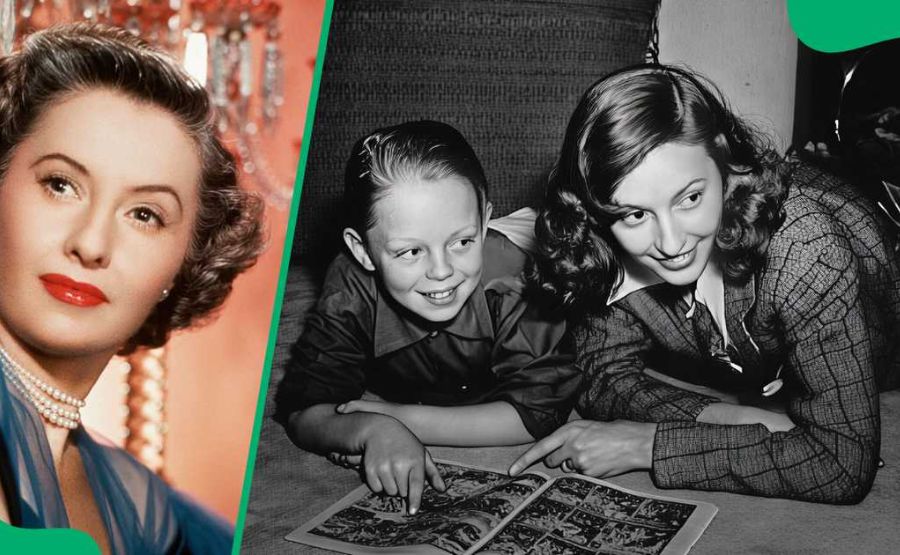
Dion Anthony Fay: The Boy Who Was Adopted Into Hollywood and Left Behind by It
Quick Bio
| Detail | Info |
| Full Name | Anthony Dion Fay |
| Birth Name | John Charles Greene |
| Born | February 5, 1932, Los Angeles, California, USA |
| Died | May 17, 2006 (age 74) |
| Nationality | American |
| Occupation | Private individual (not a public figure in his own right) |
| Known For | Being the only adopted son of actress Barbara Stanwyck |
| Adoptive Mother | Barbara Stanwyck (1907–1990) — actress |
| Adoptive Father | Frank Fay (1891–1961) — actor and comedian |
| Adoption Date | December 5, 1932 (at approximately 10 months old) |
| Nickname | “Tony” |
| Son | One (name not publicly documented) |
| Relationship with Barbara | Estranged throughout most of adult life; no reconciliation before Barbara’s 1990 death |
| Net Worth | Not publicly documented |
Introduction: The Child Caught Between Hollywood’s Brightest Light and Its Darkest Shadows
Barbara Stanwyck was one of the defining actresses of Hollywood’s golden age. She played women of steel on screen — women who survived poverty, deception, violence, and heartbreak and came out the other side standing upright. The world adored her for those performances. What the world never quite saw was what happened in the house where her only son grew up.
Anthony Dion Fay — born John Charles Greene, renamed when a famous woman adopted him at ten months old — grew up inside one of Hollywood’s most troubled households. His adoptive mother was a global star. His adoptive father drank too much and, by multiple accounts, frightened the people around him. The marriage that had motivated the adoption was already fracturing. The custody battle that followed the divorce turned Tony into a prize rather than a person.
He never made movies. He never gave interviews. He never tried to leverage his connection to one of the most famous women of the twentieth century into anything at all. He lived quietly, built a small family of his own, and died in May 2006 at the age of seventy-four, still largely unknown to the world that worshipped his mother.
His story is not a story of achievement in the conventional biographical sense. It is a story about what happens to a child when the adults around them are too consumed by their own dramas to provide what a child actually needs. It is a story about how fame and love do not automatically travel together, and about what estrangement looks like when it stretches across an entire lifetime.
It is worth telling honestly.
See also “Jenny Arness: A Short Life in a Very Long Shadow“
Before the Adoption: A Child Without a Name Anyone Would Keep
February 5, 1932. Los Angeles, California. A baby boy is born to a woman whose name history does not record in connection with him. He is given the name John Charles Greene — a perfectly ordinary name for a child whose early circumstances were not ordinary at all.
His biological mother, for reasons that have never been publicly documented in any detail, was unable or unwilling to keep him. He was placed for adoption while still an infant. He was, from the very first weeks of his life, a child in need of someone to claim him.
The 1930s adoption process was not what it is today. There were far fewer protections, far less transparency about the matching process, and far more opportunity for adoptions motivated by social optics rather than genuine parental readiness. The couple who would ultimately bring baby John home had their own complicated reasons for wanting a child.
Those reasons matter to his story.
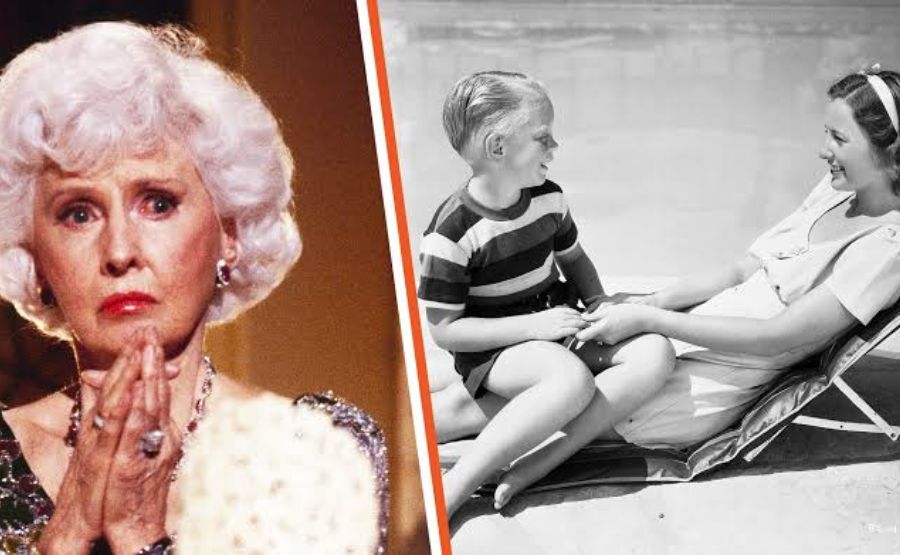
The Adoption: Two Famous Names, One Troubled Marriage
Barbara Stanwyck had married Frank Fay in August 1928. At the time, both were working entertainers — Frank was actually the bigger name initially, a successful comedian and stage performer who had come out of Broadway. Barbara was climbing fast, but she had not yet reached the astronomical heights she would eventually occupy.
Their marriage hit trouble early and often. Frank Fay, by the accounts of multiple biographers and sources, struggled severely with alcohol. His career was slowing at exactly the moment Barbara’s was accelerating, and the combination of professional jealousy, drinking, and reportedly abusive behavior made for a household that was deeply unstable beneath its polished surface.
The couple had no biological children. Barbara’s own health history has been a subject of biographical speculation, with many accounts suggesting she may have been unable to carry a pregnancy. Whatever the precise medical reality, biological parenthood was not happening for them.
So they adopted.
On December 5, 1932, Barbara Stanwyck and Frank Fay legally adopted the ten-month-old baby who had been born John Charles Greene. They renamed him Anthony Dion Fay. Family and close friends would call him Tony.
Whether the adoption was driven primarily by a genuine desire to be parents, or by a hope that a child would stabilize a marriage that was visibly coming apart, is a question that multiple biographies have raised. The sad answer, suggested by everything that followed, is that the marriage and the child were connected in ways that did not serve Tony well. He was brought in as a solution to an adult problem rather than welcomed as a small person with needs of his own.
He was ten months old. None of it was up to him.
Childhood: Growing Up in the Eye of the Storm
Tony Fay grew up in a Hollywood household that looked glamorous from outside and functioned very differently from within. His adoptive mother was becoming one of the most celebrated actresses in the world — Stella Dallas in 1937, Midnight Madonna, Remember the Night, and eventually the masterwork Double Indemnity in 1944 would cement her legend. She worked constantly, with the disciplined intensity that characterized everything she did.
His adoptive father was deteriorating. Frank Fay’s drinking worsened, and with it the instability of the household. The marriage that Tony had been brought into to stabilize was not stabilizing. Quite the opposite.
Barbara filed for divorce in 1935, when Tony was three years old. What followed was a custody battle — loud, public, and damaging in the way that custody battles always damage the children at their center. The two adults who had agreed together to bring this specific child into their home were now fighting over which of them should have him, in a battle driven as much by pride as by genuine parental devotion.
Barbara eventually won custody. Tony went to live primarily with her, in an environment where her standards were high and her emotional availability was limited. She was a working actress at the height of her powers, with the demands on her time and attention that such a career created. What she had of herself to give Tony was, by many accounts, insufficient to what he needed.
He grew into a troubled adolescent. Biographers and reporters who wrote about the Stanwyck family noted his “delinquency” — a word of the era that covered a wide range of youthful behavior, from genuine misconduct to simply being a kid who was acting out because the adults in his life were not paying adequate attention. Barbara reportedly responded to his difficulties with stricter demands rather than with warmth.
It was a mismatch that calcified over time.
The Estrangement: How Two People Become Strangers
By the time Tony reached adulthood, the distance between him and Barbara was not merely emotional. It was geographic and practical and eventually permanent.
He did not follow her into Hollywood. He did not trade on her name to pursue a career in entertainment. He built a quiet, ordinary civilian life — the kind of life that does not generate headlines or profile pieces.
He got married. He wanted Barbara to come to his wedding. She declined. She sent the newlyweds a bathroom set as a gift. It is an oddly specific detail that people who know this story tend to remember — not flowers, not something personal, not a presence. A bathroom set. The kind of gift you send when you want to acknowledge an occasion without actually showing up for the person.
Tony and his wife had a son. Barbara sent baby furniture and one hundred dollars to mark the birth. She never visited the infant. She never met her only grandson.
In an interview that has been cited across multiple sources covering this story, Tony described a late encounter with Barbara in terms that are both precise and heartbreaking. He said he spoke to her the way you would speak to a polite stranger — asking about her career, receiving vague answers in return, the two of them sitting in the same room without any of the gravity that a mother and son should carry between them. He was no longer angry. He was just describing what it was like to be in the presence of someone famous who happened to have his last name.
Barbara reportedly kept a photograph of Tony in her closet. Not displayed. Not prominent. Stored away, the way you store things that matter in some quiet way you are not ready to examine.
She died on January 20, 1990. She had not reconciled with Tony. She never invited him back in. She died as she had lived in relation to him — at a distance.
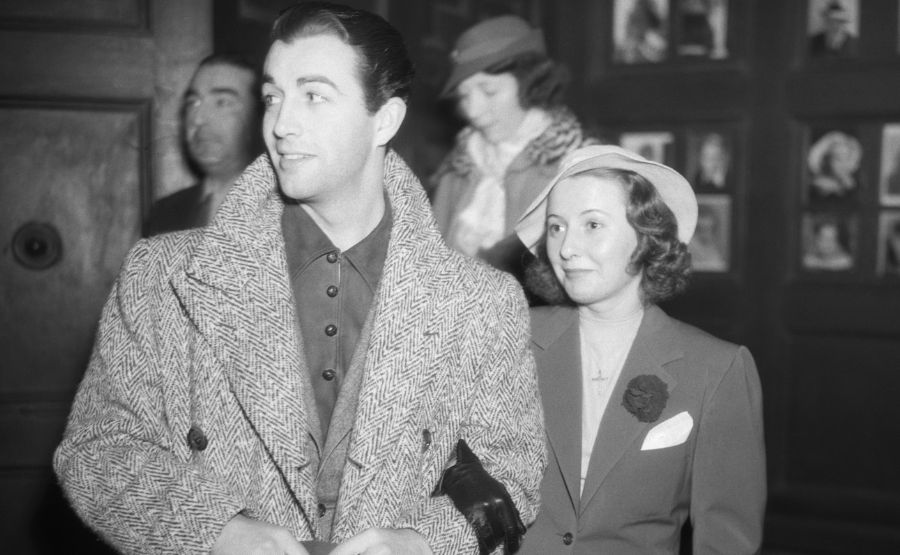
Personal Life: What He Built on His Own Terms
Against the backdrop of all that unresolved history, Tony Fay built something of his own. He had a marriage. He had a son. He had a life that was not defined by Barbara Stanwyck’s screen image or Frank Fay’s alcoholism or the custody battle that had turned him into a bargaining chip before he could walk.
He was not famous. He did not want to be famous. He seems to have understood, at some level, that the thing that was supposed to have protected him — the famous name, the wealthy household, the Hollywood connection — had not actually protected him at all. He built something smaller and more genuine.
His son’s name and the details of his marriage have never been publicly documented in any verified source. That privacy, in the context of everything Tony grew up with, feels intentional and right. He knew what happened when family life became public property. He chose not to repeat it.
Challenges: The Particular Weight of the Abandoned Child
Tony Fay’s challenges were not the challenges of a public figure navigating career reversals or financial pressures. They were the deeper, quieter challenges of someone who was relinquished by one mother before he could speak and then emotionally abandoned by a second one who was far more famous.
The biographies that touch on his life describe a man who struggled with the emotional inheritance of those early years. The delinquency of his adolescence can be read as a child communicating need through behavior because no other channel was open to him. The estrangement from Barbara in adulthood can be read as a man protecting himself from someone who had already shown, repeatedly, what her limits were.
He invited her to his wedding. She sent a bathroom set. He told her about his son. She sent furniture and money and never came. He described their last meeting as a conversation between strangers. He learned, at some point, that the hope you carry for a mother who never quite arrived can only be carried for so long before it becomes something else.
He appears to have put it down. He built what he could build without her.
Financial Picture: Private and Undocumented
Anthony Dion Fay’s financial life is not part of the public record. No net worth estimate has been reliably documented in any credible source. He was not a public figure in his own right, had no entertainment career, and appears to have built his financial life entirely through private means that generated no public documentation.
Barbara Stanwyck’s estate, upon her death in 1990, reflected decades of work as one of Hollywood’s highest-paid performers. She reportedly left most of her estate to friends, colleagues, and causes she cared about. The specific disposition of her will in relation to Tony has not been confirmed in any primary source available to the public.
What can be said plainly: Tony did not live in Beverly Hills. He was not photographed at premieres. He built a modest, private life in keeping with who he chose to be — someone who had seen what the other kind of life looked like from the inside and had decided it was not for him.
Life and Death: A Quiet Exit From a Story That Was Never Really His to Tell
Anthony Dion Fay died on May 17, 2006, at the age of seventy-four. He had outlived both of his adoptive parents — Frank Fay had died in 1961, Barbara Stanwyck in 1990. He had, in the end, outlasted the household that had shaped him so imperfectly.
He died having never been publicly famous, never having sought the spotlight, never having told his version of the story in any formal way that a researcher or journalist could access.
The story got told anyway, eventually, because Barbara Stanwyck was too significant a figure for her biographers to ignore the son who existed in the margins of her life. Tony’s role in that story is almost always supporting character — the evidence of Barbara’s private failings, the human cost of her professional obsessions. He deserves to be understood as the main character of his own story, even if that story was quieter than the one surrounding it.
Final Words
The tragedy of Anthony Dion Fay’s life is not dramatic in the way Hollywood tragedies usually are. There is no single catastrophic moment, no famous last words, no climactic confrontation. There is just the long, slow accumulation of distance — the wedding she did not attend, the grandson she never met, the photo kept in a closet rather than on a wall.
He was ten months old when they renamed him and brought him into a household that was already struggling. He was given a famous woman’s last name and a famous man’s first name and a childhood that did not match either of those gifts in terms of warmth or stability.
He grew up. He figured out what he actually needed. He built it himself, quietly, without making a public production of any of it.
He was not a great man in the sense that biographies usually celebrate — no achievements, no awards, no landmark moments that the world needed to remember. He was something smaller and more human than that: a person who survived an imperfect start, who built genuine connections even when the most famous connection in his life had failed him, and who had the dignity to live his own story rather than the one anyone else was writing for him.
That matters. Even if nobody was watching.
FAQs
1. Who was Anthony Dion Fay?
Anthony Dion Fay, born John Charles Greene on February 5, 1932, in Los Angeles, was the only adopted son of actress Barbara Stanwyck and actor Frank Fay. He was adopted at approximately ten months old on December 5, 1932. He was not a public figure in his own right but became known through biographies of his famous adoptive mother. He died on May 17, 2006, at the age of 74.
2. What was Anthony Dion Fay’s birth name?
He was born John Charles Greene. When Barbara Stanwyck and Frank Fay adopted him, he was renamed Anthony Dion Fay. Family members and close friends called him Tony throughout his life.
3. Why did Barbara Stanwyck adopt Anthony Dion Fay?
Multiple biographies have raised the question of motivation. Barbara was reportedly unable to have biological children. The adoption occurred during a period when her marriage to Frank Fay was already troubled, and several biographical accounts suggest that the adoption was at least partly motivated by a hope that raising a child together would stabilize their struggling marriage. If that was the hope, it did not come true — the marriage ended in divorce in 1935.
4. Who was Frank Fay and what was his relationship with Anthony?
Frank Fay (1891–1961) was an Irish-American actor, comedian, and stage performer — actually a bigger name than Barbara Stanwyck when they married in 1928. He is often cited as a major influence on Bob Hope’s comedic style. He struggled severely with alcoholism during his marriage to Barbara, and the household became unstable. When Barbara divorced him in 1935, a public custody battle over Tony followed. Barbara won custody.
5. Why was Anthony Dion Fay estranged from Barbara Stanwyck?
The estrangement developed over many years and had multiple contributing factors. Barbara was reportedly demanding and emotionally distant in her parenting style. Tony went through a troubled adolescence that Barbara found difficult. As an adult, he said their relationship had deteriorated to the point where they interacted more like strangers than like mother and son. Barbara did not attend his wedding, never met his son, and never reconciled with him before her death in January 1990.
6. Did Barbara Stanwyck attend Anthony Dion Fay’s wedding?
No. Tony invited her, but she declined. She sent the newlyweds a bathroom set as a wedding gift instead of attending. This specific detail has been noted across multiple biographical accounts as emblematic of the emotional distance in their relationship.
7. Did Barbara Stanwyck meet Anthony’s son — her only grandson?
She did not. When Tony and his wife had a son, Barbara sent baby furniture and one hundred dollars to mark the birth. She never visited the baby and reportedly never met him. Tony later described this as one of the most significant disappointments of his adult life.
8. What did Anthony Dion Fay do with his life?
He lived privately, away from Hollywood and away from any public career. He did not enter the entertainment industry or leverage his connection to Barbara Stanwyck in any professional way. He built a quiet civilian life, married, and had one son of his own. The specific details of his work and adult life were not documented in the public record.
9. What was Anthony Dion Fay’s last known encounter with Barbara Stanwyck like?
He described it as a conversation between strangers. He said he asked about her career politely, as anyone might speak to someone they barely knew, and she responded in kind — vague and disconnected. There was no emotional warmth, no parental recognition, nothing that suggested the particular weight of a mother-and-son relationship. It was their last contact before her death.
10. Did Barbara Stanwyck keep anything related to Anthony?
Multiple biographical sources mention that Barbara reportedly kept a photograph of Anthony in her closet — stored away rather than displayed. This has been interpreted as evidence that her feelings about him were more complicated than simple indifference, even if she could not or would not act on those feelings by seeking reconciliation.
11. How did Anthony Dion Fay die?
He died on May 17, 2006, in what Social Security records confirm as a natural death at age 74. He was survived by his son. The specific cause of death has not been documented in publicly available sources.
12. What is Anthony Dion Fay’s legacy?
He has no public legacy in the conventional sense. His legacy, such as it is, lies in what his story reveals about the private costs of Hollywood fame and the ways in which children pay for adults’ unresolved problems. His life has become a reference point in discussions of Barbara Stanwyck — evidence of the gap between her powerful screen image and the more complicated person behind it. For those who have followed his story, he stands as a reminder that the children of famous people have their own full human lives, regardless of whether anyone is paying attention.
Explore ideas that elevate your thinking with The Elevate Magazine.