Julie Deborah Brown: The Woman Who Built Room for Every Baby to Grow
Quick Bio
| Detail | Information |
| Full Name | Julie Deborah Brown |
| Born | 1966 |
| Birthplace | New York City, USA |
| Age (2026) | Approximately 60 years old |
| Nationality | American |
| Known For | Founder of Room to Grow nonprofit; second wife of filmmaker Ken Burns |
| Occupation | Nonprofit founder; social worker; philanthropist |
| Education | BA Art History, University of Michigan; MSW, New York University |
| Early Career | Old Master Painting dept., Christie’s auction house; child therapist, Karen Horney Clinic |
| Organization Founded | Room to Grow (1998) |
| Parents | Richard Brown (father); Leslie Mundjer (mother) |
| Married | October 18, 2003 (to Ken Burns) |
| Children | Olivia Burns; Willa Burns (biological); Sarah Burns; Lilly Burns (stepdaughters) |
| Current Status | Separated from Ken Burns (reported 2017); private |
| Net Worth | ~$700,000–$1 million (estimated, unverified) |
Introduction: The Builder Working Quietly at the Foundation
In the cultural world surrounding Ken Burns — one of the most celebrated documentary filmmakers in American history — Julie Deborah Brown could easily have been understood as a supporting character in someone else’s story. The wife. The philanthropist spouse. The woman photographed beside the director at galas.
She was none of those things, really.
She was the woman who founded Room to Grow in 1998, five full years before she ever married Ken Burns. She had already built a professional life — from the auction rooms of Christie’s to the therapy rooms of a Manhattan clinic — before her personal life intersected with the most famous documentary filmmaker of her generation. She had already identified the problem she wanted to spend her life solving: that babies born into poverty in the wealthiest city in the world were arriving without the parental support, practical resources, or developmental guidance that would give them a fair start.
Room to Grow became her answer to that problem. And it became, over twenty-five years, one of the most respected early childhood nonprofit models in the United States — expanding from New York City to Boston, partnering with major foundations, and directly supporting thousands of families through one of the most critical developmental windows in any human life.
Julie Deborah Brown is a serious person who did serious work. This is that story.
Early Life: New York, a Financial Family, and Quiet Formation
Julie Deborah Brown was born in 1966 in New York City — the daughter of Richard Brown, who built a career as a senior vice president for investments and financial consultant at Smith Barney, and Leslie Mundjer Brown. The household was financially comfortable without being extravagant, and whatever specific texture her childhood had in New York during the late 1960s and 1970s, it produced a person who combined intellectual ambition with a genuine orientation toward social purpose.
New York in those decades was a city of enormous contrasts. The financial world her father inhabited — the institutional New York of banking and investment — existed in visible proximity to the poverty and inequality that defined large portions of the same city. Growing up with those contrasts around her appears to have sharpened something in Julie rather than insulating her from it.
She hasn’t talked much about her early years in public. Her parents’ names, her father’s career, and the broad shape of a New York upbringing are essentially the sum total of what has been confirmed. The rest belongs to her — deliberately kept private in the way that has characterized her approach to personal information throughout her adult life.
What the childhood produced, though, is visible in everything that followed: a person who thought carefully about the world, who pursued education with genuine seriousness, and who arrived at her professional life with a clear sense of what she wanted to use it for.

Education: Art History, Christie’s, and the Pivot to Social Work
Julie attended the University of Michigan — a flagship public research institution in Ann Arbor that consistently ranks among the most academically rigorous universities in the country. She studied art history there, earning her Bachelor of Arts degree around 1988. It is a discipline that teaches something specific and transferable: how to look at objects carefully, how to situate things in their historical and cultural context, how to read what is not immediately visible on the surface.
After graduation, she took those skills into the commercial art world. She went to work at Christie’s, the world-famous auction house, specifically in the Old Master Painting department in New York. Christie’s is a place that operates on connoisseurship — the deep, trained ability to assess authenticity, quality, and value in works of art created centuries ago. Working there required exactly the kind of close attention and contextual thinking that art history training produces.
And then she made a turn.
She enrolled at New York University and completed a Master of Social Work degree. The pivot was not random. The skills she had developed at Christie’s — the careful looking, the contextual awareness, the patient attention to detail — were equally applicable to the practice of social work, where the object of careful attention was not a Flemish painting but a human being navigating difficult circumstances. She went from the Old Master Painting department to the Karen Horney Clinic, a well-regarded psychoanalytically oriented clinical center in New York, where she worked as a child therapist.
That career arc — art history to auction house to clinical social work — describes someone who was not simply accumulating credentials but genuinely following intellectual and ethical curiosity wherever it led. The art world taught her to see. The therapy practice taught her to listen. Both skills would prove foundational when she turned to the problem she had identified as the most urgent and most solvable: the gap in resources and support that babies born into poverty faced in their critical earliest years.
Founding Room to Grow: The 1998 Decision That Defined Everything
In 1998, three years before she married Ken Burns and five years before the wedding that would make her name a permanent footnote in his biographical profiles, Julie Deborah Brown founded Room to Grow.
The premise was precise, not vague. Julie had observed, through her clinical work at the Karen Horney Clinic, that the families who most needed support during a baby’s earliest developmental years were also the families least likely to have access to it. The first three years of life represent a period of extraordinary neurological and developmental growth. What happens — or does not happen — during those years leaves an imprint that is difficult and expensive to correct later. The babies arriving in poverty were not simply economically disadvantaged. They were arriving in circumstances that could compromise their developmental trajectory before anyone with the resources to help them had a chance to intervene.
Room to Grow’s model addressed this window directly. The organization works with families beginning in the final trimester of pregnancy — starting before the baby even arrives. It then provides sustained, individualized support through the child’s first three years of life. That support is both material and relational: families receive essential items including diapers, strollers, clothing, and developmental toys, but they also receive one-on-one coaching sessions that focus on parenting skills, child development knowledge, and connections to community resources that the families would not necessarily know how to navigate on their own.
The model operates through regular center visits — not drop-in, but scheduled, sustained engagements that build genuine relationships between the organization’s staff and the families it serves. Each visit is calibrated to the developmental stage the child has reached. The coaching is not generic; it responds to what a specific child and a specific parent are actually experiencing at that particular moment.
Room to Grow launched in New York City and eventually expanded to Boston, where a second program was established. Over the course of more than two decades, the organization has supported tens of thousands of families and has become a recognized model in the early childhood development nonprofit space. It has partnered with organizations including the Beker Foundation, the Acorn Foundation for the Arts and Sciences, and Bank of America — funders whose support speaks to the organization’s credibility and demonstrated impact.
Julie has remained actively involved in Room to Grow’s work — not as a figurehead founder who steps back after the launch but as someone who shows up for the galas, the benefit events, and the ongoing institutional work that keeps a nonprofit functioning across decades.
Meeting Ken Burns: The Marriage That Made Her Famous to People Who Would Not Have Otherwise Found Her
Somewhere in the orbit of New York’s philanthropic and cultural world, Julie Deborah Brown and Kenneth Lauren Burns found each other. The specific circumstances of their meeting have not been publicly documented. What is clear is that both moved in overlapping circles — the world of arts, culture, social purpose, and New York City institutions where a prominent documentary filmmaker and a prominent nonprofit founder would naturally encounter each other repeatedly.
They married on October 18, 2003, in Walpole, New Hampshire, at the home that Ken had established there during his career. The ceremony was small and private — officiated by Justice Dayton Duncan, a filmmaker and close friend of Ken’s, who had collaborated with him on several documentary projects. Julie was thirty-seven at the time. Ken was fifty. The thirteen-year age difference was never publicly treated as either a curiosity or a complication.
The wedding was in keeping with how both of them appeared to approach their personal lives — as something meaningful and private rather than something performed for an interested public.
Through the marriage, Julie became stepmother to Ken’s two daughters from his first marriage — Sarah Burns and Lilly Burns, both of whom went on to build careers in film and documentary work. Sarah in particular collaborated with her father and her husband David McMahon on the 2016 documentary O.J.: Made in America, which won the Academy Award for Best Documentary Feature. The blended family that formed around the Walpole home appears to have been warm and engaged — Ken has spoken publicly about the importance of his family relationships, and Julie’s own daughters with him, Olivia and Willa, grew up surrounded by an extended family deeply invested in documentary storytelling and social purpose.
The household combined two professional lives that were, in a real sense, variations on the same fundamental commitment: Ken’s films told the stories of what America had been and how those stories continued to shape the present; Julie’s nonprofit tried to give the youngest, most vulnerable Americans the foundation to become part of a different future. The parallelism was genuine, not coincidental.
The Separation: What Is Known and What Remains Private
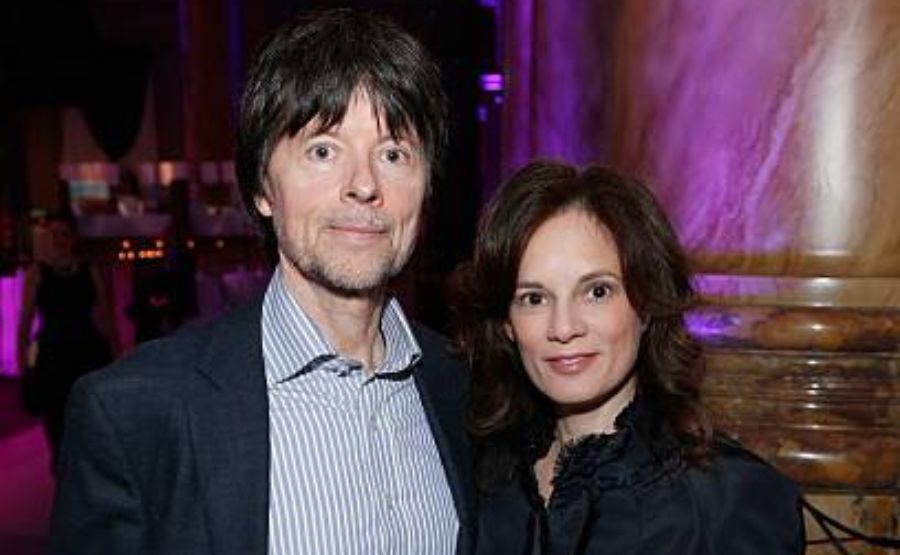
In 2017, Ken Burns spoke in an interview and referenced the fact that he and Julie had separated. He did not offer details about the circumstances or the timeline. What he said, characteristically, was that the separation had strengthened his relationship with his daughters — that the reconfiguration of his personal life had brought him into closer contact with his children in ways he valued.
The separation does not appear to have produced a legal divorce, at least not one that has been publicly confirmed. The Wikipedia article on Ken Burns lists Julie Deborah Brown as his spouse without a divorce date attached to the entry, suggesting the situation remained either unresolved legally or deliberately private as of the most recent updates. Various secondary sources have referred to her as his “ex-wife” and others as his “estranged wife” — a terminological inconsistency that reflects the genuine absence of public confirmation rather than any deliberate misdirection.
What is clear is that the twenty-something years of their relationship, including the years of the marriage and whatever its current legal status represents, produced four children who are loved, two significant professional legacies, and a philanthropic institution that has outlasted the romantic partnership that brought its founder to national attention.
Julie has not addressed the separation publicly. She has not given interviews about it. She has not used social media to communicate anything about her personal life. She has, as in all things, kept what is private, private.
Financial Situation: Independent Work, Modest Estimate
Julie Deborah Brown’s personal financial situation is not a matter of public record. The estimates that circulate — typically around $700,000 to $1 million — reflect reasonable inference about the accumulated earnings of someone who worked in the commercial art world at Christie’s, practiced clinical social work, and has led a recognized nonprofit for more than twenty-five years.
She has never discussed her finances publicly. No salary information from Room to Grow has been disclosed in any source. No divorce settlement has been reported. The figures available are plausible estimates with no verified basis.
What is worth noting is that her financial profile was built independently. Room to Grow was founded before she married Ken Burns. Her career in art and social work predated that marriage by more than a decade. Whatever financial security she has is not simply the product of a spousal relationship. It is the product of twenty-five years of building an organization from a concept into a functioning institution with offices in two cities.
Ken Burns’s own net worth is estimated in the range of twenty million dollars, reflecting four decades of documentary filmmaking and the commercial success of productions including The Civil War, Baseball, Jazz, The Vietnam War, and Country Music. The two financial profiles are substantially different in scale, which simply reflects the different commercial structures of filmmaking versus nonprofit leadership.
Life Today: Room to Grow Continues, and So Does She
In 2026, Julie Deborah Brown is approximately sixty years old and, by every available indication, continuing the work she has been doing since 1998.
Room to Grow is still active and still serving families in New York and Boston. Its annual Spring Benefit events continue to draw support from the philanthropic community. The model it pioneered — intensive, sustained support from pregnancy through age three, combining material resources with relational coaching — continues to be studied and cited in early childhood development policy discussions.
Her daughters, Olivia and Willa, are young adults. Her stepdaughters Sarah and Lilly have built their own impressive careers in film. The family constellation that formed around the Walpole home and the New York philanthropic world has dispersed into individual adult lives while presumably retaining the underlying connections.
Julie herself remains outside the public conversation in any active way. She does not maintain visible social media accounts. She does not give interviews. She appears at Room to Grow events when the organization’s work calls for her presence, and she lives the rest of her life with the same discretion she has exercised throughout.
Final Words
Here is what matters about Julie Deborah Brown’s story when you trace it from beginning to end without organizing it around Ken Burns.
She grew up in New York with a father in finance and an intellectual restlessness that kept redirecting her toward areas of genuine social urgency. She studied art, worked in the auction world, pivoted to social work, practiced therapy, and then — instead of staying inside the established systems that serve children and families — built something new. Room to Grow was not a variation on an existing model. It was her answer to a specific gap she had identified through direct clinical experience.
She founded it at thirty-two years old. She has been building it ever since. It has survived her marriage, her separation, and the kind of institutional turbulence that ends most nonprofits within their first decade. It is still there, still doing what she designed it to do, still operating from the same conviction that animated its founding: that the first three years of a life matter more than almost anything that comes afterward, and that babies born without resources deserve the same quality of developmental support as babies born into abundance.
That is not a simple accomplishment. It is a life’s work. And it belongs entirely to her.
FAQs
1. Who is Julie Deborah Brown?
She is an American philanthropist, social worker, and nonprofit founder born in 1966 in New York City. She is the founder and guiding force behind Room to Grow, a nonprofit organization established in 1998 that supports families with babies born into low-income circumstances from the third trimester of pregnancy through the child’s third birthday. She is also known as the second wife of documentary filmmaker Ken Burns, whom she married in October 2003.
2. What is Room to Grow and what does it do?
Room to Grow is a nonprofit organization founded by Julie in 1998. It provides intensive, individualized support to families with babies born into poverty, operating from pregnancy through the child’s third year — a developmentally critical window. Families receive regular one-on-one coaching sessions focused on child development, parenting skills, and access to community resources, as well as essential material supplies like diapers, clothing, strollers, and age-appropriate developmental items. The organization now operates in both New York City and Boston.
3. Did Julie Deborah Brown found Room to Grow before or after marrying Ken Burns?
Before — by five years. Room to Grow was established in 1998. In October 2003, Julie wed Ken Burns. This timeline is important because it establishes that the organization that defines her professional legacy was entirely her own creation, developed independently of her subsequent marriage.
4. Where did Julie Deborah Brown go to school?
She earned her Bachelor of Arts degree in Art History from the University of Michigan, graduating around 1988. She subsequently enrolled at New York University, where she completed a Master of Social Work degree — the credential that enabled her clinical career and provided the foundation for her nonprofit work.
5. What did Julie do before founding Room to Grow?
After graduating from Michigan, she worked in the Old Master Painting department at Christie’s, the internationally renowned auction house in New York. She later returned to graduate school at NYU and, upon completing her MSW, worked as a child therapist at the Karen Horney Clinic in New York City. Her direct clinical experience with children and families in that setting is directly credited as the formative context for the problem Room to Grow was designed to address.
6. When did Julie Deborah Brown and Ken Burns get married?
They married on October 18, 2003, in Walpole, New Hampshire, in a private ceremony held at their home. The officiant was Justice Dayton Duncan, a filmmaker and close friend of Ken Burns who had collaborated with him on documentary projects. Julie was thirty-seven at the time and Ken was fifty.
7. How many children does Julie Deborah Brown have?
She has two biological daughters with Ken Burns — Olivia Burns and Willa Burns. She is also the stepmother of Sarah Burns and Lilly Burns, Ken’s daughters from his first marriage to Amy Stechler Burns. Sarah Burns went on to co-direct O.J.: Made in America, which won the Academy Award for Best Documentary Feature in 2017.
8. Are Julie Deborah Brown and Ken Burns still married?
The situation is not clearly publicly confirmed. In 2017, Ken Burns spoke about a separation in an interview. However, no legal divorce has been publicly announced or confirmed, and some current sources still list Julie as his spouse without a divorce date. The ambiguity reflects the consistent privacy both parties have maintained about their personal lives rather than any clear public record.
9. Does Julie Deborah Brown have social media?
No verified public social media accounts in her name are widely visible. She maintains an extremely low public profile, does not give media interviews, and has consistently declined any form of public platform beyond her appearances at Room to Grow events and related philanthropic activities.
10. Who are Julie’s parents?
Her father is Richard Brown, who worked as a senior vice president for investments and financial consultant at Smith Barney. Her mother is Leslie Mundjer Brown. Beyond these basic facts, the details of her family background have not been made public, consistent with the privacy she has maintained throughout her adult life.
11. What is Julie Deborah Brown’s estimated net worth?
Estimates from secondary sources place her net worth in the range of $700,000 to $1 million. These figures are not based on any verified financial disclosure and should be understood as informed estimates reflecting her career in commercial art, clinical social work, and nonprofit leadership over several decades. No salary information from Room to Grow has been publicly disclosed.
12. Where does Julie Deborah Brown live now?
Her current residence is not publicly confirmed. She has long-standing ties to both New York City, where Room to Grow operates and where her professional career developed, and Walpole, New Hampshire, where she and Ken Burns established their family home. She has not publicly identified her current location, consistent with her overall approach to personal privacy.
Explore ideas that elevate your thinking with The Elevate Magazine.