Quick Facts
| Topic | Details |
| Name | Valleywise Health (formerly Maricopa Integrated Health System) |
| Type | Public safety-net teaching hospital and community health system |
| Founded | 1877 (as a territorial county hospital) |
| Location | Phoenix, Arizona; community centers across Maricopa County |
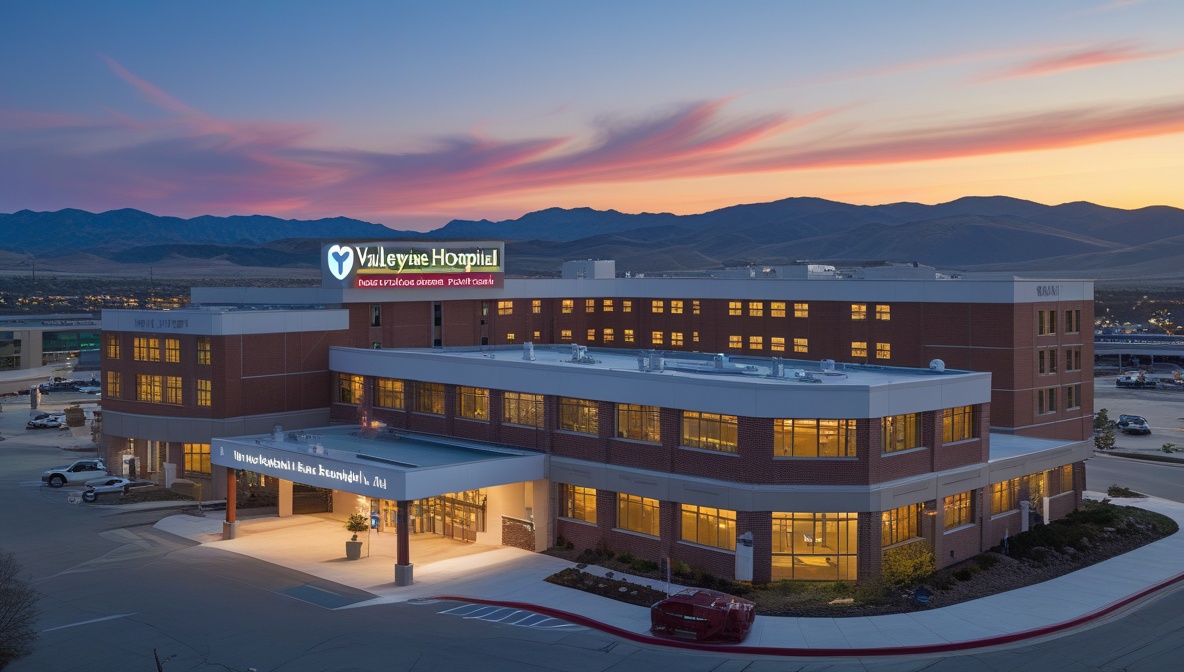
| New Medical Center | 10-story, 673,000 sq ft facility opened June 2024 |
| Key Services | Level I Trauma Center, Arizona Burn Center, Behavioral Health, HIV Care, Refugee Women’s Health, NICU, Oncology |
| Teaching Partner | Creighton University Arizona Health Education Alliance |
| Funding | Prop 480 (2014) — $935 million voter-approved bond authority |
| Known For | Serving Maricopa County citizens without insurance or with inadequate coverage regardless of their financial situation |
| Recognition | Named to IBM Watson Health’s 100 Top Hospitals list (2020) |
Introduction: The Hospital That Has Never Turned Anyone Away
There are hospitals built for profit. There are hospitals built for prestige. And then there is Valleywise Health — a hospital built for the people who have nowhere else to go.
Valleywise Health has been Maricopa County’s medical safety net for almost 150 years in one of the country’s fastest-growing metropolitan areas. Someone is not turned away when they arrive without insurance, a home address, or the means to pay. They get care. That principle has defined this institution from its earliest days as a territorial county hospital in the 1870s through to the gleaming ten-story medical center that opened its doors to patients in 2024.
Aspirational television shows don’t feature hospitals like Valleywise. It does not cater to wealthy patients seeking elective procedures in luxurious private suites. Instead, it takes on the whole burden of a community’s most complicated, urgent, and unmet medical needs, which is far more challenging and crucial. and it does so with a standard of clinical excellence that has earned it national recognition.
Understanding Valleywise Health means understanding something true about what public medicine looks like when it actually works — the history, the challenges, the people it serves, and the extraordinary investment its community made to give it a future worthy of its mission.
See also “Fun Zoom Backgrounds to Make Your Video Calls More Exciting“
From Territorial Outpost to Modern Institution: The Long History
Arizona was not yet a state when this story began. In 1877, with Phoenix still a raw frontier settlement and the territory of Arizona barely a decade old, a small hospital facility was established to care for the county’s poor and sick. It was a modest, unglamorous thing — a convalescent facility more than a modern medical centre — but it represented something important: a formal commitment by the public to take care of people who are unable to take care of themselves.
That commitment has never been withdrawn in nearly 150 years.
The county hospital grew alongside the city. The organization that cared for Phoenix’s most vulnerable citizens grew together with the city as it grew from a little territorial outpost to a significant American metropolis. In 1912, Arizona became a state, bringing with it more formal systems of government and healthcare management. The hospital was licensed as a healthcare facility by the Arizona Department of Health Services, establishing the legal and regulatory foundation it would build on for decades to come.
In 1956, the Maricopa County General Hospital — which would eventually become the direct predecessor to today’s Valleywise Health Medical Center — opened at its current location on 24th Street and Roosevelt in Phoenix. That facility served the community for well over half a century, absorbing a growing and increasingly complex patient population as Phoenix became one of the most populous cities in the country.
Along the way, the institution accumulated a series of genuine firsts that reflect its ambitions beyond basic safety-net care. It established Arizona’s first medical residency programme. It created the state’s first Level I Trauma Center — the highest designation for trauma care, meaning it can handle the most severe and complex injuries for both adults and children. It opened Arizona’s first nationally verified burn centre, which would grow into one of the most respected burn treatment facilities in the entire American Southwest. And it opened Arizona’s first HIV/AIDS clinic at a time when that disease was devastating communities and being ignored by many institutions that could have helped.
In 2018, the organization underwent a rebranding from Maricopa Integrated Health System to Valleywise Health — a name intended to signal both its roots in the Valley of the Sun and its breadth of healthcare services across the region.
What Valleywise Actually Does: The Services That Define It
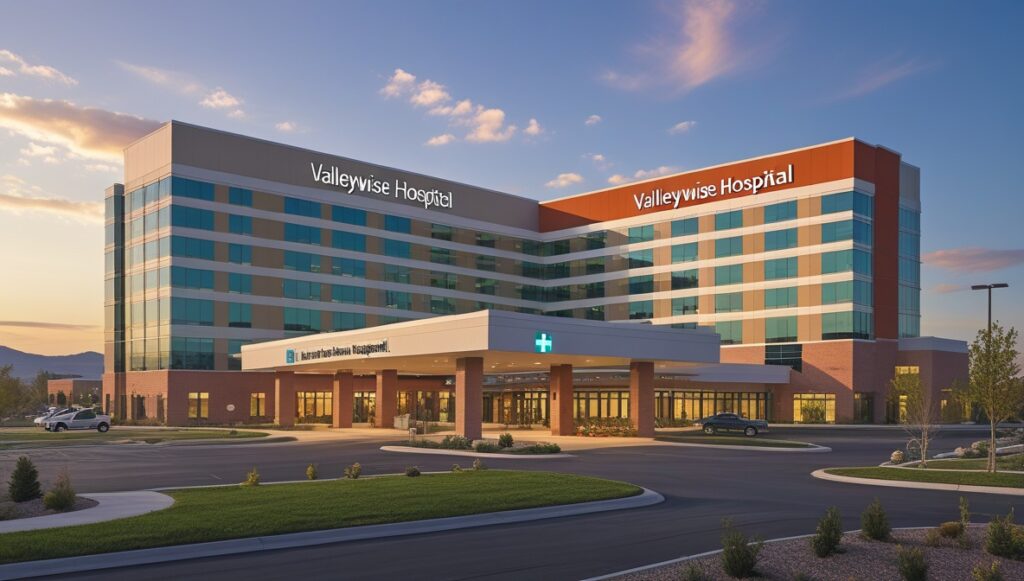
To truly understand what Valleywise Health is, you need to understand the range of what it does — because it is considerably more than a single hospital.
The Level I Trauma Center
A Level I Trauma Center is not simply a well-equipped emergency room. It is a facility that maintains round-the-clock capacity to manage the most life-threatening injuries — major car accidents, severe burns, gunshot wounds, falls from height, and other catastrophic events — with immediate access to specialist surgical teams, blood products, and critical care. The American College of Surgeons verifies these designations, and maintaining the designation requires continuous commitment to staffing, training, equipment, and outcomes data.
Valleywise Health operates the only Level I Trauma Center in Maricopa County verified to treat both adults and children. That distinction matters enormously in a county of more than four million people. When the most severe accident cases arrive in the Phoenix metropolitan area, Valleywise is where many of them go.
The Arizona Burn Center
If the trauma centre is the hospital’s most operationally critical service, the Arizona Burn Center is arguably its most nationally distinctive. It is Arizona’s only nationally verified burn centre, serving not just Maricopa County but the entire Southwestern United States. Burn injuries present some of the most complex and prolonged treatment challenges in all of medicine — requiring wound management, infection control, surgical intervention, pain management, nutrition support, and extensive rehabilitation, often over months of care. The expertise required to do this well is rare.
In the new medical centre that opened in 2024, the Diane and Bruce Halle Arizona Burn Center occupies an entire floor — approximately 72,000 square feet, which is nearly three times the size of the previous facility. The expanded centre includes dedicated trauma bays for burn cases, a specialised paediatric wing, a physical and occupational therapy suite, a hyperbaric chamber, and dedicated space for research and resident training. For burn patients across the Southwest, it represents the highest available standard of care.
Behavioural Health Services
Valleywise Health is Arizona’s largest provider of court-ordered inpatient mental health care. This is a significant and often invisible part of what the institution does — serving patients who are in acute psychiatric crisis, many of whom have no other option for care and no means to pay for it.
The organisation operates multiple behavioural health facilities, including the Valleywise Behavioral Health Center and the Valleywise Behavioral Health Center in Maryvale — a west Phoenix facility that was purchased from a former Abrazo Community Health Network hospital in 2018 using Proposition 480 funds and reopened in 2019 after extensive renovation as a 192-bed inpatient behavioural health hospital with a full-service emergency department.
Arizona consistently ranks among the states with the most limited access to mental health resources. In a state where demand far outpaces supply, Valleywise Health’s behavioural health capacity is not a niche service — it is a critical piece of infrastructure for the entire metropolitan area.
HIV and Refugee Care
Two of Valleywise Health’s community health programs deserve particular attention because they serve populations that most other healthcare institutions are poorly equipped to handle.
The McDowell Healthcare Center is the largest provider of HIV primary care in Arizona. HIV remains a condition requiring ongoing, specialised management, and for many of the patients served by Valleywise — patients who are uninsured, economically precarious, or facing compounding social challenges — access to consistent, knowledgeable HIV care is genuinely life-sustaining.
The Refugee Women’s Health Clinic offers multilingual, culturally sensitive care to refugee women who are new to the United States. Maricopa County and the Phoenix metropolitan area have historically been significant destinations for refugees arriving from numerous countries. These women arrive with unique health histories, language barriers, and often experiences of significant trauma. The clinic employs cultural health navigators and interpreter services to provide care that respects both clinical needs and cultural contexts. It is the kind of specialised, culturally competent service that most institutions do not offer, and for many refugee families arriving in Arizona, it is a first point of contact with American healthcare.
Community Health Centres
Beyond its main campus and specialist facilities, Valleywise Health operates a network of community health centres distributed across Maricopa County. These facilities offer integrated behavioral health treatments, primary care, pediatric care, and on-site pharmacy access to communities with limited access to healthcare. Each centre is designed to serve as an accessible entry point into the health system — the kind of place where a family without insurance can establish a relationship with a healthcare provider before problems escalate to emergency levels.
The Teaching Hospital Mission: Training Tomorrow’s Doctors
One dimension of Valleywise Health that is not always visible to the general public is its role as Arizona’s only public teaching hospital. Through the Creighton University Arizona Health Education Alliance, Valleywise Health trains hundreds of medical residents every year across a broad range of specialties.
Medical residency is the period after medical school when newly graduated doctors train under supervision in a clinical setting, developing the practical skills and judgment that formal education alone cannot provide. The quality and variety of cases at a safety-net trauma centre like Valleywise creates a training environment that is exceptionally rich — residents encounter the full spectrum of medical complexity, frequently in circumstances requiring quick, crucial decisions.
The new medical centre was designed with teaching explicitly in mind. Every facility upgrade — the expanded burn centre, the new trauma bays, the operating rooms, the research spaces — was conceived to serve not just current patients but the physicians being trained to care for future ones. When the CEO of Valleywise speaks about the new building making resources available to the hundreds of residents trained there each year, it reflects a genuine commitment to the hospital’s role in the long-term health infrastructure of the entire state.
Proposition 480 and the Community Vote That Changed Everything
The story of how Valleywise Health got its new building is itself a story worth telling — because it required the voters of Maricopa County to actively choose it.
In 2014, a ballot measure known as Proposition 480 asked Maricopa County residents to approve $935 million in bonding authority to transform the Valley’s public teaching hospital and safety-net system. The decision to vote was not predetermined. Executives from rival private hospital systems opposed the public funding. Supporters — including then-Phoenix Mayor Greg Stanton — made the case that the community’s most vulnerable residents deserved a modern facility equal to the care being provided elsewhere in the region.
The voters approved it.
That decision set in motion a decade of planning, design, construction, and expansion. The funds allowed Valleywise to purchase the former Abrazo hospital in Maryvale and convert it into a behavioural health facility, to open new community health centres, and most significantly, to design and build an entirely new flagship medical centre from the ground up.
More than 500 Valleywise Health staff participated directly in the design and programming process for the new tower — an unusual and meaningful degree of staff involvement that shaped everything from the layout of clinical spaces to the design of patient rooms.
The New Medical Centre: A Building Designed for People
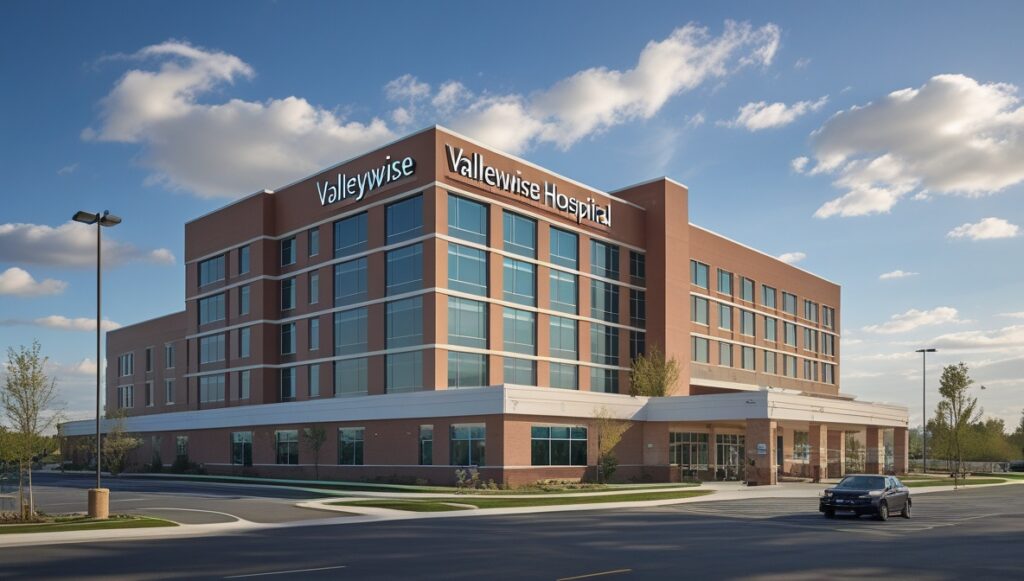
On June 13, 2024, Valleywise Health officially opened its new medical centre to patients. The building stands ten stories tall and covers 673,000 square feet. It replaced a facility that had been serving the community for more than fifty years — a building that had become, by any modern standard, genuinely inadequate for the complexity of care being delivered inside it.
The contrast between the old and new buildings captures something important about what sustained public investment in healthcare can accomplish.
The old hospital had multi-patient rooms — shared spaces that limited privacy and complicated infection control. The new building has single-patient rooms only. Every patient has their own space. Every room has a window. This is not a cosmetic change in a facility that serves a population that frequently deals with severe social stress in addition to medical needs. Privacy and personal space affect recovery. They affect dignity.
The trauma and emergency department features six dedicated trauma bays — spaces designed specifically for the initial stabilisation of the most seriously injured patients. The Diane and Bruce Halle Arizona Burn Center, occupying an entire floor of the new building, includes not just treatment spaces but a dedicated paediatric wing for child burn patients, family support rooms, and a playroom for children recovering from burn injuries. That last detail — a playroom in a burn centre — reflects a philosophy about what comprehensive healing actually requires.
By 2026, the hospital projects that it will handle nearly 86,000 emergency visits annually — a volume that reflects not just the growth of the Phoenix metropolitan area but the continuing reality that a large portion of that growing population depends on Valleywise Health as their primary or only source of care.
The Population Valleywise Serves: Why the Mission Matters
Understanding who enters Valleywise Health’s doors is essential to appreciating what the organization does.
The majority of Valleywise Health’s patients receive their care through AHCCCS — Arizona’s Medicaid programme — or through the hospital’s financial assistance programme. A significant proportion are uninsured. Housing instability, food insecurity, limited English proficiency, refugee status, mental illness, or substance use disorders are just a few of the compounding socioeconomic challenges that many people face. These are patients who, in a healthcare system driven entirely by market forces and ability to pay, would fall through the cracks.
Valleywise Health does not let them fall through the cracks. That is not a marketing slogan — it is an operational reality embedded in everything the institution does, from its community health centre network to its refugee clinic to its HIV care programme to its massive behavioural health capacity.
The financial structure of this commitment is worth understanding plainly. Operating a comprehensive safety-net system that serves largely uninsured and Medicaid-covered patients while maintaining the clinical standards required for Level I Trauma certification, burn centre verification, and teaching hospital status is expensive. The Proposition 480 bond provided capital investment. Medicaid reimbursements, state and county funding, and federal support cover ongoing operations. It is a complex and perpetually challenging financial model — one that requires sustained political will as well as institutional competence to maintain.
Challenges: The Ongoing Pressures of Safety-Net Medicine
Valleywise Health has never operated in comfortable conditions. Safety-net hospitals function at the intersection of the highest clinical complexity and the lowest revenue base — treating the sickest and most underserved patients while reimbursement rates remain far below what private insurers pay and far below what the actual cost of care demands.
Arizona has historically ranked poorly in access to mental health services, creating sustained pressure on Valleywise’s behavioural health capacity. The demand for inpatient psychiatric beds, crisis stabilisation, and outpatient mental health services consistently exceeds what is available, and Valleywise absorbs a disproportionate share of that unmet need.
The COVID-19 pandemic tested every hospital in the country, and safety-net hospitals — with their complex patient populations and thinner financial margins — faced particular strain. Valleywise navigated the pandemic while continuing construction on its new facility, managing a patient population with elevated vulnerabilities, and maintaining the full range of its services under extraordinary pressure.
The new medical centre represents a significant step forward, but the underlying dynamics of serving a large, economically disadvantaged urban population in a state with constrained public health investment do not disappear with a new building. They shift and evolve and require continued commitment.
Final Words
Valleywise Health is not a glamorous institution in the way that some teaching hospitals present themselves. It does not compete for wealthy patients seeking elective procedures. It does not market itself on luxury or exclusivity. What it offers is something considerably harder to sustain and considerably more valuable: a genuine, working commitment to the idea that people deserve medical care regardless of what they can pay for it.
For nearly 150 years, through territorial settlement, statehood, world wars, a pandemic, and the transformation of Phoenix from a frontier town into one of the five largest cities in the United States, this institution has held that commitment. It has earned the state’s first Level I Trauma Center. It has built the Southwest’s leading burn treatment facility. It has trained generations of Arizona physicians. It has served refugees, people living with HIV, people in acute psychiatric crisis, people without insurance, and people who had nowhere else to go.
And in 2024, with a new ten-story building funded by a community vote a decade earlier, it stepped into its next chapter — with the same mission it started with in 1877, and far better tools to fulfil it.
FAQs
1. What is Valleywise Health and where is it located?
Valleywise Health is Maricopa County’s public safety-net teaching hospital and healthcare system, based in Phoenix, Arizona. It operates the main medical centre on 24th Street and Roosevelt, along with multiple behavioural health centres and a network of community health centres distributed across Maricopa County.
2. What was Valleywise Health called before?
Before 2018, it operated as Maricopa Integrated Health System (MIHS). The organization was founded in 1877 as a county hospital serving the Arizona territory at the time.
3. What does “safety-net hospital” mean?
All patients receive care at a safety-net hospital, regardless of their financial situation, insurance status, or immigration status. Safety-net hospitals absorb a disproportionate share of uninsured, Medicaid-covered, and economically vulnerable patients. Valleywise Health is Arizona’s only public safety-net hospital, meaning it operates under a legal and mission-based obligation to serve the county’s most underserved residents.
4. What is the Arizona Burn Center at Valleywise Health?
The Arizona Burn Center is the only nationally verified burn treatment facility in Arizona, and it serves patients from across the entire Southwestern United States. It provides comprehensive care for burn injuries of all severity levels, for both adults and children. The new Diane and Bruce Halle Arizona Burn Center, which opened in 2024, occupies a full floor of the new medical centre and is nearly three times the size of the previous facility.
5. Does Valleywise Health have a Level I Trauma Center?
Yes. Valleywise Health operates the only Level I Trauma Center in Maricopa County that is verified by the American College of Surgeons to treat both adults and children. This is the highest designation in trauma care, requiring round-the-clock specialist availability and the capability to manage the most complex and life-threatening injuries.
6. How was the new Valleywise Health Medical Center funded?
Primarily through Proposition 480, a voter-approved ballot measure passed in 2014 that provided Valleywise Health with $935 million in bonding authority. This funding enabled the construction of the new medical centre, the purchase and renovation of the Maryvale behavioural health facility, and the expansion of community health centres across the county.
7. What was the opening date of Valleywise Health Medical Center?
The new facility officially opened to patients on June 13, 2024. It is a ten-story, 673,000-square-foot building that replaced the previous hospital which had been operating at the same location for over fifty years.
8. What mental health services does Valleywise Health provide?
Valleywise Health is the largest provider of court-ordered inpatient mental health care in Arizona. It maintains emergency psychiatric treatment capacity, runs several behavioral health facilities, and offers integrated behavioral health services at its community health centers. The Valleywise Behavioral Health Center in Maryvale is a 192-bed inpatient facility with a full-service community emergency department.
9. Does Valleywise Health provide care to people without insurance?
Yes. Serving uninsured patients is central to Valleywise Health’s mission as a public safety-net institution. Patients who do not qualify for Medicaid or other coverage may access care through Valleywise Health’s financial assistance programme. The hospital does not turn patients away based on ability to pay.
10. What is the Refugee Women’s Health Clinic?
The Refugee Women’s Health Clinic is a specialised programme at Valleywise Health that provides culturally sensitive, multilingual healthcare to refugee women who are new to the United States. The programme employs cultural health navigators and interpreter services to address the unique health needs and circumstances of refugee populations, which are a significant part of the patient community in the Phoenix metropolitan area.
11. Is Valleywise Health a teaching hospital?
Yes. Valleywise Health is Arizona’s only public teaching hospital. Through its partnership with Creighton University — formalised as the Creighton University Arizona Health Education Alliance — it trains hundreds of medical residents each year across multiple specialties. The new medical centre was specifically designed to support this educational mission with research facilities and expanded training spaces.
12. What are the main specialties offered at the new Valleywise Health Medical Center?
The new facility offers a comprehensive range of specialties including trauma and emergency medicine, burn care, cardiology, maternity and obstetrics, a Neonatal Intensive Care Unit (NICU), oncology, pharmacy, radiology, and behavioural health services. The hospital is also home to HIV primary care clinics and the Refugee Women’s Health Clinic at nearby community locations.