Quick Facts
| Feature | Details |
| Country | United States of America |
| Total States | 50 |
| Destinations Covered | 10 |
| Types Featured | Cities, National Parks, Mixed |
| Best Season (General) | Spring & Fall for most destinations |
| Currency | US Dollar (USD) |
| Language | English (Spanish widely spoken in many areas) |
| Travel Style Range | Adventure, Culture, Family, Nightlife, Nature |
| Good for First-Timers? | Yes — strong infrastructure, English-speaking, accessible |
| National Park Pass Worth It? | Yes — covers entry to over 400 federal sites |
Introduction: Why the USA Is Still the World’s Most Exciting Road Trip
There is no country on earth quite like the United States for sheer travel variety. You can stand at the edge of a canyon so deep and wide that your brain genuinely struggles to process it. You can eat a bowl of gumbo in a city that smells like jazz. You can watch a geyser shoot boiling water 100 feet into the freezing air while bison graze fifty yards away, completely unbothered. All of this is possible in one country — sometimes within a single road trip.
The challenge with traveling in the USA is not finding something to do. It is choosing. The country is enormous — the third largest in the world by land area — and its diversity of landscapes, cultures, food traditions, and experiences is genuinely staggering. A person who spent their whole life in New Orleans and a person who spent their whole life in rural Wyoming have both lived in America, and those two lives would look almost nothing alike.
This guide cuts through the noise and lays out the ten destinations that consistently earn their place at the top of every serious traveler’s list. Not because they are the most hyped or the most Instagrammed — but because each one offers something genuinely irreplaceable. Something you cannot find anywhere else.
See also “Questions to Ask a Friend: The Complete Guide to Deeper Conversations That Actually Matter“
1. New York City, New York — Where Everything Happens at Once
If you have never been to New York City, almost nothing can prepare you for the sheer density of it. You wouldn’t believe how tall the buildings are. The streets are louder. The energy is relentless in a way that is somehow thrilling rather than exhausting — at least for the first few days.
New York is one of those cities that functions like a country unto itself. Over 8 million people live there, speaking hundreds of languages, eating food from every corner of the planet, filling subway cars and sidewalks and corner bodegas at every hour of the day and night. The phrase “city that never sleeps” gets thrown around lazily about a lot of places, but New York genuinely earned it.
The obvious things — the Statue of Liberty, Times Square, Central Park, the Metropolitan Museum of Art — are obvious for a reason. They are genuinely worth seeing. But New York rewards exploration beyond the highlights. Brooklyn’s neighborhoods carry their own distinct personalities. The High Line is an elevated park built on an old freight railway that somehow manages to be beautiful and peaceful in the middle of Manhattan. The peaceful streets of the West Village provide the atmosphere of a completely different city.
For food, New York is simply unmatched in the United States. From a dollar-slice pizza counter at midnight to a $300-per-head tasting menu, the entire spectrum of human food culture is represented here. Eating everything is the best course of action. Go to a dim sum hall in Flushing, Queens. Grab a knish from a deli. Find a ramen spot in the East Village. You will not run out of options.
Best time to visit: September through November for mild weather and smaller crowds. Spring, which lasts from March to May, comes in second. Summers are hot and humid but buzzing with energy. December is magical if you can handle the cold.
Don’t miss: The Brooklyn Bridge walk. A West Village comedy show. The Frick Collection. Any live music in the East Village after 10pm.
2. The Grand Canyon, Arizona — A Hole in the Earth That Resets Your Brain
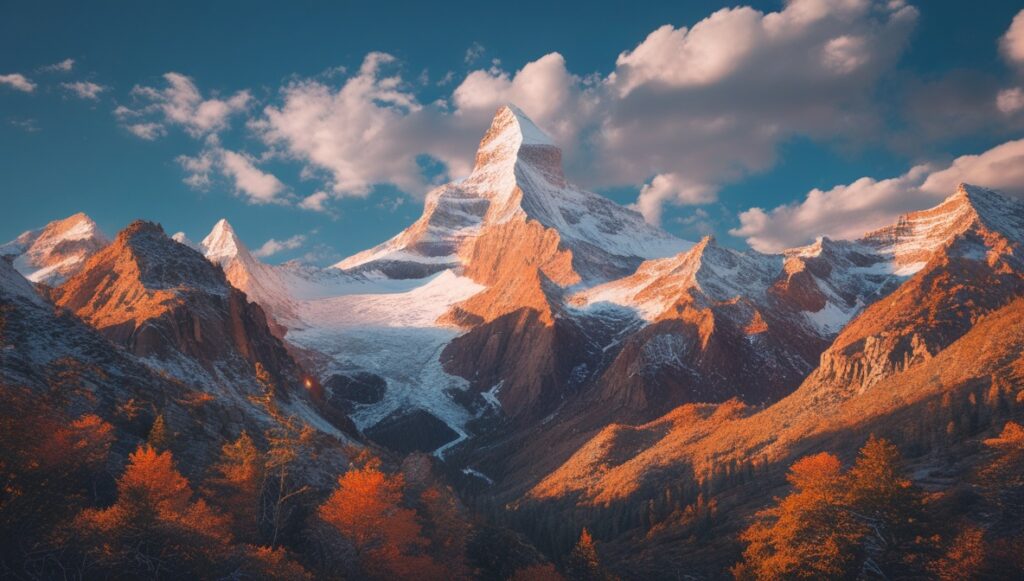
The Grand Canyon is one of those places that photographs simply cannot convey. Every traveler who has stood at the rim and looked out will tell you the same thing: it is larger than you imagined. Much larger. The canyon stretches roughly 277 miles in length and reaches over a mile deep at its lowest point. The oldest exposed rock layers at the bottom are nearly two billion years old. These are numbers that feel abstract until you are standing there looking at them.
The canyon was carved over millions of years by the Colorado River, and the layers of rock visible in its walls read like a compressed history of the planet. Geologists love this place with an intensity that makes perfect sense once you see it — every stripe of color in those cliffs represents a different era of Earth’s past.
Most visitors arrive at the South Rim, which is open year-round and offers the widest range of viewpoints and trails. The most famous hike is the Bright Angel Trail, which descends into the canyon toward the Colorado River below — a reminder that there is a whole living landscape down there that the rim view only hints at. Condors soar along the thermal currents rising from the canyon walls. Bighorn sheep pick their way along seemingly vertical faces.
For the truly adventurous, white-water rafting through the canyon floor is one of the more extraordinary experiences available anywhere in North America. Multi-day trips float the Colorado River through terrain that is accessible no other way.
The most pleasant seasons to visit are spring (April to June) and fall (September to October). Summer brings intense heat at the canyon floor — dangerous for unprepared hikers. Winter is surprisingly peaceful, with snow occasionally dusting the rim.
Don’t miss: Watching sunrise or sunset from Mather Point. The geology museum at the visitor center. The North Rim, if you want solitude.
3. Yellowstone National Park, Wyoming — The Planet Showing Off
Yellowstone sits atop one of the most geologically active regions on Earth — a volcanic hotspot that produces a landscape like nowhere else on the planet. Over 500 geysers. Neon-colored hot springs that look digitally altered but are entirely real. A canyon with yellow walls and roaring waterfalls. And enough wildlife to make wildlife photographers weep with joy.
The park covers more than 2.2 million acres across Wyoming, Montana, and Idaho, making it larger than Rhode Island and Delaware combined. It was established in 1872, making it the world’s first national park — a distinction that says something about how extraordinary the people who first saw it recognized it to be.
Old Faithful is the star attraction, a geyser that erupts approximately every 90 minutes with a column of scalding water reaching somewhere between 100 and 185 feet. People line up on benches around the viewing area like it is a small outdoor theatre, which in a way it is. But Old Faithful is just one of hundreds of geysers scattered across the park. The Grand Prismatic Spring, with its rings of vivid orange, yellow, and green from heat-loving bacteria, is arguably even more visually spectacular.
The wildlife viewing is serious. Yellowstone has one of the densest concentrations of large mammals in the lower 48 states. Bison herds wander across roads with complete indifference to the traffic they create. Bears, wolves, elk, moose, and pronghorn are all present. The Lamar Valley, in the park’s northeast corner, is particularly famous for wolf sightings and is often called “America’s Serengeti” by wildlife enthusiasts.
Best time to visit: Late May through early October for full road access and hiking. September is particularly ideal — crowds thin out after Labor Day but wildlife activity picks up dramatically with the elk rut underway.
Don’t miss: Grand Prismatic Spring boardwalk at dawn, before crowds arrive. The Lamar Valley at dusk for wolf sightings. The Grand Canyon of the Yellowstone.
4. New Orleans, Louisiana — The Most Alive City in America
New Orleans is genuinely unlike any other city in the United States. Founded in 1718 by French colonists, the city spent generations absorbing waves of African, Caribbean, Spanish, and later American influence, and the result is a cultural identity so distinctive that it operates almost as its own civilization.
The French Quarter is the oldest neighborhood, and walking its narrow streets — with their ornate iron balconies, gas lamps, and second-story galleries draped over the sidewalks — feels like stepping into a city that somehow exists slightly outside of time. Bourbon Street is the famous strip, loud and chaotic and unavoidable. But the real soul of the Quarter lives on streets like Royal, where galleries and antique shops open onto sidewalks that fill with impromptu music performances from musicians who simply set up and start playing.
Food in New Orleans is not just cuisine — it is a civic religion. Creole and Cajun cooking traditions, shaped by centuries of layered cultural exchange, produced a flavor vocabulary that no other American city has managed to replicate. Gumbo, jambalaya, beignets, chargrilled oysters, red beans and rice, a muffuletta sandwich stuffed with Italian meats and olive salad — the list goes on and every item on it is worth tracking down.
Music is everywhere. New Orleans is the birthplace of jazz, and that heritage is alive and evolving, not preserved under glass. Frenchmen Street, a short walk from the Quarter, is the current heartbeat of the city’s music scene, with live performances spilling out of venues onto the street most nights of the week. Preservation Hall keeps the roots of traditional jazz burning with intimate, no-frills concerts that are essentially sacred experiences for music lovers.
The best months to go are February through April. Mardi Gras brings enormous energy in February (arrive early, book accommodation months ahead). Spring is lovely and manageable. Summer is brutally hot and humid. Fall is underrated.
Don’t miss: A jazz brunch. The Garden District’s antebellum mansions. A swamp tour into the bayou. Beignets at Café du Monde at 2am.
5. San Francisco, California — Beautiful, Weird, and Impossible to Forget
San Francisco is one of those cities where the physical geography is itself a major attraction. Built on a peninsula ringed by the Pacific Ocean and the bay, with hills so steep that streets become staircases and views emerge unexpectedly around corners, it is one one of the world’s most striking cities.
The Golden Gate Bridge needs no introduction — it is one of the most photographed structures on Earth, and standing at the Marin Headlands looking back across it toward the city skyline is the kind of view that justifies a plane ticket on its own. Alcatraz Island, sitting in the middle of the bay like a concrete fortress, is equally compelling — the audio tour inside the old federal prison is genuinely excellent, one of the best-produced interpretive experiences at any American tourist site.
San Francisco’s neighborhoods are what make it endlessly interesting beyond the icons. The Mission District is where you find arguably the best burritos in the country, along with world-class street murals that line entire alleys. Chinatown is the oldest in North America, a dense, fragrant, completely absorbing few city blocks. The Castro carries significant cultural history as the center of the American LGBTQ+ rights movement. North Beach was home to the Beat Generation writers and still has the bookstore to prove it.
Best time to visit: September and October are the city’s best-kept secret — the famous summer fog lifts and San Francisco gets its warmest, clearest days. Spring is also excellent. Avoid July and August if sunshine is a priority.
Don’t miss: A ride on the historic cable cars (worth the line). Saturday morning farmers market at the Ferry Building. Dim sum in the Richmond District. Lands End at sunset.
6. Las Vegas, Nevada — Outrageous on Purpose
Las Vegas is completely aware of how absurd it is, and that self-awareness is part of the appeal. Nowhere else in the world would anyone build a half-scale replica of the Eiffel Tower next to a pyramid next to a New York City skyline next to a Venetian canal, pack them all onto a single mile-long stretch of road, then fill that road with fountains choreographed to opera music, and somehow make the whole thing feel joyful rather than insane.
The Strip — Las Vegas Boulevard — is the main event, a four-mile stretch of mega-resorts that represents the most concentrated collection of spectacle anywhere on the planet. The Bellagio Fountains, shooting water in time with music over a lake in front of the hotel, are arguably the most impressive free show in America. The interior of the Venetian, with its painted sky ceilings and actual gondoliers, is an architectural exercise in committed theatricality.
But Las Vegas has evolved significantly beyond gambling and neon. The city has become one of the country’s top dining destinations, with a disproportionate number of Michelin-starred and James Beard-recognized restaurants. The live entertainment calendar is relentless — residencies by major artists, world-class magic shows, Cirque du Soleil, headliners in venues ranging from intimate theatres to 20,000-seat arenas.
For anyone who wants nature alongside the excess: Red Rock Canyon is just 30 minutes from the Strip, and the contrast between those ancient sandstone formations and the Vegas skyline behind you is genuinely surreal.
Best time to visit: Spring (March to May) and fall (September to November) offer the most comfortable outdoor temperatures. Summer is extremely hot but indoor experiences are everywhere. December through February is mild and uncrowded.
Don’t miss: The Bellagio Fountains at night. The Neon Museum. A drive to Red Rock Canyon at sunrise. At least one comedy show.
7. Washington, D.C. — Where America Explains Itself
Washington, D.C. is the most important city in the United States that people most often skip in favor of flashier options — and that is a mistake. D.C. is a city that, for the most part, is free to visit and has the power to drastically alter your understanding of American history.
The Smithsonian Institution, the world’s largest museum complex, lines the National Mall with over a dozen museums covering natural history, American history, art, aerospace, African American culture, and more — all free, all extraordinary. One of the most impactful museum experiences in the nation is the National Museum of African American History and Culture, which opened in 2016. The National Air and Space Museum is unmatched anywhere in the world for its collection. You could spend four days just in Smithsonian museums and not cover everything worth seeing.
The National Mall itself — the long green promenade stretching from the Lincoln Memorial to the Capitol — is one of the great public spaces in the world. The Lincoln Memorial at night, lit up and reflected in the reflecting pool, is almost improperly beautiful. The memorials to World War II, Vietnam, and the Korean War each carry their own specific emotional weight, and visiting all three in sequence is a quiet, humbling experience.
The city’s food scene has dramatically elevated itself over the past decade, and neighborhoods like Shaw, Adams Morgan, and Capitol Hill offer restaurants representing the full spectrum of global cuisine.
Best time to visit: Spring is peak season — the famous cherry blossoms bloom around the Tidal Basin in late March to early April, and the city is unforgettable. Fall is a close second, with pleasant weather and thinner crowds. Summers are hot and humid.
Don’t miss: The Lincoln Memorial at dawn. Visit the National Air & Space Museum all day. The Library of Congress reading room. Georgetown’s canal towpath for a walk.
8. Maui, Hawaii — Where the Land Meets the Ocean Like Nowhere Else
Hawaii sits over 2,000 miles from the US mainland in the middle of the Pacific, and the effort of getting there is entirely worth it. Maui, the second-largest island in the Hawaiian chain, offers what is perhaps the single most varied natural landscape of any island on Earth — rainforest, desert, volcanic crater, and some of the world’s most breathtaking beaches, all accessible by car in a matter of hours.
The Road to Hana is one of the great drives in North America — 64 miles of highway winding along Maui’s northern coast through rainforest, past waterfalls, over narrow one-lane bridges, and down to the tiny town of Hana at the road’s end. The journey itself is the destination, and the stops along the way — Wai’anapanapa State Park’s black sand beach, the Twin Falls, the Garden of Eden arboretum — are each extraordinary on their own terms.
Haleakalā National Park is something different entirely. Driving to the summit of this dormant volcano at 10,000 feet above sea level and watching the sunrise above the clouds is an experience that travelers describe in genuinely spiritual terms. The crater below the summit, stretching miles across a rust-colored lunar landscape, is so unlike anything else in Hawaii — or anywhere else — that first-time visitors often stand in silent disorientation.
For water activities: snorkeling at Molokini Crater, a partially submerged volcanic caldera just offshore, offers visibility up to 150 feet in some conditions, with abundant tropical fish and the occasional reef shark.
Best time to visit: April through May and September through November — smaller crowds and lower prices than peak season. The weather is excellent year-round, though winter (December to March) brings the best whale-watching as humpback whales migrate to Hawaiian waters.
Don’t miss: Sunrise at Haleakalā (book the parking reservation well in advance — it fills up fast). The Road to Hana. A snorkel or dive at Molokini. Fresh poke from a local grocery counter.
9. Nashville, Tennessee — More Than Just Country Music
Nashville has undergone one of the most significant transformations of any American city over the past decade. Long known exclusively as the home of country music, the city has evolved into a full-spectrum destination — vibrant food scene, thriving live music across genres, walkable neighborhoods with genuine character, and an energy that has made it one of the top bachelorette and group travel destinations in the country.
The heart of the music scene is Lower Broadway, a stretch of honky-tonk bars where live music plays from noon until 3am, seven days a week. Cover charges are typically low or nonexistent — the musicians make their living from tips. The Bluebird Cafe, a small listening room in a strip mall on the outskirts of town, is where singer-songwriters perform in intimate rounds, and it has launched more careers than almost any other venue in American music history.
The Country Music Hall of Fame is a world-class museum even for people who are not country music fans — the story of American roots music is told in depth and detail, and the connections between country, blues, gospel, and rock are made vivid and compelling. The Ryman Auditorium, the original Grand Ole Opry venue, offers tours and performances in one of the most acoustically perfect rooms in the country.
Nashville’s food scene has quietly become exceptional. Hot chicken — a Nashville original, served in varying degrees of heat on white bread with pickles — is a genuine local creation worth seeking out. Dozens of nationally recognized chefs have opened restaurants here, making a serious dinner reservation increasingly competitive.
Best time to visit: April through June and September through November. Summer is extremely popular but hot and crowded. The winter months (January and February) are quieter and offer lower hotel rates.
Don’t miss: Live music on Lower Broadway on a weeknight (weekends are overwhelming). A hot chicken sandwich. The Bluebird Cafe. A walk through East Nashville’s neighborhoods.
10. Orlando, Florida — Where Imagination Built an Industry
Orlando is the unambiguous capital of family travel in the United States, and possibly the world. The concentration of theme parks, entertainment options, and family-friendly infrastructure in a 25-mile radius around this central Florida city is simply unmatched anywhere on the planet. Walt Disney World alone covers 40 square miles — larger than San Francisco — and contains four major theme parks, two water parks, a sports complex, and more hotels than some cities.
Universal Studios Florida has risen sharply in standing over recent years, particularly with its expanded Harry Potter worlds and the ongoing development of Epic Universe, which opened in 2025 and added an entirely new set of immersive themed lands. The two competing park complexes have engaged in a creative arms race that benefits visitors enormously.
For people who want nature alongside the theme parks — and Florida delivers on nature in ways that surprise many first-time visitors — the Kennedy Space Center is one of the genuinely moving experiences available in the American Southeast. Standing beneath a Saturn V rocket, the largest machine ever built, and understanding that human beings climbed inside one of those things and went to the Moon, is not an easily forgotten moment.
The Florida coast is accessible within an hour of Orlando, with both the Atlantic side (Cocoa Beach, New Smyrna) and the Gulf side (Clearwater, St. Pete Beach) offering very different beach experiences — the Gulf side warmer and calmer, the Atlantic side livelier and more surf-oriented.
Best time to visit: September through November is the sweet spot — heat has eased, hurricane season is winding down, and school crowds have returned to school. January through March is also excellent. Summer brings families and heat in equal measure.
Don’t miss: The Magic Kingdom at night during the fireworks show. The Wizarding World of Harry Potter. Kennedy Space Center. A sunrise kayak through a local waterway to spot manatees.
Final Words
The United States is a place that consistently surprises the people who thought they already knew it. Every traveler who visits the Grand Canyon for the first time leaves with the same expression — a quiet, slightly stunned look that says “I thought I understood what this was, and I was wrong.” New Orleans does something similar, just through flavor and sound instead of geology. Yellowstone does it through spectacle. New York does it through sheer human density.
What this list represents is not a ranking of value — all ten of these destinations earn their place for entirely different reasons, and choosing between them is like choosing between types of weather. What makes America remarkable as a travel destination is that you do not have to pick one genre. A two-week road trip can take you from the neon of Las Vegas to the silence of the Grand Canyon in four hours, then push north to the hot springs and bison jams of Yellowstone in another day.
The best version of a trip through these destinations is an unhurried one — enough time in each place to move past the landmarks and into the actual texture of the place. The best moments in any of them are rarely the ones that showed up on the top-ten list. They are the unexpected ones: the conversation in a Nashville honky-tonk, the bison blocking the road in Yellowstone for 20 minutes, the corner of the French Quarter where a brass band appears from nowhere and the whole street spontaneously starts dancing.
Those moments are everywhere in America, waiting for whoever shows up with enough time to find them.
See also “Questions to Ask a Friend: The Complete Guide to Deeper Conversations That Actually Matter“
FAQs
1. What is the single most visited tourist destination in the United States?
New York City consistently ranks as the most visited city in the country, drawing over 60 million visitors annually in peak years. Times Square alone sees roughly 380,000 people pass through it daily. Among national parks, the Great Smoky Mountains National Park typically leads in sheer visitor numbers, though Yellowstone and the Grand Canyon are both in the top tier.
2. What is the cheapest destination on this list to visit?
Washington, D.C. is the standout value destination. The Smithsonian museums are all free, as are the monuments, memorials, and the National Mall. Accommodation can be expensive depending on the neighborhood, but the core attractions cost nothing. New Orleans can also be extremely affordable if you focus on the street music, neighborhoods, and cooking at local spots rather than tourist-oriented restaurants.
3. Which location is ideal for families with little children?
Orlando is the obvious answer, designed specifically with family experiences at its core. But Yellowstone is an extraordinary family destination too — children who watch Old Faithful erupt or see their first bison herd tend to remember it forever. Washington, D.C. is also excellent for families, with the Smithsonian offering genuinely engaging experiences for kids across science, history, and aviation.
4. How many days do I need in Yellowstone?
Most travelers recommend at least three to five days to experience the park properly. One day is enough for the most famous sights (Old Faithful, Grand Prismatic Spring), but you will miss the wildlife and the quieter parts of the park. Five days allows hiking, multiple geyser basins, the Canyon area, and a proper attempt at wildlife viewing in the Lamar Valley.
5. Is it safe to visit New York City as a first-time international traveler?
Yes. New York City is a very well-policed, tourist-friendly city with excellent transit and clear wayfinding. Standard urban travel precautions apply — keep your belongings secure, stay aware in crowded areas, use licensed taxis or rideshares at night — but the city is navigable and welcoming for first-timers. The subway, though complex, is cost-effective and serves the major tourist areas well.
6. When are the cherry blossoms in Washington, D.C.?
The National Cherry Blossom Festival typically runs from mid-March through mid-April, with peak bloom most commonly arriving in the last week of March or first week of April. Peak bloom lasts only four to seven days, so timing matters. The National Park Service tracks the blossoms and publishes updated predictions each spring.
7. Do I need a car to visit the Grand Canyon?
For the South Rim, you can arrive by bus from Flagstaff or Las Vegas, and a free shuttle system operates within the park once you arrive. However, having a car gives you far greater flexibility, especially for reaching viewpoints that are not on the shuttle route. For the North Rim, a car is essentially required — public transit does not serve that area.
8. What is the difference between Creole and Cajun food in New Orleans?
Both are Louisiana traditions but come from different cultural roots. Creole cooking developed in urban New Orleans, influenced by French, Spanish, African, and Caribbean settlers, and tends to use tomatoes, butter, and cream. Cajun cooking originated in the rural bayou communities of south Louisiana, is generally spicier, and uses more pork fat, game, and wild-caught seafood. Both are extraordinary, and most New Orleans restaurants serve versions of each.
9. Is Hawaii expensive to visit?
Yes — Hawaii is among the most expensive domestic travel destinations in the United States due to the cost of getting there and the island economy’s reliance on imports. Maui is particularly pricey. Budget travelers can reduce costs by renting a condo with a kitchen, cooking some meals, using the local grocery stores for poke and plate lunches, and avoiding resort-area restaurants. The natural attractions (beaches, Haleakalā, Road to Hana) are free or very low cost.
10. Can I visit multiple destinations on one trip?
Absolutely. The classic American Southwest road trip connects Las Vegas, the Grand Canyon, and sometimes Yellowstone with a rented car and a few days between stops. The East Coast has its own circuit connecting New York City, Washington, D.C., and potentially Nashville further south. Hawaii and Maui are standalone island trips that work best with at least five to seven dedicated days.
11. Which destination has the best food scene?
This is genuinely contested and depends entirely on what you like. New York City has the most variety — every cuisine from every part of the world is available somewhere in the five boroughs. New Orleans has the most distinctive and deeply rooted local food identity in the country. San Francisco is exceptional for farm-to-table California cuisine and Asian food. Nashville has become a serious contender over the past decade, particularly for Southern cooking and a surprising breadth of global options.
12. What should first-time USA visitors prioritize if they can only visit two or three destinations?
A strong case can be made for New York City, the Grand Canyon, and either Yellowstone or New Orleans depending on your interests. New York gives you the full urban American experience at its most concentrated. The Grand Canyon delivers the natural wonder that no photograph prepares you for. Yellowstone adds wildlife and geology in quantities that exist nowhere else in the lower 48. New Orleans offers the most culturally irreplaceable American city experience — a place whose music, food, and character are simply not replicated anywhere else.