Quick Reference
| Detail | Information |
| Article topic | Sports memoirs and the Olympic experience |
| Anchor book | The Flying Elephant: Memoirs of an Olympic Champion |
| Author | Aleksandr (Alexander) Savin |
| Savin’s sport | Volleyball (middle blocker) |
| Career highlights | Gold, 1980 Moscow Olympics; Silver, 1976 Montreal Olympics; World Champion 1978, 1982, 1986 |
| Hall of Fame | International Volleyball Hall of Fame, inducted 2010 |
| Article theme | Why Olympic memoirs matter — what they teach us about greatness, sacrifice, and history |
Introduction: The Books Behind the Medals
Every four years, the world stops to watch the Olympics. We see the sprint finishes, the stunned reactions, the tears on the podium. We watch athletes reach the pinnacle of human performance, and for a few weeks, we feel connected to something larger than ourselves.
Then the closing ceremony ends, the flame goes out, and most of us move on.
But some athletes do not let the story end there. Some of them sit down — years, sometimes decades later — and try to explain what it was actually like. Not the highlight reel. Not the official account. The real version. The long, expensive, often painful, sometimes transcendent experience of pursuing gold at the highest level.
That is what a sports memoir is at its best. And that is exactly what The Flying Elephant: Memoirs of an Olympic Champion by Aleksandr Savin represents — a rare window into a world most people will never enter, told by someone who lived at the center of it.
This article is about that kind of book. It is about why Olympic memoirs matter, what separates the great ones from the forgettable ones, and why a former Soviet volleyball player from Taganrog who helped his country dominate world volleyball through the late 1970s and 1980s has a story worth hearing even now, decades after the last serve.
See also “Camocrypt.com: Exploring the Digital Platform Behind the Mystery of Online Crypto Innovation“
Who Is Aleksandr Savin — And Why Does His Story Need Telling?
Before talking about memoirs in general, it helps to understand the specific person who wrote this one.
Aleksandr Borisovich Savin was born on July 1, 1957, in Taganrog, a port city in southern Russia on the Sea of Azov. He grew up in the Soviet Union at a time when sport was not simply entertainment — it was a form of national identity, a demonstration to the world that the Soviet system produced something extraordinary.
He became a middle blocker for the Soviet national volleyball team. Standing 200 centimeters tall (about 6 feet 7 inches), he was a physically imposing presence at the net. But what separated Savin from many of his contemporaries was not just his height or athleticism. It was his ability to perform when it mattered most, in the biggest matches, on the biggest stages.
His career ran from 1975 to 1986. During that time, the Soviet team was arguably the most dominant force in men’s volleyball anywhere on earth. They won World Championships in 1978, 1982, and 1986. They claimed the FIVB World Cup in 1977 and 1981. And at the 1980 Moscow Summer Olympics — played on home soil, in front of their own people, under extraordinary political pressure — they won gold.
Savin played in every single match of that Olympic tournament. He was not a peripheral figure who happened to be on a great team. He was a central part of why that team was great.
In 2010, he was inducted into the International Volleyball Hall of Fame — a recognition that placed him among the sport’s all-time elite.
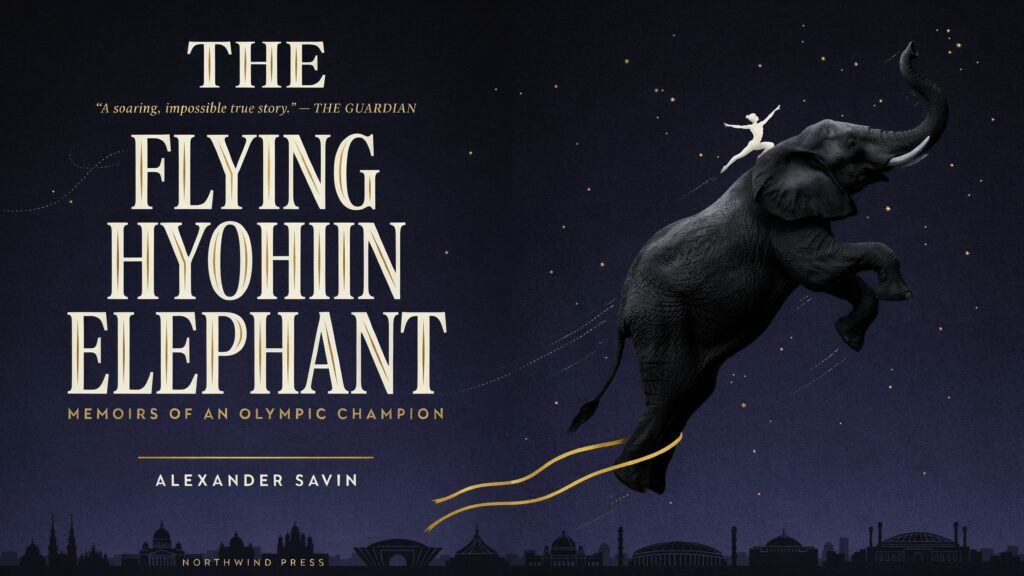
The book’s title, “Flying Elephant,” is a metaphor. An elephant is not supposed to fly. The image captures something essential about elite athletics: the act of making the impossible look effortless, of defying physical expectation through years of invisible work. It is a vivid, honest way to frame what it actually takes to reach the Olympic podium.
The Moment That Defines the Story: Moscow, 1980
To understand why Savin’s memoir resonates the way it does, you have to appreciate the specific historical moment it captures.
The 1980 Moscow Olympics were held against one of the most charged political backdrops in Olympic history. Following the Soviet invasion of Afghanistan in December 1979, the United States led a boycott of the Games. Sixty-five nations ultimately stayed away. For Soviet athletes who had trained their entire lives for this moment, the boycott created a complicated emotional reality. They would compete. They would win or lose. But the legitimacy of their victories would be questioned in ways that victories in other Games would not be.
For the Soviet volleyball team, this was the culmination of four years of determined rebuilding. They had finished second at Montreal in 1976, losing a close five-set final to Poland — a defeat that stung deeply and immediately set the team’s agenda for the next Olympic cycle. Everything that followed — the World Championships, the European titles, the daily training sessions — pointed toward one goal: getting back to that final and not losing again.
When they did win in Moscow, defeating Bulgaria 3-1 in the final, the celebration was enormous. But the questions followed immediately. Were these the best players in the world, or simply the best players among those who showed up?
This kind of complexity — triumph shadowed by doubt, joy mixed with political reality — is exactly what a good memoir can hold. And it is exactly what makes The Flying Elephant a more interesting book than a simple victory lap would be.
What Makes a Sports Memoir Worth Reading?
Before going further, it is worth stepping back and asking a larger question: why do sports memoirs matter at all? What separates the ones that genuinely deserve your time from the ones that are essentially extended press releases?
The answer, when you look at the memoirs that have lasted — the ones readers return to and recommend — comes down to a few consistent qualities.
Honesty about the cost. The best sports memoirs do not simply celebrate achievement. They account for it. They show you what had to be given up, what was lost along the way, what the pursuit of excellence actually demanded from the person living it. Andre Agassi’s Open is considered one of the finest sports memoirs ever written largely because Agassi spent most of it confessing how much he hated the sport that defined him. That honesty made the book transcendent.
Historical specificity. A great athlete does not exist in a vacuum. They exist in a specific time and place, shaped by particular cultural forces, competing within a system that has its own logic and its own pressures. The memoirs that last are the ones that bring that world to life, not just the individual within it.
The human being underneath the athlete. Medals do not have personalities. Athletes do. The gap between how a champion is presented publicly and who they actually are in quiet moments is usually where the most interesting material lives.
The willingness to sit with difficulty. The hardest moments in an athletic career — the injuries, the unexpected losses, the doubt that creeps in at 3 a.m. before a major competition — are also the most revealing. The athlete who is willing to write honestly about those moments gives the reader something that statistics and highlight reels never can: access to the interior of an extraordinary life.
Soviet Sports Culture: The System Behind the Athletes
One of the things that makes memoirs from Soviet-era athletes uniquely valuable is what they reveal about a training and competitive system that no longer exists and that most Western readers have never understood from the inside.
The Soviet approach to elite sport was unlike anything that existed in Western countries at the time. Sport was treated as a national project, not an individual pursuit. Talented young athletes were identified early, often through school programs, and channeled into specialized sports schools where they trained alongside their regular education. The state provided coaches, facilities, medical support, and structure. The expectations in return were absolute dedication and results.
This system produced genuinely extraordinary athletes. But it also created enormous pressure, imposed tremendous personal sacrifice, and demanded a kind of loyalty and conformity that athletes in more individualistic cultures did not face in the same way.
A memoir from someone who lived inside that system — who trained under its methods, competed under its pressure, and represented it on the world stage — offers a perspective that no amount of external analysis can replicate. When Savin writes about training, he is writing about a methodology that shaped an entire era of international volleyball. When he writes about competition, he is writing about what it felt like to carry the weight of an entire nation’s expectations onto the court.
This is sports history from the inside out.
The Metaphor That Holds the Book Together
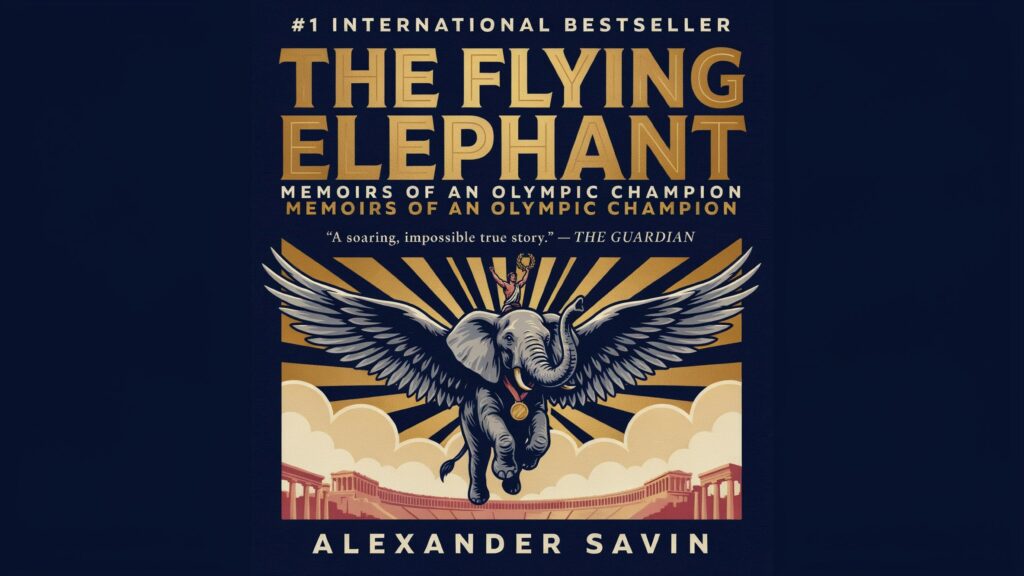
The title The Flying Elephant is worth dwelling on, because it does a lot of work.
The heaviest land mammal on the planet is the elephant. It is defined, in common understanding, by its weight, its groundedness, its permanence on earth. The idea of an elephant taking flight is therefore inherently absurd — a beautiful, ridiculous impossibility.
And that is precisely the point.
Every person who reaches the Olympic final has done something that should not, by ordinary human standards, be possible. The training volumes. The injuries endured and played through. The mental discipline required to perform at the highest level under the most intense pressure. The years of preparation for competitions that last minutes or hours. These things strain the limits of what most people would consider realistic.
The flying elephant is not a cute image. It is a provocation. It asks: how do you make something impossible happen repeatedly, reliably, in front of the world?
The answer, in every case, is the same: you do not achieve it in the moment. You achieve it in the thousands of hours of unglamorous preparation that precede the moment. The flight happens on the day of competition. The years of work that made the flight possible happen in gymnasiums and practice courts and early mornings that no spectator ever sees.
This is the real subject of elite sports memoirs. Not the moment of victory. The unglamorous architecture of excellence that made the moment possible.
Why This Story Belongs to a Specific Generation
There is something else important about Savin’s memoir and others from Soviet-era athletes: they represent an act of historical preservation.
The world of Soviet sport in the late 1970s and 1980s is gone. The Soviet Union itself dissolved in 1991. The sports system that produced players like Savin, the coaches who trained them, the political context in which they competed — none of it exists in its original form anymore.
The athletes who competed in that era are the last direct witnesses to it. As they age, the specific texture of that experience — not the statistics, which survive in record books, but the human experience of living inside that system — becomes increasingly rare and precious.
A memoir from that period is not just a personal story. It is a document. It captures a specific version of how human beings prepared for and competed at the highest level, in a particular cultural and political context, at a particular moment in history. Future readers — whether they are sports fans, historians, or simply curious people — will find things in those pages that they cannot find anywhere else.
This is one of the reasons that the best sports memoirs, decades after publication, continue to find new readers. They were always more than entertainment. They were primary sources.
The Architecture of a Great Olympic Memoir
If you were to map the structure of the most effective Olympic memoirs, you would notice certain recurring patterns — not because every writer follows a formula, but because the shape of an athletic life has its own natural rhythm.
The beginning before the beginning. Long before the first competition, something happened. A first encounter with the sport. A coach who saw something. A family that supported or sacrificed. The best memoirs go back to that original moment and examine it honestly, recognizing that the seed of the eventual champion was planted in ordinary, unheroic circumstances.
The years that do not appear in the highlight reel. Training. Injury. Setback. Near misses. The competitions that went badly and had to be survived and metabolized. This is the section most sports memoirs handle badly — by rushing through it in order to get to the victories. The great ones slow down here, because this is where character is actually formed.
The peak, contextualized. The Olympic final, the world championship, the breakthrough performance — when it arrives in a good memoir, it carries the weight of everything that came before it. The reader has earned the moment by living through the preparation.
What comes after. This is the section that most separates the honest memoirs from the promotional ones. What does it feel like to have achieved the highest thing available in your field? What does the athlete do with the rest of their life? How do you build an identity when the defining challenge of your existence has been completed? The willingness to explore this territory — honestly, without pretense — is one of the marks of a genuinely valuable memoir.
Reading Olympic Memoirs as Lessons in How to Pursue Excellence
One of the reasons sports memoirs attract readers far beyond the sports audience is what they demonstrate about the universal architecture of excellence.
The qualities that make an Olympic champion are not, at their core, sport-specific. The ability to maintain focus over long periods when results are not visible. The capacity to absorb failure and return to work without being paralyzed by it. The mental skill of performing under intense external pressure. The discipline to maintain a demanding practice routine when motivation is low and the goal feels distant.
These are qualities that any human being pursuing any demanding goal needs to develop. Reading about how an elite athlete developed them — specifically, in real-world detail, with the honesty that comes from lived experience — provides a kind of instruction that abstract self-help content cannot replicate.
When Savin describes training within the Soviet national program, he is describing a system designed to produce peak performance reliably, not through inspiration but through structure. When he describes the mentality required to compete at the Olympic level, he is describing something that applies equally to anyone trying to do something genuinely difficult.
This is why the best sports memoirs end up on the shelves of people who have no particular interest in the sport they cover. The sport is the vehicle. The subject is what it takes to become extraordinary at something.
What “The Flying Elephant” Adds to the Conversation
Within the specific tradition of Olympic volleyball literature and the broader category of Soviet sports memoirs, Savin’s book occupies a valuable and somewhat underexplored niche.
The Soviet volleyball dynasty of the late 1970s and early 1980s is not widely documented in English-language sources. Most Western sports literature focuses on Western athletes, Western teams, Western experiences. The perspective of someone who was at the center of that Soviet program — who trained under its methods, competed in its most important victories, and lived through its particular pressures — is genuinely rare in a form accessible to international readers.
The book also resists the most common failure of sports memoirs, which is the temptation to tell only a success story. The 1976 silver medal, the complicated emotions surrounding the 1980 boycott, the question of what recognition means when it comes with political asterisks — these are not comfortable subjects. They are, however, honest ones. And honesty, in a memoir, is what makes the difference between a book that you read once and forget and one that you think about afterward.
The title is a statement of intent in and of itself. The flying elephant is not a triumphant image. It is a slightly absurd one. It says: what I did was not supposed to be possible. It was not graceful or inevitable. It was strange and difficult and defied normal expectations. That is a more interesting way to frame an Olympic championship than simply “I trained hard and won.”
See also “Camocrypt.com: Exploring the Digital Platform Behind the Mystery of Online Crypto Innovation“
Final Words
Sports memoirs are sometimes dismissed as vanity projects — athletes using their fame to put their name on a book that mostly celebrates their own accomplishments. The dismissal is unfair, and it misunderstands what the best of these books actually do.
A well-written memoir from an elite athlete is an act of translation. It takes an experience that is completely inaccessible to ordinary people — the experience of competing at the Olympic level, of dedicating a decade or more of your life to a single pursuit, of standing in a final and finding out whether all of that preparation was enough — and makes it comprehensible, human, and emotionally resonant.
It preserves history that would otherwise be lost. It offers genuine insight into human performance. And when the author is honest enough and skilled enough, it delivers something that goes beyond sport entirely: a portrait of what it means to push human capacity to its edge, to find out what you are made of under conditions that most of us will never face.
Aleksandr Savin’s flying elephant did something that should not have been possible. It took off, cleared the net, and landed in Olympic gold. The memoir that carries that image in its title is an attempt to explain how. That is a story worth reading — not because the sport is familiar, but because the human experience underneath it is universal.
FAQs
1. What is The Flying Elephant: Memoirs of an Olympic Champion about?
It is a memoir by Aleksandr Savin, a former Soviet volleyball player who won silver at the 1976 Montreal Olympics and gold at the 1980 Moscow Olympics. The book covers his journey through the Soviet sports system, his career with the national team, and the broader human experience of competing at the highest level during one of the most politically charged eras in Olympic history.
2. Who is Aleksandr Savin?
Savin is a Russian former volleyball player born on July 1, 1957, in Taganrog, Russia. He played as a middle blocker for the Soviet national volleyball team from 1975 to 1986, was part of a team that dominated world volleyball during that era, and was inducted into the International Volleyball Hall of Fame in 2010.
3. What does “The Flying Elephant” mean as a title?
The image of a flying elephant captures the paradox of elite athletic achievement — the idea of making something physically impossible look possible. An elephant is defined by its weight and groundedness; the fact of it flying becomes a metaphor for what an Olympic athlete does when they exceed what ordinary expectation would suggest is achievable.
4. Why are sports memoirs from the Soviet era particularly valuable?
Soviet-era athletes competed within a unique system of state-sponsored training and international competition that no longer exists. Their memoirs preserve firsthand perspectives on that system — its methods, its demands, its pressures, and its extraordinary results — that cannot be found in any external analysis.
5. What makes an Olympic memoir different from a standard sports biography?
An Olympic memoir is typically written by the athlete themselves, in their own voice, covering not just the competitive record but the interior experience of the journey. A biography, written by someone else, is necessarily more external. The memoir offers direct access to what it felt like, not just what happened.
6. Why do sports memoirs attract readers who are not sports fans?
Because the best sports memoirs are really about universal human experiences — the pursuit of a difficult goal, the experience of failure and recovery, the challenge of maintaining discipline over long periods, and the question of what achievement actually means once you have it. These themes speak to anyone pursuing anything demanding.
7. What was the political context of the 1980 Moscow Olympics?
Following the Soviet invasion of Afghanistan in 1979, the United States and approximately 65 other nations boycotted the 1980 Games. This meant Soviet athletes competed without facing some of the strongest rivals they would otherwise have encountered. For athletes like Savin, winning gold in that environment came with a complicated question about what the victory truly represented.
8. What is the Hall of Fame for International Volleyball?
It is a hall of fame based in Holyoke, Massachusetts, that recognizes the most outstanding contributors to volleyball globally, including players, coaches, and administrators. Savin was inducted in 2010 as part of its class of honorees.
9. How does the Soviet volleyball team’s dynasty of the late 1970s to 1980s fit into sports history?
During that period, the Soviet national men’s volleyball team was arguably the most consistently dominant force in the sport worldwide, winning three World Championships (1978, 1982, 1986), two World Cups (1977, 1981), and the 1980 Olympic gold medal. Savin was a core part of that run across more than a decade of competition.
10. What separates a great sports memoir from a forgettable one?
The honest ones outlast the celebratory ones. Athletes who are willing to examine the costs of their achievements, acknowledge the doubts and difficulties honestly, and explore the complicated emotions that accompany competitive sport at the highest level write books that readers carry with them. Athletes who write only victory narratives produce books that are quickly forgotten.
11. Where can readers find The Flying Elephant: Memoirs of an Olympic Champion?
The book is available as a Kindle edition on Amazon, making it accessible to international readers without requiring a physical copy. Its digital availability means the story of Soviet volleyball’s golden era can reach audiences in places where the original competitive era was barely covered at all.
12. What can readers — especially non-volleyball fans — take away from a memoir like this?
The core lessons are not sport-specific: how to build excellence through structured preparation rather than inspiration; how to maintain performance under intense pressure; how to hold ambition and uncertainty at the same time; and how to make meaning from a career that demanded everything and then ended. These are questions every person faces in some form, and an athlete who has lived them at the most extreme level has something genuinely worth saying.