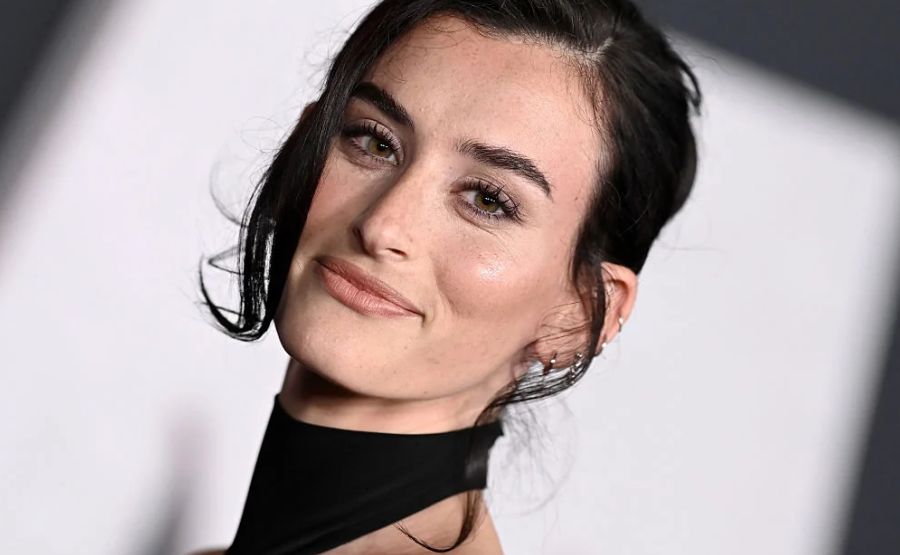
Quick Bio
| Detail | Information |
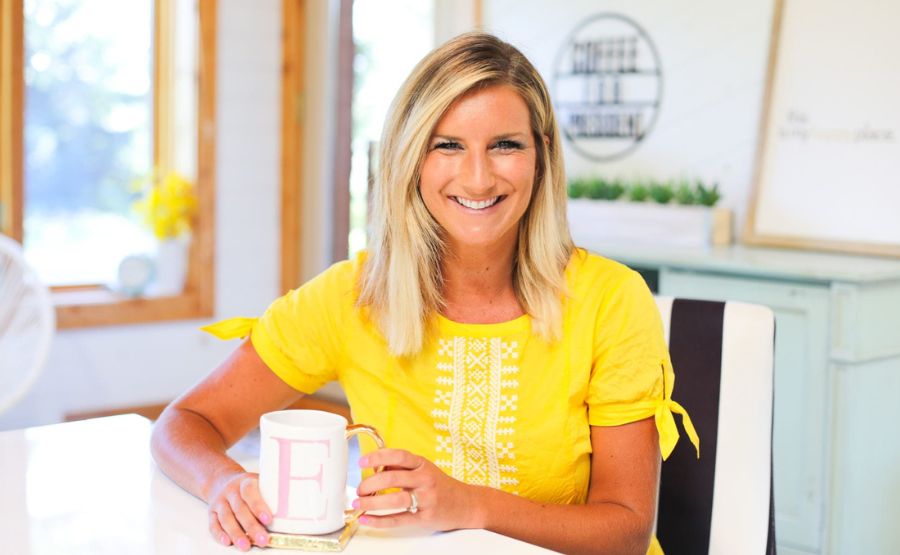
| Full Name | Stella Lefkofsky |
| Stage Name | Stella Lefty |
| Born | August 13, 2002 |
| Birthplace | Winnetka, Illinois, USA |
| Nationality | American |
| Occupation | Singer-songwriter |
| Genre | Country-pop, folk |
| Known For | Hit single “Boston”; debut album Long Way Home |
| Label | Atlantic Outpost / Disruptor Records |
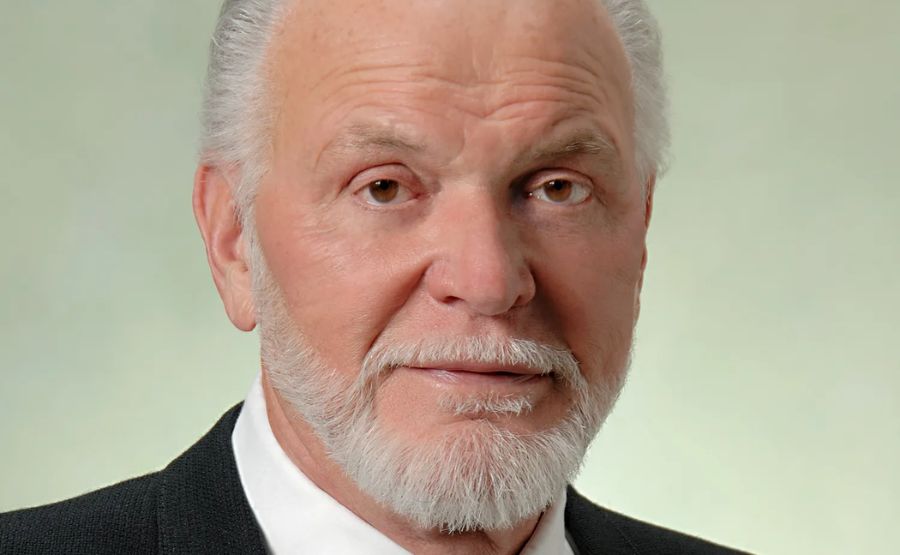
| Father | Eric Lefkofsky (billionaire entrepreneur, co-founder of Groupon, CEO of Tempus AI) |
| Estimated Net Worth | $10 million (personal) |
| Father’s Net Worth | ~$5 billion |
| Boyfriend | Vincent Mason (country artist) |
Introduction: The Name Everyone’s Debating
Here’s a question that’s been bouncing around music circles throughout 2026: Can someone born into extraordinary privilege still become a genuinely great artist on their own merits?
Stella Lefty is the reason people are asking.
In a matter of months, this 24-year-old from the leafy suburbs of Chicago went from posting casual guitar videos online to landing the second spot on the Billboard Hot 100, headlining her own sold-out tour, and performing at the Grand Ole Opry — one of country music’s most sacred stages. That would be a remarkable story on its own. But there’s a twist that has made it one of the most talked-about rises in recent music memory.
Her father, Eric Lefkofsky, is worth approximately five billion dollars.
That single fact has shaped nearly every conversation about Stella’s career — sometimes fairly, sometimes not. But here’s the thing that keeps cutting through all the noise: the songs are good. Really good. And when music connects with people the way “Boston” connected in 2026, the backstory can only explain so much.
This is the full story of who Stella Lefty is, where she came from, what she’s built, and why she matters.
Early Life: Growing Up in Glencoe
Stella Lefkofsky was born in August 2002 and grew up in Glencoe, Illinois — a well-off suburb north of Chicago, the kind of place with good schools, tree-lined streets, and families who work in finance and tech. Her father had already built several successful companies by the time Stella was in elementary school. Her mother, Elizabeth (known as Liz), is a philanthropist who helped found the Lefkofsky Family Foundation alongside Eric. Stella has two brothers.
She didn’t grow up wanting for anything material. But what stuck to her from childhood wasn’t the lifestyle — it was music. Specifically, the guitar.
By the time she was five or six years old, Stella was picking up her first chords and writing her own words to songs. Not as a formal lesson or a parent-directed hobby — this was something she just did. She’d take songs she loved and swap out the lyrics with her own, essentially teaching herself songwriting through imitation. It’s a technique that’s been used by plenty of great writers, though it would later become ironic given the controversies about song similarity that would follow her.
She attended New Trier High School in Winnetka, which is consistently ranked among the top public high schools in the country. It was there that her love of country music deepened — she grew up listening to Brad Paisley, Tim McGraw, and especially Taylor Swift. Those weren’t random tastes. They were the artists who showed her that country music could be emotionally intimate and melodically infectious at the same time.
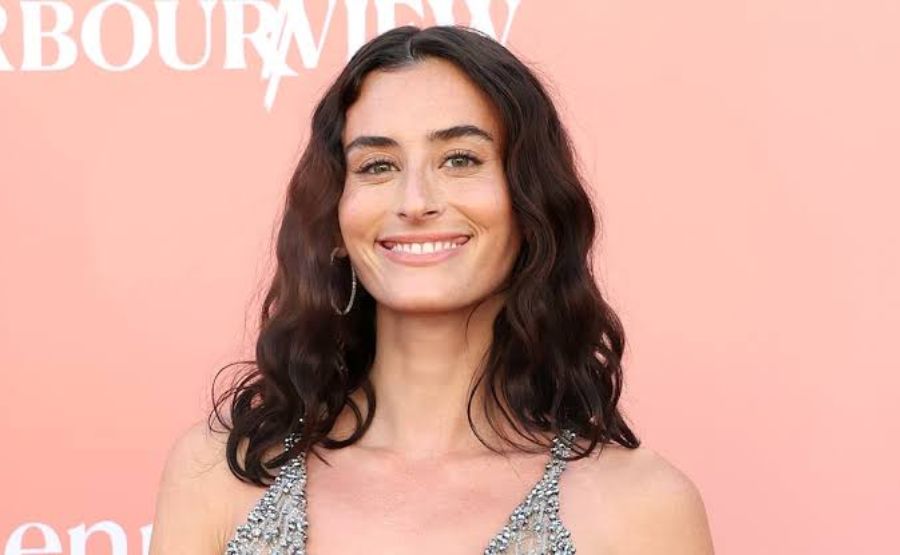
Education: A Path That Bent Toward Music
After finishing high school, Stella headed south to New Orleans to study public health at Tulane University. It wasn’t a music degree, and by her own account, that was partly her parents’ preference — the practical, stable path rather than the uncertain world of songwriting.
She went along with it, and she wasn’t miserable. But during her sophomore year, something shifted. She started to feel with more and more certainty that music wasn’t just a hobby — it was the only thing she actually wanted to do.
The turning point came when she spent part of her studies abroad, based just outside Amsterdam. Away from home, in a different country, with more space to think, she started posting her songs online and taking songwriting more seriously as a possible career. The response she got — even from a small audience at first — made her feel like she might actually have something.
She graduated from Tulane in 2024, completing her degree. But while she was walking at graduation on a Saturday, she had already bought a plane ticket to Nashville.
Career Beginnings: Nashville, A Closed Door, and a New Direction
She flew out the very next day.
Stella arrived in Nashville with a plan. A music publisher had reached out and expressed interest in signing her as a songwriter, which is a real pathway into the industry — many successful artists start out writing songs for other people. For Stella, the idea lit something up. She began to understand that songwriting could be a legitimate career, not just a dream.
But the deal fell apart.
For anyone without a financial safety net, that kind of rejection often ends the story. You go home, you reassess, you eventually give up and find something else to do. Stella had the luxury of not being forced into that choice, and she kept going.
She connected with a producer and songwriter named Jacob Hindlin, known professionally as J Kash. Hindlin is no small figure — his work includes songs for Lady Gaga, Katy Perry, Kesha, and Maroon 5. That introduction was a major one, and it gave Stella’s career a real industry foothold. She signed with Disruptor Records, a label founded by Adam Alpert — the manager who had previously helped launch The Chainsmokers from a relatively unknown DJ duo to one of the biggest acts in pop music. She relocated to Los Angeles, and the work began in earnest.
She kept writing. She kept recording. She built her audience on TikTok and Instagram one song at a time. She put out a 2025 EP called Tragic, Really, which introduced her to a small but growing fanbase. The music was catching — a blend of acoustic folk, confessional pop songwriting, and a country sensibility that felt real even if it didn’t fit neatly into any box.
Then came the song that changed everything.
The Breakthrough: “Boston” and Everything After
In early 2026, Stella released an EP called Is This Heaven? It included a song called “Boston.” The song was written shortly after she met country artist Vincent Mason in Nashville — the city she’d come to pursue music, the city where a deal had fallen through, the city that kept appearing in her story. She happened to have a tour stop in Boston coming up when she wrote it, so the name landed naturally.
“Boston” took off on TikTok almost immediately. Then it crossed over to streaming platforms. Then it hit country radio. By mid-2026, it had climbed all the way to number two on the Billboard Hot 100 and accumulated over 180 million Spotify streams. Her first headline tour sold out within minutes of going on sale.
But not without controversy.
As “Boston” grew, listeners started pointing out that the melody bore a strong resemblance to Noah Kahan’s 2022 folk-country hit “Stick Season.” Kahan’s team reached out. Stella, by her own account, wasn’t consciously thinking about the song when she wrote it — but she also didn’t want to fight about it. She agreed to give Kahan a co-writing credit, framing it herself as simply not wanting to step on anyone’s toes. The finished version of “Boston” now officially interpolates “Stick Season,” and Kahan is credited alongside Stella, collaborator Grace Enger, J Kash, and producer Joe Reeves.
It wasn’t the last time a song similarity question would come up. Her debut album, Long Way Home, released August 21, 2026, sparked another round of the conversation when listeners noticed that the track “Summer You Were Mine” bore similarities to The Chicks’ 1998 hit “There’s Your Trouble.” In this case, the interpolation had actually been cleared in advance — the original songwriters just hadn’t been listed correctly on streaming platforms due to what the label described as a technical error. A third song, “Why Wouldn’t We,” drew comparisons to Blake Shelton’s “I’ll Name the Dogs,” though no public resolution on that one has been confirmed.
Despite all of it, the album debuted at number 12 on the Billboard 200, and “Boston” kept climbing charts around the world.
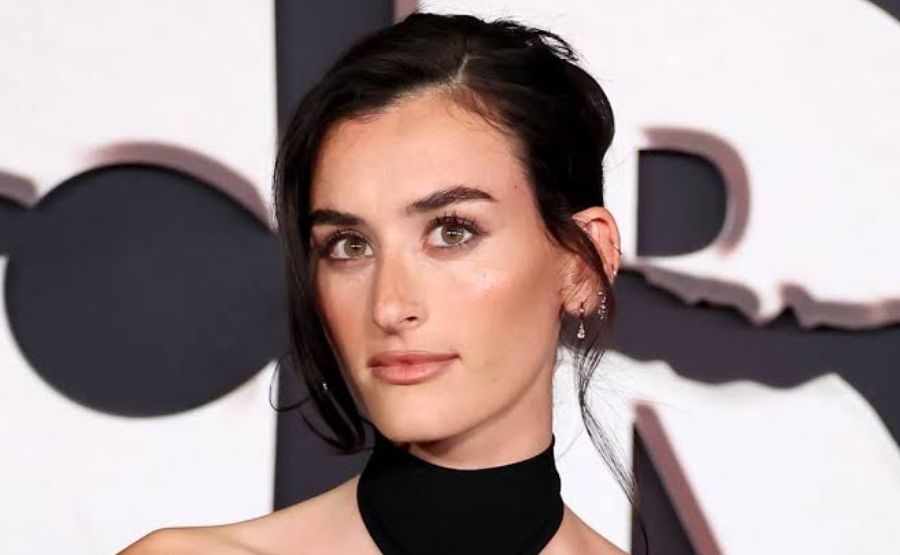
Achievements and Milestones
In terms of sheer velocity, Stella Lefty’s rise has been extraordinary.
“Boston” became one of the most-streamed country-crossover songs of 2026, with well over 370 million combined streams across platforms by the time her album landed. She broke a chart record that had been held since 2006 by Carrie Underwood — the fastest-ascending debut from a female solo artist on a specific country chart. Rolling Stone called her a “country superstar.” She performed at Lollapalooza in her hometown of Chicago, where she announced her album to a packed crowd — one of those full-circle moments that feels almost scripted. She performed at major festivals, toured internationally, and headlined arenas.
Then came September 2, 2026: her Grand Ole Opry debut.
The Opry is the heartbeat of country music — a stage that carries 100 years of history, where Hank Williams and Dolly Parton and Loretta Lynn have all stood. Getting invited is a big deal. Stella performed “Boston” and “Something to Lose,” a duet with her boyfriend Vincent Mason, who was also making his Opry debut that night. Backstage, she sang privately for two children from St. Jude Children’s Research Hospital. The video the Opry posted of that moment was sweet and genuine.
It also triggered a wave of angry comments.
Kelsea Ballerini, a full Opry member herself since 2019, jumped into the fray. She publicly defended Stella’s right to be on that stage, reminding critics that the Opry is about celebrating country music in all its forms — new and old, traditional and evolving. Ballerini wasn’t the only one. Jo Dee Messina and Chris Kappy, the manager known for his early work with Luke Combs, also spoke up in Stella’s defense. The conversation had become bigger than just one song or one show.
Personal Life: Love, Family, and Roots
Stella is still young and her personal life is, for the most part, genuinely pretty simple.
She’s been publicly dating Vincent Mason since the spring of 2026, when the two made their relationship official through a TikTok post — the very modern version of going public. Mason is a fellow country artist who toured with Morgan Wallen in 2026 and cracked the Top 30 with his single “Damned if I Do.” They’ve recorded music together, including the duet “Something to Lose,” and made their red carpet debut together at the Academy of Country Music Awards in Las Vegas. By all appearances, they’re a working creative partnership as much as a romantic one.
Her family remains close. Her mother Liz was diagnosed with breast cancer in 2015, and that experience — watching her parents navigate a serious illness — deeply shaped the family’s direction. It was one of the reasons her father went on to found Tempus AI, a healthcare technology company built around using data to help doctors make better treatment decisions.
Stella herself has spoken openly about being aware of her privileged background. She doesn’t pretend she didn’t grow up wealthy, and she acknowledges that she had access to a financial cushion most aspiring musicians never get. What she pushes back on is the suggestion that the music itself is fake — or that her audience’s response to it is somehow manufactured.
She’s a self-described country fan who grew up on Brad Paisley and Tim McGraw, even if she grew up in the suburbs rather than the South. That distinction matters to her critics more than it seems to matter to her fans.
Challenges: The Noise Around the Name
Let’s be honest about what Stella Lefty has faced.
The “nepo baby” label followed her from the moment people discovered who her father was, even though the term technically applies to children who benefit from a famous parent in the same industry. Eric Lefkofsky is not a musician. He has never used his business relationships to place Stella’s songs on playlists or get her on radio. Her manager, Adam Alpert, has been pointed about this: in his view, “industry plants” aren’t a real phenomenon, because legitimate songs eventually need to stand on their own to maintain any momentum.
But the criticism runs deeper than just the label. It touches something real about how country music’s culture works. The genre has historically rewarded artists who have a story of struggle — of fighting for years in Nashville, of sleeping in vans, of growing up poor and using music as a way out. Stella’s story is the opposite of that. She grew up in one of Chicago’s most affluent suburbs, attended a prestigious public high school, went to a private university in New Orleans, and had the financial freedom to pursue music without any survival pressure.
That doesn’t make the music bad. But it creates a friction with country music’s mythology that some fans find genuinely uncomfortable.
There’s also a gender dimension to this that several observers have pointed out. Male artists with wealthy backgrounds or genre-bending sounds rarely face the same level of scrutiny. Women in country music — even veterans like Kelsea Ballerini and Shania Twain — have faced career-threatening criticism for experimenting with sound. Stella is newer and less established, which makes her an easier target.
She’s navigating all of it while also managing a management transition. In late September 2026, it was reported that she parted ways with Disruptor Management — the firm she’d been with since the beginning. She subsequently signed with Nashville-based Make Wake Artists, where she’ll be represented by Sophia Sansone and founder Chris Kappy — the same industry figure who publicly defended her during the Opry backlash. That’s a significant pivot, suggesting she’s repositioning her career closer to Nashville’s infrastructure as her star continues to rise.
Financial Situation: What’s Hers, and What’s Her Father’s
This part matters, so let’s be clear about the difference.
Stella Lefty’s own estimated net worth stands at around $10 million. That figure reflects her streaming income, touring revenue, merchandise, sync deals, and the momentum from a breakout year. For a 24-year-old who has been a professional artist for roughly two years, that’s a meaningful number built from real commercial success.
Her father’s money is an entirely separate thing. Eric Lefkofsky is worth approximately five billion dollars — a fortune built over three decades through a succession of technology companies. He and Brad Keywell borrowed money from relatives in the early 1990s to buy a clothing company. That company failed, but they pivoted to an internet startup called Starbelly, which sold branded merchandise and was acquired for roughly $240 million within a year of launching. They went on to co-found InnerWorkings, Echo Global Logistics (which was acquired by private equity for $1.3 billion in 2021), and the venture firm Lightbank. Most famously, Lefkofsky invested $1 million in a concept called The Point, which eventually transformed into Groupon. Groupon turned down a $6 billion offer from Google, went public in 2011, and saw its stock collapse — but not before Lefkofsky and his family collected roughly $398 million from the company before the IPO.
His current largest source of wealth is Tempus AI, a healthcare data company he founded after his wife’s breast cancer diagnosis in 2015. Tempus went public in 2024 and currently holds a market cap over $7 billion. Lefkofsky owns roughly a quarter of the company.
What this means for Stella in practical terms: she has never had to worry about whether to keep pursuing music. She didn’t need a day job. She didn’t have to take a bad deal out of desperation. That safety net is real and significant, and being honest about it doesn’t diminish what she’s built — but it does explain how she got to the starting line much faster than most.
Current Activities: Where Stella Lefty Stands Today
As of October 2026, Stella Lefty is at the beginning of what looks like a long career.
Long Way Home, her 14-track debut album, is out and doing well. She’s preparing for a 2027 North American headline tour — with a stop in Boston, naturally. International dates are in the mix as well. Her new management team at Make Wake Artists is Nashville-rooted, signaling that she’s investing in a long-term country music career rather than treating country as a temporary stylistic detour.
The conversations about her background, her song similarities, and her place in the genre haven’t disappeared. They probably won’t for a while. But the music keeps finding new listeners, and “Boston” has now passed the kind of chart milestones that no amount of family money can manufacture.
She’s also part of a generation of artists — alongside Morgan Wallen, Noah Kahan, and Ella Langley — who are redefining what country-adjacent music sounds like in the streaming era. Her sound is acoustic and confessional, emotionally direct without being overwrought, commercial without feeling calculated. That’s a hard balance to strike, and she’s been striking it consistently.
Final Words
Stella Lefty is genuinely interesting precisely because her story doesn’t fit a simple narrative.
She isn’t a scrappy underdog who clawed her way up from nothing. She’s also not a cynical industry product coasting on her family’s checkbook. The truth is somewhere in between, and that in-between space is where real human beings actually live.
What makes her stand out is the music. Not just “Boston” — though that song is an earworm with genuine emotional specificity — but the body of work she’s building, song by song, EP by EP, and now album by album. She writes about falling in love, about the weird anxiety of good things happening, about the past holding on even when you’re trying to move forward. Those aren’t new themes, but she handles them with a lightness and honesty that feels current.
The privilege question will follow her for years. That’s fair. But so will the music. And so far, the music is holding up its end of the deal.
If 2026 was her first chapter, the chapters ahead will be the real measure of who Stella Lefty turns out to be.
FAQs
1. What is Stella Lefty’s real name?
Her real name is Stella Lefkofsky. She performs under the shortened stage name Stella Lefty.
2. How old is Stella Lefty?
She was born on August 13, 2002, making her 24 years old as of late 2026.
3. Where did Stella Lefty grow up?
She grew up in Glencoe, Illinois, a suburb north of Chicago. She attended New Trier High School in Winnetka.
4. What did Stella Lefty study in college?
She majored in public health at Tulane University in New Orleans, graduating in 2024.
5. What is “Boston” about?
Stella has said the song was inspired by meeting her boyfriend, country artist Vincent Mason, in Nashville. She happened to be thinking about an upcoming tour stop in Boston when she wrote it, which is how the city name ended up in the song.
6. Why did Stella Lefty give Noah Kahan a writing credit on “Boston”?
Listeners and Kahan’s team noticed the song’s melody shared similarities with Kahan’s “Stick Season.” Rather than pursue a dispute, Stella agreed to formally credit him as a co-writer and list “Boston” as an interpolation of “Stick Season.”
7. What is Stella Lefty’s debut album?
Long Way Home, released August 21, 2026, on Atlantic Outpost. It debuted at number 12 on the Billboard 200 and includes 14 tracks blending country, folk, and pop.
8. Who is Stella Lefty’s father?
Eric Lefkofsky — a Chicago-based technology entrepreneur who co-founded Groupon, co-founded Echo Global Logistics, and currently serves as CEO of Tempus AI. His net worth is approximately $5 billion.
9. Does Stella Lefty’s father fund her music career?
Her father’s wealth has provided her with financial stability throughout her life, meaning she never needed the kind of survival income that forces many aspiring artists to quit. However, her label deal is with Disruptor Records / Atlantic Outpost, and she signed with professional management like any other artist. There is no public evidence of direct parental investment in her music career.
10. What does “nepo baby” mean, and does it apply to Stella?
The term typically refers to a child who gains access to an industry because a parent is already famous or powerful within that same field. Since Eric Lefkofsky is a technology entrepreneur — not a musician — the term doesn’t technically apply, even though the wealth advantage is very real.
11. Who is Stella Lefty dating?
She is publicly dating Vincent Mason, a country singer who toured with Morgan Wallen in 2026 and reached the country Top 30 with his single “Damned if I Do.” They’ve collaborated musically as well as romantically.
12. What is Stella Lefty doing next?
She recently signed with Make Wake Artists, a Nashville-based management firm. She has a 2027 North American headline tour scheduled and has been performing internationally. With Long Way Home out and charting, she appears to be settling into a long-term country music career.
Explore ideas that elevate your thinking with The Elevate Magazine.