Quick Reference
| Topic | Details |
| Keyword | sp11l87222 |
| Type | Alphanumeric string / online handle format |
| Article Focus | The meaning, psychology, and culture of alphanumeric usernames |
| Key Themes | Digital identity, anonymity, personal codes, online communities |
| Relevance | Social media, gaming, forums, cybersecurity, self-expression |
Introduction: The Codes We Give Ourselves
Look at a string like sp11l87222 and your brain does something interesting. It tries to decode it. Is it a username? A product code? A secret? A mistake? The fact that you’re reading meaning into what looks like a random sequence says a lot about how humans relate to digital text.
Online, we are what our names say we are — at least at first glance. Before someone reads your posts, watches your videos, or hears your voice, they read your handle. And handles like sp11l87222, with their mix of letters, numbers, and implied structure, carry a whole world of meaning that most people never stop to think about.
This article is about that world. It’s about why people choose names that look like computer-generated codes, what those names actually communicate, and what the rise of complex alphanumeric handles tells us about how digital identity has evolved.
See also “Bodenxt: How a Small Swedish Arctic Town Became a Blueprint for the Green Industrial Revolution“
Why Alphanumeric Usernames Exist at All
It didn’t start as a creative choice. It started as a constraint.
When the internet first opened up to everyday users in the 1990s, signing up for a service meant picking a username. And almost immediately, the good ones were gone. If you wanted to be “David” you were too late. “David1” was taken. So was “David12” and “David123.” Eventually you landed on something like “David_sp87” just to get in the door.
That frustration shaped an entire generation of internet handles. The numbers and letters weren’t intentional expressions of identity — they were workarounds. Availability drove creativity.
But something shifted over time. What started as a workaround became a style. What began as a limitation became a language. People stopped apologizing for their numeric suffixes and started owning them. Some even started constructing them deliberately, encoding personal information — birth years, lucky numbers, special dates — into what looked to outsiders like gibberish.
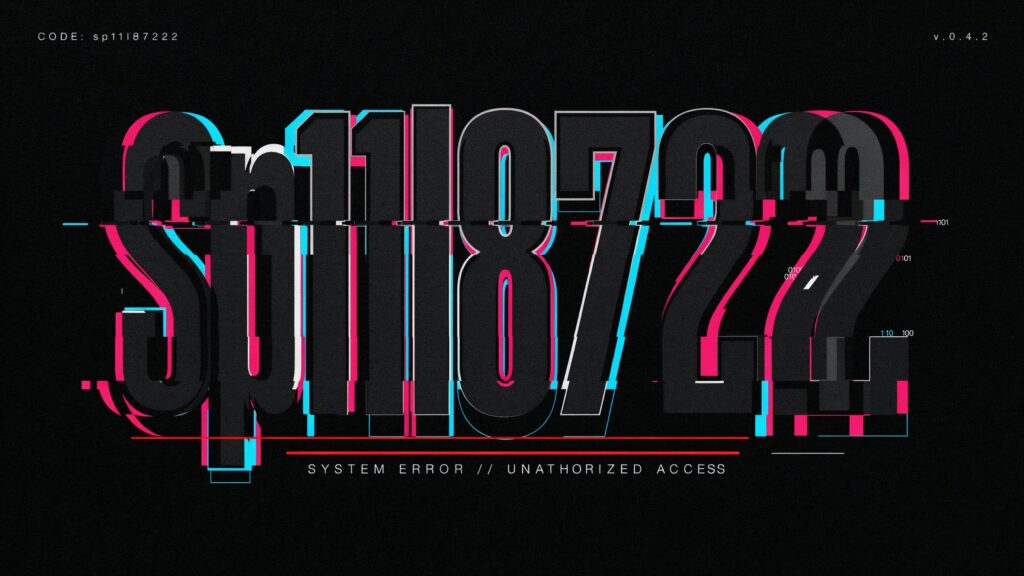
A string like sp11l87222 follows this tradition perfectly. To a stranger it’s noise. To the person who chose it, it might be a compressed autobiography.
Reading Between the Characters
Let’s think about what a handle like sp11l87222 might actually contain.
The letters at the start — “sp” — could be initials. Two-letter combinations at the beginning of a username almost always point to a name. Maybe a first and last initial. Maybe a nickname. Maybe the abbreviation of something meaningful only to the creator.
The numbers that follow — 11, 87, 222 — could be almost anything. The number 87 is a very common birth year marker. Someone born in 1987 might embed that into their username the way others wear a birth year necklace. The 11 could be a birthday — November, perhaps, or the 11th day of a month. The 222 is interesting because it repeats — triple digits tend to feel intentional. In numerology, 222 is associated with balance and new beginnings. Whether or not the creator knew that, the repetition gives the handle a rhythm that pure randomness rarely achieves.
This is not code-breaking. It’s pattern recognition. And humans are extraordinarily good at it, which is exactly why handles like this catch the eye even on a crowded platform.
The Appeal of Anonymous-Looking Handles
There’s a whole category of online user who actively wants their username to look like a system-generated string. Not because they’re lazy, but because they’re making a deliberate choice about how visible they want to be.
Think about it this way. A username like “JakeFromAccounting” tells you a lot. You know the gender, you can guess the profession, you have a mental image. That person has essentially handed you a character sketch before you’ve exchanged a single word.
A username like sp11l87222 hands you nothing. You can’t guess the gender. You can’t guess the age. You can’t guess the culture, the country, the profession, or the politics. The person is present — they’re posting, they’re active, they have a voice — but they haven’t pre-answered any of your assumptions about them.
For many people, this is enormously freeing. Online spaces can be quick to categorize and judge. A name that reveals nothing forces people to respond to your ideas rather than your identity. That might be a kind of power.
This is why anonymous handles are especially common in spaces where ideas are primary — programming communities, philosophical forums, early Reddit, hacker culture. When what you say matters more than who you are, a name that obscures identity is a rational choice.
When Numbers Tell Personal Stories
Not every numeric username is about anonymity. For a large number of people, the numbers are intensely personal — they just happen to look random to everyone else.
Sports fans often embed jersey numbers. Someone who grew up idolizing a player wearing number 11 might put that in their handle as a form of tribute. A person born on February 2nd, 2002 might naturally gravitate toward a username containing 2, 2, and 2 — not because they planned it, but because those numbers feel like theirs.
Military veterans sometimes use unit numbers. Musicians use the year a band formed or an album was released. Gamers use their highest score or fastest clear time. Parents use their children’s birthdays. People use the year they got married, the year they got sober, the year they moved to a new country and started over.
None of this is visible to the outside world. That’s part of what makes it special. The handle functions like a private tattoo — it means something profound to the person wearing it and nothing to everyone else.
This dual nature — meaningless to strangers, deeply meaningful to its owner — is part of what makes alphanumeric handles so enduringly popular. They are simultaneously the most opaque and the most personal type of username.
Alphanumeric Handles in Gaming Culture
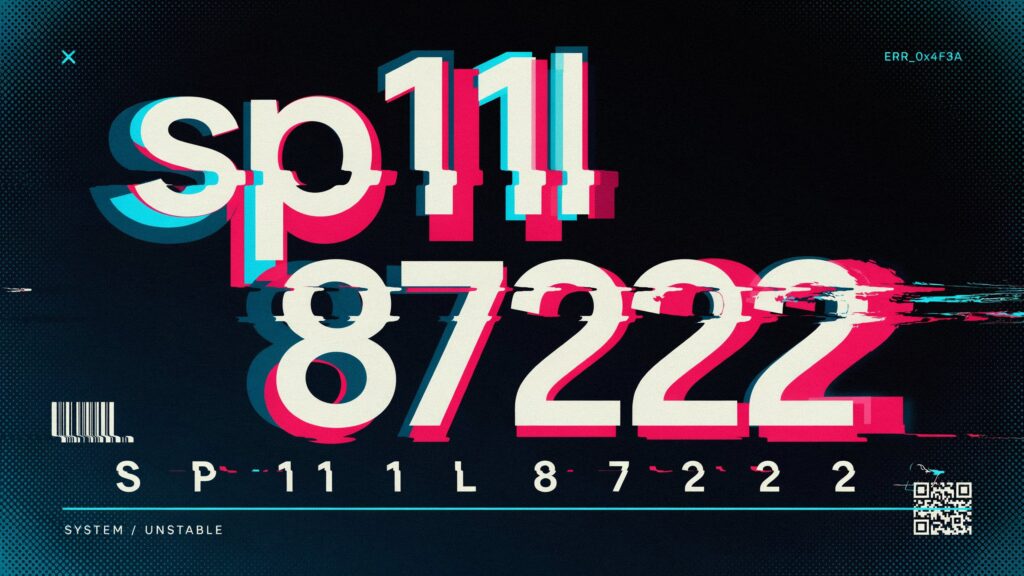
If there’s one online space where handles like sp11l87222 feel completely at home, it’s gaming.
Gaming communities have their own relationship with usernames that is distinct from social media. On Instagram or LinkedIn, your handle is a presentation. In a game lobby, your handle is a battle flag. It needs to be memorable under pressure, distinctive in a kill feed, and ideally a little intimidating.
Alphanumeric handles work in this context for a surprising reason: they’re hard to track. If you’re a competitive player who doesn’t want opponents studying your stats before a match, a name that looks machine-generated offers a small but real informational advantage. Your history becomes harder to search. Your patterns become harder to predict.
Beyond strategy, there’s also a subcultural prestige to certain types of numeric handles in gaming. Very short names and names that look like system defaults are, paradoxically, signs of seniority. Early platform users often claimed simple names, while newer users had to get creative. A long alphanumeric string can signal that someone has been around long enough to try many names and land somewhere unexpected — which, in some gaming communities, is actually a mark of experience.
The Security Angle: Why Complexity Is a Feature
Cybersecurity professionals will tell you something that surprises most people: your username matters almost as much as your password in terms of protecting your online accounts.
Simple, predictable usernames make you easier to target. If your username is your first name and your birth year — a combination that tens of millions of people use — attackers know something about you before they’ve even tried to guess your password. They know you’re not especially security-conscious. They can make educated guesses about what other information you’ve made easy.
Complex alphanumeric handles, by contrast, tell a would-be attacker nothing useful. They’re harder to associate with real-world identity. They’re harder to guess or reconstruct. And they create a small but meaningful barrier of ambiguity.
This isn’t paranoia. It’s practical privacy hygiene. The same logic that makes a strong password also applies to username selection, especially in an era when data breaches regularly expose account information and cross-platform account matching has become a recognized tool of both legitimate researchers and malicious actors.
A handle like sp11l87222 is, from a security perspective, genuinely better than a readable name. It trades recognition for resilience — a trade many people are increasingly willing to make.
How These Handles Age Over Time
Here’s something nobody talks about enough: usernames grow with you. Or sometimes, they don’t, and that becomes a problem.
A handle built around a specific year — especially a birth year — starts to reveal information over time. Something that felt pleasantly cryptic at 20 might feel uncomfortably revealing at 40. The numbers that once felt like a private code have become a public timestamp.
This is why many experienced internet users go through what might be called a username lifecycle. The first handle is accidental — whatever was available at the time. The second is expressive — something that felt true in the moment. The third and beyond are considered — constructed with one eye on longevity and one on identity.
The most durable handles share a few qualities. They don’t lock the user into a specific age, era, or interest. They’re short enough to type easily but complex enough to be reasonably unique. They sound neutral when spoken aloud — this matters more than people think, because usernames increasingly get read out in podcasts, streams, and video calls.
A handle like sp11l87222 scores reasonably well on these criteria. It’s short enough to be manageable. It doesn’t immediately date itself. And it carries enough internal structure to feel like a name rather than complete randomness.
The Future of Usernames
We’re at an interesting moment in the history of online identity. For the first two decades of mass internet use, anonymity was the default. You chose a handle and you were whoever that handle said you were.
Then came the real-name wave. Facebook insisted on legal names. LinkedIn built a professional world around verified identities. For a while it seemed like pseudonymous usernames might fade away entirely.
But they didn’t. If anything, they’ve come back stronger. The generation now coming of age online treats real-name social media with healthy suspicion. They maintain multiple identities across different platforms. They move fluidly between spaces where they’re known by name and spaces where they’re known only by handle.
Alphanumeric usernames fit naturally into this more complex, layered approach to online identity. They’re modular. They can be abandoned and replaced without much disruption. They don’t connect easily to other aspects of a person’s life. In a world of data brokers, surveillance capitalism, and social media drama, that disconnection is increasingly seen not as a flaw but as a feature.
Final Words
A string like sp11l87222 is easy to dismiss. It looks like something a computer spit out. It doesn’t tell you a name or a story or a face.
But look closer and you start to see what it actually is: a deliberate act of self-presentation in a world that increasingly pressures everyone to be legible, searchable, and monetizable. It’s a small act of resistance. A private code. A way of saying “I’m here, I’m active, I have something to say — and I’ll decide how much you know about me.”
That’s not a small thing. That’s exactly the kind of control that matters in a world where your digital identity can follow you in ways your physical one never could.
The next time you see a handle that looks like it means nothing, consider that it might mean everything — just not to you.
FAQs
1. What is an alphanumeric username?
An alphanumeric username is any online handle that combines letters and numbers together, such as sp11l87222. These are extremely common across social media, gaming platforms, forums, and email services.
2. Why do so many usernames include numbers?
Most commonly because simpler versions of a name were already taken when someone signed up. Over time, adding numbers became standard practice, and many people now choose numeric additions deliberately to encode personal meaning.
3. Are alphanumeric usernames more secure than word-based ones?
Generally, yes. They’re harder to associate with real-world identity, harder to guess as part of a targeted attack, and less likely to appear in predictive data models. This makes them meaningfully more resistant to certain types of account targeting.
4. Do the numbers in usernames usually mean something personal?
Very often. Birth years, lucky numbers, important dates, jersey numbers, and other personally significant figures frequently appear embedded in what look like random username strings.
5. Can a handle like sp11l87222 be turned into a real personal brand?
Absolutely. With consistent use across platforms and distinctive content, any handle — no matter how technical it looks — can become a recognizable identity over time.
6. Why do some people prefer anonymous-looking usernames?
They offer privacy, reduce pre-judgment, and allow ideas to be evaluated separately from the person presenting them. This is especially valued in communities centered on technical discussion, creative work, or sensitive topics.
7. Is it common for people to change their usernames over time?
Very common. Most experienced internet users go through several handles as their interests, identity, and understanding of online privacy evolve.
8. What makes a username memorable even if it’s alphanumeric?
Internal rhythm, repetition, and distinctive structure all help. A string with repeating digits or a recognizable pattern is easier to hold in memory than pure randomness.
9. How important is it to use the same username across different platforms?
Quite important for anyone building an audience or professional presence. Cross-platform consistency makes you easier to find and strengthens recognition over time.
10. Do alphanumeric usernames work well for gaming?
Yes, and many competitive players actively prefer them for the informational advantage they offer — specifically, that opponents can’t easily search their history or stats before a match.
11. What is the best way to create a lasting alphanumeric username?
Embed something personally meaningful in a way only you understand, keep it short enough to be manageable, avoid elements that will date it too quickly, and test how it looks and sounds across the platforms you plan to use.
12. Is there a cultural significance to certain number patterns in usernames?
In some communities, yes. Triple-digit repetitions like 222 or 777, specific years, and round numbers all carry varying cultural weight depending on the platform and community. Some are associated with numerological meaning; others with gaming milestones or subcultural in-jokes.