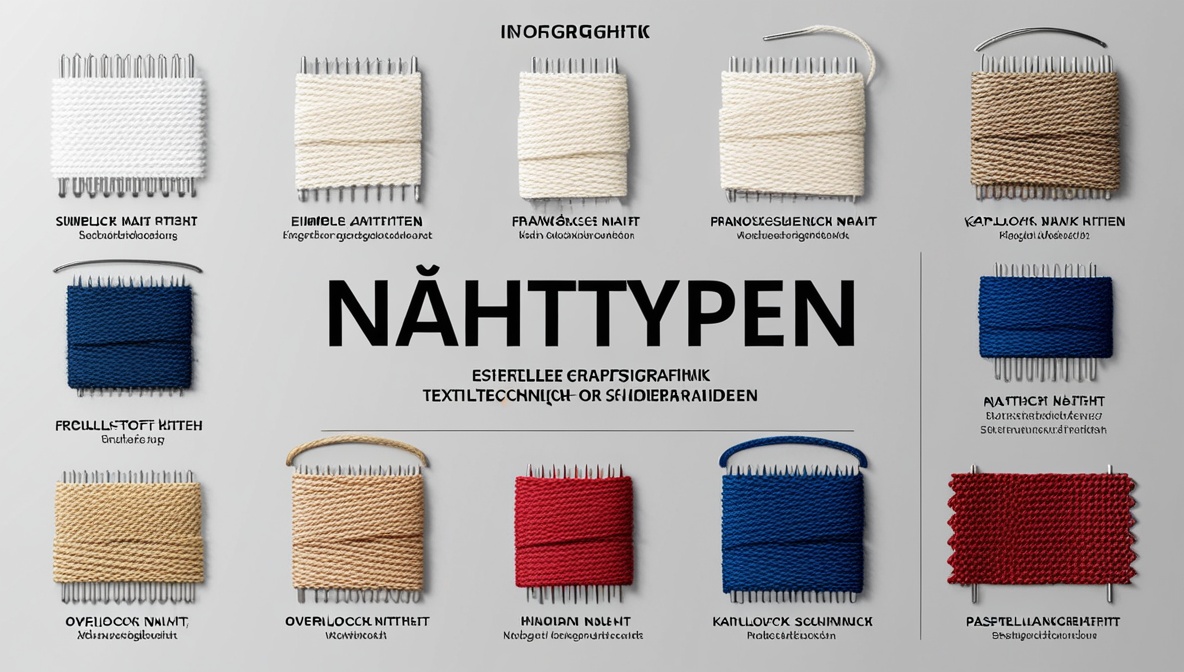
Quick Facts
| Term | Details |
| Word Origin | German — Naht (seam) + Typen (types) |
| English Equivalent | Seam Types / Types of Seams |
| Field | Sewing, Fashion Design, Textile Engineering, Tailoring |
| International Standard | ISO 4916 (Textiles – Seam Types — Terminology and Classification) |
| Primary Categories | Superimposed, Lapped, Bound, Flat, Single-Ply |
| Used In | Garments, Sportswear, Denim, Upholstery, Industrial Textiles, Medical Suturing |
| Key Governing Body | ISO/TC 38 — Textiles Committee |
Introduction: Why Seam Types Matter More Than You Think
Pick up any piece of clothing — a shirt, a pair of jeans, a jacket — and look at where two pieces of fabric meet. That junction is a seam. Now flip the garment inside out. What you see there tells an experienced eye a great deal: how the garment was made, how long it will last, and how much skill went into building it.
The German word Nahttypen simply means “types of seams,” but behind that plain phrase lies a world of technical precision, craft history, and design decision-making that stretches back centuries. From the stitched shirts of ancient civilizations to the laser-welded seams of modern athletic gear, the story of seam types is really the story of how human beings learned to turn flat fabric into three-dimensional clothing.
Whether you are a home sewer just getting started, a fashion design student, a garment industry professional, or simply someone curious about how clothes are actually built, understanding seam types opens up a new way of seeing every garment you wear. This guide walks through what seam types are, why they matter, how the major categories work, and what happens when you choose the wrong one.
See also “Glaadvoice com: All the Information You Require About It“
What Exactly Is a Seam?
Before diving into the categories, it helps to agree on the basics. A seam is the line where two or more layers of fabric are joined by stitching. Simple enough. But not all seams are created equal. Some are meant purely to hold fabric together quickly and efficiently. Others are engineered to handle enormous mechanical stress — think the crotch seam of jeans that a construction worker wears every day. Others, whose exact parallel topstitching serves as both a decorative and functional element, exist purely for esthetic reasons.
Every seam involves several decisions happening at once: what stitch type to use, how wide the seam allowance should be, whether the raw edges need finishing, how the finished seam will sit against the body, and whether the seam should be visible or hidden. Understanding Nahttypen means understanding how all of these decisions fit together into a coherent system.
The History Behind the Craft
Sewing is one of humanity’s oldest technologies. Long before woven cloth existed, early humans were piercing animal skins with bone needles and threading sinew through the holes to create rudimentary clothing. The seams of those earliest garments were purely practical — survival stitches to keep out cold and wind.
As civilization developed and textile production became more sophisticated, so did the seam. By the 19th century, dressmakers in Europe had developed a wide range of finishing techniques, each suited to particular fabrics and garment types. The flat felled seam, for instance, was already a workhorse of underwear construction because it created no scratchy raw edges against skin. The French seam, which can be traced to the 1860s and possibly earlier, was prized for the way it enclosed every raw edge within itself — invisible, tidy, and elegant.
The invention of the sewing machine by Elias Howe and its later commercialization by Isaac Singer in the mid-19th century transformed everything. What had taken a skilled seamstress hours could now be completed in minutes. But this industrialization also required standardization. Factories needed workers to produce the same seam repeatedly, consistently, at speed. That demand gave rise to the formal classification systems we use today.
In 1991, the International Organization for Standardization published ISO 4916, which classifies seam types for textiles into a numbered system. Germany followed this with its own DIN ISO 4916 standard. This framework remains the backbone of how professional garment engineers describe and specify seam construction worldwide.
The Main Categories of Nahttypen
Class 1: The Superimposed Seam
If you have ever sewn anything at all, you have used a superimposed seam. This is the foundational seam of garment construction — two pieces of fabric placed on top of each other (face to face, or right sides together), then stitched along the edge. The seam allowance is then pressed open or to one side.
It sounds almost too simple, but the superimposed seam is extraordinarily versatile. You can finish its raw edges in dozens of ways: with a zigzag stitch, a serged overlock, binding tape, or pinking shears. You can add a second row of topstitching to make it stronger or more decorative. You can sew it with a stretch stitch for knit fabrics, a straight stitch for woven ones, or a combination of both.
The French seam is a refined variation of the superimposed approach. Rather than leaving the raw edges exposed on the inside, the French seam wraps them entirely inside the seam itself. The fabric is first sewn with the wrong sides together, then turned and sewn again with the right sides together, so the first seam line is captured inside the second. The result, viewed from the inside of the garment, looks almost like a small tuck — completely clean, with no raw edges visible anywhere. This is why French seams are the signature of luxury lingerie, fine silk blouses, and haute couture garments. They feel smooth against the skin and look impeccable when the garment is examined closely, which is exactly what happens when you pay several thousand euros for a jacket.
Class 2: The Lapped Seam
In a lapped seam, one piece of fabric overlaps the other before being stitched. The overlapping layer sits on top, and stitching goes through both layers simultaneously. This approach is far stronger than a simple superimposed seam because the two rows of stitching — one on each side of the overlap — distribute stress across a wider area of fabric.
The flat felled seam (also called the stitched fell) is the most famous member of this family. Look at the inside of a pair of quality denim jeans and you will see it immediately: a bold visible line on the outside, and on the inside, a neatly folded channel of fabric with two parallel rows of stitching visible. The flat felled seam works by folding one raw edge of the seam allowance around the other, then stitching it down so that every raw edge is enclosed and no fraying is possible.
These seams have been used for centuries. Historical tailoring records show flat felled seams on undergarments and work clothing dating back hundreds of years, valued precisely because they could withstand heavy, repeated use without falling apart. Today they are standard on denim jeans, men’s dress shirts (along the yoke and sleeve), military clothing, and workwear. A true industrial flat felled seam requires a specialist sewing machine with two needles running simultaneously — no shortcut will quite replicate the result.
Class 3: The Bound Seam
A bound seam takes a different approach to finishing. Instead of folding the seam allowances in on themselves, a separate strip of fabric (the binding) wraps around the raw edges and is stitched down. The result is a clean, often decorative edge finish.
You encounter bound seams constantly without necessarily noticing them. The neck finish on a T-shirt is often a bound seam. The edge treatment on a jacket lining is a bound seam. The armhole finish of a sleeveless dress is frequently bound.
The binding strip can be cut on the bias (at a 45-degree angle to the grain of the fabric), which gives it stretch and allows it to curve smoothly around corners and curved edges. Bias binding is a staple technique in both professional garment construction and home sewing, appearing everywhere from quilt edges to lingerie straps to coat facings.
Class 4: The Flat Seam (Abutted Seam)
The flat seam — sometimes called an abutted seam or, in its historical form, an Old German seam — is fundamentally different from all the others. Instead of overlapping the fabric pieces, the flat seam butts their edges together and uses a stitch that crosses the gap, holding the two edges side by side without any overlap at all. The result is a seam with almost no added thickness, lying genuinely flat against the fabric on both sides.
This makes flat seams ideal for applications where bulk must be absolutely minimized — knitted garments where you want the seam to feel as smooth as the surrounding fabric, swimwear, sportswear with close body contact, and certain types of underwear. A specialized machine called a flatlock or cover stitch machine is typically required to produce them properly at industrial scale.
The flat seam’s near-invisibility from the outside, combined with its flexibility and lack of bulk, has made it the standard construction method for high-performance athletic clothing. A marathon runner or a swimmer does not want seam ridges pressing into their skin at high intensity — the flat seam solves that problem elegantly.
Class 8: Single-Ply Construction Seams
This classification covers seams that work on a single layer of fabric rather than joining two separate pieces. Hemming falls into this category, as do many edge finishes and decorative treatments applied to a single fabric edge. Rolled hems on lightweight chiffon, for instance, are single-ply constructions that give a delicate, fine finish to a free edge without adding any bulk.
Choosing the Right Seam: The Key Factors
Understanding seam categories is only half the picture. The other half is knowing which seam belongs on which garment, on which fabric, and in which location. This is where craft knowledge turns into genuine expertise.
Fabric weight and structure is perhaps the most important variable. A French seam, which adds some bulk at the seam line, works beautifully on a lightweight silk blouse but would be clumsy and stiff on a heavy denim jacket. Conversely, a flat felled seam on a sheer fabric would look messy and might be too stiff for the fabric to drape correctly.
Stretch requirements matter enormously, particularly for modern garments. A straight lockstitch — the most common machine stitch — will break under tension if used on a stretch fabric. Seams on jersey, spandex, and activewear fabrics must use stitches that can stretch with the fabric: zigzag stitches, overlock stitches, or the cover stitch used in flatlock construction.
Location in the garment creates different demands. Side seams on a dress are relatively low-stress and can use simple superimposed construction. But the crotch seam of trousers, the armhole seam of a fitted jacket, and the shoulder seam of a heavily structured coat all face forces that require more robust solutions.
Visibility is a design decision as much as a construction one. Exposed seams — deliberately left on the outside of the garment — are a design statement. The raw-edge aesthetic of certain contemporary fashion makes visible seam allowances a feature, not a flaw. Topstitched seams on denim and workwear are both structural and decorative, their bold parallel lines as much a part of the garment’s visual identity as the fabric itself.
End use and garment purpose ties everything together. Baby clothing demands seam finishes with no rough edges anywhere near delicate skin. Outdoor and technical clothing may require sealed or taped seams to prevent water penetration. Medical and protective clothing must meet standards for chemical resistance or particle containment. Fast fashion may prioritize speed and cost, resulting in simpler seam constructions that sacrifice longevity for efficiency.
Seam Finishing: The Invisible Half of the Work
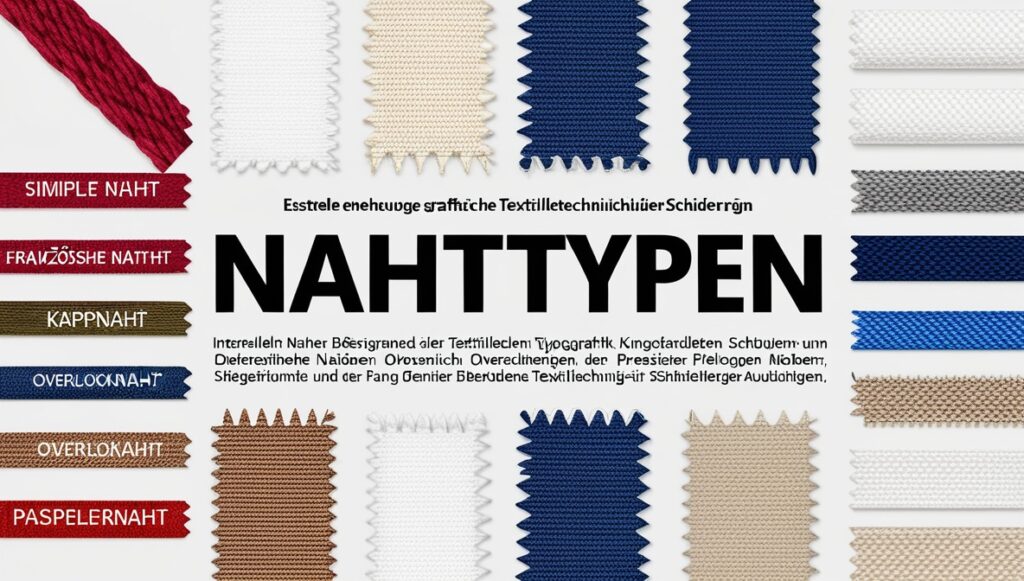
A seam finish is what you do to the raw edges of a seam allowance after the seam is sewn. The seam itself holds the fabric together. The finish prevents the raw edge from fraying over time and affecting the structure.
Common finishing methods include:
- Overlocking/Serging: A serger (overlock machine) wraps thread around the raw edge while trimming it, creating a neat, contained finish in one step. This is the method used in the vast majority of mass-produced garments worldwide.
- Zigzag stitching: A standard sewing machine set to zigzag stitches over and along the raw edge, catching the threads that would otherwise fray.
- Pinking: Cutting the raw edge with pinking shears (serrated blades) creates a notched edge that resists fraying without any additional stitching.
- Hong Kong finish: A strip of bias-cut fabric wraps the raw edge, creating a clean, visible finish on the inside of the garment — common in unlined tailored jackets.
- Bound edge: As described earlier, a separate binding strip encloses the raw edge entirely.
- Flat felled or French seam finish: The seam construction itself eliminates raw edges, making a separate finish unnecessary.
Nahttypen in Industrial Manufacturing
Modern garment factories operate at a scale that transforms seam selection from a craft decision into an engineering optimization problem. Automated industrial sewing machines can be programmed to execute specific seam types at hundreds of stitches per minute with extraordinary consistency. Some seam types lend themselves to automation more readily than others — the plain superimposed seam is highly automatable, while more complex constructions like hand-finished bound seams require skilled manual operation.
The choice of seam type in mass production involves cost calculations, speed assessments, quality targets, and machine specifications. A factory producing budget T-shirts will use a simple overlocked seam everywhere possible, minimizing operations and machine changes. A factory producing premium denim will invest in specialist flat-felling equipment and accept slower production speeds to deliver the distinctive seam appearance that justifies a higher retail price.
Sustainability has entered these calculations more visibly in recent years. Durable seam construction extends garment lifespan, which reduces the environmental cost of clothing over time. A flat felled seam on a quality garment may survive decades of wear. A poorly finished seam on a cheap garment may fail within months, sending the entire garment to landfill. As the fashion industry faces growing pressure around its environmental footprint, seam construction is increasingly recognized as part of the solution.
Nahttypen in Medical and Technical Contexts
The word Nahttypen appears in contexts well beyond fashion. In German-language medicine, the same term describes the classification of surgical suture techniques — the “seam types” used to close wounds. Resorbable sutures (which the body dissolves over time, including materials like Vicryl and PDS) and non-resorbable sutures (like nylon and silk, which must be removed) are two broad categories, each with multiple specific techniques adapted to different tissue types and wound locations.
In structural engineering and metalwork, Nahttypen describes weld seam classifications — the different geometries and configurations used when joining metal components by welding. An overlap fillet weld, a butt weld, a T-joint weld — these are all Nahttypen in the engineering sense. The same logical framework of categorizing junctions by their geometry and construction method applies across radically different materials and scales.
This cross-domain relevance is a reminder that the problem of joining two materials reliably is a universal engineering challenge, and human ingenuity has solved it similarly across very different fields.
The Future of Seam Technology
Textile technology is changing what seams can do. Ultrasonic welding uses high-frequency vibrations to fuse synthetic fabrics together without any needle or thread, creating bonds that are simultaneously waterproof, flexible, and invisible. Heat bonding uses adhesive tape activated by pressure and temperature to join fabrics without stitching. Laser cutting creates sealed edges on certain synthetics that need no further finishing at all.
These technologies are changing high-performance sportswear, outerwear, and technical clothing most dramatically. Brands producing running shoes, cycling gear, and outdoor clothing are using bonded and welded construction to eliminate the seam bulk, weight, and water-permeability that traditional stitching creates. A bonded seam on a rain jacket, for instance, is genuinely waterproof in a way that no stitched seam can be without additional seam tape applied afterward.
At the same time, traditional seam construction remains irreplaceable in most segments of the fashion industry. No welding technology produces the hand of a perfectly finished French seam on silk organza, or the rugged aesthetic of a double-needle flat felled seam on raw selvedge denim. Craft knowledge, accumulated over centuries and passed between generations of skilled sewers, continues to drive the highest quality in garment construction.
See also “Glaadvoice com: All the Information You Require About It“
Final Words
The story of Nahttypen is, in miniature, the story of human ingenuity applied to one of our most basic needs — staying clothed, staying comfortable, and expressing ourselves through what we wear. A seam is the smallest unit of construction in a garment, yet the choices made at that tiny scale determine everything about how the garment feels, performs, and endures.
From the beautiful French seam encasing the raw edges of a couture gown to the flat felled stitching on a pair of jeans that will outlive their owner by decades, to the ultrasonic bonds on a technical cycling jersey, every seam type represents a specific answer to a specific challenge. Learning to read seams — to look at a garment and understand the decisions behind its construction — is one of the most rewarding skills in the world of fashion and textile craft.
Next time you turn a piece of clothing inside out, take a moment to look. What you find there is not just stitching. It is the accumulated knowledge of generations of makers who understood that the inside of a garment matters just as much as the outside.
FAQs
1. What does “Nahttypen” mean in English?
It is a German compound word. Naht means seam, and Typen means types. Together, Nahttypen simply means “seam types” — the different categories and constructions used to join fabric pieces in sewing and textile work.
2. How many official seam types exist?
The international standard ISO 4916 organizes seam types into numbered classes with hundreds of specific variations. For practical purposes, most garment construction uses five to eight main categories, but within each category there are numerous sub-types depending on stitch method, fabric handling, and purpose.
3. Which seam type is best for beginners?
The plain superimposed seam is where almost everyone starts. Two pieces of fabric, right sides together, stitched along the edge, pressed open. It is straightforward to learn, works on almost any fabric, and provides a foundation for understanding all other seam types.
4. Why are French seams considered high-quality?
No raw threads are visible on the inside of the garment when a French seam entirely encloses both raw edges inside itself. This requires more time and precision to execute than a simple overlocked seam, and the result feels smooth against the skin while looking impeccable from every angle — markers that signal careful, considered craftsmanship.
5. What makes flat felled seams so strong?
In a flat felled seam, the fabric is stitched twice through multiple layers, and every raw edge is folded and secured inside the seam. This creates a construction that distributes stress across a wide area and has no exposed threads that could break or unravel. It is why this seam type is standard on denim jeans and other hard-wearing garments.
6. Can any sewing machine make a flat felled seam?
A home sewing machine can produce a “faux” flat felled seam that looks similar from the outside, though the construction method differs slightly and involves some extra pressing and folding steps. An industrial flat felled seam requires a specialist double-needle machine designed specifically for this purpose.
7. What is a bound seam and when would you use it?
A bound seam wraps the raw edges of a seam allowance in a separate strip of fabric. It is used to finish exposed edges decoratively and functionally, and appears commonly at armholes, necklines, hems, and the edges of unlined jackets. Bias-cut binding is flexible enough to follow curves cleanly.
8. How do stretch fabrics change seam choices?
Stretch fabrics like jersey, spandex, and other knits require seam constructions that can flex with the fabric. When under pressure, a hard straight stitch will just break. Zigzag stitches, overlock stitches, and flatlock (flat seam) constructions all have built-in stretch and are standard for activewear and knit garments.
9. What is the difference between a seam type and a seam finish?
A seam type describes how two pieces of fabric are joined — the structural construction of the junction. A seam finish describes what is done to the raw edges of the seam allowance to prevent fraying. Some seam types (French seams, flat felled seams) incorporate their own finish. Others (plain seams) require a separate finishing step.
10. Are modern bonded and welded seams stronger than stitched ones?
In certain specific conditions, yes — bonded and ultrasonically welded seams can be waterproof and very strong in technical textiles. However, stitched seams often have advantages in flexibility, repairability, and behavior across different temperature and stress conditions. The best seam type always depends on the specific application rather than one technology being universally superior.
11. Why do expensive garments often look different on the inside?
Higher-quality garments invest in better interior finishing — bound seams, French seams, or neatly pressed overlocked allowances rather than the rough, minimal finishing typical of fast fashion. The inside of a garment reflects the care put into its construction and is a reliable indicator of overall quality and expected durability.
12. Does seam choice affect sustainability in fashion?
Yes, meaningfully. A well-constructed garment with durable seam types will last longer, reducing the frequency with which it needs replacing. Efficient seam construction also reduces fabric waste. As the fashion industry works toward more sustainable practices, construction quality — including seam type selection — is increasingly recognized as part of responsible garment production.