Mitch Vogel Net Worth: The Freckle-Faced Kid From Alhambra Who Conquered Hollywood — Then Walked Away
Quick Bio
| Detail | Info |
| Full Name | Mitchel L. Vogel |
| Born | January 17, 1956, Alhambra, California, USA |
| Age | 70 (as of 2026) |
| Nationality | American |
| Occupation | Former child actor; musician; director |
| Known For | Jamie Hunter Cartwright in Bonanza (1970–1973); Lucius McCaslin in The Reivers (1969) |
| Career Active | 1967–1978 |
| Education | Heinz Kaiser Junior High, Costa Mesa; Jordan Junior High, Burbank |
| Father | Dennis Vogel |
| Wife | Christine Gilles (m. 1985) |
| Children | Two daughters |
| Current Home | Southern California |
| Post-Acting Life | Musician; rock band; church play director |
| Estimated Net Worth | $500,000 (most credible and consistently cited figure) |
Introduction: Hollywood’s Most Wholesome Teenager — On His Own Terms
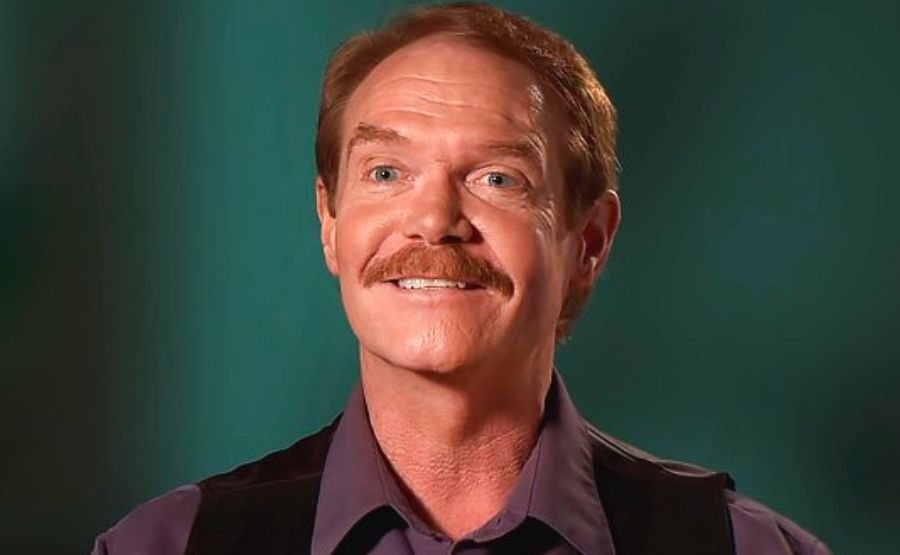
Picture the ideal all-American kid of the late 1960s. Red hair. Freckles. Blue eyes that managed to look both innocent and quietly intelligent at the same time. The kind of face that made you think immediately of Tom Sawyer rafting down the Mississippi, or of Mark Twain generally. That was Mitch Vogel — and for about a decade, that face was everywhere in American television and cinema.
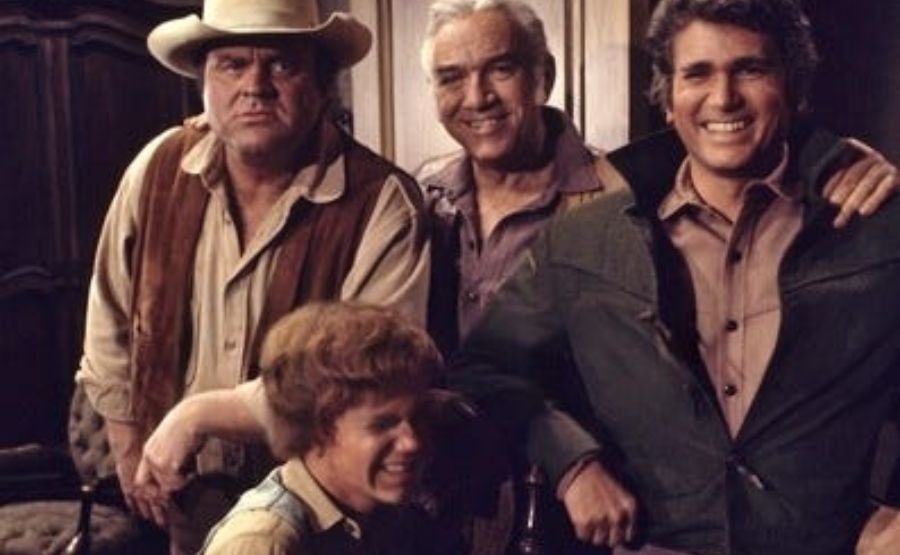
He appeared with Lucille Ball and Henry Fonda at twelve. He shared scenes with Steve McQueen at thirteen and earned a Golden Globe nomination doing it. He rode the Ponderosa alongside Lorne Greene and Michael Landon for three seasons of Bonanza at a moment when that show was one of the most watched programs in the country. He did two Disney films. He appeared in Born Innocent alongside Linda Blair. He guest-starred on Gunsmoke, The Virginian, Little House on the Prairie, and half a dozen other major productions.
And then, at twenty-two, he simply stopped.
Not because his career collapsed. Not because Hollywood cast him aside when he aged out of the wholesome teenager type. He made a deliberate, clear-eyed decision that the acting life was not the life he wanted to build, packed his things, moved to Pennsylvania, formed a rock band, and got on with it. He married Christine Gilles in 1985. They had two daughters. He directed church plays. He did a bit of music.
That is the story of Mitch Vogel — genuinely unusual in an industry full of cautionary tales. Not a tragedy of lost stardom. Not a comeback story. Just a person who figured out what they wanted and went and did it.
See also “MC Serch Net Worth: The Queens Kid Who Discovered Illmatic“
Early Life: Alhambra, California and a Kid Who Loved to Perform
Mitch was born on January 17, 1956, in Alhambra — a city in the San Gabriel Valley, about ten miles east of downtown Los Angeles. His father’s name was Dennis Vogel. Details about his mother and whether he had siblings are not part of the public record; he was not a celebrity whose family life became tabloid material even at the height of his fame.
What Alhambra gave him was proximity to an industry that would take a genuine interest in him, and a fairly normal Southern California childhood before that happened. Costa Mesa and then Burbank were the cities where he attended junior high school, reflecting the moves that accompanied his acting career. He was not a child raised specifically for Hollywood — acting found him rather than the reverse.
The first hint that something was different came when he started performing in stage productions around age ten. Not film. Not television. Just local theater — the kind of community productions that Southern California families put their children in as a recreational activity, without expecting much. He took on The Wizard of Oz, Peter Pan, Tom Sawyer, and Heidi, and apparently whatever it was that made him different was visible even then.
He was not a manufactured child star groomed from infancy by stage parents. He was a kid from Alhambra with a particular kind of natural ease in front of an audience, who discovered it early and ran with it.
Education: Schooling Alongside a Career
One of the practical realities of being a working child actor is that your education tends to be somewhat scattered. Mitch attended Heinz Kaiser Junior High School in Costa Mesa, California from 1969 to 1970 — the same years he was appearing on Bonanza — and then transferred to Jordan Junior High School in Burbank.
Burbank is, of course, the beating heart of the American television production industry. Having your junior high school in Burbank while you are working as a television actor is the kind of coincidence that feels almost scripted. The city housed the major network studios, and the practical proximity to where the work actually happened presumably simplified some of the logistical complexity of being a working student.
He attended school during the years his career was most active, managing the competing demands of academic requirements and professional commitments the way child actors in that era managed such things — with on-set tutors, flexible scheduling, and the practical accommodation that a successful production needs to make for young talent. The public record does not include information about any college attendance after his acting career wound down.
Career Beginnings: Stage to Screen
The transition from community theater to professional film work happened remarkably fast. By age twelve, Mitch had made his feature film debut — not in some minor production, but in Yours, Mine and Ours (1968), a major studio comedy starring Lucille Ball and Henry Fonda. He played Tommy North, one of the many children in the blended family the film centered on. The movie was one of the top-grossing family films of its year, which meant millions of American viewers encountered that red-haired freckled face without yet knowing his name.
What happened next was the kind of opportunity that defines careers. Director Mark Rydell was adapting William Faulkner’s The Reivers — a warmly comic coming-of-age story set in early twentieth-century Mississippi — and he needed a boy who could carry the emotional weight of the central character alongside one of the biggest movie stars in the world. He cast Mitch as Lucius McCaslin, the young protagonist who accompanies his employer on a stolen car adventure through a Mississippi that existed in the soft light of memory.
The star in question was Steve McQueen.
Performing opposite McQueen at thirteen years old, in a substantial dramatic role, and holding your own in that company — the company of a man who was at or near the peak of his cultural cool at that moment — was not a small thing. Mitch did it. The film did not perform at the level its studio had hoped, but the performances were respected, and the Golden Globe nomination Mitch received for Best Supporting Actor announced clearly that this was not merely a charming face but a genuine young talent.
The Bonanza Years: Life on the Ponderosa
The role that most people associate with Mitch Vogel came about through a combination of planning and happenstance.
He had actually appeared on Bonanza two years before he joined the cast properly — a guest spot in the 1968 episode “The Real People of Muddy Creek” during the show’s tenth season. He played a completely different character. But his face was already familiar to the Bonanza creative team, and they had registered something in the performance.
In 1970, the producers were facing a challenge. Bonanza was one of the most successful westerns in television history — it had been running since 1959 — but the energy of the show needed renewal. Michael Landon was thirty-four, a bit old to still be receiving fatherly lessons from patriarch Ben Cartwright. The series needed a younger face. More specifically, it needed the kind of young character who could believably be taken under the wing of the Cartwright family and bring fresh dramatic possibilities to scripts that had been written around four adult men for over a decade.
Mitch was brought in as Jamie Hunter — a teenage orphan who visits the Ponderosa and then just stays, eventually being adopted by Ben Cartwright and becoming the fourth son of the family. The producers were not certain the character would work, or that the audience would accept him. They described it as a trial, watching to see what kind of viewer response the new character generated.
The response was positive. The fan mail was good. Jamie became a series regular.
He appeared in 45 episodes across the final three seasons of Bonanza — from 1970 until the show’s cancellation in 1973. He was there through one of the most significant transitions in the show’s history: the death of Dan Blocker, who played Hoss Cartwright, in 1972. Blocker’s death genuinely shocked the cast and crew and the viewing public. Playing alongside a grieving production team, maintaining a character’s coherence while the real-world situation was emotionally charged, is a test of professional maturity that few teenagers would face.
Mitch has spoken warmly about those years in later interviews. He has described the Bonanza set as one of the most genuinely family-like environments he encountered in his working life. Michael Landon and Dan Blocker were famous practical jokers — particularly at dinner table scenes, where the multi-camera setup that films the wide master shot first gave them opportunities to mess with their fellow cast members before the close-ups. Lorne Greene was dignified and warm. The cast did not treat the young addition as an intrusion or a production gimmick. They absorbed him.
His friendship with Michael Landon extended beyond Bonanza‘s cancellation. When Landon went on to create and star in Little House on the Prairie — which debuted in 1974 and became another enormous hit — he brought Mitch back for a few guest appearances, maintaining the connection across productions.

Disney and the Final Years
While Bonanza was his most sustained television work, Mitch also built a relationship with Disney during these years that produced two of his most visible film credits.
Menace on the Mountain (1970) and The Boy from Dead Man’s Bayou (1971) — also released as Bayou Boy — both aired as part of Disney’s Wonderful World of Color television programming and gave him lead roles in family-oriented adventure stories. Disney’s interest in the wholesome-looking California teenager was entirely rational from the studio’s perspective: the combination of genuine acting ability and a physical type that epitomized American boyhood was exactly what the studio’s family programming needed.
Born Innocent (1974), a made-for-television film starring Linda Blair in a challenging role about a troubled young woman in a reform school, gave Mitch a completely different kind of material. The film was controversial for its time, dealing with themes of violence and abuse in juvenile detention that network television rarely addressed directly. His role as Tom Parker placed him in a very different dramatic register than the frontier adventure and family comedy of his other work.
By the mid-1970s, he was aging out of the specific type that had defined his peak years. He continued working through the rest of the decade — his credits run to 1978 — but the parts available to a twenty-year-old who had been one of Hollywood’s most recognizable teenage faces were necessarily different from those available to the thirteen-year-old who had earned a Golden Globe nomination.
In 1978, at twenty-two, he retired.
Personal Life: Pittsburgh, Christine, and a Quieter Chapter
After retiring from acting, Mitch did something that most Hollywood veterans either cannot or choose not to do: he genuinely moved on.
He relocated to Pittsburgh, Pennsylvania — as far from Alhambra or Burbank as you can get while remaining in the continental United States, both geographically and culturally. There, he formed a rock band and threw himself into music with the same focus he had brought to acting. Pittsburgh in the late 1970s and early 1980s had a working-class creative culture that was not particularly interested in what you had done on television when you were thirteen.
He met Christine Gilles, and they married in 1985. It is widely believed that Christine was his first significant romantic relationship. She appears to have worked as a high school teacher for many years — a quietly significant detail about the kind of household the couple built. Over forty years have passed since the marriage began.
Together they have two daughters, who grew up and eventually moved out to establish their own lives. The family settled back in Southern California at some point, where Mitch has remained.
He began directing church plays — a continuation of both his performance background and his presumably deepened faith. He remained in music. He did not chase television roles or attempt a comeback.
He is described in various accounts as a dog lover and as someone who enjoys charitable work. He has participated in Bonanza reunions and conventions over the years — appearing in retrospective interviews, revisiting Ponderosa filming locations for a Travel Channel program in 2002, and in general maintaining a connection with the era of his work that brings genuine pleasure to the people who grew up watching him ride across the Ponderosa.
Challenges: The Other Side of Child Stardom
Child stardom is a subject that most people understand primarily through cautionary tales. The industry’s history is full of young performers who achieved enormous early success and then struggled profoundly with the transition to ordinary adult life — with the loss of identity that came from no longer being the thing everyone wanted, and with the various destructive coping mechanisms that television and film history have documented in painful detail.
Mitch Vogel is conspicuously not one of those stories.
The challenges he faced were real — aging out of a specific type, watching a career that had peaked in your early teens become increasingly harder to sustain through your late teens and early twenties, managing the practical and psychological questions that arise for any person whose primary professional identity is established before they are old enough to vote — but he navigated them in the most effective way possible: by simply deciding that acting was not the defining purpose of his life and then going to find what was.
The question of why some child actors manage this transition and others do not is one that researchers and therapists and industry observers have debated for decades. The explanations tend to come back to support systems, self-awareness, and the presence or absence of a stable foundation outside the entertainment world itself. Mitch’s quiet post-acting life in Pittsburgh and then Southern California, his long and apparently stable marriage, his involvement in music and church — these are not the markers of someone who struggled to leave Hollywood behind. They are the markers of someone who was never entirely of Hollywood in the first place.
Financial Picture: Half a Million Dollars, Honestly Explained
Here is where honesty matters more than optimism.
Celebrity Net Worth — one of the most reliable and widely cited sources on this kind of information — puts Mitch Vogel’s net worth at approximately $500,000. That figure is consistent across the vast majority of credible sources. A small number of less reliable sites suggest numbers as high as $3 million; one source, which also claimed he was born in “Alhambra, Spain” and spotted by a fictional director named “Dick Manning” for Leave It to Beaver, should be disregarded entirely as fabricated content.
The $500,000 figure makes sense when you understand the career it reflects. Mitch worked in television and film during an era when residual structures were different from today, when streaming did not exist, and when child actors were compensated at rates that would seem modest by current standards even for significant roles. His most active years ran from 1967 to 1978. He retired at twenty-two. The passive income generated by decades of Bonanza reruns, DVD releases, and the general ongoing existence of classic television in various platforms has added to his total over time — but not dramatically.
He has lived a modest lifestyle by all available accounts. His wife worked as a teacher. He directed church plays and played in a band. The wealth he accumulated was sufficient for a stable and comfortable life outside the entertainment industry, which appears to be exactly what he wanted.
Life Today: Serene, Private, and Still Connected to the Ponderosa
Mitch Vogel is seventy years old as of 2026. He is, as Wikipedia notes with some poignancy, one of only two surviving principal cast members from Bonanza — the other being Tim Matheson. Everyone else who populated that Ponderosa is gone.
He lives in Southern California, where he has maintained the quiet private life he has built since retiring from acting nearly five decades ago. He participates in Bonanza-related retrospective events and has given occasional interviews about his time on the show — warm, engaged conversations that suggest someone who looks back on those years with genuine affection rather than bitterness or longing.
He indicated in at least one interview that he might consider returning to acting for the right role, though no such role has materialized or been publicly announced.
The daughters are grown. The marriage continues. The church plays get directed.
Final Words
Most Hollywood stories that end with the subject walking away from the industry at twenty-two are sad stories. They involve substances, or bitterness, or the grinding defeat of trying and failing to maintain relevance past the expiration date of a specific youthful type.
Mitch Vogel’s story is not that story. It is something rarer and, in its own way, more admirable.
He accomplished extraordinary things while he was working. A Golden Globe nomination at thirteen years old, shared with Steve McQueen. Three seasons as a main cast member on one of the most beloved westerns in American television history. A Disney film career. A friendship with Michael Landon that survived the end of Bonanza and extended into the Little House years. A body of work that continues to reach new viewers through the mechanisms of classic television.
And then he let it go. Completely. Without apparent regret.
That freckle-faced kid from Alhambra figured out something that many far more famous people never manage: that the work you did matters, that the memories people carry from your performances are real and lasting, and that you do not have to keep performing to justify having done it. You can just live.
That is a quiet kind of wisdom. But it is wisdom nonetheless.
See also “MC Serch Net Worth: The Queens Kid Who Discovered Illmatic“
FAQs
1. Who is Mitch Vogel?
Mitchel L. Vogel is an American former child actor born on January 17, 1956, in Alhambra, California. He is best known for playing Jamie Hunter Cartwright in the final three seasons of the NBC western series Bonanza (1970–1973) and for his Golden Globe–nominated performance as Lucius McCaslin in The Reivers (1969) opposite Steve McQueen. He retired from acting in 1978 and has since pursued music and theater direction.
2. What was Mitch Vogel’s most famous role?
His most sustained and recognized role was Jamie Hunter Cartwright in Bonanza, which he played across 45 episodes from 1970 to the show’s cancellation in 1973. The character was introduced as an orphan taken in by the Cartwright family and eventually adopted by patriarch Ben Cartwright, making him Ben’s fourth son.
3. Did Mitch Vogel receive any award nominations?
Yes. He received a Golden Globe Award nomination for Best Supporting Actor for his performance as Lucius McCaslin in The Reivers (1969), directed by Mark Rydell and starring Steve McQueen. The nomination came when Vogel was approximately thirteen years old.
4. What were Mitch Vogel’s first acting experiences?
He began performing in stage productions at approximately age ten, appearing in local theater versions of The Wizard of Oz, Peter Pan, Tom Sawyer, and Heidi. His professional film debut came at age twelve in the 1968 family comedy Yours, Mine and Ours, starring Lucille Ball and Henry Fonda.
5. Why did Mitch Vogel leave acting?
By his own account and consistent with all available reporting, he made a deliberate personal choice to leave the entertainment industry at approximately age twenty-two. He did not retire because his career collapsed or because he was unable to find work, but because he decided that building a life in music and ordinary community engagement better suited what he wanted. He relocated to Pittsburgh and formed a rock band.
6. Did Mitch Vogel work with Michael Landon after Bonanza?
Yes. He and Landon developed a genuine friendship during the Bonanza years, and after the series ended, Landon invited Vogel to appear in a few episodes of Little House on the Prairie (1974), his subsequent hit western series.
7. What Disney productions did Mitch Vogel appear in?
He had lead roles in two Disney television films: Menace on the Mountain (1970) and The Boy from Dead Man’s Bayou (1971), both of which aired as part of Disney’s Wonderful World of Color programming. Disney was drawn to his wholesome, natural screen presence and specifically sought out the same quality that made him appealing to Bonanza producers.
8. Is Mitch Vogel married and does he have children?
Yes. He has been married to Christine Gilles since 1985, in a relationship that has lasted over four decades. The couple has two daughters who have grown up and established their own lives. Christine is believed to have worked as a high school teacher for many years.
9. What did Mitch Vogel do after leaving acting?
After retiring from acting in 1978, he moved to Pittsburgh, Pennsylvania, where he formed a rock band and focused on music. He subsequently returned to Southern California and has been involved in directing church plays and community performing arts. He has also participated in Bonanza reunions and retrospective television programs over the years.
10. How many episodes of Bonanza did Mitch Vogel appear in?
He appeared in 45 episodes of Bonanza, across the show’s final three seasons (1970–1973). He also had a guest appearance in a 1968 episode called “The Real People of Muddy Creek,” two years before he officially joined the cast as a series regular.
11. What is Mitch Vogel’s estimated net worth?
The most credibly and consistently cited figure across reliable sources, including Celebrity Net Worth, is approximately $500,000. This reflects earnings from his active career years (1967–1978) including residuals from Bonanza reruns and other classic television exposure. He has maintained a modest lifestyle throughout his adult life. Higher figures cited by some sources are not supported by reliable analysis.
12. Is Mitch Vogel still alive, and is he the last surviving Bonanza cast member?
As of 2026, Mitch Vogel is alive and seventy years old. He is, alongside Tim Matheson, one of only two surviving principal cast members from Bonanza — a distinction that reflects the age of the production and how much time has passed since the show’s original run. All other main cast members from the classic NBC western have died.