
Quick Facts
| Detail | Information |
| Teams | Los Angeles Rams vs. Chicago Bears |
| Conferences | Both NFC — Rams (NFC West), Bears (NFC North) |
| Rams Founded | 1936, Cleveland; relocated to Los Angeles 1946 |
| Bears Founded | 1919, Decatur; relocated to Chicago 1921 |
| All-Time Series | Bears lead historically (regular season) |
| Super Bowl Wins | Rams: 2 (1999 season, 2021 season); Bears: 1 (1985 season) |
| Home Stadiums | SoFi Stadium (Rams); Soldier Field (Bears) |
| 2026 Season Status | Not scheduled to meet in regular season |
| Last Meeting | September 29, 2024 — Rams won 24–18 |
| Series Significance | Two of the NFL’s oldest and most historically rich franchises |
Introduction: When Old Money Meets Old Money in the NFL
There are some NFL matchups that feel bigger than the current standings. Some games carry weight simply because of what the two franchises represent — decades of history, legendary players, championship pedigrees, and fan bases that have been bleeding their team’s colors across generations.
The Los Angeles Rams versus the Chicago Bears is exactly that kind of matchup.
These are two of the oldest active franchises in professional football. Between them, they have produced Hall of Fame quarterbacks, revolutionary offensive systems, defensive units that redefined what it meant to stop a football team, and championship moments that live permanently in NFL lore. When they meet, the scoreboard matters — but so does everything that came before it.
This article covers the full story of this matchup: the history, the greatest player performances across their meetings, what makes each team’s identity distinctive, and how to read the statistical battle when these two programs collide.
See also “Eagles Rivalry Jersey: The Complete Guide to Philadelphia’s Most Iconic Matchup Uniforms“
Two Franchises, Two Identities: Understanding Who They Are
Before you can appreciate what happens when the Rams and Bears meet, you need to understand what each organization stands for.
The Los Angeles Rams: Innovation and Reinvention
The Rams have always been a franchise associated with offensive innovation. They were one of the first NFL teams to use the T-formation quarterback system in the modern era. They were the team that made “The Greatest Show on Turf” a household phrase during their dominant Super Bowl run in 1999 and 2000, when Kurt Warner, Marshall Faulk, and Isaac Bruce operated an offense so efficient it seemed almost unfair.
Then came the wilderness years — a long, difficult stretch in St. Louis that ended with a move back to Los Angeles in 2016. The rebuild under head coach Sean McVay, who arrived in 2017 as the youngest head coach in modern NFL history, was rapid and dramatic. Jared Goff took them to Super Bowl LIII. Matthew Stafford delivered the championship in Super Bowl LVI, capping a 23–20 comeback victory over the Cincinnati Bengals that electrified the franchise’s new home at SoFi Stadium.
The Rams play a brand of football that prioritizes creativity — pre-snap motion, misdirection, innovative personnel groupings, and an offensive philosophy that challenges defenses to account for multiple threats simultaneously. On defense, they have produced some of the game’s premier pass rushers, with Aaron Donald’s retirement leaving enormous shoes to fill but a culture of defensive excellence still firmly in place.
The Chicago Bears: Defense, History, and the Long Wait
The Bears are the NFL’s oldest continuously operating franchise under the same name. George Halas — “Papa Bear” — was both the founder and the defining figure of the organization, coaching the team across four separate stints from 1920 to 1967. The Bears were the NFL before the NFL was the NFL.
Their identity has almost always been defensive. The 1985 Chicago Bears — featuring Mike Singletary, Richard Dent, Dan Hampton, and the incomparable William “The Refrigerator” Perry — are regularly cited as the greatest defense in NFL history. That team went 15–1, demolished the New England Patriots 46–10 in Super Bowl XX, and became a cultural phenomenon that extended well beyond football.
The Bears have spent much of the past three decades searching for the quarterback who can finally complement that defensive tradition with offensive consistency. Jim McMahon in 1985 was good enough to win with that defense behind him. But after him, the search has been long and sometimes painful — from Erik Kramer to Rex Grossman to Jay Cutler to Mitchell Trubisky to Justin Fields and now into the current era.
The Bears’ 2024 draft selection of USC quarterback Caleb Williams with the first overall pick represented the latest and perhaps most significant attempt to finally answer the franchise quarterback question. Williams’ development into one of the game’s premier young passers has energized a franchise and a fan base that has been waiting a very long time.
The Historical Series: Key Numbers and Trends
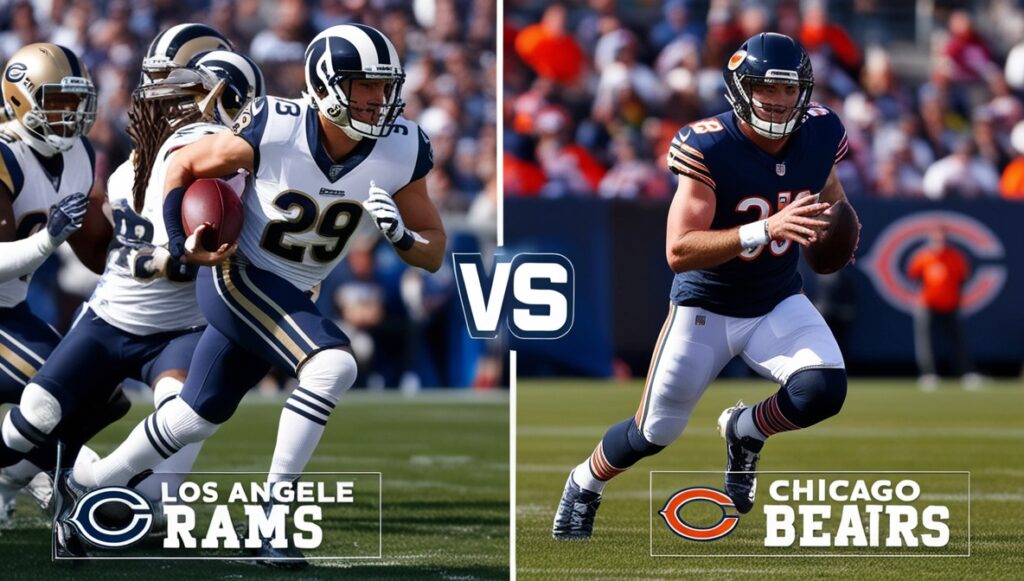
The Rams and Bears have been playing each other since the early days of professional football — long before either franchise settled into its current home city.
Their series history reflects the cyclical nature of NFL competition. There have been stretches where one team dominated — particularly during the Bears’ defensive powerhouse eras and during the Rams’ “Greatest Show on Turf” period. There have been stretches of competitive balance where games were decided by late-game drives and single possessions.
Because the two teams play in different NFC divisions, they don’t meet annually. The NFL scheduling formula rotates inter-divisional matchups on a three-year cycle for within-conference games, meaning the Rams and Bears meet roughly every three years unless they reach the playoffs and face each other there.
Playoff meetings between the two have produced memorable moments. The Rams and Bears have met in the postseason multiple times across NFL history, with both franchises having had periods of genuine championship contention that occasionally brought them into direct collision in January.
Offensive Explosions: When the Stats Tell the Story
What makes a Rams-Bears game statistically interesting is the contrast in team philosophies and how that contrast plays out in the box score.
Watching a Rams Offensive Performance
When Sean McVay’s offense is operating at its peak, the statistical output is distinctive. The Rams typically generate high completion percentages — their quarterback is often asked to throw short and intermediate routes with precision rather than launching deep shots indiscriminately. Receiver stats tend to be distributed across multiple targets, with the running back often functioning as a receiving threat out of the backfield in addition to a traditional ball carrier.
In a typical high-output Rams performance against a competitive opponent, you might see:
- The quarterback completing 70%+ of attempts with 2–3 touchdowns and minimal interceptions
- The top receiver clearing 80–100 yards on 6–8 catches
- A running back contributing 60–80 yards rushing alongside 4–6 receptions
- Multiple offensive linemen winning their individual matchups on a high percentage of snaps
Yards after contact, yards after catch, and third-down conversion percentage are the metrics that best capture whether the Rams offense is truly operating. A Rams offense that converts third downs at 45%+ is an offense that is dominating possession and field position.
Reading a Bears Offensive Performance
Chicago’s offense under the Caleb Williams era looks genuinely different from the Bears teams of recent memory. Williams brings elite arm talent, mobility, and an ability to extend plays that creates statistical outputs traditional pocket quarterbacks don’t generate.
When the Bears are moving the ball effectively, the signature statistical markers include:
- Williams rushing attempts in the 5–8 range, reflecting his willingness to use his legs as a genuine offensive weapon
- D.J. Moore continuing as a reliable top receiving option, capable of 80–120 yard performances on good days
- The running game operating as a genuine threat rather than a predictable backup plan
- Red zone efficiency, where Williams’ improvisational ability often translates into touchdowns on plays that die in the hands of less gifted quarterbacks
Defensive Battles: The Stats That Don’t Make Headlines
For all the attention offensive statistics receive, Rams-Bears games have often been defined by defensive performances. Understanding what to look for defensively adds an entirely different layer to reading the box score.
The Rams’ Defensive Philosophy
Post-Aaron Donald, the Rams have continued to invest heavily in their defensive front. The philosophy remains the same: generate pressure with four rushers, which allows the secondary to play tighter coverage without the vulnerability that comes from consistent blitzing. When the Rams’ front four is winning, the sack totals are secondary to the pressure statistics — hurries, knockdowns, and disrupted throwing lanes that force the quarterback into timing errors even without a clean sack.
Defensive back Ahkello Witherspoon’s type of coverage play, combined with a safety rotation that emphasizes preventing explosive plays, creates a bend-but-don’t-break unit on the best days and a liability on coverage assignments when the front four isn’t winning their matchups.
The Bears’ Defensive Identity
Chicago’s defensive identity under coordinator Matt Eberflus has emphasized speed at linebacker and aggressive man coverage. The Bears have drafted and developed defensive talent that can match up physically with modern NFL receiving corps, reducing their vulnerability to the quick-passing games that have historically exploited zone coverage defenses.
In a Rams-Bears game, the defensive statistical battle often comes down to:
- Whether the Bears’ coverage can hold up long enough for their pass rush to arrive
- Whether the Rams’ defensive front can disrupt the timing of a quarterback who can escape pressure
- Turnover differential — neither team’s recent identity has been built around turnovers, making takeaways significant game-changers when they occur
Key Player Matchups: What to Watch When They Play
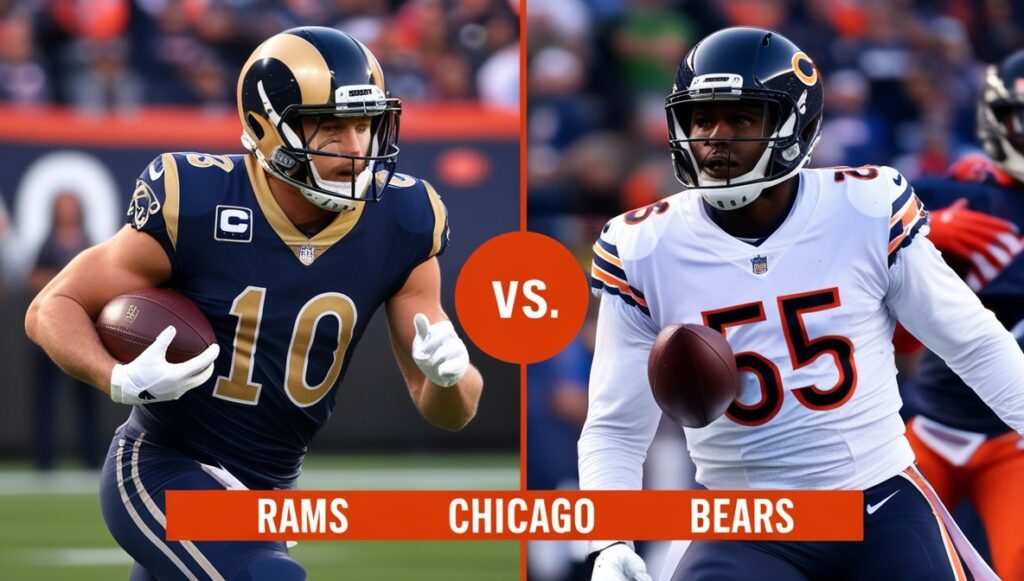
When the Rams and Bears eventually meet in a game with current rosters, certain individual matchups frame the entire contest.
Matthew Stafford vs. Caleb Williams: The Quarterback Contrast
Stafford brings championship-proven experience, an elite deep ball, and the ability to process complex defenses quickly. Williams brings youth, athleticism, creativity under pressure, and the highest ceiling of any young quarterback in the NFC. These two represent genuinely different eras of NFL quarterbacking in the same conference.
Stafford’s statistical signature in big games — his tendency toward a conservative first half that suddenly opens up into explosive third and fourth quarter throwing — contrasts sharply with Williams’ more consistent tempo and willingness to take shots throughout the game.
Puka Nacua vs. Kyler Gordon: The Slot Battle
Puka Nacua’s emergence as one of the Rams’ most dangerous receiving options created a matchup problem that most defenses struggle to solve. His combination of route running precision and yards-after-catch ability in the slot tests any coverage defender. Gordon’s aggressiveness as a slot cornerback makes this one of the highest-impact individual matchups on the field.
The Trenches: Where Games Are Actually Won
Both organizations have invested heavily in their offensive lines in recent years. Rams left tackle Joe Noteboom’s health and performance against Chicago’s edge rushers is a key variable. On the other side, Williams’ ability to escape pressure reduces the consequences of individual breakdowns — but the Bears’ offensive line protecting him on early downs remains essential to keeping the offense on schedule.
What the Stats Actually Tell You: Reading a Box Score Like an Analyst
Most people look at a box score and see touchdowns, yards, and the final score. But the numbers that actually explain why a team won tell a deeper story.
Time of Possession — When the Rams control time of possession in the 33–35+ minute range, they’re typically winning. Their ball-control offensive philosophy is designed to keep opposing offenses off the field.
Third Down Conversion Rate — The single most predictive in-game statistic for both teams. A team converting third downs at 50%+ is almost certainly going to win. A team converting at 25% or below is fighting uphill all afternoon regardless of explosive play totals.
Yards Per Play vs. Total Yards — Total yardage can be misleading. A team that gains 380 yards on 75 plays is less efficient than a team that gains 320 yards on 55 plays. Yards per play tells you which offense was actually moving the ball easily versus grinding.
Pressure Rate and Clean Pocket Percentage — These aren’t always in public box scores but show up in detailed analytics. A quarterback performing with a clean pocket 65%+ of the time is playing a fundamentally different game than one absorbing pressure on every third snap.
Red Zone Efficiency — Touchdowns vs. field goals in the red zone often determine close games. A team that reaches the red zone five times and converts three for touchdowns has created significantly more value than a team that reaches it five times and kicks four field goals.
See also “Eagles Rivalry Jersey: The Complete Guide to Philadelphia’s Most Iconic Matchup Uniforms“
Final Words
The Los Angeles Rams and Chicago Bears carry more NFL history between them than almost any other pairing you could construct. They represent the full arc of professional football — from its barnstorming early days through the television era, through expansion and relocation and reinvention and triumph.
When these teams play, the statistics they generate don’t exist in isolation. They’re the latest chapter in a story that started a century ago, written by players who will never fully know the names of those who came before them but are connected to them nonetheless through the uniform, the city, and the game itself.
Football at its best is about more than numbers. But the numbers, when you know how to read them, tell you exactly how the story is unfolding in real time. And with the Rams and Bears both building rosters with genuine championship aspirations in 2026 and beyond, the next chapter of this matchup promises to be worth watching closely — statistics and all.
FAQs
1. When did the Rams and Bears last play each other?
The most recent regular season meeting was September 29, 2024, with the Rams winning 24–18. The two teams are not scheduled to meet in the 2026 regular season due to their different divisional schedules.
2. What is the all-time series record between the Rams and Bears?
The Bears hold a historical edge in the all-time series, reflecting their longer stretch of dominance in the early NFL era. However, the series has been more competitive in recent decades as the Rams rebuilt into a championship-caliber franchise.
3. How many Super Bowls have the Rams won?
The Rams have won two Super Bowls — Super Bowl XXXIV following the 1999 season (defeating the Tennessee Titans) and Super Bowl LVI following the 2021 season (defeating the Cincinnati Bengals 23–20).
4. How many Super Bowls have the Bears won?
The Bears have won one Super Bowl — Super Bowl XX following the 1985 season, defeating the New England Patriots 46–10 in one of the most dominant championship performances in NFL history.
5. Who is the Bears’ current franchise quarterback?
Caleb Williams, selected first overall in the 2024 NFL Draft out of USC, is the Bears’ current franchise quarterback. His combination of arm talent and mobility represents the most significant quarterback investment the franchise has made in decades.
6. Who is the Rams’ head coach?
Sean McVay has been the Rams’ head coach since 2017. He became the youngest head coach in modern NFL history at appointment and has led the team to two Super Bowl appearances and one championship.
7. What statistical category best predicts the winner of a Rams-Bears game?
Third-down conversion rate is consistently the most predictive single statistic. The team that wins third downs tends to control time of possession, limits the opponent’s offensive opportunities, and puts itself in favorable field position throughout the game.
8. Why don’t the Rams and Bears play every year?
NFL scheduling rotates inter-divisional matchups within the same conference on a three-year cycle. Since the Rams play in the NFC West and the Bears in the NFC North, they meet in the regular season roughly every three years unless a playoff meeting occurs.
9. What makes Caleb Williams statistically distinctive compared to other young quarterbacks?
Williams generates rushing statistics that most pocket passers don’t, reflecting his willingness to use designed runs and scrambles as offensive weapons. Combined with above-average completion percentage and red zone efficiency, his statistical profile more closely resembles a dual-threat quarterback than a traditional drop-back passer.
10. How does Matthew Stafford’s statistical profile look heading into the later stages of his career?
Stafford remains one of the league’s most efficient deep-ball throwers, with yards per attempt and touchdown-to-interception ratios that hold up favorably against any quarterback in the NFC. His health management has become a more significant factor as he ages.
11. What is SoFi Stadium and why does it matter for the Rams?
SoFi Stadium in Inglewood, California opened in 2020 and is widely considered the most technologically advanced NFL stadium in the country. Its indoor-outdoor design, massive video boards, and premium facilities have made it a flagship venue that has hosted Super Bowl LVI and multiple college football championships.
12. What should fans watch for in a future Rams-Bears matchup?
Beyond the final score, the key storylines are the Stafford-Williams quarterback contrast, whether Chicago’s defensive front can disrupt the Rams’ rhythm passing game, and whether the Bears’ young offense has matured enough to handle the Rams’ complex defensive schemes. Turnover differential, red zone efficiency, and third-down conversion rate will likely determine the outcome more than any single explosive play.
Explore ideas that elevate your thinking with The Elevate Magazine.


