Kylie Jenner Kid Cudi: The Man Who Taught Hip-Hop to Feel Something
Quick Bio
| Detail | Info |
| Full Name | Scott Ramon Seguro Mescudi |
| Born | January 30, 1984, Cleveland, Ohio, USA |
| Age | 42 (as of 2026) |
| Nationality | American |
| Ethnicity | African-American and Mexican-American |
| Height | 5 ft 9 in (175 cm) |
| Occupation | Rapper, singer, songwriter, producer, actor |
| Known For | Man on the Moon trilogy; “Day ‘n’ Nite”; pioneering emotional/melodic rap; mental health advocacy |
| Record Label | GOOD Music / Republic Records |
| Father | Lindberg Styles Mescudi, a house painter and WWII Air Force soldier; d. when Scott was 11) |
| Mother | Elsie Harriet Mescudi (school choir teacher) |
| Siblings | Maisha, Domingo, Dean Mescudi |
| Daughter | Vada Wamwene Mescudi (b. 2010) |
| Wife | Lola Abecassis Sartore (m. 2025) |
| Notable Connections | Kanye West (mentor/collaborator); Travis Scott, Drake, Juice WRLD (influenced); introduced Timothée Chalamet to Kylie Jenner’s circle at a 2019 dinner |
| Estimated Net Worth | $16 million (Celebrity Net Worth); higher estimates up to $22 million |
Introduction: Why Kid Cudi Changed Everything
Sit with a friend and ask them which rapper made it okay for men to cry. Ask which album they were listening to the night they felt genuinely understood by music for the first time in a way that surprised them. For an enormous number of people — not just rap fans, not just Black men, but a sprawling, cross-cultural community of listeners who came of age in the 2010s — the answer is Scott Mescudi. Kid Cudi.
That is a remarkable thing to have accomplished. Hip-hop in the early 2000s was not particularly interested in vulnerability. The prevailing aesthetic favored toughness, financial success, and an emotional register that left very little room for confusion or sadness as anything other than weakness. And then this kid from Cleveland arrived with a unique voice, a hum, a way of connecting psychedelic atmosphere to genuine emotional pain, and simply talked about what it felt like to be lost and lonely and still trying.
Travis Scott has said it publicly. Drake has acknowledged it. Juice WRLD — one of the most emotionally direct rappers of his generation — pointed directly at Cudi as the person who showed him it was possible. A generation of artists who made vulnerability in hip-hop not just acceptable but commercially dominant traces a direct line back to what Scott Mescudi was doing when very few people were listening.
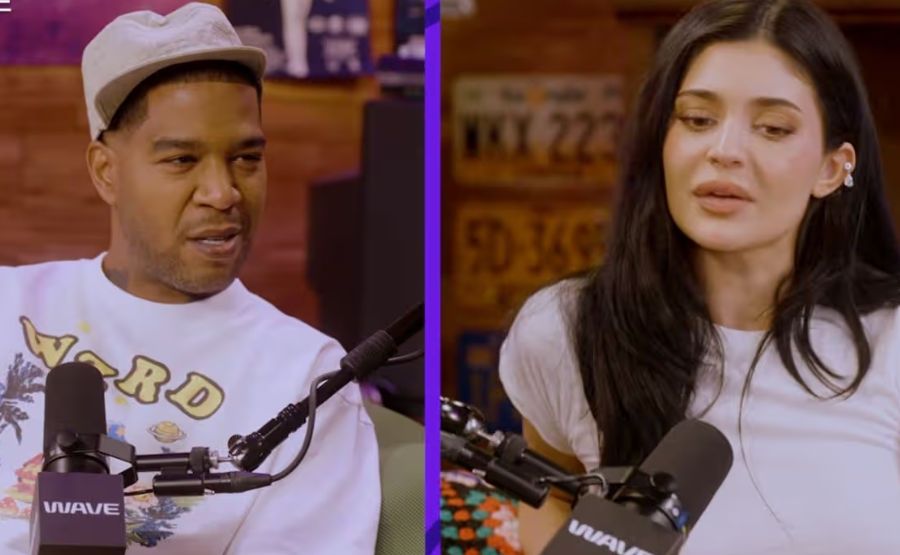
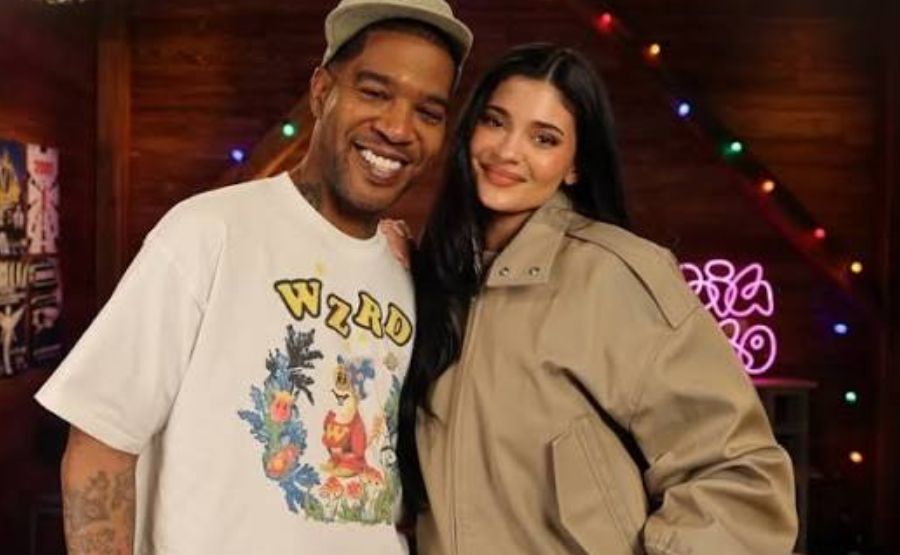
And the connection that often brings new searchers to his biography today is a small, odd footnote to the larger story: Kid Cudi was reportedly at a 2019 dinner where Timothée Chalamet first met the Kardashian-Jenner circle — an evening that eventually contributed to one of Hollywood’s more talked-about relationships. It is a curious footnote for someone whose actual legacy is this enormous and this substantive.
See also “Holly Scarfone: Hurricane Holly Takes on the World“
Early Life: Shaker Heights and the Loss That Shaped Everything
In Cleveland, Ohio, on January 30, 1984, Scott Ramon Seguro Mescudi was born. He grew up primarily in Shaker Heights — a suburb of Cleveland known for its architectural beauty and its unusual degree of racial integration, at least by the standards of American suburban life in the 1980s. His family also had roots in Solon, another Cleveland suburb.
His father, Lindberg Styles Mescudi, was a man of considerable substance: a World War II Air Force veteran, a house painter, a substitute teacher, and a man of Mexican-African descent who passed his mixed heritage to his youngest son. His mother, Elsie Harriet Mescudi (née Banks), worked as a school choir teacher — a detail that becomes interesting when you consider the role of melody, not just rhythm, in what her son would eventually create. Scott was the youngest of four children. His siblings — Maisha, Domingo, and Dean — were older.
When Scott was eleven years old, his father died of cancer.
That loss is not simply a biographical detail. It is the emotional center of everything that followed. The death of a parent at eleven creates a particular kind of wound — old enough to understand what death means, young enough for the grief to become foundational to identity rather than something processed and integrated over time. The loneliness, the searching, the feeling of being unmoored in a world that had suddenly changed its shape without warning — all of this would eventually find its way into Scott’s music with an honesty that resonated across demographics precisely because he never tried to make it sound stronger than it was.
He struggled in school. He attended Shaker Heights High School and then transferred to Solon High. He was eventually expelled — reportedly after threatening to strike a principal. He earned his GED rather than a diploma.
Education: Film School, the Navy, and a Door That Didn’t Open
After earning his GED, Scott enrolled at the University of Toledo in Ohio with the intention of studying film. He was drawn to cinema — to narrative, to visual storytelling — in a way that would eventually surface in his creative work. He lasted one year before dropping out, a decision driven by the pull toward music rather than academic disillusionment.
He considered an alternative path: joining the United States Navy. His father had served in the Air Force, and perhaps military service felt like a connection to that lost relationship. The Navy rejected him. The reason was a juvenile police record he carried from his teenage years.
That rejection was its own kind of turning point. With film school abandoned and the military unavailable, Scott Mescudi had exactly two paths in front of him: figure out how to make music happen, or figure out something else entirely. He chose music — not as a backup plan, but as the thing he had actually wanted all along.
He moved to Brooklyn, New York, to live with his uncle. He was working at a retail job — stocking shelves at a clothing store — while spending every available moment trying to make the music career work. It was exactly the kind of pre-fame grind that sounds romantic in retrospect and feels genuinely uncertain in real time.
Career Beginnings: Brooklyn, the Mixtape, and Kanye
Kid Cudi first began rapping seriously while still in high school, but the career did not take meaningful shape until his Brooklyn years. He was writing and recording, developing the aesthetic that would eventually define him — something emotionally direct but sonically unusual, blending hip-hop production with psychedelic textures, rock influences, and a melodic approach to delivery that did not sound like anything else in the space.
In 2008, he released his debut mixtape: A Kid Named Cudi. The project was a statement of artistic identity rather than a calculated commercial move. It circulated through the channels that music found audiences in 2008 — blogs, early streaming platforms, word of mouth among listeners who trusted certain tastemakers.
One of those tastemakers happened to be Kanye West. The mixtape caught Kanye’s ear, and what followed was a connection that would reshape both of their careers. Kanye signed Cudi to his GOOD Music label and brought him in as a creative collaborator at the beginning of what would become one of the most consequential periods in both their professional lives. Cudi made a substantial contribution to Kanye’s 808s & Heartbreak, an album that broke down the emotional barriers of popular hip-hop and paved the way for everything from Drake’s candid style to the wave of artists who followed.
His own breakthrough single, “Day ‘n’ Nite”, was released in late 2008. The song — built around an atmospheric, hypnotic loop, Cudi’s half-sung, half-rapped delivery, and a lyrical exploration of isolation — became a genuine hit, reaching the top of the Billboard Hot 100 in multiple European markets and establishing him as a name that the American mainstream would soon need to take seriously.
The Album That Matters: Man on the Moon
Man on the Moon: The End of Day came out in September 2009. It was the album that moved Kid Cudi from promising newcomer to genuinely important artist.
The record was conceptually ambitious from the beginning — a narrative journey through Cudi’s psychological landscape, divided into acts, with a visual and sonic mythology built around the idea of a man floating alone in the void of his own mind. It was hip-hop as personal mythology. It was also genuinely beautiful — produced with Kanye West, Emile, Dot da Genius, and others, combining orchestral elements with electronic textures in ways that felt new rather than borrowed.
Songs like “Pursuit of Happiness,” “Mr. Rager,” and “Sky Might Fall” addressed depression, substance use, ambition, and existential anxiety with a directness that was unusual in commercial rap. The album reached number four on the Billboard 200 and launched a conversation about what emotional honesty in hip-hop could look like.
Legend of Mr. Man on the Moon II. Rager followed in 2010, deepening the mythological framework while pushing further into darker territory. Then came the pivot that surprised many people: Cudi formed the alternative rock duo WZRD with producer Dot da Genius, releasing a self-titled album in 2012 that was built entirely on guitar-driven rock rather than hip-hop production. The critical reception was mixed, but the artistic statement was clear — Cudi was not going to be constrained by genre.
Indicud (2013) and Satellite Flight: The Journey to Mother Moon (2014) continued his artistic exploration. Speedin’ Bullet 2 Heaven (2015) pushed into lo-fi alternative rock and received some of the harshest critical responses of his career — but it also demonstrated that he was willing to follow his instincts even when they led to commercial uncertainty.
He returned to a more focused artistic statement with Passion, Pain & Demon Slayin’ (2016), and Kids See Ghosts (2018), a subsequent collaboration with Kanye West, became one of the most critically celebrated projects either of them had released in years, earning universal acclaim as an experimental hip-hop album with genuine emotional and spiritual depth.
Entergalactic (2022), paired with an animated Netflix special he created, demonstrated a Cudi who had fully embraced the multimedia possibilities of his artistic universe.
Acting Career: From Westworld to Horror
Kid Cudi’s acting career developed in parallel with his music, and the range of what he has done is more interesting than his music-world reputation might suggest.
He appeared as a recurring character in Westworld on HBO — one of prestige television’s most acclaimed science fiction dramas. He starred alongside Mia Goth and Jenna Ortega in Ti West’s celebrated horror films X and Pearl (2022), which were genuine critical successes. He appeared in House Party (2023) and contributed his voice to the Trolls Band Together animated sequel alongside Justin Timberlake, Anna Kendrick, and Camila Cabello.
His involvement in the 2014 action film Need for Speed gave him a mainstream blockbuster credit. He has also appeared in Brooklyn Nine-Nine and various other television productions.
The acting career is not incidental — it reflects a man who has always been interested in narrative and visual storytelling, going back to the film studies he began at Toledo.
Mental Health: The Public Reckoning
In 2016, Kid Cudi did something that was genuinely unusual in the entertainment industry: he publicly checked himself into rehabilitation for depression and suicidal urges, and he told his audience why he was doing it.
The Facebook post he wrote at the time traveled far beyond his existing fanbase. It was direct, vulnerable, and free of the kind of controlled messaging that celebrity communications usually employ. He claimed to be ill and in need of assistance. He claimed to have struggled with these issues for many years. He promised to seek assistance.
The response was overwhelming and emotional. Fans who had been telling each other for years that Cudi’s music had helped them through their own mental health struggles now had a mirror moment — the person who had given them language for their pain was acknowledging his own, publicly and without performance.
His willingness to be honest about mental health has become a defining part of his cultural legacy. Artists who came after him — including many who cite his music as foundational — operate in a space that he helped make more hospitable to this kind of honesty.
Personal Life
Kid Cudi has a daughter, Vada Wamwene Mescudi, born in 2010. He has been open about his commitment to fatherhood and his relationship with Vada’s mother, with whom he co-parents.
He was previously linked to actress Raquel Deriane and entertainment attorney Jamie Baratta, and was also connected to singer Cassie Ventura in 2012. None of these relationships became a permanent partnership until 2025, when he married Lola Abecassis Sartore — marking what sources describe as a new and settled chapter in his personal life.
He is also an avid skateboarder and has been involved in fashion collaborations across his career.
Financial Picture: Sixteen Million and Counting
Kid Cudi’s estimated net worth, as consistently reported by Celebrity Net Worth and corroborated by multiple financial biography sources, sits at approximately $16 million, with some estimates ranging as high as $22 million.
His income comes from multiple streams: music sales and streaming royalties from a catalog that spans nearly two decades; touring revenue; acting fees from film and television work; fashion and brand collaborations; and the Netflix partnership that accompanied Entergalactic. He launched his own record label, Wicked Awesome Records, adding an entrepreneurial layer to his income profile.
He is not among the wealthiest entertainers of his generation. He is, however, financially comfortable and professionally active — generating ongoing income from a career that shows no signs of slowing.
Life Today: Married, Active, and Still Evolving
As of 2026, Scott Mescudi is 42 years old, married, and operating across music, film, and television simultaneously. His marriage to Lola Abecassis Sartore in 2025 appears to have brought a personal stability that his earlier years often lacked. His daughter Vada is sixteen. His creative output continues.
New music and projects are in development. His influence on an entire generation of artists who openly acknowledge the debt has only grown as those artists have themselves become central figures in contemporary culture.
Final Words
The thing about Kid Cudi’s legacy is that it is not primarily about any single song or album — though he has both. It is about what he proved was possible. He proved that a hip-hop artist could publicly acknowledge loneliness and depression without losing the respect of his audience. He proved that genre was a cage you could choose to ignore. He proved that vulnerability, expressed honestly and with musical craft, connects with people across backgrounds in ways that toughness performance rarely does.
The artists who came after him made billions of dollars from a template he largely built. The cultural permission for emotional honesty in Black masculine expression that is now taken as a given in hip-hop was, two decades ago, something he was pushing for in the face of industry skepticism and commercial uncertainty.
He checked himself into rehabilitation when he needed to. He told the truth about why. He kept making music. He kept making movies. He got married. His daughter grew up. He turns 43 next January.
The man from Shaker Heights who lost his father at eleven and moved to Brooklyn to figure out what he was made of has been figuring it out in public for nearly two decades now. The work is not finished. The arc is still bending toward something.
See also “Holly Scarfone: Hurricane Holly Takes on the World“
FAQs
1. Who is Kid Cudi?
Kid Cudi is the stage name of Scott Ramon Seguro Mescudi, an American rapper, singer, songwriter, and actor born on January 30, 1984, in Cleveland, Ohio. He is widely considered one of the most influential artists of his generation, credited with pioneering the emotional and melodic approach to hip-hop that has defined the genre’s evolution since the late 2000s. His landmark debut Man on the Moon: The End of Day and his openness about mental health struggles have made him a cultural figure beyond music.
2. What is Kid Cudi’s real name?
His full birth name is Scott Ramon Seguro Mescudi. The middle names reflect his mixed African-American and Mexican-American heritage — his father, Lindberg Mescudi, was of Mexican-African descent, and his mother, Elsie Harriet, was African-American.
3. What is the connection between Kid Cudi, Kylie Jenner, and Timothée Chalamet?
In 2019, Timothée Chalamet attended a dinner party in Malibu that included Kim Kardashian, Kanye West, and Kid Cudi, among others. This gathering introduced Chalamet to the broader Kardashian-Jenner social orbit, and his eventual relationship with Kylie Jenner — which began publicly in 2023 — traces an indirect line back to that evening. Kid Cudi was a social connector between these worlds rather than a romantic party to any of it.
4. What was Kid Cudi’s breakthrough song?
His breakthrough single was “Day ‘n’ Nite,” released in 2008. The track reached the top of charts in several European countries and became a genuine international hit that introduced his unique melodic, atmospheric approach to hip-hop to mainstream audiences. It led directly to his deal with Kanye West’s GOOD Music label.
5. How did Kid Cudi connect with Kanye West?
His 2008 debut mixtape A Kid Named Cudi caught Kanye West’s attention, leading to a meeting and eventually a record deal with GOOD Music. Cudi subsequently contributed significantly to Kanye’s 808s & Heartbreak, which became one of the most influential albums in contemporary hip-hop. Their collaboration continued across many years, most recently producing the acclaimed Kids See Ghosts project in 2018.
6. What is Kid Cudi known for in terms of mental health advocacy?
In 2016, Kid Cudi publicly disclosed on Facebook that he was checking himself into rehabilitation for depression and suicidal urges. The post was unusually direct and personal for a major artist, and it resonated deeply with fans who had found emotional identification in his music for years. His willingness to be publicly honest about his mental health has made him one of the more significant voices in the conversation about emotional vulnerability in hip-hop and among Black men more broadly.
7. Does Kid Cudi have children?
Yes. He has a daughter named Vada Wamwene Mescudi, born in 2010. He has spoken warmly about his relationship with Vada and his commitment to fatherhood in various interviews over the years.
8. Is Kid Cudi married?
Yes. He married Lola Abecassis Sartore in 2025, marking a new chapter in his personal life following various previous relationships that remained public but did not lead to marriage.
9. What acting work has Kid Cudi done?
His acting credits include a recurring role in HBO’s Westworld, leading roles in Ti West’s critically acclaimed horror films X and Pearl (2022), House Party (2023), and Need for Speed (2014), as well as voice work in Trolls Band Together (2023). He has also appeared in Brooklyn Nine-Nine and other television productions.
10. What is Kid Cudi’s estimated net worth?
Celebrity Net Worth and most credible financial biography sources estimate his net worth at approximately $16 million, with some analyses suggesting figures as high as $22 million. His wealth comes from music sales, streaming, touring, acting, fashion collaborations, and his record label Wicked Awesome Records.
11. What is Entergalactic?
Entergalactic is both a 2022 album and an animated Netflix special that Kid Cudi created. The multimedia project — pairing a studio album with an original animated story — demonstrated his longstanding interest in visual storytelling alongside music and was critically well received.
12. Why do some people call Kid Cudi the pioneer of emo rap?
Critics and artists use the term to describe Kid Cudi’s role in establishing emotional vulnerability as a viable and commercially viable approach within hip-hop. His willingness to address loneliness, depression, and existential searching through melodic delivery and atmospheric production pre-dated and directly influenced the wave of artists who made similar approaches dominant in hip-hop through the 2010s and into the present. Artists including Travis Scott, Drake, and Juice WRLD have explicitly credited him as an influence.
Explore ideas that elevate your thinking with The Elevate Magazine.