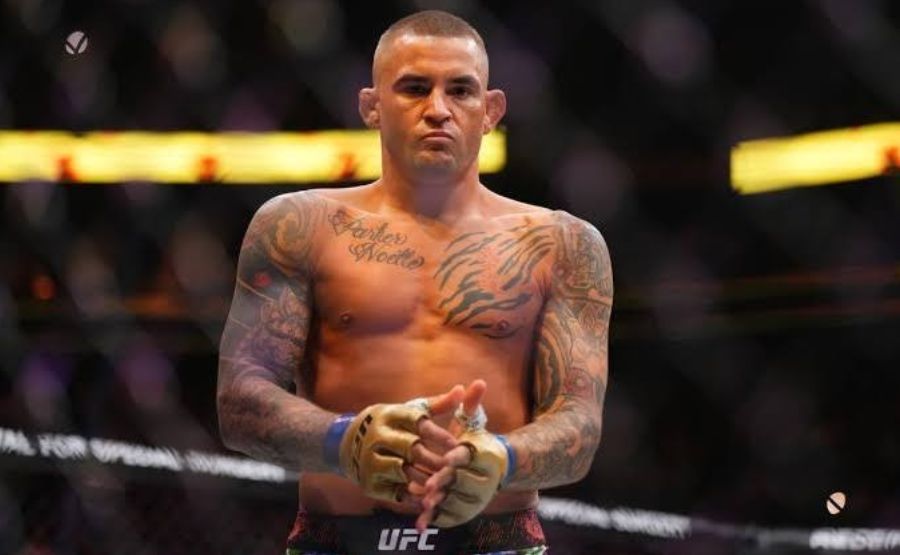
Dustin Poirier Net Worth: The Diamond That Never Stopped Shining
Quick Bio
| Detail | Information |
| Full Name | Dustin Glenn Poirier |
| Nickname | “The Diamond” |
| Born | January 19, 1989, Lafayette, Louisiana, USA |
| Age | 37 (as of 2026) |
| Nationality | American |
| Heritage | Acadian French — Cajun Louisiana roots |
| Height | 5 feet 9 inches (175 cm) |
| Fight Division | Featherweight (early career); Lightweight (primary) |
| Professional Record | 30–10–0 (1 No Contest) |
| UFC Wins | 22 (seventh most in UFC history) |
| Title | Interim UFC Lightweight Champion (2019, UFC 236) |
| Retired | July 2025, after UFC 318 vs. Max Holloway |
| Wife | Jolie Poirier |
| Daughter | Parker Noelle Poirier |
| Charity | The Good Fight Foundation (co-founded with Jolie) |
| Business | Poirier’s Louisiana Style Hot Sauce; bourbon line |
| Estimated Net Worth | $8–10 million |
Introduction: The Kid from Lafayette Who Fought His Way Into History
Let me tell you about a guy who dropped out of high school in the ninth grade, grew up in one of the rougher parts of Lafayette, Louisiana, spent his teenage years getting into street fights, and eventually became one of the most respected combat athletes of his generation.
Dustin Poirier never had a plan. He had a gift, and he had the stubborn refusal to stop when things got hard. And in a sport where things get hard every single time you compete, that refusal turned out to be worth everything.
He is known as “The Diamond” — a nickname that fits both his toughness under pressure and the clarity of his identity inside the octagon. He fought for seventeen years professionally. He beat Conor McGregor twice. He became interim UFC Lightweight Champion. He headlined pay-per-view cards watched by millions. He co-founded a charitable foundation that built houses, funded education programs, and sent water to communities without clean access to it. He launched a hot sauce brand rooted in his Louisiana heritage. He did all of this while remaining, by virtually every account from teammates and opponents alike, one of the genuinely decent human beings that combat sports occasionally and improbably produces.
In July 2025, at UFC 318, he fought Max Holloway for the third time and walked out of the octagon as a retired fighter. The Lafayette kid had finally gotten everything he came for.
This is how he got there.
Early Life: Lafayette, Louisiana, and the Long Way Around
Lafayette sits in the Cajun heartland of south Louisiana — a city built on French Acadian heritage, zydeco music, crawfish boils, and a specific kind of working-class Southern culture that is entirely its own thing and resistant to simplification. It is not a wealthy city. It is a city with genuine community spirit, strong family structures within its neighborhoods, and significant pockets of poverty that have shaped the lives of many of the people who grew up there.
Dustin Poirier grew up in that environment as a kid with Cajun roots — Acadian French heritage that traces back centuries to the French settlers who eventually established the culture that defines south Louisiana to this day. Those roots have always made him proud. His hot sauce brand is built on them. The way he talks about Lafayette in interviews reflects a genuine love for the place rather than the complicated ambivalence that many people feel about the communities that shaped them through difficulty.
But the difficulty was real. He dropped out of Northside High School in the ninth grade — not because of academic failure exactly, but because school and the structured environment it represented did not fit a teenager who was already fighting in the streets and looking for something that matched the intensity he felt inside. Street fights were not a performance of toughness. They were an expression of uncontained energy in a young person who had not yet found the right container.
That container turned out to be a gym. He found MMA through the local Louisiana combat sports community, and something clicked. The controlled environment of martial arts training — the discipline, the structure, the honest feedback of competition — gave the restless, fighting-inclined teenager somewhere to put everything he had.
He never went back to finish high school. He has never expressed regret about that specifically. What he has expressed, repeatedly and credibly, is that fighting gave him the direction and the discipline that a formal education environment had not provided. He built the life he wanted through the octagon rather than through a classroom, which is an unconventional route that he traveled more completely than almost anyone.
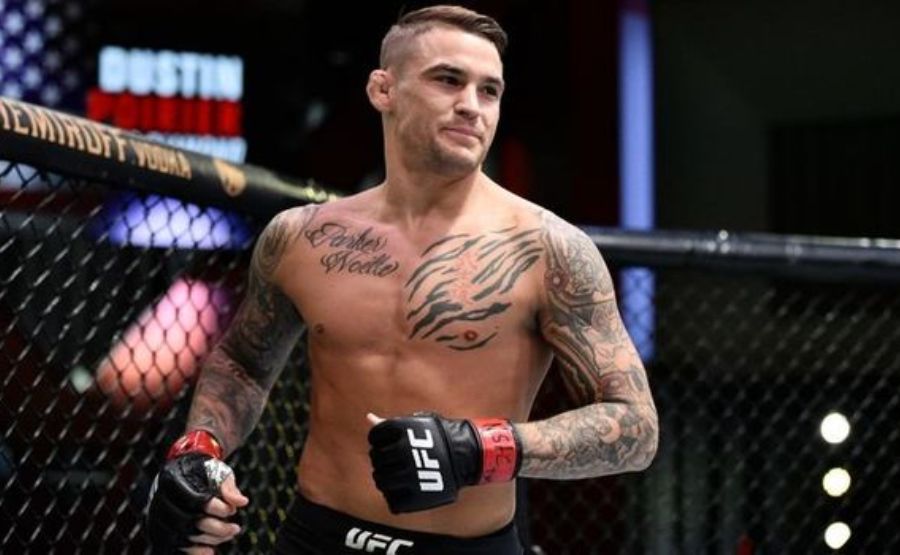
Career Beginnings: The Louisiana Regional Circuit and the Long Build
Dustin Poirier began fighting as an amateur in 2007, competing on the local Louisiana circuit — the kind of regional cards that don’t get television coverage or significant press attention, where fighters are often paid in experience rather than meaningful money, and where the most important thing is the accumulation of competitive experience and the development of a professional foundation.
He turned professional on May 16, 2009, knocking out Aaron Suarez in seventy-nine seconds at USA MMA 7. The speed and completeness of that first professional victory set a tone he would maintain: Poirier, when he finished fights, finished them with authority. He ran up a 7–0 record through regional Louisiana and Southern U.S. promotions before the WEC — the World Extreme Cagefighting organization, which was at that point one of the most legitimate second-tier organizations in American MMA — noticed him.
He signed with the WEC and made his debut there in 2010. His debut was a losing effort — a decision loss to Danny Castillo — but he responded immediately by finishing his next WEC opponent, Zach Micklewright, quickly and convincingly. That pattern — take a loss, learn from it, respond with a finish — would define his career relationship with defeat throughout his professional life.
When the UFC absorbed the WEC in late 2010, Poirier came with the package. He was twenty-one years old and about to enter the greatest MMA organization in the world.
Rise Through the UFC: From Featherweight to Lightweight Legacy
His early UFC career was in the featherweight division — 145 pounds — where he established himself as a genuine contender before eventually moving up to lightweight, which turned out to be where his body and his game were best suited.
The fight that first gave him national attention as a truly elite competitor was his 2012 bout against Jung Chan-Sung, known as “The Korean Zombie” — a fighter with his own passionate following and a highlight-reel style that guaranteed entertaining fights. Their clash was awarded Fight of the Year by multiple major MMA publications. Poirier won by technical knockout. The performance announced that he was not just a talented prospect — he was someone capable of performing at the highest level under genuine pressure.
His path to the top of the lightweight division was not linear. It never is. He accumulated wins over significant opponents, took losses when elite fighters found his weak points, and returned each time with adjustments and improvements that reflected a genuine commitment to the craft of fighting. The wins over Eddie Alvarez in 2018, Nate Diaz in 2019, and Anthony Pettis were all evidence of a fighter whose technical development had caught up with his natural gifts.
The career-defining stretch came between 2021 and what followed: two victories over Conor McGregor — who at the time of their first rematch in January 2021 was the most commercially successful fighter in MMA history — put Poirier in rarefied territory. He finished McGregor with strikes at UFC 257, then finished him again at UFC 264 when McGregor broke his leg against Poirier’s checking kick and could not continue. No other fighter had beaten McGregor twice in the UFC. Poirier became only the man who had.
See also “Tony Hinchcliffe Net Worth: How Much Has the Comedian Earned?“
Interim Champion: UFC 236 and What It Meant
In April 2019, Dustin Poirier fought Max Holloway — a former featherweight champion who had moved up to lightweight — for the interim UFC Lightweight Championship at UFC 236 in Atlanta. Both men were coming off impressive recent performances. Both were widely regarded as elite technical strikers. The fight delivered on every promise those credentials implied.
Five rounds. Two fighters who never stopped competing, never gave up position, never stopped executing their game plans under the mounting physical cost of the fight. Poirier won by unanimous decision. He became the Interim UFC Lightweight Champion — capturing a title that had felt like the right destination for someone who had been grinding toward it for a decade.
The subsequent undisputed title shot came against Khabib Nurmagomedov in September 2019. Khabib — the undefeated Dagestani champion who was arguably the most dominant lightweight in UFC history — won by submission in the third round. Poirier fought well enough that Khabib offered to waive his own post-fight medical suspension so they could do a rematch, which is perhaps the highest compliment a fighter can receive from an opponent of that caliber. The rematch never materialized; Khabib retired following a different fight later that year.
His professional record at retirement stands at 30–10–0 with one No Contest — a record that includes twenty-two UFC wins, tying him for seventh most in the organization’s history. Fifteen of those UFC wins came by finish.
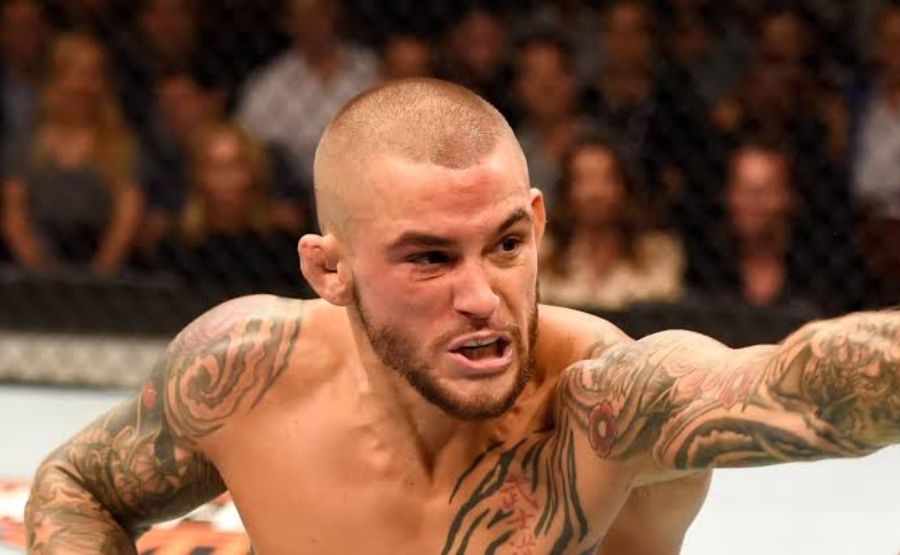
Retirement: UFC 318 and the Final Walk
In July 2025, Dustin Poirier competed at UFC 318 against Max Holloway — their third meeting, a bout that had extra meaning given that their first encounter had produced his interim championship. He was thirty-six years old. He had been fighting professionally for sixteen years. He had told people before the fight that this was his last one.
Whether he won or lost the final fight — and the result itself matters less than the fact that he chose to go out on his own terms, with his health intact, at an age when many fighters have already passed their peak — he walked out of the octagon as someone who had completed what he set out to do.
He had beaten the best. He had won a title. He had beaten the biggest star. He had never quit under pressure, even when pressure was all there was. He left the sport on his own schedule.
Personal Life: Jolie, Parker, and the Family That Made Everything Worth It
The most important relationship in Dustin Poirier’s life outside the octagon is with his wife, Jolie Poirier. They married young and have stayed married — a partnership that has been consistently central to how both of them talk about what matters most.
Their daughter, Parker Noelle Poirier, was born several years into their marriage. Parker has become a significant public presence for the Poirier family — not in a performative sense, but in the sense that Dustin talks about fatherhood with the same directness and emotional honesty he brings to discussing his fighting career. He has described becoming a father as changing his relationship to risk and meaning in ways that fighting alone could never have produced.
Jolie is not simply “the fighter’s wife.” She is the co-founder of The Good Fight Foundation, the charitable organization they built together. Her involvement is active and organizational rather than nominal and decorative. The foundation has funded water access projects, education programs, and disaster relief — the kind of practical humanitarian work that requires genuine operational commitment rather than just celebrity endorsement.
The partnership between them — both in their marriage and in their shared charitable work — represents one of the more genuinely admirable aspects of a public persona that could easily have been constructed around pure fighting imagery.
The Good Fight Foundation: Punching Above the Weight of Celebrity Charity
Most professional fighters with sufficient earnings and public profile establish some form of charitable connection. Some of it is genuine. Some of it is image management. The Good Fight Foundation is one of the genuine ones.
Dustin and Jolie co-founded it specifically to serve underserved communities in Louisiana and beyond — a mission rooted in their own knowledge of what genuine need looks like in the communities where Dustin grew up. The foundation has:
Built partnerships with local Louisiana organizations to provide educational resources and school supplies. Raised funds following Hurricane Harvey to support affected communities. Funded a water well in Uganda providing clean water to people who had none. Directed auction proceeds from Poirier’s fight equipment to the family of a fallen Lafayette police officer and to the Acadiana Outreach Center. Donated proceeds from his fight at UFC on FOX to purchase 500 school backpacks for Lafayette children.
The specificity of those contributions — the school backpacks, the water well, the police officer’s family — reflects the work of people who are paying attention to where help actually lands rather than making broad gestures at public goodness.
Business: Hot Sauce, Bourbon, and the Cajun Brand He Built
Dustin Poirier is one of the few MMA fighters who built a genuinely functional business outside of fighting while still competing at the elite level. Poirier’s Louisiana Style Hot Sauce is a commercial product that grew out of his Cajun heritage and his personality — something that would have felt gimmicky from a different fighter but feels entirely authentic coming from a man who grew up eating Cajun food and who talks about Louisiana cuisine with the enthusiasm of someone who genuinely loves it.
The hot sauce brand received a UFC-level sponsorship arrangement that gave it real commercial visibility. He subsequently expanded into a bourbon line, extending the Louisiana culinary/lifestyle brand into a related premium market.
These ventures generate an estimated $1 to $2 million annually in additional income beyond fight purses — meaningful money that reflects the value of building a brand identity rather than simply performing for fight night checks.
Financial Situation: The Diamond’s Worth, Honestly Explained
Here is where honesty about conflicting sources matters. Estimates of Dustin Poirier’s net worth range dramatically across the internet — from approximately $6 million at the conservative end to $35 million at the most generous end. The most frequently cited, cross-verified figure from the most reliable sources puts his net worth at approximately $8 to $10 million as of 2026.
His documented UFC fight earnings — visible through public record compilations — total over $10 million in disclosed fight purses. This does not include undisclosed portions of his pay-per-view revenue sharing arrangements, which can be significant for fighters who negotiate those terms. Several of his fights against McGregor and in other major pay-per-view events would have generated PPV points revenue that does not appear in the public purse disclosures.
Add to that the hot sauce and bourbon business income, the sponsorship arrangements across his career, and the management of those earnings over fifteen-plus years, and a total wealth figure in the $8–10 million range is thoroughly plausible.
He is financially secure and financially independent — able to retire from fighting without financial pressure compelling him to continue. He has not accumulated McGregor-level wealth, but he has built the kind of financial foundation that allows him to pursue the charitable work, the business ventures, and the family life that he has said matter most to him.
Today: Lafayette, Retired, and Still Giving Back
As of 2026, Dustin Poirier is thirty-seven years old, retired from professional fighting, living in Lafayette, Louisiana, with Jolie and Parker. The Good Fight Foundation continues operating. The hot sauce and bourbon brands continue generating revenue. He trains at American Top Team when camps require it, though the specific purpose of that training is no longer preparation for a fight.
He has not publicly announced any post-fighting professional direction — no commentary contracts, no fight promotion ventures, no media partnerships confirmed publicly — though his profile and his genuine articulacy about the sport make him a natural candidate for any of those directions if he wants them.
He is present in his community. He is present for his family. He is present for the foundation’s work. That is, based on everything he has said throughout his career about what matters, exactly what he wanted his retirement to look like.
Final Words
Dustin Poirier’s career is the story of what happens when genuine toughness meets genuine character — when the same quality that allows a person to absorb punishment and keep fighting in an octagon is also applied to the slower, less celebrated work of building a family, building a charity, and building a brand that reflects something real rather than something manufactured.
He came from nothing particularly comfortable. He dropped out of high school. He found his direction through fighting rather than through the conventional educational and professional pathways. He beat McGregor twice, became interim champion, challenged for the undisputed title three times, and retired with 22 UFC wins that place him among the most prolific winners in the organization’s history.
He also built a foundation that sent clean water to Uganda. He put 500 backpacks on the backs of Lafayette’s kids. He made hot sauce that actually tastes like Louisiana. He loved his wife publicly and demonstrably for his entire career. And he walked away from the sport he loved on his own schedule, with his head and his body intact, before the sport took more from him than he had given to it.
That is what a complete career looks like. The Diamond earned every facet of it.
See also “Tony Hinchcliffe Net Worth: How Much Has the Comedian Earned?“
FAQs
1. Who is Dustin Poirier?
Dustin Poirier, nicknamed “The Diamond,” is a retired American mixed martial artist born January 19, 1989, in Lafayette, Louisiana. He competed in the UFC for over a decade in the featherweight and lightweight divisions, achieving a professional record of 30–10–0 with one No Contest. He is one of the most celebrated fighters of his generation, known for his technical boxing, resilience, and his victories over Conor McGregor. He retired in July 2025 following UFC 318.
2. What is Dustin Poirier’s net worth?
His net worth is estimated at approximately $8 to $10 million as of 2026. This reflects documented UFC fight earnings exceeding $10 million in public purse disclosures, additional undisclosed pay-per-view revenue sharing, sponsorship income across his career, and business ventures including Poirier’s Louisiana Style Hot Sauce and a bourbon line. Some sources cite figures as high as $35 million, which appears to include PPV estimates; the most conservative reliable figure sits around $8–10 million.
3. Did Dustin Poirier ever win a UFC title?
He won the Interim UFC Lightweight Championship at UFC 236 in April 2019, defeating Max Holloway by unanimous decision over five rounds in Atlanta. He challenged for the undisputed title three times and for the BMF belt twice but did not capture the undisputed championship.
4. How many times did Dustin Poirier beat Conor McGregor?
Twice. He defeated McGregor by technical knockout at UFC 257 in January 2021, stopping him with punches in the second round. He defeated McGregor again at UFC 264 in July 2021, winning by doctor’s stoppage after McGregor suffered a broken leg from a checking kick at the end of the first round.
5. What is The Good Fight Foundation?
The Good Fight Foundation is a charitable organization co-founded by Dustin and Jolie Poirier that supports underserved communities through education programs, disaster relief, and international humanitarian projects including a water well in Uganda that provides clean water to a community that previously had none. It is one of the more substantively active charitable organizations connected to a professional athlete.
6. What businesses has Dustin Poirier built?
His primary business venture is Poirier’s Louisiana Style Hot Sauce — a commercial hot sauce brand rooted in his Cajun heritage that received UFC-level sponsorship visibility. He subsequently expanded into a bourbon line. These ventures are estimated to generate $1 to $2 million in annual income.
7. When and why did Dustin Poirier retire from MMA?
He retired in July 2025 following his third fight against Max Holloway at UFC 318. He had announced in advance that this would be his final fight, choosing to leave the sport on his own terms at age thirty-six after a seventeen-year professional career.
8. What is Dustin Poirier’s professional fight record?
His final professional record is 30 wins, 10 losses, and 1 No Contest. He accumulated 22 wins inside the UFC, which ties him for seventh most in UFC history. Fifteen of his UFC wins came by finish — a combination of knockouts and submissions.
9. Who is Dustin Poirier’s wife and does he have children?
His wife is Jolie Poirier, with whom he has been in a long-term partnership that began before his UFC career took off. They have one daughter, Parker Noelle Poirier. Jolie is an active co-founder and partner in The Good Fight Foundation rather than simply the fighter’s spouse.
10. What is Dustin Poirier’s Cajun heritage and why does it matter to him?
Poirier is of Acadian French descent — part of the Cajun cultural community of south Louisiana whose roots trace back to French settlers expelled from Nova Scotia in the eighteenth century. He has consistently incorporated that heritage into his public identity, most directly through the Louisiana Style Hot Sauce brand, and has spoken about his Louisiana roots with genuine pride throughout his career.
11. Did Dustin Poirier finish high school?
No. He dropped out of Northside High School in Lafayette, Louisiana, in the ninth grade due to repeated trouble connected to street fighting and difficulty with the structured school environment. He has said that finding MMA training provided the direction and discipline that formal schooling had not given him.
12. What is Dustin Poirier doing in 2026?
He is retired from professional fighting, living in Lafayette, Louisiana, with his wife Jolie and daughter Parker. He continues to operate The Good Fight Foundation and his business ventures including the hot sauce and bourbon brands. No formal post-fighting career announcement — commentary, promotion, or media — has been publicly confirmed.
Explore ideas that elevate your thinking with The Elevate Magazine.