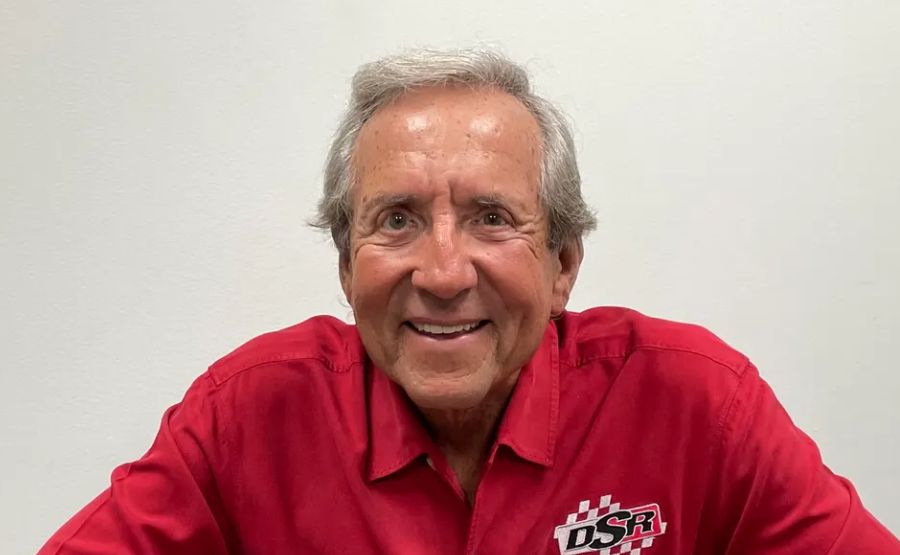
Don Prudhomme Net Worth: Inside the Wealth of a Drag Racing Icon
Quick Bio
| Detail | Information |
| Full Name | Donald Ray Prudhomme |
| Nickname | “The Snake” |
| Born | April 6, 1941 |
| Birthplace | San Fernando, California, USA |
| Nationality | American (French Creole heritage) |
| Occupation | Professional drag racer (retired), team owner (retired), author |
| Known For | Four consecutive NHRA Funny Car championships (1975–1978); Snake vs. Mongoose rivalry; 49 career NHRA victories; first Funny Car driver to exceed 250 mph |
| Spouse | Lynn Prudhomme |
| Children | Donna (one daughter) |
| Retired (as driver) | 1994 |
| Retired (as team owner) | 2009–2010 |
| Residence | Rancho Santa Fe, California |
| Estimated Net Worth | ~$5–$9 million (sources vary; built through racing, team ownership, and sponsorships) |
| Hall of Fame | Motorsports Hall of Fame of America (1991); International Motorsports Hall of Fame (2000) |
| Autobiography | Don “The Snake” Prudhomme: My Life Beyond the 1320 (2020) |
Introduction: The Man Who Made Drag Racing Famous
Let me paint a picture for you. It is the early 1970s, and drag racing is struggling to find a mainstream audience. The cars are terrifying, the speeds are mind-bending, but the sport is still a niche world — beloved by gearheads, mostly invisible to everyone else.
Then two friends with catchy animal nicknames cut a deal with a toy company, get their cars turned into Hot Wheels, travel every dragstrip in America, and suddenly millions of kids know what a Top Fuel dragster is.
One of those two friends was Don Prudhomme. The Snake.
He is, without exaggeration, one of the most important figures in the history of American motorsports. Not just because of what he did behind the wheel — though that story alone is extraordinary — but because of how he helped turn a raw, dangerous, gasoline-soaked subculture into a beloved national sport. He understood before almost anyone else that racing needed personalities, stories, and marketing. And he delivered all three.
He is 85 years old now, living quietly in Southern California. But for nearly five decades, Don Prudhomme was the heartbeat of drag racing.
Early Life: A Valley Kid With Grease Under His Nails
The San Fernando Valley in the 1940s and 1950s was a sprawling, working-class world just north of Los Angeles. It was the kind of place where fathers fixed things with their hands and kids grew up knowing the difference between an engine block and a cylinder head before they could drive.
Don was born there in April 1941, the youngest of five siblings — three sisters and a brother. His family background was complicated. He has described his childhood home as a broken one, with difficulties at home that pushed him out toward the streets and the garages of his neighborhood earlier than most kids. The Valley gave him refuge in car culture, and he took it.
By his early teens, Don was already at local drag strips, drawn in by the noise and smell and sheer mechanical violence of the machines. He started attending races at Saugus Speedway and other small California tracks around age fifteen. He was not a spectator for long. His father ran an automotive body shop, and Don had already absorbed the trade — sanding, painting, repairing — skills that would technically sustain him while his real passion quietly grew.
He joined the Road Kings, a car club based in Burbank. This was a world where young men with mechanical obsessions pooled their knowledge, shared equipment, and ran basic dragsters at the San Fernando Drag Strip on weekends. It was informal, competitive, and absolutely formative. Don was building hot rods in his family’s garage, getting faster, and starting to realize that he might actually be special behind the wheel.
Education: The School He Found at the Dragstrip
Don Prudhomme dropped out of high school. That is simply the truth, and it is one he has spoken about openly and without embarrassment over the years.
His real education came elsewhere. It came from hours in auto body shops, from weekends at local strips learning how machinery behaved under stress, from older racers who took the time to teach him what they knew. A neighbor with knowledge of car mechanics — someone Don has referred to as an early influence — helped point him in the right direction. So did Tommy Ivo, an early mentor who sold Don his first real dragster and took him on cross-country racing tours that served as the equivalent of a graduate program in competitive driving.
The connections he built through car clubs and racing circles were his curriculum. The track was his classroom. And the results, as we will see, were exceptional.
See also “Paul Fix Net Worth: Hollywood’s Most Reliable Character Actor“
Career Beginnings: From Paint Booth to Pit Lane
The story of how Don Prudhomme became a professional racer is one of those deeply American narratives — talent meeting opportunity in the right place at exactly the right moment.
He was still painting cars when he bought his first injected Buick-powered dragster from Tommy Ivo. He modified it, pushed it further with help from engine expert Dave Zeuschel, and began showing up at tracks across California. People noticed quickly. He was frighteningly calm on the starting line, his reaction times astonishingly fast. The calmness earned him the name that would follow him forever: The Snake.
The car that truly launched his reputation belonged to a trio of men named Tommy Greer, Keith Black, and Prudhomme himself. The Greer-Black-Prudhomme dragster was a terror on California tracks in the early 1960s, going on a winning streak that racers across the state still talk about decades later. It was legendary machinery driven by a man discovering exactly what he was capable of.
Then came 1962 and the Smokers March Meet in Bakersfield, California. It was one of the sport’s most respected early events, the kind of race where Top Fuel drivers measured themselves against each other on a national stage. Prudhomme won it. Just like that, he was not a promising local kid anymore. He was someone the whole racing world needed to watch.
He spent the rest of the 1960s racing constantly — touring the country with fellow travelers like the flamboyant Tommy Ivo and Roland Leong, known as “The Hawaiian.” They would drive from track to track across the continent, racing whatever was available, building reputations and collecting experience at a pace that would be unimaginable to a modern professional athlete. The money was thin. The miles were long. But the knowledge they accumulated was priceless.
The Rivalry That Changed Everything: Snake and Mongoose
Somewhere along the road, Don Prudhomme met Tom McEwen.
McEwen was another California racer with a gift for self-promotion and a natural instinct for showmanship. His nickname was the Mongoose — the natural predator of snakes, a detail that was not lost on anyone. The two men became genuine friends and ferocious competitors at the same time. That combination turned out to be gold.
What they figured out — and this was genuinely ahead of its time — was that the rivalry itself was a marketable product. Racing was exciting, but two specific characters going at each other, race after race, with real friendship underneath the competition? That was a story. That was something fans could attach to emotionally.
In the early 1970s, they took that idea to Mattel’s Hot Wheels brand. Mattel agreed to sponsor both drivers, creating miniature toy versions of their actual race cars. The Snake car and the Mongoose car hit shelves across America. Suddenly children who had never heard of drag racing were playing with the things in their living rooms. Their names went from regional fame to genuine national recognition almost overnight.
The Hot Wheels partnership is credited with doing more for drag racing’s mainstream visibility than perhaps anything else in the sport’s history up to that point. And it was Prudhomme and McEwen who made it happen, not out of pure business strategy but out of friendship and creative instinct.
Their story was eventually told in the 2013 film Snake and Mongoose, with actor Jesse Williams portraying Prudhomme. Both men made cameo appearances in the film, lending it an authenticity that the racing community appreciated deeply.
Major Achievements: The Records That Stand Forever
If you want to understand how good Don Prudhomme actually was as a driver, consider just the numbers.
Forty-nine NHRA national event victories across a thirty-two-year driving career. Sixty-eight final round appearances. A winning percentage of .660 across nearly six hundred rounds of competition. Those numbers put him firmly in the conversation for the greatest drag racer who ever lived.
But there are specific moments that stand above the rest.
Winning the NHRA Winternationals in 1965 was an early landmark — one of the sport’s premier events, and confirmation that Prudhomme belonged at the very top level. After transitioning from Top Fuel to Funny Cars — the theatrical, body-bearing machines that would become the sport’s crowd favorites — he elevated his game again.
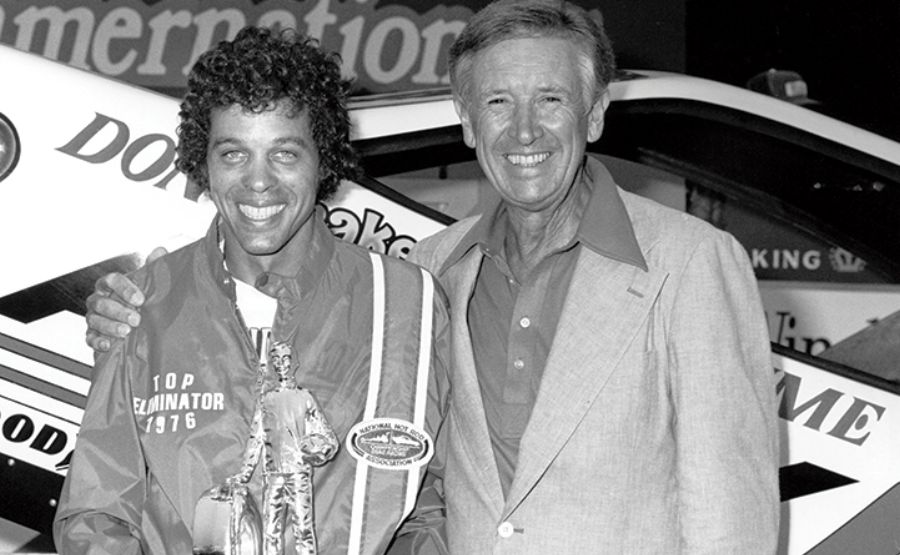
From 1975 through 1978, he won four consecutive NHRA Funny Car championships. Four in a row. No one had done it before him. The Winston Series titles were the pinnacle of the sport, and he collected them like a man who fully expected to keep winning.
He was also the first driver to push a Funny Car past 250 miles per hour. That barrier had been something the entire racing world was watching. Prudhomme broke it.
After hanging up his helmet as a driver in 1994, he moved into team ownership and proved equally gifted in that role. He guided driver Larry Dixon to back-to-back Top Fuel championships in 2002 and 2003. He helped launch the careers of drivers including Ron Capps. As an owner, he added to his already remarkable championship total, turning Snake Racing into one of the sport’s most consistently competitive operations.
In 2000, NHRA’s 50th anniversary panel of historians ranked him the third greatest driver in the organization’s entire history. That is a stunning endorsement from the people who know the sport most deeply.
He earned dual Hall of Fame inductions — the Motorsports Hall of Fame of America in 1991, and the International Motorsports Hall of Fame in 2000. Both were fully deserved.
Personal Life: The Woman Behind The Snake
Don has been married to his wife Lynn for decades. She is the steady constant in a life that spent many of its active years at full throttle. Together they have one daughter, Donna, and the family has been based in the coastal comfort of Rancho Santa Fe, California — a long way from the Valley auto shop where this story began.
Don’s hobbies away from racing reveal the quieter version of himself that the retirement years have brought into fuller view: fishing, golf, dogs, and landscaping. He is, by multiple accounts, someone who has genuinely mellowed from the intensely competitive figure he was during his racing decades.
The family has lived privately, away from the spotlight that follows some motorsports celebrities. Lynn has never sought public attention, and Don has largely protected that dimension of his life from the scrutiny that came with his professional fame.
Challenges: Fires, Crashes, and a Sport That Wanted to Kill You
Drag racing in the 1960s and 1970s was genuinely dangerous in ways that are almost impossible to overstate.
The cars were fast and the safety equipment was primitive by modern standards. Fires were not uncommon — they were a regular occupational hazard. Crashes that would end careers or lives happened in front of crowds. The technology was always slightly ahead of the safety measures designed to contain it.
Don Prudhomme went through all of it. He had bad seasons when nothing worked and good ones when everything did. He signed contracts that fell apart. He broke expensive parts at the worst possible moments. In his autobiography, he is remarkably candid about the lows — the times when the sport ground him down, when sponsorship dried up or mechanical failure humiliated him in front of his peers.
There was also the challenge of transition. Stepping out of the driver’s seat in 1994 after thirty-two years meant confronting a different kind of professional identity. He made the adjustment to team ownership, but even that chapter had its difficulties — the business of running a competitive NHRA operation is expensive, politically complex, and relentlessly demanding. When sponsorship relationships shifted near the end of his ownership tenure, the financial realities of the sport pressed hard.
His autobiography, published in 2020, addresses these struggles with the directness of a man who no longer needs to manage anyone’s perception of him. He wanted younger people to read it and understand that the path to something great is almost never clean or smooth.
Financial Situation: What “The Snake” Is Actually Worth
Don Prudhomme’s net worth is estimated somewhere between five and nine million dollars, depending on the source. That range reflects the honest uncertainty around financial estimates for private individuals who have not disclosed their wealth publicly.
What built that wealth is a combination of several distinct revenue streams across his long career.
Prize money from forty-nine NHRA victories over three decades forms the foundation. Drag racing purses in the sport’s golden era were not enormous by modern sports standards, but consistent winning over three decades adds up meaningfully. His team ownership tenure added a second layer — championship operations attract sponsorship dollars and management fees that transcend individual race payouts.
The big commercial move, of course, was Hot Wheels. The Mattel partnership in the early 1970s generated income, toys, merchandise, and an ongoing cultural footprint that produced residual value for years afterward. The Snake name became a brand, and brands generate money long after the races are over.
He also attracted major corporate sponsors throughout his career, including a significant relationship with U.S. Tobacco and various automotive brands who recognized the value of associating their names with one of drag racing’s most recognizable figures.
Real estate in the Rancho Santa Fe area — one of California’s more exclusive communities — likely represents a significant component of his current wealth. And his 2020 autobiography added a final chapter to the income story, albeit modestly.
Five to nine million dollars is not billionaire wealth. But for a man who started as a high school dropout painting cars in the San Fernando Valley, it represents something genuinely remarkable: a fortune built entirely through speed, intelligence, and the refusal to stop competing.
Life Today: The Snake at 85, Still in the Fast Lane of Memory
Don Prudhomme is 85 years old. He stepped away from team ownership in 2009–2010, closing the final chapter of a professional life that had begun when Dwight Eisenhower was president.
He lives in Rancho Santa Fe with Lynn. He fishes. He plays golf. He tends to his garden and his dogs. He tells stories.
In 2020, he published his autobiography, Don “The Snake” Prudhomme: My Life Beyond the 1320 — the 1320 being the number of feet in a quarter mile, the distance that defined his entire professional existence. The book was not a statistics collection. It was the story of a life, told by a man who had clearly spent time thinking hard about what it all meant.
He remains involved in the racing community in the ways that retired legends typically are — making appearances, attending events, speaking with the press occasionally. The Snake and Mongoose film of 2013 introduced his story to a generation of racing fans who were not yet born when he was winning championships. His Hall of Fame status keeps his name alive in the sport’s official history.
He told the world in his autobiography that he hoped some kid somewhere would pick it up and understand that obstacles are not the end of the road. Coming from a man who dropped out of school, painted cars for a living, and then conquered one of the most dangerous sports in American history for five decades — that message carries some weight.
Final Words
Here is the honest summation of Don Prudhomme’s life, told as plainly as possible.
He grew up without obvious advantages. He did not finish school. He worked with his hands because that was what was available to him. He found drag racing the way a lot of people find their calling — not through a plan, but through an irresistible pull toward something that felt exactly right.
And then he was magnificent at it. For thirty-two years as a driver and another fifteen as an owner, he showed up, competed, and won at a rate that puts him on the short list of the greatest drivers in the sport’s history.
But what makes him more interesting than just a great racer is what he understood about the world around the sport. He grasped before almost anyone else that racing needed fans, and fans needed personalities. He and Tom McEwen created something that no one had created before — a rivalry so compelling that a toy company paid to be part of it. They brought drag racing into American living rooms through the power of storytelling and friendship.
The Snake nickname was given to him because of his reaction times. But the name fits for another reason too. When patience was required, he showed it. He struck when the moment was right. And he almost never missed.
At 85, he has had a very good life. He said so himself. And from where the rest of us are sitting, it is hard to argue.
FAQs
1. Who is Don Prudhomme?
Don “The Snake” Prudhomme is a retired American drag racer and team owner widely regarded as one of the greatest drivers in NHRA history. He won 49 national events across Top Fuel and Funny Car categories during a 32-year driving career, followed by 15 years as a championship team owner.
2. Why is he called “The Snake”?
The nickname came from his extraordinary reaction times on the starting line — he was so fast and precise that fellow racers and fans compared him to the striking speed of a snake. The name stuck and eventually became one of the most recognizable brands in American motorsport.
3. What are his biggest accomplishments as a driver?
His most celebrated achievement is winning four consecutive NHRA Funny Car championships from 1975 through 1978, making him the first driver to accomplish that streak. He was also the first Funny Car driver to exceed 250 mph, won the NHRA Winternationals in 1965, and amassed 49 total national event victories across his career.
4. Who is Tom McEwen and what was the Snake vs. Mongoose rivalry?
Tom “The Mongoose” McEwen was a fellow California drag racer and Prudhomme’s closest rival and longtime friend. Their animal-themed nicknames became the basis for one of drag racing’s most famous marketing partnerships, which included a sponsorship deal with Mattel’s Hot Wheels brand in the early 1970s that produced toy versions of both men’s race cars and dramatically expanded the sport’s mainstream audience.
5. Did Don Prudhomme win championships as a team owner too?
Yes. After retiring as a driver in 1994, he ran Snake Racing and guided driver Larry Dixon to back-to-back NHRA Top Fuel championships in 2002 and 2003. He also helped develop the careers of drivers including Ron Capps before stepping away from team ownership around 2009–2010.
6. What is Don Prudhomme’s net worth?
Estimates range from approximately five to nine million dollars, with most sources clustering around five million. His wealth was built through decades of race winnings, sponsorship deals — most notably with Mattel’s Hot Wheels and U.S. Tobacco — team ownership earnings, and real estate holdings in California.
7. Is Don Prudhomme in any motorsport Hall of Fame?
Yes, he is in two. He was inducted into the Motorsports Hall of Fame of America in 1991 and the International Motorsports Hall of Fame in 2000. Both organizations recognize him as one of the defining figures in the history of drag racing.
8. Who is Don Prudhomme married to and does he have children?
He is married to Lynn Prudhomme. The couple have been together for decades and have one daughter named Donna. The family lives in Rancho Santa Fe, California.
9. Was Don Prudhomme in any movies?
He made a cameo appearance — playing himself — in the 2013 biographical film Snake and Mongoose, which dramatized his friendship and rivalry with Tom McEwen. Actor Jesse Williams portrayed him in the film’s main role. McEwen also appeared as himself in the picture.
10. Did Don Prudhomme finish high school?
No. He dropped out of high school and has been candid about that fact throughout his public life. He learned his early mechanical skills through hands-on work at his father’s auto body shop and through his immersion in Southern California’s car club culture, particularly the Road Kings of Burbank.
11. What is his autobiography about?
Published in 2020 and titled Don “The Snake” Prudhomme: My Life Beyond the 1320, the book covers his full life story — from his childhood in the San Fernando Valley through his racing career and into retirement. He has said he wanted the book to reach young people who might read it and take encouragement from his journey.
12. What does Don Prudhomme do now?
Fully retired since 2010, he lives in Rancho Santa Fe, California with his wife Lynn. He enjoys fishing, golf, caring for dogs, and gardening. He remains a respected figure in the racing community and continues to make occasional appearances and public engagements connected to his legacy in the sport.
Explore ideas that elevate your thinking with The Elevate Magazine.