Daniel Kaluuya Cult: From a Council Estate in Camden to the Academy Awards Stage
Quick Bio
| Detail | Info |
| Full Name | Daniel Kaluuya |
| Born | February 24, 1989, London, England, UK |
| Nationality | British |
| Ethnicity | Ugandan-British |
| Occupation | Actor, writer, producer, director |
| Known For | Get Out (2017); Black Panther (2018); Judas and the Black Messiah (2021); Nope (2022); Skins (2007–2009) |
| Awards | Academy Award (Best Supporting Actor, 2021); BAFTA Award; Golden Globe Award; SAG Award |
| Production Company | 59% Productions |
| Partner | Amandla Crichlow |
| Schools | Torriano Primary School; St Aloysius’ College; Camden School for Girls (sixth form) |
| Estimated Net Worth | $15 million (widely cited; unconfirmed officially) |
| Notable First | First Black British actor to win an Academy Award for acting |
Introduction: The Man Who Made the World Feel Something
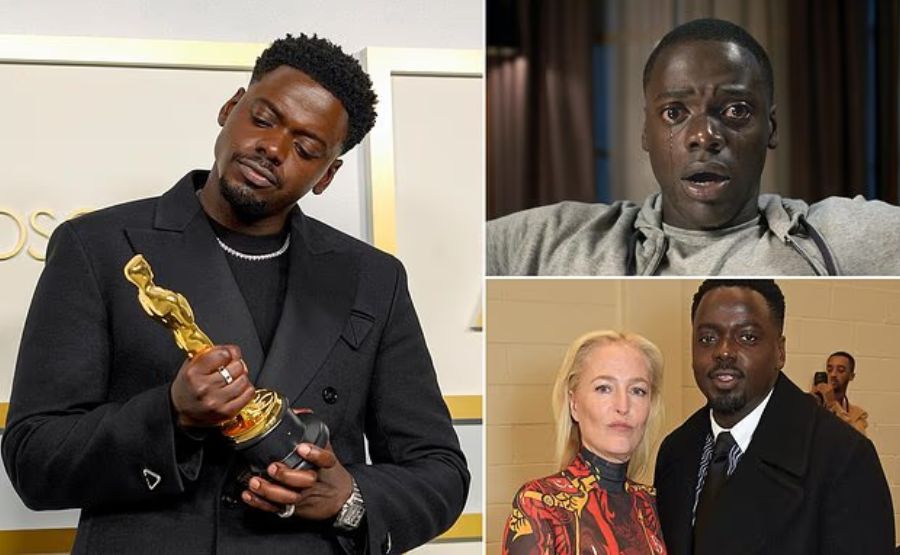
There is a moment in Get Out — the 2017 horror film that changed everything for Daniel Kaluuya — where his character sits in a chair and begins to cry silently. His face doesn’t contort or perform. The tears just fall, slowly, while his expression remains almost perfectly still. It is one of the most quietly devastating things you will see in recent cinema, and it is the moment that announced to the world that this young man from Camden was operating on a completely different level.
Daniel Kaluuya is, by now, one of the most decorated actors of his generation. He has an Oscar on his shelf. He has two Academy Award nominations before the age of 35 — a distinction no Black actor had achieved before him. He has worked with directors including Jordan Peele, Steve McQueen, Denis Villeneuve, and Shaka King. He has starred in billion-dollar Marvel films and small, tense independent dramas with equal conviction.
But the story of how he got from a public housing estate in north London to that Oscar stage is more interesting than most people know. It involves a nine-year-old writing his first play. It involves years on a waiting list just to get into an acting class. It involves a racial profiling lawsuit against the Metropolitan Police. It involves a film audition where he made himself cry five times in a row. And it involves a man who, through all of it, never stopped believing that stories about Black life — lived honestly, told bravely — were worth making.
This is that story.
See also “Darcy and Stacy Before Surgery: What Changed Over the Years?“
Early Life: Camden, Hostels, and a Mother Who Made It Work
Daniel Kaluuya came into the world on February 24, 1989, in London. His parents — Damalie Namusoke and Stephen Kaluuya — both emigrated from Uganda. His mother, Damalie, traveled to England specifically to give birth, and for Daniel’s earliest years, home was not a fixed address but a series of temporary hostels in London.
By the time he was two, Damalie had managed to secure a flat on a council estate in Camden Town — public housing, in a neighborhood that is simultaneously one of the most culturally distinctive and economically challenging parts of the city. She raised Daniel and his older sister there, largely on government benefits, working eventually at a special needs school in the area. She did it alone; Daniel’s father, Stephen, lived in Malawi, and Daniel did not meet him in person until he was fifteen years old.
Camden Town is a paradox of a place. It is where punk was born. Amy Winehouse grew up nearby. Travelers from all around the world are drawn to the market. But it is also a place where being young, Black, and working-class in the late 1990s and early 2000s carried its own specific weight — a weight that Daniel would later describe with real clarity in interviews, speaking about how every action from a young Black man gets observed and judged in ways that their white peers simply do not experience.
What he found, in the middle of all of that, was storytelling. At nine years old — not a teenager, nine — he wrote his first play. It was staged at the Hampstead Theatre, which is a proper venue, not a school gymnasium. Something in him was already reaching toward expression with unusual seriousness.
Education: Learning the Craft on a Shoestring
Daniel’s formal schooling moved through Torriano Primary School and then St. Aloysius’ College in Highgate — a school with a strong academic tradition. For his sixth form studies, he attended Camden School for Girls, which also admits male students for A-levels. He studied history, drama, and biology — an eclectic mix that tells you something about the breadth of his interests.
But the most formative education he received was not in a classroom. It was at the Anna Scher Theatre School, a community theater institution in Islington that has produced a remarkable number of working British actors over the decades. The Anna Scher model is built around improvisation — it teaches you to find truth in the moment rather than prepare your way through it. For Daniel, this was revelatory. He was on the waiting list for four years before he got in. Four years. He waited, and then he absorbed everything they had to offer.
He also trained at WAC Arts, another community arts organization in Camden, and threw himself into improvisational performance wherever he could find it. His mother, by his own account, was not enthusiastic about this path initially — she had more conventional ambitions for him, understandably. But she made peace with the classes partly because she understood they were keeping him away from the streets, and the streets in Camden had their own competing curriculum.
What the Anna Scher years gave him was not technique in the formal sense. It was something more fundamental: the ability to listen, to respond honestly, and to stop performing and start inhabiting. That distinction — between performing and inhabiting — is exactly what makes Daniel Kaluuya so watchable.
Career Beginnings: From Skins to the Screen
By 2006, when he was just seventeen, Daniel landed his first professional acting credit in Shoot the Messenger, a BBC drama that tackled race and education in Britain with an unsparing eye. It was not a small, forgettable cameo — it was a real role in a serious piece of television, and he was still in school when he got it.
Then came Skins. The British teen drama series, which debuted in 2007 and became something of a cultural touchstone for its unflinching portrayal of adolescent life, included Daniel in its original cast as Posh Kenneth — a character who provided comic relief but also gave Daniel his first taste of sustained, high-visibility television work. He appeared across two seasons. More significantly, he was trusted to write two episodes of the series — Jal and Thomas — while still a teenager. Being both an actor and a writer is not very common. Being a teenager who writes broadcast television is genuinely unusual.
After Skins, he continued building his resume through a careful combination of television, theater, and film. On stage, he worked with some of London’s most respected venues — the Royal Court Theatre, the Young Vic — in productions that stretched from Arthur Wing Pinero to Aimé Césaire to Joe Penhall. The theatrical work kept his instrument sharp in ways that television alone cannot.
The piece of television that truly changed his trajectory came in 2011: Black Mirror, Charlie Brooker’s anthology series exploring the dark underbelly of modern technology. His episode, Fifteen Million Merits, cast him as a man trapped in a dystopian entertainment system, and his performance was so striking — so honest and so controlled — that it traveled far beyond the usual British television audience. In California, a filmmaker named Jordan Peele took notice.
The Breakthrough: Get Out and the Scene That Stopped the World
By 2017, Daniel Kaluuya was a respected working actor in Britain with a growing international profile. But nothing quite prepared anyone — him included, perhaps — for what Get Out would do.
Jordan Peele’s debut feature is a horror film that operates simultaneously as a precise social satire of American liberal racism. Daniel plays Chris Washington, a Black photographer who visits the family home of his white girlfriend and gradually discovers something deeply and horrifyingly wrong beneath the polished liberal surface. The film works as horror, as comedy, as social commentary, and as a genuine character study — and all of it rests on Daniel’s face and body and the decisions he makes in each scene.
His audition for the role reportedly involved making himself cry, on cue, five consecutive times during a pivotal scene. He got the part.
The film opened in February 2017 and immediately became something more than a movie. It became a conversation. It earned over $255 million worldwide against a $4.5 million budget — one of the most extraordinary returns on investment in recent film history. It received four Academy Award nominations including Best Picture, and Daniel received a nomination for Best Actor — putting him in that category’s conversation for the first time. Get Out has since achieved what can only be called genuine cult classic status: a film that people watch, rewatch, teach, and argue about, because it earns all of that attention.
The following year brought Black Panther (2018), where he played W’Kabi, a leading Wakandan warrior. The Marvel film made over $1.3 billion globally and became a cultural milestone for Black representation in mainstream cinema. Daniel was part of an extraordinary ensemble cast including Chadwick Boseman, who he has credited as a personal mentor and guiding presence during this period of his career.
He then collaborated with renowned director Steve McQueen (of 12 Years a Slave) on Widows (2018), continuing as executive producer on Queen & Slim (2019), and starred in Sicario (directed by Denis Villeneuve). (2015), and voiced Spider-Man: Across the Spider-Verse (2023) — demonstrating a range that moves fluidly between blockbusters, prestige drama, and independent film.
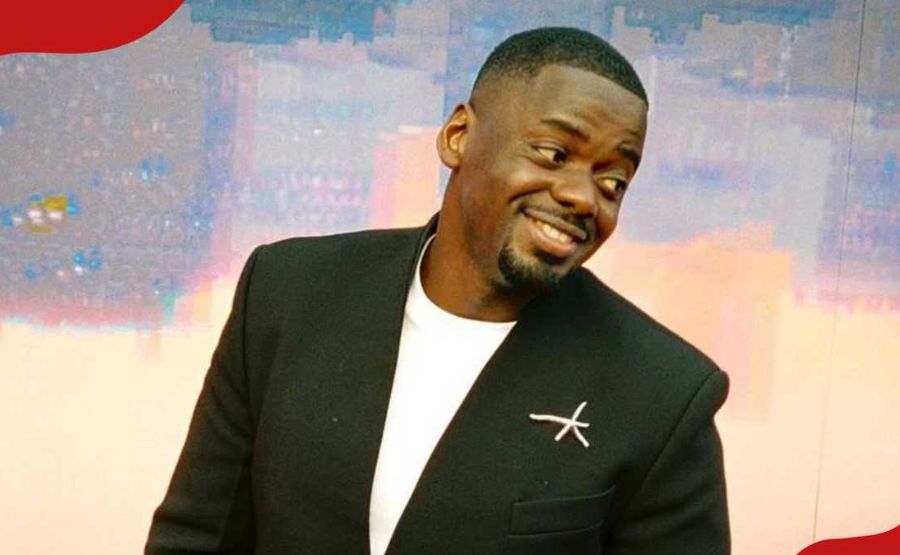
The Oscar: Fred Hampton and a Speech Nobody Forgot
In 2021, Daniel Kaluuya played Fred Hampton in Judas and the Black Messiah — a biographical film about the Black Panther Party leader who was killed at twenty-one years old in a 1969 FBI-orchestrated raid.
Fred Hampton was a once-in-a-generation organizer, orator, and community leader. Portraying him required not just physical transformation but an almost spiritual commitment to understanding what this man was and what he gave his life to. Daniel has spoken about feeling drawn to Hampton’s story precisely because so much of it was about living, not just dying — about building something and believing in people.
He became the first Black British actor to win an Oscar for acting that evening after receiving the Best Supporting Actor award for his performance. and the first person born in the 1980s to receive that specific award. He also took home the BAFTA, the Golden Globe, the Critics’ Choice Award, and the SAG Award.
His acceptance speech at the Oscars became instantly legendary — not for grand statements, but for pure, unfiltered joy. He spoke about his mother coming to London from Uganda, about the miracle of his own existence, about his parents meeting and falling in love, and about celebrating being alive. “My mom met my dad, they had sex,” he told the assembled glamour of Hollywood, entirely deadpan, to thunderous laughter. It was disarming, human, and completely him.
In 2022, he returned to Jordan Peele’s world for Nope — a western-horror-science fiction hybrid about a brother and sister dealing with something in the California sky. In 2024, he received a permanent honor: a statue in London’s Leicester Square, depicting him in the iconic “sunken place” scene from Get Out, as part of the Scenes in the Square public art trail. A kid from Camden immortalized in bronze.
Personal Life: Private, Grounded, and Family-First
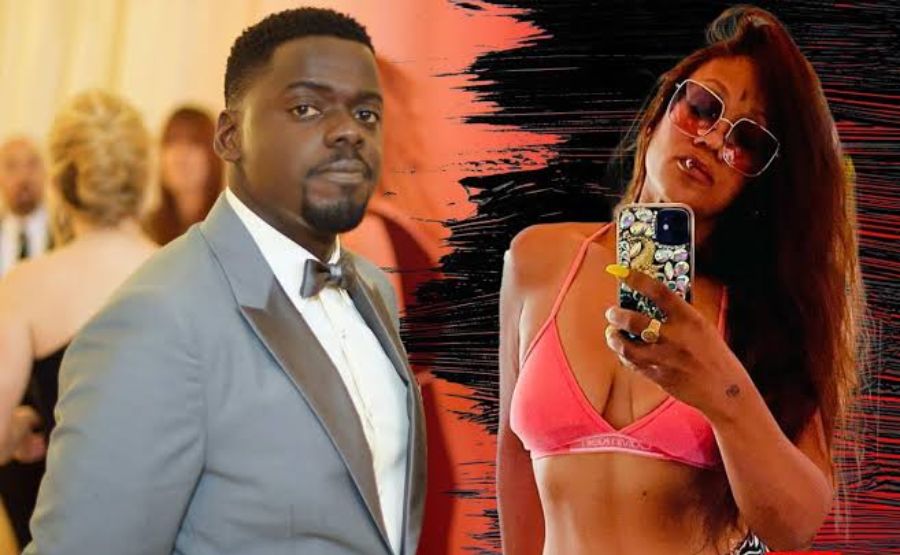
Daniel Kaluuya keeps his personal life remarkably well-guarded for someone of his profile. He has been in a relationship with Amandla Crichlow — an actress and producer who is the daughter of prominent British community activist Frank Crichlow. Amandla joined his production company in 2019. The couple has maintained a low public profile, which appears to be a genuine shared preference rather than a media strategy.
He has spoken warmly about the importance of his Ugandan heritage and family connections, while also acknowledging the complexity of his identity with characteristic honesty. He once described his experience as follows: in Uganda, he cannot speak the language; in Black British spaces, his dark skin draws its own prejudices; in America, his identity takes on different meanings entirely. It is an observation that lands quietly and lingers.
He has maintained close ties with his mother Damalie, who was present at his Oscar win and who he credits explicitly for both his survival and his success. His public comments about her are consistently full of deep respect and visible love.
Challenges: Policing, Identity, and the Weight of Representation
In 2013, Daniel took the Metropolitan Police to court over racial profiling. He alleged that officers had stopped and questioned him in connection with a drug-related matter without justifiable cause. The case reflected a reality of Black British life that he has discussed openly — that being young, male, and Black in London meant living under a particular kind of scrutiny that shaped how you moved through the world.
His description of identity issues is not performative. He was born in Britain, raised entirely in Britain, and is British in every lived sense — but his Ugandan heritage means he occupies a space that neither Uganda nor certain corners of British cultural life fully recognizes as its own. These tensions inform his artistic choices; many of the roles and projects he selects deal directly with questions of identity, belonging, and power.
He has also spoken about the pressure that comes with being positioned as a symbol. When you become the first Black British actor to win an Oscar, you carry that title into every room. It is an honor and a responsibility simultaneously, and it requires constant, conscious navigation.
Financial Picture: Building Wealth and Ownership
Estimates of Daniel Kaluuya’s net worth vary across sources but cluster most reliably around $15 million — a figure cited by Celebrity Net Worth and several other financial biography sites. Some sources suggest higher figures approaching $20 million, while others are more conservative. No official disclosure has been made.
What is clear is that he has been deliberately strategic about moving beyond acting fees alone. His production company, 59% Productions, is a genuine enterprise developing projects across studios and streaming platforms. Through 59%, he co-wrote and produced The Kitchen (2024), a Netflix dystopian drama set in a future London that explores race and class with the social eye that characterizes so much of his work. He also produced the comedy-drama Honk for Jesus. Save Your Soul. (2022) through the company.
He is reportedly developing a live-action Barney movie — yes, the beloved purple dinosaur — which he has described as an unexpected but heartfelt project about nostalgia, optimism, and childhood connection.
He owns property in London and lives relatively modestly for someone at his career level. His focus appears to be on building creative ownership — intellectual property, producing credits, writing — rather than accumulating personal luxury.
Life Today: Directing, Producing, and Still Choosing Carefully
As of 2026, Daniel Kaluuya is as creatively active as ever — but the nature of his activity has evolved. He is no longer simply an actor who takes whatever prestigious roles come his way. He is a filmmaker, a producer, a writer, and a deliberate architect of the stories he wants to exist in the world.
His directorial work is expanding. His producing slate through 59% Productions continues to develop. He remains one of the go-to performers for directors working at the intersection of genre, race, and social meaning. And his statue stands in Leicester Square, watched over by tourists and Londoners alike, depicting the moment that first showed the world what he could do.
Final Words
There is a specific image that keeps coming back when you think about Daniel Kaluuya’s journey: a child in Camden, on a waiting list for an acting class he cannot afford to miss, holding his place for four years because something inside him already knows this is the only path that makes sense.
That patience. That certainty. That willingness to wait for something real rather than settle for something easier. It permeates all of his subsequent actions. The roles he has chosen. The productions he has created. The way he shows up in a scene — not to be seen, but to tell the truth.
He grew up in a flat that his mother fought to secure. At nine years old, he penned his first play. He waited four years for an acting class. He auditioned for Get Out by making himself cry five times in a row. And then he stood on the Oscar stage and made the whole world laugh by talking about his parents’ love story.
Daniel Kaluuya is not just a great actor. He is proof that what you carry from a council estate in north London — the hunger, the observation, the understanding of what it costs just to be seen. It may turn out to be the one thing that sets you apart.
FAQs
1. Who is Daniel Kaluuya?
Daniel Kaluuya is a British actor, writer, and producer born on February 24, 1989, in London, to Ugandan parents. He is one of the most acclaimed actors of his generation, known for Get Out, Black Panther, Judas and the Black Messiah, and Nope. In 2021, he took home the Best Supporting Actor Oscar.
2. Where did Daniel Kaluuya grow up?
He grew up on a council estate in Camden Town, north London. After his parents divorced, Damalie Namusoke, his mother, raised him. His father, Stephen Kaluuya, lived in Malawi, and Daniel did not meet him until he was fifteen years old.
3. How did Daniel Kaluuya get started in acting?
He began writing plays at age nine and eventually trained at the Anna Scher Theatre School in Islington — after waiting four years to get in — as well as at WAC Arts in Camden. He made his first professional television appearance in 2006 in the BBC drama Shoot the Messenger.
4. What is Get Out and why was it so significant?
Get Out (2017) is Jordan Peele’s debut horror-satire film in which Daniel plays Chris Washington, a Black man who visits his white girlfriend’s family home and uncovers something deeply sinister. The film earned over $255 million against a $4.5 million budget, earned four Oscar nominations including Best Picture, and earned Daniel his first Academy Award nomination for Best Actor. It is now considered a modern classic and a landmark in socially conscious horror cinema.
5. What Oscar did Daniel Kaluuya win and for which film?
He won the Academy Award for Best Supporting Actor in 2021 for his portrayal of Black Panther Party leader Fred Hampton in Judas and the Black Messiah. It made him the first Black British actor ever to win an Academy Award for acting.
6. What is special about Daniel Kaluuya’s Oscar speech?
His 2021 Oscar acceptance speech became instantly famous for its warmth, humor, and complete lack of self-consciousness. Among other things, he celebrated the miracle of his own existence by joking about his parents meeting, falling in love, and having children — a moment that struck audiences as authentically joyful rather than rehearsed.
7. What is 59% Productions?
It is Daniel Kaluuya’s production company, through which he develops films and projects both with and without himself as an actor. Productions include Honk for Jesus. Save Your Soul. (2022) and his co-written and produced Netflix dystopian drama, The Kitchen (2024).He is also reportedly developing a live-action Barney film through the company.
8. Did Daniel Kaluuya write as well as act on Skins?
Yes. He joined the cast of Skins as Posh Kenneth in 2007 and appeared across two seasons. He also wrote two episodes of the series — Jal and Thomas — making him a dual contributor as both actor and writer while still a teenager.
9. What is Daniel Kaluuya’s estimated net worth?
Multiple sources estimate his net worth at approximately $15 million, reflecting his earnings from acting in major studio films, prestige dramas, and Marvel productions, as well as his producing and writing work. No official financial disclosure has been made, so this is an estimate.
10. Who is Daniel Kaluuya’s partner?
He has been in a relationship with Amandla Crichlow, an actress and producer who is the daughter of community activist Frank Crichlow. She is also involved with his production company. They both have quite private lives.
11. What legal case did Daniel Kaluuya bring against the Metropolitan Police?
In 2013, he filed a lawsuit against the Metropolitan Police alleging racial profiling — specifically that officers had stopped and questioned him in connection with a drug-related matter without legitimate cause. The case reflected wider concerns about stop-and-search practices disproportionately affecting Black men in London that he has spoken about in interviews.
12. Does Daniel Kaluuya have a statue?
Yes. In October 2024, a bronze statue of Daniel Kaluuya was unveiled in London’s Leicester Square as part of the Scenes in the Square public art trail. The statue depicts him in the iconic “sunken place” scene from Get Out — the moment that first brought him global attention.
Explore ideas that elevate your thinking with The Elevate Magazine.