Darryn Peterson: The Canton Kid Who Went Second Overall
Quick Bio
| Detail | Information |
| Full Name | Darryn Peterson |
| Born | January 17, 2007, Canton, Ohio, USA |
| Age | 19 (as of 2026) |
| Nationality | American |
| Nicknames | DP; Bucket Jones |
| Height | 6 feet 5 inches (196 cm) |
| Weight | 199 lbs (90 kg) |
| Wingspan | 6 feet 10.5 inches |
| Position | Shooting Guard / Combo Guard |
| High Schools | Cuyahoga Valley Christian Academy (Ohio); Huntington Prep (West Virginia); Prolific Prep (California) |
| College | University of Kansas (2025–26) |
| College Stats | 20.2 PPG, 4.2 RPG, 1.6 APG in 24 games (44%/38%/83%) |
| High School Stats | 30.4 PPG, 7.2 RPG, 7.4 APG (senior year) |
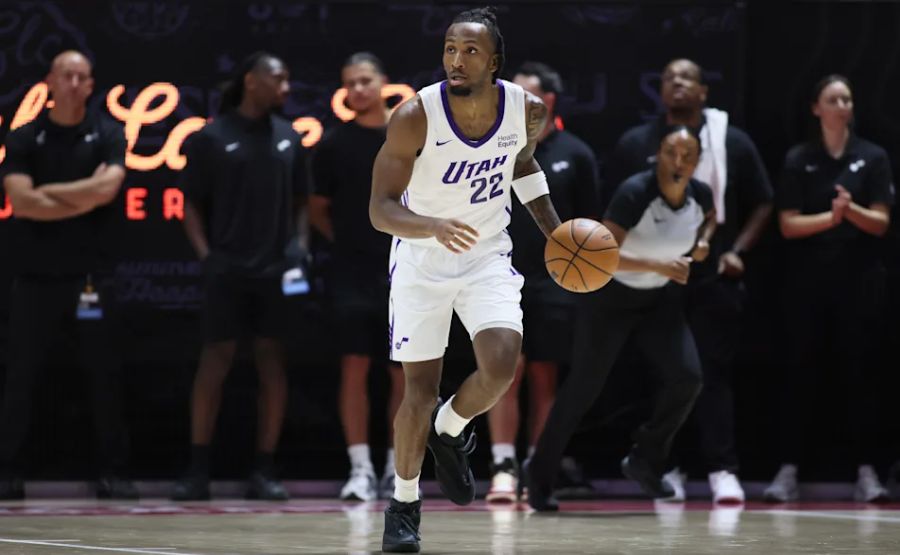
| Draft | Utah Jazz, second overall pick in the 2026 NBA Draft |
| Awards | Naismith Prep Player of the Year (2025); McDonald’s All-American Co-MVP (2025) |
| @darrynp1 | |
| Estimated Net Worth | Rookie contract (~$10+ million; 2026) |
Introduction: The Kid Who Made Bill Self Run Out of Superlatives
Bill Self has coached at the University of Kansas for over two decades. In that time, he has recruited and developed some of the finest college basketball players in the country — multiple lottery picks, multiple All-Americans, multiple NBA starters and stars. He is, by any reasonable standard, one of the most experienced evaluators of basketball talent in the history of the sport.
When Darryn Peterson committed to Kansas, Bill Self said he was the best player he had ever recruited.
Let that sit for a moment.
The best player he had ever recruited. Not one of the best. Not the best in this class. The best, full stop.
Darryn Peterson is nineteen years old. He was born in Canton, Ohio, on January 17, 2007 — which means he was born during the iPhone era, grew up in the Steph Curry era, and has been playing basketball at a level that attracted offers from major college programs since before he started high school. He attended three different high schools across two states and California. He won a gold medal for the United States before most teenagers have their first real job. He was the No. 1 recruit in the country, averaged over 30 points a game in his senior season, co-MVP’d the McDonald’s All-American Game, and then went to Kansas and averaged 20 points a game as a freshman while dealing with persistent health issues.
In June 2026, the Utah Jazz selected him with the second overall pick in the NBA Draft.
He is nineteen. He is just getting started.
See also “Sofia Hublitz: From the MasterChef Kitchen to the Ozark Lakefront“
Early Life: Canton, Ohio, and a Basketball Childhood
Canton, Ohio is a city of about 70,000 people in Stark County — known historically as a manufacturing hub and as the home of the Pro Football Hall of Fame, which sits on the northern side of the city and draws visitors from across the country every year. It is a Midwestern city with the specific character of Midwestern industrial towns: proud of its identity, connected to its heritage, and shaped by the rhythms of working-class community life.
Darryn Peterson was born and raised there. The specific details of his family background — his parents’ names and professions, whether he has siblings, what his household was like growing up — are not part of the public record in any confirmed form. What the public record does show is the basketball. From his earliest documented youth games, Peterson was playing at a level that made him impossible to ignore. He was bigger than the other kids, faster than you would expect given his size, and possessed of a scoring instinct that seemed to operate on a different frequency than everyone else on the floor.
He played organized youth basketball in the Canton area, developing the foundational skills that would eventually make him the most coveted high school recruit in the country. By the time he was in eighth grade, he had already received scholarship offers from St. John’s and Xavier — two respected college basketball programs that do not throw offers at eighth-graders unless they are genuinely certain they are looking at something rare.
Kentucky, one of the historically most successful recruiting programs in the country, offered him the summer before his ninth grade year — making him the first recruit in the class of 2025 to receive a Kentucky offer. Think about what that means. He hadn’t started high school yet. Coach John Calipari — who was still at Kentucky at that point — extended an offer that said: whatever you’re going to become, we want to be part of it.
That is the kind of thing that tells you the basketball world had already decided Darryn Peterson was different.
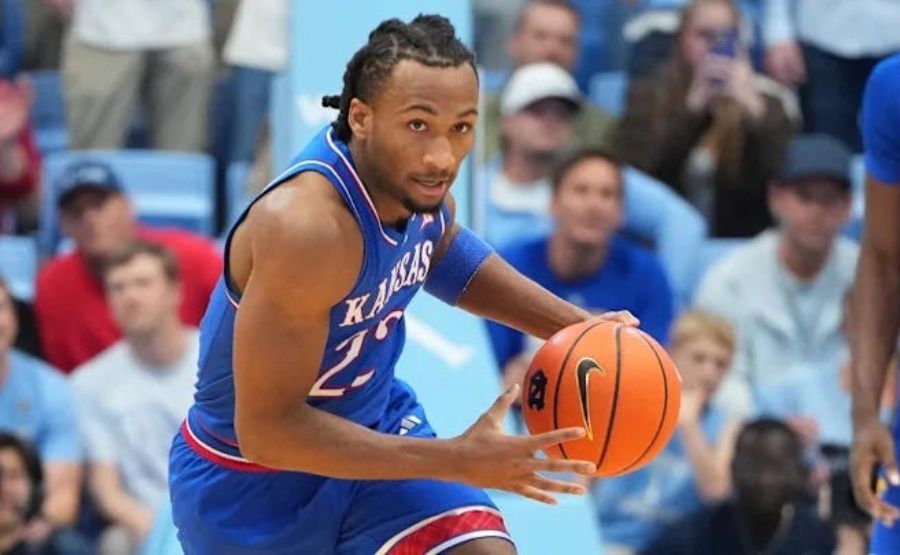
High School: Three Schools, Two States, One California, Endless Production
Darryn Peterson’s high school career is itself a story of deliberate development through increasingly elite competitive environments — a pattern that reflects both his ambition and his family’s commitment to making sure he was always being pushed by the best competition available.
He began at Cuyahoga Valley Christian Academy, known as CVCA, in Cuyahoga Falls, Ohio — a small Christian school in the greater Akron-Canton area with a strong basketball program. His freshman year there, he averaged 26.1 points, 10.5 rebounds, and 5.8 assists per game. These are not freshman numbers. These are numbers that some seniors never achieve. His sophomore year pushed further: 31.0 points and 9.8 rebounds per game.
Stop and consider what 31 points and nearly 10 rebounds per game looks like at the sophomore level. That is dominance of the kind that makes coaches from across the country get on planes to watch a sixteen-year-old play in a small Christian school gym in northeastern Ohio.
After his sophomore year, he transferred to Huntington Prep in Huntington, West Virginia — one of the country’s established prep basketball programs known for developing elite prospects and preparing them for the college game. The move was a clear step up in competition level, designed to ensure that the statistical production he was putting up was being tested against the best available opponents.
Then came the final move — to Prolific Prep in Napa, California for his senior season. Prolific Prep has become one of the most prominent basketball-focused prep academies in the country, drawing elite talent from across the nation and producing a consistent stream of high-level college recruits. Playing there for his senior year put Peterson against, and alongside, some of the best players in his age group on a daily basis.
The results at the senior level were remarkable for their balance: 30.4 points, 7.2 rebounds, 7.4 assists, and 2.2 steals per game. That assists number is what separates Peterson from a one-dimensional scorer. He was seeing the game at a different level — understanding where teammates were cutting, when to collapse a defense and kick out, how to use his scoring threat to open up the offense for others. At seventeen, he was playing more like a seasoned floor general than a high school senior.
He shot 52 percent from the field and 86 percent from the free throw line. The free throw number is particularly meaningful — it measures the reliability of a shooter’s mechanics under pressure, and 86 percent is elite by any standard.
The Recruiting Process: Thirty Programs, Four Finalists, One Decision
Darryn Peterson received scholarship offers from more than thirty Division I programs during his recruitment — a number that reflects just how broadly and how early the college basketball world had identified him as special.
The list of schools that recruited him seriously included Kentucky, Ohio State, USC, Kansas, Kansas State, and many others. His mother was reportedly a significant influence on his ultimate decision — not an unusual situation for elite recruits whose family dynamics naturally shape the process, but worth noting because it reflects a family investment in the decision rather than a purely basketball calculation.
In September 2024, he narrowed the list to four: Kansas, Kansas State, Ohio State, and USC. He took official visits to Kansas and Ohio State. In October 2024, he committed to the University of Kansas.
The decision made national sports news immediately. Kansas had been one of college basketball’s premier programs for decades. Bill Self had built the Jayhawks into a consistent national contender, winning the 2022 NCAA Championship. But even within that context, Self’s assessment that Peterson was the best recruit he had ever brought to Lawrence placed this commitment in a different category from any previous Kansas signing.
Kansas: A Historic Freshman Year, Despite Everything
Darryn Peterson arrived at the University of Kansas for the 2025-26 season as the most anticipated freshman in the program’s history. The expectations were extraordinary — and in the specific, particular way that only elite sports can generate, they were also both fair and potentially crushing depending on how the season unfolded.
The season unfolded with brilliance interrupted by frustration.
He missed eleven games due to persistent cramping issues — a health problem that seemed mundane compared to the dramatic injuries that typically derail athletic careers, but that proved genuinely disruptive to his ability to maintain the consistency and playing time that a freshman development season requires. Missing nearly a third of the possible games, at an age when every game matters for development and exposure, was a real and significant setback.
In the games he did play — twenty-four in total — he averaged 20.2 points, 4.2 rebounds, 1.6 assists, and 1.4 steals in 29 minutes per game. He shot 44 percent from the field, 38 percent from three, and 83 percent from the free throw line. His 20.2 points per game broke the Kansas freshman scoring record — a record that had previously been held at a program that has produced more NBA players than almost any other in college basketball history.
He earned Second-Team All-Big 12 honors and was named to the Big 12 All-Freshman Team. The Big 12 is one of the most competitive conferences in college basketball, filled with elite programs, experienced players, and coaches who specifically scheme to take away what opponents do best. As a nineteen-year-old freshman competing in that environment, being named Second-Team All-Conference while missing eleven games represents an objectively impressive performance.
The ESPN recognition was meaningful too — broadcaster Sean Farnham specifically highlighted Peterson as one of the faces of college basketball during his freshman year, which reflects not just statistical production but the kind of electric, watchable quality that translates beyond the box score.
The McDonald’s All-American Game: Co-MVP at Barclays Center
Before his college career began, Darryn Peterson played in the 2025 McDonald’s All-American Game at Barclays Center in Brooklyn — the annual showcase for the country’s most elite high school players, which has become a genuinely significant cultural moment in basketball.
He scored 18 points in the game, playing on the West team. His West squad defeated the East 105-92. He shared Co-MVP honors with Cameron Boozer — the son of former NBA player Carlos Boozer, who was himself one of the most heavily recruited players in the 2025 class. Sharing Co-MVP of the McDonald’s All-American Game is one of the clearest possible pre-college statements of where a player stands among their generational peers.
The Naismith Trophy Boys High School Player of the Year award — which he won for the 2024-25 season — was the capstone of his amateur career. The Naismith Award at the prep level is as definitive as the prep individual honor gets. It said, officially, with the weight of the sport’s most respected institutional voices: this is the best high school basketball player in America this year.
International Experience: Gold in Mexico
In 2023, when Peterson was sixteen years old, he represented the United States in the FIBA Under-16 Americas Championship held in Merida, Yucatan, Mexico. The team won the gold medal — a result that served multiple purposes for Peterson’s development. It exposed him to international competition and styles of play at an age when most American prospects are still working exclusively within domestic basketball contexts. It put him in a national team environment where he had to subordinate individual production to collective success. And it produced a gold medal that went on his resumé before he had played a single game of high school basketball at a national-level program.
The 2026 NBA Draft: Second Overall to Utah Jazz
In June 2026, Darryn Peterson declared for the NBA Draft. The declaration itself was expected — it would have been ext raordinary if someone who had broken the Kansas freshman scoring record and earned national All-Freshman recognition had chosen to return for a sophomore season.
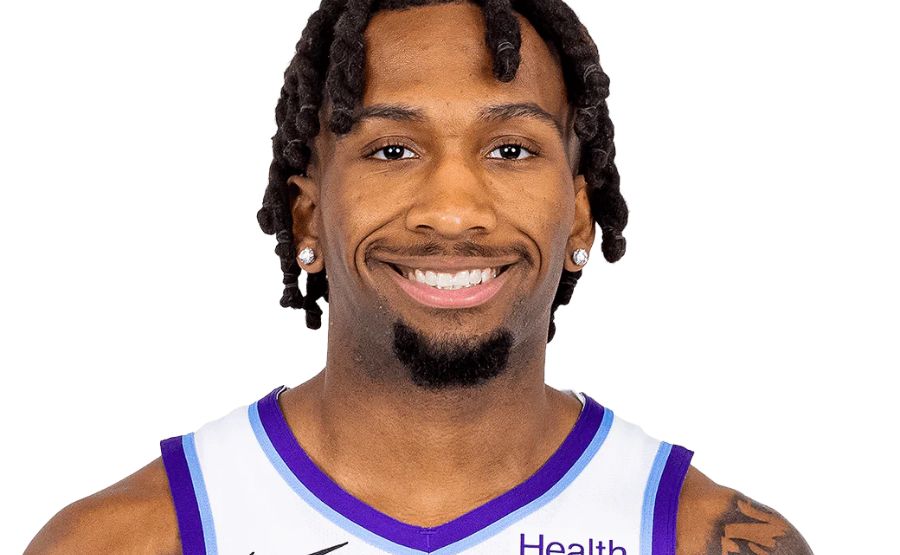
The Utah Jazz selected him with the second overall pick.
This is a remarkable outcome in the historical context of NBA drafts. The top two picks typically go to players who are considered transformational talents — the kind of players around whom franchises can credibly build. Being selected second overall means that thirty NBA organizations and their assembled scouting, analytics, and management teams looked at every available player on the board and decided that only one person in the world was clearly better than Darryn Peterson at this moment.
He is nineteen years old. He has not yet played a professional game. The arc of what he becomes in the NBA is, as of this writing, entirely in front of him.
Personal Life: Private at Nineteen
Darryn Peterson’s personal life is appropriately private for someone who is nineteen years old and who has spent the last several years focused almost exclusively on basketball development. No romantic relationship has been publicly confirmed. His family — including the mother who reportedly played a significant role in his college decision — has maintained appropriate privacy.
He is active on Instagram at @darrynp1 — a relatively modest digital presence for someone of his profile, which suggests someone focused on basketball rather than personal brand cultivation.
His nicknames — DP and Bucket Jones — both emerged organically from the basketball community. “Bucket Jones” in particular captures exactly what the basketball world sees as his most essential quality: the ability to score, consistently and seemingly without strain, against any level of competition.
Financial Situation: A Rookie Contract and a Career Just Beginning
The financial dimension of Darryn Peterson’s life is only now beginning to take its real shape. As a second overall pick in the 2026 NBA Draft, he is entitled to a rookie contract under the NBA’s collective bargaining agreement. Second overall picks typically sign four-year rookie scale contracts worth approximately $40–50 million in total, depending on the specific CBA terms in effect.
His net worth as of the moment of this biography — a few weeks after the draft — is effectively his signing bonus and the first year of his rookie contract, plus any pre-draft endorsement deals he may have secured. He is nineteen and, for the first time, genuinely wealthy in an individual sense.
The more interesting financial story is where this goes. Players drafted second overall who develop into stars — which NBA scouts and draft analysts believe his talent clearly supports — generate career earnings in the hundreds of millions of dollars between contracts, endorsements, and business ventures.
He is at the very beginning of that story.
Today: Salt Lake City and Everything Still Ahead
As of mid-2026, Darryn Peterson is preparing for his first NBA season with the Utah Jazz in Salt Lake City. The Jazz are a team in a rebuilding phase — which, for a second overall pick with clear star potential, is actually an advantageous situation. He will have opportunities to play significant minutes from the start, to learn without the immediate pressure of a championship-contending team’s expectations, and to develop his game against professional competition while being one of the featured players in the franchise’s plans.
The cramping issues that disrupted his freshman college season will be something Utah’s training and medical staff work to address before the regular season begins. Athletes playing at the professional level have access to substantially more advanced medical and performance science support than college programs provide.
He has Bill Self’s endorsement as the best player he ever recruited. He has the second overall draft pick’s endorsement from thirty NBA organizations. He has twenty-plus years of basketball life still ahead of him.
Final Words
Darryn Peterson arrived in Canton, Ohio, on January 17, 2007, and in the nineteen years since, he has become the most anticipated basketball prospect of his generation. He received his first college scholarship offer before starting high school. He attended three schools across three states to ensure he was always competing at the level his talent deserved. As a senior, he scored more than thirty points per game on average. He co-MVP’d the most prestigious high school showcase game in America. He broke the freshman scoring record at one of the most storied programs in college basketball history — while missing a third of the season with a health problem that would have derailed many players’ confidence entirely.
And then he went second overall in the NBA Draft.
What makes him stand out beyond the statistics is the specific combination of scoring instinct and basketball intelligence that scouts have consistently highlighted. He is not a one-trick offensive player. He reads defenses. He finds teammates. He plays off the ball and off the dribble with equal facility. The wingspan that extends four inches beyond his height gives him a defensive upside that makes him potentially valuable at both ends of the court.
At nineteen, the question is not whether he has the talent to become an NBA star. The question is how far that talent will take him as he develops through his professional career. Based on everything the high school and college records show, the answer is likely to be very far indeed.
He is just getting started. And the basketball world is watching.
See also “Sofia Hublitz: From the MasterChef Kitchen to the Ozark Lakefront“
FAQs
1. Who is Darryn Peterson?
Darryn Peterson is an American professional basketball player born on January 17, 2007, in Canton, Ohio. He is a 6’5″ shooting guard who was the No. 1 overall recruit in the class of 2025, won the Naismith Prep Player of the Year award, was McDonald’s All-American Co-MVP, played one season at the University of Kansas where he broke the program’s freshman scoring record, and was selected second overall by the Utah Jazz in the 2026 NBA Draft.
2. Where was Darryn Peterson born?
He was born in Canton, Ohio — a city in Stark County in northeastern Ohio, historically known for manufacturing and as the home of the Pro Football Hall of Fame.
3. What high schools did Darryn Peterson attend?
He attended three high schools. He spent his freshman and sophomore years at Cuyahoga Valley Christian Academy (CVCA) in Cuyahoga Falls, Ohio. He transferred to Huntington Prep in Huntington, West Virginia for his junior year, and then to Prolific Prep in Napa, California for his senior season.
4. What were Darryn Peterson’s high school statistics?
His career high point came during his senior year at Prolific Prep, where he averaged 30.4 points, 7.2 rebounds, 7.4 assists, and 2.2 steals per game while shooting 52 percent from the field and 86 percent from the free throw line. As a sophomore at CVCA he averaged 31.0 points and 9.8 rebounds per game.
5. Why did Darryn Peterson choose Kansas?
He committed to the University of Kansas in October 2024 after narrowing a list of finalists to Kansas, Kansas State, Ohio State, and USC. His mother was reportedly influential in the decision. Kansas head coach Bill Self’s long track record of developing NBA-level talent and the program’s sustained elite competitive standing were also factors. Self publicly called Peterson the best player he had ever recruited.
6. How did Darryn Peterson perform at Kansas?
In his one freshman season, he averaged 20.2 points, 4.2 rebounds, 1.6 assists, and 1.4 steals per game in 24 games, shooting 44 percent from the field, 38 percent from three, and 83 percent from the free throw line. He broke the Kansas program’s freshman scoring record and earned Second-Team All-Big 12 and Big 12 All-Freshman honors. He missed eleven games due to persistent cramping issues.
7. What awards did Darryn Peterson win in high school?
He won the Naismith Trophy Boys High School Player of the Year award for the 2024-25 season — the most prestigious individual honor in American prep basketball. He was also named a McDonald’s All-American and was Co-MVP of the 2025 McDonald’s All-American Game at Barclays Center in Brooklyn, sharing the honor with Cameron Boozer.
8. Did Darryn Peterson play for USA Basketball?
Yes. In 2023, he represented the United States at the FIBA Under-16 Americas Championship in Merida, Yucatan, Mexico, and won a gold medal with the team.
9. Where was Darryn Peterson drafted and by which team?
He was selected with the second overall pick in the 2026 NBA Draft by the Utah Jazz. This places him among the highest-selected prospects of his generation.
10. What are Darryn Peterson’s physical measurements?
He is 6 feet 5 inches tall and weighs 199 pounds. His wingspan is measured at 6 feet 10.5 inches — a significant advantage that extends his defensive range and contributes to his ability to finish over defenders at the rim.
11. What are Darryn Peterson’s nicknames?
He is known by two nicknames: DP — a straightforward abbreviation of his name — and Bucket Jones, which emerged from the basketball community as a reference to his consistent, seemingly effortless scoring ability.
12. What is Darryn Peterson’s estimated net worth?
As a second overall pick in the 2026 NBA Draft, he is entitled to a multi-year rookie scale contract. Second overall picks typically sign deals worth approximately $40–50 million over four years under standard NBA collective bargaining terms. As of mid-2026, he is transitioning from college athlete to professional contract holder for the first time in his life.
Explore ideas that elevate your thinking with The Elevate Magazine.