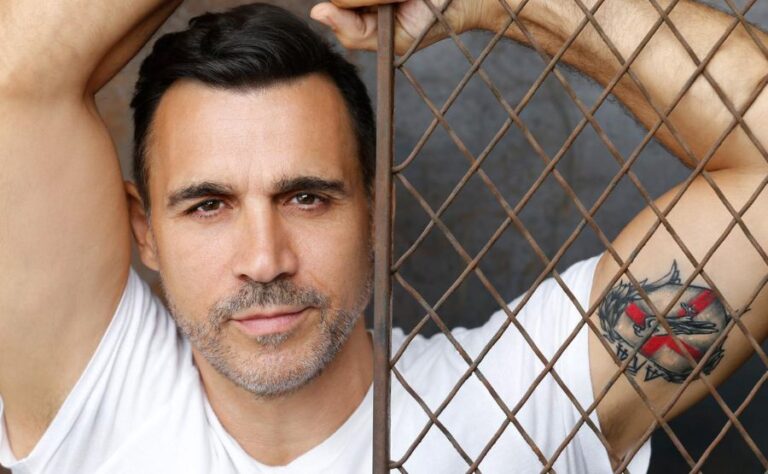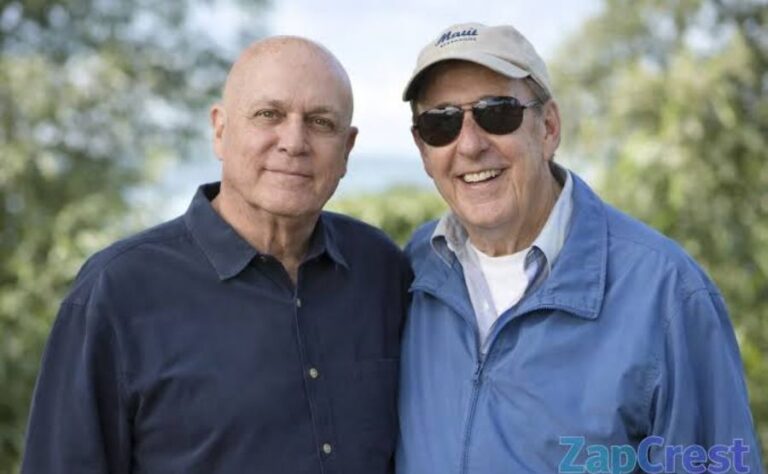
MC Serch Net Worth: The Queens Kid Who Discovered Illmatic
Quick Bio
| Detail | Information |
| Full Name | Michael Berrin |
| Stage Name | MC Serch |
| Also Known As | T Bone Lemke; White Monster |
| Born | May 6, 1967, Far Rockaway, Queens, New York, USA |
| Age | 59 (as of 2026) |
| Nationality | American |
| Heritage | Jewish-American |
| Education | High School of Music & Art, Harlem (graduated 1985) |
| Known For | 3rd Bass member; executive producer of Nas’s Illmatic (1994); discovering Nas |
| Group | 3rd Bass (with Pete Nice and DJ Richie Rich; 1987–1992) |
| Solo Album | Return of the Product (1992, Def Jam) |
| Label | Def Jam; Psycho+Logical |
| TV Work | VH1’s Ego Trip’s The (White) Rapper Show; Miss Rap Supreme |
| Business | Serchlite Music (promotions company) |
| Wife | Chantel Berrin |
| Children | Three |
| Estimated Net Worth | ~$800,000 |
Introduction: The Man Who Heard Nas Before the Rest of the World Did
Here is what makes MC Serch genuinely important to the history of hip-hop. His career as a performer was legitimate and respected — part of a groundbreaking group, a solo record on Def Jam, a hit single that topped the rap charts. That career would be enough to earn him a place in the genre’s history.
But his career as a behind-the-scenes architect of hip-hop greatness is on an entirely different level. Because somewhere in 1992, a Queens rapper named Michael Berrin heard a seventeen-year-old kid from the Queensbridge projects spit a verse. He heard something in that teenager that the rest of the industry hadn’t found yet. And he dedicated the next two years of his professional life to making sure the world heard it too.
The teenager was Nasir Jones. The album he helped bring into existence was Illmatic. And Illmatic is, by the consensus of virtually every credible list of the greatest hip-hop albums ever made, at or near the very top. Not as a historical artifact — as music that still sounds urgent, precise, and alive more than thirty years after its recording.
MC Serch didn’t make Illmatic. Nas made Illmatic. But MC Serch made it possible.
That is a legacy that deserves to be told with the weight it actually carries.
See also “Jodi Arias Net Worth: The Crime, the Trial, and the Life Behind One of America’s Most Watched Cases“
Early Life: Far Rockaway, Queens, and a Jewish Kid Who Found Hip-Hop
Michael Berrin was born on May 6, 1967, in Far Rockaway — a neighborhood at the southeastern tip of Queens, adjacent to the Atlantic Ocean and to the border with Nassau County. It is a community with its own specific character, distinct from the more centrally located Queens neighborhoods that define the borough’s popular image.
He was raised in a Jewish family — a cultural background that would become a defining element of how he navigated the hip-hop world, which in the late 1980s was overwhelmingly Black and deeply suspicious of white participation that hadn’t been earned through genuine understanding and authentic engagement.
Growing up in New York City during the 1970s and early 1980s meant growing up during the exact period when hip-hop was transforming from a Bronx block party phenomenon into something that was spreading borough by borough through the five boroughs and beyond. For a Jewish kid in Far Rockaway with genuine musical intelligence and a real love for what he was hearing, the question was whether there was space for him in a genre whose origins and central concerns were rooted in Black American experience.
He attended the High School of Music & Art in Harlem — one of New York City’s most distinctive public high schools, where artistically talented students from across the boroughs converged for a specifically creative-focused education. Graduating in 1985, he entered the music world with both the credential and the networks that a school of that specific character provided.

3rd Bass: Breaking Barriers and Going Gold
In 1987, Michael Berrin co-founded 3rd Bass alongside Pete Nice — a Columbia University English major who had been running a hip-hop show on the university’s radio station — and DJ Richie Rich. The group signed to Def Jam Records, which was at that moment the most important hip-hop label in the world.
3rd Bass occupied a specific and genuinely complicated position in the hip-hop landscape. They were — with the exception of DJ Richie Rich — a group led by white rappers attempting to participate authentically in a Black art form at a time when that participation was legitimately contested. The Vanilla Ice phenomenon was simultaneously making white rap commercially mainstream and creatively discrediting, and 3rd Bass distinguished themselves sharply from that trajectory by engaging with hip-hop’s cultural and political substance rather than simply imitating its surface.
Their debut album, The Cactus Album, arrived in 1989 and was certified gold by the RIAA. Their follow-up, Derelicts of Dialect, came in 1991 and was also certified gold. Two gold albums in the era when gold meant physical records sold. The single “Pop Goes the Weasel” climbed to the top of the Billboard rap chart. The group was commercially and critically legitimate.
Their lyrical approach was socially conscious — engaging seriously with questions of racial identity, cultural appropriation, and the politics of who gets to participate in hip-hop. MC Serch’s willingness to address his own position within the genre directly and honestly gave 3rd Bass an authenticity that many doubted was possible from white rappers at the time.
The group dissolved in 1992, with both short-lived reunion attempts in 2000 and 2013.
Solo Career and the Discovery That Changed Everything
MC Serch’s solo debut, Return of the Product, was released in 1992 on Def Jam. The album featured “Back to the Grill” — an extension of Main Source’s “Back to the Grill Again” — which included a then-unknown rapper named Nas delivering a verse that stopped people in their tracks.
This was the first time most listeners had heard Nas. MC Serch had heard him earlier — the precise story involves hearing a verse by Nas on an Organized Konfusion track and being struck by something that was genuinely different from what anyone else was doing. He pursued the connection, brought Nas into the “Back to the Grill” session, and the response confirmed what he had already believed.
He also placed Nas’s track “Halftime” on the soundtrack for the 1992 film Zebrahead — another strategic move that gave Nas additional exposure before the Illmatic session had even begun.
Then came the executive production of Illmatic itself.
Working with producer Large Professor and other collaborators, and bringing in the team that would eventually craft the album with Nas, MC Serch’s executive role was about creating the conditions under which extraordinary music could be made. He introduced Nas to Columbia Records. He advocated for the album’s creative direction. He protected the process long enough for Nas to make the record he needed to make.
Illmatic was released in April 1994. It sold modestly by commercial standards at the time of release — its initial chart performance was not explosive. However, the critical reaction was enormous and happened right away. And its cultural importance has only grown across the three decades since. It is now universally regarded as one of the greatest albums in the history of recorded music, not just hip-hop.
Beyond Nas: O.C., Non Phixion, and the Ongoing Scout’s Eye
His talent for identifying artists before the mainstream found them extended beyond Nas.
He heard rapper O.C. on an Organized Konfusion track and recognized something worth pursuing. He helped O.C. secure a recording contract with Wild Pitch Records — a move that enabled O.C. to eventually release Word…Life in 1994, an album that is itself regarded as an underground hip-hop masterpiece.
In 1995, he mentored the newly formed group Non Phixion — a Queens-based crew whose style combined conspiracy theory content with hard-edged production — supporting their early development with the kind of experienced guidance that a freshly formed group needed.
The pattern across these artist development relationships is consistent: MC Serch heard something in artists that others hadn’t yet recognized, committed himself to the development process, and produced results that demonstrated genuine curatorial talent.

Television, Radio, and the Broader Media Career
His career extended substantially beyond music into media production and hosting.
He hosted The Serch Show — his own talk show — in the mid-1990s, a relatively brief television venture. He made appearances on reality programming including The Surreal Life and Celebrity Fit Club.
His most significant television work came through Ego Trip — the hip-hop media collective — with whom he created and hosted Ego Trip’s The (White) Rapper Show on VH1, a reality competition series about aspiring white rappers that engaged directly with the questions of race, authenticity, and cultural participation that had defined his own career. He followed that with Miss Rap Supreme, a similar competition series focused on female rappers.
These productions brought hip-hop culture to broader audiences while maintaining the kind of engagement with the genre’s real values and history that characterized everything MC Serch had done since the late 1980s.
He also hosted a radio show on Detroit’s Hot 102.7 — maintaining a presence in the ongoing conversation about hip-hop through the broadcast medium.
The Illmatic Catalog Sale Announcement
In 2022, MC Serch announced plans to sell his share of Nas’s catalog — including his stakes in Illmatic and It Was Written. This announcement was significant for several reasons. It confirmed that his executive producer role had translated into genuine ownership stakes in the catalog — not merely a production credit but an ongoing economic relationship with the music he had helped bring into existence. And it suggested that those stakes had retained and perhaps grown in value as Illmatic‘s cultural reputation had continued to grow.
The catalog sale announcement also raised questions, within hip-hop communities, about the nature and terms of the original agreements between Serch and Nas — questions that have not been fully addressed publicly by either party.
Personal Life: Family in Queens
MC Serch is married to Chantel Berrin, and they have three children together. He has maintained his life in New York, rooted in the Queens community that shaped him. His personal life has been kept appropriately private relative to the public-facing dimensions of his career.
Financial Situation: Influence Versus Income
MC Serch’s estimated net worth is approximately $800,000 — a figure that multiple sources cite consistently and that reflects an honest picture of what a career in hip-hop at his level of commercial success, followed by behind-the-scenes work and media production, generates over time.
He is not wealthy. The gap between his cultural influence — executive producing one of the greatest albums in music history, discovering multiple important artists, helping define the terms on which white rappers could participate in hip-hop — and his financial position is genuinely significant. The music industry has historically been effective at generating cultural value for which the creators receive a fraction of the economic return.
The catalog sale announcement of 2022 suggests he holds assets that could meaningfully improve his financial position, depending on the terms and eventual execution of that arrangement.
Today: Still Engaged, Still Relevant
As of 2026, MC Serch is fifty-nine years old. He runs Serchlite Music, his promotions company. He continues to engage with hip-hop culture through radio work, media appearances, and the ongoing conversations about his place in the genre’s history that his career’s documented significance regularly prompts.
He is someone whose importance to hip-hop history is clearer now than it was in real time — a figure whose curatorial and developmental contributions are increasingly recognized as essential to the genre’s golden age.
Final Words
MC Serch’s legacy rests on two pillars that would each be sufficient to warrant inclusion in any serious history of hip-hop.
The first is 3rd Bass — a group that broke racial barriers in a genre that legitimately questioned whether those barriers needed breaking, and that proved through the quality of their music that the question was the wrong one. Two gold albums and a chart-topping single, made by people who genuinely understood and respected what they were participating in.
The second is Illmatic. Not making it — Nas made it — but creating the conditions that allowed it to exist. Hearing a teenage Nasir Jones before anyone else with institutional resources and contacts had heard him. Spending two years connecting him to the producers, the label, and the executive infrastructure that a debut album requires. Being right about something that the rest of the music industry was too slow or too unimaginative to see first.
The walk that Paul Fix taught John Wayne is a metaphor for essential invisible contributions. MC Serch’s contribution to Illmatic is the real thing. He heard something that changed hip-hop history. And he did something about it.
See also “Jodi Arias Net Worth: The Crime, the Trial, and the Life Behind One of America’s Most Watched Cases“
FAQs
1. Who is MC Serch?
MC Serch, born Michael Berrin on May 6, 1967, in Far Rockaway, Queens, New York, is an American rapper, music executive, and media personality. He is best known as a founding member of 3rd Bass, the respected late-1980s and early-1990s hip-hop group, and as the executive producer of Nas’s debut album Illmatic — widely considered one of the greatest hip-hop albums ever recorded.
2. What is MC Serch’s real name?
His birth name is Michael Berrin. He was raised in a Jewish home in Far Rockaway, Queens, and graduated from the Harlem High School of Music & Art in 1985.
3. What was 3rd Bass and why did it matter?
3rd Bass was a hip-hop group founded in 1987 by MC Serch, Pete Nice, and DJ Richie Rich. The group — whose two lead rappers were white — occupied a genuinely contested position in the hip-hop landscape and addressed questions of racial identity and cultural authenticity directly in their music. Both of their studio albums, The Cactus Album (1989) and Derelicts of Dialect (1991), were certified gold by the RIAA. Their single “Pop Goes the Weasel” reached number one on the Billboard rap chart.
4. How did MC Serch discover Nas?
He first heard Nas — then a teenager from the Queensbridge Houses in Queens — on an Organized Konfusion track, recognizing an extraordinary lyrical talent that had not yet been formally connected to the industry. He brought Nas into the session for “Back to the Grill,” which appeared on his 1992 solo album, and placed Nas’s track “Halftime” on the Zebrahead film soundtrack — both strategic moves that built Nas’s profile before the Illmatic sessions began.
5. What was MC Serch’s role in making Illmatic?
He served as executive producer — introducing Nas to Columbia Records, advocating for the album’s creative direction, and creating the conditions under which Nas could make the record he needed to make with the producers and resources appropriate to his talent. The album was released in April 1994 and has grown in reputation across the three decades since to become universally recognized as one of the greatest albums in music history.
6. Did MC Serch discover other artists besides Nas?
Yes. He heard rapper O.C. on an Organized Konfusion track and helped him secure a contract with Wild Pitch Records, enabling O.C. to release Word…Life in 1994. In 1995, he also mentored the newly formed Queens group Non Phixion in their early career development.
7. What solo music did MC Serch release?
He released Return of the Product in 1992 on Def Jam — the same label as 3rd Bass. The album featured “Back to the Grill” as its standout single, which reached the top of the Billboard rap chart.
8. What television work has MC Serch done?
He hosted The Serch Show in the mid-1990s. He created and hosted Ego Trip’s The (White) Rapper Show on VH1 and Miss Rap Supreme, both reality competition series. He also made appearances on The Surreal Life and Celebrity Fit Club.
9. What is Serchlite Music?
Serchlite Music is MC Serch’s promotions company, which he has operated since transitioning away from performing. It represents his ongoing professional involvement in the music industry in an executive and promotional capacity.
10. What is MC Serch’s estimated net worth?
Multiple reliable sources consistently estimate his net worth at approximately $800,000. This reflects a career that achieved genuine cultural impact — particularly through Illmatic — without generating corresponding mainstream commercial wealth. His 2022 announcement of plans to sell his catalog stakes in Nas’s music could potentially alter this figure depending on how those transactions resolve.
11. What did MC Serch announce in 2022 about Nas’s catalog?
He announced plans to sell his share of Nas’s music catalog — specifically including his stakes connected to Illmatic and It Was Written. The announcement confirmed that his executive producer role had produced genuine ownership interests in the catalog that have retained value as Illmatic‘s cultural reputation has grown.
12. Is MC Serch still active in 2026?
Yes. He continues to operate Serchlite Music and maintains a media presence through radio hosting and industry appearances. He is fifty-nine years old and remains engaged with hip-hop culture’s ongoing conversation about its history and his documented place within it.
Explore ideas that elevate your thinking with The Elevate Magazine.