Rocky Graziano Net Worth: The Street Kid Who Punched His Way Into History
Quick Bio
| Detail | Info |
| Full Name | Thomas Rocco Barbella |
| Ring Name | Rocky Graziano |
| Date of Birth | January 1, 1919 |
| Place of Birth | Lower East Side, New York City, USA |
| Date of Death | May 22, 1990, New York City |
| Age at Death | 71 |
| Nationality | American |
| Ethnicity | Italian-American |
| Occupation | Professional Boxer, Actor, Author, Television Personality |
| Boxing Record | 67 wins (52 by KO), 10 losses, 6 draws — 83 total fights |
| Title Held | World Middleweight Champion (1947–1948) |
| Known For | Three epic title fights with Tony Zale; autobiography Somebody Up There Likes Me (1955) |
| Resting Place | Locust Valley Cemetery, Locust Valley, New York |
| Estimated Net Worth | ~$5 million (at time of death, adjusted) |
Introduction
Some stories begin so far down that the only possible direction is up. Rocky Graziano’s story begins about as far down as you can get — a dirt-poor Italian-American kid on the Lower East Side of Manhattan, an abusive household, a criminal record before he was old enough to vote, a stretch at Leavenworth federal penitentiary, a dishonorable discharge from the United States Army — and then, somehow, one of the most electrifying middleweight boxing careers the sport has ever seen.
He won the world middleweight championship. He wrote a memoir that became a bestselling book. Hollywood turned that book into a film starring Paul Newman. He went on television, did commercials, made people laugh, became one of the most recognizable faces in the country — a man with a battered nose and a Bowery accent who had been to prison and didn’t pretend otherwise.
What made Rocky Graziano matter — then and now — was never just the boxing. It was the honesty. He never cleaned up his story for public consumption. He stood in front of the country and said: I grew up poor, I stole, I went to reform school, I deserted from the Army, I went to Leavenworth, and then I became the middleweight champion of the world. What do you make of that?
The country made quite a lot of it. And they never forgot him.
See also “Don Prudhomme Net Worth: Inside the Wealth of a Drag Racing Icon“
The Lower East Side: Where He Came From
The Lower East Side of Manhattan in the 1920s and 1930s was one of the most densely packed urban environments in America — a neighborhood where immigrant families lived in tenements stacked floor by floor, where every block had its own economy of survival, and where the children who grew up there learned early that nobody was coming to rescue them.
Thomas Rocco Barbella was born into this world on January 1, 1919. He was Italian-American, the son of Joseph Barbella — a former boxer himself, though not a successful one — and a mother whose name most sources do not record but whose labor kept the household from collapse. Joseph was alcoholic, physically violent, and chronically unemployed. He brought fists and failure home in roughly equal measure. His mother took in washing and ironing from neighbors who had slightly more than they did, turning other people’s laundry into the family’s food.
Rocky absorbed all of this. He absorbed the poverty and the shame and the violence, and then he went outside and found more of it in the streets. The Lower East Side in those years was not short on opportunities to get into trouble, and Rocky found most of them. He ran with other boys who were doing the same things — stealing, fighting, running from police, accumulating the kind of juvenile record that in those years landed you in reform school rather than a counselor’s office.
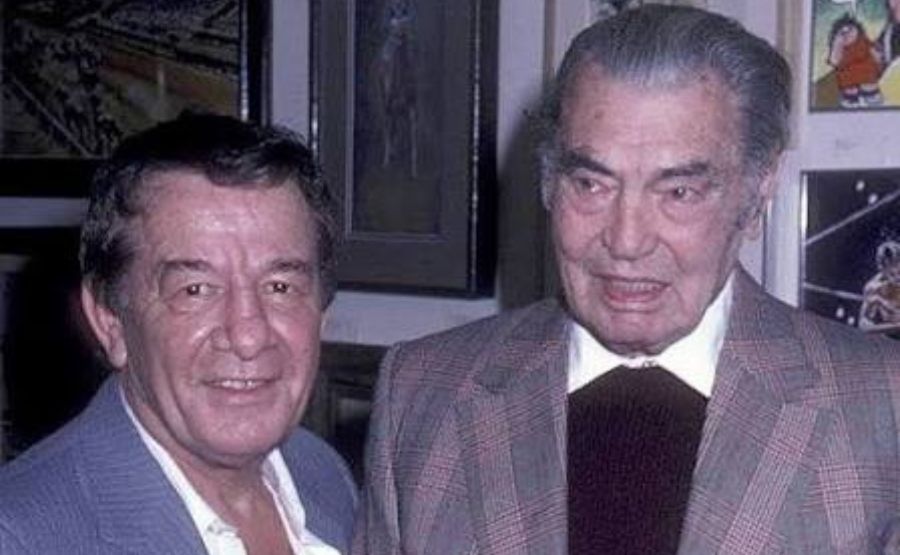
One of those boys was Jake La Motta — the same Jake La Motta who would eventually become the world middleweight champion and the subject of Martin Scorsese’s Raging Bull. Rocky and Jake attended the same reform school together, which gives you a sense of the particular neighborhood they were coming from and the particular trajectory that neighborhood set.
No Education to Speak Of, and What He Learned Instead
Rocky Graziano’s formal education was essentially nonexistent. Reform school was his school. Street life was his school. The fight was his school.
What he learned — from his father, from the reform school, from the Lower East Side — was how to take a punch and keep going. How to read a room. How to survive in environments where the wrong move had immediate physical consequences. How to make people laugh when the alternative was to make them afraid.
The laughter became important later. But first came the hitting.
He was arrested repeatedly as a teenager. He was sent to reform school multiple times. The pattern of his early years was predictable and grim: petty crime, reform school, back to the streets, more crime, another institution. The system that was supposed to rehabilitate him cycled him through without apparent effect beyond giving him something useful — a brief exposure to organized boxing through programs that some of those institutions ran.
The boxing program was the first time anyone pointed Rocky’s rage in a direction that could be channeled rather than simply contained. He hit hard. He hit constantly. He didn’t need much technique because the power and the relentlessness were already there, fully formed, as if his whole childhood had been building toward the moment someone put gloves on his hands and a bag in front of his face.
The Army and Leavenworth: The Low Point Before the Rise
When World War II arrived, Rocky Graziano was drafted into the United States Army. This did not go well.
He deserted. And before he deserted, he punched an officer.
The Army was not an environment that Rocky Graziano was equipped to navigate. The hierarchy, the discipline, the obedience to authority that military life demands were not things he had ever been given the conditions to develop. He left. He also, because this was Rocky Graziano, punched someone with authority on his way out.
During the brief period when he was in the Army — before they caught him — he had already begun boxing professionally under the name Rocky Graziano. The name was partly an alias designed to keep his real identity hidden from military authorities. It didn’t work for long. He was found, brought back, court-martialed, and sentenced to nine months at the United States Disciplinary Barracks at Leavenworth, Kansas — the federal military prison where serious military offenders were sent. He served his time, received a dishonorable discharge, and came out in 1943.
At this point, Thomas Rocco Barbella was a convicted criminal, a military deserter, a dishonorable discharge, a man who had been through reform school and federal prison — and he was twenty-four years old. The world had given him every reasonable excuse to keep going down.
Instead, he went back to the gym.
Career Beginnings and the Rise Through the Ranks
Rocky Graziano turned professional as a boxer on March 31, 1942 — even while he was still tangled up in his military situation. By the time he got through Leavenworth and was back on the street, he had already begun to build a record.
What he brought to boxing was not technical sophistication. He was not a master of the sweet science. He was not a stylist. What he was, was terrifying. He had a right hand that carried genuine danger, a relentless forward pressure that suffocated opponents, and a tolerance for being hit that came from a childhood spent being hit — so that by the time anyone in the ring was hitting him, it was honestly less than he had experienced at home.
He worked his way through the welterweight and middleweight ranks of New York boxing, fighting frequently in the mid-1940s. He beat Al Davis. He beat Marty Servo. He beat Harold Green — more than once. Each win built his reputation as someone the serious fans wanted to watch, because Rocky Graziano fights ended dramatically. They didn’t go to decisions. They ended when someone couldn’t continue, and more often than not, that someone was the other fighter.
His record climbed. His following grew. The New York fight crowd, which understood what it was looking at, recognized that this was something different from a technically gifted fighter. This was a force of nature in gloves.
By the mid-1940s, he had earned a shot at the one thing that validated everything in boxing: the world title.
Tony Zale: Three Fights That Defined an Era
Rocky Graziano fought Tony Zale three times between 1946 and 1948. These three fights are considered some of the greatest contests in the history of professional boxing, and to understand why, you have to understand what each man brought to the ring.
Tony Zale was the Man of Steel — a hard, disciplined, technically precise fighter who had been forged in the steel mills of Gary, Indiana. He was the reigning middleweight champion. He was everything that Rocky wasn’t: controlled, methodical, patient. They were opposites in the ring, which meant that when they fought, something extraordinary happened.
The First Fight — September 27, 1946 — Yankee Stadium: Tony Zale knocked Rocky Graziano out in the sixth round. It was not a comfortable fight to get there. Rocky had hurt Zale badly in the early rounds, had the champion in serious trouble — and then Zale somehow survived, recovered, and put Rocky away. The fight attracted 39,827 fans to Yankee Stadium and generated genuine shock.
The Second Fight — July 16, 1947 — Chicago Stadium: Rocky Graziano won the World Middleweight Championship. The fight was brutal and chaotic. Rocky was in trouble early. By the fifth round, his eye was cut and there were questions about whether he could continue. Then he landed the right hand. Then another. By the end of the sixth round, Tony Zale was on the canvas and could not continue. Rocky Graziano was the middleweight champion of the world.
He was not the most polished champion the division had ever seen. He was also, without question, the most dramatic.
The Third Fight — June 10, 1948 — Newark: Tony Zale knocked Rocky Graziano out in the third round and reclaimed the championship. Three rounds, done. The trilogy ended as violently as it had begun, and Zale walked out with the belt.
The three Graziano-Zale fights produced some of the most important boxing journalism of the era. They were written about by Budd Schulberg and A.J. Liebling, two of the finest sports writers the country has ever produced. They were talked about for years afterward by people who had seen them and by people who had only heard about them. They established Rocky Graziano as one of the most memorable figures in the history of the middleweight division.
Later Career and the Robinson Loss
After the third Zale fight, Rocky continued fighting. In 1952, he made his last significant title challenge — against Sugar Ray Robinson, who was at that point arguably the greatest boxer alive, a man whose combination of speed, power, technique, and ring intelligence had no peer in the sport at that time.
In the third round, Robinson stopped Rocky Graziano.
A year later, in 1953, Rocky retired from boxing with a record of 67 wins (52 by knockout), 10 losses, and 6 draws across 83 professional bouts. He had been the middleweight champion of the world. He had fought in some of the most watched fights of his era. And he was done.
He was inducted into The Ring magazine’s Boxing Hall of Fame in 1971 — recognition from the sport’s most authoritative publication that what he had accomplished in the ring was not just dramatic but historically significant.
Personal Life: Norma, the Daughters, and the Life He Built
Rocky Graziano married Norma Unger, and the marriage was the stabilizing force in a life that had given him every reason not to be stable. Norma was not from his world — she came from a more settled background, and her belief in Rocky was genuine and sustained across decades of marriage.
They had two daughters together: Audrey and Roxee. The family settled in New York, eventually living in a manner that was comfortable and middle class — a long way from the tenements of the Lower East Side, if not the extravagance that the biggest boxing promotions of the era might suggest was possible.
Rocky described Norma in interviews and in his memoir as the person who kept him from going back to the life he came from. That is a significant statement from a man who had spent time in federal prison and reform school. The marriage held. The family held. The man who had punched an Army officer and deserted in wartime became, in his domestic life, a devoted husband and father who brought the same ferocious loyalty to his family that he brought to the ring.
Somebody Up There Likes Me: The Book and the Film
In 1955, Rocky Graziano published his autobiography, Somebody Up There Likes Me, written with Rowland Barber. The book was a bestseller. It told the full story — the poverty, the crime, the reform school, the Army, Leavenworth, the championship — without softening or sanitizing any of it.
The title came from Rocky’s genuine belief that something had intervened in his life, had steered him away from the complete destruction that his early years seemed to be pointing toward, and had given him something worth having. He didn’t frame it as religious doctrine. He framed it as the honest experience of a man who couldn’t entirely explain why he was still standing when others who had started in the same place were not.
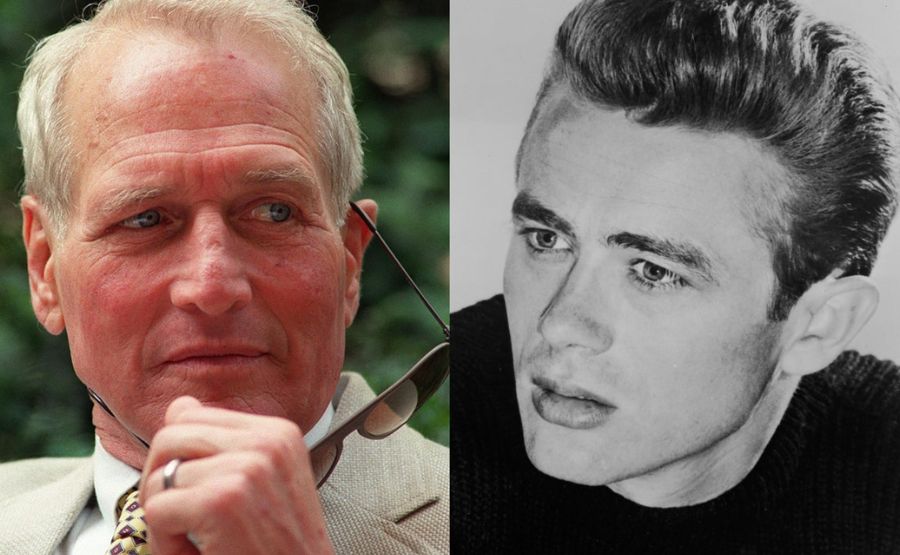
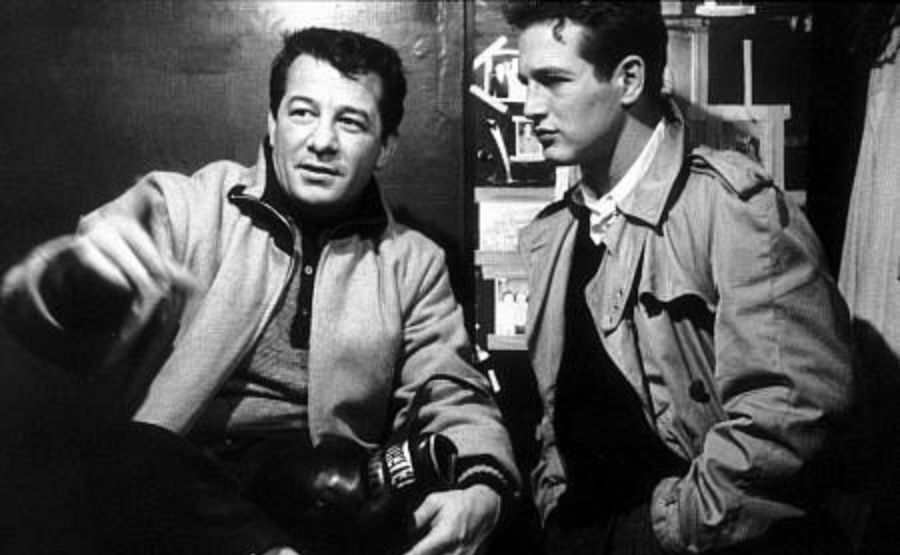
In 1956, MGM adapted the book into a film directed by Robert Wise and starring Paul Newman as Rocky Graziano. Newman was not yet the megastar he would become, but the film was excellent, and his performance was widely praised. The movie took some dramatic liberties — most notably, it ended with Rocky winning the championship against Zale without showing the third fight in which Zale won it back — but its portrait of the Lower East Side and of Rocky’s improbable transformation was powerful and credible.
The film made Rocky Graziano a national figure in ways that the boxing record alone had not accomplished. Suddenly, millions of Americans who had never seen him fight knew his story.
He followed it in 1981 with a second memoir, Somebody Down Here Likes Me Too, written with Ralph Corsel — a follow-up that reflected on the life he had built after boxing.
Television, Comedy, and the Second Career
What happened after the film is one of the more enjoyable chapters of Rocky Graziano’s life, because it turned out that the man who had grown up in the streets had a gift for something nobody had anticipated: he was genuinely funny.
He appeared on television shows throughout the 1950s, 1960s, and 1970s, often playing comic versions of himself — the tough New Yorker with the battered face and the endearing attitude. He did television commercials, including a long-running series for Jell-O with Martha Raye that made him one of the most recognizable pitchmen in the country. He worked as a Republican Party spokesman. He appeared on talk shows.
The television personality that emerged was warm, self-deprecating, and completely at ease with his own story. He didn’t try to be anything other than what he was — a man from the Lower East Side who had been to prison and to the top of the world and found the whole thing pretty remarkable himself.
Net Worth: An Honest Accounting
Rocky Graziano’s net worth at the time of his death in 1990 is estimated at approximately $5 million in contemporary figures — a significant sum for a man who had started with absolutely nothing, but modest relative to what the biggest sporting figures of later generations would accumulate.
His boxing income came from an era before the enormous television rights fees that transformed the sport’s economics. The Zale fights drew tens of thousands of fans at Yankee Stadium and Chicago Stadium, but the fighter’s purses from those events were a fraction of what comparable fights would generate in later decades. He earned real money from boxing, but not generational wealth.
The autobiography and its film adaptation added literary and entertainment income. The television commercials — particularly the long-running Jell-O campaign — provided sustained supplementary earnings across years. His television appearances generated fees that added to the accumulated total.
He lived comfortably in New York across the post-boxing decades. He was not poor. He was not extravagantly wealthy. He was a man who had built financial security from a starting point of genuine destitution, through his fists and then through his personality and his story, and who died with enough to have provided well for his family.
Death: May 22, 1990
Rocky Graziano died on May 22, 1990, in New York City. He was 71 years old. He was buried at Locust Valley Cemetery in Locust Valley, New York — far removed geographically from the Lower East Side tenements where Thomas Rocco Barbella had begun, which is perhaps the most concrete measure of how far he had traveled.
The obituaries were generous and affectionate. The New York Times ran a piece by Phil Berger. The Washington Post published a tribute by Shirley Povich. The boxing world and the entertainment world both mourned him, which tells you something about the unusual position he had carved out — a man who belonged fully to two very different worlds and was welcome in both of them.
Final Words
Rocky Graziano’s story is one of the great American transformation narratives — not because it is a fairy tale, but precisely because it isn’t. He did not become a champion despite his past. He became a champion through the same qualities that had gotten him into trouble in the first place: stubbornness, a refusal to stay down, a ferocious resistance to being defeated by anyone or anything.
He was honest about where he came from in ways that public figures rarely were then and often aren’t now. He never cleaned up his story. He never pretended the reform schools and Leavenworth were things that had happened to someone else. He stood in front of the country with his battered face and his Brooklyn accent and said: this is what I am, this is where I came from, and somehow here I am.
Somebody up there, he believed, did like him. Looking at the full arc of his life — from Lower East Side poverty to world champion to bestselling author to beloved television personality — it is genuinely difficult to argue with that assessment.
See also “Don Prudhomme Net Worth: Inside the Wealth of a Drag Racing Icon“
FAQs
1. Who was Rocky Graziano?
Rocky Graziano was an American professional boxer born Thomas Rocco Barbella on January 1, 1919, in New York City. He was the World Middleweight Champion from 1947 to 1948, known for three legendary fights with Tony Zale, and later became a successful author and television personality. He died on May 22, 1990, at age 71.
2. Why did Rocky Graziano change his name?
He adopted the name Rocky Graziano when he began boxing professionally — initially as an alias to hide his identity from the military authorities who were looking for him after he deserted from the U.S. Army during World War II. The name stuck and became his permanent professional identity.
3. What was Rocky Graziano’s boxing record?
He finished his professional career with 67 wins (52 by knockout), 10 losses, and 6 draws across 83 total professional bouts. He competed primarily in the welterweight and middleweight divisions.
4. Who did Rocky Graziano fight three times?
His most famous trilogy was against Tony Zale, the reigning World Middleweight Champion. Zale won the first fight (1946) and third fight (1948) by knockout. Graziano won the second fight (1947) by knockout in the sixth round, claiming the World Middleweight Championship.
5. What was the result of Rocky Graziano’s fight against Sugar Ray Robinson?
Robinson stopped Graziano in the third round in April 1952 — Graziano’s last major championship challenge. Sugar Ray Robinson was regarded as one of the greatest pound-for-pound boxers in history, and Graziano was unable to get past his speed, precision, and power.
6. What is Somebody Up There Likes Me about?
It is Rocky Graziano’s 1955 autobiography, written with Rowland Barber, covering his childhood poverty, criminal record, time in reform school, Army desertion, imprisonment at Leavenworth, and eventual rise to the world middleweight championship. It was a bestseller and was adapted into a 1956 film starring Paul Newman.
7. Who played Rocky Graziano in the 1956 film?
Paul Newman starred as Rocky Graziano in the MGM film directed by Robert Wise. The film is still considered one of the finest boxing films ever made and one of the best American dramas of the 1950s, frequently mentioned alongside On the Waterfront and Rebel Without a Cause.
8. Did Rocky Graziano go to prison?
Yes. He was sentenced to nine months at the United States Disciplinary Barracks at Leavenworth, Kansas, following his desertion from the Army and assault on an officer during World War II. He was dishonorably discharged from military service after serving his sentence.
9. Who was Rocky Graziano’s wife?
He was married to Norma Unger. The marriage was long and stable, providing the anchor that Rocky described as essential to keeping him away from the destructive path his early years had set. They had two daughters together, Audrey and Roxee.
10. What awards and recognitions did Rocky Graziano receive?
He was inducted into The Ring magazine’s Boxing Hall of Fame in 1971 — one of the sport’s most prestigious honors, recognizing both the historical significance of his career and the impact of his three fights with Tony Zale on the middleweight division.
11. What was Rocky Graziano’s net worth?
His net worth at the time of his death in 1990 is estimated at approximately $5 million in today’s figures, accumulated through boxing purses, his bestselling autobiography and its film adaptation, long-running television commercial campaigns (most notably for Jell-O), television appearances, and his work as a Republican Party spokesman.
12. What was Rocky Graziano’s television career?
After boxing, he became a popular television personality through the 1950s, 1960s, and 1970s — appearing on comedy programs, talk shows, and in numerous commercials. His most recognizable commercial work was a long-running Jell-O campaign with Martha Raye that made him one of the most familiar advertising faces in the country. He also worked as a spokesman for the Republican Party during this period.