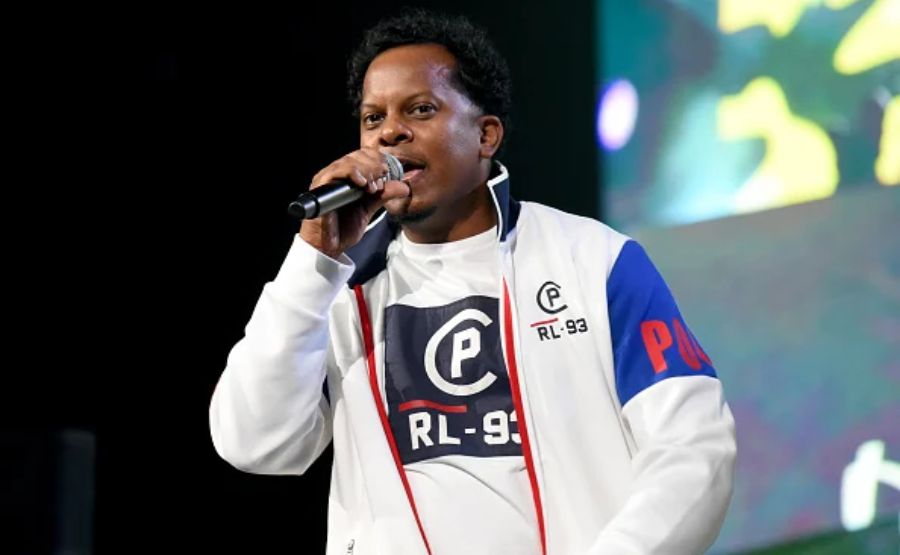
Special Ed Rapper Net Worth: The Rise and Legacy of a Hip-Hop Pioneer
Quick Bio
| Detail | Info |
| Full Name | Edward K. Archer |
| Stage Name | Special Ed |
| Born | May 16, 1972 |
| Birthplace | Brooklyn, New York City, USA |
| Nationality | American |
| Ethnicity | Mixed — Afro-Jamaican father, Indo-Jamaican mother |
| Occupation | Rapper, songwriter, record producer, actor |
| Known For | Youngest in Charge (1989); “I Got It Made”; “I’m the Magnificent” |
| Active Years | 1988 – present |
| Labels | Profile Records; Semi Records (his own) |
| Groups | Crooklyn Dodgers |
| Children | 3 |
| Height | 6 ft (1.83 m) |
| Estimated Net Worth | ~$1 million |
Introduction: The Teenager Who Took Over Hip-Hop
Let’s set the scene. It’s 1989. Hip-hop is still fighting for its seat at the table of mainstream American music. The culture is raw, competitive, and fiercely regional. And out of Brooklyn — already one of the genre’s most fertile ZIP codes — steps a kid who is barely old enough to drive, delivering rhymes so sharp and so self-assured that the rap world has no choice but to stop and pay attention.
That kid was Special Ed. Born Edward K. Archer, he released his debut album at seventeen years old and somehow managed to sound like someone twice his age and twice his experience. He wasn’t rapping about violence or desperation — he was rapping about himself, his neighborhood, his vocabulary, and his complete and total confidence that he was the greatest thing to pick up a microphone. The audacity of it was charming. The talent made it undeniable.
More than three decades later, Special Ed is still considered one of the golden era’s finest lyricists. His name comes up in academic papers about hip-hop’s development. Jay-Z has referenced him in song. His debut record sits on the short list of essential late-1980s rap albums. He is proof that in hip-hop, you can make your mark at sixteen and still be relevant at fifty.
This is his story.
See also “Saucy Santana Net Worth: The Story Behind His Fame and Fortune“
Early Life: Brooklyn, Flatbush, and the West Indian Influence
Edward Archer grew up in Flatbush, a neighborhood in Brooklyn that pulses with Caribbean energy. His father was Afro-Jamaican and his mother was Indo-Jamaican, and together they raised their children inside a household where the rhythms and textures of West Indian culture were simply part of daily life — the food, the music, the way people talked and laughed and moved through the world.
Edward was the youngest of five brothers, and the only one born in the United States. That fact matters more than it might seem. Being the youngest in a household of older brothers shapes you. You spend your childhood trying to be heard, trying to prove you belong in the conversation, trying to be taken seriously by people who were here before you. That energy — the need to make an impression — would later translate into lyrics.
Flatbush itself was a neighborhood overflowing with West Indian and Caribbean influence, and Ed’s music would carry those textures with it throughout his career. Later, the family moved to Canarsie, another Brooklyn neighborhood, expanding his sense of the borough he called home.
He was not a quiet child. From his earliest school years, writing and words captured his attention in a way that other subjects couldn’t quite compete with. He scribbled rhymes. He practiced rhythm. He matched beats with his hands and words with his breath, a habit that would stick.
Education: Classrooms and Lyric Books
Special Ed attended two Brooklyn high schools — Erasmus Hall High School and Samuel J. Tilden High School. Erasmus Hall, in particular, carries historical weight. It is one of the oldest secondary schools in the United States and has produced an extraordinary number of notable alumni, including musicians, athletes, and entertainers.
Ed was not an invisible student. He was the kind of kid who made teachers smile and scratch their heads simultaneously — filling notebooks with lyrics when he was supposed to be taking notes, beating rhythms on his desk in the middle of lessons, approaching everything through the lens of rhyme.
He would later tell a Billboard journalist that school had actually put him onto rapping — that the emphasis on vocabulary and creative writing gave him the raw material he needed. He was stockpiling words. Building a mental library. And every word he learned, he eventually found a way to use.
That connection between education and artistry is something Special Ed has always acknowledged. He wasn’t a dropout who stumbled into music as an escape. He was a student who recognized that the skills he was developing in class — how to use language precisely, how to structure an argument, how to make someone feel something through words — were exactly what rap demanded.
Career Beginnings: The Cousin, the DJ, and the Demo
The story of how Special Ed got his break is the kind of thing that sounds almost too neat to be true, but here it is.
One of Ed’s cousins lived across the street from a producer named Howie Tee — known around Brooklyn as “Hitman” Howie Tee — who was already a respected figure in the local hip-hop scene. The cousin brought Edward to a venue where Howie was spinning, and suggested the young rhymer show the producer what he could do.
Edward was fifteen years old. Howie Tee heard him rap and recognized immediately that this kid had something different. The flow was natural. The wordplay was sharp. The confidence was real, not performed. So Howie took him into the studio.
What followed was a demo that planted the seeds of a debut album. Those sessions at Howie’s home studio — a place called Howie’s Crib — and at Q’s House in Brooklyn would eventually produce the tracks that became Youngest in Charge. By the time recording wrapped, Ed was sixteen. By the time the album hit shelves, he was seventeen.
The name “Special Ed” came to represent a particular kind of distinction — a rhymer who operated in a league set apart from the crowd. It was confident without being arrogant, memorable without being gimmicky. It fit perfectly.
Rise and Major Achievements: Youngest in Charge Changes Everything
When Youngest in Charge dropped in 1989 on Profile Records, it didn’t tiptoe into the marketplace. It announced itself.
The album reached No. 73 on the Billboard 200 and climbed all the way to No. 8 on the Top R&B/Hip-Hop Albums chart — remarkable chart positions for a teenager releasing his first project. It sold over half a million copies, crossing the threshold into gold-record territory, and it spawned three tracks that embedded themselves into the culture permanently.
“I Got It Made” was the kind of song that felt immediately classic — a supremely confident self-portrait delivered over a beat that locked into your head and refused to leave. “I’m the Magnificent” doubled down on that same energy, Ed declaring his greatness with such evident pleasure that listeners couldn’t help but believe him. “Think About It” showed the more reflective side of his pen, proof that the debut wasn’t just bravado set to music.
What made the album remarkable was not just that a teenager had made it, but how it sounded. The rapping was controlled and precise, with an internal rhythm that felt effortless but was clearly the product of someone who had spent years developing his craft. The rhymes were dense but never hard to follow. The delivery made even complex lines land cleanly.
Then came the follow-up. Legal, released in July 1990, took its title from a simple fact: Ed had turned eighteen. The album reached No. 84 on the Billboard 200 and No. 15 on the hip-hop chart, and introduced “The Mission” and “Come On, Let’s Move It” — two singles that kept his momentum alive. He was still a teenager, still producing records that moved people. That alone was an achievement.
The early 1990s brought another chapter with the Crooklyn Dodgers. This Brooklyn-based hip-hop supergroup came together specifically for Spike Lee — first for the Crooklyn soundtrack in 1994, then for Clockers the following year. Being part of a Spike Lee project was not a small thing. It meant being associated with one of the most culturally significant filmmakers of that era, and it widened Ed’s audience beyond those who had found him through rap radio.
In 1995, Revelations arrived as his third solo album, featuring “Neva Go Back” and a remix of “Freaky Flow” handled by the legendary DJ Premier. The album peaked at No. 107 on the Billboard 200 — not quite the chart heights of his debut, but a respectable showing during an era when hip-hop had become exponentially more competitive.
After a quiet stretch, a greatest-hits collection landed in 2000, and then in 2004 came Still Got It Made — released on Semi Records, which was his own label. That last detail speaks volumes. Ed wasn’t just an artist at this point. He was a businessman who had built enough knowledge of the industry to operate independently within it.
Personal Life: Family, Privacy, and Staying Rooted
Edward Archer has always kept a firm wall between his professional identity and his personal life. He has never been the kind of artist who feeds celebrity gossip machines or uses his family as content. What is publicly known is simple: he is the father of three children, and according to various sources, he has been divorced at some point in his adult life.
His son Eddie Archer is listed in public records as a family member. Beyond that, he guards the specifics carefully, which given everything that comes with being a public figure, seems like a deliberate and reasonable choice.
What is clear is that Brooklyn never left him. Ed stayed connected to his roots in ways that were practical, not just sentimental. He established Dolla Cab Lab, a recording studio in Brooklyn, named with a nod to the unofficial dollar van transportation networks that have long been part of the borough’s unofficial infrastructure. The studio was designed specifically to give local talent a space to work — a direct investment in the community that shaped him.
That instinct to stay close to home, to build something useful in the neighborhood rather than retreating to an industry bubble, says a great deal about who Edward Archer is when the cameras are off.
Challenges: Navigating the Shifting Landscape
Being the “Youngest in Charge” at seventeen is a wonderful thing. But time doesn’t stop, and hip-hop has always moved fast.
By the mid-1990s, the landscape had transformed dramatically. Gangsta rap from the West Coast had altered mainstream tastes. East Coast hip-hop was reshaping itself around the harder sounds associated with producers like DJ Premier and Pete Rock, and around lyricists who leaned into a grittier aesthetic. The playful confidence of late-1980s hip-hop felt like a different era entirely.
Special Ed adapted where he could — Revelations showed him leaning into heavier production, showing range — but the commercial momentum of his debut years was difficult to replicate. This is not unique to him. It is the reality that almost every artist who breaks big young eventually faces: the audience grows, the culture shifts, and the task of remaining relevant becomes genuinely hard.
The fact that he continued releasing music, kept performing, launched his own label, and maintained the respect of both peers and critics is itself a kind of victory. Many artists who peak early simply disappear. Ed didn’t. He continued to develop, to work, and to show up.
The industry also has its structural challenges for artists of his generation. Royalty structures, evolving distribution models, and the difficulty of monetizing catalog music in the streaming era have affected countless hip-hop artists from the late 1980s and 1990s. Ed’s estimated net worth of around $1 million — discussed below — reflects a career that was artistically celebrated without necessarily translating into enormous personal wealth.
Financial Situation: What the Numbers Actually Mean
Multiple sources consistently estimate Special Ed’s net worth at approximately $1 million as of 2024. It is worth understanding what that figure represents and what it doesn’t.
It does not represent failure. For an independent artist who has worked outside the mainstream machinery for most of his adult life, a million dollars in accumulated wealth is a real and meaningful thing. He built it through album sales and royalties, through live performances that have continued for more than three decades, through acting work in film and television, through music production (his credits include work for Tupac Shakur, The Notorious B.I.G., and Junior Mafia), and through his own independent label Semi Records.
What it does reveal is that early-era hip-hop, for all its cultural impact, did not generate the kind of financial returns for artists that later music business structures would. The deals signed by teenage rappers in the late 1980s were often not favorable. Streaming had not yet arrived to generate ongoing income from catalog tracks. Physical album sales peaked and then declined over decades.
Special Ed’s relationship with money seems consistent with his overall approach to life: practical, independent, not flashy. He owns and operates a studio. He ran his own label. He made choices that kept him in control of his art and his livelihood, even when those choices meant smaller scale rather than larger paychecks.
Acting and Other Ventures
Music has been Ed’s primary language, but he has worked in other rooms too. He appeared uncredited in Juice (1992), the gritty crime drama starring Tupac Shakur — a film that became a cultural touchstone for that generation. He had a role in Ganked (2005) alongside actor Kel Mitchell.
On television, he appeared on The Cosby Show as a fictional rapper named JT Freeze — a cameo that put him in front of the enormously large audience that watched that sitcom at its peak cultural influence.
He also appeared in a music video for Rick Ross, for a track titled “Magnificent” — a nod, however indirect, to his own classic “I’m the Magnificent.” The appearance felt like a passing of the torch, or at minimum an acknowledgment that the earlier record had left a footprint deep enough for artists of a younger generation to reference.
Current Life: Still Got It Made
Special Ed remains active in the hip-hop world. He performs at events, festivals, and shows that celebrate the golden era of East Coast rap — an era that has found a devoted audience among both people who lived through it and younger fans who discovered it through streaming and social media.
His Dolla Cab Lab studio in Brooklyn continues to serve as a hub for local artists looking for a professional space to create. Ed’s position as a studio owner puts him in the role of a connector — someone who links the neighborhoods that made him to the industry he helped shape.
Jay-Z’s reference to him in “Empire State of Mind” placed his name in front of a new generation. That kind of cultural citation — arriving decades after the original work — is perhaps the truest measure of lasting influence in hip-hop.
He has three children, continues producing music, and shows no particular inclination toward the kind of retirement that older artists sometimes announce and then quietly walk back from. Hip-hop is clearly not just a career for Edward Archer. It is a way of thinking. A lens. Something that was part of him before it made him famous and has remained part of him long after the spotlight moved.
Final Words
There is a particular kind of significance that belongs to the artists who helped build something before the world understood what it was becoming. Special Ed was one of those artists. He walked into a studio at fifteen with rhymes he had been polishing since elementary school, and he emerged with a debut album that still sounds sharp and alive today.
What sets him apart is not just the hits — though the hits are genuinely excellent — but the intelligence behind them. He understood language as a tool. He treated vocabulary as raw material. He rapped with the kind of controlled enthusiasm that only comes from someone who has spent years actually studying what they love.
His career didn’t follow a linear path to wealth or crossover superstardom. But that was never really the point. He stayed in Brooklyn. He built a studio. He raised children. He kept making music. And he became, quietly and without fanfare, one of the names that serious students of hip-hop always mention when they talk about what the art form can do when a young person is given enough freedom to be fully themselves.
The youngest person in charge was, in fact, Special Ed. And in many ways, he still is.
See also “Saucy Santana Net Worth: The Story Behind His Fame and Fortune“
FAQs
1. What is Special Ed’s real name?
His birth name is Edward K. Archer. He was born on May 16, 1972, in Brooklyn, New York.
2. How old was Special Ed when he released his debut album?
He was seventeen when Youngest in Charge was officially released in 1989. The recording sessions happened when he was sixteen, making him even younger during the actual creative work.
3. What is Special Ed’s most famous song?
“I Got It Made” is commonly regarded as his hallmark song. “I’m the Magnificent” is equally iconic among fans and hip-hop historians. Both appeared on Youngest in Charge and were produced by Howie Tee.
4. How did Special Ed get his start in the music industry?
A cousin introduced him to producer Howie Tee at age fifteen. Howie recognized Ed’s talent after hearing him rap at a local venue and brought him into the studio to record a demo, which eventually led to his record deal with Profile Records.
5. How many studio albums has Special Ed released?
Four studio albums: Youngest in Charge (1989), Legal (1990), Revelations (1995), and Still Got It Made (2004). He also released a greatest-hits compilation in 2000.
6. What is Special Ed’s estimated net worth?
His net worth is estimated at approximately $1 million, accumulated through album sales, royalties, live performances, music production, acting work, and his own record label, Semi Records.
7. Did Special Ed ever act?
Yes. He made an uncredited appearance in the 1992 film Juice, starred in Ganked (2005), and appeared on The Cosby Show as a fictional rapper named JT Freeze.
8. What is the Crooklyn Dodgers?
The Crooklyn Dodgers were a Brooklyn-based hip-hop supergroup assembled for Spike Lee film soundtracks. Special Ed was part of the group’s 1994 incarnation for the Crooklyn soundtrack and the 1995 version for Clockers.
9. What is Dolla Cab Lab?
It is a recording studio in Brooklyn that Special Ed owns and operates. Named after the informal dollar van transportation networks that run through New York City’s boroughs, the studio functions as a creative space for local artists and reflects Ed’s commitment to giving back to his community.
10. Where did Special Ed grow up?
He grew up primarily in Flatbush, Brooklyn — a neighborhood with a strong West Indian cultural presence — before his family relocated to Canarsie, also in Brooklyn.
11. Has Special Ed worked with other major artists?
Yes. His production credits include work for Tupac Shakur, The Notorious B.I.G., and Junior Mafia, among others. He has also collaborated with various artists throughout his career.
12. Why is Special Ed still respected in hip-hop today?
His debut album is considered a golden-era classic, his lyrical precision has influenced subsequent generations, and he has been cited by artists like Jay-Z. He represents the kind of rap artistry — rooted in wordcraft, rhythm, and personality — that the genre’s most dedicated fans continue to celebrate.
Explore ideas that elevate your thinking with The Elevate Magazine.