Al Leong: Hollywood’s Greatest Henchman
Quick Bio
| Detail | Info |
| Full Name | Albert “Al” Leong |
| Nicknames | “Ka Bong,” “Chonky” |
| Date of Birth | September 30, 1952 |
| Place of Birth | St. Louis, Missouri, USA |
| Raised In | Los Angeles, California |
| Nationality | American |
| Ethnicity | Asian-American |
| Height | 5 ft 6 in (1.68 m) |
| Occupations | Actor, Stuntman, Martial Artist, Stunt Coordinator, Director, Writer, Producer |
| Known For | Die Hard (1988), Lethal Weapon (1987), Big Trouble in Little China (1986), Bill & Ted’s Excellent Adventure (1989) |
| Book | The Eight Lives of Al “Ka-Bong” Leong |
| Documentary | Henchman: The Al Leong Story (2018) |
| Health | Cancer survivor; suffered two strokes; retired from performing |
| Estimated Net Worth | ~$1.5 million |
Introduction
Here is a test. Think about the final act of Die Hard. The Nakatomi Plaza terrorists are panicking. Bruce Willis is getting closer. In the background, one of the henchmen pauses his world-ending villainy to unwrap and eat a chocolate bar. He savors it. He enjoys it. He is entirely comfortable with his life choices.
That was Al Leong.
Now think about Lethal Weapon — Mel Gibson strapped to a chair, electrodes attached, being methodically tortured by a lean, silent man with a Fu Manchu mustache and the quiet efficiency of someone who does this professionally. That was Al Leong.
And the short, magnificent Genghis Khan in Bill & Ted’s Excellent Adventure — the one who discovered water slides? Also Al Leong.
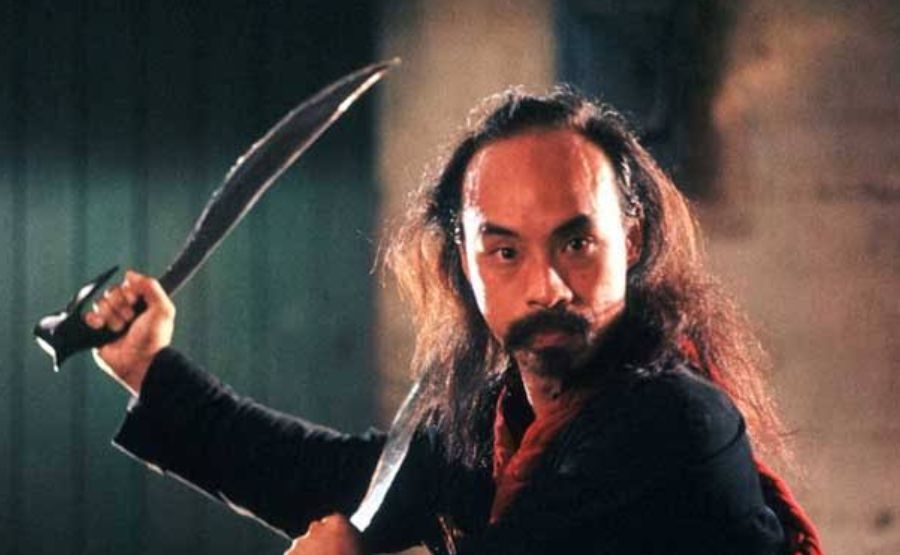
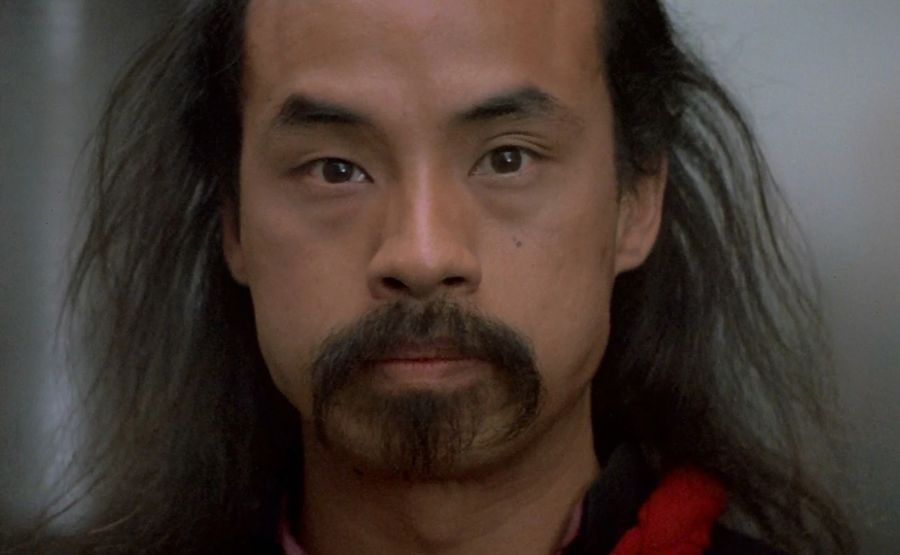
For roughly fifteen years, from the mid-1980s through the early 2000s, Al Leong was Hollywood’s henchman of choice. He appeared in more major action films than almost any other actor of his era — not as the star, not as the main villain, but as the unforgettable face in the second row. The guy who looked genuinely dangerous. The guy who moved like he actually knew what he was doing with his hands. The guy whose face, once seen, stayed permanently in the visual memory of anyone who watched action movies during that golden era.
He was not acting. He was a genuine martial arts champion, a trained stuntman who had broken nearly every bone in his body across two decades of work, a man who had climbed into that world from the Los Angeles streets and stayed there until his body finally said enough.
This is his story. It deserves to be told.
See also “Matt Gerald: The Wharton Graduate Who Chose Hollywood — and Kept Getting Called Back“
St. Louis Birth, Los Angeles Childhood: The Formation of a Fighter
Albert Leong was born on September 30, 1952, in St. Louis, Missouri — but Missouri didn’t hold him long. He grew up in Los Angeles, the city that would eventually make him famous and that shaped him in the ways that Los Angeles shapes young men who grow up in its margins: with an understanding that the world respects toughness, that opportunity doesn’t announce itself, and that if you want something, you go and get it yourself.
The specific details of his childhood — his family, his neighborhood, the particular texture of what it meant to grow up Asian-American in Los Angeles in the late 1950s and 1960s — have not been widely documented. What is known is that he came to martial arts early and that the discipline found him at a moment when he needed exactly what it offered. Martial arts in that era was not a recreational activity in the way it has become — it was a serious commitment, often rooted in cultural identity for Asian-American practitioners, and it demanded both physical sacrifice and mental discipline from everyone who pursued it seriously.
Al pursued it seriously. The nicknames he accumulated — “Ka Bong” and “Chonky” — suggest a personality that was simultaneously formidable and genuinely fun to be around, someone who could take the work seriously without taking himself too seriously. Those qualities would serve him throughout his career in ways he probably couldn’t have anticipated when he was competing on the martial arts circuit.
Martial Arts Training and Competition: Building the Foundation
Before Hollywood, Al Leong was a martial arts champion. This is not a casual biographical detail — it is the entire foundation of the career that followed. Without the martial arts expertise, without the genuine physical capability, without the competition-tested ability to move with speed and precision under pressure, none of the rest of the story happens.
He trained across multiple disciplines and competed with enough distinction to build a reputation in the Southern California martial arts community — a community that, in the 1970s and 1980s, was producing some of the most talented practitioners in the country. His weapons training was particularly notable — a specialty that would become crucial to his eventual transition into stunt work.
What martial arts competition gave him beyond physical skill was something harder to quantify but equally important: a comfort with controlled intensity, an ability to calibrate his physicality for maximum effect, and a professional discipline about preparation that stunt work demands in the same way. Championship competitors and professional stuntpeople share a fundamental characteristic — they cannot afford to be sloppy, because sloppiness in their world produces injuries rather than missed points.
He was never sloppy.
He also had a biker’s life running alongside the martial arts — a dimension of his background that the Henchman documentary explores and that speaks to a personality that sought physical intensity and risk in multiple directions simultaneously. The combination of martial arts champion and dedicated motorcyclist produces a very specific kind of person: someone who is simultaneously disciplined enough to train for competition and bold enough to accept the risks that come with living at the physical edge.
Getting into the Industry: Television, the Early Grind, and Joel Silver
Al Leong’s transition from the martial arts circuit into the entertainment industry happened through the natural intersection of his physical skills and the television industry’s constant need for performers who could actually do the things the scripts required. He began appearing in shows in the early 1980s — The Greatest American Hero, Hart to Hart, Knight Rider, The Equalizer, Airwolf, Hunter, The Fall Guy, The A-Team, MacGyver, Magnum P.I.
This is an extraordinary list when you see it assembled together. These were not fringe productions — they were some of the most-watched American television of the early 1980s, shows with enormous viewership and significant production budgets. Al was appearing in all of them, moving through the world of television action as a stuntman and small-part actor, building the industry relationships and the screen presence that would eventually make him essential to a certain kind of production.
The television years were the education. Every show was a new set of directors, a new set of stunt coordinators, new physical challenges, new opportunities to demonstrate that he was reliable, capable, and genuinely talented in ways that went beyond simply being able to throw a convincing punch. The stunt community is small and deeply networked — reputation travels fast, and capability either confirms itself or doesn’t. Al’s reputation was building.
Then came the call that changed everything. Producer Joel Silver noticed what Al was doing. The films that Silver was producing — 48 Hrs., Lethal Weapon, Die Hard — were precisely the kind of productions that needed exactly what Al offered: a convincing, physically capable, visually distinctive presence that could inhabit the villain’s world credibly and bring genuine menace to scenes that required it. Silver called. Al answered.
The Breakthrough Years: An Unmistakable Face in Every Action Film
Between 1986 and 1992, Al Leong appeared in a sequence of films that constitute one of the most remarkable concentrated runs of memorable supporting performances in the history of American action cinema.
Big Trouble in Little China arrived in 1986. John Carpenter’s gleefully chaotic supernatural action film gave Al a role as one of the Wing Kong warriors — the mystical army serving the ancient sorcerer Lo Pan. The film’s visual style, its commitment to spectacle, and its genuine weirdness created exactly the right environment for Al’s particular screen presence. The film became a cult classic, and Al’s association with it became part of his permanent legacy.
Lethal Weapon came in 1987. Richard Donner’s police thriller paired Mel Gibson with Danny Glover and surrounded them with villains who needed to feel genuinely dangerous. Al played Endo — a torturer, efficient and cold, who straps Mel Gibson to a chair and applies electric shocks with the detached professionalism of someone for whom this is simply work. The scene is disturbing in exactly the way it was intended to be, and Al made it work through physical control and the absence of theatrical excess. Less is more when you’re the person doing the torturing.
Die Hard in 1988. This is the film that, more than any other, has kept Al Leong in the cultural conversation for nearly four decades. Uli — the terrorist who pauses the occupation of Nakatomi Plaza to consume a Nestlé Crunch bar with evident satisfaction — is one of the most inexplicably beloved background moments in the history of Hollywood action films. The chocolate bar scene lasted perhaps thirty seconds of screen time. It required Al to do almost nothing except exist in the frame with complete conviction. He made it immortal.
Bill & Ted’s Excellent Adventure in 1989 revealed a dimension of Al’s talent that straight action films had never required: comedy. As Genghis Khan — specifically, a notably compact Genghis Khan who discovers the joys of a Walmart sporting goods section and later, memorably, a water slide — he managed to be both broadly physical and genuinely funny. The performance required him to locate the comedy inside the menace, which is considerably harder than simply playing either one. He found it without apparent effort.
Rapid Fire in 1992 gave him perhaps his most physically demanding acting role: a sustained fight sequence against Brandon Lee in a laundry room on fire. The fight has been described by multiple observers as one of the best action sequences of Brandon Lee’s tragically shortened career, and it required Al to match a younger, enormously skilled opponent in close-quarters combat while surrounded by practical fire effects. It is genuinely extraordinary stunt and performance work.
The cost of all this work was physical. Al Leong has said directly: “I’ve broken all my ribs at least twice. All my bones have been broken at least twice. Cracked my sternum twice. I’ve broken my hips, arms and everything else because I am a stunt person, I am not an actor.” That statement deserves to sit quietly for a moment and be appreciated for what it represents. Every action sequence that looked effortless from an audience seat was paid for in fractures and pain.
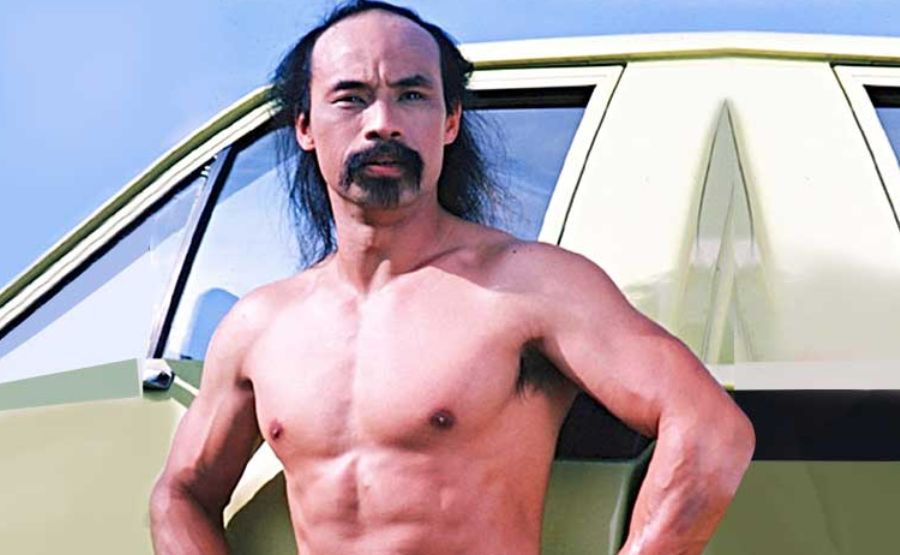
The Full Filmography: Beyond the Iconic Moments
Beyond the four or five films that defined his cultural presence, Al Leong’s career across more than seventy credits demonstrates the sheer breadth of his work and the consistency with which he showed up in major productions.
Black Rain (1989) — Ridley Scott’s atmospheric thriller set in Japan’s criminal underworld. They Live (1988) — another John Carpenter film, another showcase for Al’s capacity to inhabit menace convincingly. Action Jackson (1988). Death Warrant (1990). I Come in Peace (1990). Showdown in Little Tokyo (1991). Last Action Hero (1993) — the Schwarzenegger meta-action film. Beverly Hills Cop III (1994). The Shadow (1994). Escape from L.A. (1996) — his third John Carpenter film, a reunion that spoke to the director’s specific affection for what Al brought to a frame. The Scorpion King (2002). Deadwood (television, 2004).
As a stunt coordinator, he brought to productions the same expertise he had developed as a performer — most notably serving as stunt coordinator on Kung Fu: The Legend Continues in 1994, a production that required both martial arts knowledge and production organization.
In 2000, he stepped behind the camera to write and direct Daddy Tell Me a Story — a low-budget production that marked his directorial debut and demonstrated ambitions that extended beyond performing. A book followed: The Eight Lives of Al “Ka-Bong” Leong, filled with photographs and stories from a career that had taken him through some of Hollywood’s most celebrated action productions alongside some of the industry’s biggest names.
Health Battles: Cancer, Strokes, and the End of Performing
The career that had been built on physical invincibility eventually met the limits that every human body eventually imposes. Al Leong survived cancer — a serious enough experience that surviving it required real medical intervention and recovery time. He then suffered a stroke. And then a second stroke.
The strokes ended his performing career. A man who had spent decades conditioning his body to perform at the highest level of physical action, who had broken bones so many times that he described it as simply part of the job, found himself unable to continue working in the industry he had inhabited for more than two decades. The question asked in the Henchman documentary — “How do you go from being one of THE top Asian stuntmen in the industry to someone who is just physically unable to work in the industry?” — lacks a comfortable response. It is simply what happened.
The documentary, directed by Vito Trabucco and released in 2018, was described by his close collaborator Jeff Imada in these terms: “Al is just a unique, special individual. He has this huge amazing talent. Over the years it’s been great to call him friend.” Friends and colleagues — John Carpenter, Jeff Imada, James Lew, Gerald Okamura, Raymond J. Barry, Craig R. Baxley — shared their memories and their affection for a man who had, as one reviewer noted, been “discarded” by the industry he had served so loyally.
The documentary itself earned an IMDb rating of 8.3 — a genuinely strong score that reflects both the quality of Al’s story and the depth of feeling his colleagues brought to telling it.
Personal Life: The Private Side of a Public Face
Al Leong’s personal life has been maintained with the same privacy that most stunt performers maintain as a matter of professional culture — stunt people are by nature behind-the-scenes operators, accustomed to being the person who makes someone else look extraordinary rather than the person who receives attention. That disposition toward background operation extended into Al’s personal life.
No confirmed spouse, partner, or children appear in any public source. His personal relationships — who he loved, what his home life looked like across the decades of his career — have not been documented publicly. What the documentary and the accounts of those who knew him convey is the picture of someone who was genuinely loved and respected by the professional community around him, whose personality combined the intensity of a competitive martial artist with a warmth and humor that surprised people who expected the character from the screen.
The nicknames tell you something: nobody gives a genuinely frightening person a nickname like “Chonky.” Those are the names of someone the people around him felt comfortable teasing, felt genuinely affectionate toward, wanted to gather around and tell stories about. The picture that emerges from the accounts of his collaborators is of a man who inhabited the villain on screen and was the kind, funny, generous one off it.
Net Worth and Financial Picture
Al Leong’s estimated net worth is approximately $1.5 million — a figure that reflects more than seven decades of professional work across film and television as both performer and stuntman, royalties from his book, and whatever documentary and residual income his extensive filmography has generated over the decades.
The honest context for that number is important. Stunt performers have historically been among the least compensated members of major film productions relative to their contribution and their physical risk. Al appeared in dozens of major Hollywood productions in the 1980s and 1990s — productions that earned hundreds of millions of dollars — and received small-part and stunt performer rates for that work. The financial rewards for being the most recognizable henchman face in Hollywood did not scale with the cultural impact.
His legacy, in cultural terms, is worth considerably more than any net worth figure can capture. He contributed to films that have been watched by hundreds of millions of people. He built a cult following that spans multiple generations of action film enthusiasts. He earned the genuine affection and respect of collaborators who included some of the most respected figures in the American action genre.
Final Words
Al Leong spent fifteen years being killed on screen — by Mel Gibson, by Bruce Willis, by Arnold Schwarzenegger, by Brandon Lee, by Kurt Russell, by Dolph Lundgren. He died in dozens of different ways, in dozens of different films, with a physical commitment and a visual distinctiveness that made each death memorable in its own way. He was, in the truest sense, indispensable to the films he inhabited.
What his career represents — beyond the chocolate bar and the torture chair and the Genghis Khan water slide — is something worth understanding clearly: the labor of the background performer, the cost of the physical work, the dignity of the craft. He was not an accident of casting. He was a trained martial arts champion who had developed genuine expertise across multiple disciplines and who brought that expertise to every frame he appeared in. The producers and directors who worked with him knew what they were getting. They came back, repeatedly, because what they were getting was irreplaceable.
He survived cancer. He survived two strokes. He wrote a book. He allowed a documentary to be made about him that his friends and colleagues filled with genuine love and genuine grief about what the industry does to the people it uses and discards. He kept going.
The greatest henchman in film history was, in real life, the sweetest guy. That gap between the person on screen and the person off it is not a contradiction — it is the measure of how good he was at his job.
See also “Matt Gerald: The Wharton Graduate Who Chose Hollywood — and Kept Getting Called Back“
FAQs
1. Who is Al Leong?
Al Leong, born Albert Leong on September 30, 1952, in St. Louis, Missouri, is an Asian-American actor, stuntman, martial arts champion, stunt coordinator, director, writer, and producer. He grew up in Los Angeles and is best known for his recurring roles as menacing henchmen in major Hollywood action films of the 1980s and 1990s, including Die Hard, Lethal Weapon, Big Trouble in Little China, and Bill & Ted’s Excellent Adventure.
2. What are Al Leong’s most famous roles?
His most iconic performances include Endo — the torturer in Lethal Weapon (1987); Uli — the candy-bar-eating terrorist in Die Hard (1988); a Wing Kong warrior in Big Trouble in Minh in the battle scene with Brandon Lee in the laundry room in Rapid Fire (1992); a miniature Genghis Khan in Bill & Ted’s Excellent Adventure (1989); and Little China (1986).
3. Was Al Leong primarily an actor or a stuntman?
By his own description, primarily a stuntman. He has said explicitly: “I am a stunt person, I am not an actor.” His martial arts expertise and physical training made him one of the top Asian stuntmen in Hollywood, and his distinctive appearance led directors and producers to put him in front of the camera consistently. His career spanned more than 70 credits across both performing and stunt work.
4. What is the chocolate bar scene in Die Hard?
During Die Hard (1988), Al’s character Uli — one of Hans Gruber’s terrorists — pauses while holding Nakatomi Plaza to unwrap and eat a Nestlé Crunch bar with visible satisfaction. The moment lasts perhaps thirty seconds and requires almost no dialogue or action. It became one of the most beloved incidental moments in the film’s history and has followed Al’s legacy ever since.
5. Did Al Leong work with John Carpenter multiple times?
Yes — three times. He appeared in Big Trouble in Little China (1986), They Live (1988), and Escape from L.A. (1996). Carpenter’s repeated casting of Al reflects a specific appreciation for what his screen presence contributed to the visual world of those films.
6. What health challenges has Al Leong faced?
He has survived cancer and two strokes. The strokes ended his performing career, as they left him physically unable to continue the demanding work of stunt performance and on-camera action. The 2018 documentary Henchman: The Al Leong Story addresses this transition directly, with collaborators asking how one of Hollywood’s top Asian stuntmen became unable to work.
7. What is the Henchman documentary?
Henchman: The Al Leong Story (2018) is a documentary directed by Vito Trabucco that explores Al Leong’s life, career, and legacy. It features interviews with colleagues including Jeff Imada, James Lew, Gerald Okamura, Raymond J. Barry, and Craig R. Baxley. It holds an IMDb rating of 8.3 and is available on Amazon Prime Video.
8. Did Al Leong ever direct?
Yes. He made his directorial debut in 2000 with Daddy Tell Me a Story, a low-budget film that he also wrote and produced. The project demonstrated creative ambitions beyond performing and stunt work.
9. What book did Al Leong write?
He authored The Eight Lives of Al “Ka-Bong” Leong, a memoir filled with photographs and stories from his career in Hollywood, documenting his work across dozens of major productions alongside some of the industry’s biggest names.
10. What was Al Leong’s martial arts background?
He was a trained martial arts champion who competed at a serious level before entering the entertainment industry. His weapons training was particularly notable and contributed directly to his transition into stunt work. The physical discipline of championship martial arts competition formed the foundation of everything his career was built on.
11. How many films did Al Leong appear in?
His filmography spans more than 70 credits across film and television. Beyond his iconic 1980s films, his credits include Black Rain, They Live, Action Jackson, Death Warrant, Showdown in Little Tokyo, Last Action Hero, Beverly Hills Cop III, The Shadow, John Carpenter’s Escape from L.A., The Scorpion King, Deadwood, 24, and many others.
12. What is Al Leong’s estimated net worth?
His net worth is estimated at approximately $1.5 million — accumulated across decades of work as a stuntman, actor, stunt coordinator, director, and writer in Hollywood. The figure reflects the financial realities of stunt performing, which has historically provided significantly lower compensation than lead acting roles despite the physical demands and risks involved.