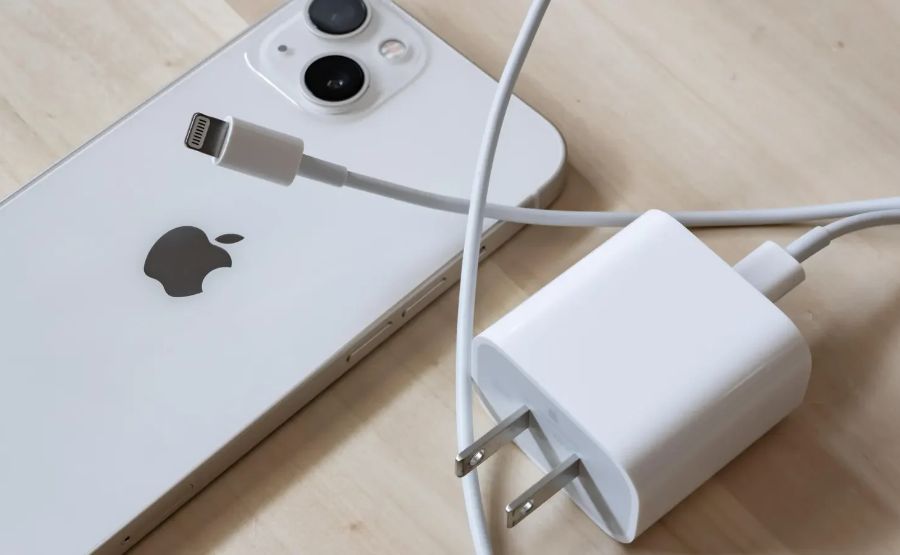
The drawer of old chargers exists because each device arrived with its own. A phone came with a small brick, a tablet with a larger one, a laptop with something the size of a paperback, and none of them was designed to be shared. A single unit can replace most of that collection, provided it meets three conditions: enough power for the hungriest device, enough ports for the rest, and a size you are willing to carry. The reward is one socket, one cable arrangement and a bag that weighs less. The drawer is not a sign of extravagance; it is a record of how devices used to be sold.

The Devices Ask for Different Things
Phone, Tablet, Laptop: Three Different Draws
The range is wider than most people assume. A phone may accept twenty to thirty watts at its peak, a tablet forty or so, and a laptop anywhere from thirty to a hundred and forty depending on the model and what it is doing. Those figures are ceilings rather than requirements, which is the useful part: a device will take what it is offered up to its own limit, and it will not complain about a charger that could give more. A single unit rated for the laptop therefore covers the other two by default, since the smaller devices simply take a fraction of what is available. A laptop on a video call can pull more than its nominal rating, which is why the largest figure is the one that matters.
The Minimum Each One Accepts
There is a floor as well as a ceiling, and it is where shared chargers go wrong. Offered less than it needs, a laptop will charge slowly or not at all while it is running, and a tablet may show the charging symbol while the battery continues to fall. The device is not damaged by this; it is simply spending more than it receives. That is why the iphone chargers sold alongside a phone make such poor laptop chargers, and why the reverse usually works. Match the unit to the largest device and let the small ones take what is left. A slow charger is not useless, only slow, and a phone left on one overnight will still be full by morning.
One Charger, Several Ports
Which Device Gets Priority
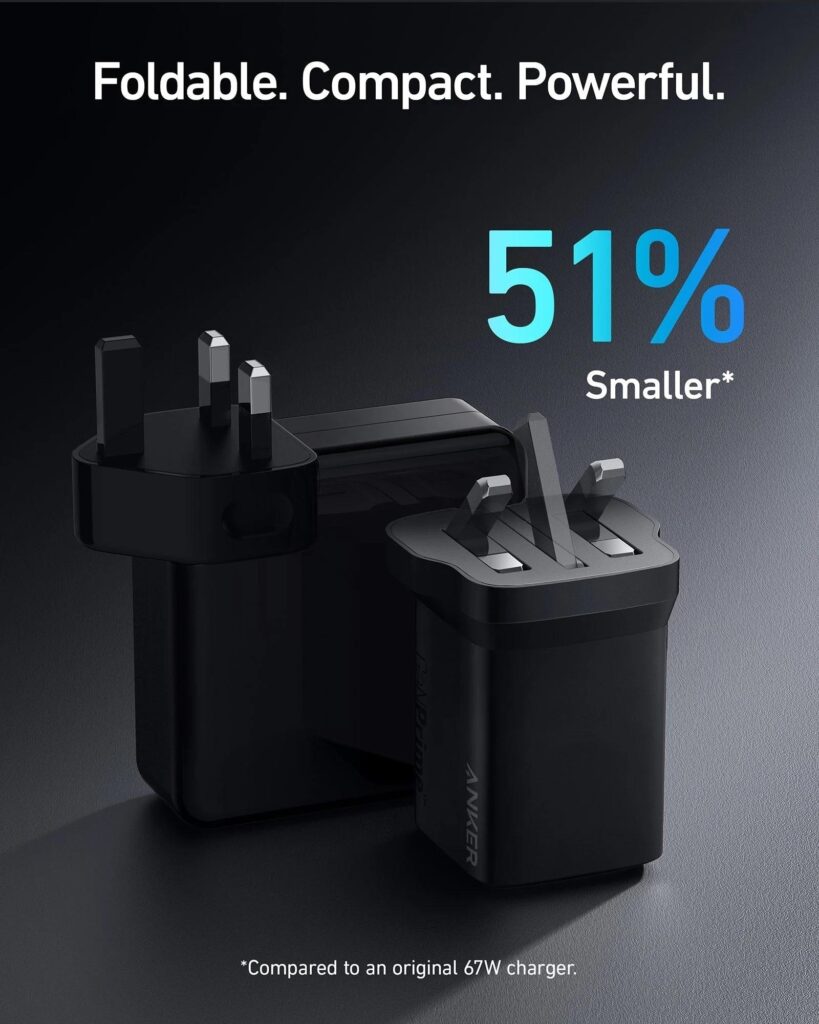
When everything is plugged in at once, something has to give. Most multi-port chargers divide their total rather than multiplying it, and the better ones distribute it according to what each device asks for rather than evenly. A laptop will usually claim the largest share, a phone the next, and a watch whatever remains. Anker’s Prime 67W GaN Wall Charger takes that approach with three ports, and its advantage is how little you lose when you add devices: a single device gets the full 67 W, and two sharing still get 65 W—barely a drop—enough to keep a laptop and a phone moving at full speed together. Many rivals fall off far more sharply once a second port is used. Reading the port labels before plugging in avoids most disappointment. The total belongs to the whole unit rather than to each port, and that distinction explains most of the confusion about multi-port chargers. Once it is clear, the labels make sense.
When the Total Is Not Enough
The signs of a shared ceiling are easy to recognise once you know them. Devices charge more slowly together than alone, one of them stops charging when another is connected, or a laptop reports that it is charging while its percentage stays flat. None of these indicate a fault; they indicate arithmetic. The answer is to unplug the least important device, or to move it to a separate charger, rather than to buy a bigger brick for a situation that happens twice a year. Most households only need the full output on the evening before a trip. Knowing which device can wait is more useful than knowing the exact wattage of each one, and it requires no equipment at all.
Living With One or With Several
The Desk Setup
On a desk, one charger with three ports and three cables is a neater arrangement than three chargers with one cable each. The unit stays plugged in, the cables stay connected, and each device has a home. Cable length becomes the only decision: a short lead for the phone and a longer one for the laptop, so neither is stretched across the surface. A charger that lives on a desk can be larger and heavier than one that travels, which is exactly the trade a household should make, since the desk unit is the one that does the daily work.
The Bag Setup
For a day away, the calculation changes. A single small charger with two ports covers a phone and a tablet, and a laptop needs either a larger unit or a power bank instead. The aim is not to replicate the desk but to cover the hours between sockets, and that usually means one charger, two cables and a pouch. Travelling with the smallest combination that works is a habit worth forming, because the bag that is packed carefully is the one that gets carried. The desk charger can stay where it belongs, and a pouch that holds the travel unit with both cables is the difference between a kit and a tangle.
Conclusion
One charger can cover a household if it meets the hungriest device and has ports for the rest; the remainder of the drawer is habit rather than need. A single well-chosen unit also removes the small daily friction of finding the right brick for the right device, and that friction is more tiring than it sounds. What the drawer really holds is the memory of devices that have long since been replaced.