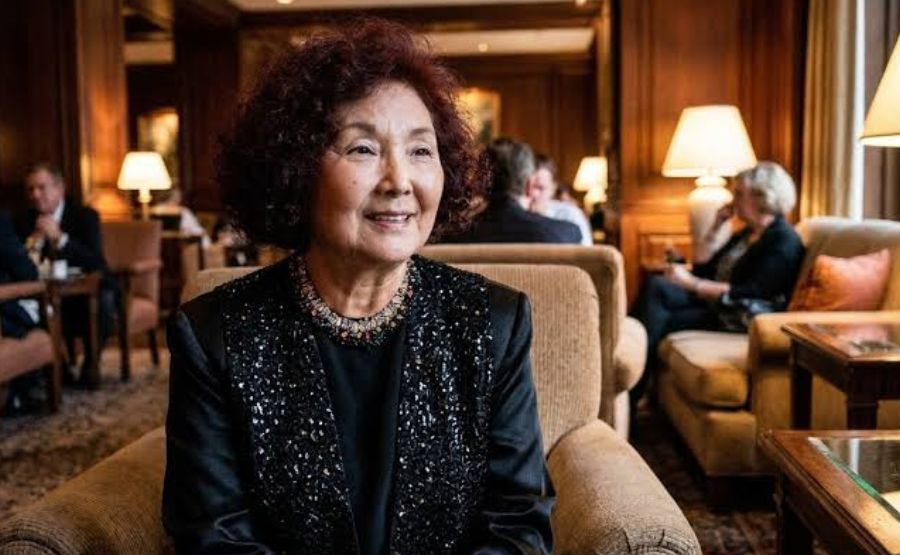
Quick Facts
| Detail | Information |
| Full Name | Yukiye Kitahara |
| Nationality | Japanese |
| Known For | Second wife of actor Pat Morita |
| Marriage Date | December 28, 1970 |
| Divorce Date | 1989 |
| Marriage Duration | 19 years |
| Children | Two daughters, Tia Morita and Aly Morita |
| Ex-Husband | Noriyuki “Pat” Morita (June 28, 1932 – November 24, 2005) |
| Ex-Husband Known For | The Karate Kid’s Mr. Miyagi and Happy Days’ Arnold |
| Current Status | Extremely private — no public profile maintained |
| Net Worth | Not publicly disclosed |
| Public Career | None documented |
Introduction: A Private Life in the Shadow of a Famous Name
There are some people in the orbit of celebrity who choose, quietly and deliberately, to stay out of the light. Yukiye Kitahara is one of them.
Her name appears in the public record almost exclusively in relation to one fact: she was the second wife of Pat Morita, the beloved American actor whose portrayal of the wise and gentle Mr. Miyagi in The Karate Kid made him an icon of 1980s cinema and a figure of genuine cultural affection for generations of fans worldwide.
From December 1970 until their divorce in 1989, Yukiye Kitahara and Pat Morita spent nineteen years creating a life together. They had two daughters. They navigated the complicated, often turbulent landscape of Morita’s entertainment career during a period that included both significant struggle and eventual remarkable triumph. And then, when the marriage ended and the public story moved on, Kitahara stepped back entirely from any form of public attention.
The truth about what is known about Yukiye Kitahara is presented honestly in this essay. That means acknowledging, early and clearly, that the documented facts about her are limited. She has never given interviews. She hasn’t kept up a public persona. Very little about her childhood, her education, her work, or her post-divorce life has been placed on the public record by anyone with direct knowledge of the facts.
What exists is the shape of her connection to a significant figure in American entertainment history. Within that shape, there is a genuinely interesting human story — one that touches on identity, perseverance, the complexity of long marriages, and the particular experience of being Japanese in mid-century America.
See also “Elizabeth Hart: Personal Life, Career, and Interesting Facts“
Who Pat Morita Was: Essential Context
Understanding Yukiye Kitahara’s story requires understanding who Pat Morita was — not because her identity is defined by his, but because the context of his life is the context in which the documented facts about her exist.
Noriyuki Morita was born on June 28, 1932, in Isleton, California, to Japanese immigrant parents. His early life was extraordinarily difficult. At age two, he was diagnosed with spinal tuberculosis and spent much of his childhood in a hospital. When World War II brought Japanese internment to California, he and his family were taken from the hospital — his recovery incomplete — and sent to an internment camp, an experience that left deep psychological marks on him and his entire family.
After the war, Morita worked through his family’s modest circumstances and eventually discovered stand-up comedy as his calling. He performed on the club circuit, often under the stage name “The Hip Nip,” using humor to process and deflect the racial barriers he encountered constantly in mid-century American entertainment. It was grinding, underpaid work for years before anything resembling mainstream success arrived.
His first marriage to Kathleen Yamachi began in 1953 and lasted fourteen years, producing one daughter, Erin. When that marriage ended in 1967, Morita was in his mid-thirties, still working the comedy circuit, not yet the household name he would eventually become.
It was into this period — a man building himself back up after a difficult first marriage, still years away from the television and film recognition that would transform his career — that Yukiye Kitahara entered the picture.

The Marriage: December 28, 1970
On December 28, 1970, Pat Morita and Yukiye Kitahara were wed. The wedding reception was held at the Playboy Club in Los Angeles — a detail that speaks to the social world Morita inhabited as a working comedian and entertainer during that era.
The fact that both Morita and Kitahara were of Japanese heritage is worth noting in the context of the time. The Japanese American community in California in the late 1960s and 1970s was still navigating the generational aftermath of internment, the complex question of assimilation versus cultural identity, and the particular social dynamics of Japanese immigrant families in a country that had, within living memory, imprisoned them.
Kitahara’s own background — where her family came from in Japan, how she came to be in Los Angeles, what she did professionally or socially — has never been placed in the public record. We know she was Japanese. We are aware that she wed Pat Morita at the close of 1970. Beyond that, the documented facts about her individual story before the marriage simply don’t exist in any publicly available source.
We can say that the marriage lasted for nineteen years, which included some of the most significant years of Morita’s career. During that time, the couple had two daughters, both of whom went on to lead quiet, private lives.
Nineteen Years Together: A Marriage Across Two Decades
Nineteen years is a long marriage by any measure.The story of Yukiye Kitahara and Pat Morita’s nineteen years is mainly portrayed through Morita’s career arc because that is the life that was recorded, and hers ran parallel to it.
The early 1970s were difficult. Morita’s comedy work paid modestly. His struggle with alcohol — which he has spoken about in various interviews over the years, acknowledging that he began drinking heavily when very young — created persistent personal and financial instability. There were periods of unemployment. There were stretches where the household finances were strained. For a wife and mother navigating this reality, those were years that demanded patience and resilience regardless of what else was happening.
The mid-1970s brought change. In 1974, Morita landed the role of Arnold Takahashi on Happy Days, the enormously popular sitcom that made him a recognizable face to American television audiences. The character — warm, funny, and culturally specific in a way that felt fresh on American primetime — connected with viewers and gave Morita the mainstream visibility he had been working toward for two decades.
For Yukiye Kitahara, this shift in her husband’s career would have changed the household considerably. The pressures of financial instability eased. The social demands of belonging to the circle around a successful television actor multiplied. The two daughters they had together — Aly and Tia — were growing up during this period in a household where celebrity was becoming a defining feature of daily life.
Then came 1984, and everything changed again. The Karate Kid opened in cinemas, and Pat Morita’s portrayal of Mr. Miyagi — patient, profound, quietly funny, full of hard-earned wisdom — connected with audiences in a way that few performances do. He earned an Academy Award nomination for Best Supporting Actor. The role made him genuinely beloved, not just famous.
Kitahara and Morita were still married during the filming and release of The Karate Kid. The years 1983 and 1984 — the period when this landmark performance was being created — were years when she was his wife.
The Divorce: 1989
After nineteen years, the marriage between Yukiye Kitahara and Pat Morita ended in 1989. The specific reasons have never been made public by either party.
Morita’s alcohol dependency was a documented feature of his life throughout much of his adult years. He spoke about it in later interviews with notable honesty, acknowledging the damage it did to his finances, his relationships, and his sense of self. Whether the drinking contributed directly to the end of the marriage with Kitahara is not something either of them has stated on the record.
What is clear is that both Kitahara and Morita conducted the ending of their marriage with significant privacy. No public statements were made. No contested details became tabloid material. For a man of Morita’s public profile by the late 1980s — post-Karate Kid, post-Oscar nomination — that level of quiet mutual dignity in the ending of a nearly two-decade relationship says something about both of them.
Yukiye Kitahara completely vanished from public life following the divorce. No subsequent relationships have been documented. No professional activities have been placed on record. She chose a life completely outside the attention that surrounded her ex-husband.

Their Daughters: Aly and Tia Morita
The two daughters Yukiye Kitahara and Pat Morita had together are named Aly Morita and Tia Morita. Both have lived private lives, consistent with the example their mother set after the divorce.
Their father’s third marriage — to actress Evelyn Guerrero in 1994 — meant they had a stepmother for the final decade of Morita’s life. When he died on November 24, 2005, of kidney failure at his Las Vegas home at age 73, Aly and Tia were among the survivors his obituaries named, alongside his widow Evelyn and his daughter Erin from his first marriage.
What Aly and Tia have done with their own lives beyond that mention in their father’s obituaries has not been part of any public record that has emerged. Like their mother, they appear to have chosen privacy as a defining value.
Personal Financial Picture: The Honest Assessment
Yukiye Kitahara has never disclosed anything about her financial situation, and no independent source has been able to establish figures.
Her ex-husband Pat Morita’s estimated net worth at the time of his death in 2005 was approximately five million dollars — primarily accumulated through his long acting career, the Karate Kid franchise, its sequels, and his extensive television work. At the time of his death, he owned a two-story home in Las Vegas, Nevada.
Whether any financial settlement from the 1989 divorce provided ongoing support, what Kitahara’s own employment history involved, or what her current financial situation looks like — none of this is part of the public record. Attempting to speculate on these figures would be inventing information rather than reporting it.
Why So Little Is Known: The Value of Private Lives
It’s worth pausing on the question of why Yukiye Kitahara remains so undocumented compared to other figures who have been connected to celebrities of Pat Morita’s stature.
Part of the answer is generational. The marriage began in 1970 and ended in 1989. That pre-dates the internet as a biographical archive. There was no social media. There were no celebrity-adjacent digital footprints being created by everyone in a famous person’s orbit. If a person who wasn’t themselves a public figure chose not to speak to journalists, they could genuinely maintain privacy in a way that is almost impossible today.
Part of the answer is also personal choice. Everything that is documented about Yukiye Kitahara’s behavior after the divorce suggests active, consistent preference for a life lived away from public attention. She gave no interviews. She made no public appearances connected to Morita’s fame. She sought no spotlight.
There is something worth respecting in that. In an era that increasingly treats every adjacent connection to celebrity as a potential personal brand to be monetized, the person who simply chooses not to participate represents a kind of integrity.
See also “Elizabeth Hart: Personal Life, Career, and Interesting Facts“
Final Words
Yukiye Kitahara is, in the documented record, primarily a footnote in someone else’s biography. That is both true and insufficient as a description of any human being’s life.
What the documented facts suggest is a woman who shared nearly two decades of her life with one of the most beloved character actors of his generation. Who raised two daughters through the full arc of that marriage — the struggling comedian years, the Happy Days success, the Karate Kid triumph. Who then, when the marriage ended, made a decision to step entirely out of public view and stay there.
That choice — to live privately, to raise her children without seeking attention, to let her ex-husband’s fame remain his own story without trying to attach herself to it — is itself a kind of statement. Not every person who touches celebrity is changed by it in ways they want others to see.
Yukiye Kitahara remains, by her own apparent design, mostly unknown. That is her right. And the shape of what little is known about her deserves to be told accurately — which means acknowledging what we genuinely don’t know as clearly as reporting what we do.
FAQs
1. Who is Yukiye Kitahara?
The late American actor Pat Morita, well known for his role as Mr., had a second wife, Yukiye Kitahara. Miyagi in The Karate Kid franchise. She and Morita were married from December 28, 1970 to 1989 and had two daughters together.
2. How long were Yukiye Kitahara and Pat Morita married?
Their marriage lasted nineteen years, from December 1970 until their divorce in 1989.
3. How many kids did Yukiye Kitahara and Pat Morita have together?
Together, they had two daughters: Tia Morita and Aly Morita.
4. What caused Pat Morita and Yukiye Kitahara to split up?
The specific reasons have never been made public by either party. Pat Morita has spoken openly in interviews about his long struggle with alcohol dependency and the damage it caused to his personal and professional life, though whether this was the direct cause of the divorce has never been confirmed.
5. Did Yukiye Kitahara ever remarry after her divorce from Pat Morita?
There is no public record of Kitahara’s future marriages or relationships. She has maintained a completely private life since the divorce.
6. What is Yukiye Kitahara’s nationality?
She is Japanese. Beyond that, specifics about her background, birthplace, or family of origin have not been documented in publicly available sources.
7. What was Yukiye Kitahara’s career?
There is no record of Yukiye Kitahara’s professional career. She is not known to have worked in entertainment, business, or any other publicly identifiable field.
8. What is Yukiye Kitahara’s net worth?
She has never disclosed financial information of any kind. Her ex-husband Pat Morita’s estimated net worth at the time of his 2005 death was approximately five million dollars.
9. When Yukiye Kitahara shot The Karate Kid, was he still wed to Pat Morita?
Yes. The Karate Kid was filmed and released in 1984. Kitahara and Morita were not divorced until 1989, meaning she was his wife during the period when his most iconic role was being created and released.
10. How did Pat Morita die?
Pat Morita died on November 24, 2005, from kidney failure at his Las Vegas home. He was 73. His third wife, Evelyn Guerrero, was with him at the time of his passing.
11. What became of Yukiye Kitahara’s daughters?
Both Aly Morita and Tia Morita, Kitahara’s daughters with Pat Morita, have lived private lives out of the public eye. Although they have not pursued public profiles of their own, they are listed in their father’s biographical record.
12. Why is so little publicly known about Yukiye Kitahara?
Kitahara has consistently chosen not to engage with media attention, give interviews, or maintain any public presence since her divorce from Pat Morita in 1989. The marriage also predates the internet era, meaning there was far less automatic documentation of celebrity-adjacent lives during that period. By all evidence, her privacy is a deliberate and consistent personal choice.