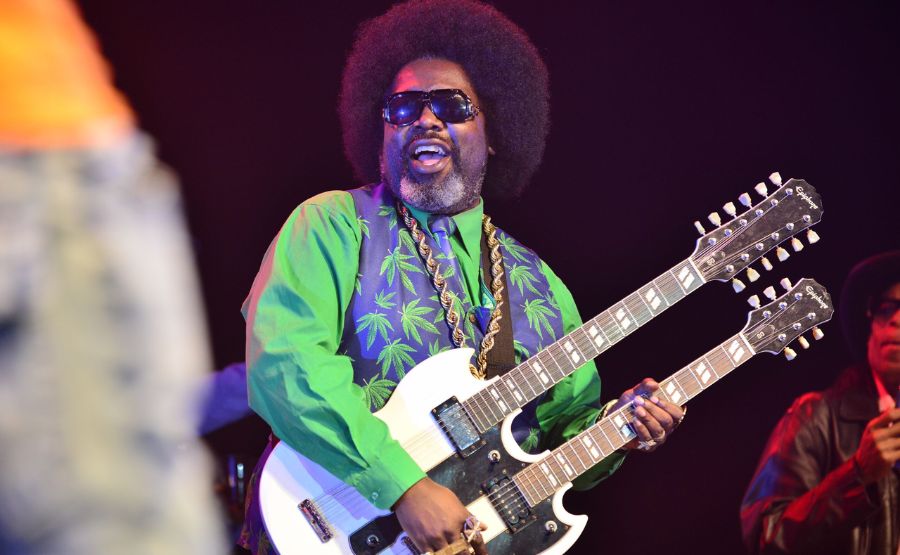
Afroman Net Worth: The Man Behind “Because I Got High” and One of Hip-Hop’s Wildest Legal Victories
Quick Bio
| Detail | Information |
| Full Name | Joseph Edgar Foreman |
| Stage Name | Afroman |
| Born | July 28, 1974, Los Angeles, California, USA |
| Age | 51 (as of 2026) |
| Nationality | American |
| Occupation | Rapper, Singer, Songwriter, Multi-Instrumentalist, Comedian |
| Known For | “Because I Got High” (2001); “Crazy Rap” (2001); 2024 presidential campaign; 2026 lawsuit victory against Ohio sheriff’s deputies |
| Instruments | Guitar, bass guitar, drums, synthesizers, vocals |
| Religion | Christian (converted 2003) |
| Political Party | Libertarian (as of 2026) |
| Children | 2 |
| Net Worth | Estimated $1–4 million (varies by source; see financial section) |
Introduction: The Rapper Who Made a Hit Song About Getting Nothing Done
If you were alive and near a radio in 2001, you heard it. That guitar riff. That lazy, half-sung delivery. The story of a man who meant to do all sorts of things — clean the house, go to court, get a job, be a good father — but didn’t, because he got high.
“Because I Got High” by Afroman was one of the most inescapable songs of the early 2000s. It was funny, it was catchy, and it was specific enough to feel personal even when it was absurd. It went platinum. It got Grammy-nominated. It showed up in movies. Like many novelty hits, the mainstream then moved on, while the individual behind it continued to pursue an independent career spanning decades that most people never noticed because they assumed he had disappeared.
He hadn’t. Joseph Edgar Foreman — the man the world knows as Afroman — has produced over 30 albums, toured continuously, converted to Christianity, run for president of the United States, had his Ohio home raided by law enforcement while he was out of town, turned the security footage into music videos, and then — in March 2026 — won a landmark court case when the deputies who sued him walked away with exactly zero dollars.
That’s a career. That’s life. Let’s walk through it properly.
See also “Daniel Kaluuya Cult: From a Council Estate in Camden to the Academy Awards Stage“
Early Life: South Central, Palmdale, and a Rough Start
On July 28, 1974, Joseph Edgar Foreman was born in Los Angeles, California. His early years were spent in South Central LA — one of the city’s most economically stressed neighborhoods, where poverty was structural and violence was a daily background noise rather than an occasional event.
His family faced financial hardship from the beginning. His parents separated while he was still young, and he and his siblings were raised primarily by their mother, who struggled with addiction. It was the kind of environment that either breaks children or shapes them into people who understand the world more clearly than most.
When Joseph was around thirteen, the family relocated east from South Central to Palmdale — a move his mother made after finding steadier work. The change wasn’t dramatic in terms of the overall economic picture, but it put the family in a house with a backyard and some breathing room. It was an improvement. He carried the memories of where he’d been either way.
Throughout all of this, what anchored him was music. He grew up in a household with strong church ties. He learned to play drums first, banging out rhythms as part of the church community, before moving to guitar — an instrument that would define his entire musical identity. His playing style wasn’t trained in any formal academic sense. It was self-taught, church-formed, and street-inflected. The combination of those three things gave him a sound unlike anyone else in hip-hop.
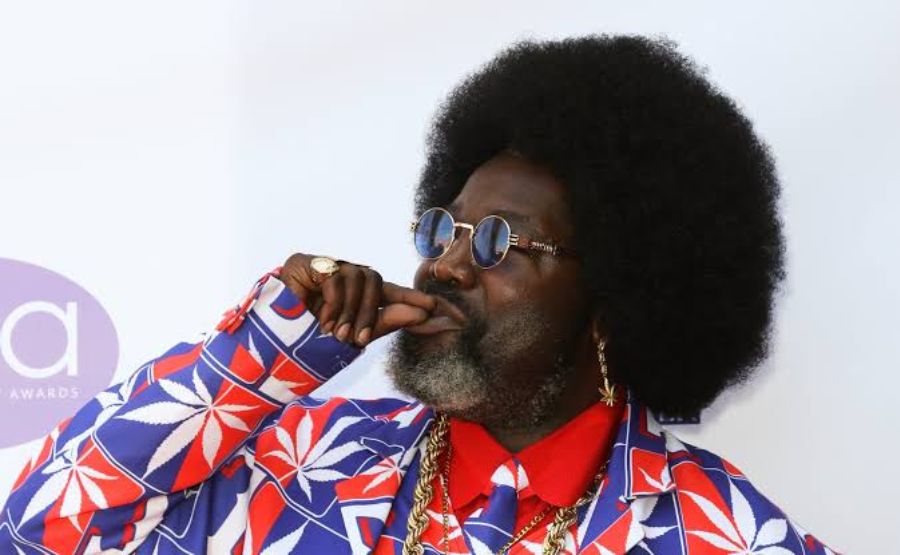
The name Afroman came from an unexpected place. As a young aspiring musician with a large natural Afro, a girl teased him with the name as a kind of put-down. He was broke at the time, hustling to get his music heard. He decided, in that unbothered way that would later define his entire public persona, to just keep it. The insult became the brand.
Education: School as Raw Material
Joseph attended high school in Palmdale, California. He was not particularly celebrated as a student in the traditional sense, but he was already doing something entrepreneurial before most teenagers had even considered the concept of building an audience.
In eighth grade, he started recording songs on homemade tapes and selling them to his classmates. His very first track was a diss directed at a teacher who had disciplined him for wearing his pants too low — a violation of dress code standards in that era. The tape moved roughly 400 copies, not just to students but to other teachers who were apparently entertained enough to pay for it.
Think about that for a second. At thirteen or fourteen years old, he wrote a song about getting in trouble, recorded it himself, sold it by hand, and made money. That is a music career in miniature. All the core elements were already present: the humor, the confession, the self-marketing, and the willingness to be completely honest about his own flaws and frustrations.
He didn’t pursue a college degree. Music was always the plan.
Career Beginnings: Hattiesburg and the Slow Burn
Afroman’s ascent was not sudden. It was the opposite of sudden. It took years of regional grinding, modest releases, and finding the right audience in the right place.
His debut album, My Fro-losophy, came out in 1998. It didn’t connect nationally. He wasn’t deterred. He released Sell Your Dope in 1999, and around that same time made a move that turned out to be crucial — he relocated to Hattiesburg, Mississippi.
This sounds counterintuitive for an LA-born rapper. But Hattiesburg gave him something he hadn’t found in California: a receptive local audience and a collaborating team. He linked up with drummer Jody Stallone, a keyboardist and bassist named Darrell Havard, and a producer who went by Headfridge. Together they developed the sound that would eventually become Because I Got High.
The song started gaining traction through an unlikely route — live performances and the then-new file-sharing platform Napster. People were downloading and sharing music outside the traditional radio and label infrastructure, and Afroman’s track spread organically through that network before any major label had even heard of him.
By 2000, the buzz was undeniable. Universal Records signed him. The album The Good Times came out in 2001, carried by two singles: “Because I Got High” and “Crazy Rap” — both of which became cultural touchstones almost overnight.
Major Achievements: A Grammy Nod and a Cultural Moment
“Because I Got High” reached its highest ranking of thirteen on the Billboard Hot 100. In the US, it achieved platinum status. It landed on the soundtrack for Jay and Silent Bob Strike Back. It earned Afroman a Grammy nomination for Best Rap Solo Performance at the 2002 ceremony — recognition that placed him alongside the most significant figures in hip-hop at the time.
“Crazy Rap,” the album’s other major single, was similarly successful in terms of radio play and cultural saturation, though it traveled through the more explicit end of the comedy rap spectrum and wasn’t played on most mainstream stations.
In 2014, with marijuana legalization gathering political momentum across the country, Afroman released a reworked version of “Because I Got High” with reversed lyrics. Instead of a story of self-sabotage, the new version reframed marijuana use as something constructive and positive. It was a clever piece of cultural commentary that renewed attention on him at exactly the right moment in the national conversation about cannabis policy.
Beyond music, he appeared in several films including Jay and Silent Bob Strike Back and A Thousand Words, and built a prolific independent catalog — over 30 albums across his career.
He converted to Christianity in 2003, a transition he described as a genuine shift in his personal identity. He began integrating his faith into his public persona and some of his music, even while continuing to perform the cannabis-themed songs that had made his name.
Personal Life: Faith, Family, and Privacy
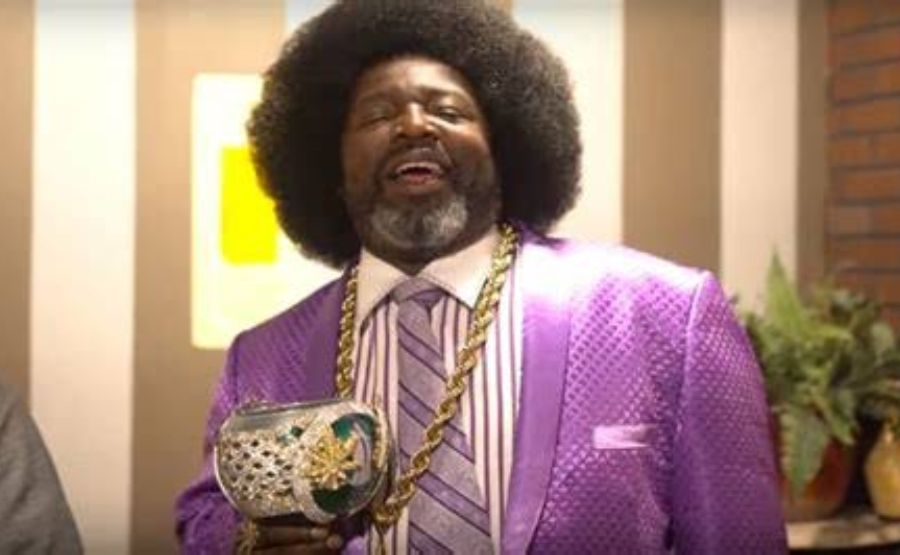
Afroman has been married to Angie Foreman, and the couple has two children together. He has kept his family life considerably more private than his professional one, which is a deliberate choice for someone who has spent the better part of three decades navigating the attention that comes with a famous novelty hit.
What he has shared publicly suggests a man who takes fatherhood seriously and who has tried to ground his family life in his Christian faith. His 2003 conversion was not, by his own account, a publicity move. He described it as a genuine turning point — a shift from making music that glorified himself toward making music that reflected something larger.
Whether or not that shift fully resolved the tension between his faith and his most famous catalog is a question he’s addressed with characteristic self-awareness. He’s a complicated person who holds contradictions without appearing to be destabilized by them. He still performs “Because I Got High.” He still talks about God. He sees no particular contradiction between those two facts.
He has two children and has expressed that being a father has shaped his perspective on everything — including his political engagement and his willingness to fight back legally when he believed he was treated unjustly.
Challenges: Assault, Raids, and the Lawsuit That Almost Cost Him Everything
Let’s be honest about the hard parts.
In February 2015, during a live concert performance, Afroman was captured on video punching a woman who had come onto the stage while he was mid-song. The hit appeared to be a reflex — he turned to find someone behind him and swung before processing who it was. His reputation was seriously harmed by the incident, and the video went viral right after.
He was arrested and charged with assault. He subsequently apologized publicly. A lawsuit followed, and he ultimately settled it, paying $65,000 to the woman who had been struck. It was an incident that cost him money, goodwill, and several years of brand recovery. He has not sought to minimize it.
The second major crisis was arguably more interesting from a legal and cultural standpoint. In August 2022, while Afroman was in Chicago for a performance, law enforcement from Adams County, Ohio, raided his home. The basis for the raid was suspicion of drug trafficking and kidnapping — allegations that turned out to be entirely unfounded. Officers found nothing. They filed no charges. But they did cause over $20,000 in property damage during the search, and they seized roughly $5,000 in cash, of which a small amount went unaccounted for when the funds were eventually returned.
Afroman’s home had security cameras rolling throughout the entire raid. He had the footage. And he did exactly what an independent rapper with a platform and a sense of humor would do — he made music videos out of it.
The tracks “Lemon Pound Cake” and “Will You Help Me Repair My Door” used the security footage directly, showing deputies moving through his house. The videos went viral. They were genuinely funny. They were also genuinely pointed — a man who had been wrongly raided, suffered property damage, and had money confiscated was now using the visual record of that event to make art.
In 2023, seven of the Adams County sheriff’s deputies filed a civil lawsuit against him, demanding nearly $4 million in damages. Their claims included invasion of privacy, defamation, and emotional distress.
The case moved toward trial through 2025 and into early 2026. In March 2026, a jury delivered a unanimous verdict in Afroman’s favor. The deputies received zero dollars. The jury accepted his legal team’s argument that the videos constituted protected artistic expression and satire.
It was a landmark outcome — not just for Afroman personally, but as a statement about the rights of individuals to document and comment on law enforcement conduct.
Financial Situation: A Complicated but Honest Picture
Afroman’s finances are genuinely difficult to pin down, and the honest version of that complexity is worth explaining rather than papering over.
He had a moment of massive commercial success in 2001. The kind of success that, under different circumstances, might have built a multi-million dollar foundation. But several things worked against him financially.
First, he remained largely independent through much of his career. Independence means creative control, but it also means bearing all the costs and risks that a major label infrastructure would normally absorb. He built his own catalog, ran his own shows, and sold directly to his audience — which is admirable but financially leaner than a traditional label deal.
Second, the legal battles were expensive. The 2015 assault settlement cost him $65,000. The years of attorneys’ fees fighting the 2023 lawsuit added up considerably, even before the verdict came in. Multiple sources estimate that his legal expenses during the raid-related case alone potentially ran into six figures.
Third, the nature of his hit — a comedy song about marijuana from 2001 — has a limited ceiling in terms of ongoing royalty scale, especially compared with more mainstream genres.
Celebrity Net Worth estimates his current net worth at approximately $1 million. Other sources place it somewhat higher, in the $4–6 million range, accounting for his independent catalog, touring income, and merchandise revenue. The truth is probably somewhere in the middle — and the March 2026 legal victory, which prevented a potential $3.9 million judgment against him, significantly improved whatever that number actually is.
He is not wealthy in a mansion-and-yacht sense. He is financially stable, independently sustained, and genuinely comfortable by most standards. He makes his money by continuing to work, which he does constantly.
Today: Presidential Bids, Lemonade, and Winning in Court
As of 2026, Afroman is 51 years old and one of the more unexpectedly relevant figures in American independent music and culture.
He announced a run for president in the 2024 cycle, with his campaign centered on marijuana legalization, law enforcement accountability, housing costs, and inflation. He ran as an independent voice with libertarian leanings — now formally identified with the Libertarian Party as of 2026. The campaign attracted attention partly because of who he is and partly because his policy positions weren’t actually as absurd as the name recognition might suggest. He didn’t win. He made a point.
He also got into the lemonade business at some point during the post-raid period — a detail that various sources reference in connection with his general entrepreneurial pivot and the “Lemon Pound Cake” branding that surrounded his raid-related content.
And in March 2026, he walked out of a courtroom in Ohio having defeated a nearly $4 million lawsuit brought by the very people who had raided his home, found nothing, and then sued him for talking about it.
He still tours. He still makes music. He still has the Afro.
Final Words
Afroman’s story is one of those careers that looks simple from the outside — one-hit wonder, novelty rapper, guy who made a song about weed in 2001 — and turns out to be something much more interesting up close.
He came out of genuine poverty, taught himself to play multiple instruments in a church, started a music business at age thirteen, built an independent catalog of over 30 albums, won a historic free speech battle against law enforcement in 2026, survived two significant legal crises, stood for president, and negotiated the perils of unexpected fame without a safety net.
What makes him stand out isn’t any one of those things. It’s the consistency of his approach throughout all of them. He stayed unbothered. He kept making things. He turned his problems into his material — literally, in the case of the raid footage. And he did it all on his own terms, without a major label, without a manager making every decision, and without pretending to be something he wasn’t.
“Because I Got High” is funny. But the story of the man who made it is genuinely impressive. That part, most people missed.
FAQs
1. What is Afroman’s real name?
His real name is Joseph Edgar Foreman. He adopted the stage name Afroman after a girl teased him with the nickname during his early years as a struggling musician — referring to his large natural Afro hairstyle. Rather than take offense, he decided to make it his identity.
2. What is Afroman’s net worth in 2026?
Estimates vary significantly by source. Celebrity Net Worth places his net worth at approximately $1 million. Other sources estimate it as high as $4–6 million when accounting for his independent music catalog, merchandise, and touring income. The March 2026 court victory — which prevented a potential $3.9 million judgment against him — significantly stabilized his financial picture. He is not conventionally wealthy but is financially independent and continues to earn through his work.
3. What is Afroman best known for?
He is best known for the 2001 single “Because I Got High,” a comedy rap track about the self-sabotaging effects of marijuana use. The song reached the top fifteen on the Billboard Hot 100, went platinum, and earned him a Grammy nomination for Best Rap Solo Performance in 2002. His other notable song, “Crazy Rap,” was released the same year and became equally popular, though it received less radio airplay due to its explicit content.
4. Where was Afroman born and raised?
He was born in Los Angeles, California, and spent his early childhood in the South Central neighborhood. His family later relocated to Palmdale in the Mojave Desert region of Southern California when he was around thirteen years old.
5. Did Afroman really run for president?
Yes. He announced his presidential candidacy during a 2022 concert in Missouri and campaigned for the 2024 election cycle as an independent voice focused on marijuana legalization, law enforcement reform, housing affordability, and inflation. He has since aligned with the Libertarian Party. The campaign attracted significant media attention given his profile and the specificity of his policy positions.
6. What happened during the 2022 police raid on Afroman’s home?
In August 2022, Adams County, Ohio, sheriff’s deputies raided Afroman’s home on suspicion of drug trafficking and kidnapping while he was away performing in Chicago. The raid found no evidence of any crime. No charges were ever filed. Approximately $5,000 in cash was seized and later returned, minus a small amount. The raid caused over $20,000 in property damage to his home.
7. What did Afroman do with the raid footage?
His home security cameras captured the entire raid on video. He incorporated the footage into music videos for two songs — “Lemon Pound Cake” and “Will You Help Me Repair My Door” — both of which went viral and served as commentary on the conduct of the officers involved.
8. What was the outcome of the lawsuit the deputies filed against Afroman?
In 2023, seven Adams County deputies sued Afroman for nearly $4 million, alleging invasion of privacy, defamation, and emotional distress stemming from his use of their likenesses in his music videos. In March 2026, a jury ruled unanimously in Afroman’s favor, awarding the deputies zero dollars. The verdict affirmed that his videos constituted protected artistic expression and satire under the First Amendment.
9. What happened at Afroman’s 2015 concert?
During a performance in February 2015, a woman came onto the stage while Afroman was mid-performance. He turned and struck her — what he described as an involuntary reflex. The footage of the incident went viral. He was arrested on assault charges, publicly apologized, and later settled a civil lawsuit filed by the woman for $65,000.
10. Is Afroman religious?
Yes. He converted to Christianity in 2003, shortly after achieving mainstream fame with “Because I Got High.” He has described the conversion as a genuine personal transformation and has incorporated faith-based themes into portions of his music and public statements since then.
11. How many albums has Afroman released?
Afroman has released over 30 albums across his career, the vast majority of them independently. His major-label output was limited to The Good Times (2001), which was released through Universal. He has continued releasing music prolifically since then, maintaining a direct relationship with his audience rather than relying on traditional label infrastructure.
12. Is Afroman still performing and making music in 2026?
Yes. He continues to tour actively, performs at festivals and venues around the country, and releases new music through his independent channels. He is still one of the most reliable performers from the early 2000s hip-hop period at the age of 51, and after his legal victory in 2026, he may be more widely relevant than he has been in years.
Explore ideas that elevate your thinking with The Elevate Magazine.