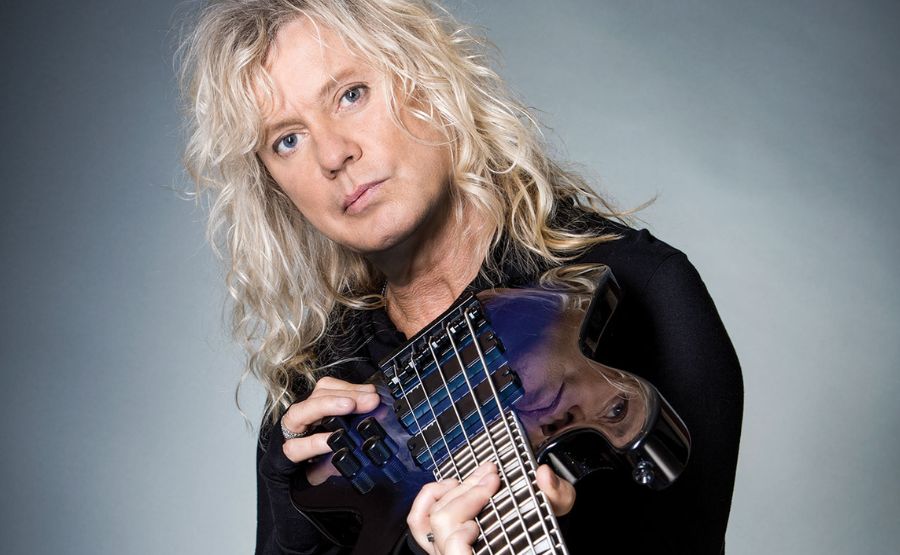
Rick Savage: The Story Behind Def Leppard’s Legendary Bass Player
Quick Bio
| Detail | Information |
| Full Name | Richard John Savage |
| Born | December 2, 1960 |
| Age | 65 (as of 2026) |
| Birthplace | Sheffield, South Yorkshire, England |
| Nationality | British |
| Height | 5 ft 9 in (approximately) |
| Occupation | Musician, bassist, songwriter |
| Instrument | Bass guitar; keyboards |
| Band | Def Leppard (founding member, 1977–present) |
| Known For | Founding bassist of Def Leppard; one of rock’s longest-serving rhythm sections |
| Co-wrote | Numerous Def Leppard albums spanning five decades |
| Wife | Paige Savage (née Johnson; m. 1993) |
| Children | Two sons |
| Residence | Nashville, Tennessee, USA |
| Estimated Net Worth | Approximately $50 million |
Introduction: The Quiet Foundation of a Very Loud Band
When people think about Def Leppard, they usually think about Joe Elliott‘s arena-shaking voice, or the one-armed drumming miracle of Rick Allen, or the twin guitar attack of Phil Collen and Vivian Campbell. Those are the stories that get told most often.
But there is a man who has been the rhythmic foundation of the whole enterprise from the very beginning — before the first record deal, before the first major tour, before Hysteria became one of the best-selling albums in rock history. A man who has been showing up to play bass for Def Leppard since he was sixteen years old and who is still doing it almost fifty years later.
That man is Rick Savage.
He doesn’t court attention the way some of his bandmates do. He doesn’t give the most interviews. He isn’t the one most often featured in the marquee press coverage. But ask anyone who understands what makes Def Leppard work as a musical unit, and the answer always circles back to the rhythm section — and Rick Savage has been holding down the low end of that section since the band’s first rehearsal in a Sheffield equipment storage room in the late 1970s.
His story is one of the most durable in rock music. A working-class kid from Sheffield who picked up a bass, joined a band with his school friends, and turned that teenage hobby into a five-decade career that has sold more than a hundred million records.
See also “Andy Nicholson: The Sheffield Kid Who Helped Build a Legend — and Had to Find His Own Way Home“
Early Life and Childhood: Sheffield and the Sound of Steel
Rick Savage was born on December 2, 1960, in Sheffield, South Yorkshire — the city that in the 1960s and 1970s was simultaneously one of the most culturally vital and economically pressured places in England. Sheffield was steel country. It was a place where heavy industry defined the landscape, where working-class families understood that life was built on physical labor and practical determination, and where the grittiness of daily existence generated a creative energy that kept expressing itself in music.
The city that produced Rick Savage also produced Joe Cocker, Pulp’s Jarvis Cocker, the Human League, Arctic Monkeys, and a disproportionately large share of British popular music across multiple decades and genres. There is something about Sheffield — the combination of industrial hardness, Northern English resilience, and the need for joy in the face of hard circumstances — that keeps producing musicians.
Rick grew up in that environment. His family was ordinary in the best sense — working people who made their lives in a working city, who didn’t have connections to the music industry or any particular reason to believe that a boy picking up a bass guitar was doing anything more than a teenager would do.
He attended Tapton School in Sheffield, where fate — or more accurately, the specific lottery of which students happen to be placed in which classes at which schools — threw him together with Joe Elliott and Pete Willis, the singer and guitarist who would become co-founders of what eventually became Def Leppard. The friendships formed in those Sheffield school corridors in the mid-1970s have turned out to be among the longest and most creatively productive in rock history.
Education: School, Music, and the Choice That Changed Everything
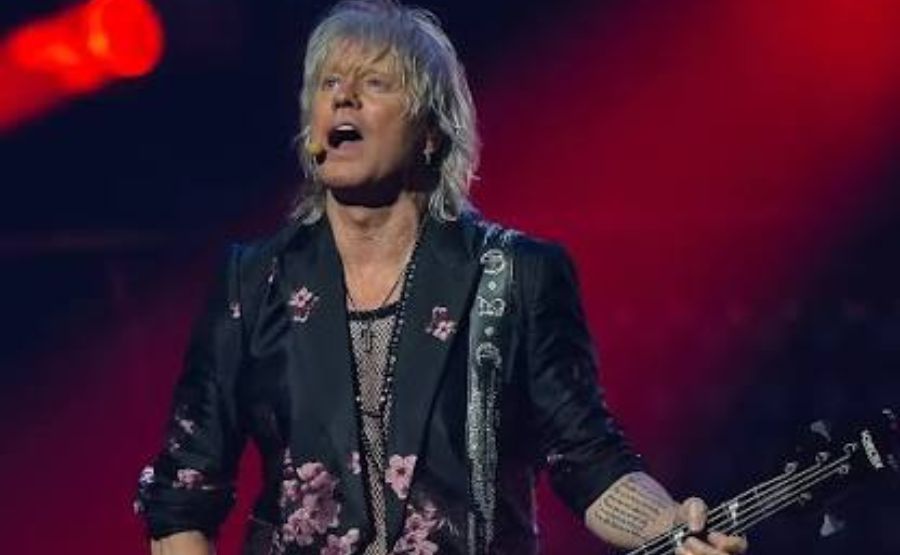
Rick attended Tapton School and received the standard British secondary education of his era. But the real education that mattered for his life was happening alongside and increasingly outside that formal structure — in rehearsal rooms, in garages, in the specific discipline of learning to play an instrument well enough to contribute to something worthwhile.
He became interested in bass guitar as a teenager, drawn to the rhythmic foundation that bass provides — the way it sits at the intersection of melody and rhythm, the way it locks with drums to create the pulse that everything else sits on top of. That appeal makes sense in retrospect for someone whose musical contribution to Def Leppard would be defined by exactly that quality: reliable, powerful, locked-in bottom end.
When the opportunity came to be a founding member of what would eventually become Def Leppard, the formal educational path became less central to his thinking. He was sixteen years old. The band was just beginning. The choice between conventional post-school routes and the gamble of trying to make it as a musician was made, and it was made with the specific courage that teenagers in that era often possessed because they hadn’t yet accumulated enough life experience to know how improbable success was.
He went with the band.
Career Beginnings: A Sheffield Equipment Room and a Band in Formation
The origins of Def Leppard are one of rock’s better origin stories precisely because of how ordinary they were. In 1977, a group of Sheffield teenagers who liked heavy rock music started putting together a band. Rick Savage was there from the start — not as a latecomer who joined an already-formed group, but as one of the founding members who helped define what the band was going to be.
The original lineup was assembled in stages: Rick and Joe Elliott knew each other from school. Pete Willis was another early presence. Drummer Tony Kenning came and went, eventually replaced by Frank Noon and then, crucially, by a fifteen-year-old Rick Allen, whose joining in 1978 completed the rhythm section partnership with Rick Savage that would become one of the defining elements of the Def Leppard sound.
They called themselves various names — including Atomic Mass — before settling on Def Leppard, a name that deliberately obscured its hard rock identity with an alternative spelling designed to look less aggressively metal. It was a calculation that proved prescient: Def Leppard always had ambitions beyond the genre limitations that would have capped their potential audience.
They played Sheffield venues. They released an EP independently in 1979 — Getcha Rocks Off — which they financed themselves and sold initially from the back of a van. The EP generated enough attention to attract the interest of Phonogram Records and Mercury Records. By 1980, they had a record deal. By 1981, they had released their debut album, On Through the Night, which reached number fifteen on the UK charts and broke into the American market on the strength of heavy touring.
Rick Savage, at twenty years old, was a professional musician with a major label deal. The gamble had started paying off.
The Pyromania Era: When Everything Changed
The early albums established Def Leppard as a promising act. But 1983’s Pyromania was when everything shifted into a different gear entirely.
Produced by Robert John “Mutt” Lange — the South African producer who had also transformed AC/DC’s sound on Back in Black — Pyromania was a departure from the band’s earlier, more traditionally hard rock approach. It was polished. It was layered. The production applied pop sensibility to rock power in a way that was new and that proved enormously effective. Songs like “Photograph” and “Rock of Ages” were built on Rick Savage’s bass lines locking with Rick Allen’s drums to create a foundation that the guitars and vocals could soar above.
Ten million copies of Pyromania were sold in the US alone. It was the second-bestselling album in America in 1983, behind only Michael Jackson’s Thriller. Def Leppard had become one of the biggest bands in the world, seemingly overnight, though the overnight success had actually taken six years of consistent grinding work.
Rick Savage was twenty-two years old. He had gone from Sheffield school corridors to being a member of one of the most commercially successful rock bands on the planet in the space of less than a decade.
Hysteria and a Decade of Triumph
The story of Def Leppard’s Hysteria album — released in 1987 — is one of the most remarkable in rock history, and Rick Savage is part of it at every step.
The album took four years to make. It began after the traumatic accident on December 31, 1984, that cost Rick Allen his left arm and nearly ended both his life and the band’s career. The decision not to replace Allen but to support him through his recovery and the development of a custom drum kit he could play with one arm extended the recording process significantly. It also changed the band permanently and, in the view of many observers, for the better — generating a unity and mutual loyalty that gave subsequent performances an emotional depth beyond ordinary rock chemistry.
Hysteria eventually emerged in August 1987 and proceeded to sell over twenty million copies worldwide. Seven singles were released from it. Seven singles charted in the top thirty on the Billboard Hot 100. That is a statistical achievement that essentially no other rock album has replicated.
Rick Savage’s bass work across Hysteria exemplifies what he does best: never flashy, always present, always exactly what the song needs. He is the low-end anchor that allows the band’s more extrovert elements — the dual guitars, the harmonized vocals, the layered production — to operate at the heights they do.
The subsequent decade brought more touring, more albums, and continued commercial success. Adrenalize in 1992 debuted at number one in both the UK and the US — a remarkable achievement for a hard rock band in an era when grunge was threatening the commercial viability of everything that Pyromania and Hysteria represented.
Significant Accomplishments: The Data That Shows the Story
The statistics of Def Leppard’s career are, at this point, genuinely staggering.
Over one hundred million albums sold worldwide. Membership in both the Rock and Roll Hall of Fame — inducted in 2019 — and the UK Music Hall of Fame. Multiple Diamond certifications from the RIAA. The specific achievement of placing seven singles in the top thirty from a single album — an unrepeated record in rock music.
For Rick Savage specifically: nearly fifty years as a founding member of a band that has never broken up, never seen the rhythm section change through the lineup shifts that have altered the lineup around it, and never produced a bass player who needed to be what he wasn’t. He has been present on every Def Leppard studio album. Every tour. Every lineup iteration.
The Rock and Roll Hall of Fame induction in 2019 was a formal recognition of what the broader musical community already understood: that Def Leppard’s contribution to rock music, and to the specific sound of rock in the 1980s, was genuinely significant and genuinely lasting.
Personal Life: Family, Nashville, and a Life Outside the Spotlight
Rick Savage married Paige Johnson in 1993. They have two sons together. The family settled in Nashville, Tennessee — a somewhat surprising choice for a British hard rock musician, but one that reflects the broader reality of where many working musicians in America end up, given Nashville’s central position in the music industry and its livable quality of life.
He has maintained a personal profile considerably lower than the fame his career would warrant. He is not a regular fixture in celebrity press. He does not maintain a high-volume social media presence. He appears at Def Leppard events, gives occasional interviews, and otherwise lives a life that is clearly organized around family and music rather than around visibility for its own sake.
The contrast between the enormous public profile of the band he helped found and the quietness of his personal life is, in its own way, characteristic of the bass player’s role in the broader ecosystem of rock and roll. The rhythm section holds things together from the foundation upward. The visibility flows naturally toward those operating higher in the arrangement.
Rick Savage has never appeared to resent that dynamic. He occupies his role — in the band and in its public life — with the same steady reliability that characterizes his playing.
Challenges: Watching Tragedy and the Long Recovery
The most documented personal challenge of Rick Savage’s career is shared with his bandmates: navigating the aftermath of Rick Allen’s 1984 accident and the decision about what it meant for the band.
Allen lost his left arm in a car accident on December 31, 1984. The initial assumption — both within the band and in the press — was that Def Leppard’s career was over. You cannot be a rock band without a drummer. And while prosthetics and adaptations were possible, nothing had been attempted at the professional level that anyone was aware of.
Rick Savage was part of the group of bandmates who collectively decided to wait for Allen’s recovery rather than replace him. That decision required genuine patience — the Hysteria album took four years partly as a result of the time needed for Allen’s rehabilitation and adaptation. It also required genuine belief in both Allen as a person and in the band’s future.
The other significant challenge was the loss of guitarist Steve Clark to alcohol-related causes in January 1991. Clark was a founding member and a central creative voice. His death was devastating personally and required the band to regroup around a new lineup — eventually adding Vivian Campbell as his replacement — while also processing genuine grief.
Rick Savage has not spoken extensively about either loss in terms of his own emotional experience, consistent with his generally private approach to his inner life. But the band’s handling of both crises — with loyalty, patience, and continued forward momentum — reflects a collective character that he has been part of shaping across five decades.
Financial Situation: What Fifty Years at the Top Actually Builds
Rick Savage’s estimated net worth is approximately $50 million — a figure that reflects both the scale of Def Leppard’s commercial success and the sustained nature of that success across nearly five decades.
The income streams are multiple and compounding. Album royalties from a catalog that includes one of the best-selling albums of the 1980s continue to generate significant passive income. Touring revenue from a band that still fills arenas and stadiums — including a 2022–2023 stadium tour with Mötley Crüe that was one of the highest-grossing rock tours in recent years — adds active income to the passive streams. Licensing deals, merchandise, streaming royalties, and the ongoing commercial activity around a back catalog that includes Hysteria, Pyromania, and Adrenalize all contribute.
He is not the public financial face of Def Leppard — the band’s business dealings are managed collectively and through professional management structures that have evolved significantly from the early Sheffield days. But he is one of the founding members with full songwriting and recording credits across the catalog, which means his share of that accumulated wealth is real and substantial.
He lives well in Nashville. He has maintained the financial security that a career of his length and achievement produces. He is not, by most available indications, ostentatious about it.
Life Today: Still Playing, Still Showing Up
At sixty-five years old, Rick Savage is still the bassist of Def Leppard. The band is still active. They toured extensively in 2022 and 2023, and the ongoing appetite for Def Leppard’s catalog — both the arena rock of their peak years and the deep-cut material that devoted fans treasure — suggests no imminent cessation of activity.
He has occasionally spoken about his admiration for bands that maintain integrity across long careers and about his own relationship to the material he has been playing for decades. The songs don’t diminish. The audience doesn’t diminish. The craft required to deliver them night after night does not diminish either.
He lives in Nashville with his family. He is, by most accounts, a settled and contented man — which is itself a relatively unusual outcome for someone who spent a significant portion of their career inside one of rock’s most successful bands during the most commercially intense period of rock music’s commercial history.
Final Words
Here is the honest assessment of Rick Savage’s place in rock history.
Without the bass lines, the rhythm section wouldn’t lock. Without the locked rhythm section, the guitars don’t have the platform they need. Without that platform, Hysteria‘s production doesn’t work the way it needs to work. Without Hysteria working the way it needs to work, you don’t sell twenty million copies and you don’t change what rock music sounds like in 1987.
Rick Savage is the foundation. He has been the foundation for forty-nine years and counting.
He grew up in Sheffield in the shadow of steel mills. He picked up a bass at sixteen. He joined a band with his schoolmates and made a bet on the future. The bet paid off at a scale that none of them could have imagined from a Sheffield equipment room in 1977, and the winnings — both financial and artistic and human — have been compounding ever since.
That is a life well lived. In rock music, that is also a legacy worth acknowledging.
See also “Andy Nicholson: The Sheffield Kid Who Helped Build a Legend — and Had to Find His Own Way Home“
FAQs
1. What is Rick Savage’s role in Def Leppard?
He is the founding bassist and one of the founding members of Def Leppard. He has been with the band since their formation in Sheffield in 1977 and has appeared on every studio album the band has released across their nearly five-decade career.
2. Where was Rick Savage born?
He was born on December 2, 1960, in Sheffield, South Yorkshire, England — the same city that spawned the rest of the founding Def Leppard members.
3. How did Rick Savage meet his Def Leppard bandmates?
The core connection happened at Tapton School in Sheffield, where Rick, Joe Elliott, and Pete Willis were students together. The friendships formed there in the mid-1970s led directly to the formation of the band.
4. What is Rick Savage’s estimated net worth?
Approximately $50 million, reflecting decades of album royalties, touring income, licensing, merchandise, and the sustained commercial activity of one of rock’s best-selling bands. The catalog alone — which includes Hysteria at over twenty million copies sold — generates significant ongoing passive income.
5. Was Rick Savage part of Def Leppard’s founding?
Yes. He is a founding member, having been involved in the band’s formation from its earliest days in Sheffield in 1977, before any record deal or professional infrastructure existed.
6. What was Rick Savage’s contribution to Hysteria?
He played bass on the album and was part of the creative collective that shaped its sound during the four-year recording process that followed Rick Allen’s accident. His bass work on Hysteria is characterized by the locked-in rhythmic precision that gives the album’s production its foundation.
7. Is Rick Savage married?
Yes. He married Paige Johnson in 1993. They have two sons and live in Nashville, Tennessee.
8. Why does Rick Savage live in Nashville rather than England?
He relocated to the United States over the course of his career and settled in Nashville — a practical choice for a working musician given the city’s central position in the American music industry and its quality of life.
9. Was Def Leppard inducted into the Rock and Roll Hall of Fame?
Yes. The band was inducted in 2019, acknowledging their contribution to rock music and the extraordinary commercial and cultural impact of their catalog.
10. What instrument does Rick Savage primarily play?
Bass guitar is his primary instrument and primary role in Def Leppard. He has also played keyboards on some recordings.
11. How has Rick Savage described his role in the band?
In various interviews over the years, he has consistently emphasized the importance of the rhythm section — bass and drums — as the foundation from which everything else in Def Leppard’s sound is built. He has spoken about the locked rhythm section partnership with Rick Allen as central to the band’s sonic identity.
12. Is Rick Savage still active with Def Leppard?
Yes. As of 2026, he is still the band’s bassist. Def Leppard remains an active touring and recording entity, with recent stadium tours generating some of the highest ticket sales in rock touring history.