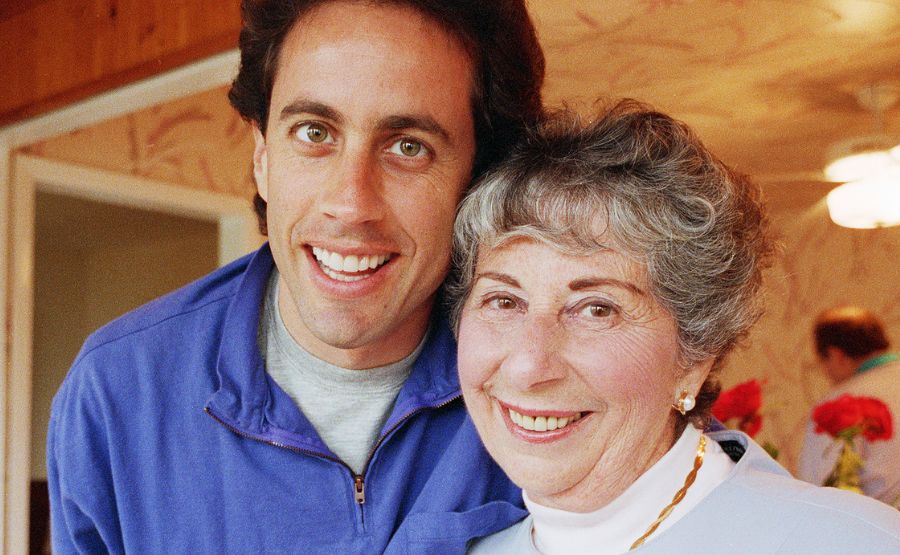
Betty Seinfeld: The Syrian-Jewish Orphan Who Raised America’s Greatest Comedian
Quick Bio
| Detail | Info |
| Full Name | Betty Seinfeld (born Betty Hosni) |
| Born | December 12, 1917, United States |
| Died | April 18, 2014 (age approximately 96–98) |
| Nationality | American |
| Heritage | Syrian Jewish immigrant family from Aleppo |
| Known For | Mother of comedian Jerry Seinfeld |
| Father | Selim Hosni (joiner/carpenter; Syrian Jewish immigrant) |
| Mother | Salha Hosni (homemaker; died 1918 Spanish Flu) |
| Sister | Orizia “Kitty” Shomer (d. 2010, age 102) |
| Husband | Kálmán (Kalman) Seinfeld (sign maker; d. 1985) |
| Children | Carolyn Liebling (b. 1952); Jerry Seinfeld (b. 1954) |
| Early Life | Raised in Brooklyn Hebrew Orphan Asylum and foster homes |
| Work | Home-based tailor |
| Later Life | Lived with sister Kitty in Brooklyn after Kalman’s death |
| Net Worth | Not publicly disclosed (son Jerry: ~$1 billion) |
Introduction: The Woman Behind the Laughter
In American history, one of the most successful comedians is Jerry Seinfeld. His television show ran for nine seasons, defined what a sitcom could be, and still generates hundreds of millions of dollars in syndication every single year. He is a billionaire. He has been quoted, analyzed, and studied for decades as a model of comedic timing and cultural observation.
And the woman who raised him grew up in an orphanage.
Betty Seinfeld’s story does not begin with comfort or privilege. It begins in the immigrant neighborhoods of Brooklyn, in the particular kind of childhood that shapes either broken people or unusually resilient ones, and then moves quietly through decades of ordinary devotion — a husband, a house on Long Island, two children, a sewing machine for extra income — before arriving at the extraordinary: watching her son become a household name across the entire planet.
She never sought attention for any of it. She gave very few interviews. She did not appear on television except very occasionally at events that celebrated her son. She was not a character in any public story except as a footnote to someone else’s biography, and she seemed perfectly content with that arrangement.
But the details of her actual life are genuinely remarkable. The Syrian Jewish heritage. The orphanage. The sister who lived to 102. The marriage to a sign maker who made his family laugh. The careful, quiet life built out of materials that most people would consider insufficient. All of it worth knowing and worth telling with the honesty it deserves.
See also “Michael Cannata Sr.: The Private Man Whose Family Story Echoes Through Hollywood History“
The Family From Aleppo: Where Betty’s Story Really Begins
To understand Betty Seinfeld, you first have to go back to Aleppo, Syria — a city that was, in the early twentieth century, home to a prosperous and ancient Syrian Jewish community. The Jewish population of Aleppo maintained a distinct cultural identity, a rich religious tradition, and the particular adaptability of people who had survived centuries in a complex part of the world.
Betty’s father, Selim Hosni, was a joiner — a craftsman who worked with wood. In approximately 1909, Selim made the journey to America, boarding the S.S. Hudson and crossing the Atlantic to pass through Ellis Island. Her mother, Salha Hosni, followed the following year with Betty’s older sister, Orizia, who was still an infant at the time.
The family settled in Brooklyn, New York, joining the Syrian Jewish community that was establishing itself in neighborhoods like Flatbush and Bensonhurst — tight-knit, tradition-preserving, and navigating the particular challenge of becoming American without losing what made them who they were.
Betty herself was born in the United States, on December 12, 1917, though some sources place her birth in Syria due to confusion with her older sister, who was actually the Syria-born sibling. The family had been on American soil long enough by late 1917 that Betty was a native-born American, the daughter of immigrants but not an immigrant herself.
The family was not wealthy. Selim worked with his hands and provided what he could. The household was simple and observant. And then, in 1918, the Spanish Flu arrived.
The Spanish Flu and the Orphanage: A Childhood Interrupted
The influenza pandemic of 1918 was catastrophic at a scale that people today struggle to fully comprehend. It killed somewhere between 50 and 100 million people worldwide, moving through populations with terrifying speed. The immigrant communities of Brooklyn — crowded, urban, with limited access to medical care — were particularly vulnerable.
Betty’s mother, Salha, died in the 1918 Spanish Flu pandemic. Betty was still an infant, barely a year old.
Selim Hosni was left with multiple children, no wife, limited income, and the particular crisis of a widowed immigrant man in an era before social safety nets. Whatever the specific circumstances — whether Selim was unable to care for the children financially, whether his work took him away, whether the community’s resources were exhausted — Betty and her siblings found themselves sent to the Brooklyn Hebrew Orphan Asylum.
The Brooklyn Hebrew Orphan Asylum was a serious institution, well-funded by the Jewish community’s internal philanthropic structures, and designed to provide for children who had no other options. It gave its residents food, education, and a structured environment. What it could not give them was a family.
Betty moved through the orphanage and then through foster homes — the particular childhood instability that comes from never quite knowing where you belong or how long you will be permitted to stay. Jerry Seinfeld, when he has spoken about his parents’ unusual emotional style and their loner quality, has pointed specifically to this history: two people who grew up without real families of their own, who consequently raised their children in a “hands-off” way — not indifferent, but unschooled in the kind of intensive parenting that comes from having been actively parented yourself.
Her older sister Orizia — who would go on to marry Mr. Shomer and live under the name Kitty Shomer to the remarkable age of 102 — remained a constant in Betty’s life. The sisters maintained their bond through all of it, and when circumstances allowed, stayed close.
Meeting Kalman Seinfeld: Two Orphans Find Each Other
Betty was already in her thirties when she met Kálmán Seinfeld — which says something about both the disruptions of her early life and the particular patience of someone who had learned not to expect things to come easily.
Kalman was himself a man who had come from a broken home. He had grown up without the stable family structure that most people take for granted, and he carried that history the same way Betty carried hers — not as a wound that never closed, but as a kind of freedom from convention, a certain loner’s self-sufficiency.
Jerry would later describe his parents as “wild dogs” in the most affectionate possible sense — people who didn’t fit into any normal category, who operated by their own quiet rules, who loved their children genuinely while remaining fundamentally independent personalities.
Kalman worked as a sign maker — a specific and somewhat unusual trade that turned out to suit his personality perfectly. He was witty and had a natural instinct for wordplay, for finding the funny angle on a situation. Some of those signs, reportedly, included jokes he had crafted himself. The man who married Betty Hosni was, in his quiet workshop way, a comedian.
The marriage represented something important for both of them: the family neither had grown up with, built from scratch in the immigrant neighborhoods of New York.
Life in Brooklyn and Long Island: Building the Ordinary
Betty and Kalman set up their household in Brooklyn first — a crowded apartment in the kind of neighborhood where families lived stacked on top of each other and community was unavoidable. Theirs was a world of Friday night dinners, neighborhood Jewish community, modest furniture, and the practical business of getting by.
Betty worked as a home-based tailor — taking in sewing work to supplement the family’s income. This was skilled labor, the kind that required precision and patience and produced real income. She sat at her sewing machine in the apartment, stitching and hemming and altering while the world went on around her.
In 1952, after what sources describe as a difficult pregnancy, she and Kalman welcomed their first child: Carolyn, who would eventually marry and become Carolyn Liebling.
Two years later, in 1954, after another challenging pregnancy, came Jerome — the boy who would grow up to become Jerry Seinfeld.
The family eventually made the move that millions of New York City families made in the postwar period: out of the city and onto Long Island, settling in Massapequa — a suburban community that was building itself as quickly as the young families arriving to fill it. Jerry has spoken about growing up in that house, about the particular atmosphere of Long Island in the late 1950s and 1960s, about his father’s humor and his parents’ unusual combination of warmth and emotional distance.
Betty continued her tailoring work. She managed the household. She was, by multiple accounts, a devoted mother who provided structure and stability without the kind of emotional intensity that can sometimes overwhelm children.
The Television Confusion: Betty Is Not Helen
Here is a clarification that genuinely matters, because the confusion is widespread and persistent.
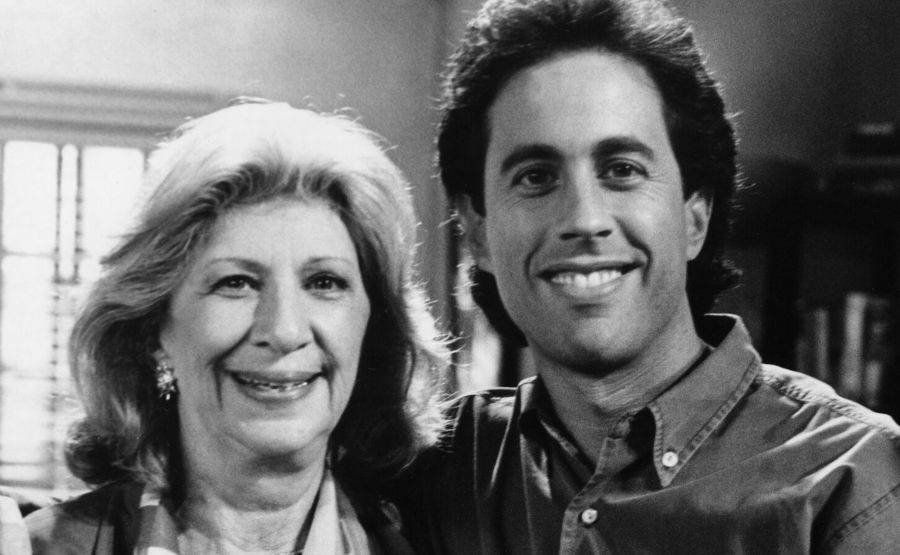
The character Helen Seinfeld on the television series Seinfeld — Jerry’s mother in the fictional universe, portrayed memorably by actress Liz Sheridan — was a comedic, slightly exasperating version of a Jewish mother. She was not Betty Seinfeld. She was a fictional creation drawn loosely from comedy tropes rather than from Betty’s actual personality and history.
Liz Sheridan is a real actress with her own biography, including a notably romantic chapter involving a young James Dean whom she dated before he became famous. Betty has nothing to do with any of that.
Betty Seinfeld — the real woman, the tailor from Brooklyn, the orphan from the asylum — was never on the television show. The character based loosely on her mother type was played by someone else, in a fictional version of events that bears only distant resemblance to what the actual Seinfeld family was like.
Real Betty was quieter, more private, and considerably more interesting than the version television created.
Losing Kalman: The 1985 Grief
Kálmán Seinfeld died in 1985 after a battle with multiple forms of cancer. Jerry was thirty-one years old and just beginning to gain real traction as a comedian — the show that would make him immortal was still four years away.
For Betty, the loss was profound. She had built her entire adult life around this partnership — two people from broken homes who had made something whole together. After thirty-plus years of marriage, she was alone again.
What she did was characteristically practical and warm: she moved in with her sister Kitty in Brooklyn. The two Hosni girls — who had grown up together through orphanages and foster homes, who had survived the Spanish Flu’s devastation, who had each made their own lives and then grown old — ended up back together in a Brooklyn apartment, two old women keeping each other company.
Kitty, remarkable woman, would live until September 24, 2010, dying at the age of 102. She was a proper aunt to Jerry and Carolyn throughout her life.
Watching Her Son Become Famous
Jerry Seinfeld told his parents he wanted to be a comedian. Their response, as he has recounted it, was essentially: “Oh, well, we look forward to hearing about it.”
That is not a cold response. It is actually a perfectly calibrated one from people who had raised themselves and trusted their children to do the same. They did not map anxiety onto his ambitions. They did not project expectations. They simply expressed appropriate interest and let him get on with it.
When Seinfeld launched in 1989 and became one of the most watched programs in American television history, Betty was in her early seventies. She watched her son become a household name, watched the show she had perhaps only loosely inspired generate cultural conversations that lasted for decades, watched him receive every award and honor the entertainment industry offered.
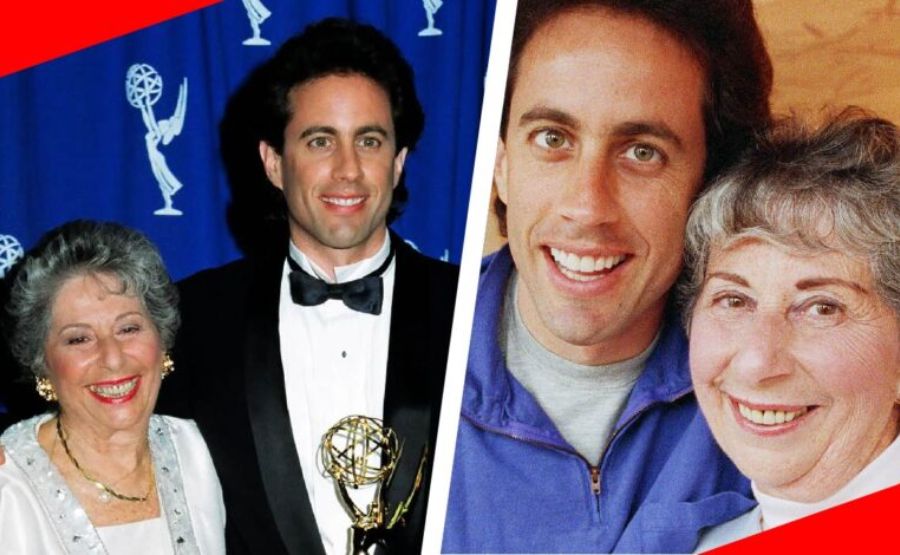
She occasionally appeared at events alongside Jerry — quiet, proud, never seeking the camera, but present.
Financial Picture: Her Own and Her Son’s
Betty Seinfeld’s personal net worth was never publicly disclosed. She was not a wealthy woman by the financial measure of fame. She was a tailor. Her husband was a sign maker. They lived a comfortable but modest middle-class life in Massapequa and later in Brooklyn.
Her son Jerry’s situation is considerably different. Jerry Seinfeld’s net worth is estimated at approximately $1 billion — a figure built primarily through the extraordinary ongoing syndication value of Seinfeld, plus his stand-up career, his ownership interest in the show, and decades of comedy specials and projects. He is one of the wealthiest entertainers alive.
Whether Jerry provided financial support to his mother in her later years is not documented. What is reasonable to assume is that a billionaire son who speaks about his mother with evident love and respect would not have permitted her to struggle financially in her final decades.
Death: April 18, 2014
Betty Seinfeld died on April 18, 2014, in the same quiet way she had lived — privately, without news coverage or public announcement. She was approximately 96 to 98 years old, depending on which sources you trust about her exact birth year. The cause of death was never publicly stated, though natural causes consistent with very advanced age is the broadly accepted understanding.
Her death was not a media event. There were no press conferences, no elaborate public tributes, no tabloid coverage. Jerry and the family grieved privately, as Betty had apparently always preferred.
Final Words
Here is what makes Betty Seinfeld’s story genuinely worth telling: it is not the story of the great man’s mother, even though that is typically how it gets framed. It is the story of a person who survived things that could have broken her and instead built a life out of the fragments that remained.
She lost her mother as an infant. She grew up in an institution. She moved through foster homes. She married in her thirties, built a family, worked as a tailor, raised two children, lost her husband, and lived nearly a century.
And somewhere in the texture of the life she lived — in the quiet independence, the pragmatic warmth, the absence of anxious parenting, the hands-off trust in her children to find their own paths — she gave Jerry Seinfeld exactly what he needed to become who he became.
The comedian has said that his parents were loners who raised their children in a hands-off way, that they were themselves “wild dogs” who didn’t fit any conventional mold. He says it with affection and understanding. He sees in it an inheritance.
Betty Seinfeld never went looking for recognition. She got something better instead: a son who understood where he came from, who kept the memory of her close, and who carried the particular shaping of her unusual life into everything he made.
That is a legacy. Quiet, undramatic, and entirely real.
FAQs
1. Who was Betty Seinfeld?
Betty Seinfeld, born Betty Hosni on December 12, 1917, was an American woman best known as the mother of comedian Jerry Seinfeld. She came from a Syrian Jewish immigrant family, grew up in the Brooklyn Hebrew Orphan Asylum and foster homes after losing her mother in the 1918 Spanish Flu pandemic, married sign maker Kálmán Seinfeld, and raised two children — Carolyn Liebling and Jerry Seinfeld. She died on April 18, 2014, at approximately 96 to 98 years of age.
2. Where was Betty Seinfeld from originally?
Betty was born in the United States to Syrian Jewish immigrant parents from Aleppo, Syria. Her father Selim Hosni arrived through Ellis Island around 1909, and her mother Salha followed a year later with Betty’s older sister. Betty herself was born in America in 1917, making her a native-born citizen of Syrian Jewish immigrant heritage.
3. Is Betty Seinfeld the same person as Helen Seinfeld from the TV show?
No. Betty Seinfeld was the real-life mother of Jerry Seinfeld. The character Helen Seinfeld on the TV series Seinfeld was a fictional creation played by actress Liz Sheridan. Liz Sheridan is a separate person with her own biography, including a notable past relationship with James Dean. Betty herself never appeared on the show and was a private person who lived outside the spotlight entirely.
4. How did Betty Seinfeld end up in an orphanage?
Her mother Salha died during the devastating 1918 Spanish Flu pandemic, leaving Betty — who was still an infant — and her siblings without a mother. Her father Selim, a working immigrant, apparently was unable to provide for the children on his own, and Betty was placed in the Brooklyn Hebrew Orphan Asylum before being moved through various foster homes.
5. Who was Betty Seinfeld’s husband?
She married Kálmán Seinfeld, a sign maker with a natural gift for wordplay and humor who some say crafted jokes into the signs he made professionally. Both Betty and Kalman came from broken homes — orphaned or from disrupted backgrounds — which Jerry has suggested explains their unusually “hands-off” parenting style. Kalman died in 1985 after battling cancer.
6. Did Betty Seinfeld have any other children besides Jerry?
Yes. Her first child was Carolyn, born in 1952 after a difficult pregnancy, who later married and became Carolyn Liebling. Jerry was born two years later in 1954. Carolyn has remained largely out of the public eye throughout her life.
7. What kind of work did Betty Seinfeld do?
She worked as a home-based tailor, taking in sewing and alteration work to contribute to the family’s income. It was skilled, precise work that supplemented her husband Kalman’s income from sign making while allowing her to remain at home with her children.
8. How did Jerry Seinfeld describe his mother’s parenting style?
Jerry has described both his parents as “loners” with a “hands-off” style — loving but emotionally independent, not anxiously invested in their children’s specific choices. When he told them he wanted to be a comedian, he says they responded with something like quiet, interested acceptance rather than enthusiasm or discouragement. He has connected this parenting style to their backgrounds as people who essentially raised themselves.
9. Does Betty Seinfeld have any connection to James Dean?
No. The connection to James Dean belongs to Liz Sheridan, the actress who played the fictional Helen Seinfeld on the Seinfeld TV series. Liz Sheridan wrote about her past relationship with James Dean in a memoir. Betty Seinfeld had no connection to James Dean or to Hollywood.
10. What happened to Betty Seinfeld after her husband died?
After Kalman’s death in 1985, Betty moved to Brooklyn to room with her older sister, Orizia “Kitty” Shomer. The two sisters — who had grown up together in orphanages and foster homes — lived together in their later years, maintaining the sibling bond that had sustained them since childhood. Kitty died in 2010 at the extraordinary age of 102.
11. When did Betty Seinfeld die?
She died on April 18, 2014, quietly and privately, at an estimated age of 96 to 98 years. The exact age depends on slightly varying accounts of her birth year, which has been listed as either 1915 or 1917 across different sources. The cause of death was never made public, and the family mourned privately.
12. What is Jerry Seinfeld’s net worth compared to his mother’s financial situation?
Betty Seinfeld lived a modest middle-class life — a tailor’s and sign maker’s household in Brooklyn and Massapequa. Her personal wealth was never publicly disclosed. Her son Jerry, by contrast, has a net worth estimated at approximately $1 billion, built largely through the ongoing syndication value of the Seinfeld television series. The contrast between their material circumstances represents a generation-spanning American story of immigration, persistence, and the strange multiplication that sometimes occurs between one generation’s quiet efforts and the next generation’s public success.
Explore ideas that elevate your thinking with The Elevate Magazine.