How Much Is Jesse Cole Worth? Inside His Wealth and Career Success
Quick Bio
| Detail | Information |
| Full Name | Jesse Cole |
| Born | March 13, 1984 |
| Birthplace | Scituate, Massachusetts, USA |
| Age (2026) | 42 years old |
| Nationality | American |
| Known For | Savanna Bananas’ founder and Banana Ball’s inventor |
| Nickname | “Yellow Tux Jesse” |
| Education | Wofford College, Class of 2006 |
| Occupation | Entrepreneur, entertainer, author, speaker |
| Company | Fans First Entertainment (100% privately owned) |
| Spouse | Emily McDonald Cole (married October 2015) |
| Children | Maverick (biological son); two adopted daughters |
| Books | Find Your Yellow Tux (2017), Fans First (2022), Banana Ball (2023) |
| Savannah Bananas Valuation | ~$500 million (Forbes estimate, 2025) |
| Personal Net Worth | ~$4–6 million (estimated; actual equity far higher) |
Introduction: The Man Who Wore the Suit Nobody Else Dared To
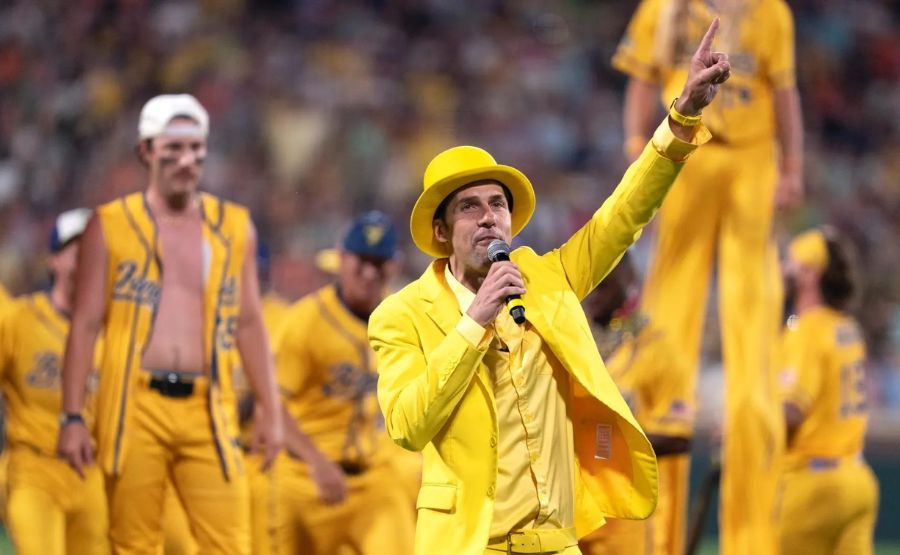
Picture a man in a blinding yellow tuxedo, sprinting across a baseball diamond while fans lose their minds in the stands. There is a senior citizen dancing. A player is doing a backflip. A toddler is racing a turtle between innings. The scoreboard shows a score, but nobody seems particularly fixated on it — because the game itself is only part of the experience.
That man in the yellow suit is Jesse Cole. And if you think what you are picturing sounds ridiculous, you are probably not wrong. But here is the thing: the ridiculous became the magnificent, and the magnificent became a half-billion dollar enterprise.
Jesse Cole started with $268 in his bank account, a failing minor league baseball team in North Carolina, and one absolute conviction — that putting fans first was not just a nice idea but a complete business philosophy that the sports world had fundamentally failed to understand. He turned that conviction into the Savannah Bananas, a traveling baseball entertainment phenomenon with a global fanbase, a waitlist of millions, and annual revenues that now exceed what some Major League Baseball teams generate.
He is not a conventional sports businessman. He is something harder to categorize: a showman with an MBA-level brain, a dreamer with the discipline to execute, and a father who decided his biggest responsibilities were to his family and his fans — in that order.
This is the whole story.
Early Life: A Small Town Kid with Big Dreams and a Pitcher’s Arm
Jesse Cole was born on March 13, 1984, in Scituate, Massachusetts — a coastal town sitting roughly twenty-five miles south of Boston. It is the kind of place where people still follow the Red Sox religiously and where kids play pickup baseball in the summers not because anyone is making them but because it is simply what you do.
Jesse loved the game. More than that, he was good at it. As a young pitcher, he showed enough promise to imagine a future in the sport at a meaningful level. He was the kid who spent extra hours in the backyard developing his delivery, who watched game tape, who thought seriously about a career that extended well past Little League.
His parents and siblings have been kept deliberately out of the public conversation — Jesse has spoken warmly about family but has not invited the media into those details. What is clear from everything he has said publicly is that the values instilled in him growing up — work ethic, service to others, the importance of showing up — became the invisible architecture of everything he later built.
Scituate shaped him without defining him. He left for college with a pitcher’s arm and a competitive hunger, ready to find out how far both could take him.
Education: Where the Arm Broke and the Showman Was Born
Jesse enrolled at Wofford College in Spartanburg, South Carolina, where he pursued his baseball ambitions on the college mound. Wofford is a small liberal arts school with a serious athletic tradition, and Cole threw himself into both the academic and athletic sides of campus life.
Then the shoulder gave out.
A pitching injury ended his playing career while he was still in college. For someone who had constructed a significant portion of his identity around his arm, that diagnosis was a genuine reckoning. The baseball player path had closed. Something else needed to open.
What opened was theatre. Cole began participating in theatrical productions and discovered — with some surprise — that performing for an audience gave him the same adrenaline charge that competing on the mound had. The connection between athlete and entertainer, between the person who rises to a moment in front of a crowd and the one who crumbles under it, suddenly felt much more obvious to him.
He graduated in 2006 with something more valuable than a playing career: a new understanding of himself. He was not just a baseball guy. He was a performer. And performers, it turned out, could reshape how baseball felt to the people watching it.
Career Beginnings: $268, Pigeons, and a Team Nobody Wanted to Watch
In 2008, Jesse Cole arrived in Gastonia, North Carolina, at twenty-three years old, with $268 in his bank account and a job title that sounded impressive but described a genuinely dire situation. He was the new general manager of the Gastonia Grizzlies, a collegiate summer league team that was failing to attract anyone. The stadium was old. The bleachers were occasionally decorated with pigeon droppings. A few hundred spectators might wander in on a good night.
This is the point in the story where most people would have looked for a different job.
Cole did not look for a different job. He studied Walt Disney. He read everything he could find about P.T. Barnum. He asked one question, over and over: what would make someone genuinely excited to come to this ballpark tonight? Not obligated. Not vaguely entertained. Actually excited.
He started with the atmosphere. Blindfolded pillow fights in the stands. Kids smashing pies into their fathers’ faces. Turtle races between innings. Fans interacting with players, with each other, with the game itself rather than simply observing it from a passive distance. The baseball was still happening — but it was happening inside an experience, and the experience was the point.
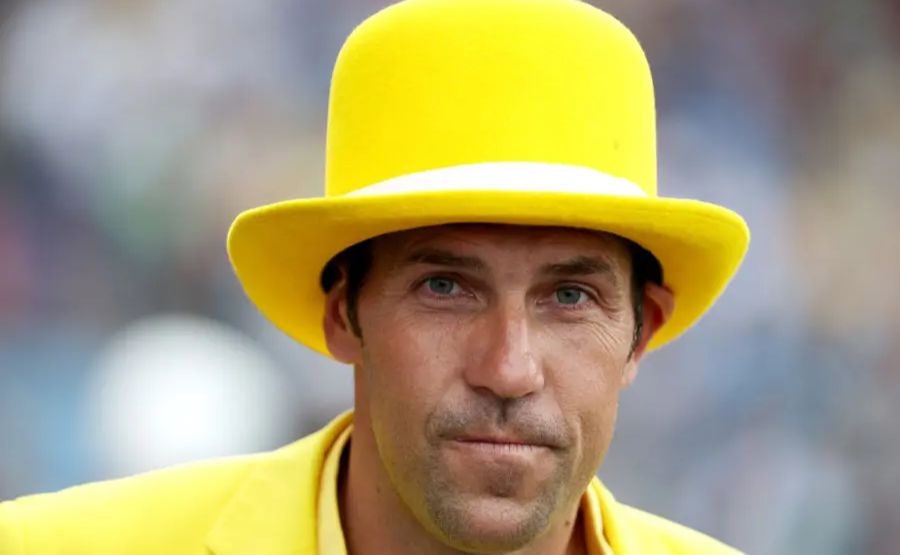
It worked. Attendance climbed from a few hundred skeptics to more than 2,300 fans per game. The yellow tuxedo appeared, because Cole understood that a recognizable, joyful visual identity was itself a form of entertainment. He started wearing it everywhere — not just at games, but in his daily life — because the tuxedo was a statement about commitment. It said: I am all in on this. I am not embarrassed by the joy. I am the living proof of what I am selling.
By 2014, he had bought the Grizzlies outright. He owned the thing he had been building.
The Savannah Bananas: Built from Nothing, Sold Out Forever
In 2015, Jesse and Emily received approval to launch a new franchise in the Coastal Plain League in Savannah, Georgia. They had visited Historic Grayson Stadium as a couple and been struck by its beauty and baffled by its emptiness. A professional team had been playing there to sparse crowds. When that team departed, Jesse and Emily saw what others had written off as a dead end.
They saw an opportunity.
The team name came from a fan contest. The Savannah Bananas won the vote and immediately became the only possible name in retrospect — bright, absurd, impossible to forget. The branding wrote itself around the name, and the name became a container for everything Jesse wanted to build.
The first year nearly killed them.
Cole and Emily moved from Gastonia to Savannah in 2016, having sold their house to keep the team funded. They were sleeping on an air mattress. Their weekly grocery budget was thirty dollars. Payroll was missed. The team existed as much through sheer will as through any business logic. There were genuine moments where it was entirely unclear whether the Savannah Bananas would make it to a second season.
Then people started coming. And then they started coming back. And then they started driving from other states to come. Word spread the way things spread when they are genuinely different from anything else available — not through advertising but through the simple mechanism of people telling other people that they had experienced something they could not quite describe and absolutely needed to see.
By 2017, every game sold out. 2018, same. 2019, same. The waitlist started building. It kept building. By the time the numbers were last reported, more than two million fans were on a list waiting for the chance to buy a ticket.
Banana Ball: Inventing a New Game
The creation of Banana Ball was not an overnight inspiration. It grew out of years of Cole watching fans disengage from traditional baseball — checking phones, getting up during long innings, losing the thread of what was happening on the field.
He asked himself a radical question: what if the rules themselves were part of the problem?
Banana Ball is Jesse Cole’s answer to that question. The game version he created keeps the core of baseball intact but surrounds it with rules designed to keep every moment interesting. No stepping out of the batter’s box. No mound visits. No bunting. Fans can catch foul balls for outs. Players interact with the crowd. Every inning has a purpose and a pace. The game moves.
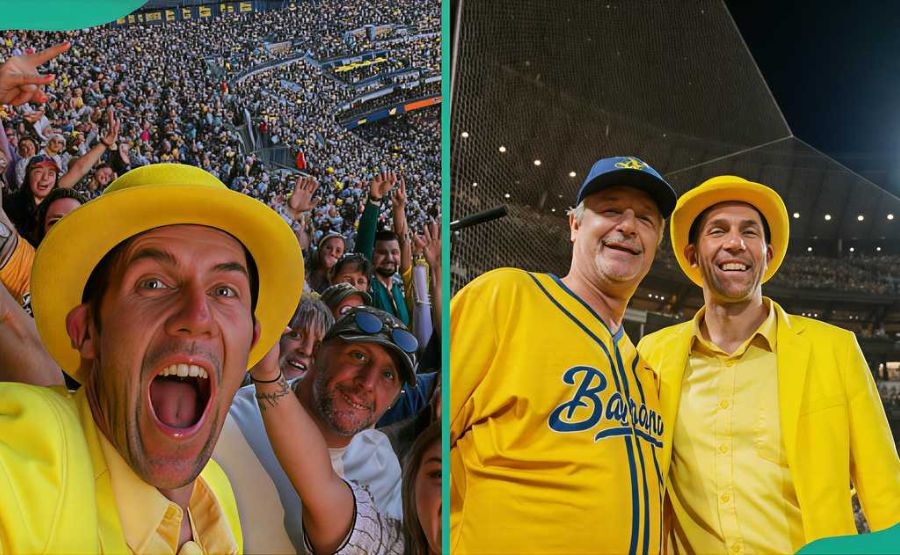
The Savannah Bananas eventually went fully touring with Banana Ball, playing exhibition games against their own traveling opponent team, the Party Animals, in stadiums across the country. They played at Fenway Park. They played at Dodger Stadium. They played at Wrigley Field. Sold out every time. A 2026 Banana Ball broadcast on ABC drew the largest viewership in the organization’s television history — 45% bigger than the previous record set at Fenway.
Achievements: The Numbers Behind the Yellow Tuxedo
The Savannah Bananas have been featured on The Today Show, CBS Sunday Morning, HBO Real Sports, and Access Hollywood. A five-part documentary series called Bananaland aired on ESPN+. The team’s social media following exceeded fifteen million across platforms.
By 2025, Fans First Entertainment — the parent company that Jesse and Emily own 100% of, having declined every outside investment offer — was generating over $100 million in annual revenue. Forbes estimated the overall enterprise value at approximately $500 million.
Jesse has written three books. Find Your Yellow Tux in 2017. Fans First in 2022. Banana Ball in 2023. All three performed well and established him as a serious business thought leader, not just a showman. On the keynote speaking circuit, he commands fees in the range of $50,000 to $125,000 per appearance, speaking to corporate audiences eager to understand how a yellow suit and a fan-first philosophy can build something as unlikely as what he built.
Walt Disney’s company once hosted the Savannah Bananas for special events. The kid who studied Disney from a failing ballpark in North Carolina had come far enough to be welcomed through Disney’s own doors.
Personal Life: Emily, Maverick, and Two Daughters
Jesse proposed to Emily McDonald in the middle of a baseball game at Gastonia Field, with fireworks going off and a ring hidden inside a baseball. This was entirely consistent with who he is. They married in October 2015.
Emily is not a passive partner in the business. She is a co-founder of Fans First Entertainment in the truest sense, contributing to strategy, operations, and the overall direction of the organization. The Savannah Bananas is genuinely and meaningfully a two-person story. Jesse says so himself. The people closest to the operation confirm it.
Their son Maverick was born in 2019. During the pandemic in 2020, with Maverick just a toddler, Jesse and Emily made a decision that has come to define a significant dimension of who they are: they became licensed foster parents.
They welcomed children into their home. It was not easy. Emily has described early moments where newly arrived children struggled with food, with routines, with trust — all entirely understandable given what those children had been through. Through the process, two of those foster daughters eventually became adopted members of the Cole family permanently.
In 2023, Jesse and Emily formalized their commitment to the foster care world by founding Bananas Foster, a registered nonprofit dedicated to celebrating foster families and inspiring others to get involved. At Savannah Bananas events around the country, foster families are recognized and honored. The mission that started as a personal choice became a public commitment.
Challenges: The Air Mattress Years and What They Built
The financial near-collapse of 2016 was real. Cole has talked about it without embarrassment — selling the house, sleeping on the air mattress, grocery shopping on thirty dollars a week, missing payroll. These are not glamorized hardships in retrospect. They were genuinely terrifying at the time.
There is also the structural challenge of building something completely new. The Savannah Bananas faced skepticism not just from fans but from baseball traditionalists who found the entertainment format disrespectful to the game. Cole has navigated that criticism by letting the numbers speak — the fans who drive from five states away do not particularly care about the traditionalists’ objections.
Scaling a touring entertainment brand while maintaining quality is an ongoing operational challenge at a level most small business owners never encounter. Running more than 100 shows a year across the country, in different stadiums with different logistics, requires organizational muscle that the bright colors and dancing do not advertise.
He has built that muscle quietly while the yellow tuxedo draws all the attention.
Financial Situation: The Most Misunderstood Number in Sports Business
Jesse Cole’s personal net worth is commonly estimated at somewhere between $4 million and $6 million. And that figure, at first glance, seems almost insultingly small for the owner of a $500 million enterprise.
The explanation is intentional, not accidental. Cole reinvests. He has declined outside funding, which means he has also declined the liquidity events — the moments where investors cash out and founders take personal distributions — that would inflate a personal wealth figure. He and Emily own Fans First Entertainment entirely, 100%, which means their equity in the organization is the actual story. The $500 million valuation is theirs. They simply have not extracted it as personal cash.
He has also said, plainly, that he is not primarily interested in becoming a billionaire. “We want to create a billion fans,” he said in one interview, not a billion-dollar company. Revenue takes care of itself, in his view, when you take care of the fans.
The speaking fees are real income — six figures per engagement for a full-day corporate keynote. The book royalties accumulate. The merchandise and ticket revenue flows into a company he wholly owns. The actual Jesse Cole net worth, factoring in his equity position, is a number considerably larger than $4 million suggests.
Life Today: Touring, Building, Fostering, and Wearing That Suit
In 2026, Jesse Cole is forty-two years old and by every available evidence operating at peak velocity.
The Savannah Bananas touring schedule continues to grow. The Bananas League — a new competitive structure that Cole has been developing — is taking shape. The team played to record television audiences on ABC. The Iowa stop in 2026 drew 140,000 fans over a weekend from forty-nine different states.
He lives in Belmont, North Carolina, with Emily, Maverick, and their two daughters. He wears the yellow tuxedo because the yellow tuxedo is not a costume — it is, as he has explained repeatedly, a daily declaration of the values he has chosen to build his life around. Standing out. Putting others first. Never making anything boring.
He still has nine of the tuxedos. He has worn them in every context imaginable.
Final Words
Here is the real Jesse Cole story, underneath all the backflips and banana-themed everything.
A young man had his dream taken away by an injury. Instead of grieving the career he could not have, he asked what he could build instead. He started with nothing — less than nothing, actually, given the $268 bank balance — and committed completely to a single idea: that people deserve to be made genuinely happy when they show up somewhere.
He proved that idea correct in Gastonia. He proved it again in Savannah. He proved it in Fenway Park, Dodger Stadium, Wrigley Field, and a hundred cities across America where families drove hours for tickets to a baseball game that technically isn’t quite baseball anymore but is absolutely something they will remember for the rest of their lives.
He built a half-billion dollar company without taking a dollar of outside investment, without compromising the vision, and without ever swapping the yellow tuxedo for something more conventionally respectable.
And then he and his wife became foster parents, adopted two daughters, and built a nonprofit that shows up for families the entertainment industry would never think to notice.
The yellow tuxedo is not a gimmick. It is the most honest advertisement of a value system that Jesse Cole has ever made. It says: I am completely serious about joy. I will stand here in this ridiculous and magnificent suit and make something worth watching, and I will do it every single day until I run out of days.
He has not run out of days yet. Not even close.
FAQs
1. Who is Jesse Cole?
He is an American entrepreneur, entertainer, and author born in Scituate, Massachusetts in 1984. He is the founder of Fans First Entertainment and the creator of the Savannah Bananas — a touring baseball entertainment team that transformed how fans experience live sports. He is known globally for the yellow tuxedo he wears everywhere as a symbol of his fan-first philosophy.
2. Where did Jesse Cole grow up and go to school?
He grew up in Scituate, Massachusetts, a small coastal town south of Boston. He attended Scituate High School and then Wofford College in Spartanburg, South Carolina, graduating in 2006. At Wofford he played baseball as a pitcher until a shoulder injury ended his playing career and redirected him toward theatre and entertainment.
3. How did the Savannah Bananas start?
After rebuilding the struggling Gastonia Grizzlies collegiate summer league team in North Carolina, Cole and his wife Emily visited Savannah, Georgia, fell in love with Historic Grayson Stadium, and decided to launch a new franchise there in 2016. The first season nearly bankrupted them — they sold their house, moved to Savannah, and survived on a thirty-dollar weekly grocery budget — but the team quickly grew into a global phenomenon through sold-out games and explosive word-of-mouth.
4. What is Banana Ball?
Banana Ball is an entertainment-focused version of baseball that Jesse Cole created to solve a problem he kept observing: fans losing interest during slow passages of traditional games. The rules emphasize continuous action and crowd interaction, including no stepping out of the box, no mound visits, fans being able to catch foul balls for outs, and entertainment elements woven throughout. The game retains the soul of baseball but wraps it in a format designed to keep every single moment engaging.
5. How much is the Savannah Bananas worth?
Forbes estimated the Savannah Bananas organization at approximately $500 million as of 2025. By the same year, the company was generating over $100 million in annual revenue — a figure that exceeds the profits of multiple Major League Baseball teams. Jesse and Emily own the entire enterprise through Fans First Entertainment and have declined every outside investment offer, preserving 100% ownership.
6. What is Jesse Cole’s personal net worth?
Personal net worth estimates place it in the range of $4 to $6 million. This figure appears low relative to the organization’s value because Cole reinvests heavily and has not extracted large personal cash distributions. His actual financial position, accounting for his full equity in a $500 million company, is considerably more substantial than the personal net worth figure suggests.
7. Why does Jesse Cole wear a yellow tuxedo?
Because he wanted to signal, visibly and unmistakably, that everything he does is oriented toward joy and standing out rather than conformity. The tuxedo began as a branding decision at the Gastonia Grizzlies and became something more meaningful over time — a daily public statement about his values. He currently owns nine of them.
8. Who is Emily Cole and what role does she play?
Emily McDonald Cole is Jesse’s wife and co-founder of Fans First Entertainment. She plays an active operational role in the business, contributing to strategy, culture, and organizational direction. The Savannah Bananas story is meaningfully a partnership story — Jesse describes Emily’s contribution as essential rather than supportive in the conventional sense. They married in October 2015, a year after Jesse proposed to her on the baseball field in Gastonia with fireworks and a ring hidden inside a baseball.
9. Does Jesse Cole have children?
Yes. He and Emily have three children. Their biological son is named Maverick. They became licensed foster parents in 2020 and eventually adopted two daughters through the foster care system. The family lives in Belmont, North Carolina.
10. What is Bananas Foster?
Bananas Foster is a nonprofit organization that Jesse and Emily founded in 2023 to support and celebrate the foster care community. At Savannah Bananas games and events across the country, foster families are recognized and honored. The organization encourages others to get involved with fostering and works to raise awareness about children in the foster system. It reflects a personal commitment that predates any public relations consideration — the Coles became foster parents first, and built the nonprofit around what they learned from that experience.
11. Has Jesse Cole written any books?
Three. Find Your Yellow Tux was published in 2017 and outlines his philosophy of standing out and committing fully to a distinctive identity. Fans First arrived in 2022 and details the business principles behind the Savannah Bananas. Banana Ball in 2023 covered the creation and expansion of the game format. All three have performed well commercially and established Cole as a credible voice in the business and entrepreneurship space.
12. What makes the Savannah Bananas genuinely different from other sports teams?
Most sports franchises are in the business of competition, and entertainment is a secondary consideration. The Savannah Bananas reversed that entirely — entertainment is the primary product, and baseball is the medium through which it is delivered. Every aspect of the experience, from the pre-game show to the between-inning activities to the rules of Banana Ball itself, is designed with the fan’s engagement as the central concern. The result is an audience so devoted that over two million people are on a waiting list just for the chance to buy a ticket.
Explore ideas that elevate your thinking with The Elevate Magazine.