Steven Kostanski: The Monster Maker From Winnipeg Who Never Grew Up
Quick Bio
| Detail | Info |
| Full Name | Steven Kostanski |
| Origin | Winnipeg, Manitoba, Canada |
| Nationality | Canadian |
| Occupations | Film Director, Writer, Producer, Makeup FX Artist, Practical Effects Designer |
| Known For | Manborg (2011); The Void (2016); Psycho Goreman (2020); Frankie Freako (2024) |
| Collective | Astron-6 |
| Mentor | Doug Morrow (Winnipeg practical effects artist) |
| Major FX Credits | Hannibal (TV); Todd and the Book of Pure Evil; Star Trek: Discovery; The Haunting in Connecticut; Wrong Turn; Resident Evil franchise |
| Key Quote | “I’ve been making monster masks and gore effects since I was a kid. I love doing it.” |
| Estimated Net Worth | ~$1–3 million |
Introduction
Somewhere in Winnipeg, Manitoba, a kid was making monster masks in his bedroom. He wasn’t doing it for a school project. He wasn’t doing it to impress anyone. He was doing it because there was something fundamentally satisfying about taking materials — foam, latex, paint, whatever was available — and turning them into something that looked like it had crawled out of a nightmare.
That kid grew up to make Manborg for approximately one thousand Canadian dollars. He grew up to co-direct The Void, one of the most genuinely unsettling Lovecraftian horror films of the modern era. He grew up to create Psycho Goreman — an intergalactic warlord designed specifically to look like the kind of action figure that ten-year-old Steven would have desperately wanted to find on a Walmart shelf.
He also grew up to work as a prosthetics makeup artist on Hannibal, Todd and the Book of Pure Evil, Wrong Turn, and the Resident Evil franchise. He glued Klingon foreheads on actors for Star Trek: Discovery. He built creatures for films that earned their production budgets back many times over, while simultaneously making his own movies on budgets so small they would make most production accountants weep with sympathy.
Steven Kostanski is not a director who came from nowhere. He is a director who came from Winnipeg, which is almost more surprising. And the thing that makes his career genuinely interesting — the thing that distinguishes him from the crowd of horror directors working in the contemporary independent scene — is that he never stopped being that bedroom monster maker. He simply became much more proficient at it.
See also “Michael Biehn: The Actor Who Did the Work and Never Played the Game“
Growing Up in Winnipeg: Monsters Before Movies
Winnipeg sits in the middle of Canada — geographically central, culturally distinct, and far enough from Hollywood’s gravitational pull that the kids who grow up there and develop film obsessions have to figure things out largely on their own. The city has its own creative energy, its own filmmaking community, and a particular character that shapes the people it produces.
Steven Kostanski grew up there with the specific obsessions of a child whose imagination was captured early by science fiction, horror, and the creature features of the 1970s and 1980s. He has described films like The Guyver as defining influences — movies packed with monsters, kung-fu, science labs, and evil doctors, films that trusted their audience to want spectacle rather than restraint. That appetite for everything-at-once filmmaking never left him. You can see it in everything he has made as a director.
Before he was making films, he was making things with his hands. Stop-motion animations. Short films. Monster masks. Gore effects. He was teaching himself the craft that he would eventually spend decades practicing professionally, not because anyone told him to but because the compulsion to make creatures was simply part of how his imagination worked. Some people write stories in notebooks. Kostanski sculpted foam latex into things with too many teeth.
The childhood-to-career pipeline in his case was unusually direct: the kid who made monster masks in Winnipeg became the adult who built the monster that anchored a film distributed by a major streaming platform. The continuity is not incidental. It is the whole story.
The Mentorship That Made the Difference
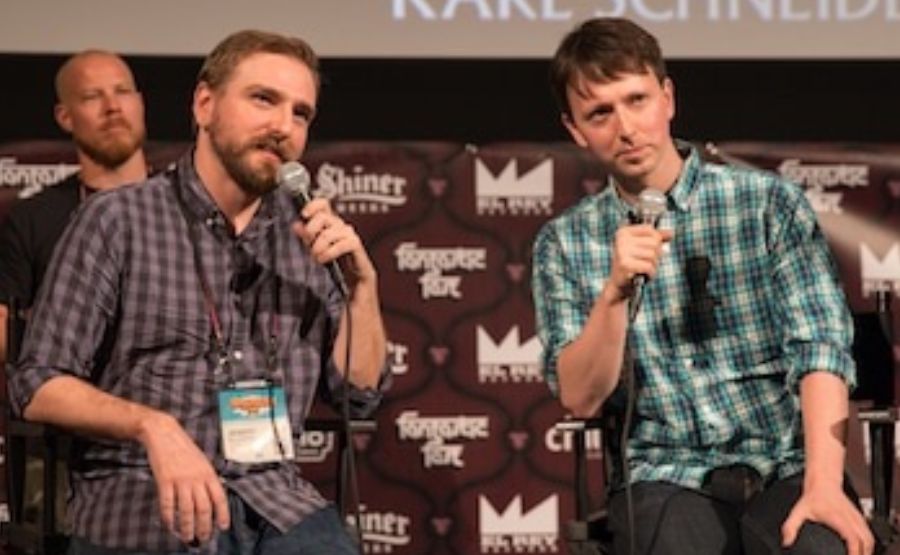
At some point during his formative years in Winnipeg, Steven Kostanski found his way to Doug Morrow — a local practical effects and makeup artist who became his mentor. The mentorship was the inflection point in his development: the moment where self-taught experimentation was supplemented by professional knowledge, where instinct was given technical vocabulary, and where the bedroom monster maker started to understand how the industry actually worked.
The nature of practical effects work — the chemistry of materials, the physics of how foam behaves when it cures, the techniques of painting and sealing and the endless problem-solving that creature building requires — is not something that can be fully absorbed from books or YouTube tutorials. It requires proximity to experienced practitioners, the ability to watch someone who knows what they’re doing and absorb the accumulated knowledge of years of professional work.
Morrow provided that proximity. What Kostanski developed under his guidance was not just technical skill but professional confidence — the understanding that the things he wanted to make were achievable, that the gap between what he could imagine and what he could produce was closeable with enough knowledge and practice.
He would eventually move from Winnipeg to pursue professional work, eventually arriving in the broader Canadian film industry. But the formation happened in Winnipeg, under the tutelage of someone who recognized what was there and helped develop it.
Breaking Into the Industry: FX Work on Major Productions
Before Astron-6 made him known as a director, Steven Kostanski spent years building a reputation as a practical effects and makeup artist on professional productions. The credits accumulated across both film and television and represent genuinely significant projects.
The Haunting in Connecticut gave him early professional experience on a mainstream horror feature. Todd and the Book of Pure Evil — the cult Canadian horror comedy series — became one of the productions where his work was most visible, bringing the gonzo creature energy that audiences of the show came to love. Hannibal, Bryan Fuller’s NBC series that became a touchstone of television aesthetics, required the kind of meticulous, artistically demanding effects work that the show’s visual ambition demanded — and Kostanski was part of the team that delivered it.
Star Trek: Discovery represented a different scale entirely. He has described his involvement with characteristic honesty: approximately one week of work, gluing Klingon foreheads onto actors during season one, a daily worker called in when extra hands were needed. His assessment of the experience — “super fun” and meaningful for the Star Trek connection — reflects the genuine enthusiasm of someone who grew up loving genre entertainment and found himself, however briefly, inside one of its most iconic franchises.
The Wrong Turn remake and the Resident Evil franchise added further mainstream credits to a resume that increasingly demonstrated his ability to function at every level of production scale, from micro-budget passion projects to studio productions with enormous resources.
All of this professional FX work served a dual purpose. It paid the bills while Astron-6 was doing what Astron-6 was doing. And it ensured that when he did direct his own films, he arrived with a practical understanding of how effects work at every scale — knowledge that would prove invaluable when he was trying to figure out how to do something ambitious with very little money.
Astron-6: A Creative Collective Built on Ambition and Friendship
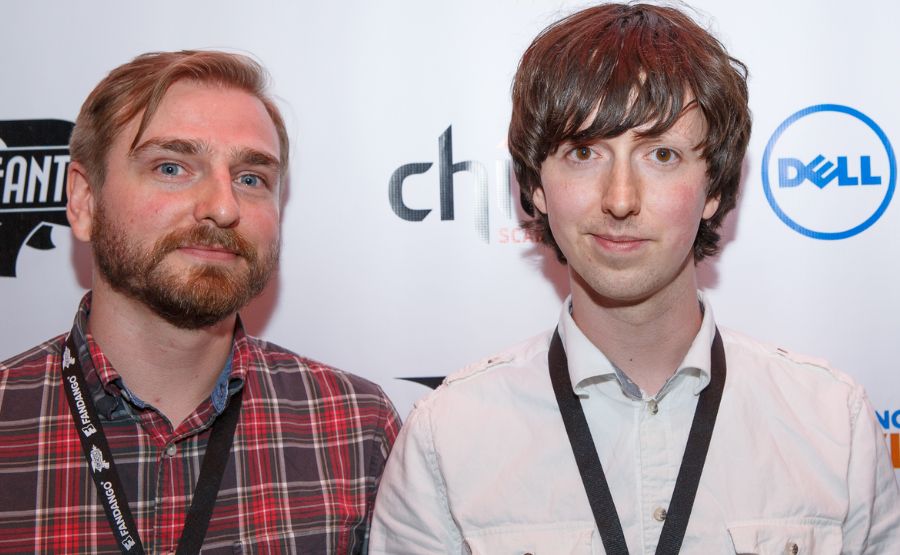
Astron-6 was founded in 2007 by Adam Brooks and Jeremy Gillespie. Kostanski, along with Matt Kennedy and Conor Sweeney, joined the collective as equal partners, and together they became one of the most interesting creative entities in contemporary Canadian independent film.
The collective’s defining characteristics were apparent from the beginning: low budgets treated not as limitations but as creative parameters; a deep and affectionate relationship with the genre films of the 1970s and 1980s; a willingness to combine horror and comedy in ways that required tonal precision to avoid either element undercutting the other; and a commitment to practical effects at a time when the industry was increasingly defaulting to digital solutions for everything.
Kostanski’s contribution to the collective was specific and essential: he was the creature guy, the makeup guy, the person who could build the things that the scripts demanded. When Astron-6 needed a monster, Kostanski built the monster. When the production needed practical gore effects, Kostanski made the gore. This was not simply a division of labor — it was the core creative identity of the collective, because the practical effects weren’t decoration for Astron-6 films; they were the point.
The Astron-6 ethos can be summarized simply: make the movie you want to see, with whatever you have, without waiting for someone to give you permission or resources. It is a philosophy that produced a body of work that is sometimes rough around the edges and always genuinely alive with creative energy.
Manborg: One Thousand Dollars and Infinite Ambition
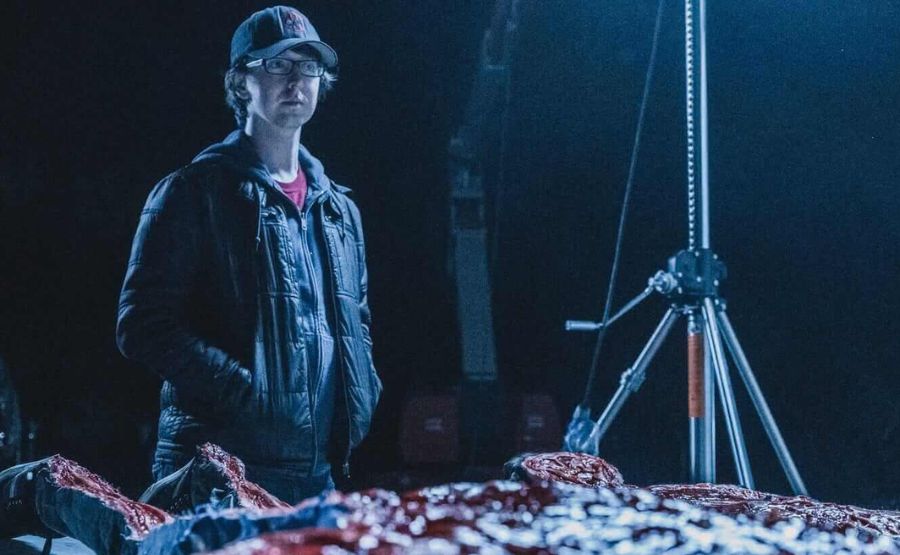
In 2011, Steven Kostanski released Manborg — a science fiction action film with an approximate budget of one thousand Canadian dollars. Read that again. One thousand dollars. Canadian.
The film involves Nazi vampires, a hell war, and a soldier whose body is fitted with robotics after he is killed in battle. It premiered at Fantastic Fest on September 22, 2011, and was distributed by Raven Banner Entertainment. It is, by any measure of what a thousand-dollar film should be capable of, absolutely extraordinary.
The technical approach was entirely in keeping with Kostanski’s fundamental filmmaking philosophy: you do not wait until you have enough money to make the movie you want to make. You make the movie with what you have, using creativity and knowledge to compensate for the resources you lack. The stop-motion techniques he had been practicing since childhood, the practical effects knowledge he had developed through years of professional work, the collaborative energy of the Astron-6 collective — all of it converged in Manborg to produce something that demonstrated, unambiguously, that limitation and ambition are not mutually exclusive.
The film’s release also coincided with Father’s Day, the Astron-6 collective feature that announced the group’s presence to the international horror community in a considerably more explicit way.
The Void: A Crowdfunded Masterpiece
In 2016, Kostanski co-directed The Void with Jeremy Gillespie. The film was crowdfunded through Indiegogo — independent filmmakers going directly to their audience for the resources to make something they couldn’t otherwise afford — and it became, by the consensus of the horror community that received it, one of the best horror films of its decade.
The Void is a Lovecraftian horror film set largely in a hospital under siege, with creatures that owe debts to John Carpenter, H.P. Lovecraft, and the practical effects tradition of the 1980s. The film’s monsters were built rather than rendered, and the decision to anchor the film’s horror in physical, tangible creature work rather than digital effects gave it a texture and a visceral weight that audiences responded to immediately.
The crowdfunding model worked not just financially but creatively — it demonstrated that a dedicated audience for this kind of horror existed and was willing to put money directly into the hands of filmmakers they trusted. The success of The Void in that regard was a validation of the Astron-6 approach and of Kostanski’s specific vision for what horror could still do when it trusted its practical effects instincts.
Critical reception was exceptional. The film earned recognition across the horror community as a genuine achievement, and Kostanski’s profile — already established among genre enthusiasts — expanded significantly.
Psycho Goreman: The Movie Ten-Year-Old Steve Wanted to See
PG: Psycho Goreman, released in 2020 and available on demand in early 2021, is in many ways the most complete expression of Steven Kostanski’s filmmaking identity to date. It is also, by his own description, the most deliberately personal.
The concept originated from a simple question: what would E.T. have been like if instead of a friendly alien, the extraterrestrial at the center of the story was a violent megalomaniac? A young girl discovers and takes control of an ancient intergalactic warlord using a gem that compels his obedience. She calls him Psycho Goreman, or simply PG.The result is a film that genuinely manages to function simultaneously as a children’s adventure story, a splatter horror film, and a comedy — a tonal combination that should not work and somehow does.
The practical effects work on Psycho Goreman was Kostanski at his most ambitious and most hands-on. Masters FX Toronto built a significant portion of the creature, while friend and collaborator Chris Nash served as on-set key effects artist and contributed additional builds. Kostanski himself handled substantial amounts of the sculpting, painting, and fabrication work out of practical necessity. The film’s production — shot in St. Catharines, Ontario, and deliberately embracing its Canadian identity rather than pretending to be set somewhere else — used every dollar of its budget on screen.
The design of Psycho Goreman himself was guided by a single question: “My design intention was: create something that would make a cool toy that 10-year-old Steve would see on the shelf at Walmart and want to buy.” The result is a creature that is simultaneously menacing and toyetic — designed for impact at every scale from cinema screen to action figure.
The film became one of the most beloved horror releases of its year, earning widespread critical praise and a devoted fan following that continues to grow.
Beyond Directing: Anthologies and Television
Alongside his feature directing work, Kostanski has contributed to the anthology format that suits his particular creative energy well. His “W is for Wish” segment for The ABCs of Death 2 (2014) demonstrated his ability to work within tight constraints while still delivering the creature work and tonal specificity that define his style. His segment for V/H/S/94 (2021) continued that collaborative anthology engagement.
Television work has provided both professional income and creative outlets. His contributions to Day of the Dead as a television series brought his practical effects expertise to a long-running zombie franchise. These projects demonstrate the breadth of his professional practice — he is not exclusively a feature film director, but someone who has learned to work across formats while maintaining the creative identity that makes his work recognizable regardless of the platform.
Frankie Freako and What Comes Next
In 2024, Frankie Freako premiered at the Fantasia International Film Festival on July 24 and was subsequently distributed by Shout! Studios. The film — written and directed by Kostanski, produced under the Astron-6 umbrella — stars Conor Sweeney and Matthew Kennedy, longtime collaborators whose presence in the cast speaks to the sustained creative relationships at the core of the Astron-6 world. It is a horror comedy in the mold that defines his work: practical effects, creature design, and a commitment to the spectacle that the genre is capable of when it is made with genuine affection rather than commercial calculation.
Deathstalker, his next project as of 2025, has been described as featuring more monsters, more gore, and more practical effects — which is essentially the Kostanski brand promise, delivered consistently across fifteen-plus years of filmmaking.
Personal Life: Private by Design
Steven Kostanski’s personal life is genuinely and consistently private. No confirmed romantic relationship, spouse, or children appear in any public record or interview. In the dozens of interviews he has given across his career, he has spoken extensively about his films, his effects work, his influences, and his philosophy — and essentially nothing about his personal circumstances.
This is not unusual for a filmmaker who has always seemed more interested in talking about creatures than about himself. The interviews consistently reveal someone who is thoughtful, self-deprecating, genuinely funny, and deeply committed to the creative work — and who routes all of that personality through the movies rather than through personal disclosure.
What is consistent across every account of working with Kostanski is the picture of someone who creates community around his projects — bringing in friends, collaborators, people he trusts and whose work he respects, building makeshift production families out of mutual enthusiasm and shared creative vision. Chris Nash on Psycho Goreman. Adam Brooks, Jeremy Gillespie, Matt Kennedy, and Conor Sweeney across the Astron-6 years. The collaborative instinct is core to who he is.
Net Worth: Independent Filmmaker, Honest Accounting
Steven Kostanski’s net worth is estimated at approximately $1 to $3 million — a range that reflects the financial reality of a career that has consistently prioritized creative satisfaction over commercial calculation.
His income comes from two distinct streams. The FX and makeup work on major productions — the Hannibal seasons, the Wrong Turn remake, the Resident Evil franchise work, and dozens of other professional credits — represents the reliable professional income that funds his life between directing projects. The directing work, as he has noted directly, is where his creative brain gets satisfied rather than where the bills necessarily get paid.
Psycho Goreman‘s distribution through RLJE Films and its strong on-demand performance improved the financial picture associated with his directing work. Frankie Freako‘s Shout! Studios distribution added another legitimate platform relationship. As his directorial profile continues to grow, the financial returns from directing will likely increase alongside the audience size and platform access those films generate.
Final Words
Steven Kostanski’s career is a coherent argument for a specific proposition: that loving something deeply enough, from childhood through professional life, is itself a kind of expertise. He loved monster movies. He loved practical effects. He loved the ambitious, everything-at-once genre films of the 1970s and 1980s that trusted their audiences to want spectacle. He never stopped loving any of it, and he built a career from those loves with a patience and consistency that most people who start making short films in their bedrooms never manage.
The one thousand dollar Manborg connects directly to Psycho Goreman, which connects directly to Frankie Freako, which connects directly to whatever Deathstalker becomes. The thread running through all of it is the same one that ran through the Winnipeg bedroom: the desire to make things that feel alive, that have texture and weight and the irreducible presence of objects built by human hands.
He said once that he hopes some kid sees his films and thinks: I could do better than that. And then pursues their own career in filmmaking. It is exactly the right aspiration for a filmmaker who was himself that kid — making stop-motion animations in Winnipeg, not because anyone told him he should, but because the compulsion was already there and needed somewhere to go.
The monsters are still coming. They always are.
See also “Michael Biehn: The Actor Who Did the Work and Never Played the Game“
FAQs
1. Who is Steven Kostanski?
Steven Kostanski is a Canadian filmmaker, practical effects artist, makeup artist, writer, and producer from Winnipeg, Manitoba. He is best known as a director for Manborg (2011), The Void (2016, co-directed with Jeremy Gillespie), Psycho Goreman (2020), and Frankie Freako (2024). He is also a founding equal partner of the Canadian film collective Astron-6 and has an extensive professional career as a makeup and prosthetics artist on major film and television productions.
2. Where is Steven Kostanski from?
He was born and raised in Winnipeg, Manitoba, Canada. Winnipeg is where he developed his passion for practical effects and monster making as a child, and where he eventually found his professional mentorship under local effects artist Doug Morrow.
3. What is Astron-6?
Astron-6 is a Canadian film production and directing collective founded in 2007 by Adam Brooks and Jeremy Gillespie, later expanded to include Kostanski, Matt Kennedy, and Conor Sweeney as equal partners. The collective is known for producing low-budget, 1980s-influenced horror comedies with a strong emphasis on practical effects. Major Astron-6 productions include Father’s Day (2011), The Editor (2014), The Void (2016), and Frankie Freako (2024).
4. What was the budget for Manborg?
Manborg was made for approximately one thousand Canadian dollars — widely cited as one of the most ambitious micro-budget genre films ever produced. It premiered at Fantastic Fest on September 22, 2011, and was distributed by Raven Banner Entertainment.
5. How was The Void financed?
The Void (2016) was financed in part through a crowdfunding campaign on Indiegogo, with additional support for its production and distribution. The film was co-directed by Kostanski and Jeremy Gillespie and became one of the most acclaimed horror films of its year, praised for its Lovecraftian atmosphere and practical effects work.
6. What inspired Psycho Goreman?
Kostanski has described the concept as originating from the question: what would E.T. have been like if the alien were a violent megalomaniac rather than a friendly one? The creature’s design was guided by a specific goal: to create something that ten-year-old Steven would have seen on a Walmart shelf and wanted to buy as an action figure. The film was produced with Masters FX Toronto handling major creature builds and filmmaker Chris Nash serving as on-set key effects artist.
7. What major studio productions has Kostanski done effects work on?
His professional effects credits include The Haunting in Connecticut, Todd and the Book of Pure Evil (television), Hannibal (television), Star Trek: Discovery (brief, Season 1), Wrong Turn, and the Resident Evil franchise, among many others. He worked on The Divide (2011) as part of his early professional credits.
8. Has Steven Kostanski worked on horror anthologies?
Yes. He directed the “W is for Wish” segment for The ABCs of Death 2 (2014) and contributed a segment to V/H/S/94 (2021). Anthology formats suit his approach to maximally dense genre storytelling within compact running times.
9. What is Psycho Goreman’s design concept?
Kostanski has described his design intention explicitly: to create a creature that would make a toy that ten-year-old Steve would want to buy. The result combined influences from every monster he loved as a child — tokusatsu superhero shows, action figures, creature features — into a single design that functions simultaneously as a threatening villain and a tremendously toyetic character. A character redesign would be considered for any future installments.
10. Is Steven Kostanski’s directing work his primary income?
He has directly addressed this question in interviews. His professional effects work on major productions represents his reliable income, while directing is described as the creative work that “satisfies his brain” — passion-driven rather than primarily commercially driven. As his directorial profile grows, the balance is shifting, but practical effects work has been the financial foundation of his career.
11. What is Steven Kostanski’s estimated net worth?
His net worth is estimated at approximately $1 to $3 million, accumulated across both his professional effects career and his directing work. The range is approximate because independent filmmaker finances are rarely disclosed publicly. His ongoing effects work and his expanding directorial reach suggest continued financial growth.
12. What is Kostanski’s most recent and upcoming project?
Frankie Freako (2024) premiered at the Fantasia International Film Festival on July 24, 2024, and was distributed by Shout! Studios. Deathstalker is his next announced project as of 2025, described as featuring more monsters, gore, and practical effects — consistent with his established creative identity.