Morgan Freeman Wife: The Untold Story Behind His Relationships
Quick Bio
| Detail | Information |
| Full Name | Myrna Colley-Lee |
| Born | 1941 |
| Place of Birth | Hamlet, North Carolina, USA |
| Nationality | American |
| Occupation | Costume Designer, Art Director, Set Designer, Philanthropist, Arts Patron |
| Known For | Black Theater Movement costume design; ex-wife of Morgan Freeman |
| Education | Women’s College of the University of North Carolina (BFA); Brooklyn College (scene painting and properties) |
| Marriage | Morgan Freeman (June 16, 1984 – divorced 2010) |
| Children | None biological; helped raise Morgan’s children; adopted his step-granddaughter |
| Base | Charleston, Mississippi |
| Major Awards | Wynona Lee Fletcher Award; Honored Artist (National Museum of Women in the Arts); Mississippi Institute of Arts and Letters Lifetime Achievement Award; Honorary Doctorate, Mississippi State University; 2022 Mississippi Governor’s Arts Award |
| Estimated Net Worth | ~$5 million (personal career) |
Introduction
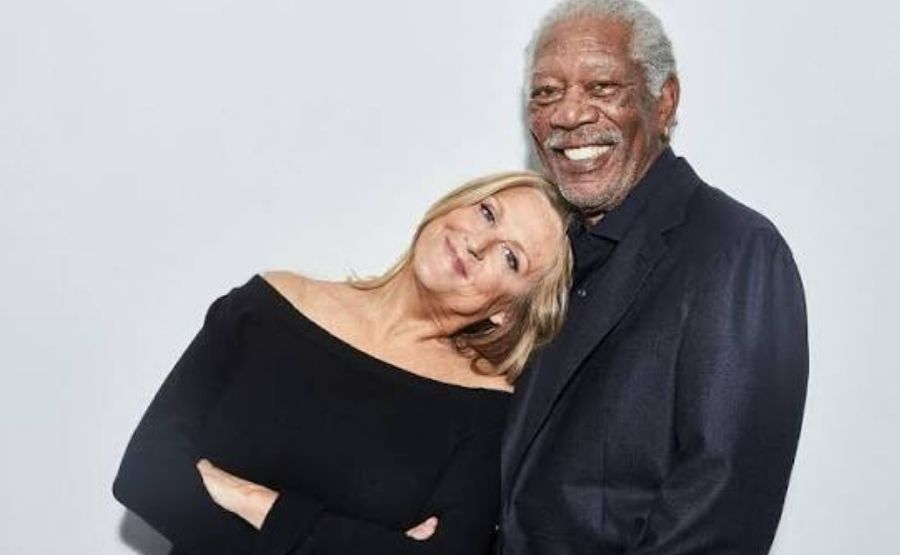
When people type “Morgan Freeman wife” into a search engine, they are looking for Myrna Colley-Lee. What they find — if they look past the tabloid summaries and the divorce settlement speculation — is someone considerably more interesting than the label they arrived with.
Myrna Colley-Lee is an internationally recognized costume designer who has spent more than five decades building one of the most significant bodies of work in American theater. She was at the forefront of the Black Theater Movement in the late 1960s, a period when African-American theatrical voices were fighting for resources, audiences, and recognition — and when the costumes she designed helped those stories find their full visual power. She has designed for more than seventy productions at more than fifty theaters. Her work is in the permanent collections of major arts institutions. She holds an honorary doctorate. She has been recognized as an Honored Artist by the National Museum of Women in the Arts. She received Mississippi’s Governor’s Arts Award in 2022.
She was also married to Morgan Freeman for twenty-six years, and that marriage ended in a divorce that generated considerable media coverage for reasons that were painful and not of her choosing.
Both things are true. Only one of them usually gets told. This is the other one.
See also “Shawn Ryan Net Worth: The Navy SEAL Who Built a Media Empire One Story at a Time“
Hamlet, North Carolina: The Beginning of an Artist
Hamlet, North Carolina is a small railroad town in the Sandhills region of the state — the kind of place where community life is close and everyone knows the shape of everyone else’s day. Myrna Colley-Lee was born there in 1941, arriving into a Southern world that was still legally segregated and culturally defined by the particular textures of African-American life in the mid-century South: church, family, community resilience, and the constant negotiation between what the world said you were and what you knew yourself to be.
The details of her earliest years — her parents, her household, the specific character of her childhood in Hamlet — have not been publicly shared. She is a private person about the things that most matter to her, and her childhood falls squarely in that category. What is known is that she developed at a young age both a love of travel and a deep visual sensibility. She has described being a world traveler since the age of seventeen — a remarkable claim for a young Black woman from a small Southern town in the late 1950s, and one that tells you something important about the ambition and curiosity that were already operating in her at that age.
That curiosity would eventually lead her to the theater, to fabric and color and the visual language of costume, and to a career that would take her to stages across the United States and into the permanent collections of some of the country’s most respected arts institutions. But first, it led her to college.
Education: Two Schools, One Artistic Vision
Myrna Colley-Lee pursued her formal education at the Women’s College of the University of North Carolina — the institution now known as UNC Greensboro — where she earned a Bachelor of Fine Arts degree. The Women’s College had a strong tradition of arts education and produced graduates who went on to serious creative careers. For a young woman from a small North Carolina town with an eye for beauty and a desire to make things, it was exactly the right environment to begin developing a professional vocabulary for what she could see in her imagination.
After completing her undergraduate work, she moved to New York City and enrolled at Brooklyn College, where she studied scene painting and properties — the technical and artistic craft of creating the physical world that theatrical productions inhabit. The combination of her UNC BFA and her Brooklyn College specialization gave her a foundation that was both broad and precise: the ability to understand design conceptually and the practical skill to execute it with her own hands.
New York in the early-to-mid 1960s was an extraordinary place for a young artist with those capabilities. The civil rights movement was remaking the cultural landscape. African-American creative voices were asserting themselves in theater, literature, music, and visual art with a force and confidence that demanded response from every institution that had previously excluded them. Myrna arrived in that world at exactly the right moment and with exactly the right training to become part of what was building.
The Black Theater Movement: Where the Career Began
In the late 1960s, Myrna Colley-Lee stepped into what would become the defining work of her professional life. The Black Theater Movement was a cultural revolution — an assertion that African-American stories, perspectives, and aesthetics deserved their own theatrical spaces, their own companies, their own visual languages, and their own designers who understood those stories from the inside.
The movement faced formidable practical challenges. Funding was scarce. Resources were minimal. Productions were often mounted on budgets that would make a commercial producer’s eyes water with sympathy. And yet the work produced in this environment was some of the most artistically vital American theater of the twentieth century — plays that carried the weight of history, the urgency of the present, and the vision of a future that had not yet arrived.
Myrna designed costumes for this work. She understood that a costume is not decoration — it is characterization made visible, history made wearable, the interior life of a character externalized in fabric and color and silhouette. She brought to her designs an understanding of African-American cultural heritage that gave them authenticity and depth. Her costumes didn’t just dress actors. They helped audiences understand who those characters were before a single line of dialogue was spoken.
She would eventually be recognized as one of the foremost costume designers in the Black Theater Movement — a designation that carries real historical weight, because the people who built that movement built something that mattered permanently to American theatrical culture.
A Career of Seventy Shows and Five Decades
After her entry into the Black Theater Movement, Myrna’s career expanded and deepened over decades. She designed costumes for more than seventy productions at more than fifty theaters and venues across the United States — regional theaters, university stages, festival productions, and some of the most respected institutional stages in the country. In 2003, she designed costumes for the Steppenwolf Theatre Company’s production of The Wedding Band, work that is now part of her archived papers at Mississippi State University.
Her expertise extended beyond costume into set design and art direction — the capacity to shape the entire visual world of a production rather than simply the clothing that inhabits it. This broader skill set placed her in the category of complete theatrical designers rather than specialists, and it opened opportunities that narrower specialization would have closed.
She also curated and contributed to major exhibitions of her work. In 2006, GladRags: Sketches, Swatches, and Costume Designs brought her design work into gallery spaces — the sketches, fabric swatches, and finished costume designs that document a theatrical creative process made visible for audiences who had never seen the work that exists before the lights come up. The same year, a major exhibition at the Mississippi Museum of Art featured her work. In 2012, Songs of Social Significance appeared at the McNay Museum’s Tobin Collection Gallery in San Antonio. In 2017, she organized Reflections: African American Life, an art gallery exhibition at LSU Museum of Art that explored African-American life through a collection she had assembled over decades of global travel and personal connection to artists.
She has been collecting art since the age of seventeen — a practice she described as acquiring pieces that carry personal impact, whether from artisans in small villages encountered during travels, through friendships with artists, or through more formal acquisition. The collection she eventually organized into Reflections at LSU represented not just aesthetic taste but biographical depth: forty years of encounters with artists and artworks across the world, assembled into a coherent meditation on African-American experience and identity.
Major Awards: Recognition Long Overdue
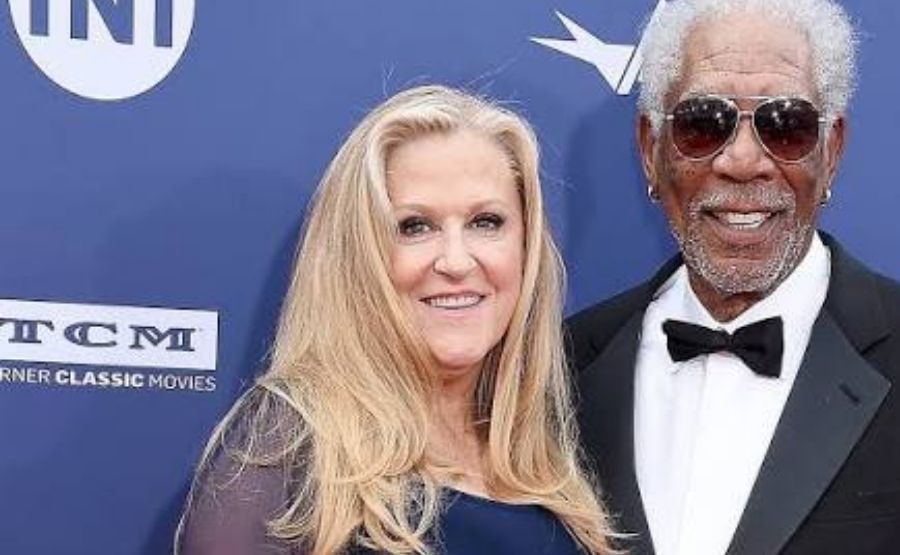
The institutional recognition that Myrna Colley-Lee’s career has generated is extensive and came from organizations that understood her work deeply rather than simply associating her with a famous ex-husband.
The Wynona Lee Fletcher Award for Outstanding Achievement as a Designer, presented by the Black Theatre Network, recognized her decades of service to the specific artistic community where her career was rooted. The Honored Artist designation from the National Museum of Women in the Arts — one of the most prestigious arts institutions in Washington, D.C. — placed her in a lineage of women whose creative contributions had been historically undervalued and were now being formally acknowledged.
The Lifetime Achievement Award from the Mississippi Institute of Arts and Letters recognized her contributions to arts and culture in the state she had made her home. An Honorary Doctorate in Creative Arts from Mississippi State University formalized the relationship between her career and the institution that now holds her permanent archives — the Myrna Colley-Lee Costume Collection, which she donated to serve the theater community of Mississippi, and the Myrna Colley-Lee Papers, which document her full career in scripts, playbills, photographs, design materials, and personal correspondence.
In 2022, the Governor of Mississippi presented her with the Governor’s Arts Award for Excellence in Costume Design and Arts Patron — the state’s highest arts recognition. She received it at an age when most people have long since moved away from active work. She remains active.
Meeting Morgan Freeman: A Mutual Friend, a Dinner, a Marriage
The story of how Myrna Colley-Lee and Morgan Freeman found each other is one of the simpler meet-cute narratives in Hollywood history, and perhaps the more genuine for being simple. A mutual friend introduced them. A date was arranged for them. Something clicked.
At the time of their introduction, Myrna was already an established costume designer with a serious professional reputation in theater circles. Morgan was an actor building toward the fame that Driving Miss Daisy, The Shawshank Redemption, and Se7en would eventually generate — not yet the universally recognized voice and face he would become, but clearly talented, clearly determined, and clearly going somewhere. He had recently ended his first marriage to Jeanette Adair Bradshaw, a twelve-year union.
They married on June 16, 1984, in a small private ceremony. The wedding reflected the personalities of both participants: no Hollywood fanfare, no magazine coverage of the gown and the guest list, just two adults making a commitment in the way that people who prefer substance to spectacle tend to make commitments.
Myrna was forty-three years old. She was marrying for the first time. She brought to the marriage not a blank slate but a fully formed identity — a career, an artistic community, a collection of artworks, a relationship with the world of theater that had been built over nearly two decades of serious work.
Twenty-Six Years: The Marriage and What It Held
The marriage lasted twenty-six years — long enough to encompass the entirety of Morgan Freeman’s ascent from respected theatrical actor to one of the most recognizable voices and faces in the history of American cinema.
Myrna navigated that transition with the same composure she brought to everything else. She was not a Hollywood wife in any conventional sense. She maintained her own career, her own artistic identity, her own community in Mississippi, her own network of theatrical and philanthropic relationships that existed entirely independent of her husband’s celebrity. She was not on his arm at premieres as a decorative presence. She was a person with her own things to do.
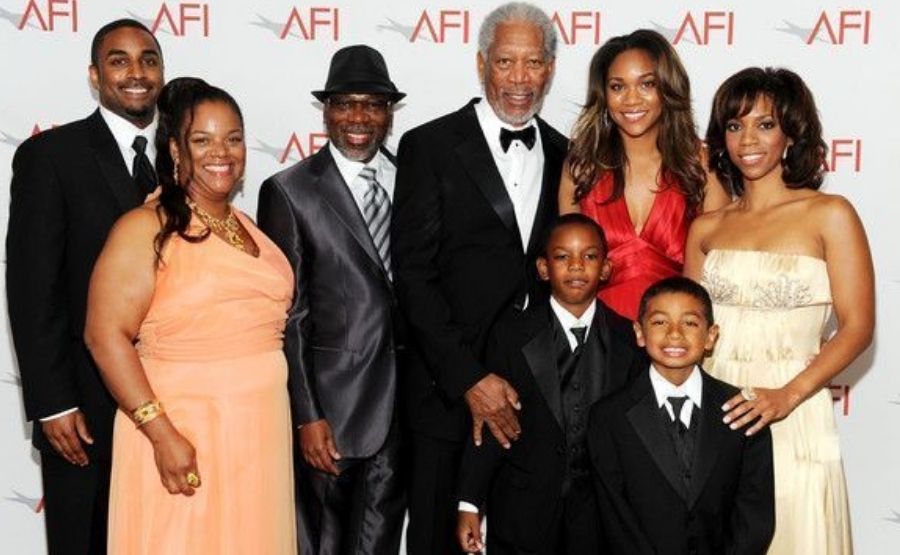
They had no biological children together. Morgan had children from his first marriage and from other relationships, and Myrna was present in those children’s lives. They adopted his step-granddaughter from his first marriage — a child who became part of the family they built together in the particular way that blended families build themselves, which is to say imperfectly but genuinely.
She was also, throughout the marriage, the person managing their Mississippi life — the home in Charleston, the connection to the community arts scene, the philanthropic relationships she was building with schools and cultural organizations across the state. Morgan’s career demanded his presence on sets around the world. Myrna’s anchor was always Mississippi.
The End: Infidelity, Divorce, and a Settlement
In December 2007, Myrna Colley-Lee filed for divorce from Morgan Freeman. The divorce was finalized in 2010. The marriage was over after twenty-six years.
The reason was not complicated, though it was painful. Morgan Freeman had affairs during the marriage. One documented relationship was with a schoolteacher named Mary Joyce Hays. Reports of additional infidelities surfaced over time. Myrna had sustained the marriage for years through these difficulties before making the decision that she would not continue to do so.
Her attorney Kay Farese Turner offered a statement after the settlement: “Both parties were relieved and pleased with the terms of the settlement.” Turner also noted that Myrna would continue to reside in Mississippi, where her roots in the arts community had only deepened over the decades of their marriage.
The financial terms of the settlement have been the subject of considerable speculation. Various figures have circulated, including claims of a $400 million settlement — a figure that appears in some sources and is disputed in others. What is credibly established is that the settlement was substantial and that Myrna’s attorney described both parties as satisfied with its terms.
The Morgan Freeman sexual misconduct allegations that emerged in 2018 — when CNN reported accusations from sixteen women — were not connected to the divorce and came years after it was finalized. They added an additional layer to the public understanding of the man Myrna had married and lived with for twenty-six years, though she has said nothing publicly about those allegations.
Life After Divorce: Mississippi, Art, and Active Purpose
Since her divorce, Myrna Colley-Lee has done what she has always done: worked. She continued designing. She continued collecting. She continued serving on the boards of organizations she believes in — the Charleston Arts and Revitalization Effort, the Rock River Foundation, the Mississippi State University Department of Art, the Gertrude C. Ford Center for the Performing Arts at the University of Mississippi.
She donated her professional archive to Mississippi State University — a major institutional gift that ensures her career will be studied and understood by future costume designers, theater historians, and arts scholars. The collection includes not just finished costumes but the full documentary record of a creative process: scripts, playbills, photographs, design materials, sketches, rehearsal notes, fabric swatches, and personal correspondence accumulated over five decades.
She remains involved in the Charleston area school arts programs — a ground-level commitment to ensuring that young people in rural Mississippi have access to arts education, whatever form that takes. It is the kind of work that doesn’t generate press releases but reflects a genuine commitment to the next generation of artists.
She was awarded the Mississippi Governor’s Arts Award in 2022 — four years after the divorce had left her name primarily attached to the Morgan Freeman narrative in public search results, and twelve years after the marriage had ended. The award, presented for Excellence in Costume Design and Arts Patron, recognized the person she had been for her entire adult life, independent of who she had been married to.
Net Worth: The Honest Picture
Myrna Colley-Lee’s personal net worth — built from her own career as a costume designer, art director, and philanthropist — is estimated at approximately $5 million. That figure reflects five decades of professional work, institutional relationships, art collection, and the kind of cultural capital that a career built in theater accumulates over time.
The divorce settlement from Morgan Freeman — whose own net worth has been estimated at over $250 million — was reportedly significant. The $400 million figure that circulates in some sources is almost certainly an exaggeration, and the actual terms were never publicly disclosed beyond the attorney’s statement that both parties were satisfied. Whatever she received added to her financial security in ways that are not separately documentable.
Her own career-generated net worth is what reflects who she is professionally. Five million dollars built through costume design in Black theater over five decades is a meaningful number — and it belongs entirely to the choices she made starting in the late 1960s when she decided that African-American theatrical stories deserved to be dressed with care and excellence.
Final Words
Myrna Colley-Lee’s biography is, ultimately, a story about what it means to build a professional identity with such depth and integrity that even a twenty-six-year marriage to one of the most famous actors in the world cannot fully obscure it — though it has certainly tried.
She designed costumes for more than seventy productions. She helped build the visual vocabulary of the Black Theater Movement during one of the most significant periods in American cultural history. She collected art across forty years of world travel and organized it into exhibitions that opened those stories to new audiences. She donated her archive and her costume collection to institutions that will preserve and study them. She serves on boards. She teaches. She is still designing, still collecting, still active at an age when most people have long since decided they’ve done enough.
The marriage to Morgan Freeman is one chapter of a long and genuinely distinguished life. It is the chapter that brings most people to her name, but it is not the chapter that defines her — except in the search results that have not yet caught up to who she actually is.
The Governor of Mississippi knows. The National Museum of Women in the Arts knows. The faculty and students who work with her costume collection at Mississippi State know. Fifty-plus theaters whose productions she dressed over five decades know. The women in Charleston-area schools she has opened arts programs for are learning.
It is enough. It is more than enough.
See also “Shawn Ryan Net Worth: The Navy SEAL Who Built a Media Empire One Story at a Time“
FAQs
1. Who is Myrna Colley-Lee?
Myrna Colley-Lee is an American costume designer, art director, set designer, philanthropist, and arts patron born in 1941 in Hamlet, North Carolina. She is internationally recognized as one of the foremost costume designers in the Black Theater Movement and has designed for more than seventy productions across more than fifty American theaters. She is also the former wife of actor Morgan Freeman, to whom she was married from 1984 to 2010.
2. When and where was Myrna Colley-Lee born?
She was born in 1941 in Hamlet, North Carolina — a small railroad town in the Sandhills region of the state. The specific date of her birth has not been confirmed publicly; sources list January 1, 1941 as the most common citation.
3. What was Myrna Colley-Lee’s education?
She earned a Bachelor of Fine Arts from the Women’s College of the University of North Carolina (now UNC Greensboro) and then studied scene painting and properties at Brooklyn College in New York — building both conceptual design ability and practical technical craft.
4. How did Myrna Colley-Lee and Morgan Freeman meet?
They were introduced by a mutual friend who set them up on a date. Morgan had recently ended his first marriage to Jeanette Adair Bradshaw. They married on June 16, 1984, in a small private ceremony.
5. Why did Myrna Colley-Lee and Morgan Freeman divorce?
Myrna filed for divorce in December 2007 after Morgan’s ongoing infidelity during the marriage became untenable. One documented affair was with a schoolteacher named Mary Joyce Hays. The divorce was finalized in 2010 after twenty-six years of marriage.
6. Did Myrna Colley-Lee and Morgan Freeman have children?
They had no biological children together. Morgan had children from his first marriage and other relationships. During their marriage, Myrna was close to those children, and they adopted his step-granddaughter from his first marriage.
7. What is the Black Theater Movement and what was Myrna’s role in it?
The Black Theater Movement was a mid-to-late twentieth century cultural movement asserting that African-American theatrical stories deserved their own stages, companies, and aesthetic vocabulary. Myrna entered the movement in the late 1960s and became one of its most recognized costume designers, working under tight budgets on productions of vital artistic importance. She is still regarded as one of the foremost designers of that era.
8. What awards has Myrna Colley-Lee received?
Her awards include the Wynona Lee Fletcher Award for Outstanding Achievement as a Designer from the Black Theatre Network; Honored Artist designation from the National Museum of Women in the Arts; Lifetime Achievement Award from the Mississippi Institute of Arts and Letters; Honorary Doctorate in Creative Arts from Mississippi State University; and the 2022 Mississippi Governor’s Arts Award for Excellence in Costume Design and Arts Patron.
9. Where is Myrna Colley-Lee’s work held in permanent collections?
Her professional archive — scripts, playbills, photographs, costume sketches, design materials, and personal correspondence — is held at Mississippi State University Libraries. Her costume collection was donated to Theatre MSU. Her renderings, collages, and costumes have been exhibited at the Marion Koogler McNay Art Museum’s Tobin Collection of Theater Arts, the Mississippi Museum of Art, LSU Museum of Art, and other institutions.
10. What is Myrna Colley-Lee’s estimated net worth?
Her personal net worth from her own career is estimated at approximately $5 million. The divorce settlement from Morgan Freeman — whose net worth exceeds $250 million — was reported to be substantial, though the specific terms were never publicly disclosed. Her attorney confirmed that both parties were satisfied with the settlement.
11. Where does Myrna Colley-Lee live now?
She has remained in Charleston, Mississippi, since the divorce — as her attorney noted following the settlement. She is active in the Charleston area arts community, involved in school arts programs, and serves on multiple boards including the Charleston Arts and Revitalization Effort, the Rock River Foundation, and arts advisory boards at Mississippi State University and the University of Mississippi.
12. Is Myrna Colley-Lee still working as a designer?
Yes. As of the 2022 Governor’s Arts Award, she was described as an active designer, having worked continuously since the late 1960s. She has designed more than seventy shows and continues to work in regional theater. Her career spans over five decades without interruption.