Hedy Lamarr Adopted Son: The Untold Story of Her Family and Legacy
Quick Bio
| Detail | Information |
| Full Name | James Lamarr Loder (also known as James Lamarr Markey, James Lamarr) |
| Born | January 9, 1939 — Los Angeles, California, USA |
| Died | July 28, 2013 — Omaha, Nebraska, USA (aged 74) |
| Nationality | American |
| Occupation | U.S. Air Force serviceman; Police officer (Omaha Police Department) |
| Known For | Being the adopted son of actress Hedy Lamarr; the 1969 Vivian Strong shooting in Omaha |
| Adoptive Parents | Hedy Lamarr and Gene Markey (1941); later re-adopted by John Loder (1943) |
| Half-Siblings | Denise Loder-DeLuca (b. 1945) and Anthony Loder (1947–2023) |
| Residence | Omaha, Nebraska (adult life) |
| Estate Dispute | Challenged Hedy Lamarr’s will in 2000 after being explicitly disinherited; received a $50,000 private settlement |
Introduction: A Son Hollywood Forgot
Every great story has a shadow. In the gleaming, heavily told story of Hedy Lamarr — the Austrian actress who became one of Hollywood’s biggest stars and co-invented the technology that underpins modern wireless communications — there is a shadow that is rarely discussed.
His name is James Lamarr Loder.
He was the first child Hedy ever called her own. She fought in court to keep him. She dressed him up, photographed him, and wrote about how he became the center of her world. And then, when he was barely old enough to understand what was happening, she let go — and never really reached back.
James’s life is the kind of story that gets lost because it doesn’t have a happy ending, a redemption arc, or the kind of dramatic closure that makes for a satisfying tale. It has confusion, loss, a career marked by tragedy, and decades of silence from the woman who was supposed to be his mother. It also has something quietly human at its core: a person trying to build a life with whatever pieces he was given.
This is that story.
Early Life: Born Into a World of Glamour He Didn’t Choose
James came into the world on January 9, 1939, in Los Angeles, California — the city of dreams, and in his case, the city of a very complicated beginning.
His origins are genuinely murky, and that murkiness would follow him his entire life. At various points, different versions of his story were told by different people. Hedy Lamarr consistently maintained throughout most of her life that James was a fully adopted child — a baby she took in during her marriage to screenwriter and naval officer Gene Markey. Documents and public records at the time supported that version.
But there’s another version too. Some researchers later came to believe that James was not adopted in the traditional sense, but was instead the out-of-wedlock biological son of Hedy and actor John Loder — the man who would become her third husband. Hedy, it was suggested, may have used the adoption story as cover for an illegitimate pregnancy, a fairly common maneuver in the morally rigid world of 1930s Hollywood.
The truth, eventually, was resolved by science. DNA testing conducted later by Hedy’s other children confirmed that James shared no biological connection with Hedy or the Loder family. The adoption story was apparently correct all along. But the decades James spent wondering about his own parentage, carrying three different surnames, and searching for clarity in his identity — that was a real and lasting wound.
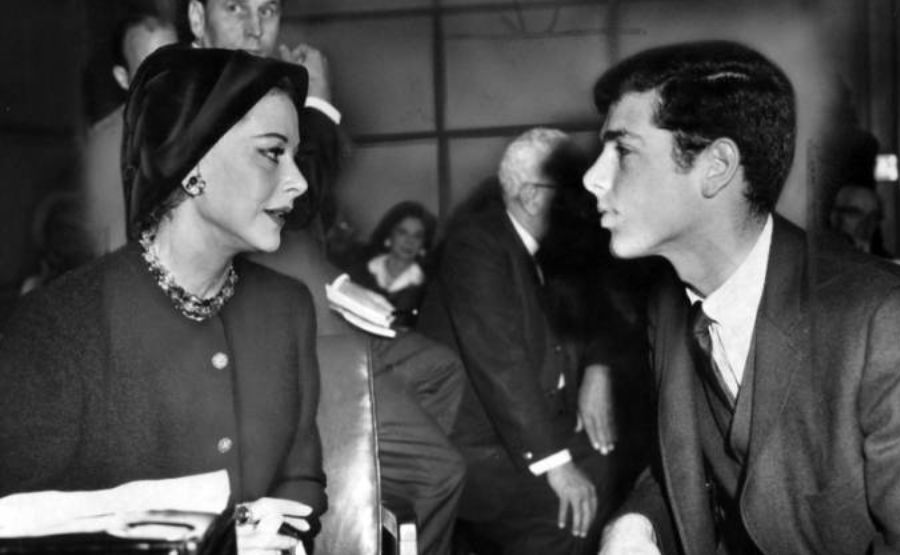
Hedy and Gene Markey married on March 4, 1939 — just weeks after James was born. The adoption was formalized in 1941, during the couple’s marriage. Hedy threw herself into motherhood with the same intensity she brought to everything. Friends and family described how she adored the baby, nicknaming him “little Jamesie,” making him the focal point of her attention. To the outside world, here was Hollywood’s most beautiful woman embracing the role of devoted mother.
But Hedy’s personal life was chaotic. She and Markey divorced in 1941, the same year the adoption was finalized. James was two years old.
The Blended Household: Two Adoptions, Three Names
In 1943, Hedy married her third husband — British actor John Loder. The household that formed around this marriage was, to put it mildly, complicated. John Loder officially adopted James, giving him his third name: James Lamarr Loder. He now had the surname of a man who was not his biological father but had legally become one through adoption — the second such arrangement of his young life.
Together, Hedy and John Loder went on to have two biological children: a daughter named Denise, born in 1945, and a son named Anthony, born in 1947. James was the eldest of the three children in the household — six years older than Denise, eight years older than Anthony. He was also, quietly, the most precarious. His half-siblings were biologically Hedy’s. He was not.
Whether that distinction was ever made explicit to James as a child is not recorded. What we do know is that the household did not stay intact. Hedy and John Loder divorced in 1947, when James was eight years old. By this point, James had already lived through two broken marriages involving his mother, two adoptions, and two surname changes. He was in elementary school.
Education: Chadwick and the Break That Changed Everything
James began attending Chadwick School, a private institution on the Palos Verdes Peninsula in Los Angeles County. Chadwick was — and remains — a prestigious establishment, the kind of school where Hollywood families sent their children. It was not a place for troubled kids so much as for privileged ones.
James did not finish his time there cleanly. Accounts describe a disciplinary incident that led to his departure from the school, sometime around when he was ten or eleven years old. The specifics of what happened are not clearly documented in public sources. What happened next, however, changed the entire trajectory of his relationship with his mother.
After leaving Chadwick, James moved in with a teacher named Ingrid Gray. This is where the story gets both heartbreaking and revealing. In James’s own words, recalled years later, Gray offered him a home and stability that suited him — he could live with her, go to school with his friends, stay in a world he recognized. He agreed to the arrangement. And that decision, simple as it seemed to a ten-year-old, apparently ended his relationship with Hedy Lamarr.
Hedy did not pursue him. She did not bring him back. By James’s own account, she was “disenchanted” with the choice he had made, and after that, she didn’t want anything more to do with him. He was roughly eleven or twelve years old when the break happened. He would not have a real relationship with his mother for almost five decades.
Career: From the Air Force to the Omaha Police
James eventually built his own life — quietly, and far from Hollywood’s orbit.
He served in the United States Air Force for eight years. The military gave him structure, purpose, and a sense of belonging that his fractured childhood had not. After completing his service, he settled in Omaha, Nebraska — as far from Los Angeles as it’s possible to get in spirit, even if the geography isn’t extreme.
In Omaha, James joined the police department. He was a patrol officer, working in a city that in the late 1960s was navigating the same racial tensions tearing apart cities across America. It was an era of protest, of civil rights marches, of anger boiling over in urban neighborhoods. It was a difficult time to be any police officer, let alone one working in North Omaha.
The Defining Moment: June 24, 1969
This is the event that made James Lamarr Loder a figure in history beyond his famous parentage, and it is not a comfortable one.
On the night of June 24, 1969, fourteen-year-old Vivian Strong — a Black girl — was at an informal dance party with friends in a vacant apartment at the Logan Fontenelle Housing Project in North Omaha. A neighbor called police to report a suspected break-in. Two officers were dispatched, including James Loder.
When the officers arrived, the teenagers panicked and ran out of the back of the building. James Loder raised his weapon and fired a single shot. The bullet struck Vivian Strong in the back of the head. She died instantly.
No warning had been issued. No weapon had been found. There had been no actual burglary. Vivian Strong — fourteen years old, unarmed, running away — was gone.
The city of Omaha reacted with days of protest and rioting in North Omaha’s streets. The anger was enormous and legitimate. A young Black girl had been shot dead by a white police officer in a neighborhood already strained by decades of inequality.
James Loder was charged with manslaughter. He was suspended from the police department for fifteen days and released on $500 bail. The trial came in the fall of 1969. In March 1970, he was found not guilty by an all-white jury.
He was reinstated to the force. He continued working as a patrol officer, though in a transferred assignment after community protests about his presence in North Omaha specifically. On November 29, 1971, he was fired by police Chief Richard Andersen — not for the shooting, which he had been acquitted of, but for a series of disciplinary infractions: failure to appear in court as a city witness, misuse of police radio, insubordination, and failure to pass uniform inspection.
Vivian Strong’s death has never been forgotten. A historical marker was unveiled in her name in Omaha in 2023. A portion of 21st Street near Logan Fontenelle Park was renamed in her honor. Her story became part of Omaha’s civil rights history — the painful, unresolved kind of history that cities carry for generations. James Loder’s name appears in that history too, permanently attached to a night that shaped both a community and whatever remained of his own life.
The Estrangement: Five Decades of Silence
While all of this was unfolding in Omaha, Hedy Lamarr — living out her later years in Florida — was effectively pretending her eldest son didn’t exist.
Hedy had drafted a will as early as 1961 that specifically excluded James by name — all three of his names: “James Markey, also known as James Lamarr, also known as James Lamarr Loder.” The wording was not accidental or bureaucratic. It was precise and personal. She didn’t just omit him; she disinherited him explicitly, and specifically extended that disinheritance to any of his potential descendants.
When asked about James in her later years, Hedy was reluctant to say much. What she did say was brief and pointed. “He hurt me,” she told people who pressed her. Her daughter Denise, speaking later in a documentary about Hedy’s life, echoed the sentiment without elaborating: something had happened that Hedy could not forgive. What that something was has never been fully disclosed in public accounts.
James, for his part, told a slightly different story — or at least a more textured one. He said the two had maintained some form of sporadic contact over the years. “I called her sometimes and she called me sometimes,” he said in an account referenced in later reporting. He described a period in the late 1980s when they spoke on the phone and he was struck by how sharp and vibrant she still seemed, all those years later.
A few years before her death, Hedy reportedly sent James a photograph of the two of them together. On the back, she wrote an inscription: Dear Jim, I thought you would want a photo of us, much love to you and your family, from Mom. It was a small gesture — possibly the warmest thing she offered him in decades. But when she died, the will that excluded him had not changed.
The Will and the Fight for Inheritance
Hedy Lamarr died on January 19, 2000, in Casselberry, Florida. She was 85 years old.
The estimated value of her estate was $3.3 million. Her final will left the bulk of it equally to her two biological children: Anthony Loder received about $1.8 million, and Denise Loder-DeLuca received about $1.2 million. Four close friends received modest sums. James received nothing.
He challenged the will in court. He alleged that Hedy had been mentally unsound when she signed the document, and that the will was the product of undue influence or coercion by those named in it. The attorney who had drafted the will pushed back firmly, describing Hedy as entirely lucid and deliberate when she signed it just three months before her death.
The legal challenge ultimately did not succeed. But the story didn’t quite end there. Anthony and Denise, in what appears to have been a private act of something between generosity and resolution, agreed to give James a settlement of $50,000 from the estate — a fraction of the total, but an acknowledgment that he existed and that the situation was complicated.
James accepted it. He went back to Omaha.
Personal Life
James married and had at least one son. He lived in Omaha for most of his adult life, keeping a distance from the celebrity world that had defined his origins. He declined to speak publicly about the Vivian Strong shooting in his later years. His wife, in a brief phone conversation with a reporter years after the incident, said the shooting had deeply affected the entire family, and expressed a wish to leave it behind.
His half-siblings Denise and Anthony largely went on to private lives of their own. Denise had very few memories of James, having been born years after the estrangement began. Anthony, who died in 2023, had been closer to Hedy in her final decades and was the one who scattered part of her ashes in the Vienna Woods, fulfilling her last wishes.
James never reconciled publicly with Hedy’s memory. He didn’t pursue fame, didn’t write a memoir, didn’t give interviews. He was a private man who had been dealt a very public set of circumstances.
Challenges and Difficult Periods
It would be hard to catalog James Lamarr Loder’s difficult periods without including most of his life.
Abandoned — practically speaking — by his adoptive mother at eleven years old. Carrying three different names through childhood with no stable identity. Serving on a police force during one of the most combustible eras in American racial history. Being acquitted of manslaughter in a shooting that cost a fourteen-year-old girl her life and ignited a community. Being fired from his job. Being explicitly cut out of a multi-million-dollar estate by a mother who sent him a photograph signed “much love” just years before.
If there was a period of his life that was free of serious challenge, the record doesn’t clearly show it.
What the record does show is that he kept going. He built a family. He stayed in Omaha. He didn’t become a public symbol of grievance or a tabloid figure. He lived his life.
Financial Situation
James was not a wealthy man by any documented measure. He worked as a serviceman and then a police officer — two respectable but modest-paying careers. His $50,000 settlement from Hedy’s estate was a one-time payment from a family that otherwise formally excluded him.
There is no credible public figure for his net worth. He lived a working-class life in Omaha, Nebraska, without the inheritance or industry connections that might have come from a different kind of relationship with his famous mother.
Later Life
After leaving the police force in 1971, James Loder lived the remainder of his life in Omaha with little public profile. He was mentioned periodically in press accounts around the time of Hedy’s death in 2000 and the estate dispute that followed. Beyond that, he stayed out of the news.
He died on July 28, 2013, in Omaha, Nebraska. He was 74 years old.
The city of Omaha remembered Vivian Strong in 2023 with a historical marker and a street renaming. James Loder’s name appears in that memorial history — not as a hero, but as a fact.
Final Words
There is no tidy way to summarize James Lamarr Loder’s life because it doesn’t have a tidy shape.
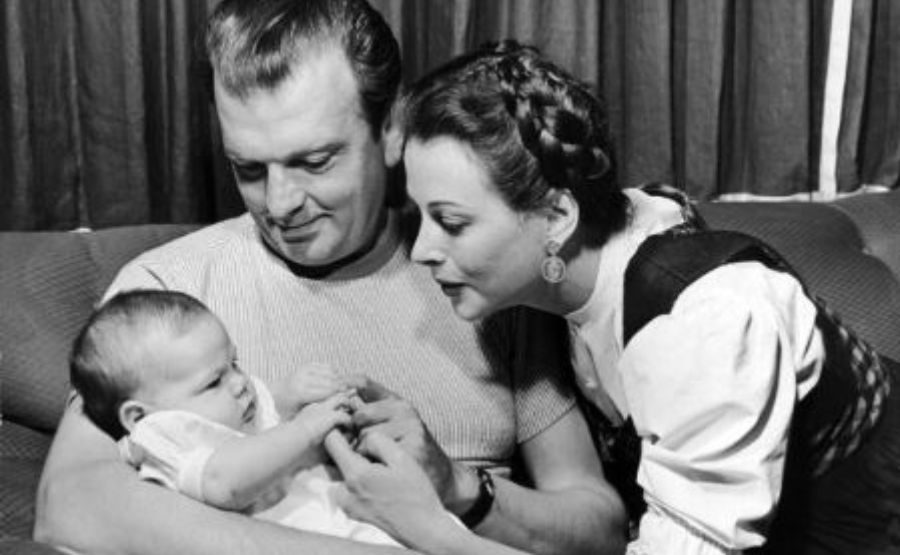
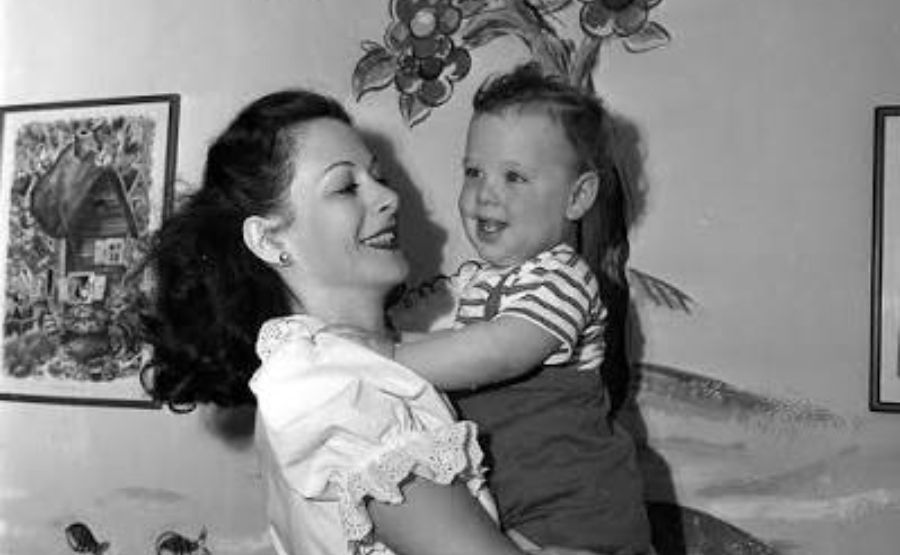
He was given the most glamorous possible beginning — born in Los Angeles, adopted into Hollywood royalty, photographed as an infant in the arms of one of the most famous women in the world. And then, piece by piece, all of that fell away. Two marriages dissolved around him before he was ten. Two different men adopted him. His mother, the most recognizable face of her generation, found a reason to close the door and left it closed.
What he did with the life that remained was messy and human. He served his country. He became a police officer. He was involved in a shooting that haunts a community to this day, and he was found not guilty by a jury that many believed reached the wrong conclusion. He challenged his mother’s will and lost. He took the smaller settlement and went home.
He was not a villain, not a victim in any simple sense, and not a hero. He was a person shaped by abandonment and identity confusion, who built a life anyway, in a city a long way from Hollywood, with people who knew him by one name only.
Hedy Lamarr’s legacy is dazzling and deserved. Her films, her invention, her courage in escaping a dangerous marriage in prewar Europe — all of it is remarkable. But legacies are not the whole story. James was part of her story too, even if she tried to write him out of it. The photograph she sent him — much love, from Mom — suggests that somewhere beneath everything, she knew it.
He deserved better. Most of the evidence suggests he knew that too.
FAQs
1. Who exactly was James Lamarr Loder?
James Lamarr Loder — also known as James Lamarr Markey — was the adopted son of Hollywood actress and inventor Hedy Lamarr. He was adopted during her marriage to screenwriter Gene Markey, and later re-adopted by her third husband, British actor John Loder. He lived most of his adult life in Omaha, Nebraska, where he worked as a police officer.
2. When and where was James born?
He was born on January 9, 1939, in Los Angeles, California, during the height of Hollywood’s golden era. His birth came just weeks before Hedy Lamarr and Gene Markey married.
3. Was James Lamarr Loder actually Hedy Lamarr’s biological son?
This question was debated for decades. Hedy always maintained he was fully adopted and not related to her biologically. Some researchers suspected he was her out-of-wedlock son with actor John Loder. DNA testing conducted later by Hedy’s other children ultimately confirmed he was not biologically related to Hedy or John Loder, supporting the adoption narrative.
4. Why did James and Hedy become estranged?
Their estrangement began when James was around eleven or twelve, following a disciplinary incident at Chadwick School in Los Angeles County. James moved in with a teacher named Ingrid Gray rather than returning home. Hedy apparently took this as a rejection and severed contact. She never forgave whatever happened between them, though she described it simply by saying “he hurt me.”
5. How many names did James have?
Three. He was initially James Lamarr Markey, taking the surname of Hedy’s second husband, Gene Markey. After Hedy’s marriage to actor John Loder, he was re-adopted and became James Lamarr Loder. He was also sometimes referred to simply as James Lamarr. His shifting names reflect the serial instability of his family structure.
6. What did James do as a career?
He served in the U.S. Air Force for eight years. After leaving the military, he joined the Omaha Police Department in Nebraska, where he worked as a patrol officer until 1971.
7. What happened with Vivian Strong?
On June 24, 1969, James Loder shot and killed fourteen-year-old Vivian Strong, an unarmed Black girl, while responding to a suspected break-in at a North Omaha housing project. Strong and other teenagers had been at an informal dance party and fled when police arrived. Loder fired a single shot without issuing any warning. Strong was killed instantly. Loder was charged with manslaughter, acquitted by an all-white jury in March 1970, and reinstated before being fired in 1971 for unrelated infractions.
8. Was James Lamarr Loder included in Hedy Lamarr’s will?
No. Hedy’s final will specifically and explicitly excluded James by all three of his known names and extended that exclusion to his descendants. She left her estate — valued at roughly $3.3 million — to her biological children Denise and Anthony Loder, along with modest gifts to a handful of close friends.
9. Did James challenge the will?
Indeed. James filed a court challenge after Hedy passed away in January 2000, claiming that she was incapable of signing the will and that it was the product of improper influence by its beneficiaries. The challenge was ultimately unsuccessful. His half-siblings Denise and Anthony privately agreed to pay him a settlement of $50,000.
10. Did James and Hedy ever reconcile?
The answer depends on how you define reconciliation. The two were functionally estranged for nearly fifty years. James said they maintained sporadic phone contact over the years. A few years before her death, Hedy sent him a photograph with the handwritten inscription “much love, from Mom.” But she never changed her will, and James was explicitly excluded when she died. Whatever warmth existed between them privately, it did not translate into a formal or public reconciliation.
11. Who were James’s half-siblings?
Hedy’s biological children from her marriage to John Loder were Denise Loder-DeLuca, born in 1945, and Anthony Loder, born in 1947. Denise reported having almost no memories of James, given that she was born years after his estrangement from Hedy had begun. Anthony Loder died in 2023.
12. When did James Lamarr Loder die?
James died on July 28, 2013, in Omaha, Nebraska. He was 74 years old. He had lived the majority of his life in Omaha, far from the Hollywood world into which he had been born.