Ken Curtis Spouse: The Story Behind the Gunsmoke Star’s Marriages and Family Life
Quick Bio
| Detail | Information |
| Full Name | Curtis Wain Gates (stage name: Ken Curtis) |
| Born | July 2, 1916, Lamar, Colorado, USA |
| Died | April 28, 1991, Fresno, California, USA (age 74) |
| Cause of Death | Heart attack (in his sleep) |
| Nationality | American |
| Height | 6 feet 0 inches (183 cm) |
| Occupations | Actor, Singer, Film Producer |
| Known For | Deputy Festus Haggen on Gunsmoke (CBS, 1962–1975) |
| First Spouse | Lorraine Page (married 1942; divorced) |
| Second Spouse | Barbara Ford (married 1952; divorced 1964) |
| Third Spouse | Torrie Ahern Connelly (married 1966; lasted 25 years until his death) |
| Notable In-Law | John Ford (father-in-law through Barbara Ford) |
| Children | 2 stepchildren |
| Net Worth (estimated) | Approximately $3 million at time of death |
| Twin Brother | Chester Gates |
Introduction: The Sheriff’s Son Who Played a Deputy
Here’s a detail that sounds like it was invented for a Hollywood pitch meeting: the man who spent eleven years playing a scruffy, barely-literate deputy sheriff on one of American television’s most beloved Westerns actually grew up living inside a real county jail. His father was the sheriff. His mother cooked meals for the prisoners. The West wasn’t a costume for Ken Curtis — it was his childhood.
Curtis Wain Gates was born in 1916 in Lamar, Colorado. He changed his name, learned to sing with big bands in New York, replaced Frank Sinatra as a vocalist for Tommy Dorsey, married the daughter of John Ford, appeared in some of the greatest Western films ever made, produced two of the most amusingly terrible monster movies in B-film history, and finally — in his mid-forties — found the role that the world would remember him for.
Festus Haggen. All drawl and heart and stubborn loyalty. The kind of character you remember the way you remember a real person — not because of what he did in any particular episode, but because he felt genuinely alive in a way that television characters rarely manage.
But ask most people who Ken Curtis was, and the question that lands in the search bar is often about his wives. He was married three times across a life that spanned three distinct professional eras. Each marriage tells you something different about the man — where he was, what he needed, and who he was becoming.
This biography covers all of it. The jail. The band. The singer. The son-in-law. The B-movies. And finally, Festus.
See also “Wendi J Adelson Pa: The Woman at the Center of One of America’s Most Haunting True Crime Cases“
Early Life and Childhood: Growing Up in the Las Animas County Jail
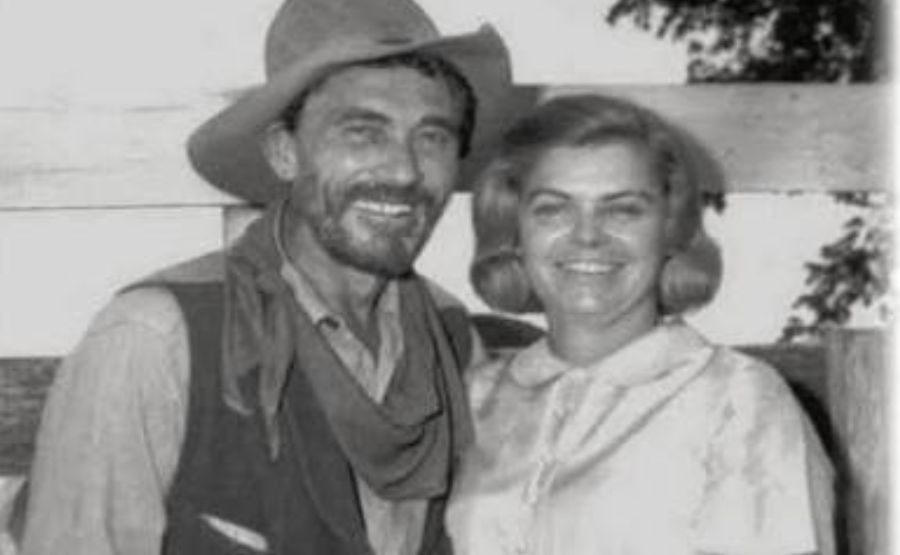
Curtis was born on July 2, 1916, in Lamar, Colorado — a small city on the eastern plains of the state, flat and wide and full of the particular sky that makes Colorado’s eastern edge feel like a different world from the mountains. He came into the world alongside his twin brother Chester, which means the Gates household doubled its population in a single afternoon.
The family subsequently moved to Las Animas, Colorado, where his father, Dan Gates, served as the county sheriff. The family home was, quite literally, the county jail — it was standard practice at the time for the sheriff and his family to live in the attached residence above or alongside the lockup, and his mother, Nellie Sneed Gates, cooked meals for the prisoners as part of the arrangement.
This upbringing gave Curtis something that most actors who play Western lawmen never have: actual familiarity with the texture of that world. He knew what a jail smelled like. He knew what the sheriff’s daily rhythm looked like. He knew the characters who cycled through — the drunks, the troublemakers, the hardscrabble figures who ended up on the wrong side of a locked door for a night.
One of those characters would, decades later, become immortal in a different form. A man known locally as Cedar Jack — whose real name was Frederick Munden — lived out in the cedar hills about fifteen miles from town, cutting fence posts for farmers and ranchers, and periodically coming into Las Animas to get properly drunk and end up in Dan Gates’ jail. Young Curtis watched him. Filed him away. Let him sit in memory for thirty years. And then, when the time came, pulled him out and turned him into Festus Haggen.
That’s the kind of specificity that you can only access if you actually lived it first.
As a teenager, Curtis threw himself into two very different activities simultaneously: he played quarterback on the high school football team and he played clarinet in the marching band. That combination — athlete and musician, physical and artistic — would remain a consistent duality throughout his life.
Education: The Medical School That Lost Him to Music
After finishing high school, Curtis enrolled at Colorado College in Colorado Springs with the intention of studying medicine. This is, in retrospect, the most surprising biographical fact about a man who ended up playing a semi-literate deputy on prime-time television for over a decade. He was headed toward becoming a doctor.
The music got him first. By the time he reached college age, the pull of performing — of singing, of being in front of an audience — had become stronger than any career plan his education had pointed him toward. He left the medical program behind. He moved toward music instead.
By 1940, he was in New York City, working as a singer for the NBC radio network. That transition — from Colorado medicine student to New York radio vocalist — tells you everything about the kind of young man he was. He followed the thing that actually called to him, even when the sensible path pointed elsewhere.
Career Beginnings: New York, Tommy Dorsey, and the Frank Sinatra Shadow
New York in 1940 was the center of American popular music. The big band era was at its height, and the bandleaders — Tommy Dorsey, Glenn Miller, Benny Goodman — were the celebrities of their day. Getting any kind of foothold in that world meant competing against genuinely extraordinary talent in the most demanding market in the country.
Curtis managed it. He sang for NBC radio, worked with bandleader Shep Fields, and eventually entered the orbit of Tommy Dorsey’s orchestra — one of the most prominent bands of the era. The conventional story is that he succeeded Frank Sinatra as Dorsey’s lead vocalist when Sinatra departed in late 1942. The reality is slightly more complicated: there was a contractual transition involving Dick Haymes, and Curtis’s exact position in that sequence has been debated. What is undisputed is that he recorded with Dorsey’s orchestra during this period — an achievement that placed him at the center of American popular music at its commercial peak.
He also married for the first time during these years. In 1942, he wed Lorraine Page. The marriage coincided with his military service — he was called up for the Army infantry during World War II and served for two years. Whatever the specific circumstances that led to the marriage’s end, Lorraine and Curtis eventually divorced, and that chapter closed quietly.
After his military service concluded, Curtis signed with Columbia Pictures and began his transition from music to film. The movie business was a natural destination for someone with his range of talents — he could sing, he had physical presence, and the Western genre that would define his career was approaching its golden age.
The John Ford Years: A Son-in-Law’s Access to Greatness
The most consequential connection in Ken Curtis’s professional life arrived not through a casting director or a talent agent but through his second marriage.
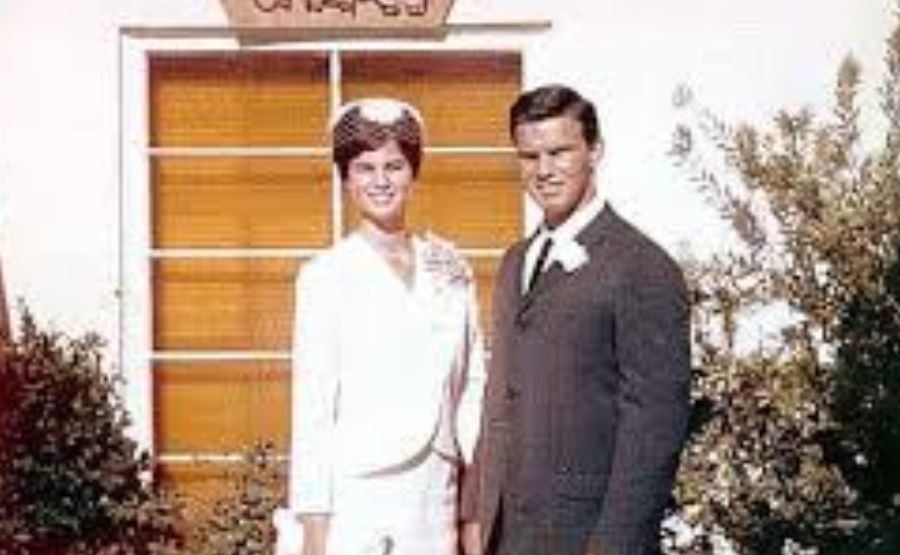
In 1952, he married Barbara Ford — the daughter of John Ford, the most celebrated Western film director in Hollywood history. Ford’s career was built on a series of films that defined how Americans understood the West: Stagecoach, The Grapes of Wrath, How Green Was My Valley, She Wore a Yellow Ribbon. The man had four Academy Awards. He worked almost exclusively with the biggest stars of his era — John Wayne, Henry Fonda, James Stewart.
And now he had Curtis as his son-in-law.
The relationship between director and husband was complicated in the way that creative partnerships involving family always are. Ford was a demanding man, famously difficult on sets, prone to humiliating actors publicly as a way of testing their resolve. But he was also a genuine artist who recognized ability when he saw it, and he clearly saw something in Curtis worth deploying.
He cast Curtis in Rio Grande, in The Quiet Man, in Mister Roberts, in The Alamo. The most significant role came in The Searchers in 1956 — widely considered one of the greatest Westerns ever made, a film starring John Wayne as a haunted, morally compromised man searching the frontier for his niece who has been captured by Comanches. Curtis played Charlie McCorry, a supporting role that required both dramatic grounding and physical credibility. He delivered both.
These were serious films made by a serious director, and Curtis appeared in them not because he was the director’s son-in-law but because Ford wouldn’t have put him there if he couldn’t do the job. The personal connection opened the door. The talent kept it open.
The marriage to Barbara lasted twelve years before ending in divorce in 1964. Whatever tensions accumulated over those years — between a son-in-law and a father-in-law who was one of Hollywood’s most formidable personalities, between a wife and a husband whose careers pulled in different directions — they eventually proved too much.
The Sons of the Pioneers and Musical Achievements
Between his Tommy Dorsey years and his full-scale pivot to acting, Curtis spent a significant period as a member of the Sons of the Pioneers — the legendary Western vocal group that Roy Rogers had co-founded in the 1930s. Curtis joined them for live appearances and recordings from 1949 to 1953, and then continued contributing to recordings only from 1955 to 1957.
The Sons of the Pioneers occupied a specific and beloved place in American musical culture — harmony-rich, trail-song centered, the authentic sound of a West that was already becoming more myth than geography. Curtis performed with them at Carnegie Hall. He contributed to recordings that became standards of the Western music canon. It was a chapter of his career that demonstrated a genuine versatility — he wasn’t just a pop vocalist who happened to sing for big bands, and he wasn’t just a cowboy actor who occasionally warbled a tune. He could move between musical worlds with fluency.
Major Achievements: Festus, and the Role That Lasted Eleven Years
Gunsmoke was the longest-running dramatic series in American primetime television history. It ran for twenty seasons from 1955 to 1975, and for most of that run, it dominated Saturday night viewing in a way that would be impossible to replicate in any fragmented contemporary media landscape. Marshal Matt Dillon, played by James Arness, was its center. But the deputy beside him was, for many viewers, the emotional heart of the show.
Curtis first appeared on Gunsmoke in December 1962 in the episode “Us Haggens,” playing Festus in a guest capacity. He came back for another appearance in 1963 playing an entirely different character. Then, in January 1964, he joined the permanent cast as Festus — replacing Dennis Weaver’s Chester Goode, who had been the previous deputy and was departing to pursue other roles.
The character of Festus Haggen was built on the foundation of Cedar Jack — that particular Las Animas local from Curtis’s childhood who made fence posts and drank himself into the county jail on a regular basis. The nasal, twangy accent Curtis developed for the role bore no resemblance to his actual voice, which was a smooth, trained singer’s instrument. The transformation was complete. And it stuck.
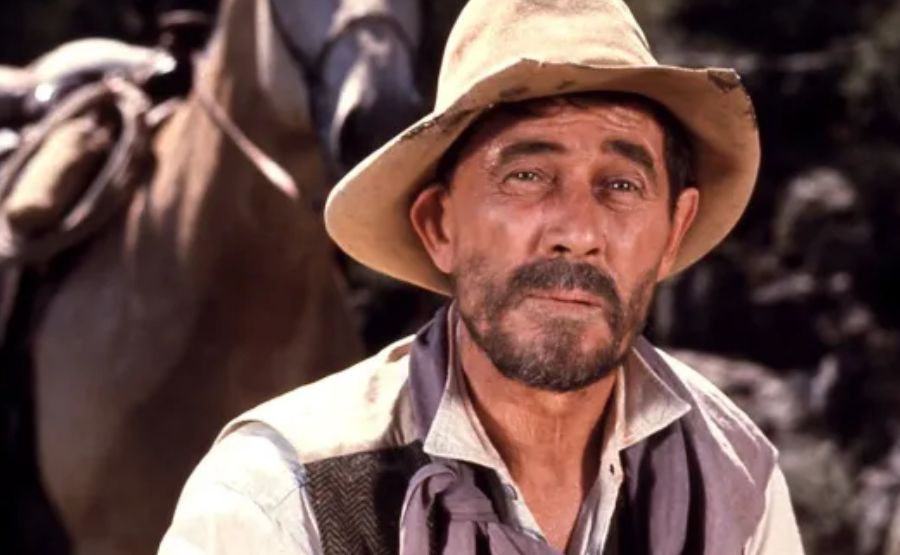
Curtis played Festus for 304 episodes across eleven seasons, making him the longest-serving deputy in Marshal Dillon’s tenure. The character was, as the show described him, semi-illiterate and rough-edged — but also fiercely loyal, funny in ways that caught you off guard, capable of sudden fierce emotion. Curtis turned those qualities into something that felt real. Viewers didn’t watch Festus as a character. They watched him as a person.
He also produced two memorable low-budget films during the late 1950s that have achieved a different kind of immortality: The Killer Shrews and The Giant Gila Monster, both released in 1959, are beloved landmarks of B-movie culture — cheerfully terrible creature features that have been screened at film festivals and celebrated by cult audiences for decades.
In 1973, he provided the voice of Nutsy in Disney’s animated Robin Hood — a piece of trivia that delights people whenever it surfaces, because the gap between Deputy Festus and a Disney animated character is wide enough to drive a stagecoach through.
Personal Life: Three Marriages and the One That Lasted
Ken Curtis married three times across his life. The first was Lorraine Page in 1942 — a marriage that coincided with his earliest professional years in music and his military service, ending in divorce without significant public detail.
The second was Barbara Ford in 1952. This marriage brought him inside the orbit of Hollywood’s most powerful Western filmmaker and opened professional doors that shaped his entire film career. It lasted twelve years and ended in 1964, the same year he was cementing his position as a full-time cast member on Gunsmoke.
The third was Torrie Ahern Connelly, whom he married in 1966 — two years into his Gunsmoke tenure. This was the marriage that held. It lasted twenty-five years, until his death in 1991. Torrie had children from a previous relationship, and Curtis took on the role of stepfather to her two children — the people listed as his surviving family when he died.
What the third marriage offered that the previous two could not — beyond timing — is impossible to say from the outside. What is clear is that it was stable in a way the others weren’t. He was in his fifties when Festus was at the height of his television fame, and the steadiness of the marriage with Torrie appears to have been part of the foundation that allowed him to bring such consistency to the role year after year.
He is buried in Clovis, California. A bronze statue of him as Festus stands in Clovis — a tribute to the character he inhabited for eleven seasons and the actor who made that character real.
Challenges and Difficult Times
The arc of Curtis’s career had a significant dip between his John Ford years and the Gunsmoke breakthrough. The Western musical genre that had given him his early film platform faded as the 1950s progressed, and the transition to dramatic acting required rebuilding professional credibility in a new lane.
The divorce from Barbara Ford in 1964 meant losing the family connection to one of Hollywood’s most powerful directors at a moment when that connection had been professionally significant. Whatever the personal dimensions of that separation, the professional implications were real.
The years between Ford’s films and the permanent Gunsmoke casting were years of rebuilding — guest appearances, recurring roles, the low-budget film productions that showed entrepreneurial initiative even if the artistic results were modest. None of it felt like the career of a man coasting on past associations. It felt like a man working consistently at his craft while waiting for the right thing.
The right thing arrived, in the form of Festus Haggen, at forty-seven years old. Some actors would have found that timeline discouraging. Curtis appears to have simply kept working until the door opened.
Financial Situation: What He Built
Ken Curtis’s estimated net worth at the time of his death in 1991 was approximately three million dollars — a figure that reflects a career spanning fifty years of work across multiple entertainment industries.
His income sources across that career were unusually varied: NBC radio salary, recording fees with Tommy Dorsey and the Sons of the Pioneers, Columbia Pictures contracts, John Ford production fees, his own B-movie production work, and eleven seasons of what was at its peak one of the highest-rated shows on American television. The Gunsmoke years in particular represented sustained, reliable income over more than a decade.
Three million dollars in 1991 represented meaningful financial security — equivalent to significantly more than that in contemporary purchasing power. He left behind a modest but real estate for Torrie and her children.
Life Today: Legacy and the Festus Statue
Ken Curtis died on April 28, 1991, in Fresno, California, in his sleep, of a heart attack. He was seventy-four years old. His final television role was in Conagher — a 1991 film adaptation of a Louis L’Amour novel, in which he played an aging rancher. He was working almost until the end.
His legacy survives most visibly through Gunsmoke reruns, which continue to air on cable television decades after the show’s conclusion. New generations discover Festus and find the same thing that original audiences found in the 1960s and 1970s: a character who feels more real than fictional, more present than performed.
The bronze statue in Clovis, California — depicting him in full Festus regalia, hat and all — is visited regularly by fans who want to stand beside the physical memorialization of a character they loved. That kind of tangible tribute is reserved for figures who genuinely connected with people. It’s not built for everyone.
Final Words
Ken Curtis is one of those performers whose greatness is most visible in retrospect. During his Gunsmoke years, he was beloved by the viewing public and largely overlooked by the award infrastructure that was busy celebrating dramatic television’s more obviously prestigious productions. Festus wasn’t the kind of character that won Emmys. He was the kind of character that people actually watched.
The life behind the character was, if anything, more interesting than most people realized. A Colorado jail as a childhood home. Big band New York in its golden era. A place in the Tommy Dorsey orchestra. John Ford as a father-in-law. The Searchers as a credit. Two gloriously bad monster movies. Eleven seasons of one of television’s most enduring shows. A third marriage that finally held.
That’s not a biography that fits on a tombstone. It’s a life lived with more variety and more genuine accomplishment than the simple image of a scruffy Western deputy would suggest.
The voice he used for Festus was invented. Everything else was earned.
FAQs
1. Who was Ken Curtis?
Ken Curtis was an American actor and singer born Curtis Wain Gates on July 2, 1916, in Lamar, Colorado. He is best known for playing the beloved, good-natured Deputy Festus Haggen on CBS’s Western drama Gunsmoke from 1962 to 1975. Before his acting career fully took hold, he was a professional singer who performed with Tommy Dorsey’s orchestra and the Sons of the Pioneers. He died on April 28, 1991, in Fresno, California, at age seventy-four.
2. How many times was Ken Curtis married?
Ken Curtis was married three times. His first marriage was to Lorraine Page in 1942, which ended in divorce. His second marriage was to Barbara Ford — daughter of director John Ford — in 1952, which ended in divorce in 1964. His third and final marriage was to Torrie Ahern Connelly in 1966, which lasted twenty-five years until his death.
3. Who was Ken Curtis’s second wife and why is she significant?
His second wife was Barbara Ford, daughter of the legendary Western film director John Ford. Through this marriage, Curtis became John Ford’s son-in-law and was subsequently cast in several of Ford’s most celebrated films, including Rio Grande, The Quiet Man, The Searchers, The Wings of Eagles, and The Horse Soldiers. The marriage lasted from 1952 until their divorce in 1964.
4. Who was Ken Curtis’s third wife?
His third wife was Torrie Ahern Connelly, whom he married in 1966. She had children from a previous relationship, and Curtis became their stepfather — these two stepchildren are recorded as his surviving family. Their marriage lasted until his death in 1991, making it the longest and most stable of his three marriages at twenty-five years.
5. Did Ken Curtis have biological children?
He did not have biological children of his own. He had two stepchildren through his third marriage to Torrie Ahern Connelly.
6. How did Ken Curtis get the role of Festus on Gunsmoke?
He first appeared on Gunsmoke as Festus in a December 1962 guest episode. After Dennis Weaver, who played the previous deputy Chester Goode, chose to leave the series, Curtis was brought in permanently beginning in early 1964. He based the character on a real person from his childhood in Las Animas, Colorado — a local figure known as Cedar Jack who cut fence posts and periodically ended up drunk in his father’s jail. Curtis played Festus for 304 episodes across eleven seasons.
7. What was Ken Curtis’s relationship to Frank Sinatra?
Both men sang for Tommy Dorsey’s orchestra, though not at the same time. When Sinatra departed Dorsey’s band in late 1942, Curtis was among those who sang for the orchestra in the transitional period that followed. The popular narrative that Curtis directly “replaced” Sinatra has been described as somewhat overstated, but the connection is real — both men occupied the vocalist’s chair with one of the era’s most prominent bands.
8. What other notable films did Ken Curtis appear in?
Beyond his Gunsmoke years, Curtis appeared in John Ford films including The Quiet Man (1952), The Searchers (1956), The Wings of Eagles (1957), The Horse Soldiers (1959), and How the West Was Won (1962). He also appeared in The Alamo (1960) and provided the voice of the animated character Nutsy in Disney’s Robin Hood (1973). He produced and appeared in the cult B-movies The Killer Shrews and The Giant Gila Monster, both in 1959.
9. What was Ken Curtis’s estimated net worth at the time of his death?
His estimated net worth was approximately three million dollars when he died in 1991. This reflected income from fifty years of work across radio, recording, film, television production, and his long run on Gunsmoke — one of American television’s highest-rated shows across multiple seasons.
10. Where did Ken Curtis grow up and how did it influence his acting?
He grew up in Las Animas, Colorado, where his father Dan Gates served as the county sheriff. The family lived adjacent to the county jail, and his mother cooked meals for prisoners. This upbringing gave Curtis direct, lived familiarity with the Western lawman environment he would later inhabit on screen. His character Festus was specifically modeled on a real Las Animas local he observed as a boy — a man called Cedar Jack who cut fence posts and ended up in his father’s jail when he came to town.
11. Did Ken Curtis have a twin?
Yes. He was born alongside his twin brother Chester on July 2, 1916. Chester Gates lived a private life away from the entertainment industry.
12. How is Ken Curtis remembered today?
He is most prominently remembered through the continuing popularity of Gunsmoke reruns, which have introduced successive generations of viewers to Festus Haggen. A bronze statue of Curtis as Festus stands in Clovis, California, honoring both the character and the actor who created him. He is also remembered by Western music enthusiasts for his years with the Sons of the Pioneers, and by B-movie fans for his cult productions of the late 1950s.