Quick Facts
| Detail | Info |
| Product | 100 troy ounce silver bar |
| Common purity | .999 fine silver (99.9%) or .9999 (99.99%) |
| Approximate weight | 6.86 lbs / 3.11 kilograms |
| Typical dimensions | ~6 inches long × 3 inches wide (varies by refiner) |
| Value calculation | Spot price of silver × 100 + dealer premium |
| Current spot price | ~55–66 per oz (as of mid-2026) |
| Approximate value range | ~5,500–6,600+ per bar (mid-2026) |
| Key refiners | Johnson Matthey, Engelhard, Royal Canadian Mint, PAMP Suisse, Scottsdale Mint |
| IRA eligible? | Yes — but only exchange-approved brands |
| Best for | Bulk silver accumulation at lowest per-ounce premiums |
Introduction: Why a 100 oz Silver Bar Deserves Your Attention
Imagine holding a solid block of metal roughly the size of a standard brick. It sits heavy in your hands. It’s cool to the touch. And depending on when you’re reading this, that single bar could be worth anywhere between four and seven thousand dollars — sometimes more.
That’s the 100 oz silver bar. It’s not flashy. It doesn’t have an eagle embossed on it or come in a fancy collector’s case. But among experienced precious metals investors, it is arguably the most efficient way to own physical silver at scale.
The 100 oz bar sits in a sweet spot that smaller bars and coins simply can’t reach. It carries some of the lowest per-ounce premiums of any silver product on the market. It’s recognized globally. It’s accepted by major exchanges and qualifies for retirement accounts when purchased from the right refiners. And in an era when silver has become one of the most talked-about commodities in the world — driven equally by investment demand and explosive industrial consumption — understanding what a 100 oz silver bar is worth, and why, has never been more relevant.
This guide covers everything. The price mechanics, the factors that influence value beyond the spot price, which brands matter and why, how to buy and store these bars intelligently, and what the current silver market means for anyone thinking about owning one.
See also “Rocket League Hacks: Risks, Myths, and What Players Should Know“
What a 100 oz Silver Bar Actually Is
Let’s start with the physical reality, because it’s easy to lose that when you’re staring at numbers.
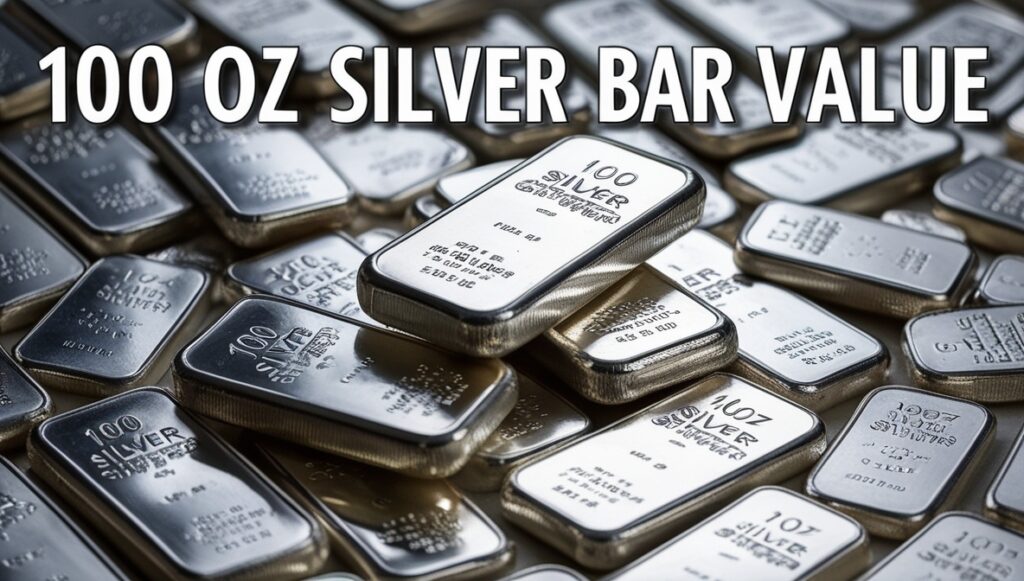
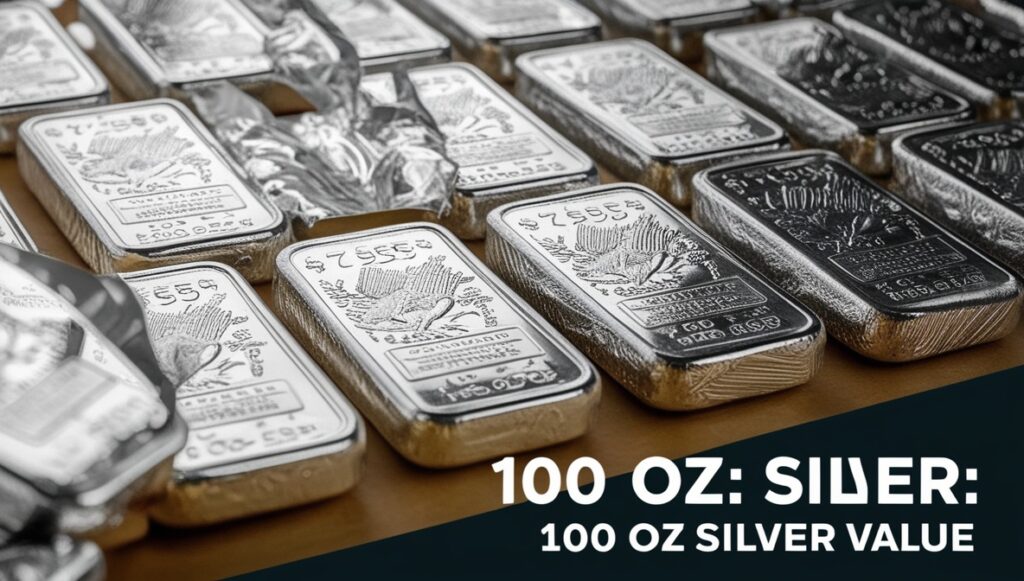
A standard 100 oz silver bar contains exactly 100 troy ounces of silver. Not regular ounces — troy ounces, which are the standard unit for precious metals and are slightly heavier than the avoirdupois ounces used for everyday items. One troy ounce equals about 31.1 grams, which means a 100 oz silver bar weighs approximately 3.11 kilograms, or a little under seven pounds.
The bar itself typically measures around six inches in length and about three inches in width, though exact dimensions vary somewhat between different manufacturers. It’s dense and compact — noticeably smaller and heavier than it looks at first glance.
Silver bars at the 100 oz weight are produced in two main ways: cast and minted. Cast bars are made by pouring molten silver into a mold — they tend to have a rougher, more industrial appearance and are slightly cheaper to produce. Minted bars are cut from rolled silver blanks and typically carry a cleaner, more refined look with sharper stamping. Both are legitimate investment products. The production method affects appearance more than value.
Every authentic investment-grade bar carries specific markings: the weight (100 troy oz), the metal purity (.999 or .9999 fine silver), the manufacturer’s name or hallmark, and often a unique serial number. These markings are not decoration — they are the bar’s credentials.
How the Value Is Calculated: Spot Price Is Just the Start
The most important number in any conversation about a 100 oz silver bar is the spot price — the current live market price per troy ounce of silver, traded continuously on global commodity exchanges.
The math is beautifully simple on the surface: multiply the spot price by 100 and you have the bar’s base metal value. If silver is trading at $55 per ounce, the bar’s underlying value is $5,500. If silver moves to $60, that same bar is now worth $6,000. Every single dollar change in the spot price shifts the bar’s value by exactly $100.
But the price you actually pay — or receive when selling — is rarely just the spot price. Several additional layers shape the real-world transaction.
The premium over spot is the amount a dealer charges above spot to cover their costs: manufacturing, refining, distribution, storage, insurance, and profit margin. For 100 oz silver bars, this premium is typically very modest — often just a fraction of a percent above spot, sometimes even below spot during certain market conditions, as premium tracking data from mid-2026 shows. This is one of the key reasons experienced investors prefer larger bars. A 1 oz silver coin might carry a premium of 3–8 per ounce or more. A 100 oz bar often carries a premium well under $1 per ounce. Over large purchases, that difference adds up to real money.
The buyback spread works in the opposite direction. When you sell a bar back to a dealer, they will typically buy it at a small discount to spot. This is how dealers stay in business. The spread on 100 oz bars is generally narrower than on smaller products, which is another advantage of the 100 oz format for serious investors.
Purity affects value directly. A bar stamped .9999 fine contains more pure silver per ounce than one stamped .999. The difference is small but real, and .9999 bars typically command a slightly higher premium. Investment-grade silver must be at least .999 fine to qualify for exchange acceptance and IRA eligibility.
Brand recognition matters more than most new investors expect. Not all 100 oz bars are treated equally by the market. A bar from a COMEX-approved refiner like Johnson Matthey, Engelhard, the Royal Canadian Mint, or PAMP Suisse will be accepted everywhere and can be sold almost instantly. A bar from an obscure or unrecognized refiner may require an assay — an independent test to verify its purity — before a dealer will buy it. That assay costs time and money, which effectively reduces what you receive.
The Brands That Matter
The 100 oz silver bar market has a handful of names that carry genuine weight.
Johnson Matthey is one of the most recognized names in precious metals. Their 100 oz bars have been produced for decades and are universally accepted. Some vintage Johnson Matthey bars from earlier decades carry an extra collectible appeal among enthusiasts, in addition to their metal value.
Engelhard bars carry similar prestige. Engelhard stopped producing silver bars in the 1980s, which means existing Engelhard 100 oz bars are now both investment products and historical artifacts. Some command premiums beyond their silver content precisely because they’re no longer made.
The Royal Canadian Mint (RCM) brings government backing and world-class quality to their bars. RCM products are recognized globally, COMEX-approved, and widely accepted for IRA accounts.
PAMP Suisse, based in Switzerland, is one of the most respected independent refiners in the world. Their 100 oz bars are known for precision and quality. PAMP also produces beautifully designed products, though their 100 oz bars lean toward the functional rather than decorative side.
Scottsdale Mint has developed a strong following in recent years, particularly for their Stacker bars — designed specifically to lock together for compact, efficient storage. For investors holding multiple large bars, this practical feature has real appeal.
Generic or secondary market bars represent the most affordable entry point. These are bars from various refiners, often sold without a specific brand emphasis. They carry the lowest premiums, but buyers should ensure they’re purchasing through reputable dealers and that the bars bear proper hallmarks.
Where Silver Stands Right Now — and What Got It Here
To understand what a 100 oz silver bar is worth in 2026, you have to understand what happened to silver prices over the past two years. And the short answer is: a lot.
Silver spent most of 2023 in the 22–26 range. Then came 2024, when prices started rising, driven by interest rate expectations, a weakening dollar, and growing industrial demand. By the time 2025 arrived, something bigger was happening. Silver surged dramatically through the year — one of the most explosive annual performances in modern commodity history — eventually rising roughly 140–147% over the course of the year and touching all-time record highs above $100 per ounce.
By early 2026, silver had set a new all-time high above $117 per ounce. At that price, a single 100 oz silver bar would have been worth over $11,700 — a figure that would have seemed extraordinary just two years earlier.
Since then, prices have pulled back from those highs as profit-taking, reduced industrial demand growth, and shifting investor sentiment weighed on the market. As of mid-2026, silver is trading in the 50–66 range, placing a 100 oz bar in the 5,000–6,600 value zone depending on the specific day and hour.
What drove that extraordinary 2025 rally? Several things converged at once. Industrial demand for silver reached record levels, with the solar panel manufacturing industry alone consuming nearly 200 million ounces in 2024 — a figure that reflects silver’s irreplaceable role in photovoltaic cell production. Electric vehicle manufacturing, data center infrastructure, and grid electrification all add to that industrial appetite. Meanwhile, supply has remained persistently short of demand for multiple consecutive years. When supply deficits meet rising investment interest, prices move.
Silver’s Dual Role: Metal and Money
One thing that makes silver uniquely interesting — and uniquely complex to value — is that it serves two very different masters simultaneously.
About 55–60% of all silver demand comes from industry. Silver conducts electricity better than any other metal. It reflects light more efficiently than anything else. It has powerful antimicrobial properties. It is genuinely irreplaceable in solar panels, electronics, medical devices, automotive components, and now the infrastructure of artificial intelligence and data centers. This industrial demand is structural — it grows with the global economy and the green energy transition.
The other 40–45% of demand comes from investment, jewelry, and silverware. This is the part where silver behaves like a monetary asset — a store of value, a hedge against inflation and currency weakness, an alternative to paper money. This is the demand that drives investors to buy 100 oz bars.
The tension between these two roles creates silver’s characteristic volatility. When economies are strong, industrial demand rises. When economies weaken, monetary demand rises as investors seek safe havens. The two forces don’t always pull in the same direction, which is part of why silver can move dramatically in either direction faster than gold.
The gold-to-silver ratio — how many ounces of silver it takes to buy one ounce of gold — is a closely watched indicator. When this ratio is high, silver is considered relatively cheap compared to gold. When it narrows, silver is catching up. Shifts in this ratio have historically preceded significant silver price moves.
Buying a 100 oz Silver Bar: What Smart Investors Actually Do
Knowing the value of a 100 oz silver bar is only half the picture. Actually acquiring one well requires a bit of strategy.
Buy from reputable, established dealers. The precious metals market has its share of opportunists. Stick with dealers who are well-reviewed, transparent about pricing, and clearly display their premiums. Major online bullion dealers update prices in real time and allow you to compare premiums across multiple sellers.
Prioritize exchange-approved brands. If you ever want to store bars in a depository, use them in an IRA, or sell them quickly without hassle, COMEX-approved brands are the only sensible choice. The marginal extra cost of a recognized brand over a generic bar is almost always worth it.
Compare premiums carefully. Even a small difference in premium per ounce adds up at the 100 oz scale. Use bullion price comparison tools to see current offerings across multiple dealers before buying.
Think about storage before you buy. A single 100 oz bar is manageable — it fits in a home safe without much trouble. But two, five, or ten bars represent significant weight and value that a home safe may not adequately protect. Professional vaulting and depository storage exist for exactly this reason, and for IRA holdings it’s typically required by law.
Understand the liquidity trade-off. The 100 oz bar’s biggest practical limitation is that it must be sold as a whole unit. You can’t chip off 10 oz when you need some cash. Investors who want flexibility for partial sales often hold a mix of formats — some large bars for cost efficiency, some 1 oz or 10 oz products for flexible liquidation.
Tax Considerations
In the United States, silver bars are generally treated as collectibles by the IRS, subject to capital gains tax when sold at a profit. The rate depends on your income level and how long you’ve held the metal. State taxes vary — some states apply sales tax to silver purchases, others exempt investment-grade precious metals.
For IRA-held silver, the tax treatment differs depending on whether you have a Traditional or Roth IRA. Only exchange-approved bars held in approved depositories qualify for IRA inclusion.
Tax rules change and vary by jurisdiction. Consulting a tax professional before making significant precious metals purchases is genuinely worthwhile.
Final Words
There is something almost philosophical about a 100 oz silver bar. It is simultaneously ancient and modern — a form of wealth that human civilizations have recognized for thousands of years, now shaped into a standardized industrial product traded electronically across the globe, consumed in solar panels and circuit boards and electric vehicles.
For investors, it represents one of the most efficient ways to hold meaningful quantities of physical silver. The low premiums, the recognized brands, the IRA eligibility, the manageable physical size — these are practical advantages that have made the 100 oz format the most commonly traded silver bullion product in the world.
The silver market in 2026 is in a fascinating place — off its historical highs from early in the year, but structurally supported by deficits that haven’t resolved and industrial demand that continues to grow with the global energy transition. Whether silver climbs back toward those highs or consolidates at current levels, the 100 oz bar will remain what it has always been: a dense, heavy, honest store of value that doesn’t require a password to access and doesn’t depend on a counterparty’s promise to hold its worth.
See also “Rocket League Hacks: Risks, Myths, and What Players Should Know“
FAQs
1. How do I calculate what my 100 oz silver bar is worth right now?
Find the current spot price of silver per troy ounce — available on any precious metals dealer website, commodity exchange, or financial news platform, updated continuously during trading hours. Multiply that number by 100. That gives you the base metal value. To find what a dealer would charge you to buy one, add the current premium. To find what a dealer would pay to buy yours, subtract the buyback spread, which is usually a small percentage below spot.
2. What is the current value of a 100 oz silver bar in 2026?
As of mid-October 2026, silver is trading in roughly the 55–66 per ounce range, placing a 100 oz silver bar at approximately 5,500–6,600 in base metal value before premiums. Prices move constantly, so always check a live price source for an accurate real-time figure.
3. Why do 100 oz silver bars have lower premiums than smaller silver products?
Manufacturing cost doesn’t scale linearly with size. Producing one 100 oz bar requires far less labor, packaging, and handling per ounce of silver than producing a hundred 1 oz coins. Those savings get passed along as lower premiums. This makes larger bars the most cost-efficient format for investors whose priority is accumulating silver by weight.
4. Which brands of 100 oz silver bars are most trusted and liquid?
Johnson Matthey, Engelhard, the Royal Canadian Mint, PAMP Suisse, Scottsdale Mint, and Valcambi are among the most widely recognized and accepted. Bars from COMEX-approved refiners enjoy the broadest market acceptance and the easiest resale process. Generic bars may sell at slightly lower premiums when buying but can be harder to liquidate quickly.
5. Can I hold a 100 oz silver bar in an IRA?
Yes, but only under specific conditions. The bar must be from an exchange-approved refiner, must meet purity requirements of at least .999 fine silver, and must be held in an IRS-approved depository — you cannot keep IRA metals at home. Not all silver bars qualify; purchasing from a recognized COMEX-approved refiner is essential for IRA eligibility.
6. Is a 100 oz silver bar a good investment right now?
That depends on your individual financial situation, goals, time horizon, and risk tolerance — factors no general article can assess for you. What can be said objectively: silver has structural demand support from industrial uses, persistent supply deficits, and a history of significant price appreciation during certain economic environments. It also carries meaningful price volatility. Speak with a qualified financial advisor before making investment decisions.
7. How do I verify that a 100 oz silver bar is genuine?
Authentic bars carry clear hallmarks showing weight, purity, and manufacturer. You can also perform basic tests: a magnet test (silver is not magnetic), a weight and dimension check against known specifications, and an ice test (silver conducts cold extremely quickly). For high-value purchases, professional assay testing by a certified laboratory is available and provides definitive verification.
8. What is the best way to store a 100 oz silver bar at home?
A quality fire-rated home safe bolted to the floor or wall is the minimum for home storage. Silver is dense, so the safe must be rated for sufficient weight. Keep documentation of your purchase (receipts, serial numbers, photos) stored separately. For larger holdings, professional depository storage with full insurance is generally a safer and more practical solution than home vaults.
9. What happened to silver prices in 2025 — and why does it matter?
Silver surged approximately 140–147% during 2025, reaching all-time highs above $100 per ounce and briefly exceeding $117 in early 2026. The rally was driven by record industrial demand particularly from solar manufacturing and electrification, persistent multi-year supply deficits, a weakening US dollar, and significant investment inflows. This historic move fundamentally changed the baseline price context for silver and has attracted far broader attention to the metal as both an industrial commodity and an investment.
10. What’s the difference between a cast bar and a minted bar?
Cast bars are made by pouring liquid silver into a mold, producing a bar with slight surface variations and a more industrial appearance. Minted bars are cut from rolled silver sheets and pressed, resulting in clean edges, sharp details, and a more uniform appearance. Both contain the same amount of silver at the stated weight. Minted bars typically carry a slightly higher premium due to the extra manufacturing step, but the difference is modest at the 100 oz size.
11. How does the gold-silver ratio affect the value of a 100 oz silver bar?
The gold-silver ratio tells you how many ounces of silver are needed to purchase one ounce of gold. Historically this ratio has averaged around 60:1 to 80:1, though it varies widely. When the ratio is high — say 85:1 or above — silver is considered undervalued relative to gold, which historically has preceded silver price gains. When the ratio tightens significantly, it often signals silver catching up to gold’s performance. Many investors use the ratio as one input in timing silver purchases.
12. Should I buy one 100 oz bar or multiple smaller silver products?
There’s no universal right answer — it depends on your priorities. One 100 oz bar gives you maximum cost efficiency per ounce at the lowest premium. Multiple smaller bars or coins give you flexibility: you can sell a portion of your holdings without selling everything at once. Many experienced investors hold a mix — large bars for bulk efficiency, smaller pieces for transaction flexibility. The right balance depends on your investment goals, storage capacity, and likely liquidation scenarios.